



Immunoassay Neurological Biomarkers Market Trends, Leading Companies, Company Revenue / Sales Performance, Procedure Volume, Healthcare Spending, Technology Adoption, Reimbursement Analysis, Competitive Landscape, and Growth Outlook
Payal Rabde, a Healthcare Industry Expert, highlights that the immunoassay neurological biomarkers market has reached USD 1.46 billion in 2026 to USD 3.68 billion by 2035, growing at a CAGR of 10.80%. Key immunoassay neurological biomarkers market companies shaping the market include Roche Diagnostics, Fujirebio, Quanterix, Abbott, while major growth segments span product, disease, biomarker, application and region.
Source: https://www.precedenceresearch.com/immunoassay-neurological-biomarkers-market
 Get a Sample
 Report Description


Immunoassay Neurological Biomarkers Market Size, Trends, Share, and Innovations 2035
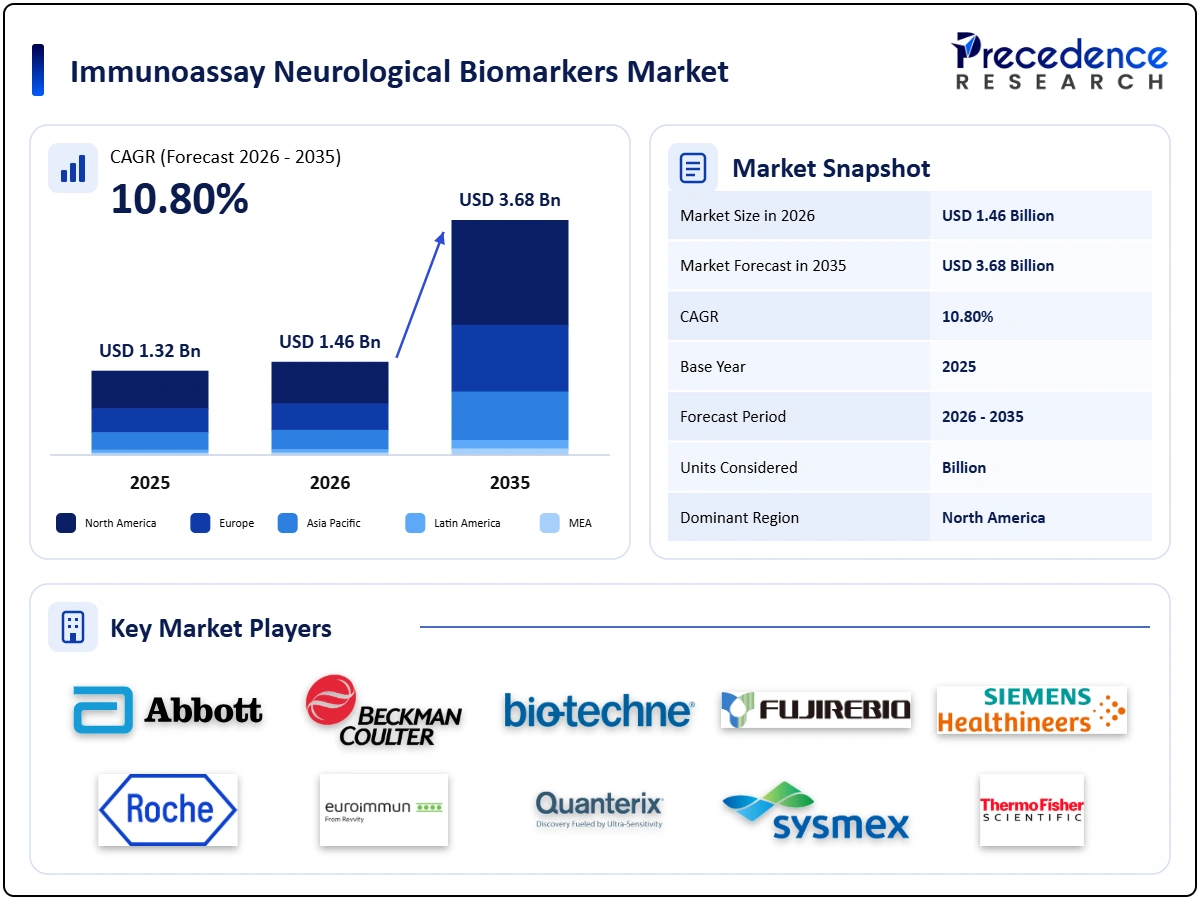
The immunoassay neurological biomarkers market is forecasted to expand from USD 1.46 billion in 2026 to USD 3.68 billion by 2035, growing at a CAGR of 10.80% from 2026 to 2035.
Key Takeaways
Market Size & Growth Outlook
- Market size in 2025: USD 1.32 billion
- Estimated market size in 2026: USD 1.46 billion
- Projected market size by 2035: USD 3.68 billion
- CAGR (2026-2035): 10.80%
Regional Market Spotlight
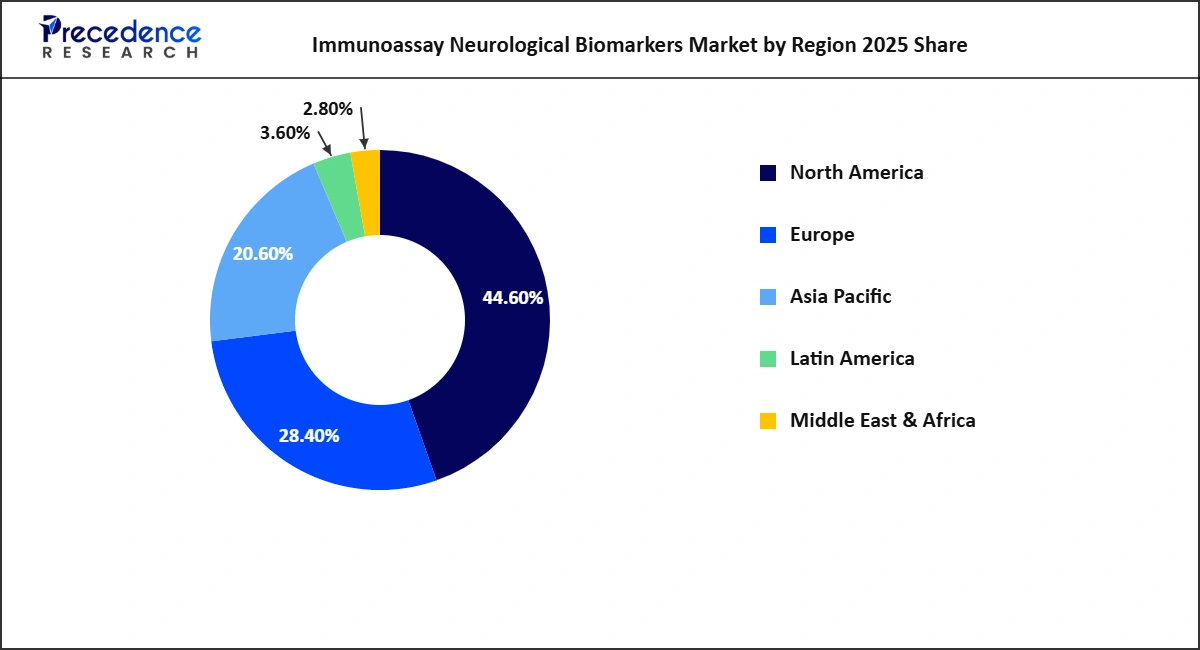
- North America led the market with a 44.60% (USD 0.59 billion) share in 2025.
- Europe accounted for 28.40% (USD 0.37 billion) of the market in 2025.
- Asia Pacific accounted for 20.60% (USD 0.27 billion) of the market in 2025 and is projected to be the fastest-growing region, at a CAGR of 12.14% from 2025 to 2035.
Segmental Spotlight
- By product, Reagents & Kits accounted for 62.40% (USD 0.82 billion) in 2025.
- By disease, Alzheimer's Disease accounted for 46.80% (USD 0.62 billion) in 2025.
- By biomarker, Amyloid & Tau accounted for 44.20% (USD 0.58 billion) in 2025.
- By application, In Vitro Diagnostics accounted for 58.60% (USD 0.77 billion) in 2025.
Immunoassay Neurological Biomarkers Market Size and Forecast, 2025-2035 (USD Billion)
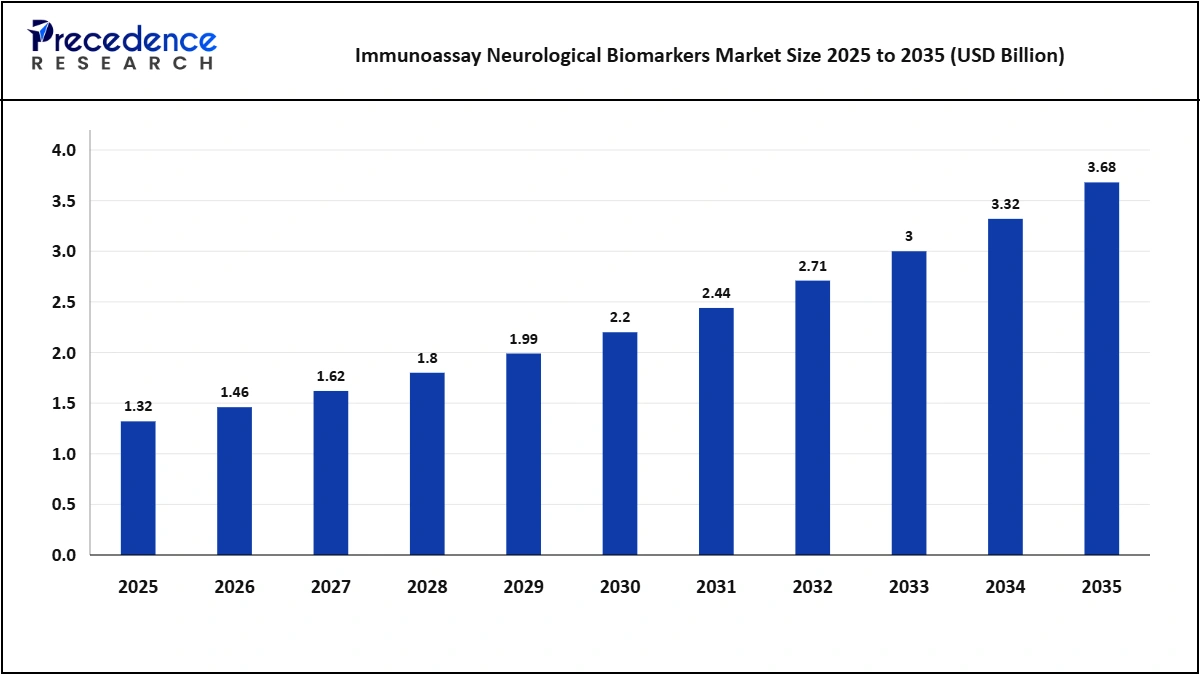
Note: 2025 is the base year; 2026-2035 values are forecasts.
Sources: Expert interviews, secondary sources, Precedence Research database and Precedence Research analysts.
The immunoassay neurological biomarkers market is projected to grow from USD 1.32 billion in 2025 to USD 3.68 billion by 2035 because doctors and researchers use blood and CSF immunoassays to detect Alzheimer's pathology, monitor nerve damage, and assess brain injury, replacing more costly or invasive tests. The market is anticipated to grow to USD 2.20 billion by 2030 and maintain a CAGR of 10.80% between 2026 and 2035 due to the FDA-approved blood tests associated with anti-amyloid treatment options and availability in laboratories.
- Analyst View: Neurological biomarker test volumes in clinical and research settings, along with the cost of reagents and equipment, were taken into account while calculating the estimate. Clinical volumes reflect memory clinic and primary care evaluation of cognitive decline, multiple sclerosis monitoring, and emergency testing for traumatic brain injury, while research volumes reflect trials and academic studies. The total was cross-checked against the neurology diagnostics revenue of leading immunoassay companies and against published estimates, which places our base year slightly above the comparable figures. The growth rate is influenced by the widespread adoption of Alzheimer's blood tests and anti-amyloid therapies, as well as moderated by reimbursement uncertainty.
Market Trends
- Blood tests are replacing PET and CSF tests for amyloid confirmation.
- pTau217 is emerging as the leading Alzheimer's blood marker.
- Single cutoffs are being developed to enable Alzheimer's testing in primary care.
- Neurofilament light is used to monitor MS activity.
- GFAP blood tests enable healthcare professionals to make effective CT decisions in brain injury.
- Ultra-sensitive assays facilitate the measurement of very low protein levels.
Drivers, Restraints and Opportunities
Driver
Anti-amyloid Alzheimer's therapies require confirmation of amyloid pathology, and blood tests are cheaper and less invasive than PET scans and lumbar punctures. Approval by the FDA of a number of blood tests and availability of laboratories throughout the country provide for clinical application. Population aging increases the number of people evaluated for cognitive decline. Neurofilament light and GFAP tests support multiple sclerosis care and brain injury assessment. Drug developers use biomarkers widely in neurology trials.
Restraint
Reimbursement for new Alzheimer's blood tests is still being established. Some results are ambiguous and require further testing. The use of anti-amyloid therapy has not seen the uptake initially expected because of safety concerns and costs. Ultra-sensitive platforms are not available in all laboratories. Different assays may result in different outcomes, requiring standardization.
Opportunity
Primary care use of Alzheimer's blood tests could greatly expand volumes. Blood testing could help screen patients for trials and new treatments. Neurofilament light may become a standard diagnostic test for all neurological conditions. Brain injury blood tests can extend to point-of-care and sports settings. The increasing number of geriatric population in Asia offer strong growth.
Market Segmentation: 2025 Share and Value
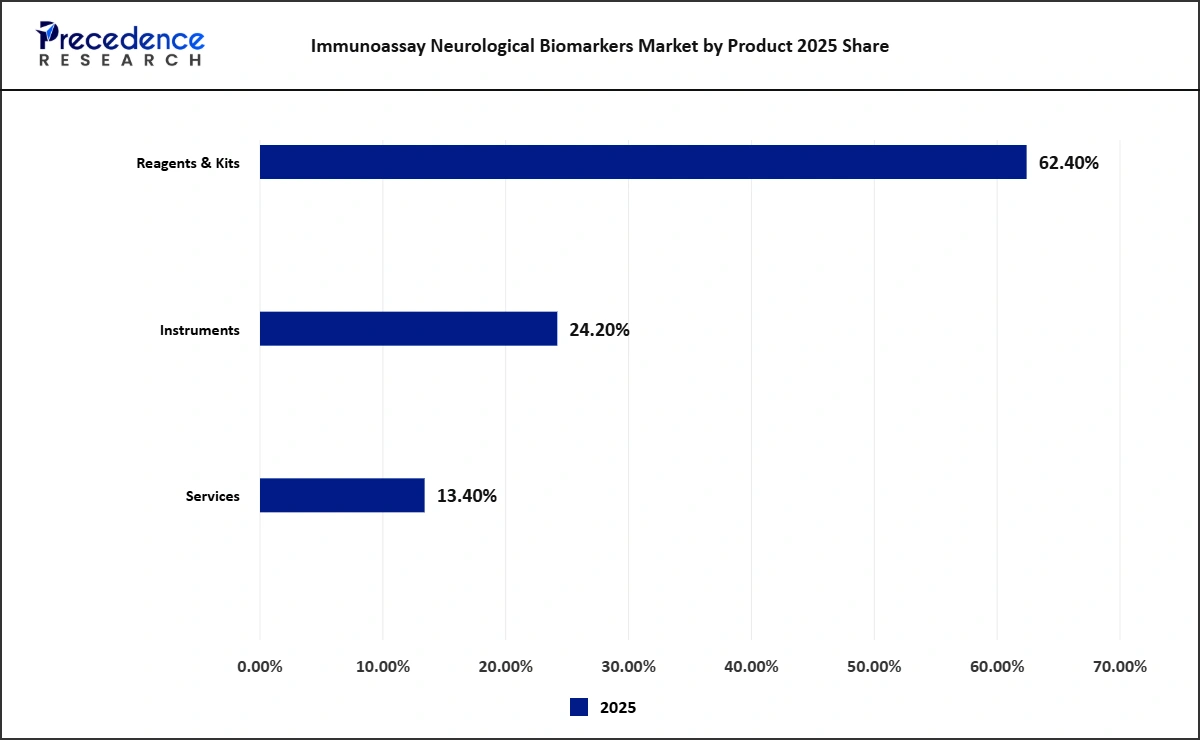
Immunoassay Neurological Biomarkers Market by Product 2025 Share
Note: 2025 is the base year.
Sources: Expert interviews, secondary sources, Precedence Research database and Precedence Research analysts.
Reagents and kits accounted for 62.40% (USD 0.82 billion) in 2025 because every test uses assay cartridges or kits, and volumes are rising as blood-based Alzheimer's tests move into routine laboratory use. Instruments, constituting 24.20% (USD 0.32 billion), comprise automated immunoassay analyzers and highly sensitive single-molecule systems that help detect minute amounts of brain proteins in the bloodstream. Services account for 13.40% (USD 0.18 billion) and cover reference laboratory testing and biomarker services for drug trials.
Immunoassay Neurological Biomarkers Market by Disease 2025 Share & Size
| Segments | 2025 Share | 2025 Market Value |
| Alzheimer's Disease | 46.80% | USD 0.62 billion |
| Others | 14.80% | USD 0.20 billion |
| Multiple Sclerosis | 14.60% | USD 0.19 billion |
| Traumatic Brain Injury | 12.60% | USD 0.17 billion |
| Parkinson's Disease | 11.20% | USD 0.15 billion |
Note: 2025 is the base year.
Sources: Expert interviews, secondary sources, Precedence Research database and Precedence Research analysts.
Alzheimer's disease accounted for 46.80% (USD 0.62 billion) in 2025 and is the fastest-growing disease segment because anti-amyloid therapies require confirmation of amyloid pathology, and blood tests for pTau217 and pTau181 can rule Alzheimer's in or out without PET scans or lumbar punctures. Other conditions such as ALS, stroke and frontotemporal dementia account for 14.80% (USD 0.20 billion), multiple sclerosis for 14.60% (USD 0.19 billion), where neurofilament light monitors disease activity, traumatic brain injury for 12.60% (USD 0.17 billion), where GFAP and UCH-L1 blood tests help decide on CT scans, and Parkinson's disease for 11.20% (USD 0.15 billion).
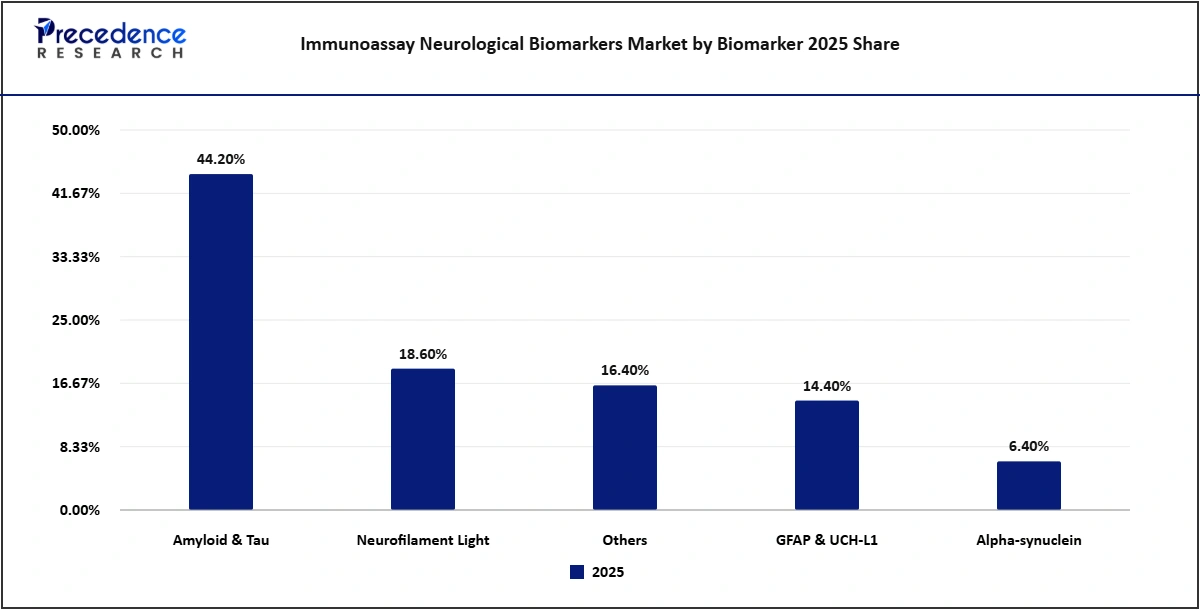
Immunoassay Neurological Biomarkers Market by Biomarker 2025 Share
Note: 2025 is the base year.
Sources: Expert interviews, secondary sources, Precedence Research database and Precedence Research analysts.
The proportion of amyloid and tau markers was 44.20% (USD 0.58 billion), and pTau217, pTau181, and amyloid beta ratios were the prominent factors. Neurofilament light, at 18.60% (USD 0.25 billion), measures nerve damage across many conditions; other biomarkers account for 16.40% (USD 0.22 billion); GFAP and UCH-L1 for 14.40% (USD 0.19 billion) and alpha-synuclein for 6.40% (USD 0.08 billion), mainly in research.
Immunoassay Neurological Biomarkers Market by Application 2025 Share & Size
| Segments | 2025 Share | 2025 Market Value |
| In Vitro Diagnostics | 58.60% | USD 0.77 billion |
| Research & Drug Development | 41.40% | USD 0.55 billion |
Note: 2025 is the base year.
Sources: Expert interviews, secondary sources, Precedence Research database and Precedence Research analysts.
In vitro diagnostics accounted for 58.60% (USD 0.77 billion) in 2025 and is the fastest-growing application as FDA-cleared tests enter clinical use. Research and drug development, at 41.40% (USD 0.55 billion), remain a large application because neurological drug trials use biomarkers to select patients and track treatment effects.
- Analyst View: Segment values were allocated by matching test volumes by disease and setting to biomarkers and products, using average prices. Alzheimer's testing and reagents lead because blood-based amyloid and tau tests are scaling quickly in clinical laboratories. Clinical diagnostics, Alzheimer's disease testing, and reagents are likely to gain traction as more cleared tests reach the primary care market.
Regional Analysis
Immunoassay Neurological Biomarkers Market By Region 2025 Share
Note: 2025 is the base year.
Sources: Expert interviews, secondary sources, Precedence Research database and Precedence Research analysts.
North America represented 44.60% (USD 0.59 billion) in 2025 due to the rise in the approval of blood tests by the FDA for Alzheimer's disease, wide availability via Labcorp and Quest, anti-amyloid drugs, and funding in neuroscience research. U.S. emergency departments also use GFAP and UCH-L1 tests for brain injury. Europe, at 28.40% (USD 0.37 billion), is supported by CE-marked Alzheimer's blood tests, strong biomarker research in Sweden, the UK, Germany, and the Netherlands, and neurofilament light testing in multiple sclerosis. Asia Pacific, at 20.60% (USD 0.27 billion), is the fastest-growing region, supported by rapidly aging populations in Japan, China, and South Korea, approval of anti-amyloid therapies in Japan and China, and growing memory clinic networks. Latin America, at 3.60% (USD 0.05 billion), and the Middle East and Africa, at 2.80% (USD 0.04 billion), are smaller markets where testing is mainly available in academic and private centers.
North America accounted for 44.60% (USD 0.59 billion) in 2025. FDA-cleared Alzheimer's blood tests drive adoption. The presence of national laboratories offers tests nationwide. Brain injury blood tests are used in emergency care.
Europe accounted for 28.40% (USD 0.37 billion) in 2025. CE-marked Alzheimer's blood tests are available. The increasing number of strong research centers facilitate the development of biomarkers. Neurofilament light supports MS care.
Asia Pacific accounted for 20.60% (USD 0.27 billion) in 2025 and is the fastest-growing region. Aging populations increase dementia cases. Japan and China have approved anti-amyloid therapies. Memory clinics are expanding.
Latin America accounted for 3.60% (USD 0.05 billion) in 2025. Testing is concentrated in academic centers. Awareness of dementia diagnosis is rising.
The Middle East and Africa accounted for 2.80% (USD 0.04 billion) in 2025. Gulf hospitals are adopting neurology biomarkers. Access is limited elsewhere.
Analyst View: Regional shares were built from neurological biomarker test volumes, research activity, and prices in each region. North America leads because of FDA-cleared tests and anti-amyloid therapy use. We assign Asia Pacific the highest growth premium because population ageing and therapy approvals are expanding testing quickly there.
Top 10 Companies in the Immunoassay Neurological Biomarkers Market
| Rank | Company Name | Market-Specific Revenue (USD Billion) | 2025 Share | Key Products/Business | Headquarters |
| 1 | Roche Diagnostics | 0.22 | 16.67% | Elecsys pTau181, pTau217 and CSF Alzheimer's assays | Switzerland |
| 2 | Fujirebio | 0.14 | 10.61% | Lumipulse pTau217/Abeta42 plasma and CSF assays | Japan |
| 3 | Quanterix | 0.12 | 9.09% | Simoa ultra-sensitive biomarker assays | United States |
| 4 | Abbott | 0.10 | 7.58% | GFAP and UCH-L1 brain injury tests | United States |
| 5 | Siemens Healthineers | 0.08 | 6.06% | Neurology immunoassays | Germany |
| 6 | Euroimmun | 0.08 | 6.06% | Neurology antibody and biomarker assays | Germany |
| 7 | Thermo Fisher Scientific | 0.08 | 6.06% | Neurology immunoassays and reagents | United States |
| 8 | Beckman Coulter | 0.06 | 4.55% | Alzheimer's biomarker assays | United States |
| 9 | Bio-Techne | 0.06 | 4.55% | Neuroscience immunoassay kits | United States |
| 10 | Sysmex | 0.05 | 3.79% | Amyloid beta immunoassays | Japan |
Note: Company revenues and shares are 2025 estimates.
Sources: Company press releases, expert interviews, secondary sources, Precedence Research database and Precedence Research analysts.
Roche Diagnostics led the immunoassay neurological biomarkers market with an estimated 16.67% (USD 0.22 billion) of 2025 revenue, followed by Fujirebio at 10.61% (USD 0.14 billion) and Quanterix at 9.09% (USD 0.12 billion). Roche leads with Elecsys CSF and blood Alzheimer's assays, including FDA-cleared pTau181 and pTau217 tests that run on thousands of installed cobas analyzers and are offered by national laboratories. Fujirebio received the first FDA clearance for an Alzheimer's blood test, the Lumipulse pTau217/beta-amyloid 1-42 plasma ratio, and has a long history in CSF testing. Quanterix leads ultra-sensitive research and clinical biomarker testing with its Simoa platform for neurofilament light, GFAP and pTau. Abbott leads brain injury blood testing with GFAP and UCH-L1, and Siemens Healthineers, Euroimmun, Thermo Fisher Scientific, Beckman Coulter, Bio-Techne, and Sysmex supply additional assays and reagents.
The 10 leading firms contributed to an estimated 75.00% of USD 0.99 billion revenues, whereas the other 25.00% of revenues valued at USD 0.33 billion belonged to biomarker start-ups, neurology labs, and research reagents suppliers. The immunoassay neurological biomarkers market is concentrated among a few companies with cleared tests and high-sensitivity platforms, and competition centers on clinical accuracy, regulatory clearance, availability on installed analyzers, single cutoffs for primary care, and partnerships with drug developers. Collaboration with pharmaceutical firms that produce Alzheimer's treatments like the partnership between Roche and Eli Lilly is an important strength.
Recent Developments
- May 2025: The FDA cleared Fujirebio's Lumipulse G pTau217/beta-amyloid 1-42 plasma ratio, the first blood test to aid diagnosis of Alzheimer's disease in adults aged 55 and older with symptoms.
- October 2025: The FDA cleared Roche's Elecsys pTau181 blood test, developed with Eli Lilly, to help rule out Alzheimer's disease in adults with early cognitive decline.
- August 2026: The FDA cleared C2N Diagnostics' mass spectrometry-based PrecivityAD2 blood test for people aged 40 and older, adding competition for immunoassay-based Alzheimer's tests.
- August 2026: The FDA cleared Roche and Eli Lilly's Elecsys pTau217 blood test to help rule Alzheimer's disease in or out, with Labcorp and Quest Diagnostics planning nationwide availability.
Immunoassay Neurological Biomarkers Market Segments
By Product
- Reagents & Kits
- Instruments
- Services
By Disease
- Alzheimer's Disease
- Others
- Multiple Sclerosis
- Traumatic Brain Injury
- Parkinson's Disease
By Biomarker
- Amyloid & Tau
- Neurofilament Light
- Others
- GFAP & UCH-L1
- Alpha-synuclein
By Application
- In Vitro Diagnostics
- Research & Drug Development
By Region
- North America (U.S., Canada, Mexico)
- Europe (Germany, U.K., France, Italy, Spain, Rest of Europe)
- Asia Pacific (China, Japan, India, South Korea, Taiwan, Rest of Asia Pacific)
- Latin America (Brazil, Argentina, Rest of Latin America)
- Middle East & Africa (GCC, South Africa, Rest of MEA)
Research Methodology
The immunoassay neurological biomarkers market refers to reagents, kits, instruments, and services for immunoassays that measure neurological biomarkers in blood and cerebrospinal fluid for clinical and research use worldwide. The 2025 base year was built bottom-up from neurological biomarker test volumes in clinical and research settings, reagent and kit prices, and instrument and service revenue, and checked top-down against the neurology diagnostics revenue of leading immunoassay companies. Segment, regional, and company values were allocated from products, diseases, biomarkers, applications, and regional testing. These critical estimates were confirmed using third-party estimates and comparisons of corporate disclosures against regulatory/industry data, and input values which could not be reconciled were omitted. All segment, regional, and company figures were reconciled to the same 2025 base year, and the 2026-2035 forecast, which applies a constant CAGR from the 2025 base, was recalculated and validated.
Analyst View: Overall Market
The immunoassay neurological biomarkers market is entering a period of strong growth as FDA-cleared blood tests bring brain biomarkers into routine care. The forecast is based on the number of demand volumes and prices for each type of biomarker tests and diseases, and therefore, it is affected by clearances and use of laboratories and therapies. The main upside comes from primary care Alzheimer's testing and new therapies, while the main risks are reimbursement uncertainty and slower therapy uptake.
Sources and References
- AJMC. "FDA clears first blood test for early detection of Alzheimer-linked amyloid plaques". 2025-05-19. Lumipulse plasma test clearance. https://ajmc.com/view/fda-clears-first-blood-test-for-early-detection-of-alzheimer-linked-amyloid-plaques
- Powers Health. "FDA clears new blood test to help rule out Alzheimer's disease". 2025-10-15. Elecsys pTau181 clearance. https://www.powershealth.org/about-us/newsroom/health-library/2025/10/15/fda-clears-new-blood-test-to-help-rule-out-alzheimers-disease
- MedTech Dive. "Roche, Eli Lilly get FDA nod for new Alzheimer's blood test". 2026-08-25. Elecsys pTau217 clearance. https://medtechdive.com/news/roche-eli-lilly-get-fda-nod-for-new-alzheimers-blood-test/828659
For inquiries regarding discounts, bulk purchases, or customization requests, please contact us at sales@precedenceresearch.com
Frequently Asked Questions





Ask For Sample
No cookie-cutter, only authentic analysis – take the 1st step to become a Precedence Research client
 Get a Sample




 sales@precedenceresearch.com
 Schedule a Meeting
