


Noninvasive Prenatal Diagnostics Market Trends, Leading Companies, Company Revenue / Sales Performance, Procedure Volume, Healthcare Spending, Technology Adoption, Reimbursement Analysis, Competitive Landscape, and Growth Outlook
Payal Rabde, a Healthcare Industry Expert, highlights that the noninvasive prenatal diagnostics market has reached USD 6.25 billion in 2026 to USD 16.25 billion by 2035, growing at a CAGR of 11.20%. Key noninvasive prenatal diagnostics market companies shaping the market include Natera, Illumina, BGI Genomics while major growth segments span offering, technology, application, end user and region.
Source: https://www.precedenceresearch.com/noninvasive-prenatal-diagnostics-market
 Get a Sample
 Report Description


Noninvasive Prenatal Diagnostics Market Analysis, Demand, and Growth Rate Forecast 2035
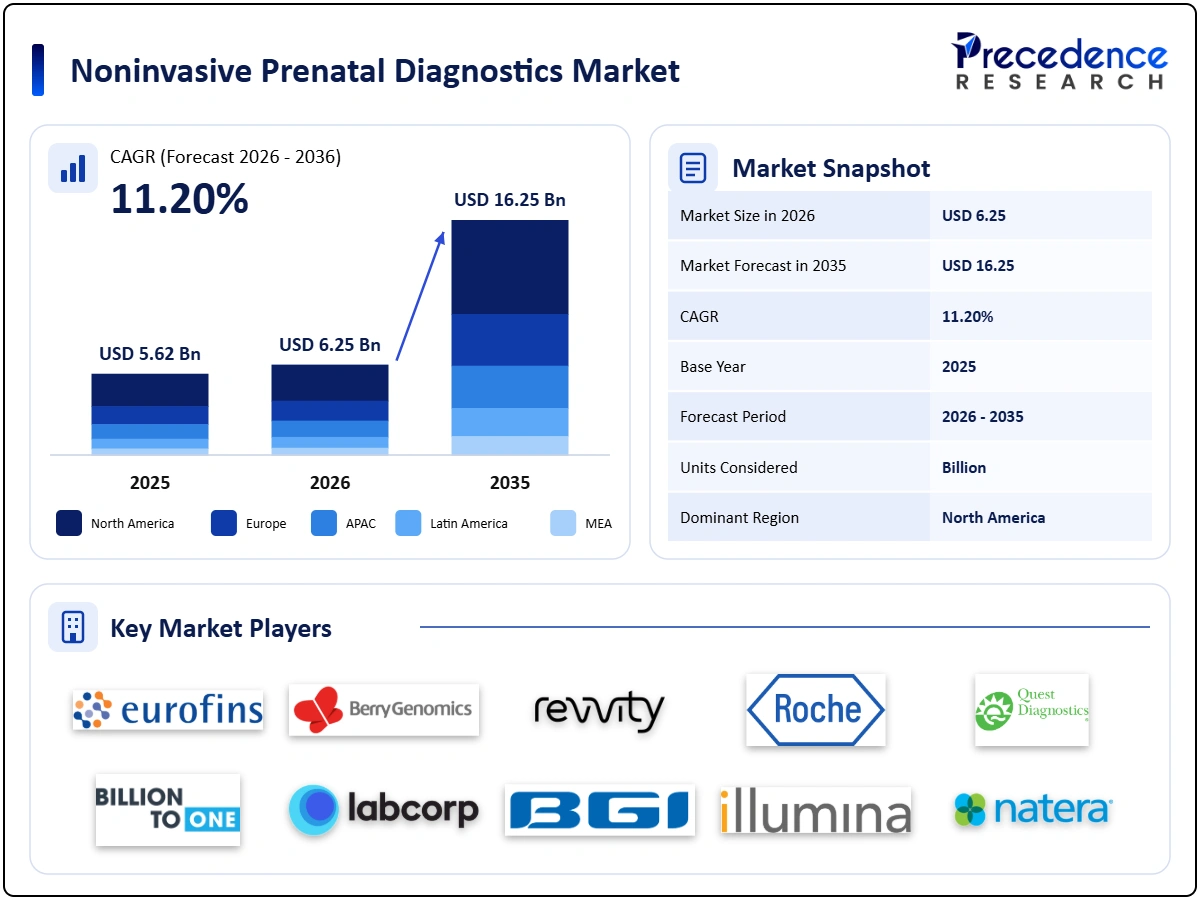
The noninvasive prenatal diagnostics market is forecasted to expand from USD 6.25 billion in 2026 to USD 16.25 billion by 2035, growing at a CAGR of 11.20% from 2026 to 2035.
Key Takeaways
Market Outlook Highlights
- The market was valued at USD 5.62 billion in 2025
- Market value is estimated to reach USD 6.25 billion in 2026
- Projected market size by 2035: USD 16.25 billion
- CAGR (2026-2035): 11.20%
Regional Market Highlights
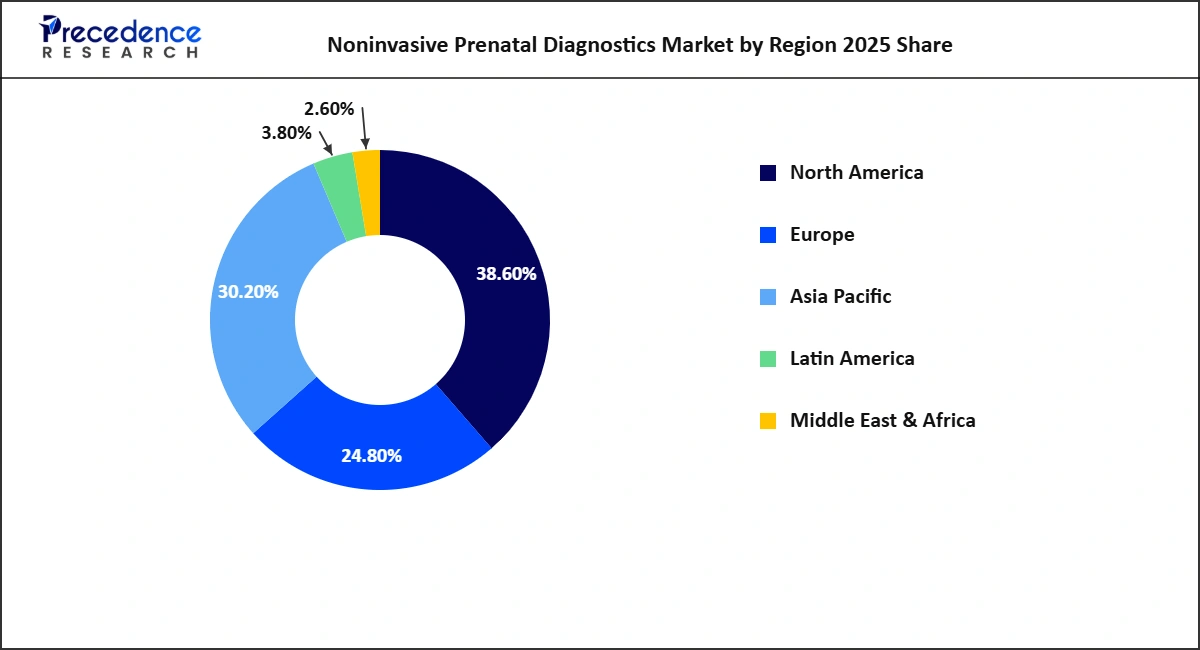
- North America led the market with a 38.60% share and reached USD 2.17 billion in 2025.
- Asia Pacific accounts for 30.20% (USD 1.70 billion) of the market share in 2025 and is projected to be the fastest-growing region, at a CAGR of 12.58% from 2026 to 2035.
- The Europe region is registered at 24.80% share and valued at USD 1.39 billion in 2025.
Segmental Spotlight
- By offering, the Services segment accounted for 72.80% share (USD 4.09 billion) in 2025.
- By technology, Next-Generation Sequencing accounted for 68.40% of the market share and generated USD 3.84 billion in revenue in 2025.
- By application, the Trisomy Screening segment captured 54.60% and was valued at USD 3.07 billion in 2025.
- By end user, Diagnostic Laboratories held 58.40% of the market share and reached USD 3.28 billion in 2025.
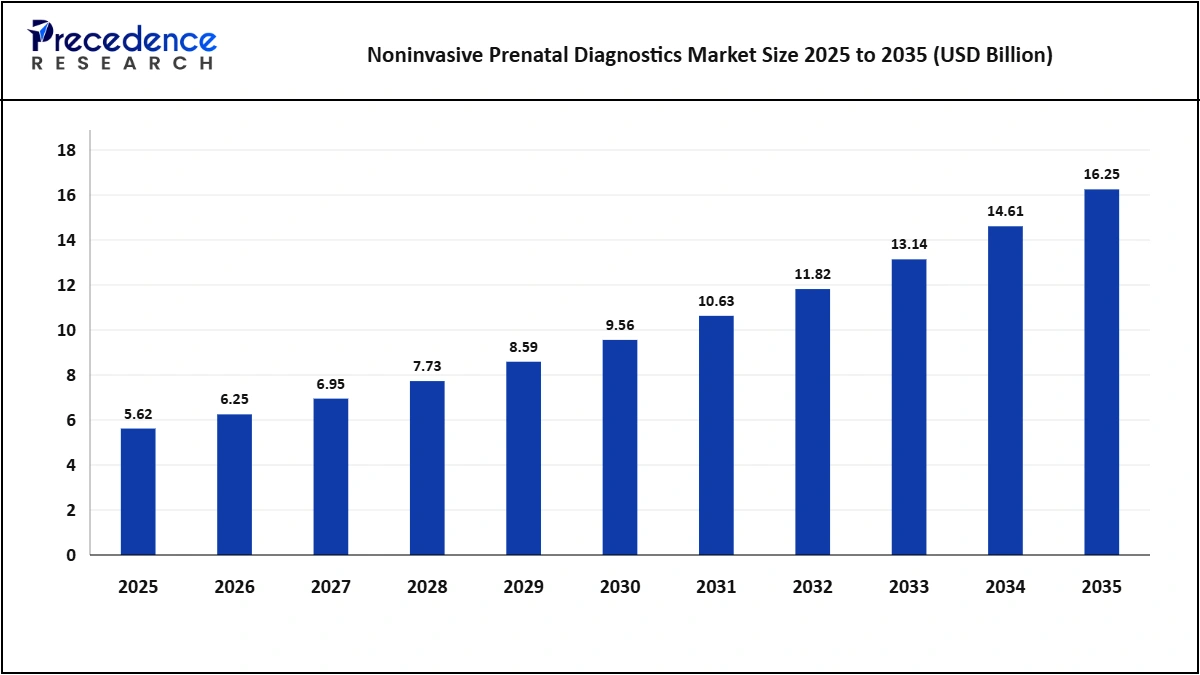
Noninvasive Prenatal Diagnostics Market Size and Forecast, 2025-2035 (USD Billion)
Note: 2025 is the base year; 2026-2035 values are forecasts.
Sources: Expert interviews, secondary sources, Precedence Research database, and Precedence Research analysts.
The noninvasive prenatal diagnostics market is projected to grow from USD 5.62 billion in 2025 to USD 16.25 billion by 2035 because expectant parents and clinicians use cell-free DNA tests to screen for chromosomal conditions early in pregnancy with a simple blood draw and fewer invasive procedures. Public health systems adding the test to funded prenatal care will increase volumes, lifting the market to USD 9.56 billion by 2030 and sustaining a CAGR of 11.20% from 2026 to 2035.
- Analyst View: The noninvasive prenatal diagnostics market is poised for strong growth, driven by rising demand for early chromosomal screening, growing preference for safer prenatal testing, and expanding public healthcare coverage. Uptake reflects professional guidance, public program coverage and private payment, and prices differ sharply between North America, Europe, and Asia Pacific. Advancements in cell-free DNA testing and broader integration into routine prenatal care are expected to support market expansion.
Market Trends
- Screening shifts to all pregnancies regardless of risk.
- Public programs replace combined screening with NIPT.
- Single-gene and fetal RhD screening are added.
- Hospitals bring testing in-house with kit systems.
- Deeper sequencing improves accuracy and lowers failure rates.
Market Dynamics
Driver
Professional guidance now supports offering cell-free DNA screening to all pregnant patients, not only those at high risk. Cell-free DNA tests detect common trisomies more accurately than conventional serum screening and reduce invasive procedures. Rising maternal age increases the risk of chromosomal conditions and demand for screening. Public health systems are adding the test to funded prenatal care. Falling sequencing costs allow broader panels to be at lower prices.
Restraint
Test prices are falling under payer pressure and competition, especially in the Asia Pacific region. Coverage for microdeletion and expanded panels remains limited. Positive predictive values for rare conditions can be low, requiring confirmation and counselling. Ethical and regulatory concerns about expanded screening vary by country. Low birth rates in many developed countries limit volume growth.
Opportunity
Single-gene and expanded screening can raise the value per test. First-line public screening programs in Europe and Asia Pacific can greatly increase volumes. Hospital-based kit testing opens markets for platform suppliers. Integration with carrier screening and other prenatal tests creates bundled offerings. Growing awareness in emerging markets offers expansion.
Segment Analysis: 2025 Share and Value
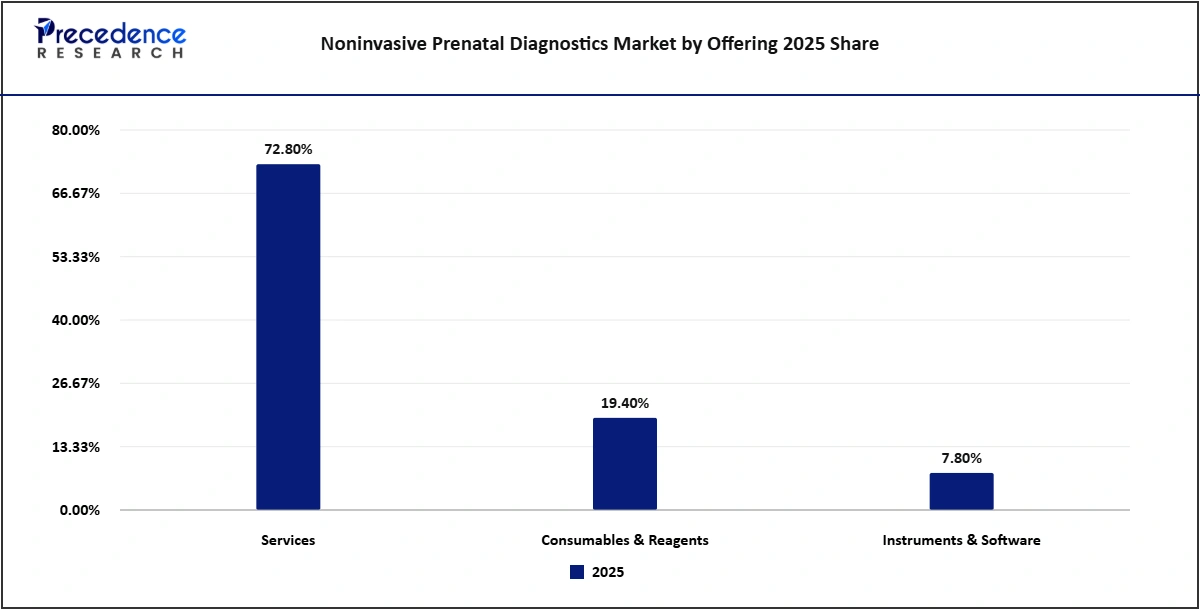
Noninvasive Prenatal Diagnostics Market by Offering 2025 Share
Note: 2025 is the base year.
Sources: Expert interviews, secondary sources, Precedence Research database, and Precedence Research analysts.
By offering, the services segment accounted for 72.80% share and was valued at USD 4.09 billion in 2025 because most cell-free DNA screening is performed by centralized commercial and hospital laboratories that charge per test, including sample processing, sequencing, bioinformatic analysis, and genetic counselling support. Large laboratories in North America, Europe, and China run extremely high test volumes. Consumables & reagents, at 19.40% of the market share (USD 1.09 billion), are used by laboratories running in-house tests on sequencing and PCR platforms. Instruments & software are held at 7.80% share, and valued at USD 0.44 billion in 2025.
Noninvasive Prenatal Diagnostics Market by Technology 2025 Share & Size
| Segments | 2025 Share | 2025 Market Value |
| Next-Generation Sequencing | 68.40% | USD 3.84 billion |
| Microarray | 9.20% | USD 0.52 billion |
| PCR & Others | 22.40% | USD 1.26 billion |
Note: 2025 is the base year.
Sources: Expert interviews, secondary sources, Precedence Research database, and Precedence Research analysts.
Next-generation sequencing held the largest share of 68.40% (USD 3.84 billion) in 2025 because whole-genome and targeted sequencing methods offer high accuracy for trisomies and can extend to microdeletions and genome-wide analysis. Sequencing is also the fastest-growing technology as falling costs support expanded panels and single-gene testing. PCR and other segments, including SNP-based and rolling circle approaches, account for 22.40% (USD 1.26 billion), and microarray methods account for 9.20% share (USD 0.52 billion) in 2025.
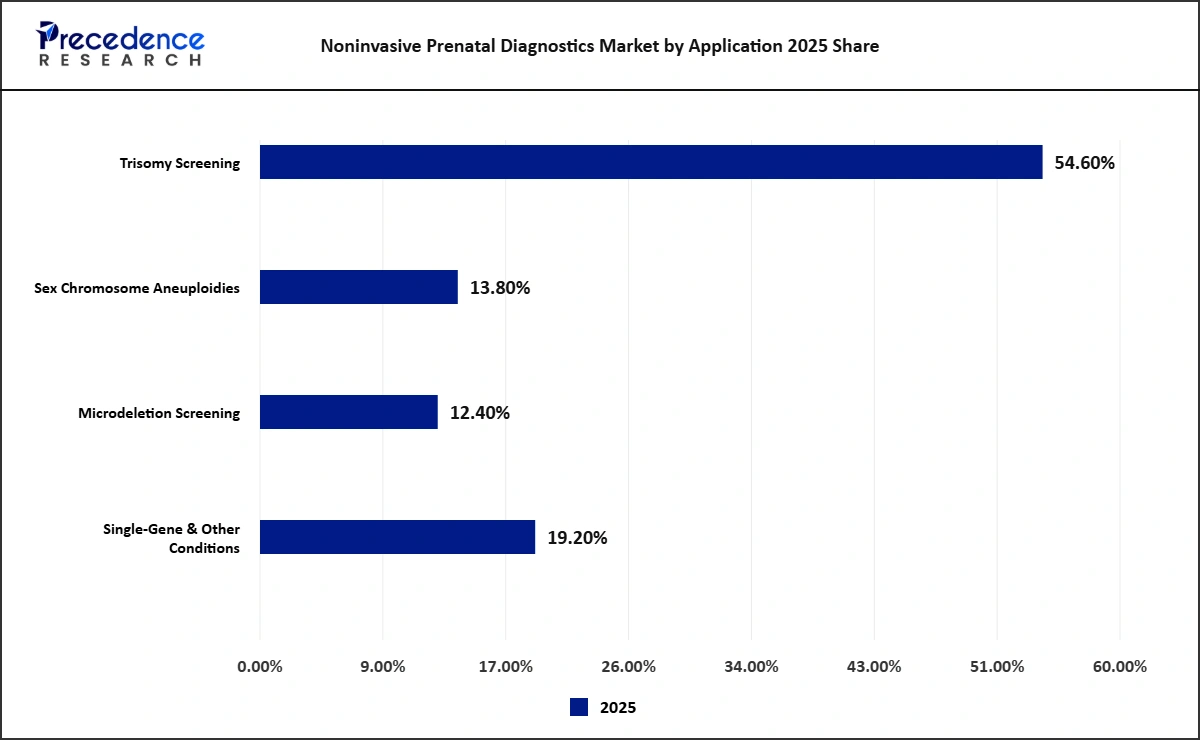
Noninvasive Prenatal Diagnostics Market by Application 2025 Share
Note: 2025 is the base year.
Sources: Expert interviews, secondary sources, Precedence Research database, and Precedence Research analysts.
Trisomy screening for Down, Edwards, and Patau syndromes accounted for 54.60% share and reached USD 3.07 billion in 2025 because it is the core test offered in all programs. Sex chromosome aneuploidies held 13.80% of the market share and generated USD 0.78 billion in 2025, and microdeletion screening captured 12.40% (USD 0.70 billion) share in 2025. Single-gene & other conditions, at 19.20% share (USD 1.08 billion), are the fastest-growing application as laboratories add screening for recessive and de novo single-gene disorders.
Noninvasive Prenatal Diagnostics Market by End User 2025 Share & Size
| Segments | 2025 Share | 2025 Market Value |
| Diagnostic Laboratories | 58.40% | USD 3.28 billion |
| Hospitals | 30.20% | USD 1.70 billion |
| Others | 11.40% | USD 0.64 billion |
Note: 2025 is the base year.
Sources: Expert interviews, secondary sources, Precedence Research database, and Precedence Research analysts.
By end user, the diagnostic laboratories segment held 58.40% share and was valued at USD 3.28 billion in 2025 because commercial laboratories process most tests ordered by obstetricians. Hospitals, at 30.20% (USD 1.70 billion), are the fastest-growing end user as public systems bring testing into hospital laboratories, and others, including clinics and research centers, account for 11.40% share (USD 0.64 billion) in 2025.
- Analyst View: The market is estimated to increase demand for early and accurate prenatal screening. The services segment is the leading offering segment due to the high volume of tests processed by diagnostic laboratories, while next-generation sequencing dominates the technology segment because of its accuracy and ability to detect multiple chromosomal conditions. Growing adoption of single-gene screening, improvements in testing technology, and wider access to prenatal care are estimated to create opportunities for market expansion.
Regional Analysis
Noninvasive Prenatal Diagnostics Market by Region 2025 Share
Note: 2025 is the base year.
Sources: Expert interviews, secondary sources, Precedence Research database, and Precedence Research analysts.
North America region captured 38.60% share and generated USD 2.17 billion in 2025, supported by guidance recommending that cell-free DNA screening be offered to all pregnant patients, broad payer coverage, and large commercial laboratories. Asia Pacific, at 30.20% share, reached USD 1.70 billion in 2025 and is the fastest-growing region, supported by high test volumes in China, expanding public funding and growing adoption in India, Japan, and Southeast Asia. Europe held 24.80% of the market share and was valued at USD 1.39 billion, supported by countries adding cell-free DNA screening to funded prenatal care, either as a first-line test or after combined screening. Latin America, at 3.80% share (USD 0.21 billion), and the Middle East and Africa, at 2.60% share (USD 0.15 billion), are smaller markets where testing is mostly privately paid.
North America registered for 38.60% share (USD 2.17 billion) in 2025. Professional guidance supports offering cell-free DNA screening to all pregnant patients regardless of risk. Commercial laboratories such as Natera, Labcorp, Quest, and BillionToOne run most tests.
Europe region held 24.80% share and reached USD 1.39 billion in 2025. Several countries fund cell-free DNA screening, and some regions are replacing combined screening with first-line NIPT, such as Western Uusimaa in Finland. Hospital laboratories increasingly run tests in-house.
Asia Pacific is the fastest-growing region with 30.20% share and valued at USD 1.70 billion in 2025. China performs a huge number of tests through domestic sequencing companies at low prices. Public funding is expanding in several provinces and countries.
Latin America accounted for 3.80% (USD 0.21 billion) in 2025. Testing is mostly paid privately in Brazil, Mexico, and Argentina. Laboratory partnerships with international providers support access.
The Middle East & Africa held 2.60% of the market share and reached USD 0.15 billion in 2025. Gulf countries lead with private and public hospital testing. Adoption elsewhere is limited by cost.
Analyst View: Regional shares were built from births, screening uptake, and average test prices in each region. North America leads the noninvasive prenatal diagnostics market on value because of high prices and broad coverage, while Asia Pacific has the largest volumes. We project Asia Pacific is the highest-growth premium because public funding and uptake are expanding fastest in this region. Europe continues to benefit from the integration of NIPT into publicly funded prenatal care. Meanwhile, Latin America and the Middle East & Africa offer growth opportunities as healthcare infrastructure improves and testing becomes more accessible, although affordability remains a key challenge.
Top 10 Players in the Noninvasive Prenatal Diagnostics Market
| Rank | Company Name | Market-Specific Revenue (USD Billion) | 2025 Share | Key Products / Business | Headquarters |
| 1 | Natera | 1.12 | 19.93% | Panorama NIPT and Empower screening | United States |
| 2 | Illumina | 0.42 | 7.47% | VeriSeq NIPT solution and sequencing systems | United States |
| 3 | BGI Genomics | 0.38 | 6.76% | NIFTY prenatal tests | China |
| 4 | Labcorp | 0.36 | 6.41% | MaterniT21 PLUS and related prenatal screening | United States |
| 5 | BillionToOne | 0.32 | 5.69% | UNITY single-gene and aneuploidy prenatal screening | United States |
| 6 | Quest Diagnostics | 0.22 | 3.91% | QNatal Advanced prenatal screening | United States |
| 7 | Roche | 0.18 | 3.20% | Harmony prenatal test | Switzerland |
| 8 | Revvity | 0.12 | 2.14% | Vanadis NIPT system and prenatal screening | United States |
| 9 | Berry Genomics | 0.10 | 1.78% | Prenatal sequencing tests | China |
| 10 | Eurofins | 0.08 | 1.42% | PrenaTest and laboratory services | Luxembourg |
Note: Company revenues and shares are 2025 estimates.
Sources: Company press releases, expert interviews, secondary sources, Precedence Research database, and Precedence Research analysts.
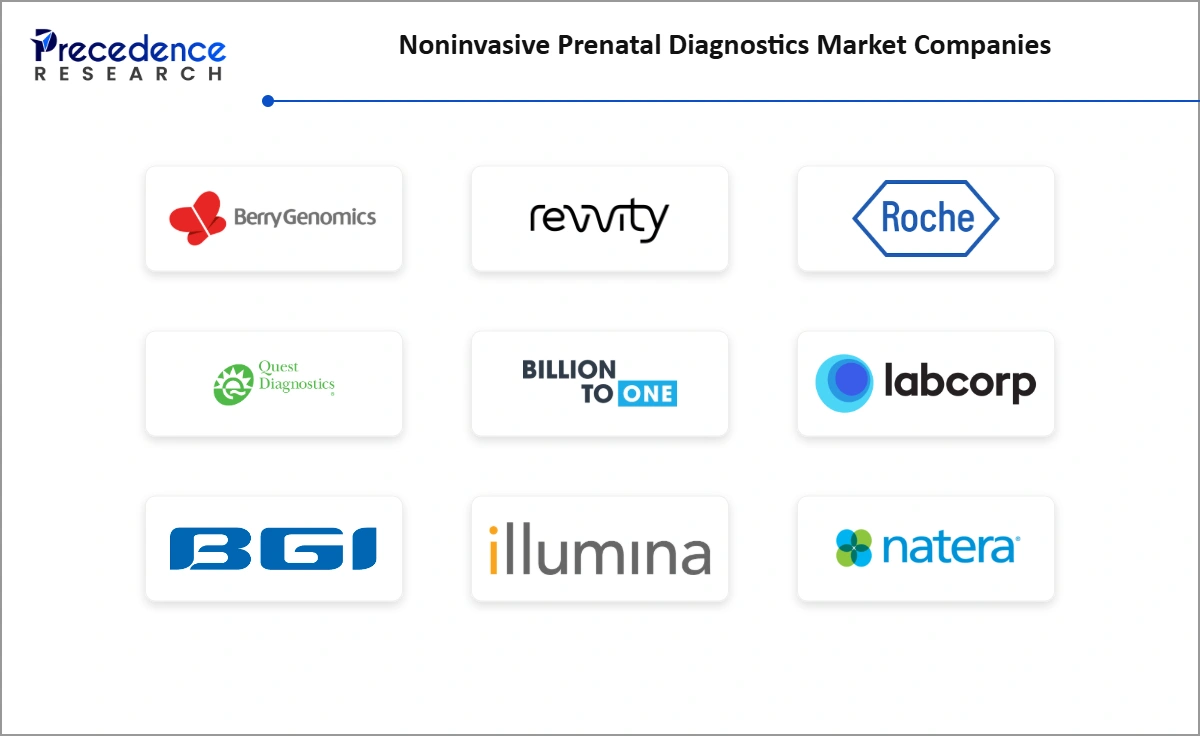
Natera led the noninvasive prenatal diagnostics market with 19.93% share and reached USD 1.12 billion in 2025 revenue, followed by Illumina at 7.47% (USD 0.42 billion) and BGI Genomics at 6.76% (USD 0.38 billion). Natera leads because its SNP-based Panorama test is one of the most widely ordered prenatal screens in the U.S., supported by a large sales force, broad payer contracts, and a portfolio that includes carrier screening. Natera announced an enhanced Panorama based on SNP-informed deep sequencing. Illumina supplies sequencing systems and its VeriSeq NIPT solution to laboratories worldwide, while BGI Genomics runs large NIFTY test volumes in China and international markets. Labcorp, Quest Diagnostics, and BillionToOne are major U.S. testing laboratories, with BillionToOne growing quickly through its UNITY test, which adds single-gene screening, and Roche Diagnostics, Revvity, Berry Genomics, and Eurofins compete through tests, kits, and platforms.
The top 10 companies held 58.71% share (USD 3.30 billion) of 2025 revenue, while the remaining 41.29% (USD 2.32 billion) was shared among regional laboratories, hospital laboratories running in-house tests, and kit suppliers. The noninvasive prenatal diagnostics market is moderately concentrated, and competition centers on accuracy, low test failure rates, panel breadth, turnaround time, payer coverage, and price. Patent disputes have shaped the competitive landscape, and laboratories are differentiating through single-gene screening, fetal RhD testing, and integrated carrier screening.
Recent Developments
- January 2026: Russia added noninvasive prenatal testing to its state-guaranteed free medical care program, allowing pregnant women with a medium or high risk of fetal chromosomal abnormalities based on first-trimester screening to access the test through mandatory health insurance.
- February 2026: The Western Uusimaa Wellbeing Services County in Finland announced it would offer noninvasive prenatal testing in place of combined screening to suitable expectant parents from February 16, 2026.
- May 2026: Natera announced plans to launch an enhanced Panorama noninvasive prenatal testing incorporating SNP-informed deep sequencing technology to improve screening performance in samples with low fetal DNA fractions.
Noninvasive Prenatal Diagnostics Market Segments
By Offering
- Services
- Consumables & Reagents
- Instruments & Software
By Technology
- Next-Generation Sequencing
- Microarray
- PCR & Others
By Application
- Trisomy Screening
- Sex Chromosome Aneuploidies
- Microdeletion Screening
- Single-Gene & Other Conditions
By End User
- Diagnostic Laboratories
- Hospitals
- Others
By Region
- North America (U.S., Canada, Mexico)
- Europe (Germany, U.K., France, Italy, Spain, Rest of Europe)
- Asia Pacific (China, Japan, India, South Korea, Taiwan, Rest of Asia Pacific)
- Latin America (Brazil, Argentina, Rest of Latin America)
- Middle East & Africa (GCC, South Africa, Rest of MEA)
Research Methodology
The global noninvasive prenatal diagnostics market was defined as cell-free DNA prenatal screening tests, kits, instruments, software, and laboratory services. The 2025 base year was built bottom-up from births by region, cell-free DNA screening uptake and average test prices, plus laboratory product sales, and checked top-down against the prenatal testing revenue of leading laboratories and platform suppliers. Segment, regional, and company values were allocated from offerings, technologies, applications, end users, and regional demand. Key estimates were verified by cross-checking company disclosures, regulatory and industry data and published third-party estimates, and inputs that could not be reconciled were excluded. All segment, regional, and company figures were reconciled to the same 2025 base year, and the 2026-2035 forecast, which applies a constant CAGR from the 2025 base, was recalculated and validated.
Analyst View: Overall Market
The global noninvasive prenatal diagnostics market is expected to grow steadily, driven by increasing demand for early detection of chromosomal abnormalities, advancements in cell-free DNA testing, and wider integration of NIPT into routine prenatal care. North America leads the market while Asia Pacific is growing fastest due to rising testing volumes and improving healthcare access. The noninvasive prenatal diagnostics market is maturing in high-income countries while volumes grow in Asia Pacific and public programs. Our estimate links demand to births, screening uptake and prices, so the forecast follows guidance, public funding and price trends. The main upside comes from average-risk uptake and expanded panels, while the main risks are price erosion and declining birth rates.
Sources and References
- Non-invasive prenatal testing has been included in the compulsory medical insurance program. (Source: interfax.ru)
- Western Uusimaa Wellbeing Services County. "Western Uusimaa will offer NIPT screening to expectant parents". 2026-02-12. Finland NIPT program. (Source: luvn.fi)
- Natera. "Natera to Launch Enhanced Panorama NIPT Powered by Novel SNP-Informed Deep Sequencing Technology". 2026-05-26. Natera Panorama announcement. (Source: natera.com)
For inquiries regarding discounts, bulk purchases, or customization requests, please contact us at sales@precedenceresearch.com
Frequently Asked Questions





Ask For Sample
No cookie-cutter, only authentic analysis – take the 1st step to become a Precedence Research client
 Get a Sample




 sales@precedenceresearch.com
 Schedule a Meeting