



PARP Inhibitor Biomarkers Market Size, Key Companies, Company Market Share, Patient Volume, Treatment Adoption Rates, Pricing Analysis, Regulatory Landscape, Competitive Positioning, and Demand Forecast
Payal Rabde, a Healthcare Industry Expert, highlights that the PARP inhibitor biomarkers market has reached USD 1.06 billion in 2026 to USD 2.56 billion by 2035, growing at a CAGR of 9.20%. Key PARP inhibitor biomarkers market companies shaping the market include Illumina, Myriad Genetics, Foundation Medicine, while major growth segments span Product, Biomarker test, technology, application, end use, region.
Source: https://www.precedenceresearch.com/parp-inhibitor-biomarkers-market
 Get a Sample
 Report Description


PARP Inhibitor Biomarkers Market Growth, Innovations, and Market Size Forecast 2035
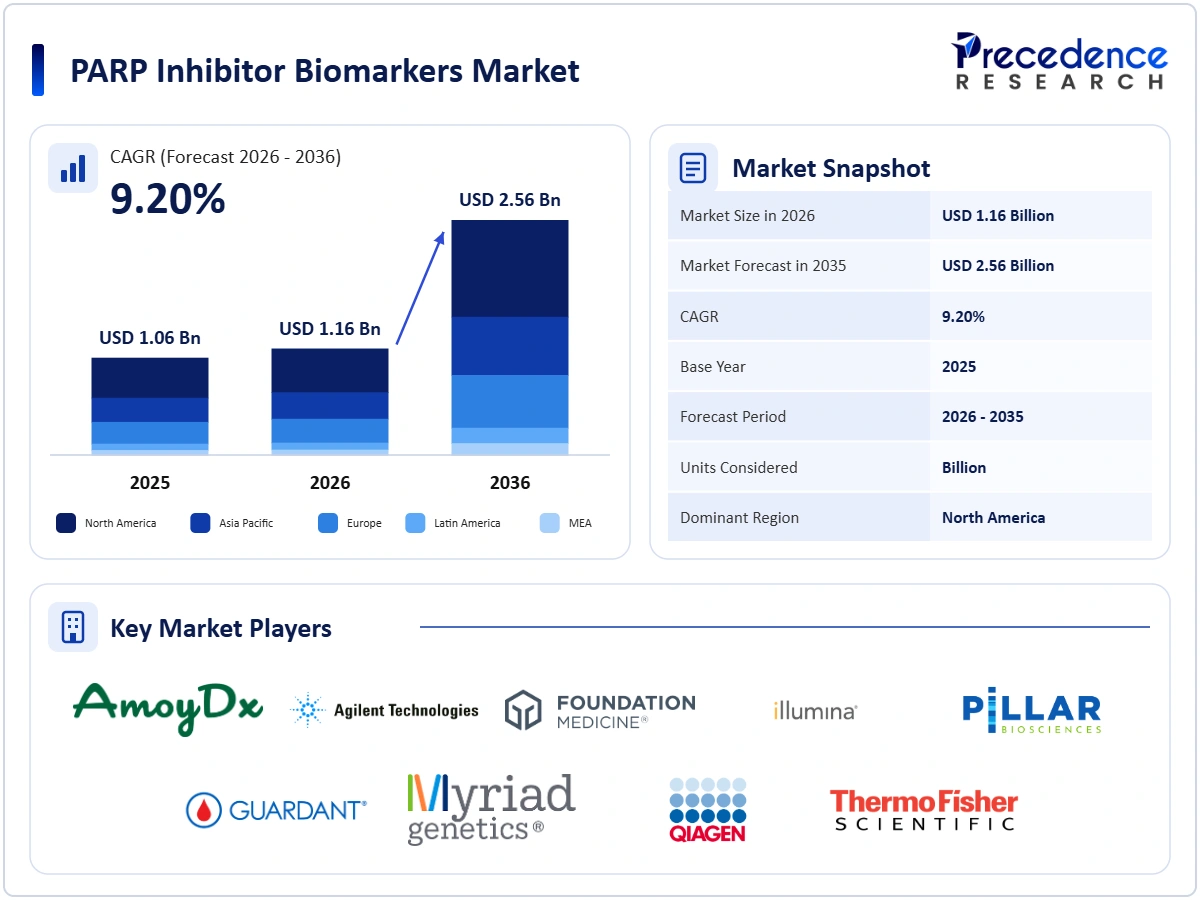
The PARP inhibitor biomarkers market is forecasted to expand from USD 1.16 billion in 2026 to USD 2.56 billion by 2035, growing at a CAGR of 9.20% from 2026 to 2035.
Key Takeaways
Market Size & Growth Outlook
- Market size in 2025: USD 1.06 billion
- Estimated market size in 2026: USD 1.16 billion
- Projected market size by 2035: USD 2.56 billion
- CAGR (2026-2035): 9.2%
Regional Market Spotlight
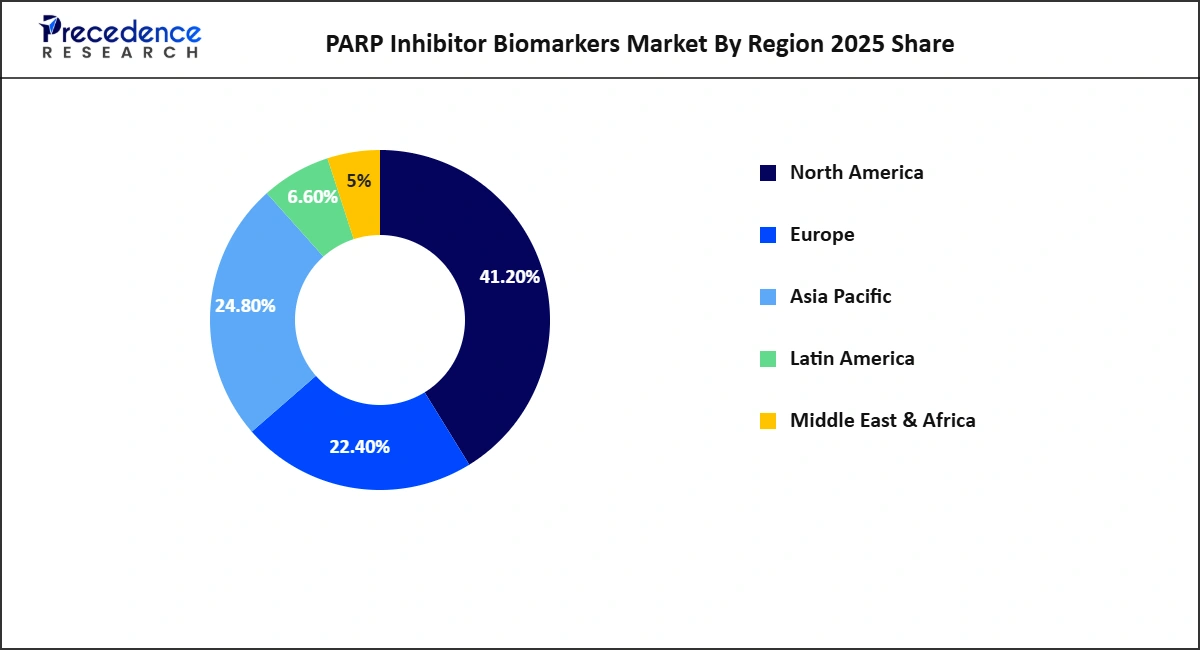
- North America accounted for 41.2% of the market, valued at USD 0.44 billion in 2025.
- In 2025, Asia Pacific garnered 24.8% of the market, valued at USD 0.26 billion. From 2025 to 2035, the region is projected to report a CAGR of 10.27%, making Asia Pacific the fastest-growing region.
- Europe is valued at USD 0.24 billion, representing 22.4% of the market in 2025.
Segmental Spotlight
- By product, kits accounted for 61.8%, valued at USD 0.66 billion in 2025.
- By biomarker test, BRCA1 & BRCA2 testing, valued at USD 0.43 billion, accounted for 40.6% in 2025.
- Based on technology, next-generation sequencing accounted for 54.2%, valued at USD 0.57 billion in 2025.
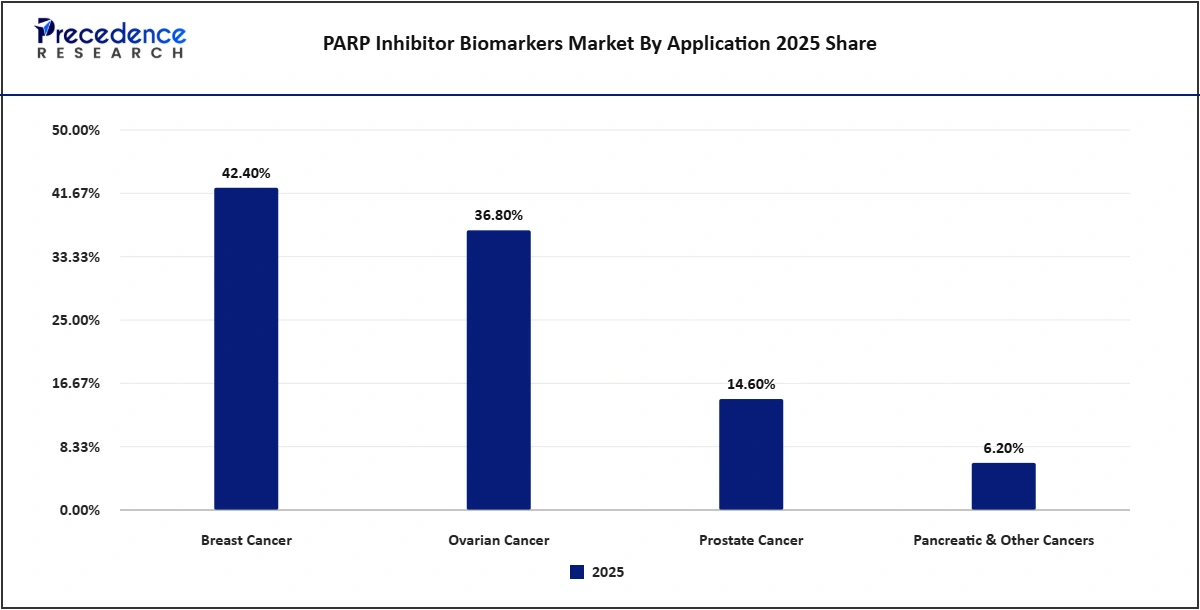
- By application, breast cancer accounted for 42.4% in 2025.
- By end use, Hospitals & Clinics accounted for 42.2% (USD 0.45 billion) in 2025.
PARP Inhibitor Biomarkers Market Size and Forecast, 2025-2035 (USD Billion)
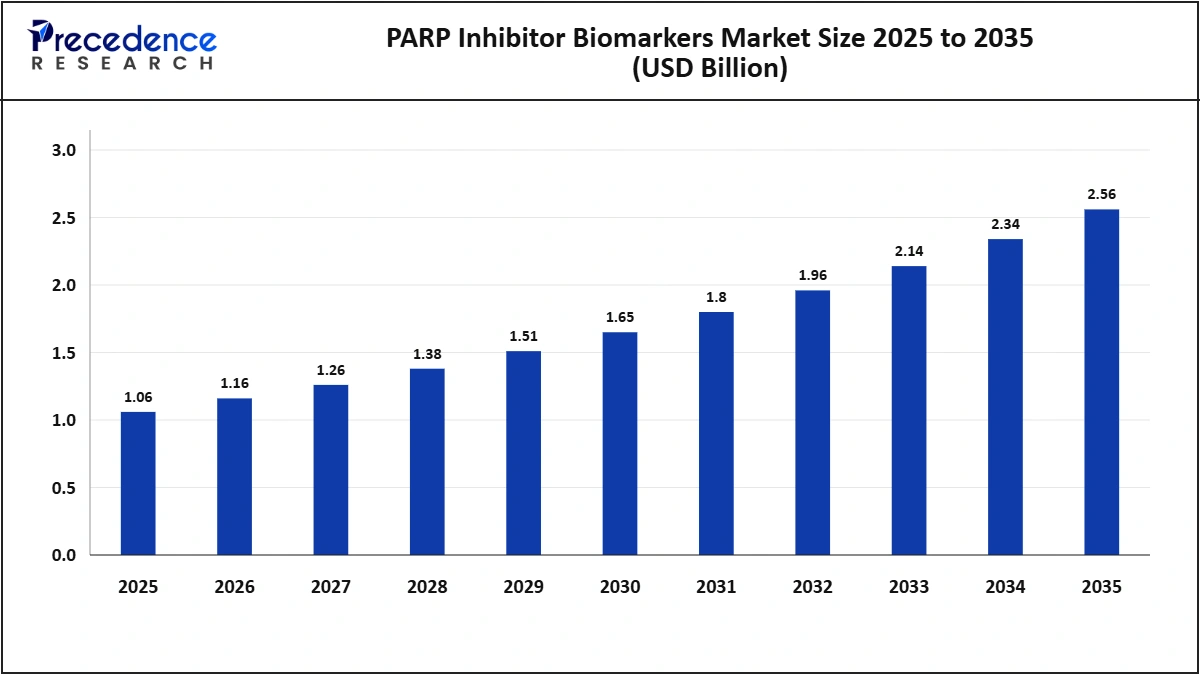
Note: 2025 is the base year; 2026-2035 values are forecasts.
Sources: Expert interviews, secondary sources, Precedence Research database and Precedence Research analysts.
The PARP inhibitor biomarkers market is projected to grow from USD 1.06 billion in 2025 to USD 2.56 billion by 2035 because of mandatory confirmation of BRCA, HRD, or HRR status before prescription of PARP inhibitors. Every eligible patient needs at least one biomarker test. Broader PARP inhibitor use across additional cancer types is expected to expand testing volumes, driving the market to USD 1.65 billion by 2030 and supporting a 9.2% CAGR from 2026 to 2035.
- Analyst View: Market growth is driven by expanding PARP inhibitor indications, increasing BRCA and HRD testing, and broader adoption of companion diagnostics. The market estimate incorporates testing volumes, average test prices, and leading providers' revenues. Growth is expected to continue as biomarker-guided treatment expands, while reimbursement limitations, uneven testing access, and sequencing price competition may moderate the projected 9.2% CAGR.
Market Trends
- HRD testing is extending beyond BRCA for ovarian cancer.
- Liquid biopsy facilitates testing in cases with limited tissue availability.
- Germline and/or somatic testing for relevant DNA-repair gene alterations is recommended in appropriate prostate cancer settings.
- There is a combination of germline and tumor testing.
- Generic olaparib may increase accessibility to treatment.
- Academic HRD assays are competing with commercial testing options.
Drivers, Restraints, and Opportunities
Driver
Growing demand for PARP inhibitor biomarker testing is driven by the increasing use of BRCA1/BRCA2 and HRD testing to identify patients who may benefit from PARP inhibitor therapies. Expanding testing recommendations across cancer types and wider adoption of next-generation sequencing are increasing demand for diagnostic kits, reagents, and testing services, supporting the growth of the PARP inhibitor biomarkers market.
Restraint
Variations in HRD testing methods and thresholds complicate result interpretation and wider adoption. Inconsistent reimbursement policies, inadequate tissue samples, and uncertainty about treatment benefits in certain patient groups may limit testing demand. Additionally, price competition among sequencing providers can reduce revenue per test, restraining growth in the PARP inhibitor biomarkers market.
Opportunity
Expanding PARP inhibitor indications, including PARP1-selective therapies and combination treatments, may increase demand for new and established biomarkers. Liquid biopsy offers testing alternatives when tissue samples are unavailable, while generic therapies could improve access in emerging markets. Standardized HRD assays also present opportunities to expand diagnostic kit adoption across hospital laboratories.
PARP Inhibitor Biomarkers Market Segmentation: 2025 Share and Value
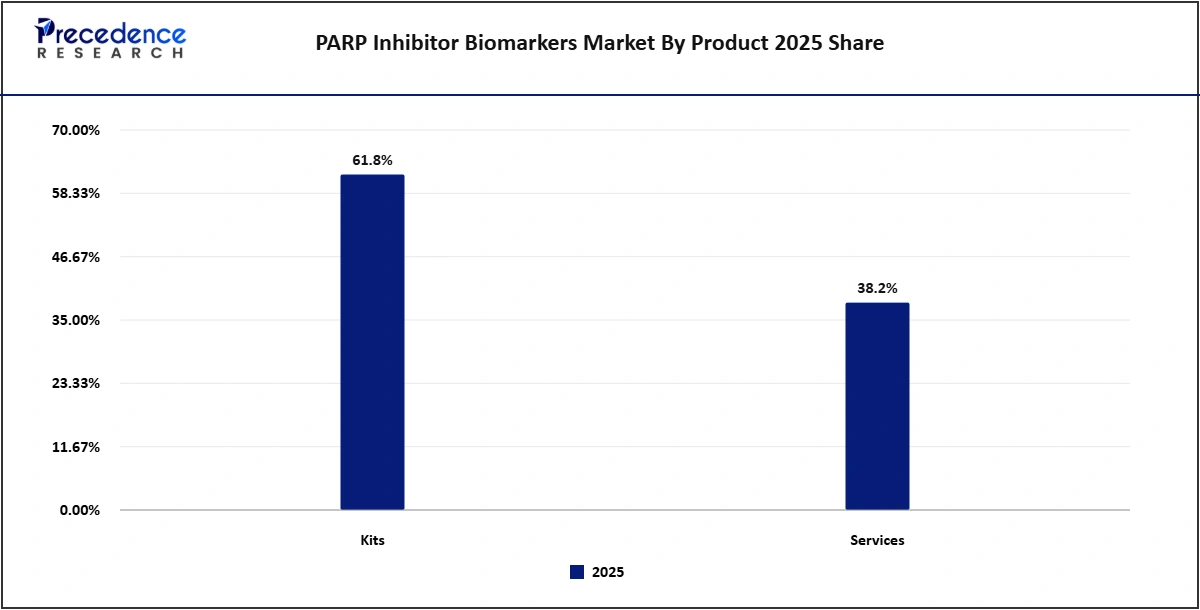
PARP Inhibitor Biomarkers Market By Product 2025 Share & Size
Note: 2025 is the base year.
Sources: Expert interviews, secondary sources, Precedence Research database and Precedence Research analysts.
Kits accounted for an estimated USD 0.66 billion in 2025, accounting for 61.8% of the market. Hospital and reference laboratories are using companion diagnostic and research-use kits for sequencing and PCR testing, which is strengthening the segmental growth. On the other hand, services were estimated at USD 0.40 billion, equivalent to 38.2%, and are identified as the faster-growing product due to the centralization of complex tests, such as genomic instability scoring for HRD, in FDA-approved specialist laboratories.
PARP Inhibitor Biomarkers Market by Biomarker Test 2025 Share & Size
| Segments | 2025 Share | 2025 Market Value |
| BRCA1 & BRCA2 Testing | 40.6% | USD 0.43 billion |
| HRD Testing | 29.2% | USD 0.31 billion |
| HRR Gene Panel Testing | 21.4% | USD 0.23 billion |
| Others | 8.8% | USD 0.09 billion |
Note: 2025 is the base year.
Sources: Expert interviews, secondary sources, Precedence Research database and Precedence Research analysts.
BRCA1 and BRCA2 testing represented 40.6% of the market, with an estimated USD 0.43 billion in 2025, owing to its pivotal role as the eligibility criterion for PARP inhibitors in various cancers, including breast, ovarian, prostate, and pancreatic. Germline testing is widely recommended for numerous patients and families. HRD testing, marking a significant 29.2% (USD 0.31 billion) of the market, is currently the fastest-growing test. It targets patients lacking BRCA mutations who could still gain benefits from PARP inhibitors, particularly in ovarian cancer. HRR gene panel testing constitutes 21.4% (USD 0.23 billion) and is predominantly used in prostate cancer, while other biomarkers account for 8.8%, valued at USD 0.09 billion.
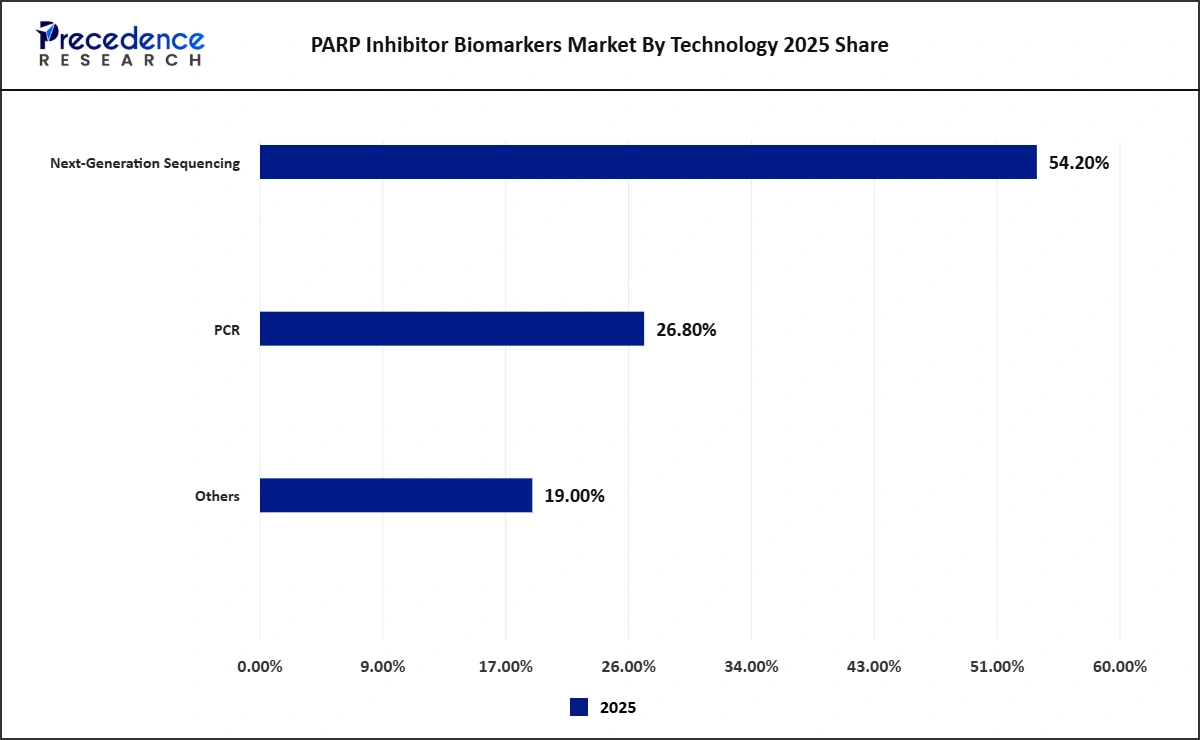
PARP Inhibitor Biomarkers Market By Technology 2025 Share & Size
Note: 2025 is the base year.
Sources: Expert interviews, secondary sources, Precedence Research database and Precedence Research analysts.
In 2025, next-generation sequencing (NGS) led the market, accounting for 54.2% and an estimated USD 0.57 billion in revenue. This demand is driven by its ability to test multiple genetic markers such as BRCA and HRR genes through a single assay. In contrast, polymerase chain reaction (PCR) held 26.8% of the market with a revenue of USD 0.28 billion, mainly utilized for targeted mutation testing. Other sequencing methods collectively represent 19% of the market, contributing to USD 0.20 billion.
PARP Inhibitor Biomarkers Market By Application 2025 Share & Size
Note: 2025 is the base year.
Sources: Expert interviews, secondary sources, Precedence Research database and Precedence Research analysts.
In 2025, breast cancer held 42.4% of the market, valued at USD 0.45 billion, which was driven by a significant patient population and the prevalence of BRCA testing. Ovarian cancer follows with a market share of 36.8%, equivalent to USD 0.39 billion, which utilizes both BRCA and HRD testing.
Prostate cancer, accounting for 14.6% (USD 0.15 billion), is expected to be among the faster-growing applications due to the routine adoption of HRR testing in metastatic cases. Along with that, pancreatic cancer and other cancers together contribute 6.2% (USD 0.07 billion).
PARP Inhibitor Biomarkers Market By End Use 2025 Share & Size
| Segments | 2025 Share | 2025 Market Value |
| Hospitals & Clinics | 42.2% | USD 0.45 billion |
| Diagnostic Laboratories | 29.6% | USD 0.31 billion |
| Academic & Research Institutes | 18.2% | USD 0.19 billion |
| Others | 10% | USD 0.11 billion |
Note: 2025 is the base year.
Sources: Expert interviews, secondary sources, Precedence Research database and Precedence Research analysts.
On the basis of end use, in 2025, hospitals and clinics were estimated at USD 0.45 billion, equating to 42.2% of the market, while diagnostic laboratories comprised 29.6% of the market, valued at USD 0.31 billion, making them the fastest-growing segment due to the centralization of testing. Academic and research institutes represented 18.2%, estimated at USD 0.19 billion, and other entities contributed 10% of the market, with USD 0.11 billion.
- Analyst View: Our analysis indicates that BRCA testing remains pivotal as it determines eligibility for various approved indications, with expectations for HRD testing, sequencing, and prostate cancer to increase prevalence.
Regional Analysis
PARP Inhibitor Biomarkers Market By Region 2025 Share & Size
Note: 2025 is the base year.
Sources: Expert interviews, secondary sources, Precedence Research database and Precedence Research analysts.
In 2025, North America represented the largest share of the market at 41.2%, owing to FDA-approved companion diagnostics, guidelines endorsing germline testing for various cancers, and significant PARP inhibitor utilization. Asia Pacific accounted for 24.8% of the market in 2025 and is projected to be the fastest-growing region. This growth is attributed to large cancer populations in countries such as China and Japan, new approvals for PARP inhibitors, and a growing number of domestic sequencing test suppliers.
Europe held a 22.4% share of the market. The regional market benefits from national testing initiatives, HRD testing in ovarian cancer, and widespread PARP inhibitor use supported by public health systems. In contrast, Latin America, at 6.6%, and the Middle East and Africa, at 5%, are smaller markets where testing access is expanding through private laboratories and pharmaceutical access programs.
North America accounted for 41.2% of the market, equating to USD 0.44 billion in 2025. FDA-approved companion diagnostics such as Myriad's BRACAnalysis CDx and MyChoice CDx, along with Foundation Medicine's tests, determine eligibility for PARP inhibitors. Guidelines advocate for germline BRCA testing in patients suffering from breast, ovarian, prostate, and pancreatic cancers, which is further supported by high drug usage, justifying increased testing volumes.
Europe accounted for 22.4%, gaining USD 0.24 billion in revenue in 2025. National health systems support BRCA and HRD testing for qualifying patients, with academic labs creating proprietary HRD assays. Germany, France, and the UK represent the largest markets for these tests.
Asia Pacific represented 24.8% of the market in 2025, with a valuation of USD 0.26 billion, emerging as the fastest-growing region, with significant cancer populations in China and Japan. Multiple PARP inhibitors have been approved in these countries, and domestic companies like Amoy Diagnostics provide BRCA and HRD testing kits. Testing accessibility is also increasing throughout Southeast Asia and India.
Latin America accounted for 6.6% (USD 0.07 billion) in 2025. Private laboratories and pharmaceutical access programmes support BRCA testing in Brazil and Mexico. Still, public funding for testing is limited in the region.
The Middle East and Africa were valued at USD 0.05 billion, which makes up 5% of the market in 2025. Gulf countries lead due to high adoption through cancer centers. Elsewhere, testing access is limited by cost and laboratory capacity.
Analyst View: North America leads because of companion diagnostic use and higher prices. We assign Asia Pacific the highest growth premium because drug approvals and testing access are expanding fastest there.
Top 10 Companies in the PARP Inhibitor Biomarkers Market
| Rank | Company Name | Market-Specific Revenue (USD Billion) | 2025 Share | Key Products / Business | Headquarters |
| 1 | Illumina | 0.17 | 16.04% | TruSight Oncology panels and sequencing systems | United States |
| 2 | Myriad Genetics | 0.13 | 12.26% | BRACAnalysis CDx and MyChoice CDx | United States |
| 3 | Foundation Medicine | 0.11 | 10.38% | FoundationOne CDx and FoundationOne Liquid CDx | United States |
| 4 | Thermo Fisher Scientific | 0.08 | 7.55% | Oncomine panels and sequencing systems | United States |
| 5 | QIAGEN | 0.06 | 5.66% | BRCA and HRD testing solutions | Netherlands |
| 6 | Amoy Diagnostics | 0.04 | 3.77% | BRCA and HRD testing kits | China |
| 7 | Agilent Technologies | 0.03 | 2.83% | SureSelect target enrichment panels | United States |
| 8 | Ambry Genetics | 0.03 | 2.83% | Germline BRCA and HRR panels | United States |
| 9 | Pillar Biosciences | 0.02 | 1.89% | oncoReveal BRCA and HRR panels | United States |
| 10 | Guardant Health | 0.02 | 1.89% | Liquid biopsy genomic profiling | United States |
Note: Company revenues and shares are 2025 estimates.
Sources: Company press releases, expert interviews, secondary sources, Precedence Research database and Precedence Research analysts.
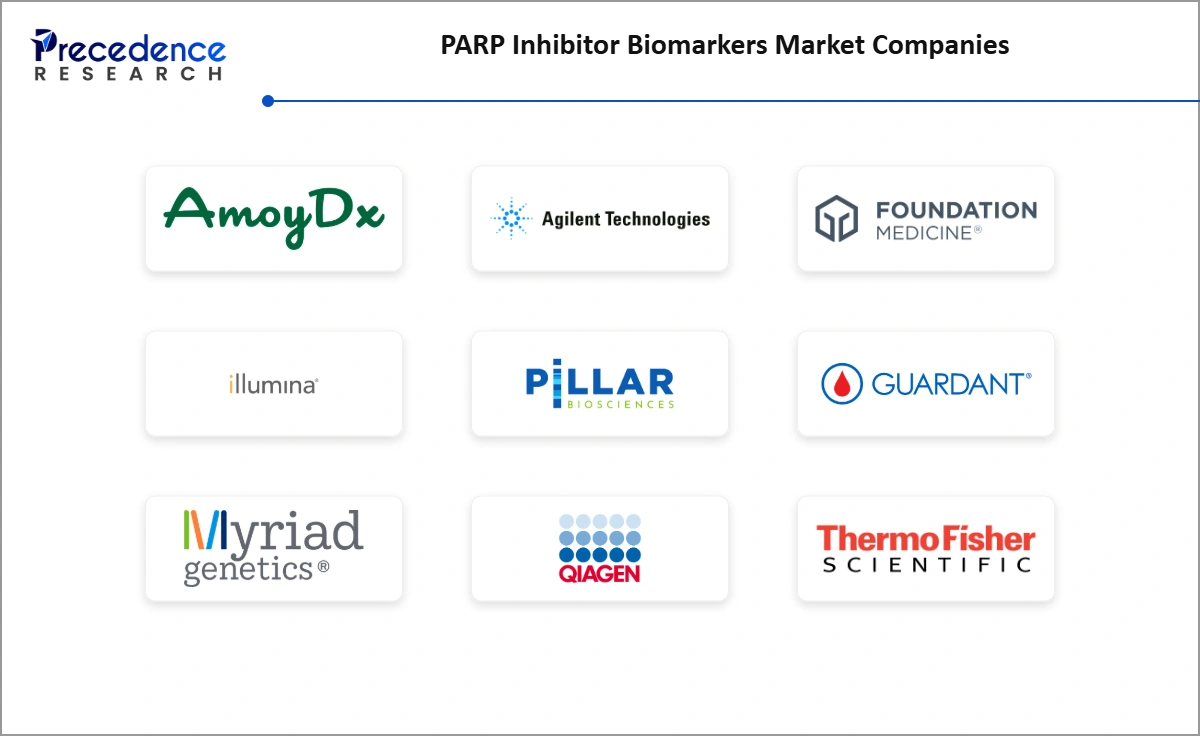
The top 10 companies held 65.10% of the PARP inhibitor biomarkers market in 2025, with the remaining 34.91% distributed among academic HRD assay developers, regional kit makers, and hospital laboratories.
Illumina dominated the global market with 16.04% of the 2025 revenue, attributed to its extensive BRCA, HRR, and HRD sequencing tests and comprehensive genomic profiling panels for cancer laboratories globally. Illumina ranked first, followed by Myriad Genetics and Foundation Medicine, which held 12.26% and 10.38%, respectively. Myriad offers FDA-approved companion diagnostics for PARP inhibitors, including BRACAnalysis CDx and MyChoice CDx, which support niraparib for HRD-positive ovarian cancer as of March 2026. Foundation Medicine also provides FDA-approved tests for olaparib in prostate and other cancers, while companies like Thermo Fisher, QIAGEN, and others supply various testing services and kits.
The market exhibits moderate concentration due to companion diagnostic approvals, which enhance leading suppliers' positions for specific drugs and indications. Key competitive factors include regulatory approvals, test accuracy, turnaround time, the capability to test tissue and blood, and the diversity of panels integrating PARP inhibitor biomarkers with other oncology targets.
Recent Developments
- March 2026: The FDA approved Myriad Genetics's MyChoice CDx test as a companion diagnostic to identify HRD-positive advanced ovarian cancer patients eligible for Zejula (niraparib) maintenance therapy.
- November 2025: Zydus Lifesciences received tentative approval from the USFDA for generic olaparib tablets in 100 mg and 150 mg strengths.
PARP Inhibitor Biomarkers Market Segments
By Product
- Kits
- Services
By Biomarker Test
- BRCA1 & BRCA2 Testing
- HRD Testing
- HRR Gene Panel Testing
- Others
By Technology
- Next-Generation Sequencing
- PCR
- Others
By Application
- Breast Cancer
- Ovarian Cancer
- Prostate Cancer
- Pancreatic & Other Cancers
By End Use
- Hospitals & Clinics
- Diagnostic Laboratories
- Academic & Research Institutes
- Others
By Region
- North America (U.S., Canada, Mexico)
- Europe (Germany, U.K., France, Italy, Spain, Rest of Europe)
- Asia Pacific (China, Japan, India, South Korea, Taiwan, Rest of Asia Pacific)
- Latin America (Brazil, Argentina, Rest of Latin America)
- Middle East & Africa (GCC, South Africa, Rest of MEA)
Research Methodology
The PARP inhibitor biomarkers market was defined as BRCA, HRD, HRR, and other biomarker kits and testing services used to select patients for PARP inhibitor therapy worldwide. The 2025 base year was built bottom-up from patients tested by cancer type and region, test mix and average test prices, plus kit sales. The bottom-up estimate was cross-checked using a top-down assessment of relevant oncology companion-diagnostic revenue. Segment, regional and company values were allocated from products, biomarkers, technologies, applications, end uses, and regional demand.
Key estimates were verified by cross-checking company disclosures, regulatory and industry data, and published third-party estimates, and inputs that could not be reconciled were excluded. All segment, regional, and company figures were reconciled to the same 2025 base year. 2026-2035 forecast, which applies a constant CAGR from the 2025 base, was recalculated and validated.
Analyst View: Overall Market
The PARP inhibitor biomarkers market is tied directly to PARP inhibitor use, and testing expands with each new indication and guideline change. Our estimate links demand to tested patients, test mix, and prices, so the forecast follows drug approvals, testing rates, and sequencing adoption. The main upside comes from HRD and prostate testing and new PARP inhibitors, while the main risks are mixed survival data and price competition.
Sources and References
- OncLive. "FDA Approves MyChoice CDx as Companion Diagnostic for Niraparib in Ovarian Cancer". 2026-03-18. MyChoice CDx approval. https://www.onclive.com/view/fda-approves-mychoice-cdx-companion-diagnostic-for-niraparib-in-ovarian-cancer
- Pearce IP. "Zydus receives tentative approval from FDA for olaparib tablets". 2025-11-07. Generic olaparib. https://www.pearceip.law/2025/11/07/zydus-receives-tentative-approval-from-fda-for-olaparib-tablets/
- OncLive. "FDA green lights companion diagnostics for olaparib plus abiraterone acetate in BRCA mCRPC". 2024-09-03. Prostate cancer companion diagnostics. https://onclive.com/view/fda-green-lights-companion-diagnostics-for-olaparib-plus-abiraterone-acetate-in-brca-mcrpc
For inquiries regarding discounts, bulk purchases, or customization requests, please contact us at sales@precedenceresearch.com
Frequently Asked Questions





Ask For Sample
No cookie-cutter, only authentic analysis – take the 1st step to become a Precedence Research client
 Get a Sample




 sales@precedenceresearch.com
 Schedule a Meeting
