



Primary Care POC Diagnostics Market Trends, Leading Companies, Company Revenue / Sales Performance, Procedure Volume, Healthcare Spending, Technology Adoption, Reimbursement Analysis, Competitive Landscape, and Growth Outlook
Payal Rabde, a Healthcare Industry Expert, highlights that the primary care POC diagnostics market has reached USD 20.38 billion in 2026 to USD 29.01 billion by 2035, growing at a CAGR of 4%. Key primary care POC diagnostics market companies shaping the market include Abbott, Roche Diagnostics, Siemens Healthineers, BD, while major growth segments span test type, product, technology, end user, region.
Source: https://www.precedenceresearch.com/primary-care-poc-diagnostics-market
 Get a Sample
 Report Description


Primary Care POC Diagnostics Market Growth, Innovations, and Market Size Forecast 2035
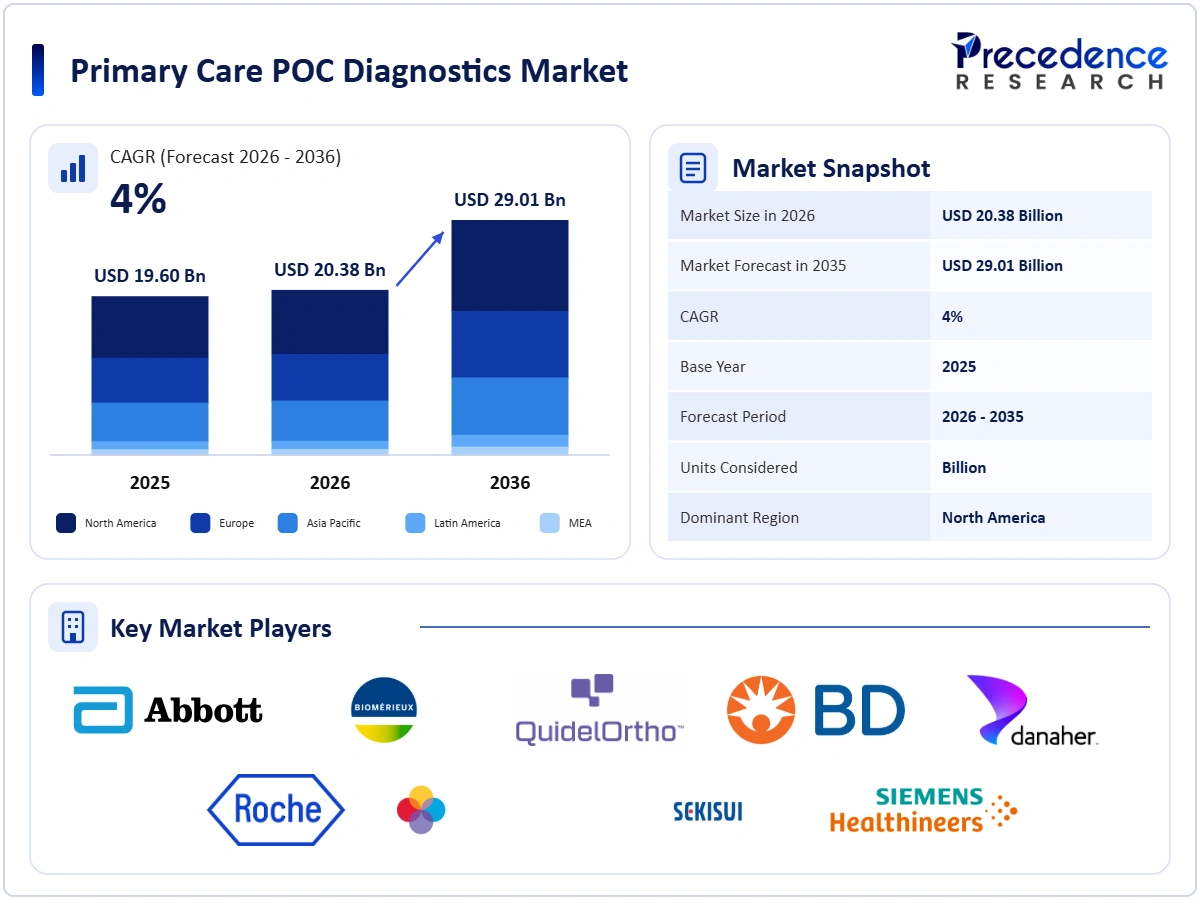
The primary care POC diagnostics market is forecasted to expand from USD 20.38 billion in 2026 to USD 29.01 billion by 2035, growing at a CAGR of 4% from 2026 to 2035.
 Key Takeaways
Market Size & Growth Outlook
- Market size in 2025: USD 19.60 billion
- Estimated market size in 2026: USD 20.38 billion
- Projected market size by 2035: USD 29.01 billion
- CAGR (2026–2035): 4.00%
Regional Market Spotlight
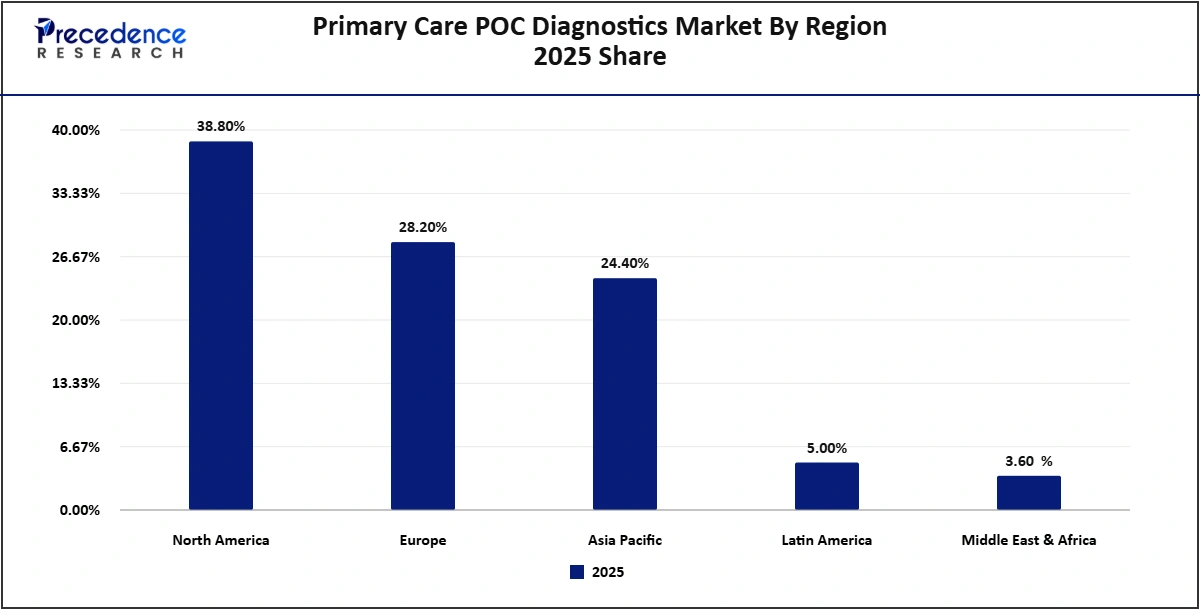
- North America led the market with a 38.80% share of USD 7.60 billion in 2025.
- Europe accounted for 28.20% with USD 5.53 billion of the market in 2025.
- Asia Pacific accounted for 24.40% with USD 4.78 billion of the market in 2025 and is projected to be the fastest-growing region, at a CAGR of 5.63% from 2025 to 2035.
Segmental Spotlight
- By test type, the glucose & HbA1c testing accounted for 38.40% with USD 7.53 billion in 2025.
- By product, the consumables & test kits accounted for 78.60% with USD 15.41 billion in 2025.
- By technology, the biosensors & electrochemical accounted for 38.20% with USD 7.49 billion in 2025.
- By end user, the physician offices & clinics accounted for 48.40% with USD 9.49 billion in 2025.
Primary Care POC Diagnostics Market Size and Forecast, 2025-2035 (USD Billion)
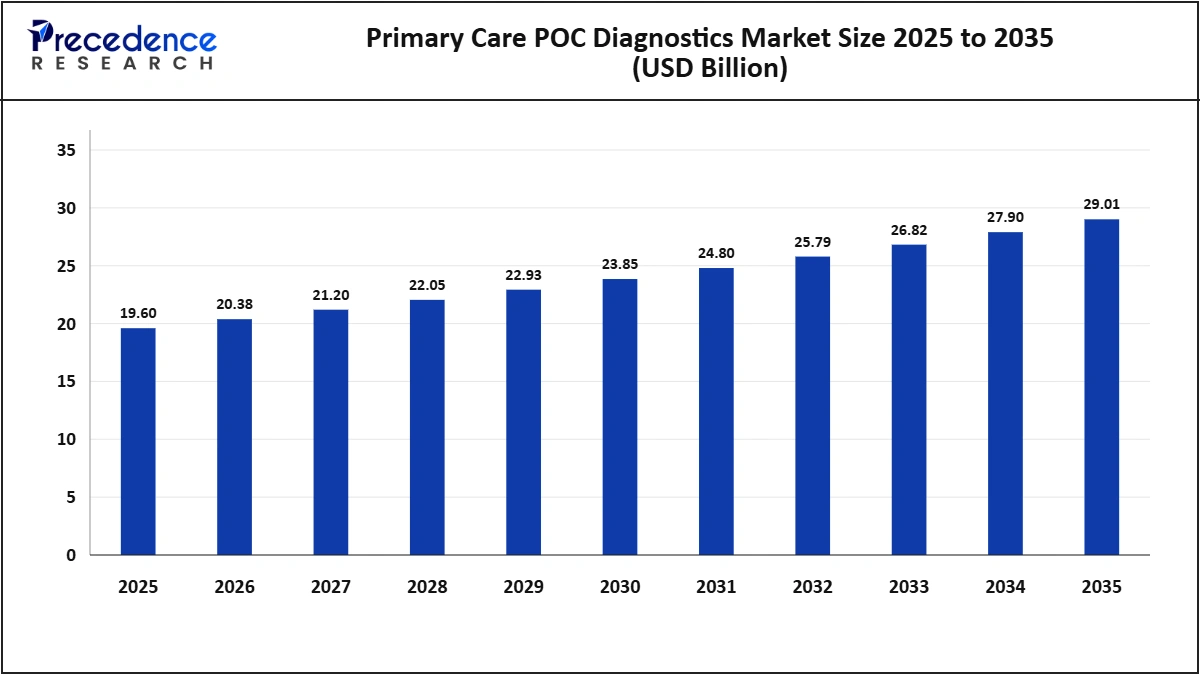
Note: 2025 is the base year; 2026-2035 values are forecasts.
Sources: Expert interviews, secondary sources, Precedence Research database, and Precedence Research analysts.
The primary care POC diagnostics market is projected to grow from USD 19.60 billion in 2025 to USD 29.01 billion by 2035 because primary care clinicians use rapid in-office tests to manage diabetes and anticoagulation, diagnose infections, and confirm pregnancy without sending samples to a laboratory and waiting for results. CLIA-waived molecular tests and pharmacy testing extend point-of-care use, lifting the market to USD 23.85 billion by 2030 and sustaining a CAGR of 4.00% from 2026 to 2035.
- Analyst View: We built the estimate from the number of primary care, urgent care, and pharmacy testing sites by region, test volumes per site for each test category, and average consumable prices, plus analyzer sales and service.
Volumes reflect chronic disease prevalence, respiratory infection seasons, anticoagulation monitoring and pregnancy testing, and prices reflect reimbursement in each country. The total was cross-checked against the point-of-care revenue of leading diagnostics companies and against published estimates, which places our base year slightly above the comparable figures. The growth rate reflects steady chronic disease testing and faster growth in molecular infectious disease testing, offset by price pressure on mature tests.
Market Trends
- CLIA-waived molecular tests expand in physician offices.
- Host-response tests support antibiotic stewardship.
- Pharmacy test-and-treat services grow.
- Connected analyzers send results to health records.
- Multiplex respiratory panels move into urgent care.
- In-office HbA1c supports same-visit diabetes decisions.
Drivers, Restraints and Opportunities
Driver
Diabetes, cardiovascular disease and other chronic conditions are rising, increasing routine monitoring in primary care. Rapid results allow clinicians to make treatment decisions during the visit. Care is shifting from hospitals to community settings, urgent care and pharmacies. Antimicrobial stewardship programmes encourage tests that guide antibiotic use. New CLIA waivers bring molecular and host-response testing to physician offices.
Restraint
Reimbursement for some point-of-care tests is low or inconsistent. Mature tests such as glucose face strong price pressure. Small practices may lack staff time and quality control capacity. Demand for respiratory tests fluctuates with infection seasons. Laboratory testing remains cheaper per test for high-volume panels.
Opportunity
Molecular point-of-care tests for respiratory infections and STIs can expand the infectious disease segment. Pharmacy testing can grow as more countries allow test-and-treat services. Connected devices can support population health and remote monitoring programmes. Multiplex cardiometabolic panels can add value in chronic care. Expanding primary care in Asia and Africa offers new demand.
Market Segmentation: 2025 Share and Value
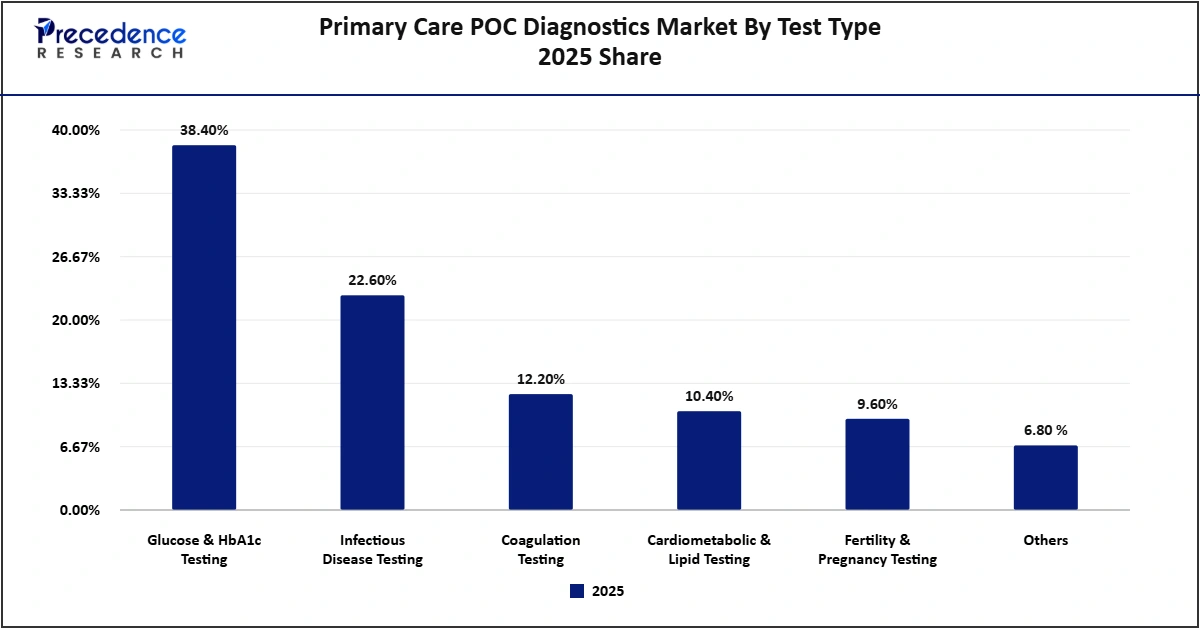
Primary Care POC Diagnostics Market By Test Type 2025 Share
Note: 2025 is the base year.
Sources: Expert interviews, secondary sources, Precedence Research database, and Precedence Research analysts.
Glucose and HbA1c testing accounted for 38.40% with USD 7.53 billion in 2025 because diabetes is among the most common conditions managed in primary care, and in-office HbA1c analyzers let clinicians adjust treatment during the same visit, improving adherence and outcomes. Infectious disease testing, at 22.60% with USD 4.43 billion, is the fastest-growing test type, as CLIA-waived molecular tests for influenza, COVID-19, strep, and sexually transmitted infections, and host-response tests that separate bacterial from viral infections, support faster treatment and antibiotic stewardship.
Coagulation testing accounts for 12.20% with USD 2.39 billion, cardiometabolic and lipid testing for 10.40% with USD 2.04 billion, fertility and pregnancy testing for 9.60% with USD 1.88 billion, and other tests, including urinalysis and CRP, for 6.80% with USD 1.33 billion.
Primary Care POC Diagnostics Market By Product 2025 Share & Size
| Segments | 2025 Share | 2025 Market Value |
| Consumables & Test Kits | 78.60% | USD 15.41 billion |
| Analyzers & Readers | 21.40% | USD 4.19 billion |
Note: 2025 is the base year.
Sources: Expert interviews, secondary sources, Precedence Research database, and Precedence Research analysts.
Consumables and test kits accounted for 78.60% with USD 15.41 billion in 2025 because every test uses a cartridge, strip, or kit, creating recurring revenue tied to patient volumes. Analyzers and readers, at 21.40% with USD 4.19 billion, include HbA1c analyzers, coagulation meters, and molecular instruments, and molecular instrument placements are growing fastest in urgent care and physician offices.
Primary Care POC Diagnostics Market By Technology 2025 Share
| Segments | 2025 Share | 2025 Market Value |
| Lateral Flow & Immunoassays | 34.80% | USD 6.82 billion |
| Biosensors & Electrochemical | 38.20% | USD 2.86 billion |
| Molecular Diagnostics | 14.60%  | USD 2.86 billion |
| Others | 12.40%  | USD 2.43 billion |
Note: 2025 is the base year.
Sources: Expert interviews, secondary sources, Precedence Research database, and Precedence Research analysts.
Biosensors and electrochemical methods accounted for 38.20% with USD 7.49 billion in 2025 because glucose and coagulation meters rely on them. Lateral flow and immunoassays, at 34.80% with USD 6.82 billion, are used for pregnancy, infectious disease antigen, and cardiac tests. Molecular diagnostics account for 14.60% with USD 2.86 billion and are the fastest-growing technology, and other technologies account for 12.40% with USD 2.43 billion.
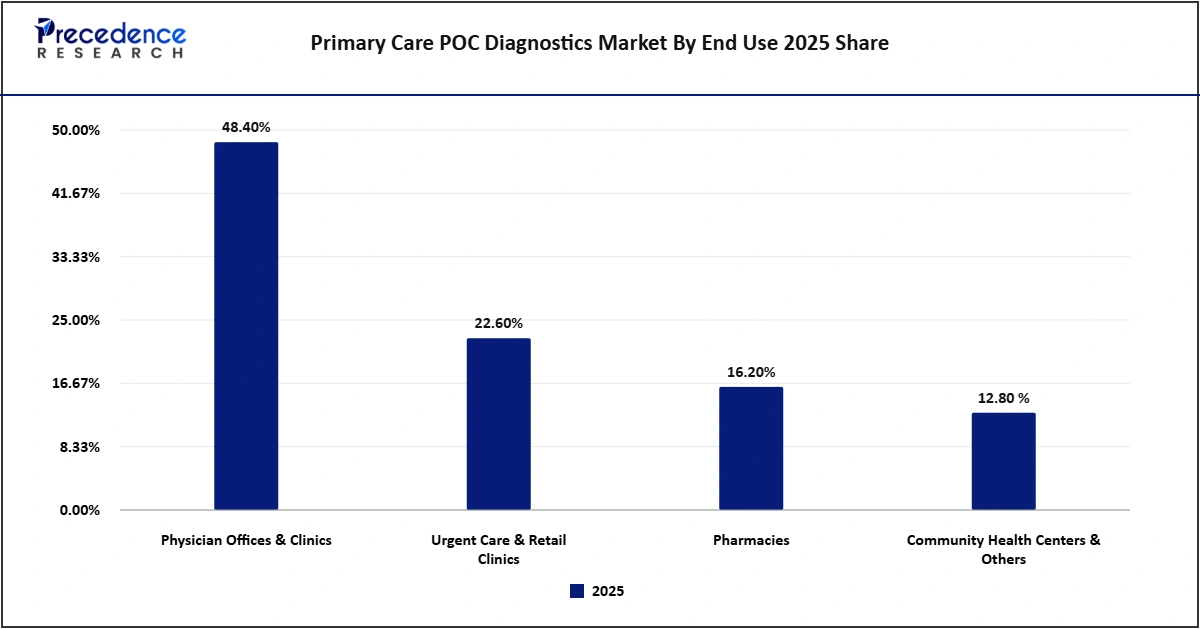
Primary Care POC Diagnostics Market By End User 2025 Share
Note: 2025 is the base year.
Sources: Expert interviews, secondary sources, Precedence Research database, and Precedence Research analysts.
Physician offices and clinics accounted for 48.40% with USD 9.49 billion in 2025 because general practitioners and internists perform most chronic disease testing. Urgent care and retail clinics account for 22.60% with USD 4.43 billion, pharmacies, at 16.20% with USD 3.18 billion, are the fastest-growing end user as pharmacists test and treat common infections in more countries, and community health centres and others account for 12.80% with USD 2.51 billion.
- Analyst View: Segment values were allocated by matching test volumes per site and prices to test types, products, technologies and end users, using supplier revenue mixes. Glucose and HbA1c lead because of high chronic disease volumes. We expect infectious disease testing, molecular diagnostics, and pharmacies to gain share.
Regional Analysis
Primary Care POC Diagnostics Market By Region 2025 Share
Note: 2025 is the base year.
Sources: Expert interviews, secondary sources, Precedence Research database, and Precedence Research analysts.
North America accounted for 38.80% with USD 7.60 billion in 2025, supported by CLIA-waived testing in physician offices, urgent care and retail clinics, reimbursement for in-office tests and high chronic disease prevalence. Europe, at 28.20% with USD 5.53 billion, is supported by general practice testing for CRP, HbA1c and coagulation, pharmacy test-and-treat services and antimicrobial stewardship programmes. Asia Pacific, at 24.40% with USD 4.78 billion, is the fastest-growing region, supported by large diabetes populations, expanding primary care networks in China and India, and growing pharmacy testing. Latin America, at 5.00% with USD 0.98 billion, and the Middle East and Africa, at 3.60% with USD 0.71 billion, are smaller markets where point-of-care testing supports clinics with limited laboratory access.
North America accounted for 38.80% with USD 7.60 billion in 2025. CLIA waivers allow rapid tests to be used in more than 300,000 certificate-of-waiver sites in the United States. Recent waivers for molecular STI tests and host-response respiratory tests extend the menu. Diabetes and anticoagulation management keep chronic testing volumes high.
Europe accounted for 28.20% with USD 5.53 billion in 2025. CRP testing in general practice helps reduce unnecessary antibiotic prescribing in the Nordic countries, the Netherlands, and the United Kingdom. Pharmacies in several countries offer testing for strep throat and other infections. Germany and the United Kingdom are the largest markets.
Asia Pacific accounted for 24.40% with USD 4.78 billion in 2025 and is the fastest-growing region. China and India have very large diabetes populations and are expanding primary care. Community health centres are adopting point-of-care analyzers. Japan has an established clinic testing market.
Latin America accounted for 5.00% with USD 0.98 billion in 2025. Point-of-care tests support primary care clinics and pharmacies in Brazil and Mexico. Public health programmes use rapid tests for infectious diseases.
The Middle East and Africa accounted for 3.60% with USD 0.71 billion in 2025. Gulf countries invest in primary care networks with point-of-care testing. In Africa, rapid tests for HIV, malaria and other infections are widely used in primary care.
Analyst View: Regional shares were built from primary care sites, test volumes, and prices in each region. North America leads because of CLIA-waived testing and reimbursement. We assign Asia Pacific the highest growth premium because primary care capacity and testing adoption are expanding fastest there.
Top 10 Companies in the Primary Care POC Diagnostics Market
| Rank | Company Name | Market-Specific Revenue (USD Billion) | 2025 Share | Key Products / Business | Headquarters |
| 1 | Abbott | 3.10 | 15.82% | Afinion, ID NOW, BinaxNOW and Cholestech systems | United States |
| 2 | Roche Diagnostics | 2.70 | 13.78% | CoaguChek, cobas b 101 and cobas liat systems | Switzerland |
| 3 | Siemens Healthineers | 0.82 | 4.18% | DCA Vantage and CLINITEK systems | Germany |
| 4 | Danaher (Cepheid and HemoCue) | 0.80 | 4.08% | GeneXpert Xpress and HemoCue systems | United States |
| 5 | BD | 0.42 | 2.14% | BD Veritor rapid tests | United States |
| 6 | bioMérieux | 0.38 | 1.94% | BIOFIRE SPOTFIRE respiratory and sore throat panels | France |
| 7 | QuidelOrtho | 0.36 | 1.84% | Sofia and Triage rapid tests | United States |
| 8 | Sekisui Diagnostics | 0.18 | 0.92% | OSOM rapid tests | United States |
| 9 | ARKRAY | 0.16 | 0.82% | HbA1c and glucose analyzers | Japan |
| 10 | Lumos Diagnostics | 0.02 | 0.10% | FebriDx host-response test | Australia |
Note: Company revenues and shares are 2025 estimates.
Sources: Company press releases, expert interviews, secondary sources, Precedence Research database, and Precedence Research analysts.
Abbott led the primary care POC diagnostics market with an estimated 15.82% with USD 3.10 billion of 2025 revenue, followed by Roche at 13.78% with USD 2.70 billion and Siemens Healthineers at 4.18% with USD 0.82 billion. Abbott leads because its Afinion HbA1c and lipid analyzers, ID NOW molecular platform, BinaxNOW antigen tests and Cholestech systems are widely used in physician offices, urgent care and pharmacies, supported by a broad distribution network. Roche is a close competitor through CoaguChek coagulation monitoring, cobas b 101 HbA1c and lipid testing and cobas liat molecular tests, which received FDA clearance with CLIA waiver for sexually transmitted infection testing in January 2025. Siemens Healthineers supplies DCA Vantage and urinalysis systems, Danaher competes through Cepheid GeneXpert Xpress and HemoCue, bioMérieux offers SPOTFIRE molecular panels, and BD, QuidelOrtho, Sekisui, ARKRAY and Lumos Diagnostics provide rapid tests and analyzers.
The top 10 companies accounted for an estimated 45.61% with USD 8.94 billion of 2025 revenue, while the remaining 54.39% with USD 10.66 billion was shared among regional rapid test makers, glucose meter suppliers and distributors. The primary care POC diagnostics market is moderately concentrated among large diagnostics companies, while many smaller firms compete in specific tests. Competition centres on CLIA waivers and regulatory approvals, test menu breadth, accuracy, speed, connectivity with health records and price, and distributors play a major role in reaching physician offices.
Recent Developments
- In March 2026, The FDA granted a CLIA waiver to FebriDx, a ten-minute fingerstick test that helps distinguish bacterial from non-bacterial acute respiratory infections, allowing use in physician offices, urgent care, retail clinics and long-term care facilities.
- In January 2025, Roche received FDA clearance with CLIA waiver for cobas liat molecular tests to aid in diagnosing sexually transmitted infections at the point of care.
Primary Care POC Diagnostics Market Segments
By Test Type
- Glucose & HbA1c Testing
- Infectious Disease Testing
- Coagulation Testing
- Cardiometabolic & Lipid Testing
- Fertility & Pregnancy Testing
- Others
By Product
- Consumables & Test Kits
- Analyzers & Readers
By Technology
- Lateral Flow & Immunoassays
- Biosensors & Electrochemical
- Molecular Diagnostics
- Others
By End User
- Physician Offices & Clinics
- Urgent Care & Retail Clinics
- Pharmacies
- Community Health Centers & Others
By Region
- North America
- U.S.
- Canada
- Mexico
- Europe
- Germany
- U.K.
- France
- Italy
- Spain
- Rest of Europe
- Asia Pacific
- China
- Japan
- India,
- South Korea
- Taiwan
- Rest of Asia Pacific
- Latin America
- Brazil
- Argentina
- Rest of Latin America
- Middle East & Africa
- GCC
- South Africa
- Rest of MEA
Research Methodology
The primary care POC diagnostics market was defined as rapid tests, analyzers, and consumables used in physician offices, urgent and retail clinics, pharmacies, and community health centres, worldwide. We built the 2025 base year bottom-up from primary care testing sites by region, test volumes per site, and average consumable and analyzer prices, and checked it top-down against the point-of-care revenue of leading diagnostics companies.
We allocated segment, regional, and company values from test types, products, technologies, end users, and regional demand. Key estimates were verified by cross-checking company disclosures, regulatory and industry data, and published third-party estimates, and inputs that could not be reconciled were excluded. All segment, regional and company figures were reconciled to the same 2025 base year, and the 2026–2035 forecast, which applies a constant CAGR from the 2025 base, was recalculated and validated.
Analyst View: Overall Market
The primary care POC diagnostics market is a large, mature market with steady chronic disease testing and faster growth in infectious disease and molecular testing. Our estimate links demand to testing sites, volumes, and prices, so the forecast follows chronic disease prevalence, care shifts, and regulatory waivers. The main upside comes from molecular and pharmacy testing, while the main risks are price pressure and seasonal swings in respiratory testing.
Sources and References
- Roche Diagnostics. "Roche receives FDA clearance with CLIA waiver for cobas liat molecular tests to aid in diagnosing sexually transmitted infections at the point of care". 2025-01-22. cobas liat STI waiver. https://diagnostics.roche.com/us/en/news-listing/2025/roche-receives-fda-clearance-with-clia-waiver-for-cobas-liat-molecular-tests-to-aid-in-diagnosing-sexually-transmitted-infections-at-the-point-of-care.html
- Clinical Lab Products. "FDA grants CLIA waiver to FebriDx rapid respiratory infection test". 2026-03-27. FebriDx waiver. https://clpmag.com/disease-states/infectious-diseases/flu-respiratory-infections/fda-clia-waiver-febridx-rapid-respiratory-infection-test/
For inquiries regarding discounts, bulk purchases, or customization requests, please contact us at sales@precedenceresearch.com
Frequently Asked Questions





Ask For Sample
No cookie-cutter, only authentic analysis – take the 1st step to become a Precedence Research client
 Get a Sample




 sales@precedenceresearch.com
 Schedule a Meeting
