



Psychiatric Digital Biomarkers Market Size, Key Companies, Company Market Share, Equipment Production Volume, Sales Performance, Manufacturing Cost, Export & Import Trends, Competitive Positioning, and Market Analysis
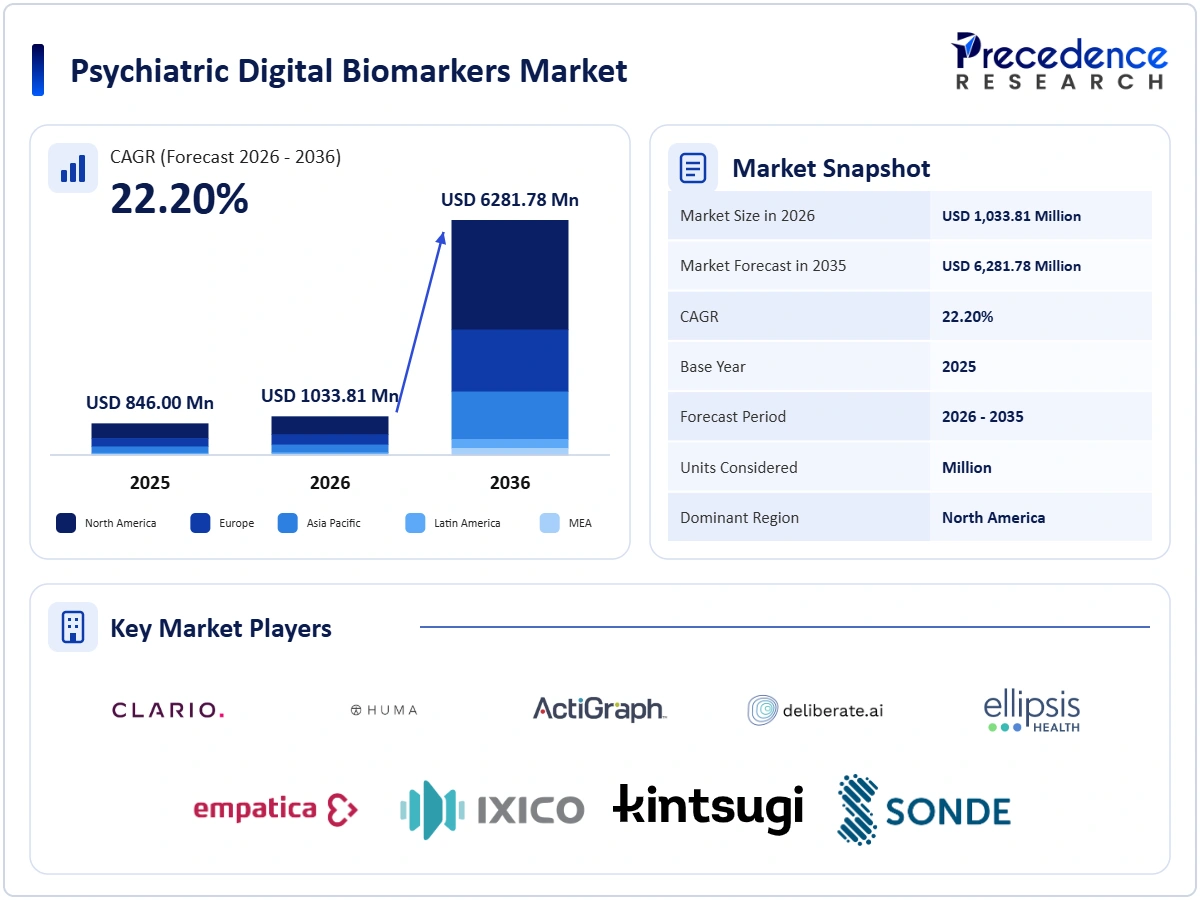
Laxmi Narayan, who specializes in the machinery and equipment industry, assesses the psychiatric digital biomarkers market at USD 1,033.81 million in 2026 to USD 6,281.78 billion by 2035, growing at a CAGR of 22.20% psychiatric digital biomarkers market companies including Empatica, Clario, Koneksa Health, ActiGraph remain prominent players, with demand concentrated across segments such as type, clinical practice, indication, end use region.
Source: https://www.precedenceresearch.com/psychiatric-digital-biomarkers-market
 Get a Sample
 Report Description


Psychiatric Digital Biomarkers Market Trends, Share, and Growth Analysis 2035
The psychiatric digital biomarkers market is forecasted to expand from USD 1,033.81 million in 2026 to USD 6,281.78 billion by 2035, growing at a CAGR of 22.20% from 2026 to 2035.
Key Takeaways
Market Size & Growth Outlook
- Market size in 2025: USD 846.00 million
- Estimated market size in 2026: USD 1,033.81 million
- Projected market size by 2035: USD 6,281.78 million
- CAGR (2026–2035): 22.20%
Regional Market Spotlight
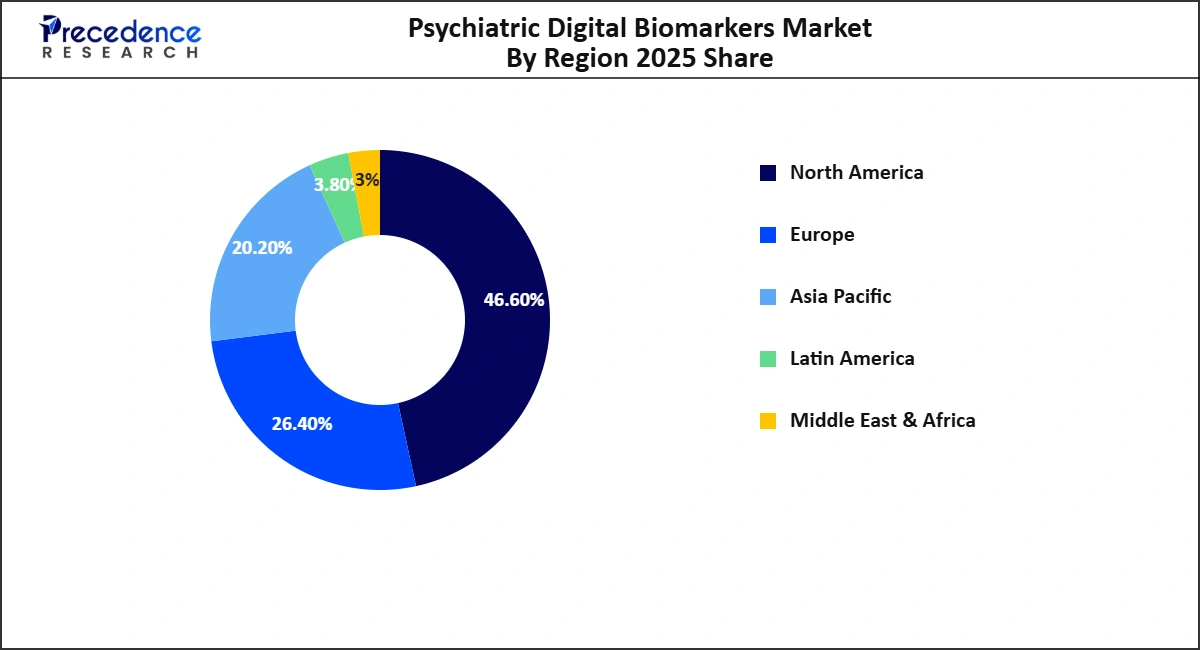
- North America held a 46.6% share of the market in 2025, valued at USD 394.24 million.
- The European market accounted for USD 223.34 million of the global total in 2025, translating to a 26.4% share.
- In 2025, Asia Pacific accounted for 20.2% of the market, valued at USD 170.89 million. From 2025 to 2035, the region is projected to report a CAGR of 24.33%, making Asia Pacific the fastest-growing region.
Segmental Spotlight
- By type, wearables, valued at USD 319.79 million, accounted for 37.8% in 2025.
- In 2025, based on clinical practice, monitoring accounted for 36.4%, valued at USD 307.94 million.
- By indication, depression & anxiety accounted for 44.6%, valued at USD 377.32 million in 2025.
- By end use, healthcare companies accounted for 48.4% in 2025.
Psychiatric Digital Biomarkers Market Size and Forecast, 2025-2035 (USD Million)
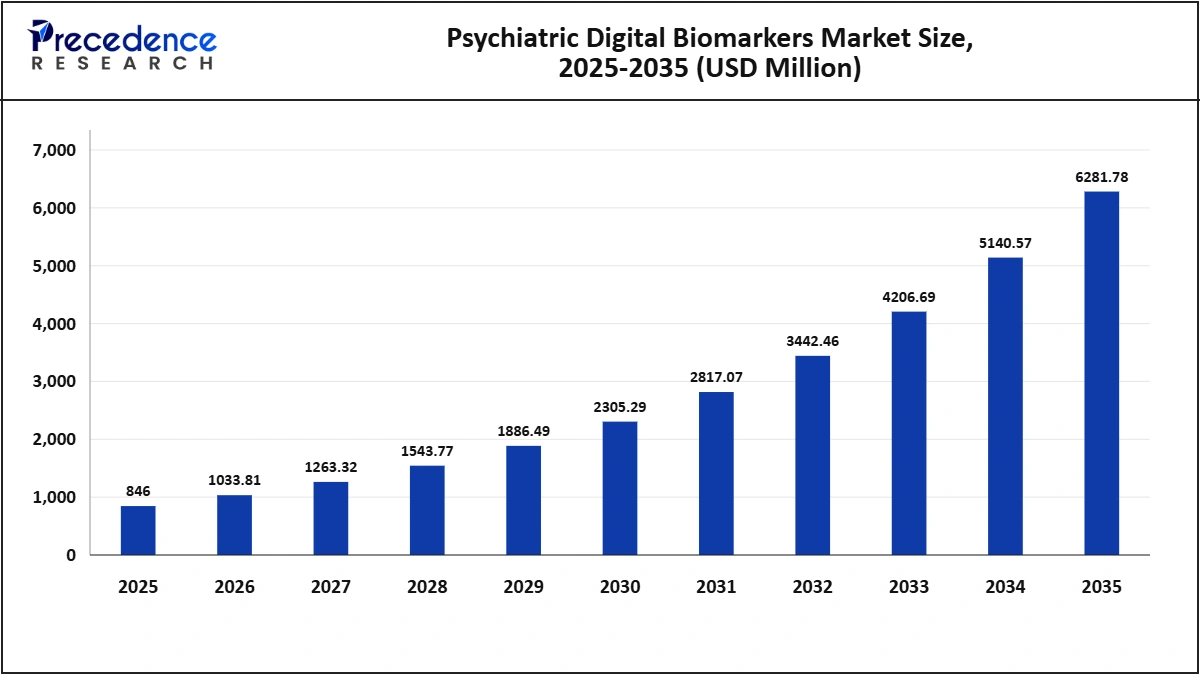
Note: 2025 is the base year; 2026-2035 values are forecasts.
Sources: Expert interviews, secondary sources, Precedence Research database and Precedence Research analysts.
The psychiatric digital biomarkers market is expected to expand from USD 846 million in 2025 to USD 6,281.78 million by 2035. Demand for objective, continuous mental health measurements from pharmaceutical companies, clinicians, and payers for trials, diagnosis, and treatment monitoring is supporting the market growth. Widespread smartphone and wearable ownership support large-scale passive data collection, contributing to projected market growth. Smartphones and wearables facilitate large-scale passive data collection, and the market is projected to reach USD 2,305.29 million by 2030, with a CAGR of 22.20% from 2026 to 2035.
- Analyst View: Market growth is driven by increasing demand for objective mental health monitoring, rising pharmaceutical investment in digital clinical trials, and wider adoption of wearable devices and smartphone-based assessments. Advances in AI-enabled behavioral analysis are expected to accelerate adoption, while clinical validation requirements, data privacy concerns, and regulatory uncertainty may moderate growth.
Market Trends
- Voice AI analyzes short speech samples to identify depression-related patterns, supporting the development of objective psychiatric screening biomarkers.
- Wearables capture continuous sleep, activity, and physiological data, enabling digital endpoints for psychiatric clinical trials.
- Passive smartphone sensing tracks behavioral changes that may help identify symptom progression and relapse risk.
- Regulatory qualification programs support the validation of digital biomarkers for use in psychiatric drug development and clinical practice.
- Multimodal AI integrates voice, video, and sensor data to improve the accuracy and reliability of psychiatric assessments.
- Pilot digital screening programs in primary care expand opportunities for early identification and continuous monitoring of mental health conditions.
Drivers, Restraints, and Opportunities
Driver
High rates of underdiagnosed mental health disorders and reliance on subjective assessments are increasing demand for objective psychiatric digital biomarkers. Growing use of smartphones, wearables, and AI-powered analytics is expanding opportunities for continuous symptom monitoring and more sensitive clinical trial endpoints, supporting market growth.
Restraint
Limited regulatory validation, potential algorithmic bias, and privacy concerns are slowing the adoption of psychiatric digital biomarkers. Unclear reimbursement pathways and difficulties integrating digital tools into clinical workflows may further restrict commercial adoption and market growth.
Opportunity
Regulatory qualification of digital endpoints, integration of voice-based screening into telehealth and primary care, and partnerships with pharmaceutical companies are creating growth opportunities for the psychiatric digital biomarkers market. Combining digital biomarkers with personalized treatments and continuous monitoring could expand clinical applications and support wider adoption across mental healthcare.
Psychiatric Digital Biomarkers Market Segmentation: 2025 Share and Value
Psychiatric Digital Biomarkers Market By Type 2025 Share
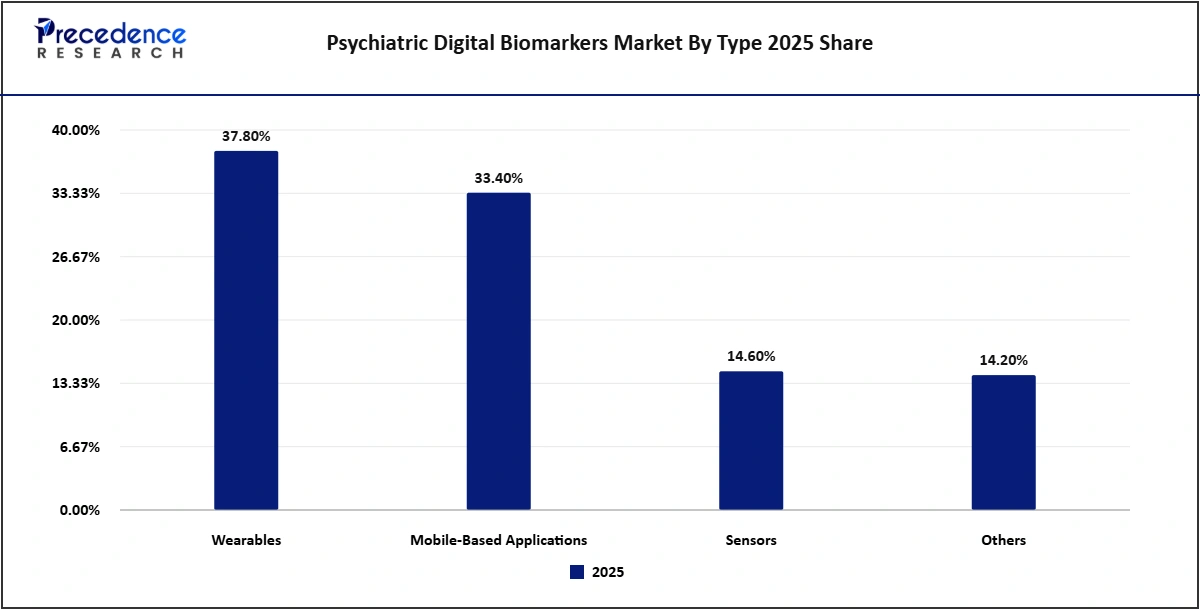
Note: 2025 is the base year.
Sources: Expert interviews, secondary sources, Precedence Research database and Precedence Research analysts.
Wearables dominated 37.8% of the market in 2025, translating to USD 319.79 million. These devices, wearables, particularly wrist-worn devices and patches, support continuous measurement and monitoring of sleep, activity, and heart rate variability. Electrodermal activity, which is vital for assessing mood, stress, and relapse risk in psychiatric clinical trials. Mobile-based applications, which accounted for 33.4% of market share (equivalent to USD 282.56 million), are the fastest-growing segment, utilizing smartphones to passively record mobility, social interactions, typing, and voice patterns while providing cognitive and mood-related tasks without requiring additional hardware. Sensors, including EEG devices, make up 14.6%, valued at USD 123.52 million, while other platforms for voice and video analysis represent 14.2%, accounting for USD 120.13 million.
Psychiatric Digital Biomarkers Market By Clinical Practice 2025 Share & Size
| Segments | 2025 Share | 2025 Market Value |
| Diagnostic | 32.2% | USD 272.41 million |
| Monitoring | 36.4% | USD 307.94 million |
| Predictive & Prognostic | 19.6% | USD 165.82 million |
| Others | 11.8% | USD 99.83 million |
Note: 2025 is the base year.
Sources: Expert interviews, secondary sources, Precedence Research database and Precedence Research analysts.
Monitoring accounted for USD 307.94 million, representing 36.4% of the total market in 2025. This ongoing tracking of symptoms and behaviors enables clinicians and trial sponsors to identify shifts in mood, relapse risk, and treatment efficacy between appointments. With a valuation of USD 272.41 million, diagnostic biomarkers represented 32.2% of the market and are essential for screening and diagnosis, including the use of voice-based tools for depression assessment. Predictive and prognostic biomarkers constitute 19.6% (USD 165.82 million) and are expected to offer growth opportunities as predictive models develop, with machine learning models under development to predict relapse and treatment outcomes. Other categories maintained an 11.8% share of the market, with their value estimated at USD 99.83 million.
Psychiatric Digital Biomarkers Market By Indication 2025 Share
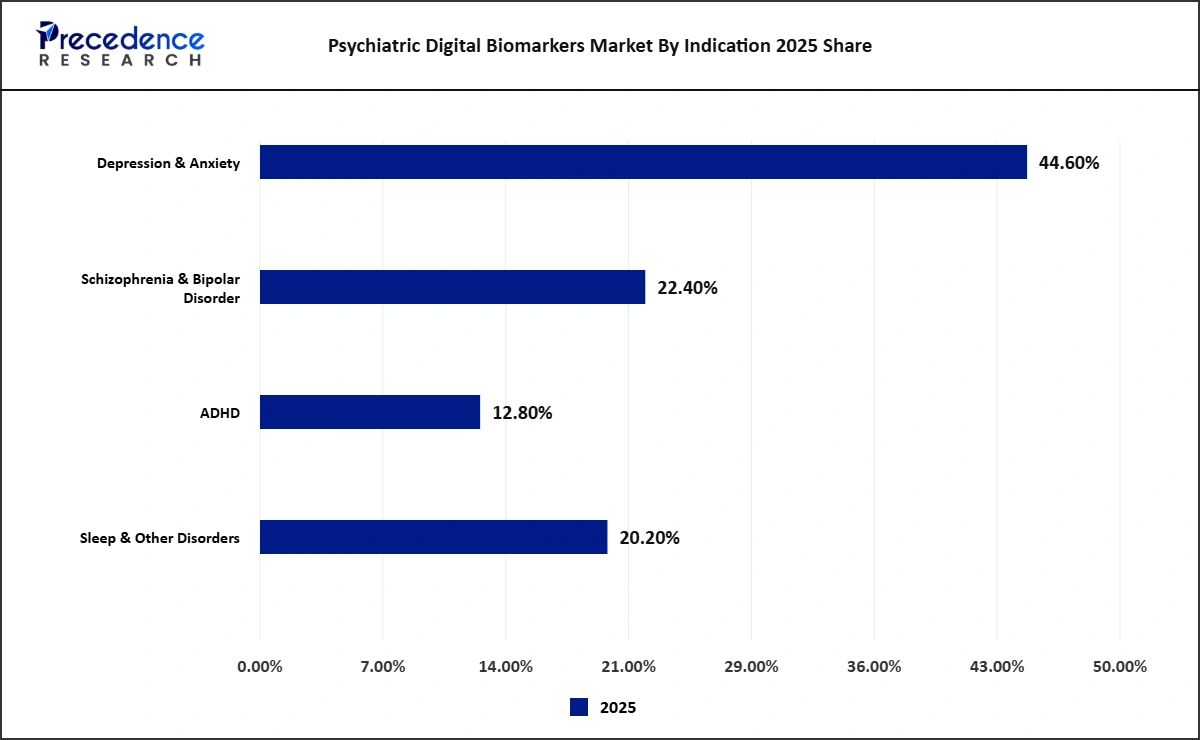
Note: 2025 is the base year.
Sources: Expert interviews, secondary sources, Precedence Research database and Precedence Research analysts.
In 2025, depression and anxiety accounted for 44.6% of the global market, totaling USD 377.32 million, reflecting their importance in digital biomarker research and trials. Schizophrenia and bipolar disorder together accounted for 22.4% of the market, valued at USD 189.50 million, driven by advancements in passive sensing technology aimed at identifying early signs of relapse. Additionally, ADHD accounted for 12.8% of the market, valued at USD 108.29 million. In contrast, sleep and other disorders comprised 20.2%, corresponding to USD 170.89 million.
Psychiatric Digital Biomarkers Market By End Use 2025 Share & Size
| Segments | 2025 Share | 2025 Market Value |
| Healthcare Companies | 48.4% | USD 409.46 million |
| Healthcare Providers | 30.6% | USD 258.88 million |
| Payers | 8.4% | USD 71.06 million |
| Others | 12.6% | USD 106.60 million |
Note: 2025 is the base year.
Sources: Expert interviews, secondary sources, Precedence Research database and Precedence Research analysts.
Healthcare companies, primarily in the pharmaceutical and biotechnology sectors, held a 48.4% share of the market, with a market value of USD 409.46 million, and were noted as the fastest-growing segment, as behavioral health and primary care providers increasingly implement remote monitoring and screening. With a valuation of USD 258.88 million, healthcare providers represented 30.6% of the market as they increasingly adopt remote monitoring and screening methods. Payers represented 8.4% of the market, amounting to USD 71.06 million, whereas other entities, which include employers and patients, contributed 12.6%, totaling USD 106.60 million.
- Analyst View: Wearables held the largest share, supported by their use in continuous physiological monitoring and clinical-trial data collection. Healthcare companies lead because pharmaceutical sponsors are the main paying customers. We expect mobile applications, predictive biomarkers, and provider use to gain share as validation and reimbursement improve.
Regional Analysis
Psychiatric Digital Biomarkers Market By Region 2025 Share
Note: 2025 is the base year.
Sources: Expert interviews, secondary sources, Precedence Research database and Precedence Research analysts.
North America held 46.6% of the market in 2025 owing to its significant share of global psychiatric drug trials and robust investments in digital health. FDA initiatives concerning AI and digital measures have supported regulatory engagement in the region. Europe's 26.4% share stemmed from research consortia, regulatory qualification efforts, and national digital health programs in the UK, Germany, and Nordic countries. Asia Pacific accounted for 20.2% of the market in 2025 and is projected to be the fastest-growing region due to high smartphone use, increased mental health awareness, and digital health investments in China, Japan, and South Korea. Singapore, and expanding clinical trial activities. Latin America, the Middle East, and Africa represented smaller markets with early adoption in research and private care, at 3.8% and 3.0%.
North America maintained a 46.6% share of the market in 2025, with its value at USD 394.24 million. Pharmaceutical sponsors are adopting digital endpoints in psychiatric trials, with the FDA accepting an AI-driven assessment tool for depression and anxiety in 2024. Meanwhile, behavioral health providers and employers are investigating voice and passive-sensing tools for screening.
Europe represented 26.4% of the market in 2025, valued at USD 223.34 million. Public-private research in Germany and the UK. Nordic countries focus on remote monitoring for depression and digital mental health applications, with Germany facilitating the pathway for digital health tools.
Asia Pacific held 20.2% of the market, equivalent to USD 170.89 million, making it the fastest-growing region in this sector. High smartphone ownership supports app-based health initiatives. AI tools for early depression detection are being tested in Singapore, South Korea, and Japan, while China's digital health sector is growing.
Latin America's market valuation reached USD 32.15 million in 2025, securing a 3.8% share. Adoption of clinical practices in Brazil, Mexico, and Argentina is mainly seen in research and clinical trials, with limited reimbursement restricting wider clinical application.
The Middle East and Africa captured 3% of the market in 2025, with their market size estimated at USD 25.38 million. Gulf countries are actively investing in digital mental health services, while adoption in other regions remains limited.
Analyst View: North America has the highest trial volumes and investment, whereas the Asia Pacific region shows the greatest growth potential due to swift digital health adoption and rising trial activity.
Top 10 Companies in the Psychiatric Digital Biomarkers Market
| Rank | Company Name | Market-Specific Revenue (USD Million) | 2025 Share | Key Products / Business | Headquarters |
| 1 | Empatica | 62 | 7.33% | EmbracePlus wearable and Health Monitoring Platform | United States |
| 2 | Clario | 58 | 6.86% | Digital endpoint and eCOA solutions | United States |
| 3 | Koneksa Health | 36 | 4.26% | Digital biomarker platform for clinical trials | United States |
| 4 | ActiGraph | 32 | 3.78% | Wearable activity and sleep monitoring | United States |
| 5 | Huma | 24 | 2.84% | Remote patient monitoring platform | United Kingdom |
| 6 | Sonde Health | 14 | 1.65% | Voice biomarker platform | United States |
| 7 | Kintsugi | 10 | 1.18% | Kintsugi Voice depression screening | United States |
| 8 | Ellipsis Health | 9 | 1.06% | Voice-based mental health assessment | United States |
| 9 | Deliberate AI | 7 | 0.83% | AI-COA multimodal assessment | United States |
| 10 | IXICO | 6 | 0.71% | Neuroimaging and digital biomarker analytics | United Kingdom |
Note: Company revenues and shares are 2025 estimates.
Sources: Company press releases, expert interviews, secondary sources, Precedence Research database and Precedence Research analysts.
The top 10 companies from the global psychiatric digital biomarkers market generated 30.5% of the 2025 revenue, with the remaining 69.5% shared among smartphone sensing startups, EEG and sleep tech firms, and consumer wearables. The market is fragmented and at an early stage of development, with a competitive focus on clinical validation, regulatory engagement, data quality, privacy, workflow integration, and pharmaceutical partnerships. As of late 2025, no voice biomarker platform had obtained FDA clearance, making regulatory milestones essential for future clinical adoption.
Empatica is the leader in the psychiatric digital biomarkers market with an estimated 7.33% share of 2025 market revenue, followed by Clario at 6.86% and Koneksa at 4.26%. Empatica's success is attributed to its EmbracePlus wearable and Health Monitoring Platform, which provide physiological measures accepted into the FDA's ISTAND pilot programme physiological measures for use as digital endpoints in clinical trials. Clario and Koneksa offer support through digital endpoint, eCOA, and biomarker platforms, leveraging strong relationships with major pharmaceutical companies. ActiGraph and Huma offer wearable and remote monitoring solutions, while Sonde Health, Kintsugi, and Ellipsis Health focus on voice biomarkers for mental health. Deliberate AI's multimodal assessment tool is part of the FDA's ISTAND pilot, and IXICO specializes in neuroscience analytics.
Recent Developments
- January 2025: A study of 14,898 adults published in Annals of Family Medicine evaluated Kintsugi's AI voice biomarker tool, which detected signals consistent with moderate to severe depression from about 25 seconds of free speech.
Psychiatric Digital Biomarkers Market Segments
By Type
- Wearables
- Mobile-Based Applications
- Sensors
- Others
By Clinical Practice
- Diagnostic
- Monitoring
- Predictive & Prognostic
- Others
By Indication
- Depression & Anxiety
- Schizophrenia & Bipolar Disorder
- ADHD
- Sleep & Other Disorders
By End Use
- Healthcare Companies
- Healthcare Providers
- Payers
- Others
By Region
- North America (U.S., Canada, Mexico)
- Europe (Germany, U.K., France, Italy, Spain, Rest of Europe)
- Asia Pacific (China, Japan, India, South Korea, Taiwan, Rest of Asia Pacific)
- Latin America (Brazil, Argentina, Rest of Latin America)
- Middle East & Africa (GCC, South Africa, Rest of MEA)
Research Methodology
The psychiatric digital biomarkers market was defined as wearables, smartphone applications, sensors, and AI software that measure physiological and behavioral markers of psychiatric conditions worldwide. The 2025 base year was built bottom-up from psychiatric trial spending on digital endpoints, provider and payer platform subscriptions, and device and software sales. The bottom-up estimate was cross-checked against a top-down assessment of revenues earned by digital biomarker and remote-monitoring companies serving psychiatric applications.
Segments, regional and company values were allocated from types, clinical practices, indications, end uses, and regional demand. Key estimates were verified by cross-checking company disclosures, regulatory and industry data, and published third-party estimates, and inputs that could not be reconciled were excluded. All segment, regional and company figures were reconciled to the same 2025 base year. The 2026–2035 forecast, which applies a constant CAGR from the 2025 base, was recalculated and validated.
Analyst View Overall Market
The psychiatric digital biomarkers market is growing rapidly from a small base, led by clinical trial use and moving gradually into clinical care. Our estimate links demand to trial spending, provider adoption, and device and software sales, so the forecast follows regulatory progress, validation, and reimbursement. The main upside comes from regulatory qualification and clinical screening adoption, while the main risks are validation gaps and privacy concerns.
Sources and References
- Business Wire. "Deliberate AI accepted into FDA ISTAND pilot program". 2024-01-26. ISTAND acceptance. https://www.businesswire.com/news/home/20240126824538/en
- Annals of Family Medicine. "Evaluation of an AI-Based Voice Biomarker Tool to Detect Signals Consistent With Moderate to Severe Depression". 2025-01. Kintsugi study. https://www.annfammed.org/content/23/1/60.abstract
- HIT Consultant. "Empatica receives FDA clearance for new digital biomarkers". 2023-11-06. Empatica platform clearances. https://hitconsultant.net/?p=75256
For inquiries regarding discounts, bulk purchases, or customization requests, please contact us at sales@precedenceresearch.com
Frequently Asked Questions
Tags





Ask For Sample
No cookie-cutter, only authentic analysis – take the 1st step to become a Precedence Research client
 Get a Sample




 sales@precedenceresearch.com
 Schedule a Meeting
