



Rapid Pathogen Detection Diagnostics Market Trends, Leading Companies, Company Revenue / Sales Performance, Procedure Volume, Healthcare Spending, Technology Adoption, Reimbursement Analysis, Competitive Landscape, and Growth Outlook
Payal Rabde, a Healthcare Industry Expert, highlights that the rapid pathogen detection diagnostics market has reached USD 21.60 billion in 2026 to USD 35.86 billion by 2035, expanding at a CAGR of 5.20%. Key rapid pathogen detection diagnostics market companies shaping the market include Roche Diagnostics, Abbott, bioMérieux, Thermo Fisher Scientific while major growth segments span product, infection type, testing setting, end user, region.
Source: https://www.precedenceresearch.com/rapid-pathogen-detection-diagnostics-market
 Get a Sample
 Report Description


Rapid Pathogen Detection Diagnostics Market Size, Demand, and Trends Analysis 2035
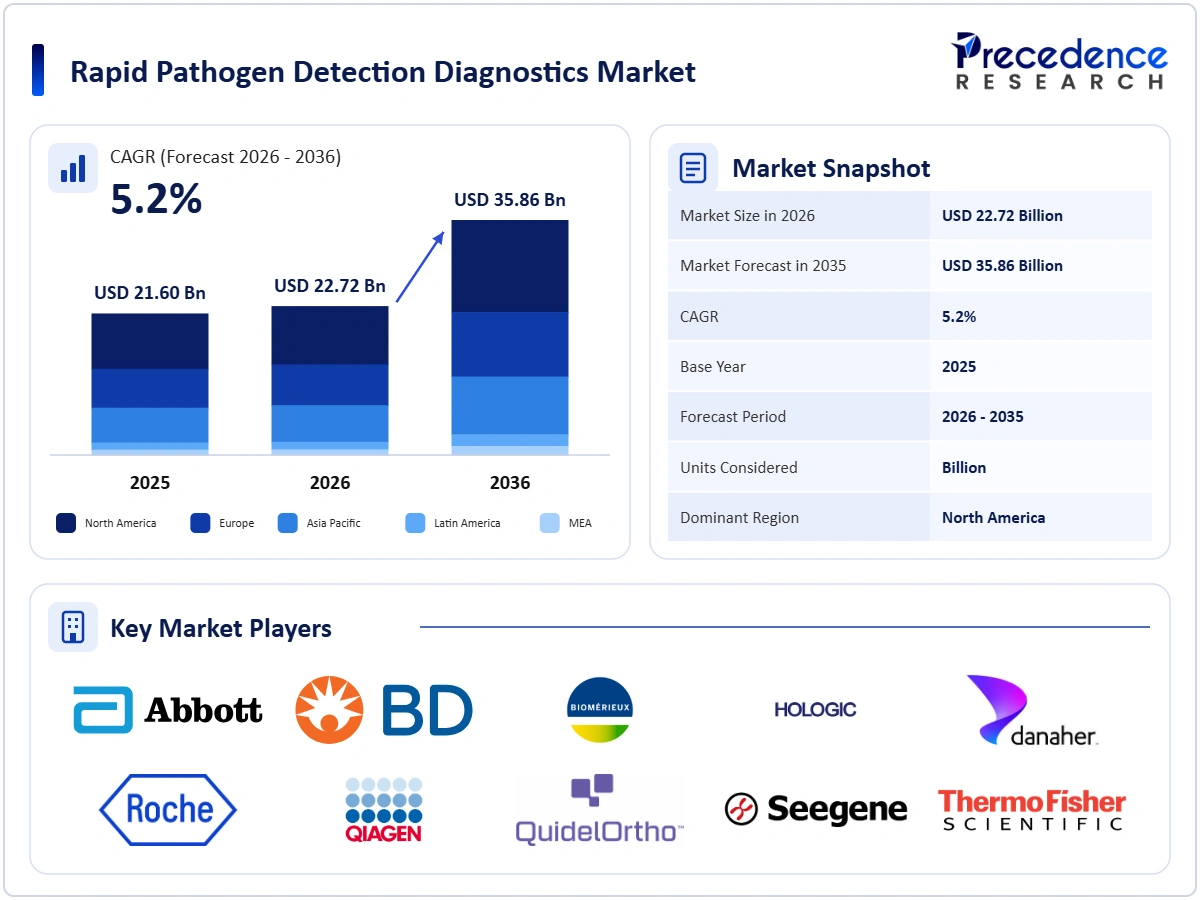
The pathogen detection diagnostics market is forecasted to expand from USD 21.60 billion in 2026 to USD 35.86 billion by 2035, growing at a CAGR of 5.20% from 2026 to 2035.
Key Takeaways
Market Size & Growth Outlook
- Market size in 2025: USD 21.60 billion
- Estimated market size in 2026: USD 22.72 billion
- Projected market size by 2035: USD 35.86 billion
- CAGR (2026-2035): 5.2%
Regional Market Spotlight
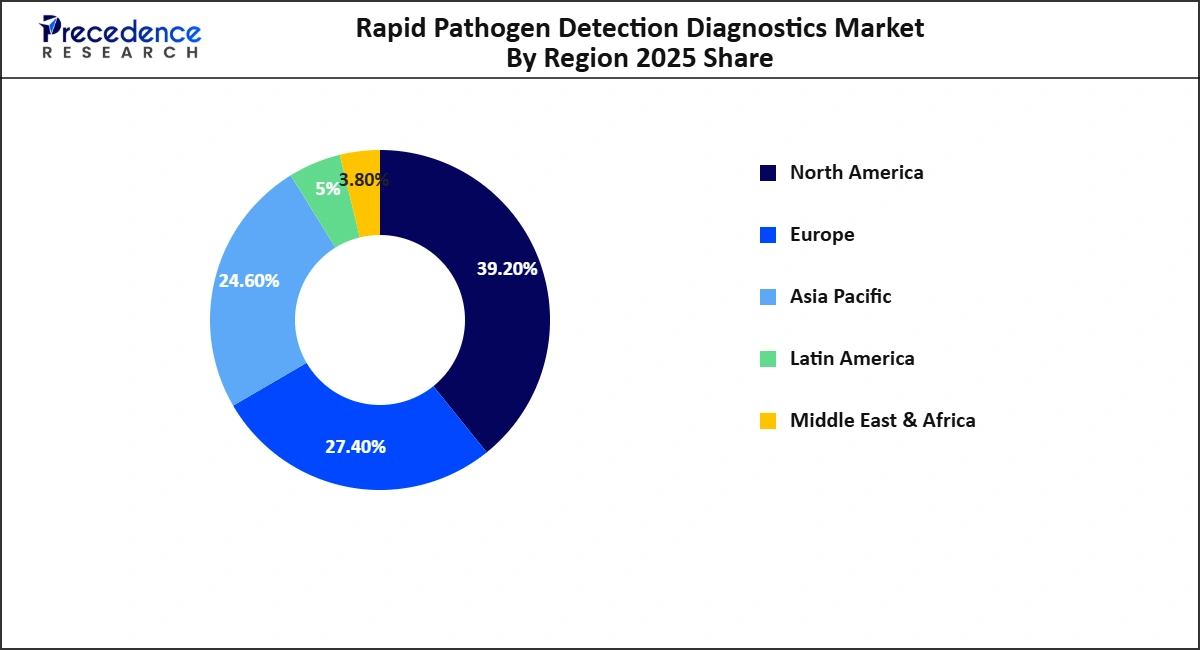
- North America held a 39.2% share of the market in 2025, valued at USD 8.47 billion.
- In 2025, Europe represented 27.4% of the global market, equivalent to USD 5.92 billion.
- In 2025, Asia Pacific accounted for 24.6% of the market, valued at USD 5.31 billion. From 2025 to 2035, the region is projected to report a CAGR of 6.68%, making Asia Pacific the fastest-growing region.
Segmental Spotlight
- PCR-based assays accounted for USD 9.2 billion, representing 42.6% of the total market in 2025.
- By infection type, respiratory infections accounted for 34.8%, valued at USD 7.52 billion in 2025.
- By testing setting, laboratory testing, valued at USD 15.42 billion, accounted for 71.4% in 2025.
- In 2025, based on end use, hospitals & clinics accounted for 46.8%, valued at USD 10.11 billion.
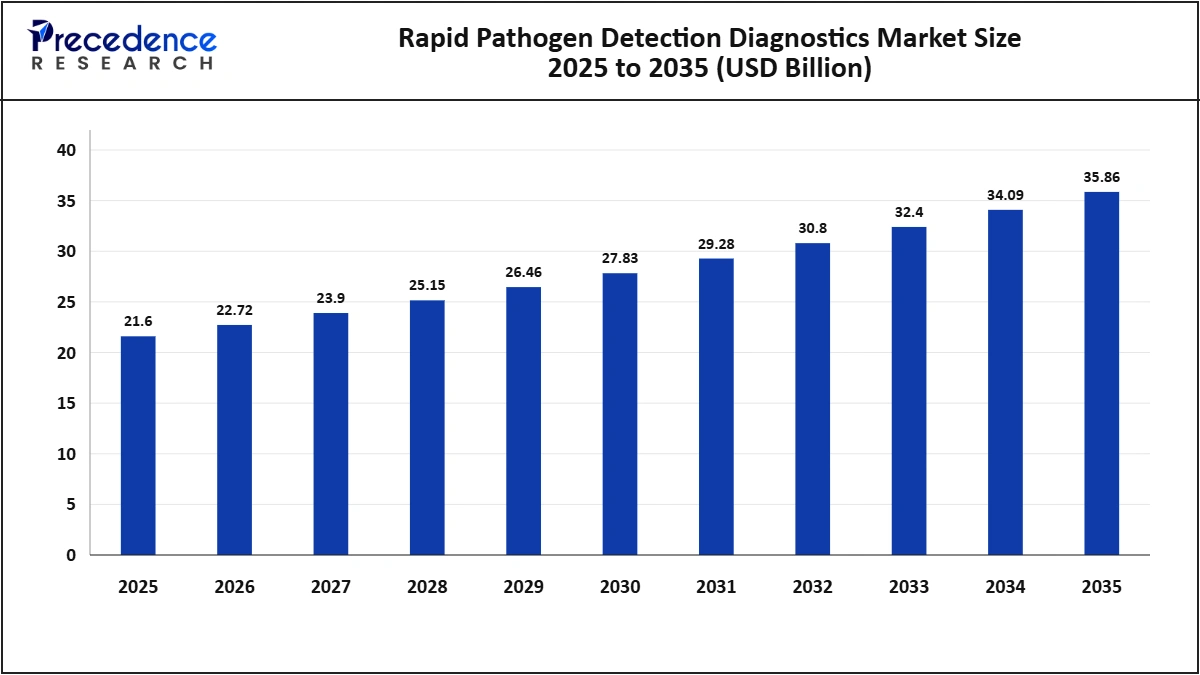
Rapid Pathogen Detection Diagnostics Market Size and Forecast, 2025-2035 (USD Billion)
Note: 2025 is the base year; 2026-2035 values are forecasts.
Sources: Expert interviews, secondary sources, Precedence Research database and Precedence Research analysts.
The rapid pathogen detection diagnostics market is expected to increase from USD 21.60 billion in 2025 to USD 35.86 billion by 2035. This growth is driven by the need for quick pathogen and resistance results to ensure appropriate treatment, reduce unnecessary antibiotic use, and manage infection control. The introduction of syndromic panels and point-of-care molecular tests is anticipated to elevate the market to USD 27.83 billion by 2030, with a CAGR of 5.2% from 2026 to 2035.
- Analyst View: Market growth is driven by rising infectious disease incidence, increasing antimicrobial resistance, and demand for faster, more accurate diagnosis. Expanding syndromic panels, rapid molecular assays, and decentralized testing are expected to increase adoption across healthcare settings. However, reimbursement constraints, high testing costs, and declining post-pandemic respiratory testing may moderate growth, supporting a projected 5.2% CAGR through 2035.
Market Trends
- Syndromic blood culture panels offer comprehensive portfolios.
- Rapid phenotypic antibiotic susceptibility testing (AST) can be performed directly from blood cultures.
- Specific eligible tests receive CLIA-waived categorization.
- Sequencing technology aids in unbiased pathogen detection.
- Identification panels now include resistance markers.
- Stewardship programs connect test results to prescribing practices.
Drivers, Restraints, and Opportunities
Driver
Rising cases of sepsis and infectious diseases, coupled with increasing antimicrobial resistance, are driving demand for rapid pathogen detection diagnostics. The need for timely treatment decisions and effective antibiotic stewardship is encouraging the adoption of syndromic panels that identify multiple pathogens simultaneously. Additionally, investments in pandemic preparedness and molecular testing infrastructure are supporting market growth.
Restraint
High costs of syndromic panels and rapid susceptibility tests, coupled with limited reimbursement, may restrict adoption compared with traditional culture methods. Declining post-pandemic respiratory testing volumes and laboratory staffing constraints can further limit demand. Additionally, detecting colonizing organisms or genetic markers may complicate result interpretation, potentially affecting clinical adoption and market growth.
Opportunity
Growing demand for rapid pathogen detection diagnostics is creating opportunities for rapid susceptibility testing, point-of-care molecular assays, and sequencing-based pathogen identification. Expanding laboratory capacity in emerging markets and integrating diagnostic results with antimicrobial stewardship software are expected to increase demand for testing instruments, assays, and services, supporting the growth of the rapid pathogen detection diagnostics market.
Rapid Pathogen Detection Diagnostics Market Segmentation: 2025 Share and Value
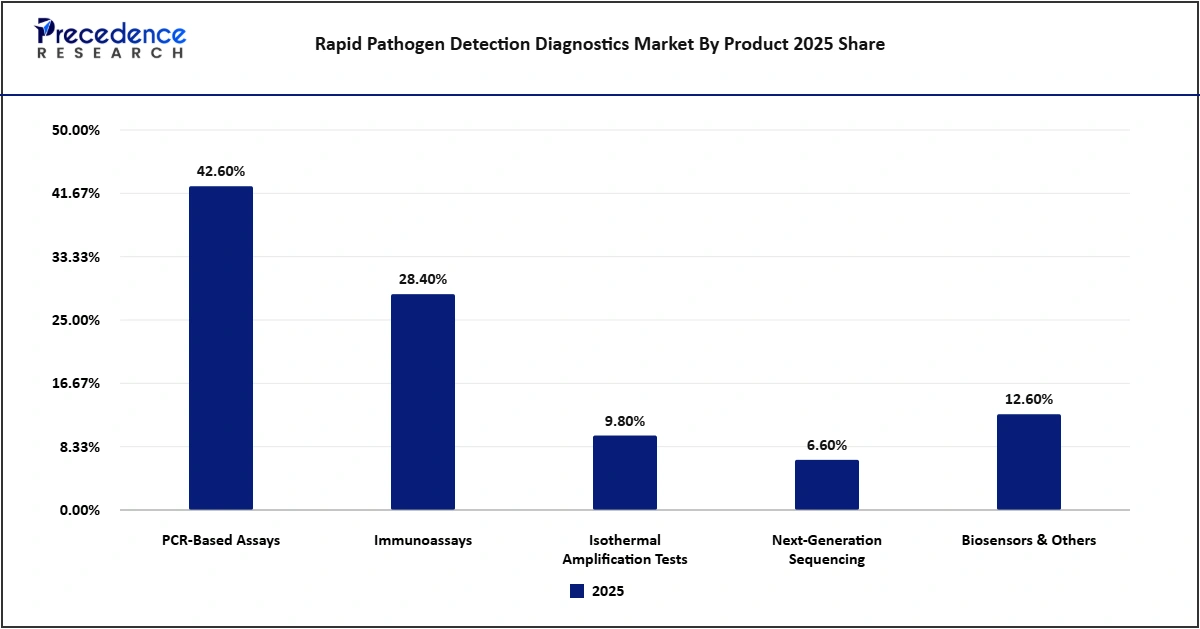
Rapid Pathogen Detection Diagnostics Market By Product 2025 Share
Note: 2025 is the base year.
Sources: Expert interviews, secondary sources, Precedence Research database and Precedence Research analysts.
In 2025, PCR-based assays dominated the market, accounting for 42.6%, equivalent to USD 9.20 billion, owing to the rapid and sensitive detection of multiple pathogens and resistance genes facilitated by real-time and multiplex PCR technology. The popularity of syndromic panels enables laboratories to perform tests on numerous targets using a single sample, contributing to the sales uplift of recurring cartridges from established platforms like BioFire, GeneXpert, and QIAstat-Dx. Cobas systems. Immunoassays represented 28.4%, valued at USD 6.13 billion, providing rapid antigen testing for various infections, including influenza and COVID-19.
Isothermal amplification was valued at USD 2.12 billion with a market share of 9.8%. Next-generation sequencing, recognized as the most promising approach, is expected to grow rapidly for broad-spectrum pathogen detection, including organisms not targeted by a predefined panel, in suitable applications, and was valued at USD 1.43 billion with a 6.6% market share. Biosensors and related technologies, including rapid phenotypic susceptibility systems, accounted for USD 2.72 billion, representing 12.6% of the market.
Rapid Pathogen Detection Diagnostics Market By Infection Type 2025 Share & Size
| Segments | 2025 Share | 2025 Market Value |
| Respiratory Infections | 34.8% | USD 7.52 billion |
| Bloodstream Infections & Sepsis | 18.6% | USD 4.02 billion |
| Sexually Transmitted Infections | 14.4% | USD 3.11 billion |
| Gastrointestinal Infections | 10.2% | USD 2.20 billion |
| Hospital-Acquired & Other Infections | 22% | USD 4.75 billion |
Note: 2025 is the base year.
Sources: Expert interviews, secondary sources, Precedence Research database and Precedence Research analysts.
In 2025, respiratory infections accounted for USD 7.52 billion, representing 34.8% of the market, driven by high testing volumes for pathogens like influenza, COVID-19, and RSV. Bloodstream infections and sepsis accounted for USD 4.02 billion, or 18.6% of the market. Are projected to be among the fastest-growing categories, emphasizing the need for rapid identification and resistance detection from blood cultures to expedite therapy and reduce mortality rates. Sexually transmitted infections contributed USD 3.11 billion, accounting for 14.4% of the market. Gastrointestinal infections accounted for USD 2.20 billion, representing 10.2%. Additionally, hospital-acquired and other infections contributed USD 4.75 billion, comprising 22% of the market.
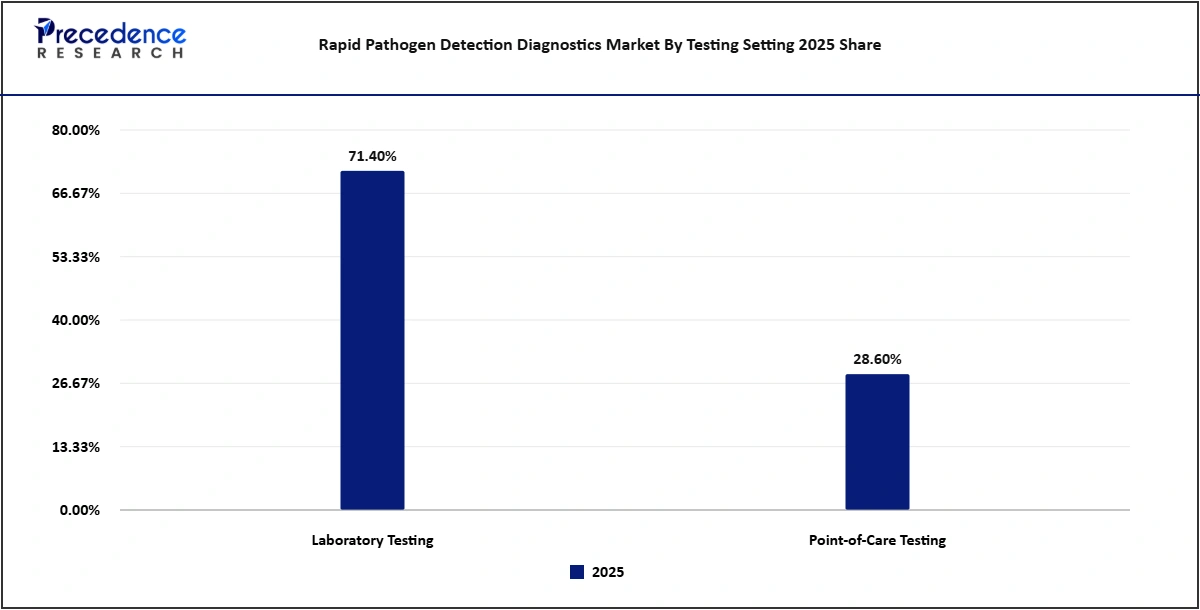
Rapid Pathogen Detection Diagnostics Market By Testing Setting 2025 Share
Note: 2025 is the base year.
Sources: Expert interviews, secondary sources, Precedence Research database and Precedence Research analysts.
In 2025, contributed USD 15.42 billion to the market, accounting for 71.4% of the market, owing to the predominance of molecular and sequencing tests conducted in hospital and reference laboratories. In contrast, point-of-care testing, which accounts for 28.6% or USD 6.18 billion, grew rapidly as CLIA-waived molecular and antigen tests were increasingly adopted in emergency departments, clinics, and pharmacies.
Rapid Pathogen Detection Diagnostics Market By End User 2025 Share & Size
| Segments | 2025 Share | 2025 Market Value |
| Hospitals & Clinics | 46.8% | USD 10.11 billion |
| Diagnostic Laboratories | 34.2% | USD 7.39 billion |
| Public Health Agencies & Research Institutes | 12.4% | USD 2.68 billion |
| Others | 6.6% | USD 1.43 billion |
Note: 2025 is the base year.
Sources: Expert interviews, secondary sources, Precedence Research database and Precedence Research analysts.
In 2025, hospitals and clinics accounted for 46.8% of the global market, equivalent to USD 10.11 billion. Hospitals are expected to increase adoption as they implement syndromic testing and rapid AST for sepsis management and antimicrobial stewardship. With a valuation of USD 7.39 billion, diagnostic laboratories represented 34.2% of the market. Public health agencies and research institutes represented 12.4% of the market, valued at USD 2.68 billion, and others accounted for 6.6%, valued at USD 1.43 billion.
- Analyst View: PCR leads because of syndromic panel growth, and respiratory infections lead because of seasonal volumes. We expect sequencing, bloodstream infection testing and point-of-care settings to gain share.
Regional Analysis
Rapid Pathogen Detection Diagnostics Market By Region 2025 Share
Note: 2025 is the base year.
Sources: Expert interviews, secondary sources, Precedence Research database and Precedence Research analysts.
North America held a 39.2% market share in 2025, driven by molecular testing and FDA clearances. Europe follows at 27.4%, supported by robust microbiology laboratories. Asia Pacific held a 24.6% share in 2025, aided by expanding laboratory networks and investment in pandemic preparedness. Latin America and the Middle East and Africa represent smaller markets at 5% and 3.8%, respectively, driven by rapid tests for infectious disease control.
North America represented a 39.2% portion of the market in 2025, valued at USD 8.47 billion. The FDA cleared several diagnostic panels through the 510(k) pathway and introduced rapid phenotypic susceptibility testing in 2025 and 2026. Hospitals use these rapid diagnostics to address sepsis and stewardship objectives, while CLIA waivers facilitate the use of molecular tests in clinics.
Europe's market valuation reached USD 5.92 billion in 2025, securing a 27.4% share. Laboratories in Europe were early adopters of rapid susceptibility and syndromic testing, supported by antimicrobial resistance surveillance programmes. Germany, France, and the United Kingdom are identified as the largest markets.
Asia Pacific captured 24.6% of the market in 2025, with its market size estimated at USD 5.31 billion. China and South Korea possess robust domestic molecular diagnostic companies such as Seegene, funded by government investments in laboratory capacity during the pandemic. Meanwhile, India is increasing molecular testing capabilities for tuberculosis and other infections.
Latin America maintained a 5% share of the market in 2025, with its value estimated at USD 1.08 billion. Rapid tests enhance infectious disease programs in Brazil and Mexico, while molecular testing is largely centralized in major laboratories.
The Middle East and Africa contributed 3.8% to the market in 2025, with a market value of USD 0.82 billion. Rapid tests for HIV, malaria, and tuberculosis are prevalent in Africa, while Gulf countries invest in molecular laboratories.
Analyst View: North America leads because of molecular testing intensity and reimbursement. We assign Asia Pacific the highest growth premium because laboratory capacity and testing are expanding fastest there.
Top 10 Companies in the Rapid Pathogen Detection Diagnostics Market
| Rank | Company Name | Market-Specific Revenue (USD Billion) | 2025 Share | Key Products / Business | Headquarters |
| 1 | Roche Diagnostics | 2.30 | 10.65% | cobas molecular and liat point-of-care systems | Switzerland |
| 2 | Abbott | 2.10 | 9.72% | ID NOW, BinaxNOW and Alinity m | United States |
| 3 | Danaher (Cepheid) | 2.00 | 9.26% | GeneXpert systems and Xpert tests | United States |
| 4 | bioMérieux | 1.90 | 8.8% | BIOFIRE syndromic panels and VITEK systems | France |
| 5 | Thermo Fisher Scientific | 1.10 | 5.09% | TaqMan assays and microbiology products | United States |
| 6 | BD | 1.00 | 4.63% | BD MAX, BD COR and BACTEC systems | United States |
| 7 | Hologic | 0.90 | 4.17% | Panther Fusion molecular systems | United States |
| 8 | QIAGEN | 0.48 | 2.22% | QIAstat-Dx syndromic panels | Netherlands |
| 9 | QuidelOrtho | 0.46 | 2.13% | Sofia antigen tests and Savanna systems | United States |
| 10 | Seegene | 0.22 | 1.02% | Allplex multiplex PCR assays | South Korea |
Note: Company revenues and shares are 2025 estimates.
Sources: Company press releases, expert interviews, secondary sources, Precedence Research database and Precedence Research analysts.
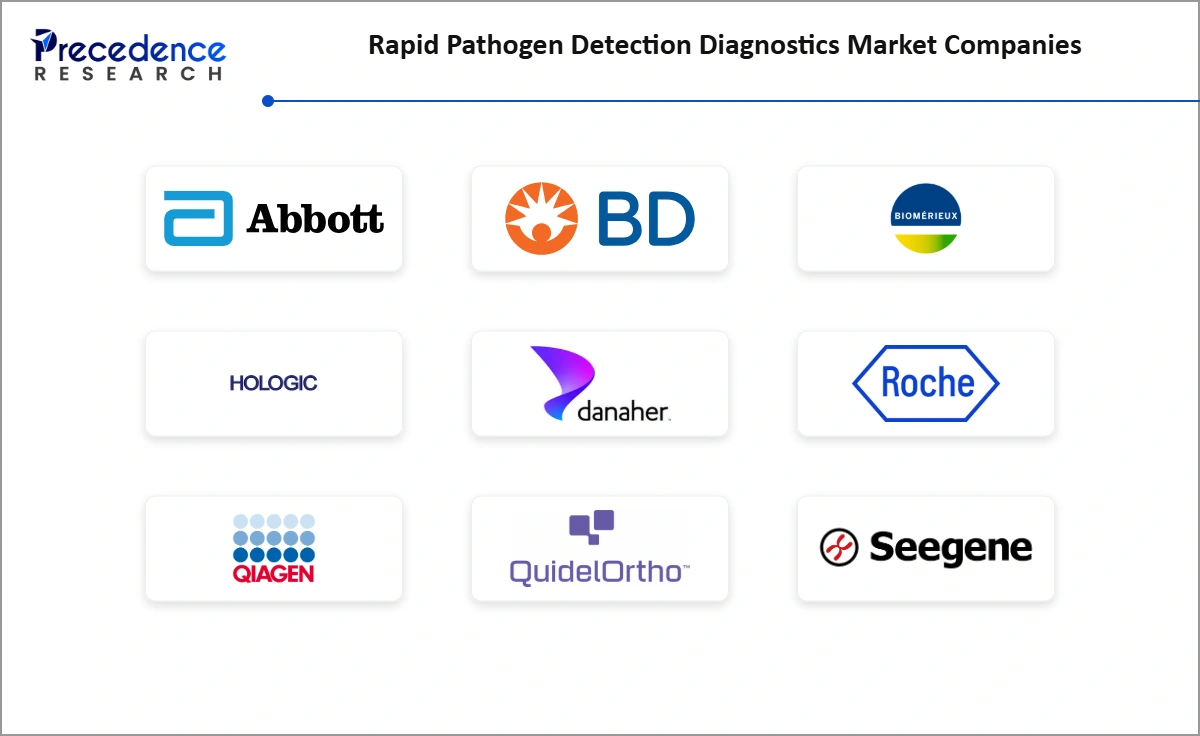
The top 10 companies are estimated to have accounted for 57.69% of 2025 market revenue, with the remaining 42.31% distributed among Diasorin, Bio-Rad, rapid susceptibility testing firms, and regional molecular test manufacturers. Roche ranks first in the report's estimated market-specific revenue table, which held a 10.65% share of the 2025 revenue, through its cobas high-throughput molecular systems and cobas liat point-of-care platform. Following Roche are Abbott with 9.72% and Cepheid at 9.26%. Abbott provides ID NOW rapid molecular tests and BinaxNOW antigen tests, while Cepheid has a substantial installed base of GeneXpert systems. In syndromic testing, bioMérieux excels with its BIOFIRE panels. Other competitors include Thermo Fisher, BD, Hologic, QIAGEN, QuidelOrtho, Seegene, Diasorin, and Bio-Rad, among others. The market is led by major companies with comprehensive platforms, emphasizing competition in areas like menu variety, result speed, multiplexing, resistance detection, user-friendliness, regulatory compliance, and cost efficiency. Key competitive segments include syndromic panels and rapid phenotypic susceptibility testing, alongside contributions from smaller innovators with new technologies.
Recent Developments
- August 2026: QIAGEN received FDA clearance for the QIAstat-Dx BCID GPF Plus AMR Panel, its first bloodstream infection panel in the United States, detecting Gram-positive bacteria, fungi, and resistance markers in about one hour.
- June 2026: The FDA cleared the PhAST instrument and Blood Culture Gram-negative Panel, which provides phenotypic susceptibility results for 15 antimicrobials directly from positive blood cultures in about two hours.
Rapid Pathogen Detection Diagnostics Market Segments
By Product
- PCR-Based Assays
- Immunoassays
- Isothermal Amplification Tests
- Next-Generation Sequencing
- Biosensors & Others
By Infection Type
- Respiratory Infections
- Bloodstream Infections & Sepsis
- Sexually Transmitted Infections
- Gastrointestinal Infections
- Hospital-Acquired & Other Infections
By Testing Setting
- Laboratory Testing
- Point-of-Care Testing
By End User
- Hospitals & Clinics
- Diagnostic Laboratories
- Public Health Agencies & Research Institutes
- Others
By Region
- North America (U.S., Canada, Mexico)
- Europe (Germany, U.K., France, Italy, Spain, Rest of Europe)
- Asia Pacific (China, Japan, India, South Korea, Taiwan, Rest of Asia Pacific)
- Latin America (Brazil, Argentina, Rest of Latin America)
- Middle East & Africa (GCC, South Africa, Rest of MEA)
Research Methodology
The rapid pathogen detection diagnostics market was defined as rapid molecular, immunoassay, sequencing, biosensor, and susceptibility tests, instruments, and software for infectious pathogens worldwide. The 2025 base year was built bottom-up from rapid infectious disease test volumes by infection type, technology, and region, average test prices, and instrument placements. The bottom-up estimate was cross-checked against the infectious disease diagnostics revenue of leading suppliers, with adjustments made for products outside the defined market.
Segment, regional, and company values were allocated from products, infection types, testing settings, end users, and regional demand. Key estimates were verified by cross-checking company disclosures, regulatory and industry data, and published third-party estimates, and inputs that could not be reconciled were excluded. All segment, regional, and company figures were reconciled to the same 2025 base year. The 2026-2035 forecast, which applies a constant CAGR from the 2025 base, was recalculated and validated.
Analyst View: Overall Market
The rapid pathogen detection diagnostics market combines large, mature respiratory and antigen testing with faster-growing bloodstream infection, resistance, and sequencing segments. Our estimate links demand to test volumes, prices, and installed platforms, so the forecast follows infection trends, resistance, and decentralisation. The main upside comes from sepsis and resistance testing, while the main risks are reimbursement limits and volatile respiratory demand.
Sources and References
- Diasorin. "DIASORIN RECEIVES FDA 510(K) CLEARANCE FOR THE LIAISON PLEX BLOOD CULTURE YEAST ASSAY ON THE NEW MULTIPLEXING LIAISON PLEX". 2024-06-05. Diasorin clearance. https://us.diasorin.com/sites/default/files/press-releases/PR%20LIAISON%20PLEX%20BCY%20ENG.pdf
- Clinical Lab Products. "FDA clears PhAST phenotypic AST panel for blood cultures". 2026-09-24. PhAST clearance. https://clpmag.com/diagnostic-technologies/microbiology/microbiology-instruments/fda-clears-phast-phenotypic-ast-panel-blood-cultures/
- MLO Online. "QIAGEN's QIAstat-Dx BCID GPF Plus AMR Panel receives FDA clearance for bloodstream infections". 2026-08-11. QIAGEN clearance. https://www.mlo-online.com/diagnostics/news/55397196/qiagens-qiastat-dx-bcid-gpf-plus-amr-panel-receives-fda-clearance-for-bloodstream-infections
For inquiries regarding discounts, bulk purchases, or customization requests, please contact us at sales@precedenceresearch.com
Frequently Asked Questions





Ask For Sample
No cookie-cutter, only authentic analysis – take the 1st step to become a Precedence Research client
 Get a Sample




 sales@precedenceresearch.com
 Schedule a Meeting
