



Zika Virus Testing Market Size, Key Companies, Company Production Capacity, Healthcare Infrastructure Growth, Product Utilization, Regulatory Compliance, Company Expansion Strategies, Company Investment Strategies, and Market Outlook
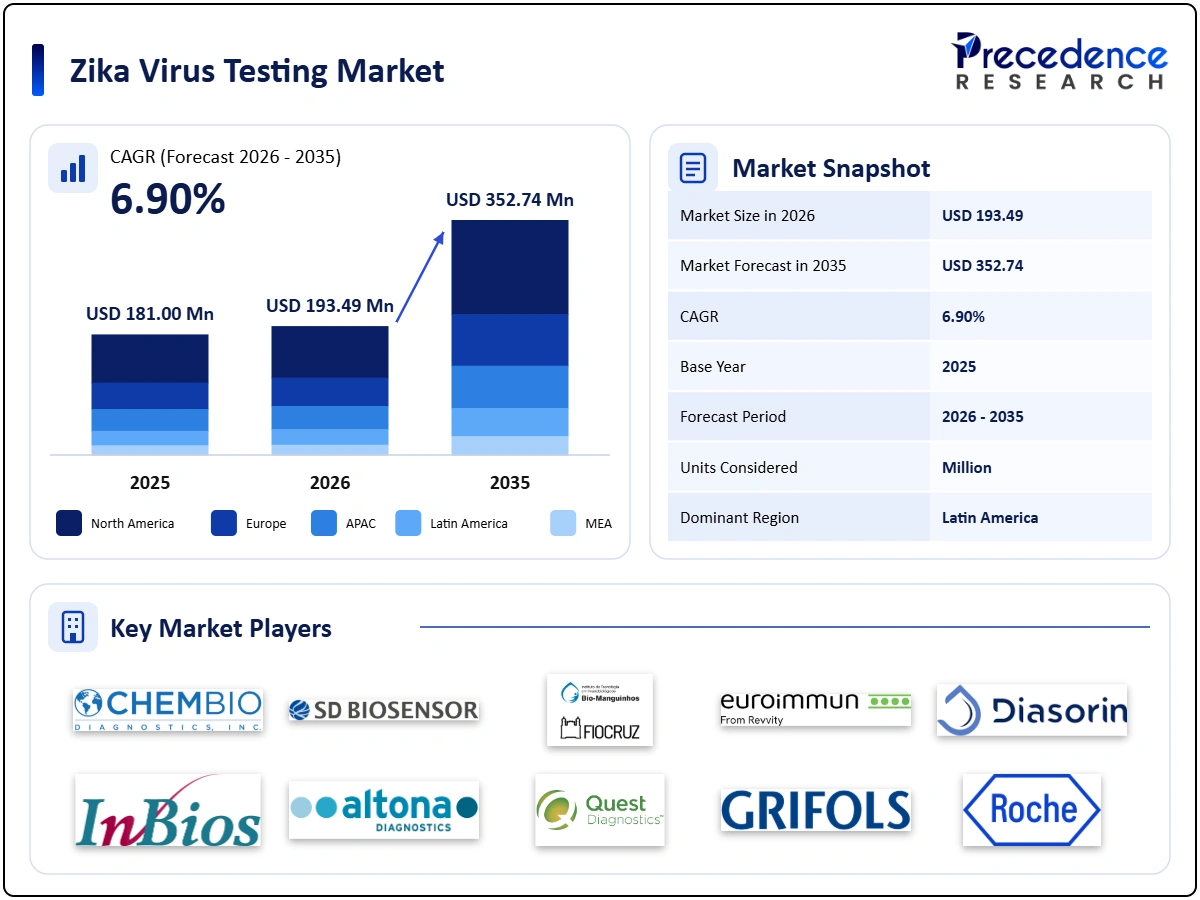
Payal Rabde, a Healthcare Industry Expert, highlights that the zika virus testing market has reached USD 193.49 million in 2026 to USD 352.74 million by 2035, growing at a CAGR of 6.90%. Key zika virus testing market companies shaping the market include Roche Diagnostics, Grifols, Quest Diagnostics, Altona Diagnostics major growth segments span test type, application, end user and region.
Source: https://www.precedenceresearch.com/zika-virus-testing-market
 Get a Sample
 Report Description
Key Takeaways
Market Size & Growth Outlook
- Market size in 2025: USD 181.00 million
- Estimated market size in 2026: USD 193.49 million
- Projected market size by 2035: USD 352.74 million
- CAGR (2026-2035): 6.90%
Regional Market Spotlight
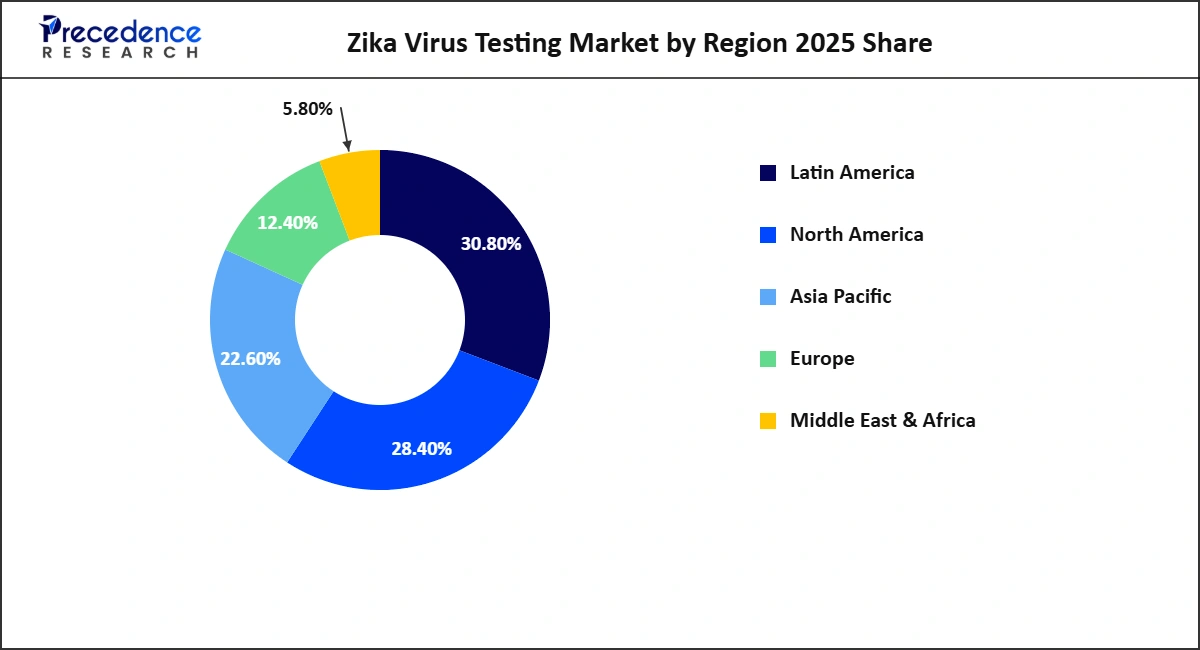
- Latin America led the market in 2025, with a 30.80% (USD 55.75 million) share.
- North America accounted for 28.40% (USD 51.40 million) of the market in 2025.
- Asia Pacific accounted for 22.60% (USD 40.91 million) of the market in 2025. It is expected to be the fastest-growing region, with a CAGR of 8.53% from 2025 to 2035.
Segmental Spotlight
- By test type, Nucleic Acid Amplification Testing (NAAT) held a 56.40% (USD 102.08 million) share in 2025.
- By application, Clinical Diagnosis accounted for 38.40% (USD 69.50 million) of the market in 2025.
- By end user, Diagnostic Laboratories held a 40.20% (USD 72.76 million) share in 2025.
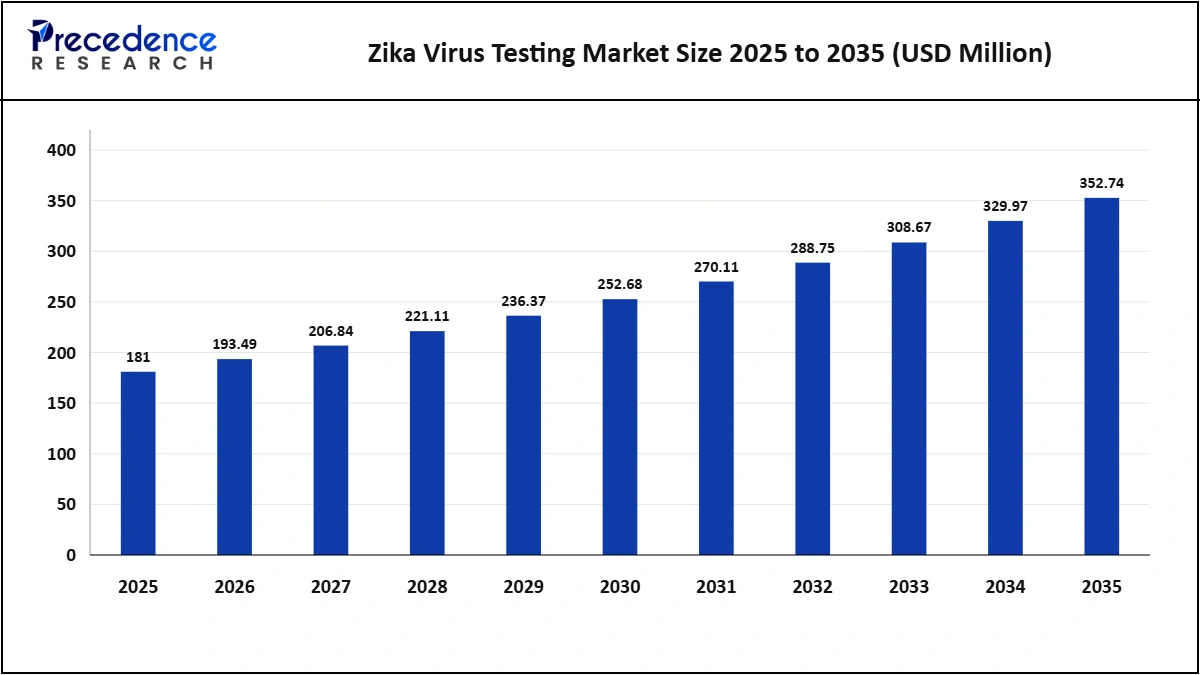
Zika Virus Testing Market Size and Forecast, 2025-2035 (USD Million)
Note: 2025 is the base year; 2026-2035 values are forecasts.
Sources: Expert interviews, secondary sources, Precedence Research database and Precedence Research analysts.
The Zika virus testing market is expected to grow from USD 181.00 million in 2025 to USD 352.74 million by 2035. This growth is mainly linked to the need for health authorities and doctors to confirm Zika infection in pregnant women, travellers and people in outbreak areas. Zika infection during pregnancy can cause serious birth defects, making timely testing important.
Multiplex arbovirus panels also support market growth by including Zika testing alongside dengue and chikungunya tests. The market is expected to reach USD 252.68 million by 2030 and grow at a CAGR of 6.90% from 2026 to 2035.
- Analyst View: We estimated the market by looking at the annual number of Zika tests used for clinical diagnosis, prenatal screening, travel-related testing, blood donor screening and public health monitoring in each region. We then applied the average prices of molecular, antibody and rapid tests, along with the related costs of reagents and services.
Our estimates of test volumes take into account reported Zika cases, dengue and chikungunya testing that also includes Zika, and blood screening requirements. We compared the total estimate with the arbovirus testing revenue of diagnostic companies, public health purchasing data and published market estimates. This comparison placed our base-year estimate slightly above similar published figures. The expected growth reflects continued Zika transmission and wider use of multiplex testing, while also taking into account the decline in cases since the 2016 epidemic peak.
Market Trends
- Multiplex arbovirus panels are increasingly including Zika testing.
- Testing is moving from emergency authorisations to cleared diagnostic tests.
- Blood donor screening continues in areas where Zika is present.
- Rapid tests are supporting field-based surveillance.
- Climate change is expanding the areas where Aedes mosquitoes can live.
- Testing during pregnancy remains a major priority.
Drivers, Restraints and Opportunities
Driver
Zika infection during pregnancy can cause microcephaly and other birth defects, making testing especially important for pregnant women. Zika transmission continues in Latin America and parts of Asia. Blood donations are also screened in affected areas. Climate change is expanding the range of Aedes mosquitoes, while combined arbovirus surveillance is encouraging the use of tests that detect Zika, dengue and chikungunya together.
Restraint
Zika cases remain far below the levels seen during the 2015-2016 epidemic, which reduces demand for testing. Antibody tests can react to dengue antibodies, making results harder to interpret. Funding for Zika-specific programmes also competes with other public health needs. Many affected countries have limited testing facilities, and some blood screening programmes have reduced the amount of testing they carry out.
Opportunity
Multiplex point-of-care tests could make diagnosis easier in areas where Zika is common. New outbreaks in Asia or Africa could increase demand for testing. Better antibody tests that are less likely to cross-react with dengue could improve prenatal screening. Vaccine development may also increase the need for diagnostic tests during clinical trials. Wastewater and mosquito monitoring could help health authorities identify possible outbreaks earlier.
Market Segmentation: 2025 Share and Value
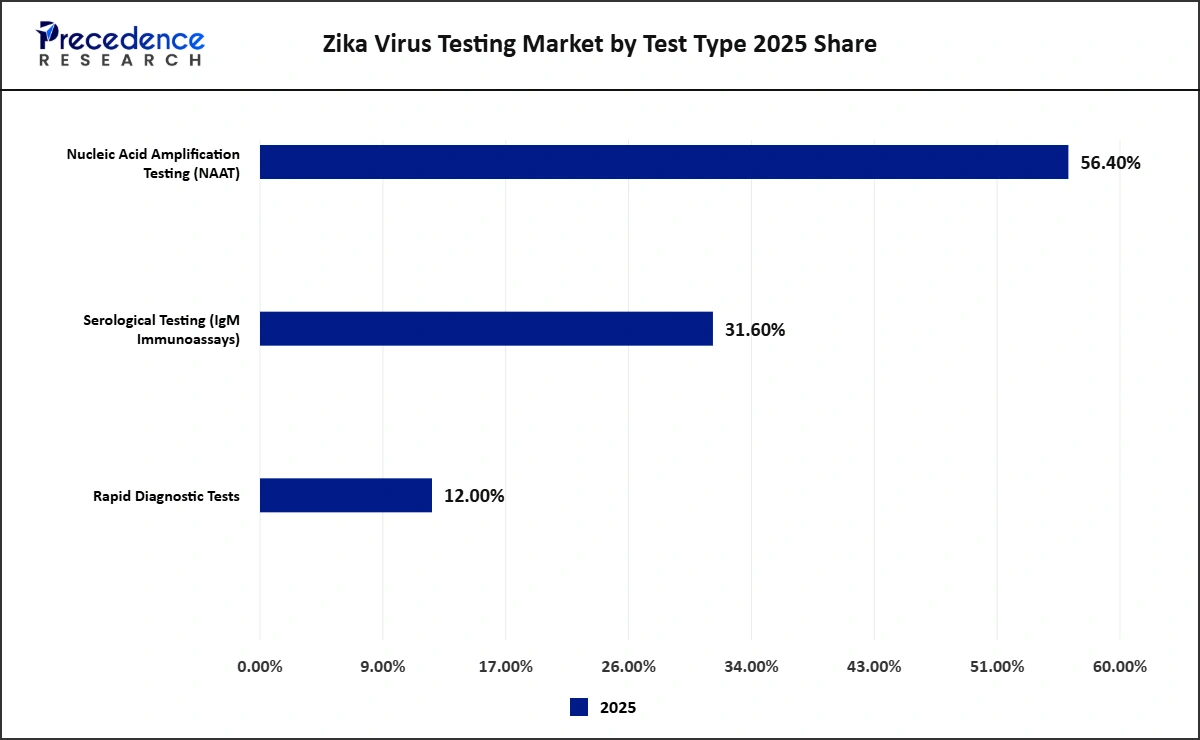
Zika Virus Testing Market by Test Type 2025 Share
Note: 2025 is the base year.
Sources: Expert interviews, secondary sources, Precedence Research database and Precedence Research analysts.
Nucleic acid amplification testing held the largest share in 2025, accounting for 56.40% (USD 102.08 million) of the market. RT-PCR can detect Zika virus RNA during the first days of illness, and the virus may remain detectable in urine for longer. This makes molecular testing useful for confirming infection. Multiplex arbovirus panels can also test for Zika, dengue and chikungunya using one sample. Blood donor screening in affected areas also uses nucleic acid tests.
Serological testing accounted for 31.60% (USD 57.20 million) of the market. These tests use IgM antibody immunoassays, including FDA-cleared tests, to help identify recent infection. However, their results can be difficult to interpret because antibodies to dengue may also react in these tests.
Rapid diagnostic tests accounted for 12.00% (USD 21.72 million) of the market. They are the fastest-growing test type for field surveillance, especially in areas with limited healthcare and laboratory resources.
Zika Virus Testing Market by Application 2025 Share & Size
| Segments | 2025 Share | 2025 Market Value |
| Clinical Diagnosis | 38.40% | USD 69.50 million |
| Prenatal Screening | 24.20% | USD 43.80 million |
| Blood Donor Screening | 22.60% | USD 40.91 million |
| Surveillance & Research | 14.80% | USD 26.79 million |
Note: 2025 is the base year.
Sources: Expert interviews, secondary sources, Precedence Research database and Precedence Research analysts.
Clinical diagnosis was the largest application in 2025, accounting for 38.40% (USD 69.50 million) of the market. Prenatal screening accounted for 24.20% (USD 43.80 million), while blood donor screening held 22.60% (USD 40.91 million). Surveillance and research accounted for the remaining 14.80% (USD 26.79 million).
Prenatal screening is the fastest-growing application because pregnant women who live in affected areas or may have been exposed while travelling are advised to seek testing when appropriate.
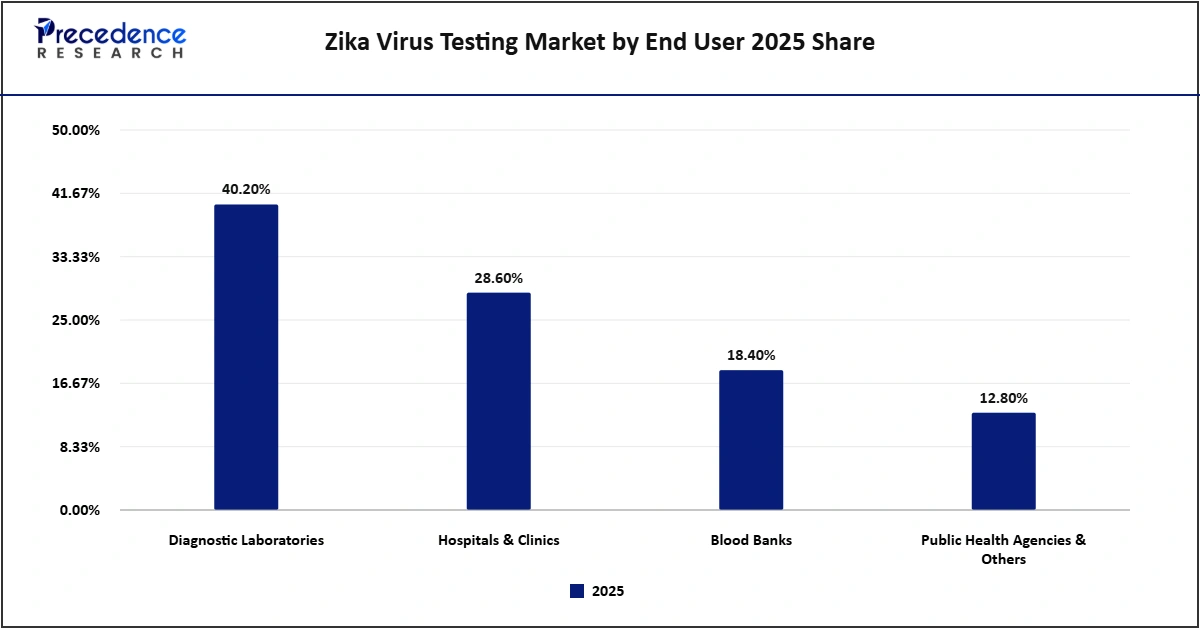
Zika Virus Testing Market by End User 2025 Share
Note: 2025 is the base year.
Sources: Expert interviews, secondary sources, Precedence Research database and Precedence Research analysts.
Diagnostic laboratories accounted for 40.20% (USD 72.76 million) of the market in 2025. Hospitals and clinics held 28.60% (USD 51.77 million), blood banks accounted for 18.40% (USD 33.30 million), and public health agencies and other users made up 12.80% (USD 23.17 million).
Hospitals and clinics are the fastest-growing end-user group as more multiplex arbovirus testing becomes available closer to patients.
- Analyst View: We estimated the value of each segment by matching test volumes and prices with the relevant test types, applications and end users. We also used purchasing data and supplier revenue information. NAAT leads because it can help confirm infection and is used for blood screening. Clinical diagnosis leads because of the need to test suspected cases during outbreaks. We expect rapid tests, prenatal screening and point-of-care multiplex testing to account for a growing share of the market.
Regional Analysis
Zika Virus Testing Market by Region 2025 Share
Note: 2025 is the base year.
Sources: Expert interviews, secondary sources, Precedence Research database and Precedence Research analysts.
Latin America held the largest share of the market in 2025, accounting for 30.80% (USD 55.75 million). Zika transmission continues in Brazil, Argentina, Bolivia, Peru and other countries in the region. Public health laboratories test people with suspected infections, pregnant women and blood donations.
North America accounted for 28.40% (USD 51.40 million) of the market. Demand is supported by blood screening, testing related to travel, cleared IgM and molecular tests, and higher testing prices.
Asia Pacific held a 22.60% (USD 40.91 million) share and is the fastest-growing region. Zika transmission in India and Southeast Asia, the addition of multiplex arbovirus panels to laboratories that already test for dengue, and wider surveillance are supporting growth.
Europe accounted for 12.40% (USD 22.44 million) of the market, with testing mainly focused on returning travellers. The Middle East and Africa held a 5.80% (USD 10.50 million) share, with surveillance still limited but gradually expanding.
Latin America
Latin America accounted for 30.80% (USD 55.75 million) of the market in 2025, making it the largest regional market. Brazil reported 5,117 probable Zika cases to PAHO in the first quarter of 2025, while Argentina reported 497 cases. Public health laboratories use combined tests to check for different arboviruses. Testing during pregnancy remains important because of the risk of congenital Zika syndrome.
North America
North America accounted for 28.40% (USD 51.40 million) of the market in 2025. Blood donations in the United States are screened for Zika. Travellers and pregnant women who may have been exposed are tested using cleared IgM and molecular tests. Puerto Rico and other territories also continue to monitor Zika transmission.
Asia Pacific
Asia Pacific accounted for 22.60% (USD 40.91 million) of the market in 2025 and is the fastest-growing region. India has reported Zika clusters in several states. Countries in Southeast Asia, where dengue is common, are adding Zika testing to multiplex arbovirus panels. The expansion of laboratory facilities is also helping improve surveillance.
Europe
Europe accounted for 12.40% (USD 22.44 million) of the market in 2025. Testing mainly focuses on travellers returning from affected areas and pregnant women who may have been exposed. Reference laboratories provide both molecular and antibody testing.
Middle East & Africa
The Middle East and Africa accounted for 5.80% (USD 10.50 million) of the market in 2025. Zika surveillance remains limited in the region, although Aedes mosquitoes are present in many areas. International programmes are helping improve the region's ability to test for arboviruses.
Analyst View: We estimated regional market shares using test volumes, reported cases, blood screening activity and testing prices in each region. Latin America leads because Zika transmission continues there. We expect Asia Pacific to grow the fastest because arbovirus surveillance and laboratory capacity are expanding more quickly in the region.
Top 10 Companies in the Zika Virus Testing Market
| Rank | Company Name | Market-Specific Revenue (USD Million) | 2025 Share | Key Products / Business | Headquarters |
| 1 | Roche Diagnostics | 28.00 | 15.47% | cobas Zika blood screening test | Switzerland |
| 2 | Grifols | 22.00 | 12.15% | Procleix Zika Virus Assay | Spain |
| 3 | Quest Diagnostics | 14.00 | 7.73% | Zika molecular and antibody testing services | United States |
| 4 | Altona Diagnostics | 10.00 | 5.52% | RealStar Zika and arbovirus PCR kits | Germany |
| 5 | InBios International | 8.00 | 4.42% | ZIKV Detect 2.0 IgM Capture ELISA | United States |
| 6 | DiaSorin | 8.00 | 4.42% | Zika antibody immunoassays | Italy |
| 7 | Euroimmun | 7.00 | 3.87% | Anti-Zika virus ELISA | Germany |
| 8 | Bio-Manguinhos | 6.00 | 3.31% | Arbovirus molecular kits | Brazil |
| 9 | SD Biosensor | 5.00 | 2.76% | Zika rapid diagnostic tests | South Korea |
| 10 | Chembio Diagnostics | 4.00 | 2.21% | DPP Zika and arbovirus tests | United States |
Note: Company revenues and shares are 2025 estimates.
Sources: Company press releases, expert interviews, secondary sources, Precedence Research database and Precedence Research analysts.
Roche Diagnostics led the Zika virus testing market in 2025, with an estimated 15.47% (USD 28.00 million) share of revenue. Grifols ranked second with 12.15% (USD 22.00 million), followed by Quest Diagnostics with 7.73% (USD 14.00 million).
Roche Diagnostics holds a leading position because its cobas Zika test is used to screen blood donations on cobas systems in the United States and other countries. This supports regular demand for its testing products. Grifols supplies the Procleix Zika Virus Assay for blood screening, while Quest Diagnostics offers molecular and antibody testing services for doctors and travellers.
Altona Diagnostics and Bio-Manguinhos supply PCR kits for arbovirus testing. InBios received the first US marketing authorisation for a Zika IgM test. DiaSorin, Euroimmun, SD Biosensor and Chembio also offer antibody tests and rapid diagnostic products.
The top 10 companies accounted for an estimated 61.88% (USD 112.00 million) of market revenue in 2025. The remaining 38.12% (USD 69.00 million) came from regional molecular test manufacturers, public health laboratories and suppliers of arbovirus testing panels.
The Zika virus testing market is small and specialised. Companies mainly compete on test accuracy, the risk of cross-reaction with dengue, regulatory clearance, the ability to test for several arboviruses at once, and their ability to supply public health and blood screening programmes. Multiplex panels and rapid tests are becoming more important as Zika testing becomes part of wider dengue and chikungunya surveillance.
Recent Developments
- April 2025: Brazil reported 5,117 probable Zika cases to PAHO during the first weeks of 2025 through late March, while Argentina reported 497 cases. These figures show that Zika transmission continued in South America. (Source: paho.org)
Zika Virus Testing Market Segments
By Test Type
- Nucleic Acid Amplification Testing (NAAT)
- Serological Testing (IgM Immunoassays)
- Rapid Diagnostic Tests
By Application
- Clinical Diagnosis
- Prenatal Screening
- Blood Donor Screening
- Surveillance & Research
By End User
- Diagnostic Laboratories
- Hospitals & Clinics
- Blood Banks
- Public Health Agencies & Others
By Region
- North America (U.S., Canada, Mexico)
- Europe (Germany, U.K., France, Italy, Spain, Rest of Europe)
- Asia Pacific (China, Japan, India, South Korea, Taiwan, Rest of Asia Pacific)
- Latin America (Brazil, Argentina, Rest of Latin America)
- Middle East & Africa (GCC, South Africa, Rest of MEA)
Research Methodology
This report defines the Zika virus testing market as the market for molecular tests, antibody tests, rapid tests, reagents and laboratory services used for Zika diagnosis, screening and surveillance worldwide.
We estimated the 2025 base-year market from the bottom up by calculating Zika test volumes across different applications and regions and applying average test prices. We then checked the estimate against the revenue of diagnostic companies involved in arbovirus testing and public health purchasing data.
We divided the market among test types, applications, end users and regions based on test volumes and demand. Key estimates were checked against company disclosures, regulatory and industry data, and published estimates from other sources. Inputs that could not be matched or reconciled were left out.
All segment, regional and company estimates were aligned with the same 2025 base year. We then prepared the 2026–2035 forecast using a constant CAGR from the 2025 base and recalculated and checked the forecast values.
Analyst View: Overall Market
The Zika virus testing market is small and is strongly affected by outbreaks. Continued Zika transmission, blood donor screening and testing during pregnancy support demand. Our estimates link the market outlook to reported cases, test volumes and testing prices. As a result, future growth will depend on transmission trends, funding for surveillance and the use of multiplex tests.
New outbreaks and wider use of multiplex testing offer the main growth opportunities. However, low case numbers and limited funding remain the main risks to market growth.
- Sources and References
- Clinical Lab Products. "FDA issues first clearance for Zika diagnostic test". 2019-07-23. InBios ZIKV Detect 2.0. (Source: clpmag.com)
- MesVaccins.net. "More than 5,000 Zika cases reported in Brazil since the start of the year". 2025-04-03. Zika cases in South America. (Source: mesvaccins.net)
- Diagnostic methods and pregnancy-related testing: (Source: cdc.gov)
For inquiries regarding discounts, bulk purchases, or customization requests, please contact us at sales@precedenceresearch.com
Frequently Asked Questions





Ask For Sample
No cookie-cutter, only authentic analysis – take the 1st step to become a Precedence Research client
 Get a Sample




 sales@precedenceresearch.com
 Schedule a Meeting
