



Aerial Work Platforms Market Size, Key Companies, Company Market Share, Equipment Production Volume, Sales Performance, Manufacturing Cost, Export & Import Trends, Competitive Positioning, and Market Analysis
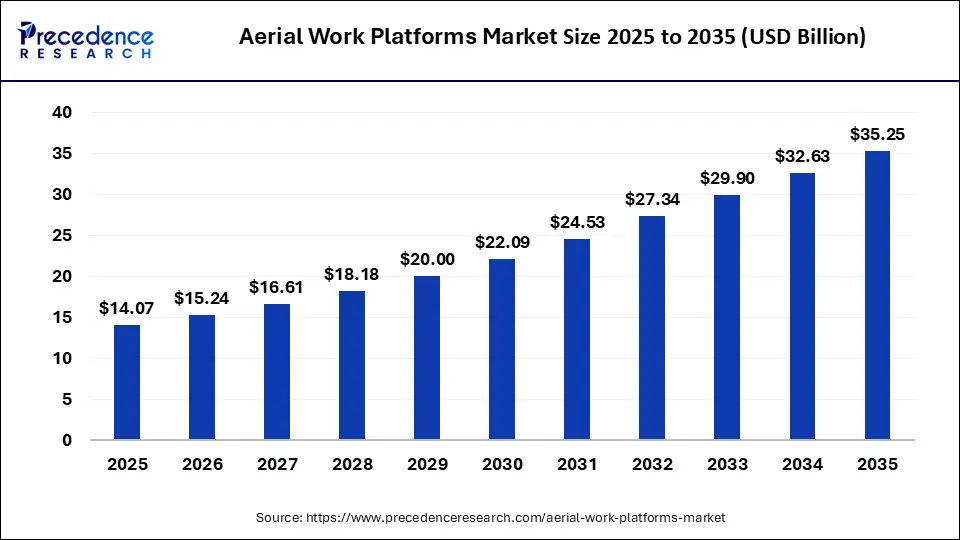
The global aerial work platforms market was valued at USD 14.07 billion in 2025 and is projected to grow from USD 15.24 billion in 2026 to USD 35.25 billion by 2035, expanding at a CAGR of 9.62% during the forecast period. Market growth is driven by rising infrastructure and construction activities, stringent workplace safety regulations, and increasing adoption of electric and AI-enabled aerial work platforms. Advancements in telematics, predictive maintenance, and smart safety technologies, along with growing demand from warehousing, logistics, manufacturing, and renewable energy sectors, are further accelerating global market expansion.
Source: https://www.precedenceresearch.com/aerial-work-platforms-market
 Get a Sample
 Table Of Content


What is the Aerial Work Platforms Market Size?
The global aerial work platforms market size is valued at USD 14.07 billion in 2025 and is predicted to increase from USD 15.24 billion in 2026 to approximately USD 35.25 billion by 2035, expanding at a CAGR of 9.62% from 2026 to 2035. The market growth is attributed to increasing infrastructure investments, stricter workplace safety regulations, and rising adoption of electric and technologically advanced aerial work platforms across construction and industrial sectors.
Aerial Work Platforms Market Key Takeaways
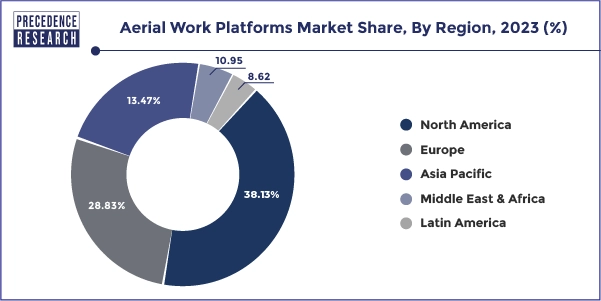
- North America has captured the largest market share of 38.13% in 2025.
- Asia Pacific is expected to expand at the fastest CAGR during the forecast period.
- By end-user, the construction segment led the market with the biggest market share of 45.53% in 2025.
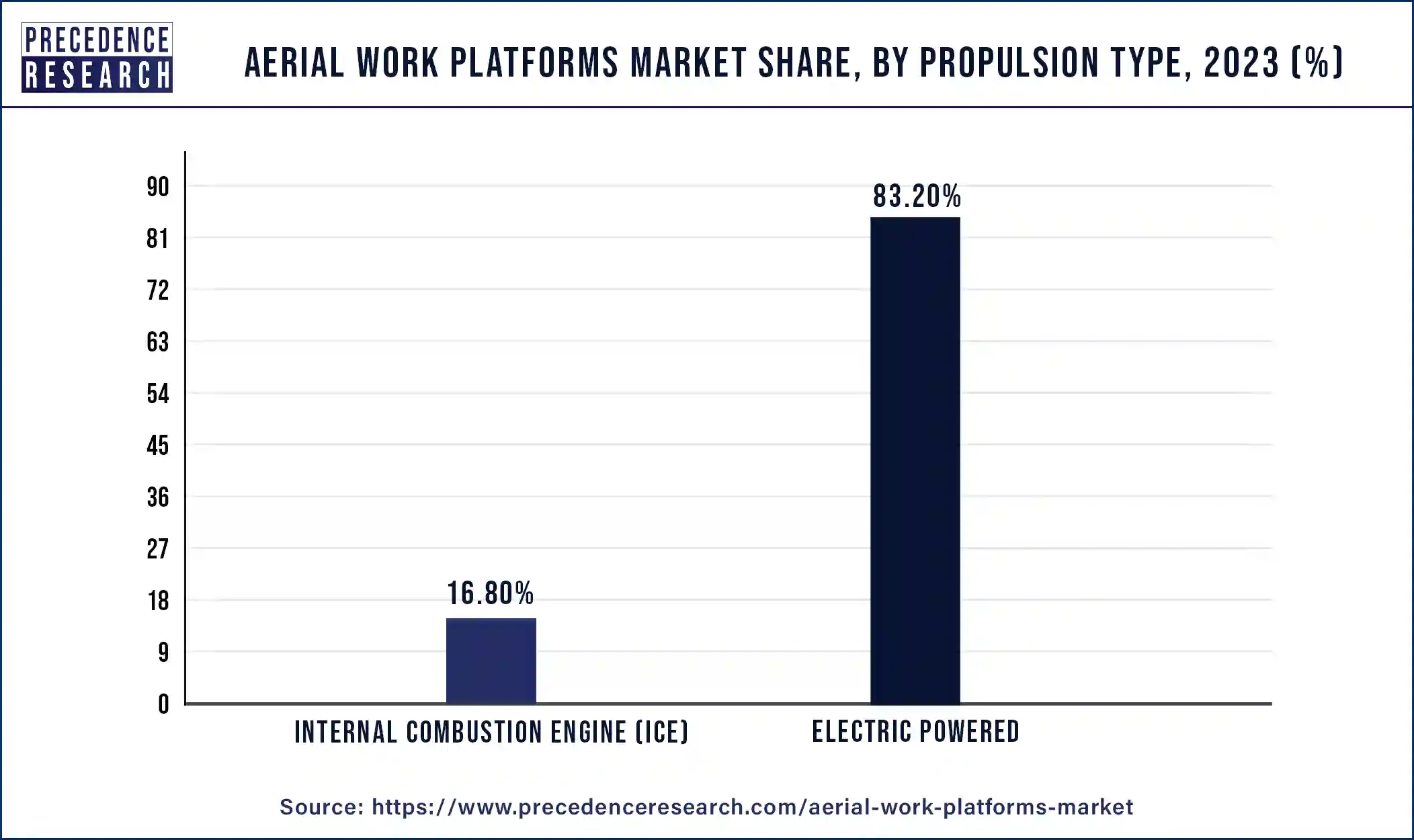
- By propulsion type, the internal combustion engine segment dominated the market with the biggest market share of 83.20% in 2025.
- By types, the scissor lift segment has contributed more than 49.28% of revenue share in 2025.
Market Overview
Increasing workplace safety regulations and expanding infrastructure investments are driving strong demand for aerial work platforms across multiple industries worldwide. An aerial work platform (AWP), also referred to as a mobile elevating work platform (MEWP), is a powered means of elevating workers, tools, and materials to work at height in a safe manner. They are designed to increase productivity and decrease the need for traditional scaffolding, ladders, and temporary access for multiple work sites.
According to the International Powered Access Federation (IPAF), India's demand for hire of MWPs increased by 18% in 2025, with Saudi Arabia's growth at 49%, as major infrastructure and industrial projects continue to drive increased demand in India. Furthermore, the Occupational Safety and Health Administration continues promoting safer work-at-height practices, while updated ANSI standards strengthen operator training, equipment design, and safe operating procedures.
What are Aerial Work Platforms?
The aerial work platforms market is generally driven by the rapid investment by government for developing the public infrastructures coupled with rise in number of warehouses in different parts of the world. The aerial work platforms are mechanical devices that provide temporary, safe access for workers and equipment to elevated areas.
Impact of Artificial Intelligence on the Aerial Work Platforms Market
The market for aerial work platforms is being transformed by artificial intelligence, which enhances fleet efficiency and improves safety conditions in their application for construction and maintenance. Telematics, computer vision, and advanced sensor technologies, with artificial intelligence capabilities, are being integrated into aerial work platforms.
They provide manufacturers with a view into the machinery condition, optimize lifting activities, and minimize unplanned downtime. Furthermore, the intelligent safety systems leverage cameras, proximity sensors, and machine learning algorithms to automatically scan for obstacles, monitor platform stability, identify risk parameters, and provide real-time alerts to operators.
Growth Factors
Government authorities of several regions have imposed stringent worker safety norms expected to surge the adoption of advanced lifting technologies across the globe. Further, rising investments in construction and infrastructure sectors by the private and government authorities again propels the market growth. Government authorities across various regions are significantly investing for the development of public transportation infrastructure that includes airports, railway stations, and residential buildings. Mobile elevating work platforms (MEWPs) are prominently used at construction sites to lift tools, workers, and other light materials at an elevated height safely and efficiently.
The accessibility of aerial work platforms (AWP) rental services provides an impetus to the growth in market size. Companies renting AWP offer a wide range of equipment from various equipment manufacturers to augment their product portfolio that provides a positive market outlook. Moreover, the advent of electrification in the global construction industry prominently supports the industry growth of aerial work platform market. Electric AWPs notably aid in reducing the carbon footprint as well as offer noiseless performance compared to diesel-powered equipment anticipated to boost the demand for AWP in the coming years.
Besides this, unavailability of skilled workers for operating the equipment challenges the industry growth. Numerous AWP manufacturers operating in the industry provide operator training courses to address the challenge. Moreover, the high cost of MEWPs anticipated to hamper the market growth over the forecast timeline.
Powering Global Infrastructure Growth
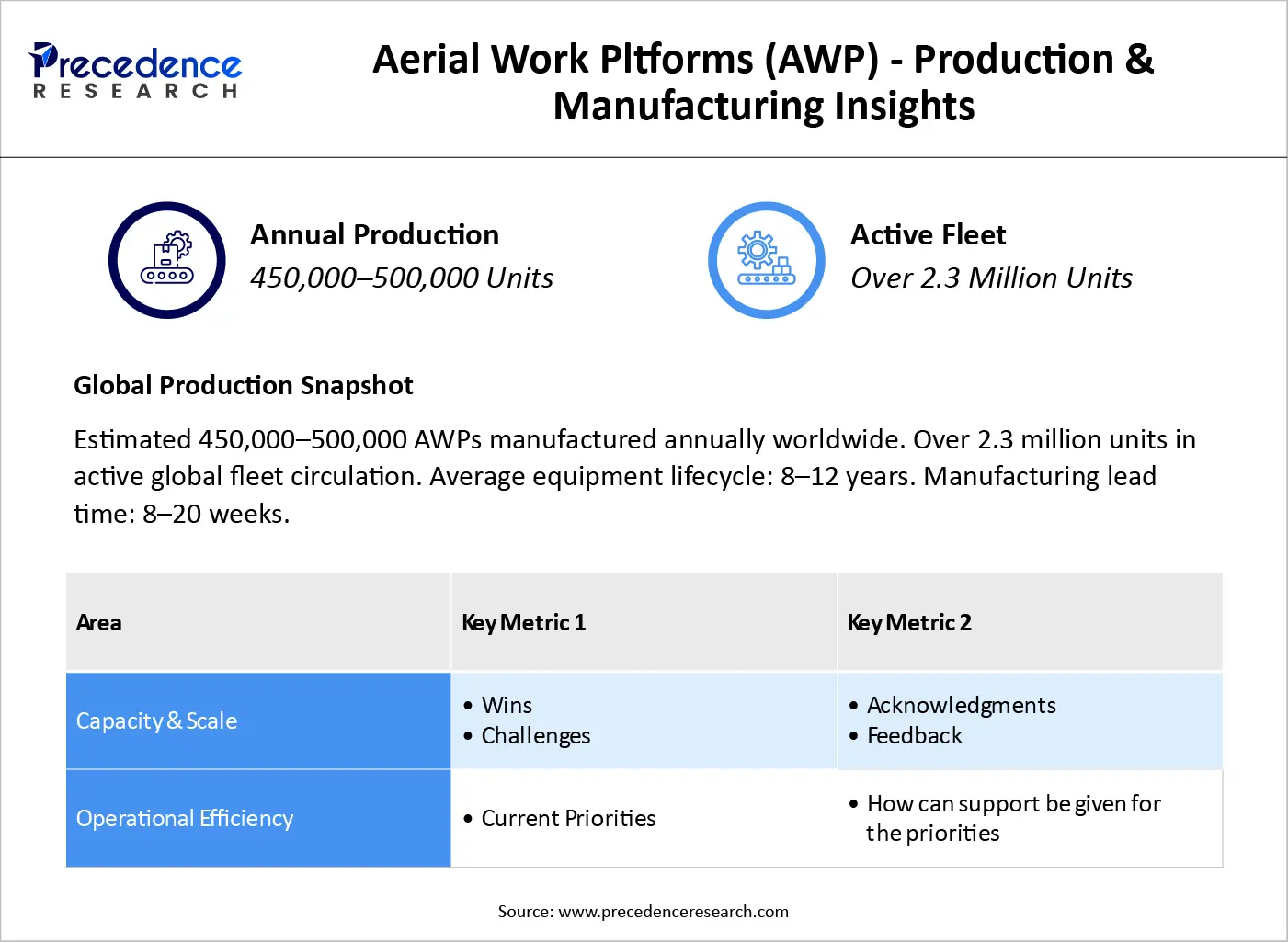
Aerial Work Platforms (AWPs) play a vital role in construction, maintenance, utilities, and industrial operations worldwide. With an estimated 450,000–500,000 units manufactured annually and over 2.3 million units active in global fleets, the sector reflects strong and sustained demand. An average equipment lifecycle of 8–12 years ensures long-term asset utilization, while manufacturing lead times of 8–20 weeks highlight the complexity and precision of production. The scale of output, fleet circulation, and operational longevity underscores the industry's strategic importance in enabling safe, efficient elevated access across rapidly expanding infrastructure and industrial development projects globally.
Market Trends
- Growing Adoption of High-Capacity Boom Lifts for Large Infrastructure Projects: Investments in airports, bridges, semiconductor plants, and renewable power plants are picking up the pace in 2026, as initiated by both the government and the private sector. These are generally complex tasks and require high-capacity aerial work platforms that offer increased outreach, height, and terrain adaptability. With growing demand from the mega infrastructure project market across the globe, manufacturers are still rolling out bigger boom lifts.
- Expansion of Low-Emission Access Equipment for Urban Construction: Banned or regulated emission requirements for construction equipment use during 2026 are put into law in cities. Contractors increasingly select electric and hybrid aerial work platforms to comply with environmental policies while reducing noise and operating costs. The market for sustainable access solution applications continues to grow for sustainable access solutions on urban construction projects.
Aerial work platforms market outlook
- Industry Growth Overview: Between 2025 and 2030, this market is expected to rise significantly due to the rapid expansion of the construction sector along with the increasing demand for articulating boom lift from the real-estate sector.
- Major Investors: Several market players and strategic investors are actively entering this market, drawn by collaborations, R&D and business expansions. Numerous heavy equipment brands such as Aichi Corporation, Haulotte Group, Dinolift OY and some others have started investing rapidly for developing high-quality aerial work platforms for the construction sector.
- Startup Ecosystem: Various startup brands are engaged in developing advanced aerial work platforms. The prominent startup brands dealing in aerial work platform consists of Aereo, BON V Aerospace, AirWorks and some others.
Future Outlook and Strategic Recommendations
- Long-Term Industry Outlook: Rapid phase-out of internal combustion engines in favor of battery-electric and hybrid aerial work platforms to comply with stringent government emission mandates. Concurrently, companies are leveraging IoT sensors for predictive maintenance, fleet optimization, and AI-powered safety features implementation, like geofencing, to improve productivity and job-site safety to protect operators and reduce job-site accidents.
- Emerging Business Models: Modern equipment strategies are transforming the industry by shifting to outcome-based leasing Equipment-as-a-Service (EaaS) models that charge for actual utilization rather than ownership. This shift is supported by cloud-based Digital Fleet Management Platforms for real-time logistics and efficiency tracking, whereas specialized, lightweight aerial work platforms are tailored for specific environments like smart warehouses, urban infrastructure, and telecommunications.
- Strategic Recommendations for Stakeholders: To achieve a sustainable and modernized market, stakeholders must align with standardized safety and environmental regulations. Governments should enforce standardized regulations and incentivize eco-friendly fleets by encouraging public-private partnerships for infrastructure development. OEMs must prioritize zero-emission and significant AI-enabled and interoperable machinery research and development. Whereas rental companies must upgrade their electric fleets, upskill their workforce, and adopt sustainable procurement.
Market Scope
| Report Highlights | Details |
| Growth Rate from 2026 to 2035 | CAGR of 9.62% |
| Market Size in 2025 | USD 14.07 Billion |
| Market Size in 2026 | USD 15.24 Billion |
| Market Size by 2035 | USD 35.25 Billion |
| Largest Market | North America |
| Fastest Growing Market | Asia Pacific |
| Base Year | 2025 |
| Forecast Period | 2026 to 2035 |
| Segments Covered | Type, Product, Application, Region |
| Regions Covered | North America, Europe, Asia-Pacific, Latin America, and Middle East & Africa |
Market Dynamics
Market Drivers
Increasing Constructional And Infrastructural Activities
Rising improvement in urban and rural infrastructure, coupled with government initiatives to provide the technological facilities such as electrical utilities and telecommunication network to the rapidly increasing population in the various countries including China, India, Brazil, Bangladesh, Indonesia, the U.S., and others are expected to propel the growth of end-use industries such as construction, electric & telecommunication, retail, and others. This, in turn, is anticipated to increase the demand for aerial work platforms as a large number of end-use industries across the globe use aerial lifts for new and daily maintenance work.
A large number of boom and scissor lifts are used at airports for the placement and storage of luggage and cleaning and maintenance work of aircraft. Articulated electrical boom lifts are used on a large scale for work on the interior of the airport premises to reach the overhead of an aircraft for cleaning, maintenance, and inspection work. Their trend is like to continue in the coming years with rise in the number of flyers and construction of new airports which, in turn, is expected to lead to the requirement for different types of lifts, thus propelling the growth of the overall aerial work platform market.
Increasing Number Of Retail And Warehouse Units
An attempt to provide uninterrupted supply of products and equipment requires storage and warehouse units, especially by e-commerce and logistics companies. Keeping and storing the required products reduces the shortage of materials and helps in maintaining the inventory up to date. Rising e-commerce platforms are the major drivers fueling the growth of warehouse units across the globe. Promised shipping standards by various e-commerce giants require near-by storage and warehouse units that employ a large number of scissor, vertical, and boom lifts for product handling and transportation from one place to another. These aerial platforms promote easy material handling and lookup in bulk orders and help retain a company's delivery promises.
Fully automated warehouses are gaining popularity in various developed countries. These warehouses are equipped with several aerial lifts and platforms that need minimum human intervention. They require the deployment of a large number of single scissor lifts, double scissor lifts, and other lifting tables for product and pellets placement. Massive funding and investment in the construction of warehouse buildings by various e-commerce and logistics companies across the globe are expected to significantly contribute to overall market growth. For instance, Walmart and eBay spend heavily on logistics and warehousing to compete with Amazon in terms of fulfilling product delivery to consumers. Moreover, Amazon India established 10 new warehouses in the country in 2020, which is likely to increase the demand for different types of lifts in these warehouses, thereby adding to the overall growth prospects of the aerial work platform market.
Market Restraint
Lack Of Skilled Labor
The demand for various mechanical and electrical equipment for aerial lifts production has witnessed an upward trend in recent years. Manufacturers are forced to offer technically advanced machines or lifts such as hybrid and electricity-driven machines to conserve fuel. However, the penetration of such advanced and technologically enhanced aerial platforms has not been widespread owing to the lack of skilled labor.
Several companies such as Wiese USA, MEC Aerial Work Platforms, JLG Industries, and various other market players conduct training and certification courses to ensure the proper use of different types of aerial platforms. This becomes a major challenge which hampers the growth of the market. Untrained worker or operator increases the safety concern in the working area which may lead to an unexpected incident. Moreover, ANSI A92 has strict regulations and standards in place for the use and operations of aerial work platforms as training and maintenance contribute to the safe and efficient operation of aerial lifts.
Market Challenges
High Dependency On Raw-Material Suppliers And Vendors
- High dependency on raw material suppliers or third-party suppliers for assembled parts such as drive trains, engines, tires, hydraulics, electric controls and motors, and various others makes manufacturers vulnerable to supply shortages and price increments. Delays in receiving supplies may affect the manufacturers' ability to deliver the product to customers, which, in turn, may affect a business entity's mode of operation, finance, and market positioning.
Environmental Health and Safety Impact
- Environment Health and safety is a global industry concern and high risk is involved in aerial work platform as the related work is performed above the ground at a certain height. Therefore, strict guidelines need to be followed while operating different types of aerial lifts. Approved aerial lift trainers are provided to guide and train workers & controllers to effectively work at a certain height. This directly increases the overall spending of the manufacturers and often leads to delay in work, if proper guidelines are not followed.
- Diesel or gasoline-based lifts are restricted from use in indoor premises. They are being replaced with aerial lifts that run on electricity to reduce carbon footprints. Hence, the manufacturer is forced to spend more on remanufacturing and maintenance of aerial platform for changing of engines that complies with stage V emission norms. This increases the maintenance and repair cost of companies to a certain level.
Changes In Import/Export Regulatory Regimes
- The imposition of different tariffs by various countries and global trade conflicts may negatively affect business on a global scale. For example, the U.S. administration imposed tariffs on certain foreign goods from a number of countries, especially China, which led to an increase in the overall cost of products as prices of certain raw materials, including steel, aluminum, or iron, get affected due to imposed tariffs. In addition, same happens for the Chinese market. For instance, as per Terex Corporation, tariffs imposed by the Chinese government on U.S. imports have made the cost of some of the company's products more expensive for Chinese customers.
High Competition
- To successfully introduce a product in the market, the manufacturer has to take into account various factors such as high quality, reliability, features, price, ease of use, and comfort to fulfill customer demands in terms of machine specifications. This has created a need for higher financial resources for major competitor present in the market, which puts them at a competitive disadvantage. In addition, competition from countries such as China and other developing markets providing low-cost alternatives often creates hindrance to a majority of the key players and creates a higher competition in the overall aerial work platform market.
Segment Insights
End-User Insights
What Made the Construction Segment the Largest Revenue Contributor to the Aerial Work Platforms Market in 2025?
The construction segment dominated the market in 2025, due to unprecedented expansion of public infrastructure, advanced manufacturing facilities, and commercial developments requiring efficient work-at-height solutions. Equipment utilisation in large construction projects continued to strengthen, supported by continued investments in industrial plants, logistics centres and renewable energy production facilities.
The maintenance and cleaning segment is expected to grow at the fastest CAGR between 2026 and 2035, owing to the increasing maintenance requirements of commercial buildings, healthcare facilities, airports, warehouses, and digital infrastructure worldwide. Electric scissor lifts are growing increasingly popular amongst facility management companies in the shift towards more efficient workplace operations and reduced indoor emissions and disruption. Furthermore, the increasingly widespread preventive maintenance practices drive ongoing utilization of equipment in business and industry settings.
Propulsion Type Insights
What made the Electric-Powered Segment Dominate the Aerial Work Platforms Market?
The electric-powered segment dominated the market in 2025. This is due to its stringent zero-emission mandates and reduced maintenance costs with indoor suitability. The phase-out of fossil fuel equipment in urban and enclosed environments heavily favors electric motors for reducing emissions and improving air quality. Shifting from internal combustion engines to electric propulsion drastically reduces mechanical complexity and maintenance costs. Electric aerial work platforms eliminate exhaust buildup and noise by making them ideal for indoor construction and facility management.
The internal combustion engine (ICE) segment is anticipated to have the fastest growth during the forecast period. This growth is mainly due to its use in long-duration jobsites, multi-shift operations, and high-power lifting that require rapid refueling. ICE drivetrains provide the high power density required for heavy-lift capacities and managing rough terrain on construction and industrial sites. Many ICE platforms are evolving toward hybrid-electric architectures to regulate heavy-duty output with emission reduction mandates, further contributing to market expansion.
Platform Working Height Insights
What Drove the 10–20 Meters Segment to Capture the Largest Share of the Aerial Work Platforms Market in 2025?
The 10-20 meters segment dominated the market in 2025 due to the widespread use of mid-height aerial work platforms in commercial buildings, industrial maintenance, warehousing, and municipal infrastructure projects. 10-20 meter scissor lifts and articulated boom lifts were becoming popular choices with contractors for effective indoor and outdoor use, generating more productivity.
The above 30 meters segment is expected to grow at the highest CAGR between 2026 and 2035, due to increasing construction of high-rise buildings and offshore energy facilities requiring extended working heights. Additionally, the segment growth is driven by increased investments in skyscrapers, renewable energy power plants, petrochemical plants, and aviation services.
Type Insights
Why did Boom Lifts Segment Dominate the Aerial Work Platforms Market in 2025?
The boom lift segment dominated the market in 2025 due to rising demand for multifunctional elevated access in infrastructure, energy, telecommunication, and industrial construction. Boom lifts offer enhanced horizontal reach and also higher working levels to give access to higher working elevation areas that are unreachable with conventional access equipment.
The scissor lift segment is expected to grow at the fastest CAGR between 2026 and 2035, owing to the rising construction of warehouses, data centers, manufacturing facilities, hospitals, and commercial buildings driving up the need for efficient vertical access solutions. Scissor lifts are becoming a favorite among contractors given their increased working platforms, stability when lifting, and efficiency in overhead installation jobs in confined areas.
Regional Insights
How does North America Dominated the Market the Aerial Work Platforms Market Share in 2025?
North America led the market, capturing the largest revenue share in 2025, due to the sustained investments in industrial expansion, transportation upgrades, and large-scale utility modernization across the U.S. and Canada. Overall growth in construction jobs continued throughout 2026 as strong project activity drove up rates for aerial workers and in other construction roles in the commercial sector and for infrastructure projects.
U.S. Aerial Work Platforms Market Size and Growth 2026 to 2035
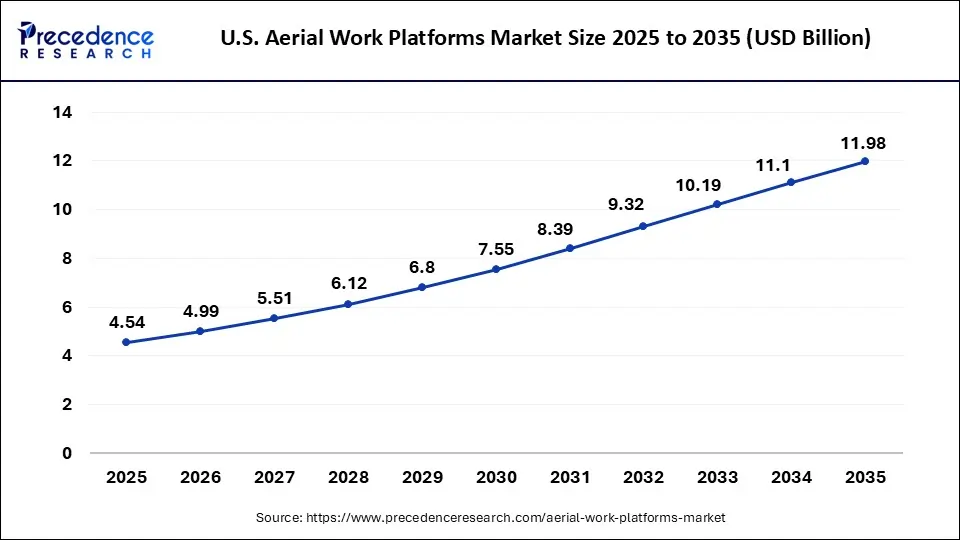
The U.S. aerial work platforms market size is valued at USD 4.54 billion in 2025 and is anticipated to reach around USD 11.98 billion by 2035, poised to grow at a CAGR of 10.19% from 2026 to 2035.
U.S. Driving North America's Aerial Work Platforms Leadership in 2025
U.S. leads the market due to its growing contractor demand for access equipment, resulting in the expansion of access equipment fleets by rental companies such as Major, United, Sunbelt, and Herc. Long-term, aerial work platforms are expected to continue to grow in the U.S. as new hyperscale data centers, airport expansion projects, logistics hubs, and electric vehicle manufacturing facilities start construction and adoption climbs.
Asia Pacific Aerial Work Platforms Market Trends
Asia Pacific expected to grow at the fastest CAGR during the forecast period, supported by governments investing heavily in smart city projects, renewable energy infrastructure projects, and metro rail projects, while continuing to invest in industrial manufacturing. The growing emphasis on workplace safety and advancing investment in advanced construction equipment are expected to drive continued growth in the region.
China Leading Asia Pacific Aerial Work Platforms Expansion
China is a major contributor to the market due to its relentless investments in smart manufacturing, transportation, renewables, and urban infrastructure. Infrastructure investment is viewed as continuing to support robust demand for aerial work platforms on railways, industrial park areas, commercial construction, and logistics facilities.
Europe Aerial Work Platforms Market Trends
Europe is expected to grow at a significant CAGR between 2026 and 2035, driven by an increase in investment by governments in sustainable buildings, railway modernisation, offshore wind energy, and decarbonisation projects in the industrial sector. The jobs association WindEurope also noted a continued growth in offshore and onshore wind power capacity, as wind farms are now being fitted out using boom lifts to get to the tops of the turbines for installation or maintenance work.
Germany Powering Europe's Rapid Aerial Work Platforms Growth
In Germany, the market is due increasing automation in warehouses, the refurbishment of industrial facilities, and more demanding industrial workplace safety standards. Germany is also still having a rapid scale-up of their offshore wind generation and electricity system, which will require even more high-reach boom lifts to be used during the turbine installation and maintenance operations.
Latin America Aerial Work Platforms Market Trends
Latin America is expected to grow at a notable CAGR between 2026 and 2035, due to the continued growth of investment in mining, transportation projects, commercial construction, and renewable energy projects in the region's markets.
Brazil Becoming a Key Aerial Work Platforms Hub in Latin America
Brazil is a major player in the market, fuelled by High investment expected for highway modernization, construction of warehouses, and export infrastructure. Long-term maintenance operations and installation of the country's growing wind and solar power projects are also being supported by specific types of boom lifts.
Middle East & Africa Aerial Work Platforms Market Trends
The Middle East & Africa is expected to grow at a considerable CAGR between 2026 and 2035, driven by growing Capital spending on infrastructure. This facilities the rise in the number of aerial work platforms working on major construction sites, as reported by GCC Statistical Center (GCC-Stat). The trend of greater investments in airports, entertainment hubs, industrial areas, logistics corridors, and more continued to drive up demand for advanced access equipment.
Saudi Arabia Emerging as a Leader in Aerial Work Platforms in the Middle East & Africa
In Saudi Arabia, the market as they invests more than ever before in mega projects, tourism infrastructure projects, industrial diversification, and smart city projects with Vision 2030. The Kingdom is moving quickly with the development of big projects across urban areas, such as airports, entertainment zones, logistics hubs, and renewable energy plants, which demand large aerial projects that require high-lift, high-reach aerial work platforms.
Key Regulator Guidelines for the Aerial Work Platforms Market
- U.S.: The Occupational Safety and Health Administration enforces mandatory training, evaluation, and certification for all operators. Employers are held accountable to ensure workers are fully trained in hazard recognition, equipment inspection, and manufacturer rules, and thereby follow manufacturer guidelines.
- U.S.: Manufacturing and load limits must comply with the ANSI A92 Suite, which mandates load-sensing devices, platform wind rating compliance, and tilt sensors for all newly manufactured aerial work platforms.
- EU: The European Commission governs manufacturing through the Machinery Directive. Aerial work platforms must carry a CE mark, proving they meet strict design standards for stability, fall protection, and control systems before being sold.
- UK: The Health and Safety Executive (HSE) mandates routine preventative maintenance alongside periodic Thorough Examinations conducted by competent professionals to ensure all safety-critical components stay fully operational.
Aerial Work Platforms Market – Supply Chain Analysis
- Component Manufacturing: Raw materials are transformed into hydraulic cylinders, diesel engines, electric motors, batteries, control systems, axles, tires, sensors, telematics modules, and structural assemblies. These components determine lifting performance, operational safety, energy efficiency, and machine reliability.
Key Players: Bosch Rexroth, Danfoss, Parker Hannifin, Cummins, Deutz AG, Dana Incorporated, ZF Group, Continental AG. - Equipment Design & Assembly: Manufacturers integrate structural frames, lifting mechanisms, hydraulic systems, powertrains, electronic controls, and safety technologies into complete aerial work platforms. Every machine undergoes rigorous performance, stability, and safety testing before commercial deployment.
Key Players: JLG Industries, Genie (Terex), Haulotte Group, Skyjack, Sinoboom, Zhejiang Dingli, XCMG, Zoomlion, Niftylift, Manitou Group. - End-User Deployment & Aftermarket Services: Aerial work platforms are deployed across construction, utilities, warehousing, manufacturing, aviation, telecommunications, mining, and facility maintenance applications. Manufacturers and rental companies provide replacement parts, inspections, digital fleet management, maintenance contracts, and equipment refurbishment throughout the product lifecycle.
Key Players: United Rentals, JLG Industries, Genie (Terex), Haulotte Group, Skyjack, Manitou Group, TVH Parts Holding, Briggs Equipment.
Competitive Landscape
The market is moderately consolidated with the global manufacturers competing in terms of technology and innovation developed in their products and wide-ranging rental alliances. Top companies such as JLG Industries, Genie (Terex), Haulotte Group, Skyjack, Sinoboom, Zhejiang Dingli, XCMG and Zoomlion in the aerial equipment market include diversified product lines and global distribution channels. Competition is now geared towards electrification, digital fleet management, more capacity on the platforms, and lower costs of both owning and operating equipment.
Manufacturers continue increasing research investments to strengthen competitive positioning through intelligent technologies and sustainable equipment development.
In 2026, Genie enhanced its lithium-ion-powered access solutions to further boost operating efficiency and maintenance-stacked performance. XCMG further developed its product range of electric aerial work platforms and enhanced its overseas manufacturing and service capabilities. Furthermore, the continuous investments in infrastructure and technological innovations should increase competition, and more strategic partnerships should emerge.
Key Companies & Market Share Insights
The global aerial work platforms market participants are investing prominently on the research & development (R&D) activities to develop new products and enhance the safety of workers along with the lifting capacity of the AWP. Moreover, the industry players are also focusing on the development of electric AWPs and MEWPs. For instance, in July 2019, MEC Aerial Work Platform launched its new Micro 26 slab scissor lift. The new AWP features a 36-inch roll out extension deck with incremental lock positions that maximizes productivity and material usage.Besides this, market players also focus strictly towards inorganic growth strategies that include partnership, merger & acquisition, and collaboration.
Aerial Work Platforms Market Companies
- Holland Lift International BV: Holland Lift International BV was a Dutch manufacturer of high-quality, heavy-duty scissor lifts that went into liquidation in 2023. The company was known for producing customized and durable machines for industries like construction and maintenance.
- JLG Industries: JLG Industries is a global designer, manufacturer, and marketer of access equipment, including aerial work platforms and telehandlers, for industries like construction, industrial maintenance, and warehousing.
- Hunan Sinoboom Heavy Industry Co. Ltd.: Hunan Sinoboom Heavy Industry Co., Ltd. is a Chinese manufacturer of aerial work platforms, including articulated boom lifts, telescopic boom lifts, scissor lifts, and spider lifts.
- Niftylift Limited: Niftylift Limited is a UK-based manufacturer of mobile elevating work platforms (MEWPs), including cherry pickers and boom lifts, that sells products worldwide. Founded in 1985 by Roger Bowden, the company specializes in compact, lightweight designs and focuses on innovation, quality, and safety features like its SiOPS system.
- Manitou Group: Manitou Group is a French multinational company that designs, manufactures, and distributes handling, access platforms, and earthmoving equipment for the construction, agriculture, and industrial markets.
- Haulotte Group: Haulotte Group is a global manufacturer of aerial work platforms and lifting equipment, with a focus on innovation, safety, and environmental responsibility. Founded in 1881 and headquartered in Lorette, France, the company is the European leader in its field and sells products worldwide through its own subsidiaries and a network of distributors.
Other Major Key Players
- CTE
- Aichi Corporation
- Dinolift OY
- Hunan Runshare Heavy Industry Company, Ltd.
- Zhejiang Dingli Machinery Co, Ltd.
- Hunan Sinoboom Heavy Industry Co. Ltd.
- Snorkel
- Skyjack
- Tadano Limited
- SocageSrl
- Teupen
- Genie
Recent Developments
- In June 2026, Sinoboom introduced its Dual-E Smart Technology at CONEXPO-CON/AGG 2026. This innovative technology enhances the battery life of electric boom lifts and improves efficiency by utilizing high-spec components that optimize power usage in real time. Sensors for pressure, weight, length, and level work together to achieve efficient power management, with a permanent magnet synchronous motor boosting pump efficiency. The result is a 30% reduction in energy consumption and enhanced endurance compared to standard systems.
- In June 2026, Linamar Corp.'s Skyjack brand launched the SJ6940 RTE, an electric rough terrain scissor lift that offers an 800-pound capacity and reaches a height of 40 feet. This model features the largest working area in its class, with a platform measuring over 11 feet long. Skyjack's president, Charlie Patterson, emphasized the machine's commitment to productivity and sustainability, highlighting its zero emissions and impressive capacity for supporting more personnel and tools.
- In October 2025, Blade Platforms launched Blade 187. Blade 187 is a 187-ft truck-mounted aerial platform designed for transmission, high-reach utility, and infrastructure projects.
- In July 2025, Tadano launched AS-23MJ telescopic boom lift. AS-23MJ is designed to handle demanding applications by maintaining high utilization and reducing service needs.
- In April 2025, Palfinger launched a new aerial platform. This platform delivers safe and efficient access to great heights across multiple applications.
Segments Covered in the Report
By End-User
- Construction
- Maintenance and Cleaning
- Logistics and Transportation
- Manufacturing
- Aerospace and Defense
- Others
By Propulsion Type
- Internal Combustion Engine (ICE)
- Electric Powered
By Platform Working Height
- Below 10 meters
- 10-20 Meters
- 20-30 Meters
- Above 30 Meters
By Type
- Boom Lift
- Articulating Boom Lift
- Telescopic Boom Lift
- Cherry Pickers
- Scissor Lift
- Electric Scissor Lifts
- Rough Terrain Scissor Lifts
- Pneumatic Scissor Lifts
- Atrium Lift
- Z-style Atrium Lift
- S-style Atrium Lift
By Regional Outlook
- North America
- U.S.
- Canada
- Europe
- U.K.
- Germany
- France
- Asia Pacific
- China
- India
- Japan
- South Korea
- Rest of the World
For inquiries regarding discounts, bulk purchases, or customization requests, please contact us at sales@precedenceresearch.com
Frequently Asked Questions





Ask For Sample
No cookie-cutter, only authentic analysis – take the 1st step to become a Precedence Research client
 Get a Sample




 sales@precedenceresearch.com
 Schedule a Meeting
