



Conjunctivitis Market Size, Key Companies, Company Market Share, Patient Volume, Treatment Adoption Rates, Pricing Analysis, Regulatory Landscape, Competitive Positioning, and Demand Forecast
Deepa Pandey, a Healthcare Industry Expert, highlights that the conjunctivitis market has reached USD 5.85 billion in 2026 and is on track to reach USD 8.93 billion by 2035, advancing at a CAGR of 4.85%. Key conjunctivitis market companies shaping the market include Atopix Therapeutics Ltd., Allegran, Ocular Therapeutix, Inc., while major growth segments span By Type, Patients Type, Drug Class.
Source: https://www.precedenceresearch.com/conjunctivitis-market
 Get a Sample
 Table Of Content


What is the Conjunctivitis Market Size?
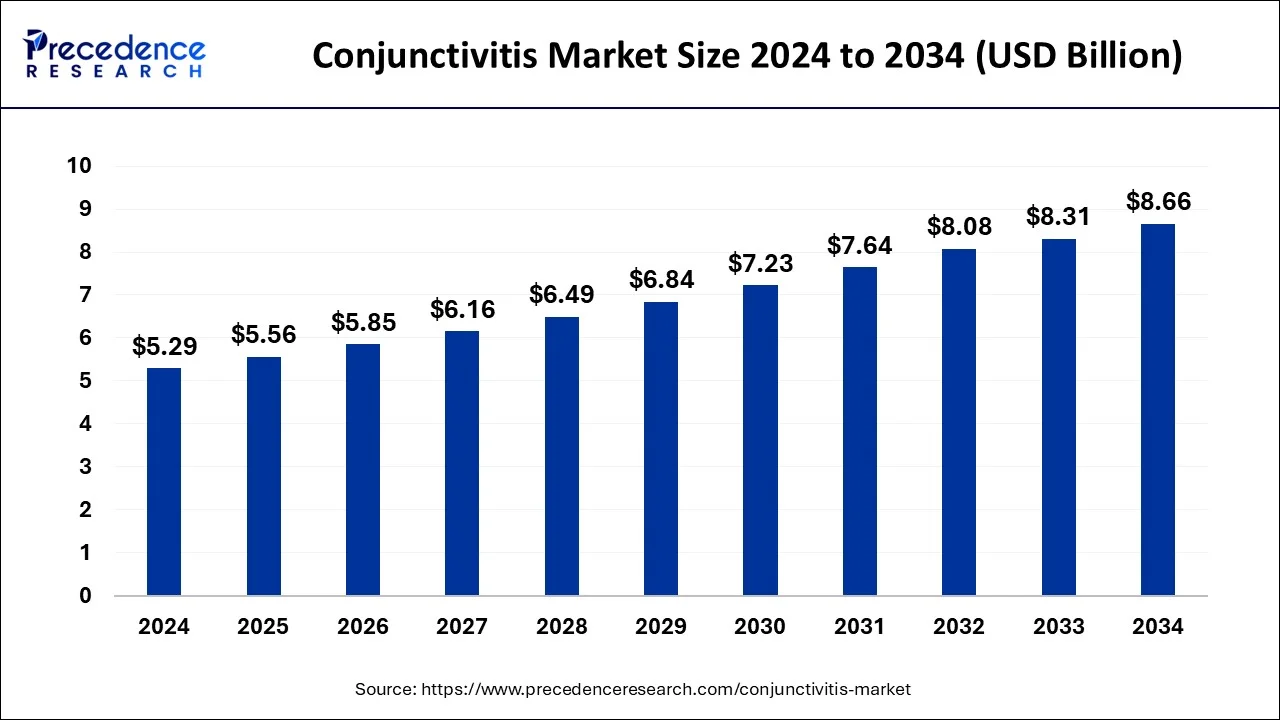
The global conjunctivitis market size was calculated at USD 5.56 billion in 2025 and is predicted to increase from USD 5.85 billion in 2026 to approximately USD 8.93 billion by 2035, expanding at a CAGR of 4.85% from 2026 to 2035. The growing approvals by regulatory agencies for the development of effective treatments, rising awareness, and the ongoing advancements with increased healthcare expenditure are propelling the conjunctivitis market.
Key Takeaways
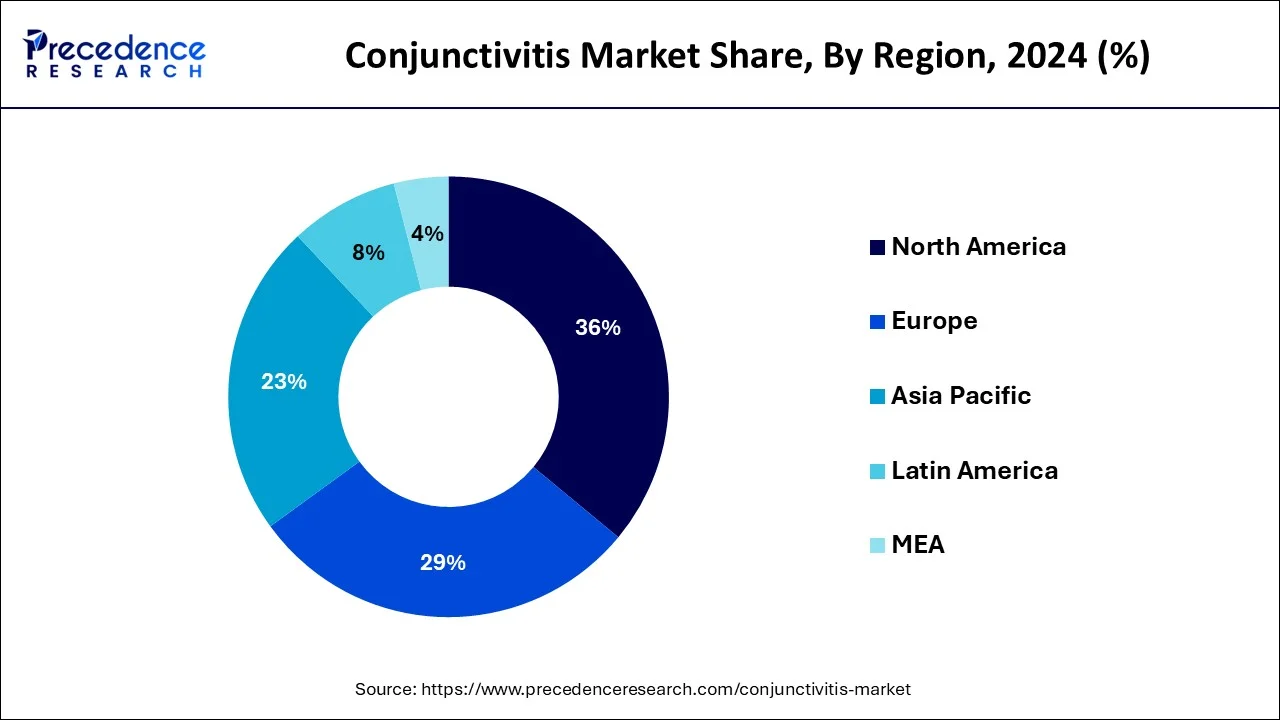
- North America led the conjunctivitis market with the largest market share of 36% in 2025.
- Asia-Pacific is projected to grow at a notable CAGR during the forecast period.
- By type, the allergic conjunctivitis segment contributed the biggest market share in 2025.
Role of Artificial Intelligence (AI) in Conjunctivitis Market
Artificial Intelligence (AI) can be integrated in conjunctivitis applications for automatic detection and diagnosis of conjunctivitis based on eye images, for analysing the seriousness of eye conditions, predictive maintenance by monitoring disease progression, risk stratification and recommending personalized treatments thereby enabling faster, accurate and objective assessment of different types of conjunctivitis. However, a recently published study in the Allergology International journal in August 2024 stated that the development of potential diagnosing techniques for allergic conjunctival diseases (ACDs) is hindered by the absence of tailored image database and explainable AI models.
Major Trends in the Conjunctivitis Market
Patents on medication such as Lotemax, Patanol, Pataday, and Lastacaft are expected to expire during the forecast period, as well as other medications. Though the frequency of conjunctivitis is higher, the rate of treatment use is not, as the contamination usually rectifies on its own. Treatment is usually sought only when the condition persists or when the infection starts affecting the daily activities of an individual. As the infection is highly contagious, proper maintenance of hygienic conditions is necessary.
Conjunctivitis, also known as pink eye, is an infection in or irritation of the conjunctiva. It disturbs a person's eyes and might be the result of a virus, bacteria, or allergen. Allergens such as pollen, smoke, eye drops, dust mites, perfumes, and cosmetics can result in conjunctivitis. It is typically associated with soreness of the eye accompanied by the release of mucous releases. Although the ailment usually heals without medicine, antibiotics are usually used for treatment to avoid problems due to irritation of the eye.
The timely use of medication to treat the condition helps keep it under control. This can be ensured through educating people about the condition and conducting awareness campaigns. For instance, as part of the efforts of the Lebanese Ministry of Public Health and the Lebanese Ministry of Education and Higher Education, the University of Balamand's Faculty of Health Sciences conducted a conjunctivitis awareness campaign for the students, faculty, and staff of the university. Similarly, Planned Parenthood Arizona published a report about the connection between sexually transmitted infections and conjunctivitis. Educating the public on the treatment options for conjunctivitis increases the chances of individuals identifying the infection and treating it early with medication.
Treatment depends on the stage of conjunctivitis along with the experience of the optometrist. Experienced physicians understand the root cause of the condition easily, which helps reduce the patient's intake of unnecessary medication. Proper treatment reduces the incidence of the condition and avoids the chances of the condition worsening. The treatment options available for conjunctivitis are as follows
Market Outlook
- Industry growth Overview: The growth is being driven by growing cases of viral, bacterial, and allergic conjunctivitis, which drive demand for preservative-free diagnosis and fast-acting treatments. Developments in drug delivery and diagnostics are present. Additionally, the acceptance of laboratory testing, advanced diagnostic tools, and teleophthalmology services has improved the treatment effectiveness.
- Global Expansion: The regional industry, such as Europe and North America, has continued to grow due to high healthcare investment, while developing sectors in the Asia-Pacific region serve as the main possibilities that lead to developing healthcare availability and rising disposable incomes.
- Sustainability Trends: The Fred Hollows Foundation has made a formal position statement on eco-friendly sustainability and climate change. It keeps out the position on how the climate update impacts eye health and totally defines loyalty to use sustainable practices across their initiatives that help lower the environmental impact while serving sight and high-quality care.
Conjunctivitis Market Growth Factors
- Rising prevalence of conjunctivitis cases across the globe
- Increased exposure to environmental allergens promoting growth of allergic conjunctivitis incidences
- The highly contagious nature of conjunctivitis leading to spread in communities
- Increased accessibility and affordability of over-the-counter conjunctivitis medications
- Technological advancements in research and development of safer and effective treatment options for conjunctivitis
- Growing registration of cohorts in clinical trial studies
- Rising approvals from regulatory agencies and support from government bodies
- Global surge in healthcare expenditure for the diagnosis and treatment of conjunctivitis.
Market Scope
| Report Highlights | Details |
| Market Size in 2025 | USD 5.56 billion |
| Market Size in 2026 | USD 5.85 billion |
| Market Size by 2035 | USD 8.93 billion |
| Growth Rate From 2026 to 2035 | CAGR of 4.85% |
| Base Year | 2025 |
| Forecast Period | 2026 to 2035 |
| Segments Covered | Patients, Drug Class, Patient Type, and Region |
| Regional Scope | North America, Europe, Asia Pacific, Latin America, Middle East & Africa (MEA) |
Segment Insights
Type Insights
Allergic conjunctivitis segment dominated the market in 2025.
This type can be conveniently treated with antihistamine eye drops, which are frequently the first-line treatment for allergic conjunctivitis. They operate by precluding histamine, as the chemical is totally responsible for redness, itching, and swelling in the eyes. Such drops serve fast-acting relief, frequently within minutes, which makes them perfect for acute flare-ups. Some of the antihistamine drops also include stabilizers, which prevent additional allergic reactions which assist in lowering the frequency of symptoms in an allergy-prone environment.
The bacterial conjunctivitis segment is expected to grow at the fastest CAGR during the forecast period. This type is still one of the most prevalent eye infections experienced in clinical practice. Doctors mostly prescribe effective eye drops for the diagnosis of bacterial conjunctivitis. Such medications avoid bacteria and lower inflammation. Antibiotic drops generally need to be used many times, daily for about five to seven days.
Patients Type Insights
Adults segment dominated the market in 2025.
Conjunctivitis can impact both children and adults. It includes one eye as primary and is transmitted to the other, particularly when the reason is infectious. White, they are frequently self-restricted and mild; symptoms can be uncomfortable and lead to interference in school, work, screen application, or reading. Several cases develop with accurate time and care, but they are ideal to check the reason accurately.
The pediatric segment is expected to grow at the fastest CAGR during the forecast period. Pink eye is the most common term for conjunctivitis, which occurs when the clear tissue covering the white part of the eye becomes inflamed. They can be caused by several viruses and bacteria that are totally responsible for colds and several other infections, including sinus infections, ear infections, and sore throats. Pink eye can also be caused by irritants or allergies because of chlorine or air pollution in pools.
Drug Class Insights
Anti-Histaminic segment dominated the market in 2025.
Antihistamine eye drops are the most advantageous for people who experience seasonal allergic conjunctivitis, which specifically occurs in spring and fall when grass pollen, tree pollen, and weed pollen are at their highest. These drops also assist with perennial eye allergies, which are caused by indoor allergens such as pet dander, dust mites, or mold spores.
Contact lens wearers often experience increased fragility to eco-friendly allergens, which creates antihistamine drops specifically designed to manage symptoms while preserving lenses.
The steroid drugs segment is expected to grow at the fastest CAGR during the forecast period. A steroid shot in the eye involves flushing the focused tissue with corticosteroid molecules, which shift to receptors inside cells and move towards the chemical signals that drive inflammation. Particularly, corticosteroids adjust the manufacturing of cytokines, prostaglandins, and other inflammatory mediators, which are responsible for causing blood vessels to dilate and tissues to swell.
Regional Insights
North America is Estimated to be the Largest Market for Conjunctivitis
The detailed research report covers significant prospects and inclinations of conjunctivitis products throughout different regions including Europe, North America, Asia-Pacific, Africa, Middle East, and Latin America. By region, conjunctivitis market is led by North America due to early application of latest technologies and availability of latest technology infrastructure. Europe reported the second maximum share predominantly due to presence of key companies. Asia-Pacific is also anticipated to witness the rapid growth rate, on account of increasing healthcare expenditure.
U.S. Conjunctivitis Market Size and Growth 2026 to 2035
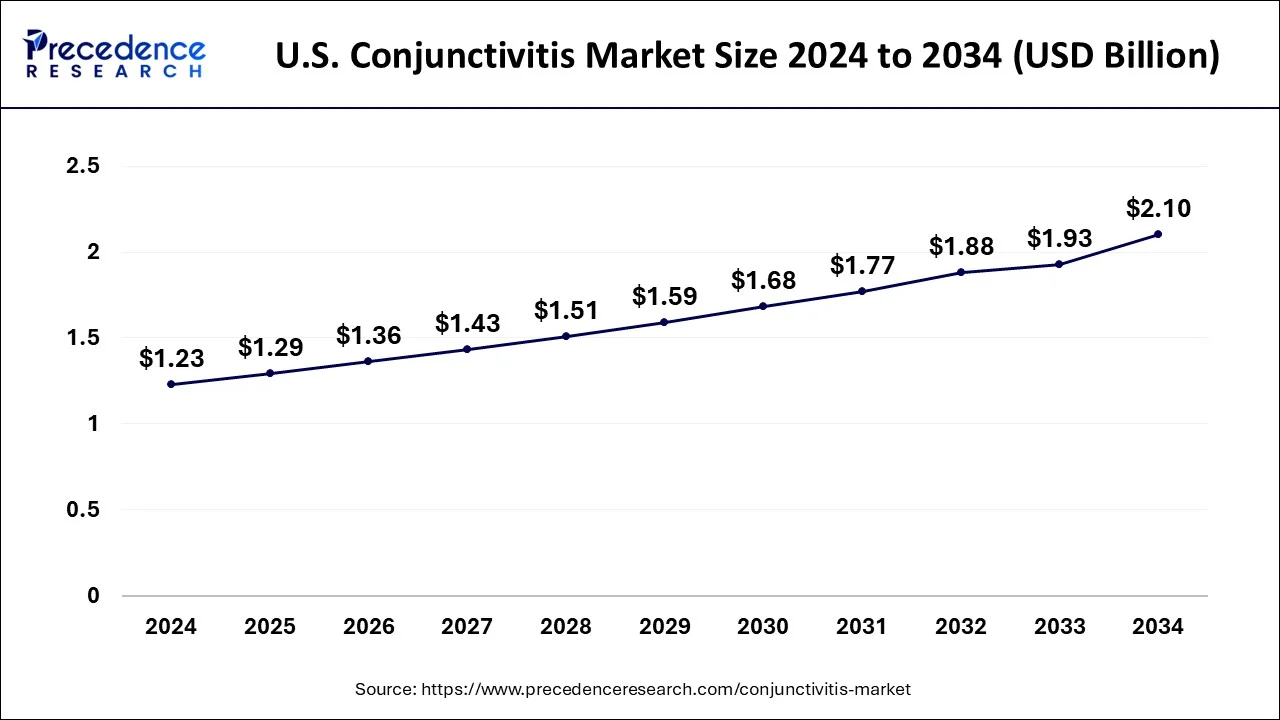
The U.S. conjunctivitis market size was evaluated at USD 1.35 billion in 2025 and is predicted to be worth around USD 2.20 billion by 2035, rising at a CAGR of 5.00% from 2026 to 2035.
How is North America leading the Conjunctivitis Market?
North America is the leading region in the conjunctivitis market, thanks to its advanced medical facilities, large pharmaceutical companies, and preventive eye-care strategies. The area's focus on early diagnosis and easy access to ophthalmic products encourages market growth. The regulatory standards have become stricter, companies are innovating new formulations and conducting continuous research, all of which have indirectly contributed to the expansion of the region's major markets.
United States Conjunctivitis Market Trends:
The U.S. continues to be the overall leading conjunctivitis market with its state-of-the-art healthcare system, insurance support, and large-scale awareness of the disease. The regular use of prescription and over-the-counter medications, the doctors' specialization in R&D, and skilled ophthalmologists' access also contribute to the strong and constantly growing demand of the U.S. conjunctivitis market, as patients are granted easy and prompt access to effective treatments.
How is Asia-Pacific performing in the Conjunctivitis Market?
Asia-Pacific has been the fastest-growing region in the conjunctivitis market, thanks to its vast population, rising healthcare expenditure, and increasing awareness of eye health. Moreover, the treatment demand is being raised by the rising pollution, urbanization, and upgradation in the diagnostic capabilities, which in turn is causing an increase in the prevalence of conjunctivitis. The region is also being powered by expanding healthcare networks, government programs for vision care, and a skilled medical workforce.
China Conjunctivitis Market Trends
China is becoming an important player in the global market of conjunctivitis treatment as the country's market is expanding rapidly. The reason might be the improvement of the healthcare system, a shift of the ophthalmology department to the main goal of curing eye problems, and the gradual acceptance of the prevention of eye diseases by the public. Urbanization and government-backed healthcare reforms are improving patients' diagnosis and treatment accessibility, and the country is poised to emerge as a major player in the Asia-Pacific region for conjunctivitis treatment.
What are the driving factors of the Conjunctivitis Market in Europe?
Europe captures a considerable proportion of the conjunctivitis market because of its modern health care systems, patient-friendly treatment locations, and regulators' constant attention to patient safety. The high incidence of allergic and bacterial conjunctivitis, together with public health awareness campaigns, grows market demand. The cooperation of pharmaceutical companies and healthcare providers enhances the region's treatment capacity and patient outcomes.
Germany Conjunctivitis Market Trends
Germany is the principal solver of the European conjunctivitis market problem owing to its advanced healthcare system, strong pharmaceutical research base, and large patient awareness. The consequences of the existence of developed ophthalmic clinics and the adoption of favorable reimbursement policies are that the availability of both prescription and non-prescription eye treatments is widespread, thus the country's influence on the overall regional market growth is further strengthened.
What Are the Driving Factors of The Conjunctivitis Market in Latin America?
Latin America is expected to grow at a significant CAGR during the forecast period. As the environment becomes more polluted and seasonal allergies become more prevalent, the market is increasing. There is a high demand for conjunctivitis treatment in countries such as Brazil. The presence of generic medicines and the better availability of pharmaceutical care are contributing to market growth, but access to health care is not equal in certain areas of the region.
Brazil Market Trends
Urbanization and environmental pollution are increasing cases of allergic conjunctivitis, especially among children. Diagnosis continues to be difficult because, currently, widely used rapid testing technologies are not available in general health care. Additionally, a treatment via private healthcare providers could be costly, as a number of diagnostic methods and specialist consultations may be required to accurately manage eye disease.
How is the Middle East and Africa Performing in The Conjunctivitis Market?
The Middle East and Africa are expected to grow at a significant CAGR during the forecast period. The region experiences high cases of allergic conjunctivitis due to hot, dry, and dusty environmental conditions. The healthcare system of GCC countries experiences better eye care access because of their ongoing investments in medical facility development. The conjunctivitis treatment market is expanding because of two factors: the large number of children in the population and the rising need for anti-inflammatory and anti-infective eye products.
Saudi Arabia Market Trends
Allergic conjunctivitis is a frequent problem in Saudi Arabia in the presence of dry air, desert climate, and sandstorms. One frequently asked question is about chronic eye irritation and dry eye syndrome. The nation is also building state-of-the-art eye care facilities and introducing new treatment regimens, which will enhance the availability of special treatment for inflammatory and allergic eye diseases.
Value Chain Analysis
- R&D (Research and Development): Aims at new drug molecule discovery and preclinical testing, which is done to check efficacy and safety.
Key Players: Pfizer, Merck & Co., Sanofi-Aventis, Allergan (AbbVie) - Clinical Trials and Regulatory Approvals: The process includes human studies to substantiate drug safety and efficacy, followed by permission from the appropriate regulatory bodies.
Key Players: IQVIA, Syneos Health, Charles River Laboratories - Formulation and Final Dosage Preparation: Mixing of active materials with excipients to manufacture stable and effective formulations, such as eye drops.
Key Players: Akorn, Catalent, Recipharm, Salvat - Packaging and Serialization: Packaging, labeling, and serialization are done to ensure safety and also for traceability and counterfeit prevention throughout the supply chain.
Key Players: Amcor, Gerresheimer AG, AptarGroup, Inc. - Distribution to Hospitals, Pharmacies: Logistics are managed to bring the final product to health centers and pharmacies for patient access.
Key Players: AmerisourceBergen (Cencora), Cardinal Health, McKesson Corporation - Patient Support and Services: Offering programs post-sale, such as adherence help, financial support, and disease education to improve treatment outcomes, is the service.
Key players: Max Healthcare, ASG Eye Hospitals
Conjunctivitis Market Companies
- Atopix Therapeutics Ltd.
- Allegran
- Ocular Therapeutix, Inc.
- Santen Pharmaceutical Co. Ltd.
- Novartis
- Boehringer Ingelheim
- Pfizer Inc
- Allegran
- Sun Pharma
- Sirion Therapeutics, Inc.
Collaboration Landscape
- In January 2026, DiagnosTear Technologies will reveal an official collaboration with AlyaTec, which is a contract research organization that specializes in environmental and allergy diseases, for use in a clinical study of its teaRx Red Eye diagnostic test. (Source: https://clpmag.com)
Latest Announcements
- In December 2025, NTC, an international R&D focused pharmaceutical company headquartered in Italy, announced the positive results of their Phase II MIRAKLE study which evaluated the potency and tolerance of NTC014 for treatment of bacterial conjunctivitis in adults. Riccardo Carbucicchio, CEO of NTC said that, “We are encouraged by the overall results of the Mirakle study. NTC 014 is first in class combination worldwide of an antibiotic and an NSAID. Given the significant unmet medical need, NTC014 aims to provide physicians with an effective treatment for moderate-severe bacterial conjunctivitis, a common eye infection. We believe that NTC 014 has a great potential and we aim to finalize the commercial partnering for this asset in most countries of the world before end of 2025.”
Recent Developments
- In April 2026, Sandoz launched its azelastine and fluticasone nasal spray in Germany and Switzerland, approved for seasonal and perennial allergic rhinitis and rhinoconjunctivitis in patients aged six and older. (Source: https://pharmafile.com)
- In January 2026, Retail healthcare firm Cartwheel intends to license ClearSight Therapeutics' new over-the-counter pink eye treatment, enhancing its product lineup. Both companies, from local accelerator Health Wildcatters, will finalize licensing and market strategies for a 2027 shelf launch, leveraging North Texas's eye care expertise. (Source: https://www.dmagazine.com)
- In July 2025, Lupin launched Loteprednol Etabonate Ophthalmic Suspension, 0.5%, in the U.S., a bioequivalent to Lotemax, for treating various inflammatory eye conditions and post-operative inflammation. (Source: https://www.thehindu.com)
- In March 2025, Glenmark gets FDA approval for Hydrochloride Ophthalmic Solution, bioequivalent to Pataday, for allergic conjunctivitis and itching treatment. (Source: https://pharma.economictimes.indiatimes.com)
- In November 2024, Kedrion Biopharma Inc., declared the U.S. FDA approval for the production of RYPLAZIM at the company's manufacturing facility in Bologana, Italy. RYPLAZIM is a plasma-derived human plasminogen indicated for treatment of patients with plasminogen deficiency type 1 (PLGD-1), a rare and challenging disorder commonly causing ligneous conjunctivitis in the eye.
- In February 2024, AffaMed Therapeutics, a biotechnology company announced the approval by Singapore Health Sciences Authority (HSA) for its New Drug Application (NDA) for DEXTENZA (0.4 mg dexamethasone ophthalmic insert) applied for the treatment of ocular inflammation and pain following ophthalmic surgery and ocular itching associated with allergic conjunctivitis.
Segments Covered in the Report
By Type
- Bacterial Conjunctivitis
- Viral Conjunctivitis
- Allergic Conjunctivitis
By Patients Type
- Pediatric
- Adults
By Drug Class
- Antibiotics
- Anti-Histaminic
- Decongestant
- Steroid Drugs
- Others
By Region
- North America
-
- U.S.
- Canada
-
- Europe
-
- Germany
- France
- United Kingdom
- Rest of Europe
-
- Asia Pacific
-
- China
- Japan
- India
- Southeast Asia
- Rest of Asia Pacific
-
- Latin America
-
- Brazil
- Rest of Latin America
-
- Middle East & Africa (MEA)
-
- GCC
- North Africa
- South Africa
- Rest of Middle East & Africa
-
For inquiries regarding discounts, bulk purchases, or customization requests, please contact us at sales@precedenceresearch.com
Frequently Asked Questions
Tags





Ask For Sample
No cookie-cutter, only authentic analysis – take the 1st step to become a Precedence Research client
 Get a Sample
.webp)



 sales@precedenceresearch.com
 Schedule a Meeting
