



Surgical Laser Market Size, Key Companies, Company Market Share, Patient Volume, Treatment Adoption Rates, Pricing Analysis, Regulatory Landscape, Competitive Positioning, and Demand Forecast
Surgical Laser Market (By Product Type: Solid-state Laser Systems, Gas Laser Systems; By Application: Surgical, Aesthetic, Dentistry, Ophthalmic, Dermatology, Urology, Gynecology, Cardiology, Oncology, Others; By End-Use: Hospitals, Specialty Clinics, Ambulatory Surgical Centers) - Global Industry Analysis, Size, Trends, Leading Companies, Regional Outlook, and Forecast 2026 to 2035
Source: https://www.precedenceresearch.com/surgical-laser-market
 Get a Sample
 Table Of Content


What is the Surgical Laser Market Size?
The global surgical laser market size is accounted at USD 3.51 billion in 2025 and predicted to increase from USD 3.73 billion in 2026 to approximately USD 6.5 billion by 2035, expanding at a CAGR of 6.36% over the forecast period from 2026 to 2035.
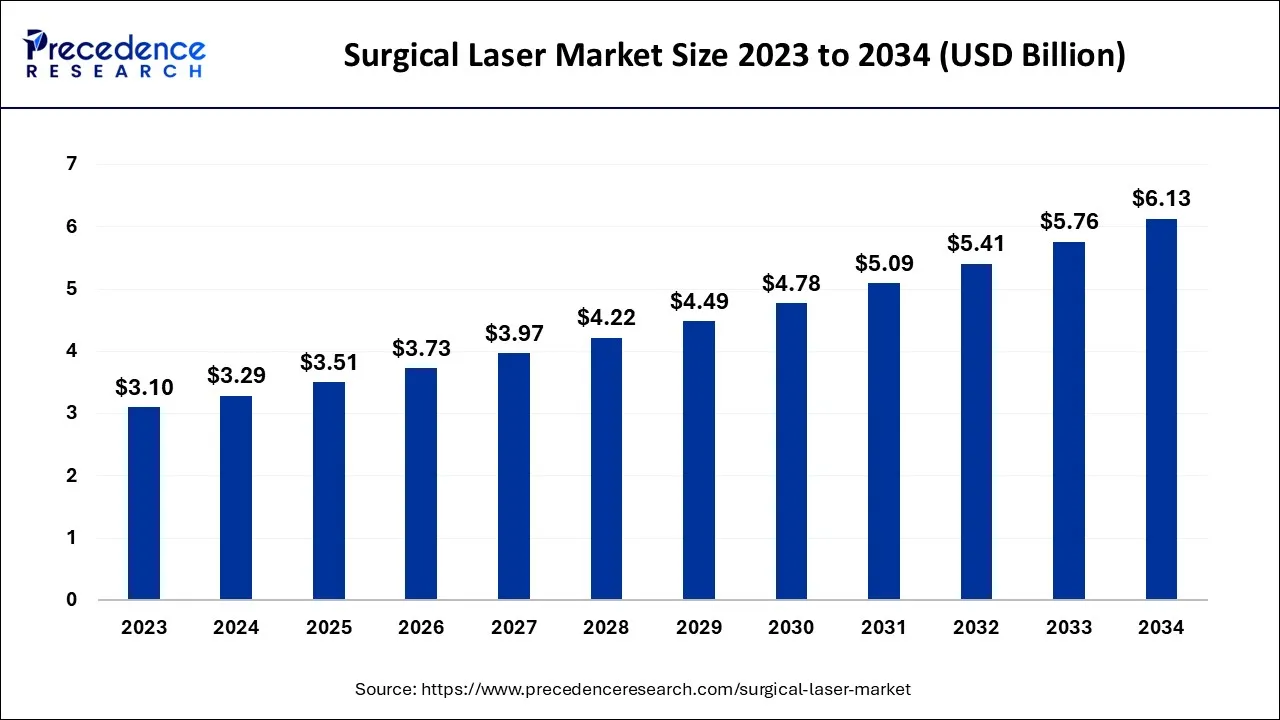
The rising prevalence of chronic diseases is the key factor driving market growth. Also, the increasing preference for minimally invasive surgeries coupled with the technological advancements in laser systems can fuel market growth further.
Surgical Laser Market Key Takeaways
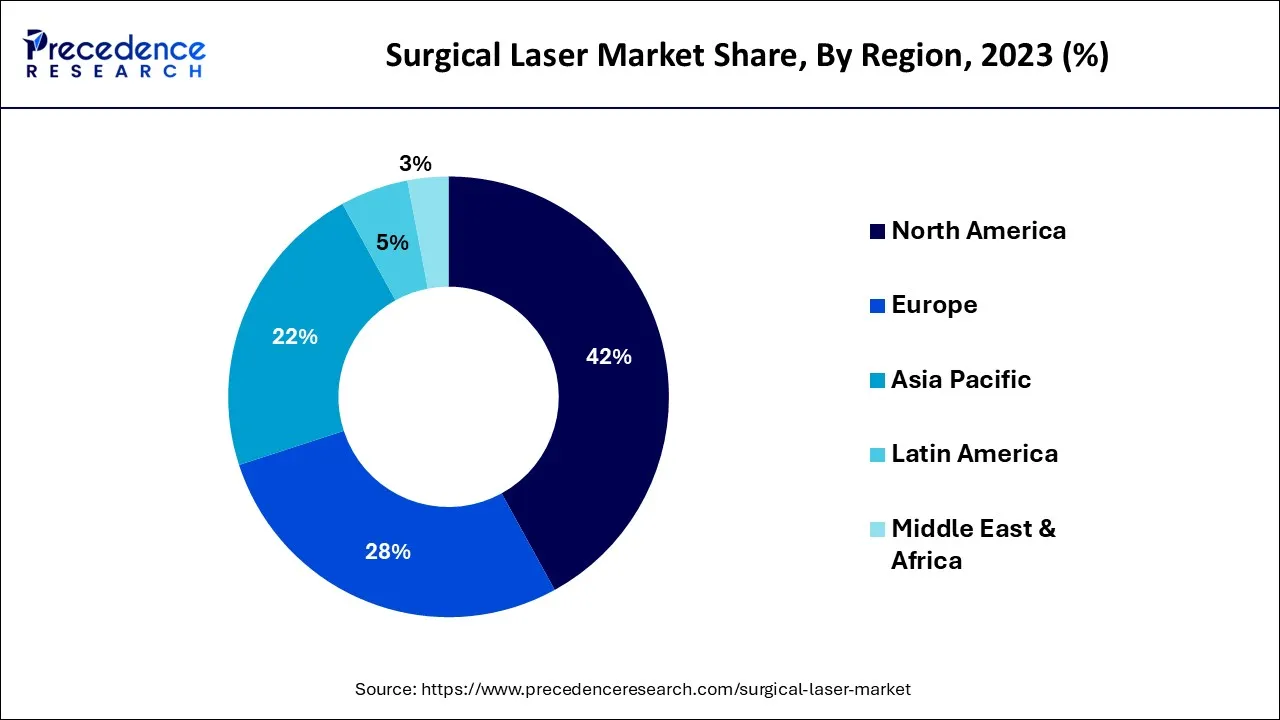
- North America has generated the highest market share of 42% in 2025.
- Asia Pacific region is expected to witness the fastest growth over the forecast period.
- By application, the aesthetic laser segment has captured 32.6% of the total market share in 2025.
- By application, the dentistry segment is anticipated to grow at the fastest rate over the forecast period.
- By end user, the hospital segment has accounted market share of 41.4% in 2025.
- By end user, the ambulatory surgical centers (ASCs) segment is estimated to show the fastest growth during the projected period.
- By product, the solid-state laser systems segment has held the largest market share of over 38.3% in 2025.
- By product, the diode laser systems segment is expected to grow at the fastest rate over the forecast period.
What is a surgical laser?
Surgical lasers are devices that treat or cut tissue without the use of a scalpel by using light. When performing eye surgery, a surgical laser is frequently utilized to reshape the cornea or correct vision. The device can also be used to get rid of tattoos, birthmarks, and wrinkles. Since there is no physical touch during laser surgery, there is no chance of infection, making it safer than traditional surgery.
What is the impact of AI on surgical lasers?
The implementation of Artificial Intelligence (AI) technology in the market is substantially changing the market. AI algorithms enable precise diagnostics and accurate treatment planning during laser procedures. Furthermore, AI and ML technologies optimize overall operational efficiencies by decreasing human error and enhancing processes.
Surgical Laser Market Growth Factors
The market has been transformed by high growth potential in developing nations and growing interest in minimally invasive procedures. The market for surgical lasers is being driven by the expansion of the medical tourism sector as a result of the globalization of the healthcare system. People have been steadily increasing in number in recent years who travel abroad for medical care.
To draw patients, many nations have positioned themselves as having top-notch healthcare facilities and cutting-edge technology. The developing world is now taking advantage of the increased demand for medical care by meeting it with better facilities and at lower costs due to the high cost of surgeries and treatments in the industrialized world.
Furthermore, the rising prevalence of vision impairment and the quick development of laser technology will drive the worldwide surgical lasers market trends through 2030. Over 2.2 billion people worldwide have a distance or near visual impairment, according to the WHO. This element might increase demand for LASIK eye surgery, which makes up 90%–95% of all laser vision correction procedures. The development of laser technology to treat critical illnesses like cancer will also spur industrial growth.
Furthermore, Heriot-Watt University in Edinburgh received a $1.6 million grant from the Engineering and Physical Sciences Research Council in 2021 for the creation of a new laser device that would assist surgeons in identifying and removing cancer cells without causing damage to neighboring tissues. Such significant investments in the management of specific diseases will also encourage
- The increasing incidence of chronic illnesses is expected to boost market growth soon.
- The growing prevalence of vision impairment can propel market growth shortly.
- The ongoing expansion of the medical tourism sector will likely contribute to the market expansion over the projected period.
Surgical Laser Market Outlook
- Industry Growth Overview: From 2025 to 2030, the surgical laser market is expected to grow significantly as a result of the increasing acceptance of minimally invasive surgeries and precision-based medical treatments. North America and the Asia-Pacific region will be the main regions for growth, due to sophisticated healthcare technologies and an increasing demand for cosmetic and ophthalmic laser procedures.
- Global Expansion: Major manufacturers are also expanding into emerging healthcare markets, including Southeast Asia and Latin America. For example, Lumenis and Bausch & Lomb are continuing to bolster distribution partnerships as well as regional service hubs to target projected increased surgical volumes.
Institutional Investors: As private equity firms look to high-margin medical device segments, investment is rapidly increasing in surgical lasers. For example, Medtronic Ventures (Medtronic) and GE HealthCare Capital (General Electric) have invested in laser technology startups focused on ophthalmology, oncology, and dental surgery. - Startup Ecosystem: The surgical laser startup ecosystem is evolving significantly, with firms such as LightForce (US) and LENSAR (US) providing AI-assisted laser surgical systems. Startups focused on small size, energy efficiency, and AI-ready surgical lasers are attracting considerable interest from healthcare investors globally.
Market Scope
| Report Coverage | Details |
| Market Size in 2025 | USD 3.51 Billion |
| Market Size in 2026 | USD 3.73 Billion |
| Market Size by 2035 | USD 6.5 Billion |
| Growth Rate from 2026 to 2035 | CAGR of 6.36% |
| Base Year | 2025 |
| Forecast Period | 2026 to 2035 |
| Segments Covered | By Product Type, By Application and By End-Use |
| Regions Covered | North America, Europe, Asia-Pacific, Latin America and Middle East & Africa |
Market Dynamics
Key Market Drivers
Rising interest in minimally invasive procedures - Minimally invasive surgery typically results in less discomfort, a shorter hospital stay, and fewer complications. Furthermore, the demand for minimally invasive or non-invasive operations is rising, and patients are favoring shorter hospital stays, which is driving manufacturers to create items and equipment with cutting-edge technology and quick recovery times.
Minimally invasive surgery typically results in less discomfort, a shorter hospital stay, and fewer complications. Furthermore, the demand for minimally invasive or non-invasive operations is rising, and patients are favoring shorter hospital stays, which is driving manufacturers to create items and equipment with cutting-edge technology and quick recovery times.
- In March 2023, Lumenis launched a new laser system for urological procedures. This system is designed to treat various urological diseases such as benign prostatic hyperplasia (BPH), kidney stones, and bladder cancer.
As a result of the aforementioned variables, it is projected that the market under study will expand during the course of the investigation. However, the substantial procedural costs linked to laser surgery will probably restrain market expansion.
Increase in key developments - The Spectranetics Corporation (Philips Holding USA Inc.), IPG Photonics Corporation, Carl Zeiss Meditec, Inc., BISON MEDICAL Co., Ltd., Biolitec AG (BioMed Technology Holdings Ltd.), Alma Lasers (Sisram Med), Abbott Laboratories, Lumenis, Cynosure, and Boston Scientific Corporation are just a few of the major companies operating in the market.
These businesses are employing a variety of techniques, such as new product releases and partnerships, to increase their market share in the cutthroat industry. For instance, Boston Scientific and a BPEA affiliate signed a contract in March 2021. (Baring Private Equity Asia). With this agreement, Lumenis' surgical division, comprising its top-tier laser systems, will be acquired.
Key Market Challenges
Lack of knowledge regarding specialized training - Over the forecast period, challenges such as surgeons' specialized training, stringent safety regulations, and the high cost of laser therapy are anticipated to have a negative impact on the growth of the surgical laser market. Additionally, laser therapy's effects might not persist as long in other conditions, like cancer, so doctors might need to repeat the procedure to get better outcomes.
Furthermore, the high cost of laser procedures, the absence of practical medical reimbursement mechanisms, and stringent guidelines guiding the approval of surgical lasers are anticipated to also be market restraints.
Key Market Opportunities
Acceptance of surgical lasers in developed and undeveloped countries – Players in the surgical laser market have a lot of room to grow in emerging markets like India, China, Brazil, and Mexico. The aging of the population, the incidence of lifestyle illnesses, and rising investments by major companies in these nations are all contributing to growth in these regions.
Furthermore, growing acceptance and demand for sophisticated cosmetic operations worldwide, in both established and emerging nations, are largely due to growing awareness of advanced aesthetic techniques. The use of surgical laser technology in aesthetic operations has significantly increased during the past several years. According to the American Society of Plastic Surgeons (ASPS), the South Atlantic has 3.8 million (25%) of the country's cosmetic treatments were conducted there in 2020.
Acceptance of surgical lasers in developed and undeveloped countries – Players in the surgical laser market have a lot of room to grow in emerging markets like India, China, Brazil, and Mexico. The aging of the population, the incidence of lifestyle illnesses, and rising investments by major companies in these nations are all contributing to growth in these regions.
Furthermore, the growing acceptance and demand for sophisticated cosmetic operations worldwide, in both established and emerging nations, is largely due to growing awareness of advanced aesthetic techniques. The use of surgical laser technology in aesthetic operations has significantly increased during the past several years.
Product Type Insights
The surgical laser market is anticipated to have the greatest revenue share in solid-state laser systems in 2023. Erbium Yttrium Aluminum Garnet (Er: YAG), Neodymium Yttrium Aluminum Garnet (Nd: YAG), Holmium Yttrium Aluminum Garnet (Ho: YAG), Ruby laser systems, and other solid-state systems are further subdivided.
The use of Nd: YAG laser systems for cosmetic procedures has spread throughout the world as market participants introduce their goods and surgical laser systems in other regions. Additionally, improvements in Nd: YAG lasers along with their widespread use due to their effective results on practically all skin types are some of the key drivers boosting the segment's growth in the surgical lasers market.
Furthermore, with the low cost of these surgical laser systems and the precision of the procedures, carbon dioxide surgical lasers account for a sizeable portion of gas-laser systems. Due to the numerous benefits that these systems offer, market participants are concentrating on the introduction of CO2 lasers.
The diode laser systems segment is expected to grow at the fastest rate over the forecast period. The growth of the segment can be attributed to the growing use of diode lasers in a variety of applications such as dentistry, dermatology, and ophthalmology which makes them adaptable for various procedures. Additionally, ongoing development in diode laser technology can impact segment growth positively in the market.
Application Insights
The market for surgical lasers is divided into cosmetic, surgical, dental, and ophthalmic segments based on the application. Over the foreseeable period, it is expected that the aesthetics segment will continue to dominate.
An increasing number of FDA approvals that broaden dermatology applications such as skin rejuvenation, varicose vein treatment, acne, tattoo, and pigmented lesions support industry growth in the aesthetics sector.
The market for surgical lasers is divided into cosmetic, surgical, dental, and ophthalmic segments based on the application. Over the foreseeable period, aesthetics segment dominaed the market in 2025.
An increasing number of FDA approvals that broaden dermatology applications such as skin rejuvenation, varicose vein treatment, acne, tattoo, and pigmented lesions support industry growth in the aesthetics sector.
The dentistry segment is anticipated to grow at the fastest rate over the forecast period. The growth of the segment can be credited to the rising adoption of laser technology for an extensive range of dental procedures. Lasers provide numerous benefits in dentistry like reduced pain. Moreover, developments in laser technology including portable diodes can lead to market growth soon.
End-Use Insights
The surgical lasers market was dominated by the hospital sector. Over the projected period, the category is expected to continue to rule. The rise in aesthetic operations in hospitals in important markets including the U.S., Germany, and Japan is credited with the hospital segment's expansion.
Additionally, it is projected that growing consumer awareness of aesthetic and cosmetic procedures in developing nations like China and India will promote segment expansion.
The ambulatory surgical centers (ASCs) segment is estimated to show the fastest growth during the projected period. The growth of the segment can be credited to the rising demand for OPD procedures and the increasing preference for cost-effective treatments. Furthermore, ASCs are easier to reach than hospitals, good for patients searching for convenient and quick alternatives.
Regional Insights
U.S. Surgical Laser Market Size and Growth 2026 to 2035
The U.S. surgical laser market size is exhibited at USD 1,031.94 million in 2025 and is projected to be worth around USD 1,979.96 million by 2035, growing at a CAGR of 6.73% from 2026 to 2035.
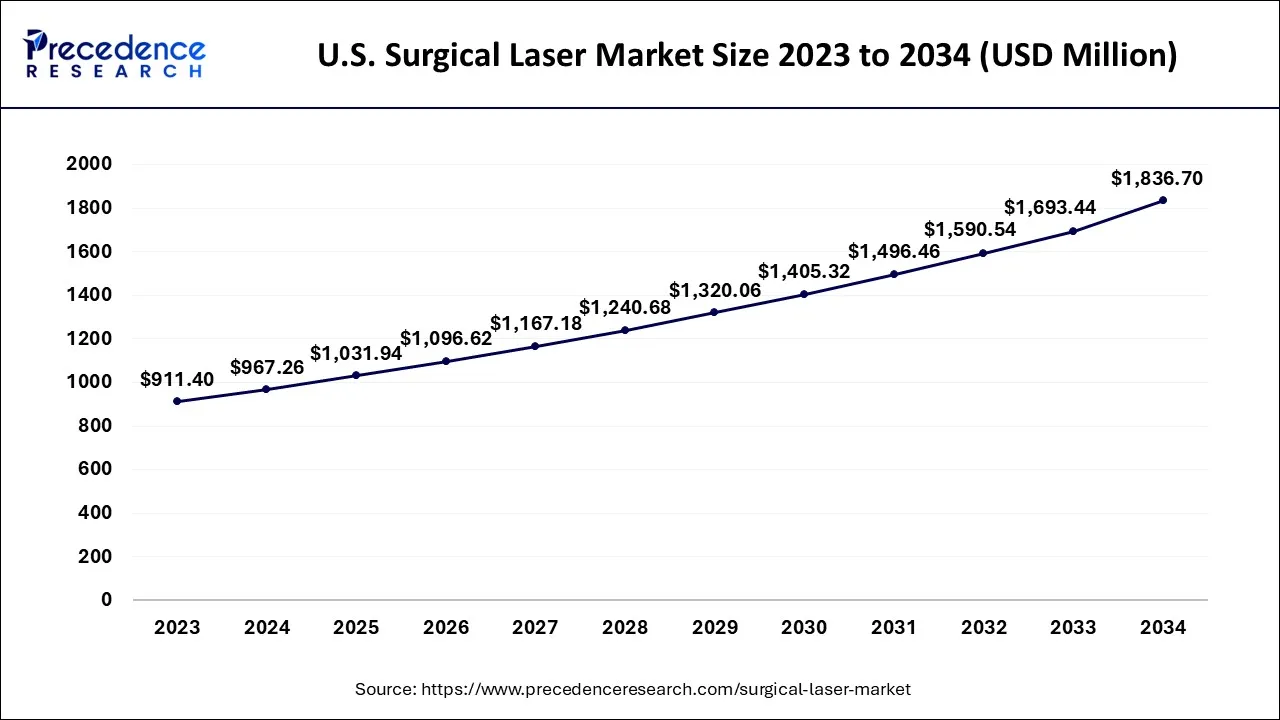
North America Title: North America's Laser Edge: Dominating the Surgical Frontier
North America, Latin America, Europe, Asia Pacific, the Middle East, and Africa are the regional divisions of the surgical lasers market. North America generated the most revenue in 2023, and it is anticipated that it will hold this position throughout the projected period. This dominance is attributable to the established healthcare system, widespread use of technologically sophisticated aesthetic laser technologies, and rising demand for aesthetic and cosmetic procedures in North America.
U.S. Surgical Laser Market Trends
The U.S. market is witnessing robust growth driven by the increasing uptake of minimally invasive procedures which favor precision laser systems over traditional surgical approaches. In particular, solid state laser systems currently command the largest share of the market due to their versatility in applications such as ophthalmology, dermatology, and urology, while diode lasers are projected to register the fastest compound annual growth because of their lower cost and expanding usage across specialties.
Furthermore, it is projected that the local presence of large firms and their ongoing strategic endeavors will further improve the market environment. During the projection period, surgical lasers are anticipated to have brisk growth in the Asia Pacific region. In order to increase the visibility of its surgical laser devices and to obtain a competitive edge, a number of significant firms are implementing a variety of growth methods.
Furthermore, new key developments, such as product launches and approval by key players, are also anticipated to provide growth opportunities. For instance, in order to support the care of more people with heart failure, Abbott acquired expanded indication approval from the US Food and Drug Administration (FDA) in February 2022 for the CardioMEMS HF System. A paperclip-sized sensor known as the CardioMEMS HF System is inserted into a patient's pulmonary artery using a catheter.
Asia Pacific region is expected to witness the fastest growth over the forecast period. The growth of the region can be driven by ongoing developments in healthcare infrastructure and rising access to innovative surgery technologies. Also, there is a surge in healthcare standards in developing economies like China and India. In addition, an increasing shift toward minimally invasive surgeries can shorten recovery times.
Asia Pacific Title: Asia-Pacific's Ascent: The New Growth Engine for Surgical Lasers
China Surgical Laser Market Trends
The surgical laser market in China is experiencing strong expansion, underpinned by rapid growth in minimally invasive procedures and healthcare infrastructure upgrades. Revenues are projected to grow significantly over the next several years, solidifying the market's position regionally. Growth is driven by rising demand across specialties like ophthalmology, urology, and dermatology, where laser-based interventions offer shorter recovery times and improved precision.
Europe: Precision and Progress in Every Pulse
Europe grew steadily in the surgical laser market due to strong regulatory frameworks and significant acceptance of medical innovations. The increasing emphasis on precision healthcare and the growing elderly population requiring eye and skin surgeries bolstered the demand for surgical lasers. Additionally, opportunities broadened when the European Union established initiatives to encourage the development of green and energy-efficient medical technologies, motivating manufacturers to invest in sustainable approaches for laser developments in the medical market.
Germany Surgical Laser Market Trends
Germany held the dominant position in the European market due to the development of hospitals and heavy investment in R&D of medical lasers. Leading companies, such as Carl Zeiss Meditec and BIOLASE, broadened their product offerings across vision and dental indications. Innovation, medical expertise, and relationships with medical research groups became things that contributed to Germany's leadership in the surgical laser market compared to the markets across Europe.
Latin America: New Horizons of Laser Care
Latin America experienced significant growth as nations improved access to private healthcare, and awareness of aesthetic and ophthalmic surgery increased. The growth contributed to demand for affordable and portable laser systems, as local clinics modernized. Additionally, there were diversification opportunities in countries, making national and regional investments in healthcare infrastructure, technology imports, and in collaboration with global companies to manufacture capital equipment locally.
Brazil Surgical Laser Market Trends
Brazil led the Latin American market as the country had the highest demand for cosmetic laser surgeries. The sustained influx of medical tourism and investment in private clinics helped the rapid adoption of these procedures. The country attracted professionals for its dermalogical and dental laser procedures, while local companies began to introduce more affordable systems for a wider variety of patients.
Middle East & Africa: Shaping Tomorrow's Surgical Landscape
The Middle East & Africa region demonstrated considerable opportunity owing to increased healthcare infrastructure and demand for advanced surgical technology. Investments in medical tourism and improved hospital infrastructure supported the growth of the market. Moreover, the introduction of energy-efficient, portable laser systems for different clinical contexts expanded opportunities.
The UAE Surgical Laser Market Trends
The UAE established itself as a leader in the region, making significant investments to develop smart hospitals and sophisticated medical devices. The growing desire for cosmetic and ophthalmic surgery has led to an increase in the use of surgical lasers. Strategic partnerships with laser companies and developers from around the world helped the UAE establish itself among competitive markets for medical technology developers.
Latest Announcements by Market Leaders
- In August 2024, Candela Corporation, a leading global medical aesthetic device company headquartered in Marlborough, MA, announced that the Matrix™ system, a first-of-its-kind radiofrequency (RF) platform for comprehensive skin treatments, has received U.S. Food and Drug Administration (FDA) 510(k) clearance for the percutaneous treatment of facial wrinkles.
- In January 2024, Cynosure and Hahn & Company, which has recently acquired Lutronic, announced that they have entered into a definitive merger agreement for a strategic combination of Cynosure and Lutronic. Both Cynosure and Lutronic are global providers of energy-based medical aesthetic treatment systems and related technologies.
Surgical Laser Market Companies
- Cynosure, Inc.
- Lumenis Ltd.
- Candela Corporation
- Cutera, Inc.
- Lutronic Corporation
- El.En Group
- Fotonad.o.o
- Alcon
- Biolase
- Asclepion Laser Technologies GmbH
Recent Developments
- In June 2024, Lumenis launched Folix, the first FDA-cleared fractional laser designed for hair loss treatment. Using unique fractional technology, Folix stimulates hair follicles to promote regrowth while minimizing damage to surrounding tissues
- In May 2024, Monteris Medical said its launch of the NeuroBlate NB3 FullFire makes it the smallest laser probe for brain procedures on the market. The 1.6mm laser fiber probe features patented NeuroBlate System cooling technology and is available in a single adjustable length.
- In May 2022- RevoLix HTL, a family of pulsed and continuous wave Thulium YAG lasers that forms the basis of RevoLix Therapy for urology patients undergoing Benign Prostatic Hyperplasia (BPH) and Stone Management procedures, has been approved by the US Food and Drug Administration.
- In March 2022- The United States Food and Drug Administration granted AviClear, one of the first energy-based products to achieve this certification for the treatment of mild, moderate, and severe acne, to CUTERA, INC., a provider of dermatology solutions.
- In December 2021- The next generation PicoLO Premium Picosecond Nd:YAG Laser from LASEROPTEK Co., Ltd., a developer of top-notch laser equipment for aesthetic and medical dermatology applications, has been given FDA 510(k) clearance.
- In March 2021- Boston Scientific and a BPEA affiliate established a contract (Baring Private Equity Asia). With this agreement, Lumenis' surgical division, comprising its top-tier laser systems, will be acquired.
- In July 2019- The TempSure Firm handpiece and a small mask for SculpSure submental treatments are two new items from Hologic's Cynosure division that add to the company's expanding line of cutting-edge aesthetic treatments. The U.S. Food and Drug Administration (FDA) has officially approved SculpSure submental treatments for patients with a body mass index (BMI) of up to 49, the highest BMI clearance available for submental therapies.
Segments Covered in the Report
By Product Type
- Solid-state Laser Systems
- Erbium Yttrium Aluminum Garnet (Er: YAG)
- Neodymium Yttrium Aluminum Garnet (Nd: YAG)
- Holmium Yttrium Aluminum Garnet (Ho: YAG)
- Ruby Laser Systems
- Others
- Gas Laser Systems
- CO2
- Excimer
- Helium Neon
- Diode Laser Systems
- Others
By Application
- Surgical
- Aesthetic
- Dentistry
- Ophthalmic
- Dermatology
- Urology
- Gynecology
- Cardiology
- Oncology
- Others
By End-Use
- Hospitals
- Specialty Clinics
- Ambulatory Surgical Centers
By Geography
- North America
- Europe
- Asia-Pacific
- Latin America
- The Middle East and Africa
For inquiries regarding discounts, bulk purchases, or customization requests, please contact us at sales@precedenceresearch.com
Frequently Asked Questions





Ask For Sample
No cookie-cutter, only authentic analysis – take the 1st step to become a Precedence Research client
 Get a Sample
.webp)



 sales@precedenceresearch.com
 Schedule a Meeting
