



Brachytherapy Market Size, Share and Trends 2026 to 2035
Brachytherapy Market (By Dosage: High-dose Rate (HDR) Brachytherapy, Low-dose Rate (LDR) Brachytherapy; By Product: Seeds, Applicators & Afterloaders, Electronic Brachytherapy; By Application: Prostate Cancer, Gynecological Cancer, Breast Cancer, Others) - Global Industry Analysis, Size, Trends, Leading Companies, Regional Outlook, and Forecast 2026 to 2035
Source: https://www.precedenceresearch.com/brachytherapy-market
 Get a Sample
 Table Of Content


What is the Brachytherapy Market Size?
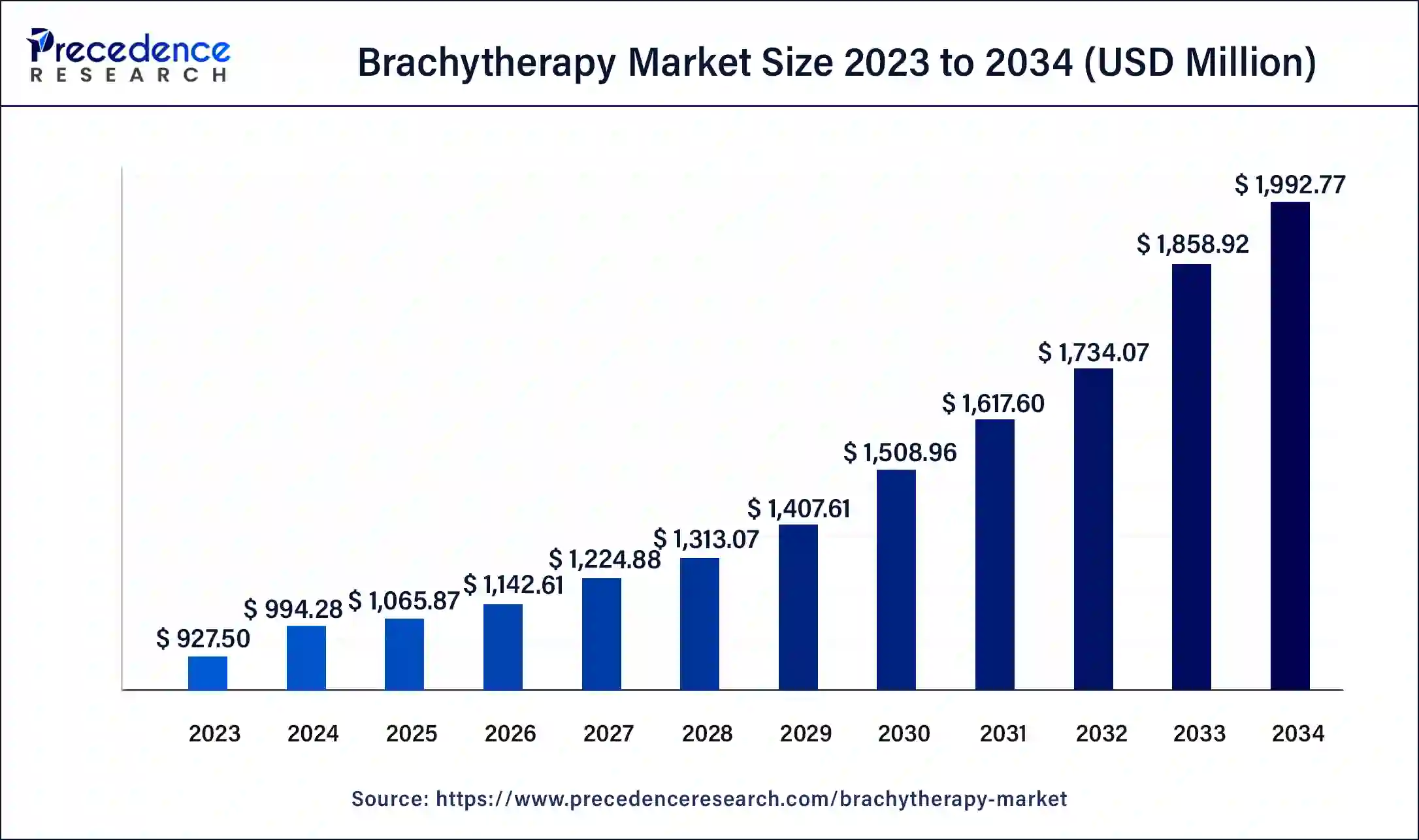
The global brachytherapy market size was valued at USD 1.07 billion in 2025, and is expected to reach around USD 2.12 billion by 2035, expanding at a CAGR of 7.08% from 2026 to 2035. The North America brachytherapy market size reached USD 460 million in 2025. The increasing prevalence of cancer, technological advancements, and a significant rise in the adoption of brachytherapy are expected to drive the growth of the market during the forecast period.
Brachytherapy Market Key Takeaways
- The global brachytherapy market was valued at USD 1.07 billion in 2025.
- It is projected to reach USD 2.12 billion by 2035.
- The brachytherapy market is expected to grow at a CAGR of 7.08% from 2026 to 2035.
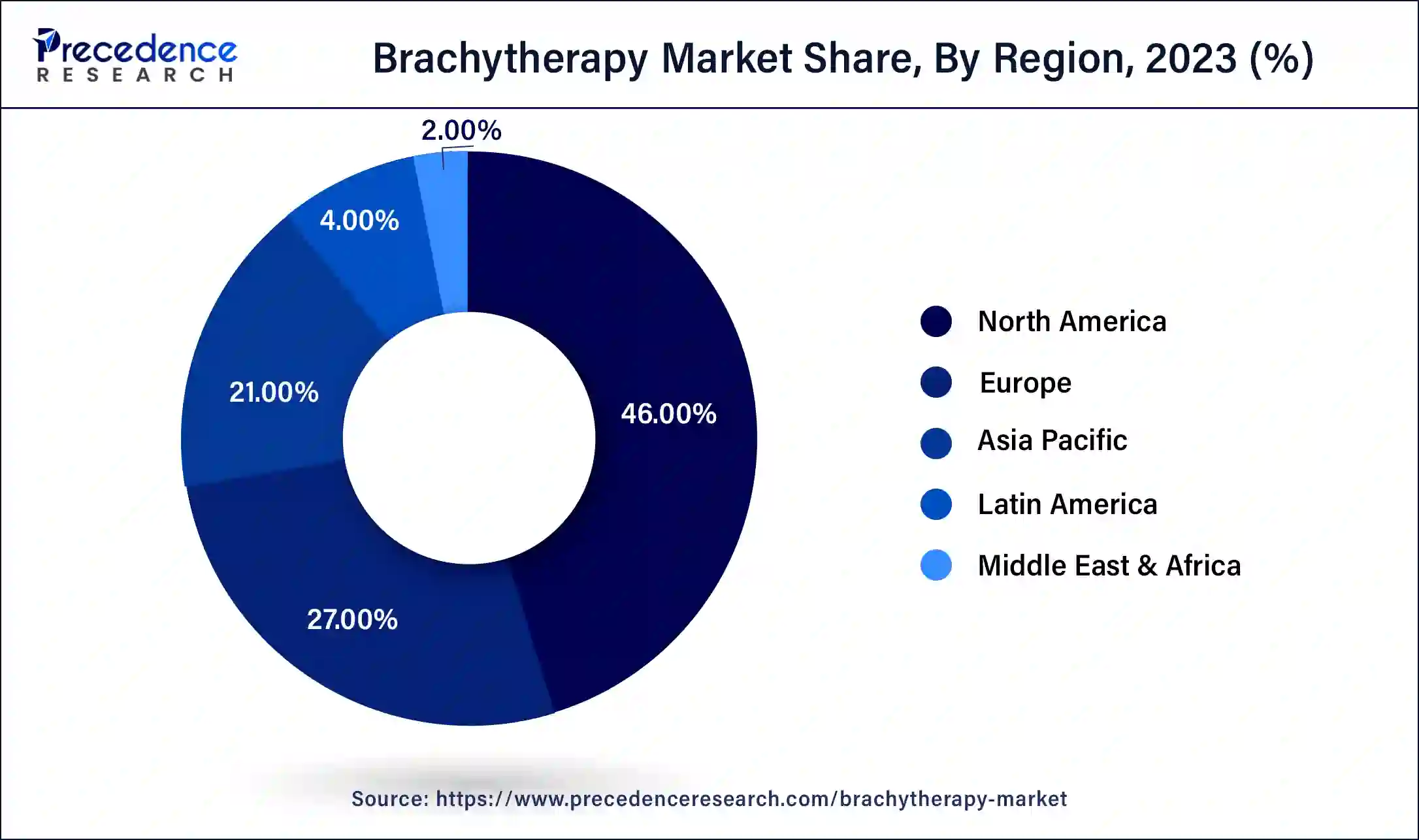
- North America has held the biggest market share of 46% in 2025.
- Asia Pacific is expected to see the fastest growth rate during the forecast period.
- By application, the prostate cancer segment led the market with the largest market share of 33% in 2025.
- By application, the breast cancer segment is projected to grow at the fastest rate during the forecast period.
- By product, the applicators and loaders segment has accounted more than 45% of market share in 2025.
- By product, the electronic brachytherapy segment is projected to experience notable growth during the forecast period.
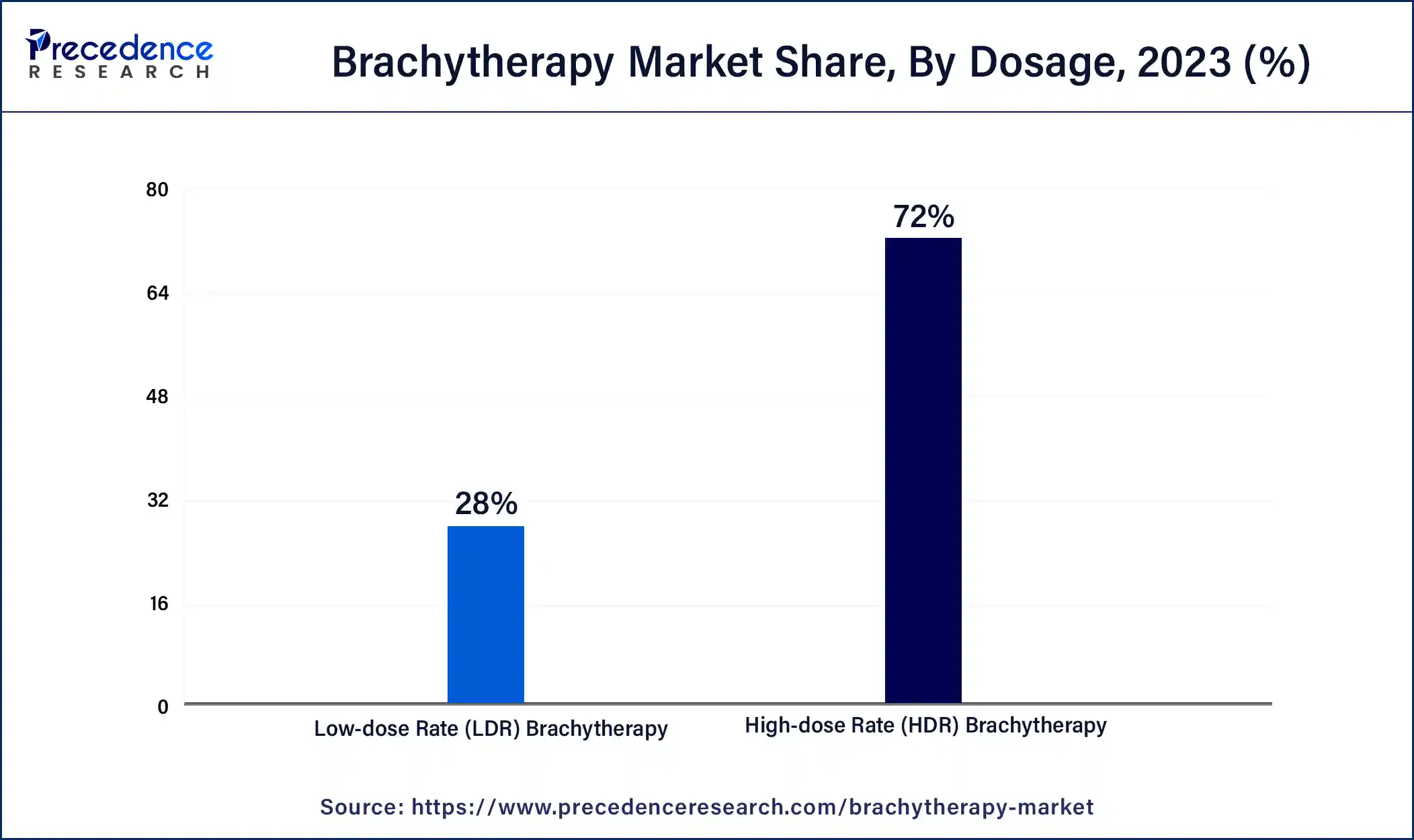
- By dosage, the high-dose-rate (HDR) brachytherapy segment held the largest market share of 72% in 2025.
- By dosage, the low-dose-rate (LDR) brachytherapy is projected to witness significant growth over the forecast period.
Market Overview
Brachytherapy is a specialized cancer treatment that utilizes radiation therapy. It involves placing a radioactive source near or directly into the tumor, delivering powerful radiation precisely while safeguarding nearby healthy tissues. This treatment is widely used for cancers like cervical, prostate, breast, and skin cancers due to its focused approach and shorter treatment duration. The market size majorly depends on technological advancements, cancer rates, and awareness of the benefits of brachytherapy.
The brachytherapy market is centered around the business aspect of this cancer treatment, with companies manufacturing and selling devices for brachytherapy, including equipment and related products. Key players include medical research institutions and healthcare providers. Success in the market often stems from enhancing brachytherapy techniques and devices to offer more effective and precise cancer treatments.
The brachytherapy market size depends on advancements in technology, cancer rates, and awareness about the benefits of brachytherapy. Key players include medical research institutions, medical device manufacturers, and healthcare providers. Market dynamics can vary depending on location, regulatory rules, and cancer prevalence.
Artificial Intelligence: The Next Growth Catalyst in the Brachytherapy Industry
AI is transforming the brachytherapy industry by significantly increasing the speed and accuracy of treatment planning, particularly through automated segmentation of organs and applicator/needle reconstruction in image-guided brachytherapy (IGBT). By utilizing machine learning algorithms, clinicians can reduce complex, time-consuming tasks from hours to minutes, allowing for more personalized treatment while improving consistency and reducing human errors in dosage administration.
AI integration is also driving advancements in real-time imaging during procedures, enabling predictive modeling for improved treatment outcomes and toxicity management, particularly for prostate and gynecological cancers.
Brachytherapy Market Growth Factors
- Rising cancer burden globally is one of the key factors driving the market growth
- The increasing aging population worldwide can fuel the brachytherapy market growth shortly.
- Growing demand for localized treatment across the globe can contribute to the brachytherapy market expansion during the forecast period.
- Government initiatives and rising funding for cancer treatment and research are boosting the growth of the market shortly.
- Advancements in brachytherapy technologies like image-guided therapy, etc., are propelling the market growth.
Market Outlook
- Market Growth Overview: The brachytherapy market is expected to grow significantly between 2025 and 2034, driven by the rising cancer prevalence and aging population, innovation in advanced technology in precision, and expanded healthcare infrastructure and reimbursement.
- Sustainability Trends: Sustainability trends involve greening the operating room and procedure suites, the environmental impact of treatment options, and long-term strategic sustainability.
- Major Investors: Major investors in the market include Elekta AB, Varian Medical Systems, Eckert & Ziegler BEBIG, Becton, and Isoray Medical, Inc.
Market Scope
| Report Coverage | Details |
| Growth Rate from 2026 to 2035 | CAGR of 7.08% |
| Market Size in 2025 | USD 1.07 Billion |
| Market Size in 2026 | USD 1.14 Billion |
| Market Size by 2035 | USD 2.12 Billion |
| Largest Market | North America |
| Base Year | 2025 |
| Forecast Period | 2026 to 2035 |
| Segments Covered | By Dosage, By Product, and By Application |
| Regions Covered | North America, Europe, Asia-Pacific, Latin America, and Middle East & Africa |
Market Dynamics
Driver:
Rising prevalence of cancer
The market for brachytherapy is experiencing growth due to the increasing prevalence of cancers such as prostate, breast, and cervical cancers. Subsidies, grants, and awareness programs are encouraging healthcare providers to invest in brachytherapy equipment and services, which further contributes to the growth of cancer care infrastructure. The treatment approach is becoming more popular as it provides accurate and efficient cancer therapy, either as a primary treatment or in combination with other methods. As cancer cases continue to rise, there is a growing demand for advanced treatment options such as brachytherapy.
- In September 2023, the Biden-Harris Administration announced over 330 million Dollars in new funding to advance the Biden Cancer Moonshot Initiative and improve healthcare research, treatment, and outcomes for the American public.
Restraint:
High cost of equipment and alternative treatment modalities
Brachytherapy requires specialized equipment and infrastructure for treatment planning, radiation delivery, and patient safety, which can be costly to set up initially. This high upfront investment can be a challenge for healthcare facilities, especially in regions with limited resources, leading to slower adoption of brachytherapy. Additionally, the availability of alternative treatments like external beam radiation therapy, surgery, and chemotherapy presents competition for brachytherapy, which can directly affect its widespread use in the brachytherapy market.
Opportunity:
Integration of AI in brachytherapy
The use of artificial intelligence (AI) in the planning and delivery of brachytherapy shows promising growth opportunities. AI can improve treatment accuracy, reduce planning time, optimize dose distribution, attract investments, and drive technological advancements. The emerging economies present untapped markets with significant growth potential for brachytherapy. These economies are supported by the growth of healthcare infrastructure and awareness of advanced cancer treatment options. Collaborations between industry players, healthcare institutions, and research organizations offer opportunities for market expansion by fostering the development of innovative brachytherapy solutions, streamlining regulatory processes, and broadening market reach.
- In March 2024, Mayo Clinic researchers invented a new class of artificial intelligence (AI) algorithms called hypothesis-driven AI that are a significant departure from traditional AI models which learn solely from data. In a review published in Cancers, the researchers note that this emerging class of AI offers an innovative way to use massive datasets to help discover the complex causes of diseases such as cancer and improve treatment strategies.
Segment Insights
Application Insights
The prostate cancer segment dominated the brachytherapy market share in 2025. This is because brachytherapy for prostate cancer offers several advantages over other treatments. These benefits include the ability to safely deliver a higher dose of radiation to the tumor while minimizing radiation exposure to nearby organs like the rectum, bladder, and urethra. Additionally, brachytherapy treatment is shorter, leading to faster recovery times. Its precise delivery of radiation minimizes the risk of side effects. It's an effective option for patients who experience prostate cancer recurrence.
- In July 2022, RaySearch Laboratories AB announced the launch of RayStation* 12A, the latest version of the company's advanced treatment planning system. RayStation 12A brings deep learning segmentation for all users as well as new features for brachytherapy.
- In March 2023, CryoLife Inc. introduced a new brachytherapy solution named the CryoLife Prostate Brachytherapy System. This innovative system is designed for a minimally invasive delivery of radioactive seeds to the prostate gland, with the company aiming to capture a larger share of the expanding brachytherapy market.
The breast cancer segment is projected to grow at the fastest rate during the forecast period. This growth is driven by Accelerated Partial Breast Irradiation (APBI), an innovative radiation therapy method used after a lumpectomy. The segment's expansion indicates the effectiveness of brachytherapy in treating breast cancer cases, which offers hope for advancements in breast cancer treatment.
Product Type Insights
The applicators and loaders segment led the global brachytherapy market in 2025 and is expected to maintain its dominance throughout the forecast period. Applicators are preferred by patients because they are more effective and less invasive compared to other options. An after-loader device transports radioactive sources to the treatment site. In High Dose Rate (HDR) brachytherapy, a single radioactive source is briefly inserted into the tumor and then removed.
The electronic brachytherapy segment is projected to experience notable growth during the forecast period. With advancements in technology, electronic brachytherapy presents a modern approach that can transform treatment methods in the field. This technique is particularly effective for treating skin lesions and offers radiation shielding, which helps overcome challenges associated with handling radioisotopes.
- In February 2022, Gonoshasthaya Kendra began cancer treatment through electronic brachytherapy in three phases, offering different packages, including one at Tk 12,000 for people with low incomes.
Dosage Insights
The high-dose-rate (HDR) brachytherapy segment held the largest market share in 2025. It's an outpatient procedure that can be utilized as a standalone treatment. The free treatment generally requires more than one session, depending on the kind of cancer being treated. Varian Medical Systems, ELEKTA AB, etc., are some key players in the market.
- In May 2023, Varian Medical Systems announced the launch of its new brachytherapy system, the TrueBeam STx. The TrueBeam STx is a high-dose-rate (HDR) brachytherapy system that uses a linear accelerator to deliver high doses of radiation to tumors.
The low-dose-rate (LDR) brachytherapy is projected to witness significant growth over the forecast period. This can be attributed to the new products, such as gamma tile for the diagnosis of brain tumors, which is anticipated to boost the market growth further.
Regional Insights
What is the U.S. Brachytherapy Market Size?
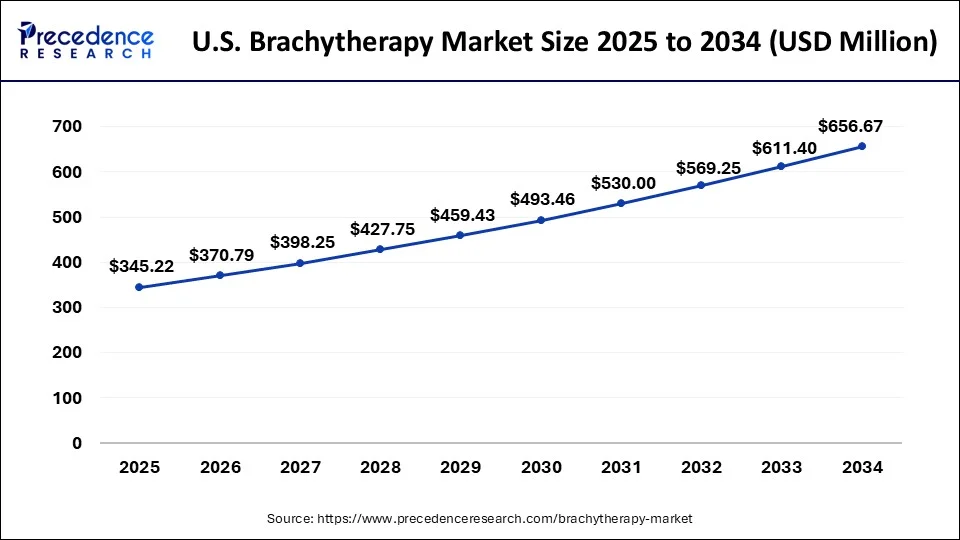
The U.S. brachytherapy market size was estimated at USD 345.22 million in 2025 and is predicted to be worth around USD 699.86 million by 2035, at a CAGR of 7.32% from 2026 to 2035.
North America took the lead in the brachytherapy market in 2025. This was driven by continuous advancements in healthcare technology in the region. North America's commitment to innovation, along with significant investments in research and development, has resulted in innovative brachytherapy solutions catering to various medical needs.
The high prevalence of cancer in North America has increased the demand for targeted treatments like brachytherapy. The region's dominance in the market is further fueled by growing awareness among patients and healthcare professionals about the benefits of this therapy.
- In March 2023, the FDA approved the TomoTherapy Hi-Art brachytherapy system for the treatment of prostate cancer. The TomoTherapy Hi-Art system is a robotic brachytherapy system that uses a CT scanner to image the tumor and then delivers radiation to the tumor in a precise and targeted manner.
U.S. Brachytherapy Market Trends
The U.S. shift towards high-dose-rate treatments and electronic sources, which offer superior precision and eliminate isotope-related hazards. The integration of AI-driven imaging and 3D-printed hardware allows for highly personalized, outpatient-based care. The robust reimbursement frameworks and a growing preference for shorter treatment cycles, such as APBI, are solidifying brachytherapy's role as a cornerstone of cost-effective, minimally invasive oncology.
Asia Pacific, in the brachytherapy market, is expected to see the fastest growth rate during the forecast period. This is primarily due to the region's high disease burden and increasing awareness among the population. Limited access to advanced cancer treatments also presents opportunities for market players. Moreover, the introduction of various brachytherapy systems in developing countries like India is anticipated to have a positive impact on the market.
- In November 2022, Medicover Hospitals launched Asia's first TrueBeam Identify system. The system is also Telangana's (an Indian state) first SGRT, making treatment more accessible for patients.
China Brachytherapy Market Trends
China's dominance of high-dose rate (HDR) technology, which leverages efficiency and outpatient suitability to command the largest revenue share. This leadership is reinforced by a rapid shift toward image-guided techniques and AI-driven planning, which optimize dose accuracy for a growing geriatric patient base.
Value Chain Analysis of the Brachytherapy Market
- Raw Material Sourcing & Isotope Production
This stage involves the sourcing of radioactive isotopes (e.g., Iridium-192, Iodine-125, Cesium-131, Palladium-103) and high-grade materials for applicators.
Key Players: Eckert & Ziegler BEBIG, IsoRay Inc., and IsoAid LLC. - Manufacturing and Product Development
This stage focuses on innovation, including the development of 3D-printed applicators, image-guided systems, and software for precise treatment planning.
Ky Players: Elekta AB, Varian Medical Systems, and BEBIG Medical - Distribution and Regulatory Compliance
Products are distributed to hospitals and clinics through specialized logistics, ensuring strict regulatory compliance and safety standards for handling radioactive materials.
Key Players: CIVCO Medical Solutions, Boston Scientific Corporation, and Argon Medical Devices.
Brachytherapy Market Companies
- Varian Medical Systems, Inc.: Varian (a Siemens Healthineers company) dominates the brachytherapy market by providing a comprehensive, integrated portfolio of high-dose rate (HDR) afterloaders, such as the BRAVOS and GammaMedplus™ systems, alongside specialized applicators.
- Becton: BD contributes to the brachytherapy market by focusing on and manufacturing innovative, specialized seed technology, such as the BrachySource™ I-125, designed for and offering improved, precise radiation treatment.
- Elekta AB: Elekta is a market leader in high-dose rate (HDR) brachytherapy, offering a complete, image-guided, and, hence, efficient workflow through its Flexitron afterloader and Elekta Studio, which, in turn, minimizes treatment times and maximizes, in fact, patient comfort.
- Isoray Medical, Inc.: Isoray Medical specializes in the development and production of unique brachytherapy seeds utilizing Cesium-131, which provides, in turn, a, indeed, short half-life and, consequently, a, frankly, higher energy option for, in fact, treating, quite efficiently, various cancers like, for example, prostate and brain.
Other Major Key Players
- Dickinson & Company
- Eckert & Ziegler BEBIG
- iCAD, Inc.
- CIVCO Medical Solutions
- Theragenics Corporation
Recent Developments
- In January 2023, Boston Scientific Corporation made a strategic move by acquiring CoreLink LLC, a key player in brachytherapy software and services. This acquisition is anticipated to broaden Boston Scientific's product range in the brachytherapy market.
- In April 2023, Elekta announced the acquisition of Calypso Medical, a company that develops and manufactures real-time tumor-tracking systems for brachytherapy. The acquisition will allow Elekta to offer a more comprehensive brachytherapy solution to its customers.
- In October 2022, Elekta and Varian Medical Systems revealed plans to merge in a significant $16.4 billion deal, aiming to form the world's largest provider of radiotherapy and radiosurgery equipment and services. This collaboration is set to establish a formidable presence in the brachytherapy market, boasting a diverse portfolio that includes Elekta brachytherapy seeds and Varian brachytherapy applicators.
Segments Covered in the Report
By Dosage
- High-dose Rate (HDR) Brachytherapy
- Low-dose Rate (LDR) Brachytherapy
By Product
- Seeds
- Applicators & Afterloaders
- Electronic Brachytherapy
By Application
- Prostate Cancer
- Gynecological Cancer
- Breast Cancer
- Others
By Geography
- North America
- Europe
- Asia-Pacific
- Latin America
- Middle East and Africa
For inquiries regarding discounts, bulk purchases, or customization requests, please contact us at sales@precedenceresearch.com
Frequently Asked Questions
Tags





Ask For Sample
No cookie-cutter, only authentic analysis – take the 1st step to become a Precedence Research client
 Get a Sample




 sales@precedenceresearch.com
 Schedule a Meeting
