



Cosmeceuticals Market Size, Key Companies, Company Market Share, Patient Volume, Treatment Adoption Rates, Pricing Analysis, Regulatory Landscape, Competitive Positioning, and Demand Forecast
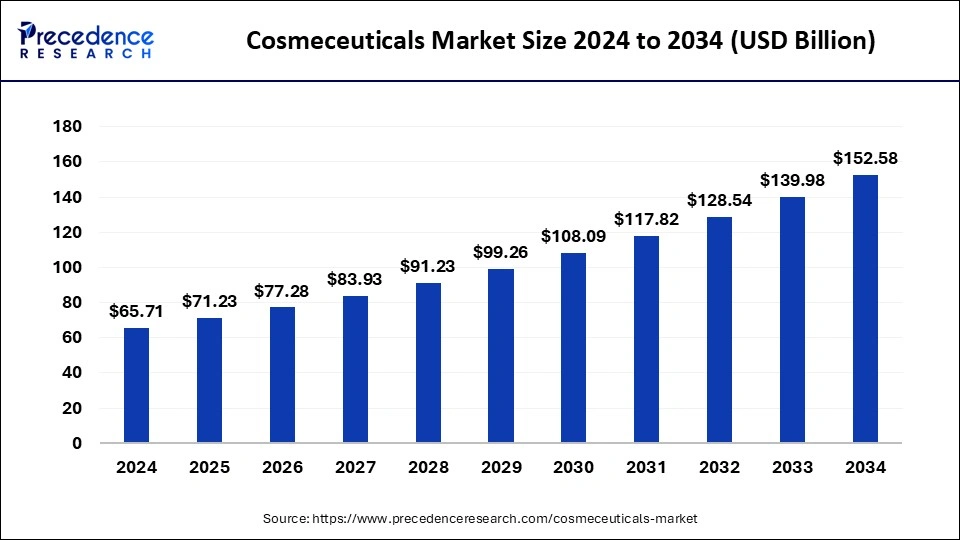
The global cosmeceuticals market size accounted for USD 77.28 billion in 2026 and is forecasted to hit around USD 152.58 billion by 2034, representing a CAGR of 8.83% from 2026 to 2034. The Asia Pacific market size was estimated at USD 21.29 billion in 2024 and is expanding at a CAGR of 9.06% during the forecast period. The market sizing and forecasts are revenue-based (USD Million/Billion), with 2024 as the base year.
Source: https://www.precedenceresearch.com/cosmeceuticals-market
 Get a Sample
 Table Of Content


Cosmeceuticals Market Size and Forecast 2026 to 2034
The global cosmeceuticals market size was calculated at USD 71.23 billion in 2025 and is predicted to increase from USD 77.28 billion in 2026 to approximately USD 152.58 billion by 2034, expanding at a CAGR of 8.83% from 2026 to 2034. The market is growing due to rising consumer awareness about skin health, a growing aging population and demand for organic cosmetics.
Cosmeceuticals Market Key Takeaways
- Asia Pacific cosmeceuticals market size was valued at USD 21.29 billion in 2024.
- By distribution channel, the online platform segment is expected to grow at the fastest rate is expected to grow at the fastest rate in the market during the forecast period of 2026 to 2034.
- By skin care, the skin care segment accounted for a considerable share of the market in 2024.
- By hair care, the hair care segment is projected to experience the highest growth rate in the market between 2026 and 2034.
- By injectable data is not available to determine a dominating or fastest growing segment.
What Are Cosmeceuticals?
Cosmeceuticals refer to a new category of products placed between cosmetics and pharmaceuticals that are used for the improvement of both the health and beauty of the skin. This market includes a wide range of skincare, haircare, lip care, and oral care products. Cosmeceuticals contain bioactive ingredients that offer therapeutic benefits to the skin and offer a comprehensive approach to skin health. The desire to look good, younger, toned, and healthy has caught on across the worldwide population in a big way.
AI in the Cosmeceuticals Market?
AI has played a crucial role in transforming product development in the cosmeceuticals market, from ingredient discovery to formulation and launch. Beauty companies are now using AI to simulate ingredient interactions, predict formulation stability, and speed up reformulation efforts to meet changing regulatory requirements. This technology enables brands to conduct detailed simulations of chemical interactions, forecast stability, and refine formulations with high precision. Recent research on AI-driven skincare recommendations demonstrates how deep learning enhances formulation accuracy and personalization.
- For instance, in July 2026, KT and Amorepacific launched an AI platform aimed at converting over 70 years of beauty research into searchable data. This initiative is expected to shorten the time required for new product development.
Trends in the Cosmeceuticals Market
- The rising popularity of active ingredient formulations, such as retinoids, peptides, and botanical extracts. This trend has led to a significant increase in demand for premium cosmeceuticals and customized skincare options.
- Advanced technologies, including nanocarriers and microencapsulation, are driving product launches. These innovations aim to improve ingredient stability and skin penetration, providing targeted therapy and aesthetic benefits in a single application.
- Growing consumer awareness of clean beauty with chemical-free, ethical, and sustainable products has become a notable trend. This includes interest in environmentally friendly packaging and the use of artificial intelligence in product development and marketing.
Cosmeceuticals Market Growth Factors
- The demand for organic products is expected to grow in the coming years
- The dermatologists are also prescribing products that are good for the long-term use for her as well as skin the demand for organic products
- Increased awareness regarding the benefits of using the natural products or the natural ingredients for the treatment of the skin as compared to the other products
- The availability of these products on the online platforms will be one of the growth factors
These natural ingredients have less side effects as compared to the traditional products which are generally used by the consumers. The side effects of these products are creating a greater demand for natural ingredients. Major manufacturing companies are constantly engaging in research and developmental activities for coming up with better products and organic products.
As the manufacturing units are offering these products on the online platforms the sales of these products are expected to grow and a large amount of revenue will be generated through these online platforms. The government of various nations are taking any shear tips in order to promote different market players as their products are good for skin and hair. As many active ingredients are used in the products which are used for the treatment for skin and hair is growing the market is expected to grow well. Active ingredients will play an important role in developing the market. There is a growing demand for these products even in the emerging economies.
Various campaigns are carried out by organizations that are dedicated for the hair and skin health. Skin cancer awareness month will be beneficial in driving the market growth as it helps in creating the awareness regarding the damage caused by the UV rays. It shall be helpful in promoting the sunscreens that help in preventing the skin from the harmful effects of the ultraviolet rays. As the number of skin disorders in children as well as the adults continue to grow the demand for all of these skin care products will also continue to grow.
Growing demand for organic products across the globe will encourage the manufacturers to develop more products by incorporating active ingredients which will be best for the skin and hair. Many new products are launched in the market which will be responsible for the growth in the market. All of these products are extremely beneficial in various skin as well as her conditions. They help in reversing the worst of the disorders through the use of these medicines which are prescribed by the dermatologists. Constant research and development activities have been fruitful in coming up with innovative products that worked like miracles. All of these factors are expected to drive the market growth in the coming years.
Market Outlook
- Global Expansion: The U.S., Canada, the UK, Germany, and several European countries are growing significantly in the global cosmeceuticals market. Additionally, emerging markets such as China, India, and Vietnam present significant growth opportunities, driven by their growing millennial populations.
- Sustainability Trends: The cosmetics industry is making strides toward sustainability by embracing natural ingredients for emollients and preservatives. Brands are moving beyond merely using recyclable materials to introduce refillable systems and compostable packaging. Companies are adopting eco-friendly ingredients, innovative preservation techniques, and unique formulations that meet consumer expectations while adhering to regulatory standards.
- Startup Ecosystem: There has also been an increase in companies that combine beauty with biotechnology. These startups focus on scientific research and development rather than traditional formulas, with an average of 28 new companies launching each year over the past decade.
Market Scope
| Report Coverage | Details |
| Market Size by 2034 | USD 152.58 Billion |
| Market Size by 2026 | USD 77.28 Billion |
| Growth Rate from 2026 to 2034 | CAGR of 8.83% |
| Base Year | 2025 |
| Forecast Period | 2026 to 2034 |
| Segments Covered | Product, Packaging Material, Ingredient, Distribution Channel, and Geography |
| Regions Covered | North America, Europe, Asia-Pacific, Latin America, and Middle East & Africa |
Market Dynamics
Driver
Rising disposable incomes in urban areas
Rising disposable incomes in urban areas significantly drive the cosmeceuticals market. As people have more money to spend on non-essential goods, they increasingly invest in skincare products that promise both cosmetic and therapeutic benefits. Urban lifestyles often expose individuals to higher levels of pollution and stress, leading to a growing demand for products addressing skin issues. Higher incomes allow consumers to afford premium cosmeceuticals with advanced ingredients and formulations. This economic empowerment enables greater experimentation and willingness to invest in self-care, propelling the cosmeceuticals market forward by catering to urban consumers.
Restraint
Consumer skepticism
Due to a lack of trust in product claims and efficacy, the consumer skepticism factor is observed to hinder the market's growth. Misleading advertising, exaggerated promises and the proliferation of subpar products have led consumers to question the authenticity of cosmeceuticals. This skepticism results in hesitancy to invest in such products, leading to lower sales and adoption rates. Building transparent communication, providing scientific evidence, and adhering to ethical marketing practices are essential to overcoming this barrier and restoring consumer confidence in cosmeceuticals. Thus, consumer skepticism is observed to restrain the market's growth.
Opportunity
Rising demand for personalized formulations
The demand for personalized formulation presents a significant opportunity for the cosmeceuticals market. Consumers are increasingly seeking customized skincare solutions that address their unique needs and preferences. Cosmeceuticals can be made in a way to analyze the skin characteristics and recommend tailored products, enhancing customer satisfaction. This trend fosters brand loyalty and encourages repeat purchases. Companies can leverage data analytics to gather insights into consumer preferences and adjust formulations accordingly. By offering personalized products, the cosmeceuticals industry can tap into a lucrative market segment, differentiate themselves from competitors, and create a more engaged customer base, ultimately driving growth and innovation within the market. Thus, the demand for personalized formulations will positively impact the market in the upcoming years.
Challenge: Scientific validation issues
Scientific validation issues with cosmeceuticals arise from several factors. Limited regulation and ambiguous definitions of the term make it challenging to establish clear standards for efficacy and safety. The lack of rigorous clinical trials and peer-reviewed studies for many products hinders their credibility. Variations in individual response, subjective assessment methods and inadequate control groups can lead to unreliable results. Incomplete disclosure of ingredients and potential conflicts of interest further complicate validation. Thus, the scientific validation issues are observed to pose a challenge for the cosmeceuticals market.
Segments Insights
Skin Care Insights
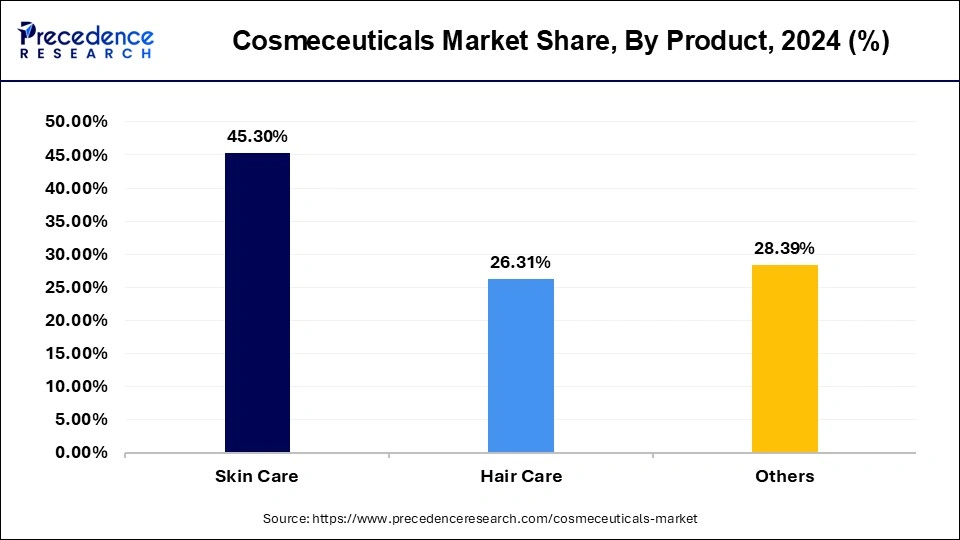
The skin segment accounted for a considerable share of the market in 2024. This segment's dominance is supported by the rising focus on anti-aging, skin brightening, and overall skin health. Consumers are becoming more aware of the benefits of active ingredients such as retinoid, peptides, and antioxidants, which are commonly found in cosmeceutical formulations. The demand is also fuelled by lifestyle changes, increased exposure to pollution, and a greater emphasis on preventive skin care. Professional endorsements, dermatologist recommended products, and the expanding premium skin care category have solidified the segment's stronghold in the market.
Hair Care Insights
The hair care segment is projected to experience the highest growth rate in the market during the forecast period. Rising concerns over hair thinning, premature greying, scalp health, and damage from chemical treatments are driving consumers toward specialized cosmeceutical hair products. Innovations in formulation, such as products enriched with plant extracts, keratin, and peptides, are attracting health conscious buyers seeking both aesthetic and restorative benefits. The influence of fashion trends, frequent hair styling, and growing awareness of hair wellness as part of overall personal care have also players a crucial role in boosting the segments appeal.
Injectable Insights
The market includes products such as botulinum toxin, dermal fillers, and other minimally invasive cosmetic treatments offered in clinical or medical spa settings. While data on dominance is limited, the category is witnessing growing attention due to the increasing demand for long lasting and professional grade result. These products appeal to consumers seeking quick, visible improvements without undergoing major surgical procedures. Rising acceptance if aesthetic enhancements, coupled with advancements in injection technique gain traction among both younger consumers and the aging population.
Others
The market includes segments such as lip care, oral care, and merging natural or organic products. Although none of these subcategories currently leads in market share, natural and organic products within this category are registering rapid growth. Consumers are increasingly drawn toward clean-label, chemical-free solutions that align with health and environmental values. Lip care products enriched with botanicals, vitamins, and sun protection are also gaining popularity as part of daily grooming routines. The “others” category serves as a space for innovation, where niche and artisanal brands can cater to specialized needs and preferences.
Product Insights
Depending upon the type of the product there are different types of hair care products skin care products and oral care products. Out of all of these, the skin care segment is expected to grow well in the forecast period. This segment has dominated the market in the past with a share of about 45.15% and it is expected to grow well in the coming years. Various campaigns undertaken by the organizations that help in creating an awareness regarding the harmful effects of the ultraviolet rays and the use of sunscreens and other lotions that prevent the skin damage as these products are extremely beneficial in preventing the skin from being damaged due to the ultraviolet rays will be beneficial in driving the market growth. His awareness campaigns play a very important role in the growth of the market as they create awareness regarding the ill effects of various factors.
Prolonged exposure of skin to ultraviolet radiation leads to skin cancer, which happens to be a chronic disorder and can also be fatal. There are other effects of the exposure of the skin like aging and dark spots. undo males have started taking steps to protect their skin through the use of different skin care products and they shall drive the market growth in the coming years. There are a wide range of products that are available for the skin that help in preventing the damage caused by the ultraviolet radiation and all of these products will be in great demand during the forecast period. The demand for the sunblock creams and the BB creams will also grow and drive the market growth in the coming years. There is a growing demand for moisturizers as well as the makeup serums which plays similar roles.
Apart from the skin care segment the hair care segment is also expected to grow at a considerable rate during the forecast period as there is a demand for various products that help in maintaining and strengthening the hair. Shampoo, conditioner, hair color and hair oil will be the most sold products in the coming years. there's a growing popularity of dry shampoos and air mask with expected to drive the market growth in the coming years. Shampoos are prescribed by dermatologists in order to treat various skin conditions. Due to an increase in the pollutants in the environment the damage caused to the hair can be treated with the use of these products. Patients seek prescriptions from the dermatologists in order to reduce the flaking and sebum from their scalp as these are some of the factors that are driving the market growth and in the recent years the cases of such problems have grown to a great extent. Environmental pollution as a negative effect on the skin and hair.
Global Cosmeceuticals Market Revenue, By Product, 2022-2024 (USD Million)
| Product | 2022 | 2023 | 2024 |
| Skin Care | 25,317.9 | 27,439.5 | 29,766.2 |
| Hair Care | 14,673.9 | 15,919.1 | 17,285.9 |
| Others | 16,083.3 | 17,314.6 | 18,657.0 |
Distribution Channel Insights
The online platform segment is projected to experience at the fastest rate of market growth during the forecast period. The shift toward e-commerce has been accelerating as consumers increasingly prefer the convenience of browsing, comparing, and purchasing cosmeceutical products from home. Online platforms provide a wider product range, better access to niche brands. And the opportunity to research product reviews before purchase.
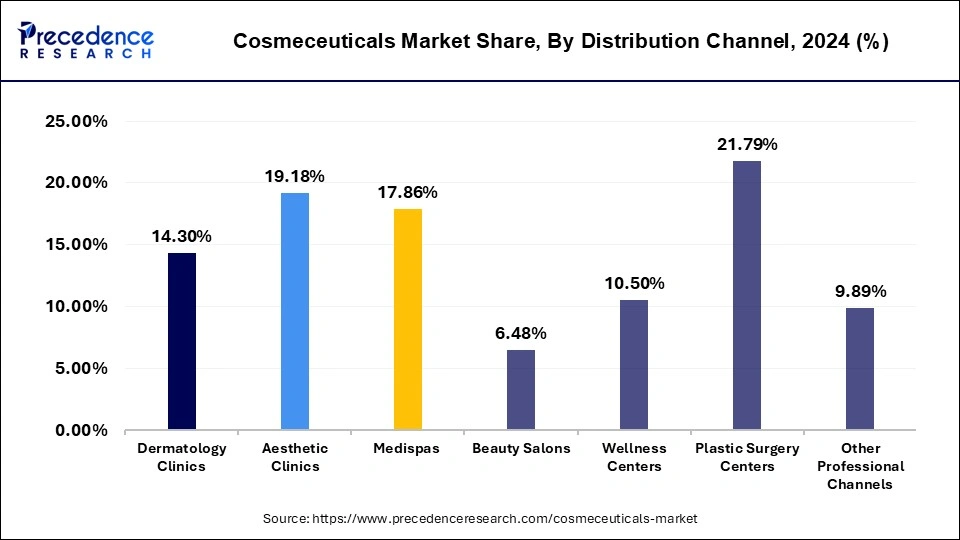
Growing social media influence, targeted marketing, and the rise of beauty influencers are also boosting online sales. Additionally, improved delivery services and easy return policies have further enhanced consumer trust in online purchasing, allowing this channel to capture attention from both established brands and merging players.
Global Cosmeceuticals Market Revenue, By Distribution Channel, 2022-2024 USD Million)
| Distribution Channel | 2022 | 2023 | 2024 |
| Dermatology Clinics | 7,961.7 | 8,644.4 | 9,394.2 |
| Aesthetic Clinics | 10,700.1 | 11,608.3 | 12,605.2 |
| Medispas | 9,981.4 | 10,818.0 | 11,735.7 |
| Beauty Salons | 3,589.7 | 3,908.9 | 4,260.1 |
| Wellness Centers | 5,835.5 | 6,343.4 | 6,901.7 |
| Plastic Surgery Centers | 12,184.2 | 13,201.0 | 14,315.8 |
| Other Professional Channels | 5,822.5 | 6,149.2 | 6,496.4 |
Regional Insights
Which Region Dominated the Cosmeceuticals Market in 2025?
Asia Pacific dominated the market in 2025. In the Asia Pacific region, consumer demand for beauty and skincare products that offer both cosmetic and therapeutic benefits has led to significant market growth. With a focus on innovation and the adoption of advanced technologies, this region is at the forefront of cosmeceuticals, setting global trends in skincare and anti-aging solutions. Increasing awareness of skin health, along with rising disposable incomes, particularly in countries like China, Japan, and South Korea, further drives market expansion.
Asia Pacific Cosmeceuticals Market Size and Growth 2026 to 2034
The Asia Pacific cosmeceuticals market size was exhibited at USD 25.14 billion in 2026 and is projected to be worth around USD 50.47 billion by 2034, growing at a CAGR of 9.06% from 2026 to 2034.
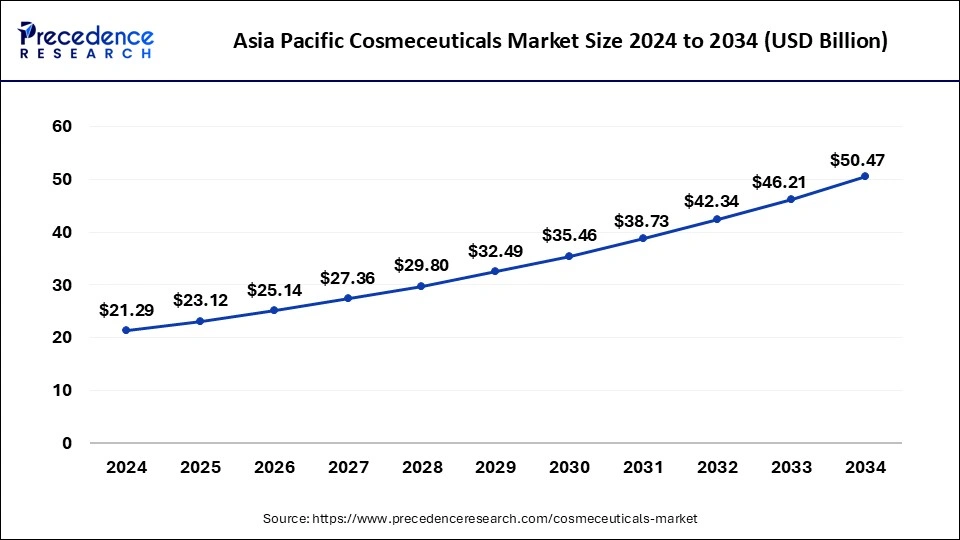
Asia Pacific dominated the cosmeceuticals market in 2024. The Asia Pacific region has firmly established itself as the dominant force in the global cosmeceuticals market. The growing consumer demand for beauty and skincare products with both cosmetic and therapeutic benefits has driven significant growth in this region. With a strong emphasis on innovation and the adoption of advanced technologies, Asia Pacific is at the forefront of cosmeceuticals, leading global trends in skincare and anti-aging solutions. The rising awareness about skin health, coupled with increasing disposable incomes, particularly in countries like China, Japan, and South Korea, further propels this market's expansion. As a result, Asia Pacific continues to shape the future of the cosmeceuticals industry, making it a key hub for market players and consumers alike. Asia Pacific continues to lead the cosmeceuticals market, benefiting from a combination of strong consumer demand, cutting-edge technology, and continuous innovation. Countries like South Korea, Japan, and China are at the forefront, driving the development of advanced cosmeceuticals that blend the effectiveness of pharmaceuticals with the appeal of cosmetics.
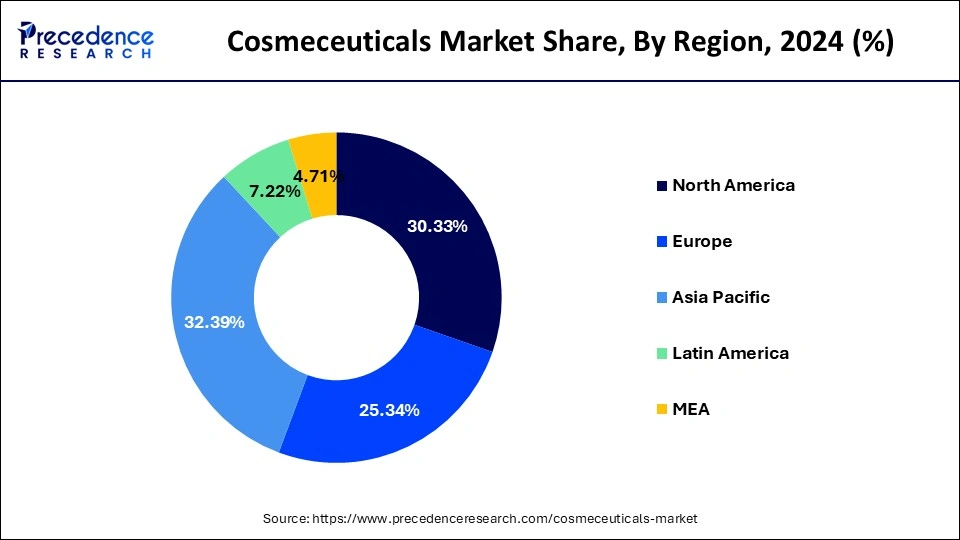
- North America cosmeceuticals market size was valued at USD 19.92 billion in 2024 and it is expected to hit around USD 47.19 billion by 2034.
- Europe cosmeceuticals market size was estimated at USD 16.65 billion in 2024 and it is expected to hold around USD 39.52 billion by 2034.
- Asia Pacific cosmeceuticals market was reached at USD 21.29 billion in 2024 and is expanding around USD 50.47 billion by 2034.
- Latin America cosmeceuticals market was accounted for USD 4.74 billion in 2024 and it is predicted to surpass around USD 11.87 billion by 2034.
India Market Trends
The combination of rising disposable incomes, rapid urbanization, and heightened beauty awareness among consumers across various demographics has led multinational brands to enter the Indian market. This expansion is facilitated by dedicated support structures and strategic pricing. Additionally, with over 50% of India's population under 30, there is a sustained demand for skincare, grooming, and cosmetics.
North America Cosmeceuticals Market Trends
North America presents a dynamic landscape where innovation, health consciousness, and environmental concerns significantly shape the industry. Consumers are increasingly aware of potential health risks associated with synthetic chemicals in personal care products, leading to a shift toward plant-based oils, herbal extracts, and natural preservatives. Growing investments in the development of bioactive ingredients and advanced delivery systems, such as nanotechnology, are also contributing to the market's expansion.
U.S. Market Trends
The U.S. cosmeceuticals market is particularly driven by the demand for products that combine therapeutic and cosmetic effects for enhanced skincare. Factors such as rising skincare awareness, increasing disposable income, and the influence of beauty influencers also play crucial roles in propelling the market.
Europe Cosmeceuticals Market Trends
Europe is expected to grow at the fastest rate during the forecast period, driven by higher consumer awareness of skincare, personal grooming, and wellness-oriented beauty routines. This demand is further fueled by an increase in product offerings and the expansion of online retail. Additionally, consumers across Europe have more disposable income, making it an attractive market for companies, particularly those introducing innovative natural ingredients.
Germany Market Trends
In Germany, Millennials and Gen Z are key drivers of growth in the cosmeceuticals market, with a strong preference for clean and organic beauty products. The country is also a major adopter of certified natural cosmetics and dermocosmetic actives. In July 2026, BASF inaugurated a new plant in Düsseldorf, Germany, focused on producing specialty emollients for skincare and sun protection products.
Middle East and Africa Cosmeceuticals Market Trends
The cosmeceuticals sector in the Middle East and Africa is rapidly expanding, driven by rising disposable incomes, a young and affluent consumer base, and strong cultural traditions related to personal grooming and self-expression. The growing participation of women in the workforce in Saudi Arabia and the UAE, as part of Vision 2030 reforms, has significantly boosted purchasing power in the beauty and personal care products sector.
Saudi Arabia Market Trends
Saudi Arabia is shaping cosmeceuticals through science, culture, and innovation. The country has established itself as one of the most dynamic and promising markets in the global perfumery and cosmetics industry, fueled by a young population, increased purchasing power, and a strong emphasis on personal image, resulting in heightened demand for beauty products.
Latina America Cosmeceuticals Market Trends
The cosmeceuticals industry in Latin America is growing rapidly. Other countries like Brazil and Mexico are also key players in consumption and innovation, benefiting from the growth of e-commerce and foreign direct investments. Brazil's beauty industry is thriving, driven by rising middle-class spending, social media influence, inclusive beauty demands, and a cultural passion for personal appearance.
Competitive Landscape
Competitive dynamics in the cosmeceutical market are marked by rapid innovation, strategic alliances, and regional expansion initiatives. Leading companies such as L'Oréal, Estée Lauder, and Shiseido are heavily investing in research and development to create advanced formulations that meet evolving consumer needs. These companies are also pursuing mergers and acquisitions to strengthen their market presence and diversify their product offerings. Regional expansion strategies focus on emerging markets in the Asia-Pacific and Latin America, where rising disposable incomes and increasing beauty consciousness present lucrative opportunities.
Cosmeceuticals Market Companies
- Johnson and Johnson
- L'Oreal
- Procter and gamble
- Unilever
- Estee Lauder
- Avon
Recent Developments
- In April 2026, BASF announced the launch of two new cosmetic actives named NeoHelix Regenerate and SkinNexus Collag3n, both aimed at skin rejuvenation. The company plans to showcase these ingredients at in-cosmetics Global 2026 in Paris, France, highlighting a new chapter in collagen science.
- In January 2026, INEOS Olefins & Polymers Europe announced a new Recycl-IN hybrid polymer grade containing 70% recycled material, designed to enhance the sustainability of contact-sensitive cosmetics packaging without compromising on quality or performance.
- In February 2026, Amlactin, the number one dermatologist-recommended moisturizer brand with lactic acid, is redefining radiance by making exfoliation essential for achieving brighter-looking skin. The launch of the Amlactin Bright & Smooth Serum brings their expertise into brightening care, revealing a natural glow by removing dullness and maximizing the efficacy of brightening ingredients in the formula.
- The cosmeceutical industry is witnessing a growing integration of biotechnology at scale, allowing even smaller brands to tap into sustainable, high performances ingredient sources. Companies such as OneSkin and Mother science are leveraging biotech, while giants like L'Oréal aim to source nearly all ingredients via bio sourced or circular methods by 2030. Innovations like La Roche-Posay's enzyme targeting the microbiome reflect biotech's penetration into specialized treatments for conditions like eczema. Social media analytics show a notable increase in consumer interest, with mentions of “skincare biotech” rising steadily. Furthermore, AI powered product experiences such as L'Oréal's bio print device are enabling cellular level skin data for tailored recommendations. This marks a notable shift from purely aesthetic driven innovation to science backed, practical tools that marry biotech with consumer convince and transparency. (Source: The beauty exec's guide to biotechnology | Vogue Business )
- Beauty brands are increasingly pivoting toward biotechnology powered solutions and data driven personalization, marking a significant leap in cosmeceutical innovation. Companies are now exploring DNA coded skincare, wearable nanobots, and exosome derived serums that can act at a cellular level to address concerns like skin inflammation, pigmentation and regeneration. Concurrently, mRNA based therapies are being investigated for their potential in anti aging by targeting and rejuvenating specific skin cell types. Innovations extend beyond topical treatments metabolic reprogramming approaches, such as GLP-1 injectable, are being refined for holistic wellness and aesthetic maintenance. Additionally, wearable biosensors and Nano implants are under development to dynamically monitory and manage hormonal health, particularly for menopause related skincare concerns. Established giants like Estee Lauder and emerging brands like noble Panacea are investing heavily in AI assisted formulation and targeted ingredient delivery technologies to spearhead shift toward precision, transparent, and regenerative cosmeceutical solutions. (Source: DNA-coded skincare, wearable nanobots: The beauty products of tomorrow | Vogue Business )
Segments Covered in the report
By Product
- Skin Care
- Anti-aging
- Sun Protection
- Skin Whitening
- Anti-Acne
- Professional Skincare
- Others
- Hair Care
- Hair Growth
- Anti-Dandruff
- Others
- Injectable
- Botox
- Dermal Fillers
- Other
- Others
- Lip Care
- Tooth Whitening
- Anti-Cellulite/Body Slimming Preparations
- Others
By Packaging Material
- Glass
- Plastic
- Metal
- Others
By Ingredient
- Anti-Oxidants
- Sunscreens
- Botanicals
- Peptides & Proteins
- Exfoliants
- Moisturizers
- Retinoids
By Distribution Channel
- Dermatology Clinics
- Aesthetic Clinics
- Medispas
- Beauty Salons
- Wellness Centers
- Plastic Surgery Centers
- Other Professional Channels
By Geography
- North America
- Europe
- Asia-Pacific
- Latin America
- Middle East & Africa (MEA)
For inquiries regarding discounts, bulk purchases, or customization requests, please contact us at sales@precedenceresearch.com
Frequently Asked Questions
Tags





Ask For Sample
No cookie-cutter, only authentic analysis – take the 1st step to become a Precedence Research client
 Get a Sample
.webp)



 sales@precedenceresearch.com
 Schedule a Meeting
