






 Request Consultation
AI-powered tools from symptom-checking chatbots to predictive health systems are redefining patient engagement, improving navigation of care, and enabling more personalized medical support.
In the new digital economy, artificial intelligence (AI) has become the invisible architect of consumer thinking, brand engagement, and decision making. From voice activated shopping aides to predictive health applications, AI has remolded the cadence of consumer life without fanfare. What began life as a measure of technological efficiency has transformed into a behavioral catalyst It is now molding choices, emotions, and expectations throughout every point of the customer journey.
Today's consumer are not merely responding to marketing stimuli, but instead are interacting within intelligent ecosystems that learn from them, predict their needs, and personalize their experiences in real time. Algorithms determine what we watch, where we shop, the health we manage, and how we establish trust in a brand.
This is not limited to a single industry of application. Retailers leverage AI recommendation engines to invent hyper-personalized shopping experiences, while healthcare organizations deploy intelligent chatbots to assist patients navigate care options. The integration of AI is seamlessly infused into consumer engagement from the generic to genetic coded directly to individual behavior.
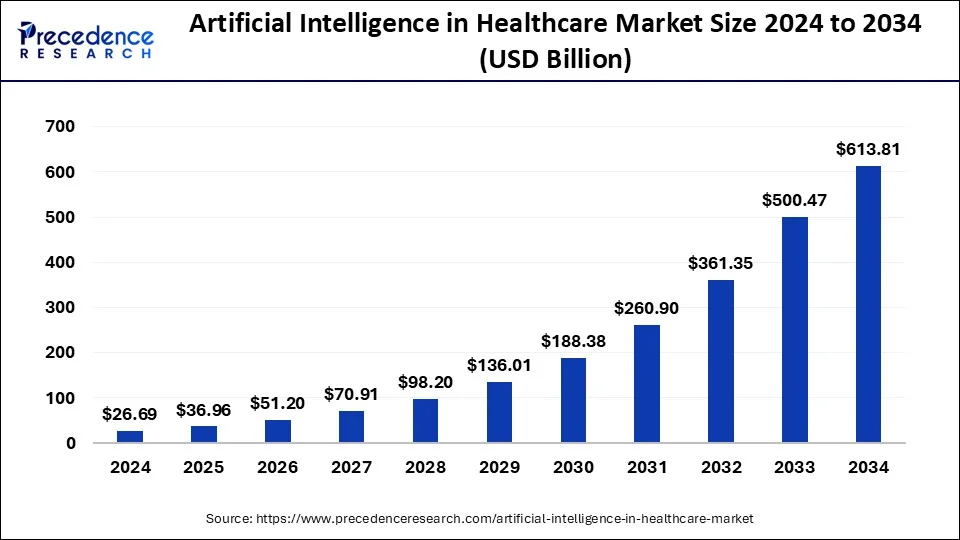
What is AI in Healthcare Market Size in 2023 to 2034
The global artificial intelligence (AI) in healthcare market size is valued at USD 36.96 billion in 2025 and is predicted to increase from USD 51.20 billion in 2026 to approximately USD 613.81 billion by 2034, expanding at a CAGR of 36.83% from 2025 to 2034.
The Three E’s Of AI Driven Consumer Experience: Engage, Empower, Evolve
Artificial Intelligence (AI) is no longer merely a back-end facilitator; it is the emotional engines driving how people think, choose, and connect. Across industries and sectors, AI is rewiring the way the world engages with everything brands communicate, consumers make decisions, and consequently, the world evolves collaboratively. The changes happening can be better articulated in three pillars: Engage, Empower, and Evolve.
Engage: Take Data to Emotions
In the economy of attention, engagement is everything. AI allows brands to move beyond dependencies on demographics and engage by way of emotional intelligence. From personalized recommendations at Netflix, to AI chat-bots in healthcare, technology is learning to feel the mood, predict intent, and adjust the conversation in real time. As noted by McKinsey, intelligent systems now guide patients without even prompting them for help terrific outcome of predictive empathy. Surrounding ourselves with AI is transforming conversational dialogue from being basic and rudimentary, into naturally human and thus loyal engagement into the brand experience loyalty won by understanding and not selling.
Empower: Giving Control back to Consumer
AI doesn’t maximize decision making; it extends human decision making. Today, consumers want to be given things that are most relevant, most convenient, and have transparency, and do it all in less time. AI provides this to consumers continually through experience. Voice, chat and predictive shopping tools, and wellness apps are allowing people to act with confidence and autonomy. Research from IQVIA shows that using an AI chat tool allowing patients actively engage in self-managing their health proves empowerment emerges from information made available where consumers feel equipped.
Evolve: The Cycle of Trust in Learning
The most significant attribute of AI is its ability to evolve along with consumers. Each time a consumer interacts; it gains a better understanding of the consumer and moves along a cycle where brands and consumers learn together. Moreover, as shown by research from JETIR, predictive models begin to change behavior patterns over time for more adaptive, relevant, and human experiences. This evolution is not fixed; it is a live relationship between data and desire.
Thus, the Three E's: Engage, Empower, Evolve, are the new DNA of consumer experience. Brands that learn how to truly engage, empower and evolve with consumers will go from serving consumers to a place where they can anticipate, collaborate with, and grow with consumers; where technology becomes trust and interaction is wisdom.
AI in Experience Design: How Brands Are Changing the Game
AI has evolved into the creative heart of experience design and is revolutionizing how consumers engage with brands across all physical and digital touch points. Whereas AI was previously limited to optimizing ads and automating responses, it is now designing the core elements of brand experiences personalized, predictive, and emotionally-connected. From intelligent recommendation engines that illuminate seamless product journeys to AI-powered content that adapts in response to usage in real-time, brands are learning how to talk to the consumer language before the consumer even wants to fully articulate their needs.
Hetty Rosenstein's analysis indicates that leading players are merging design thinking with machine intelligence to allow data to inform creativity instead of eliminate it. This combination enables a company to create experiences that feel uniquely human, even when they are algorithm driven. Retailers use generative AI to role-play customer scenarios while healthcare providers redesign patient journeys with predictive personalization. Entertainment platforms are generating storylines to fit each viewer's emotional rhythm.
Successful examples, like BSH Group, demonstrate how AI application can lead to significant improvements in conversion rates. Medallia offers solutions to help businesses harness these technologies and craft unforgettable customer experiences.
The message for industry leaders is clear: AI is no longer a supplement on the backend it is now a design partner. To capitalize on this value, companies need to blend data, empathy, and automation into cohesive, nimble experiences. The winners will be those that turn AI’s precision into emotional connection making technology not just useful, but unforgettable.
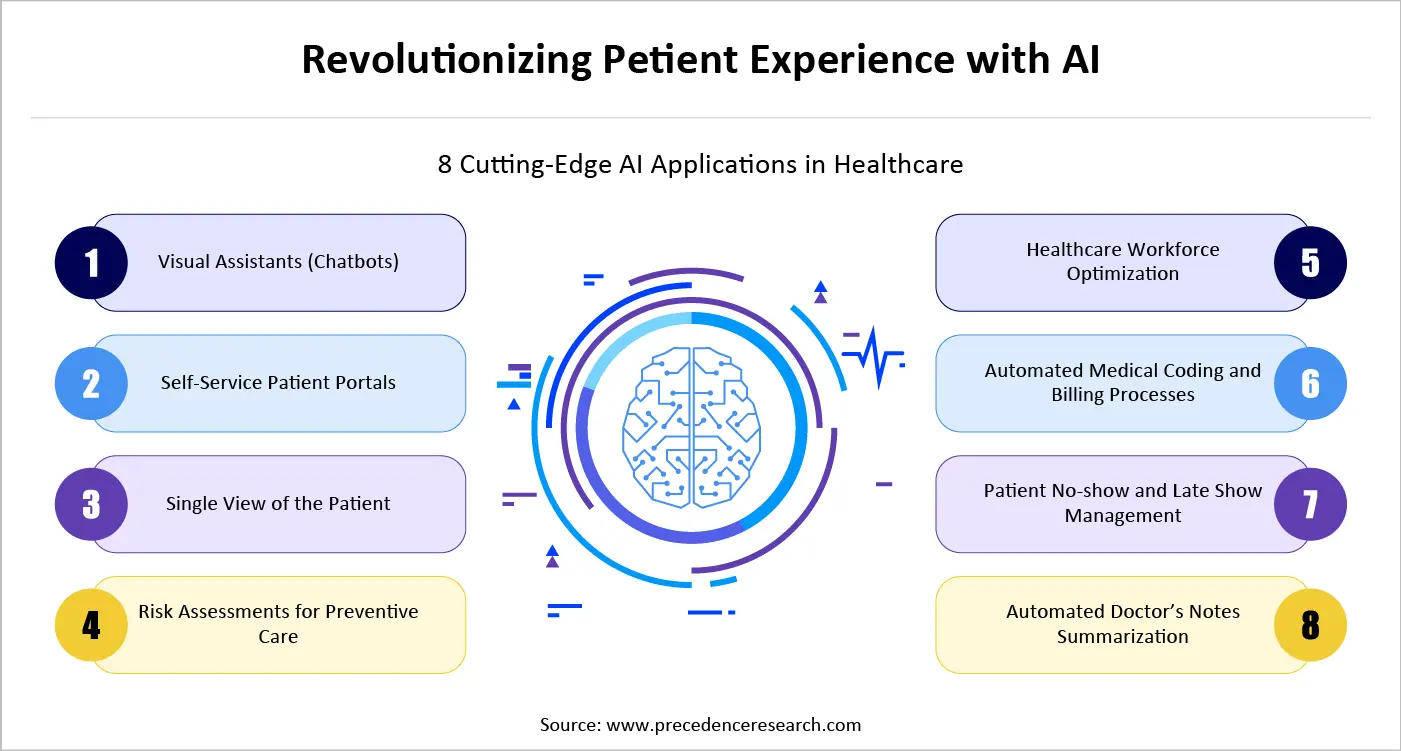
Eight Ways: AI is Improving the Patient Experience
- Smart Virtual Assistants (Chatbots)
AI chatbots provide 24/7 support for patients’ straightforward inquiries like picking a provider, appointment booking, or for basic questions. They provide support for human agents by addressing repeated engagements and elevating to human engagement if necessary.
- Intuitive Self-Service Patient Portals
Modern portals allow patients to access their own records at any time (i.e. tests, discharge notes, immunizations) and provide functions like appointment booking or cancelling without getting on the phone. With AI integration, patients on these portals can receive doctor recommendations, cost estimates, or individualized health insight.
- 360-Degree View of the Patient
Healthcare organizations collect data across many systems. AI helps integrate and analyze that data across modalities to understand a more whole view of a patient; providing better tracking of historical context, more sophisticated intelligence about patient behaviors, and more appropriate engagement strategies.
- Risk Assessments for Prevention
AI can analyze clinical imagery and data from smart wearables and other modalities to identify early risk factors of disease, e.g., risk for heart attacks or earliest signs of diabetes. This creates an opportunity to prevent rather than respond to care, helping reduce illness conditions and prevent emergency room visits.
- Optimizing Healthcare Workforce
Often patient experience is negatively impacted by long wait-times and sub-optimal efficiencies. Automated artificial intelligence and analytics can assist providers in identifying bottlenecks, better assigning physicians, automating follow-ups, and streamlining workflows, resulting in not only better responsiveness, but also enhanced effectiveness of operations.
- Automating Medical Coding and Billing Tasks
Medical coding is time-consuming and error-prone. With AI-assisted coding, these tasks can be automated to ensure accuracy, create quicker reimbursement cycles, mitigate disputes, and ultimately, restore the trust of provider and patient with billing transparency and accuracy of historical data.
- Patient No-show and Late Show Management
Missed patient appointments create inefficiencies and negative patient experience. AI-enabled scheduling systems can predict the likelihood of patient no-shows, support the use of wait-lists and optimise booking slots. This will lead to reducing idle capacity, waiting times and friction on the care journey.
- Automating Doctor's Notes Summarisation
In some contexts like mental health or behavioural health, providers are interfacing with more detailed notes due to the sheer volume of information required. AI models can ingest these conversation notes in real-time and automatically generate summarised notes, this prioritises which information is shared or noted; resulting in faster decision-making and improved pattern recognition and ultimately the care experience.
 Driving the AI Revolution in Healthcare: Accelerating Consumer Experiences Transformation
Artificial Intelligence has shifted from being a possibility in healthcare to an essential component in health. It is transforming how patients connect, decide, and recover. The question for most groups is not why AI is important it is how an organization can make it work at scale. AI is more than tools and algorithms; it is the intersection of data, empathy, and trust.
Build Intelligent Data Foundations
AI will only be as intelligent as the information that fuels it. Healthcare organizations are sitting on a mountain of clinical notes, insurance claims, wellness app data you name it that has all been siloed. The creating a comprehensive, secure, and interoperable platform from which to integrate these sources is the starting point. When data flow responsibly and freely, we can have AI discover the trends to help us understand how to really prevent, predict, or personalize the in-care journey.
Design For Real Journeys Of Consumers
The most successful AI programs do not simply begin with technology, but rather human pain points. Whether it is ease of scheduling, better comprehension of medical bills, or improving post-discharge care navigation experience-based design is focused on solving real-world problems. This leads to the ability to create AI-supported engagement tools that fit seamlessly into the front-line to improve the patient engagement experience.
Respond to Human Signals in Real Time
The benefit of AI is timeliness. AI's ability to analyze patient behaviors (e.g., appointment logs or sentiment from messages) enables it to trigger early indicators of disengagement or confusion. Imagine an automated visit that reminds a patient with hypertension to refill medication or schedule a missed follow up preemptive care that is personalized.
Enforce Ethics and Trust
Innovation without accountability damages trust. Healthcare systems should design and incorporate ethical, bias-controlled, and privacy-protective guardrails into every algorithm. Transparency in the use of data, explainable models, and strong governance systems builds trust for consumers that AI is an advocate of their health, not a voyeur of their data.
Grow Capabilities, Not Just Systems
AI adoption is successful when people evolve with the technology. Upskilling clinicians, engaging with AI partners, and inviting “human-plus-machine” workflows builds confidence and creativity. With initiatives built from real feedback, pilot projects scale to system-level enhancements.
The next frontier of healthcare is personalization powered by intelligence. Doing this by mastering data, empathy, and ethics together allows organizations to transform fragmented healthcare journeys to intuitive, seamless human-centered experiences demonstrating AI's true potential is in not automating humanity, but enhancing care itself.
The Psychology behind the Change: Why it Works
So why does redesigning the experience with AI really change the way consumers think, feel, and act? The answer lies in the subtle psychological triggers and behavioral patterns that AI activates and enables experiences to become not only efficient, but also, emotionally resonant experiences.
The Feel of Control
Humans enjoy feeling like they are in control of their own decisions. When AI systems moderate experiences based on individual preferences whether its curating playlists, making shopping suggestions, or setting workout plans it generates an idea of agency for the user. This sense of empowerment in a choice space prompts more satisfaction with and engagement in the experience while creating brand affinity. With the contextual adaptation of the user, an AI experience feels intuitive rather than activated.
The “Right Time, Right Place” Effect
AI understands timing, anticipating when a consumer is most primed for a message, offer, or reminder. Such timing makes conversations feel organic and not like an interruption. Psychological, consumers also associate the brand with helpfulness and relevance. Over time, this, “right moment,” engagement builds an expectation and trust of appropriate brand engagement, as well as emotional connection as a persuasive dimension for conversion potential.
Habit Development Through Continued Engagement
Experiences driven by artificial intelligence are structured to be ongoing, rather than a transactional concept. Consider how Netflix is in the business of reminding you, regardless of whether you have time to watch anything, or, consider how fitness applications send out reminder capabilities based on general hypotheses about your fitness routine and weekly goals. Similar to above, continuously designed, personalized nudges engage you in quite measurable, habitual interaction loops. The more surely you are engaged, the more a consumer is likely to develop habits, or habitual engagement - turning a "party of one" user into a habitual, or loyal user willing to introduce your brand to others.
The strength of Social Validation, Followed by Personalized Engagement
There are not a lot of things that humans are smart to do - we look to the next person for social validation and potential cues that would suggest what we should do or buy. Artificial intelligence introduces and relies on recommendation engines, gathered from consumer experiences and behavior showing us what "other people like you thought would be good" or "other people like you purchased this" etc. The social validation of choices is significant and takes away cognitive anxiety. If a consumer feels that artificial intelligence understands them and their community, it adds credibility and comfort.
Cognitive Ease through Choice and Curation
Today's consumers face a barrage of choices with fear of choice paralysis or cognitive ease. Artificial intelligence helps to eliminate some of that cognitive load - through curated choices, automating repetitive choices - and surfacing or surfacing exposure to what means most to each individual. Reducing cognitive load contributes to a smoother, more pleasurable experience. Even when a consumer engages or experiences ease of decision fatigue, they immediately associate that feeling of ease and efficiency with your brand.
Challenges & Pitfalls: When AI Goes Wrong
The emergence of AI-based consumer experience has opened up tremendous opportunities, but it is far from perfect. The same systems that personalize and predict can also disengage or error when done without care. For brands, the challenge is not only to adopt AI, but do so responsibly, ethically, and transparently.
Privacy, Trust & Ethical Issues
Today’s consumers are increasingly conscious of how their data is collected and used. The moment consumers perceive overreach, trust is lost. Transparency is not simply a nice to have, it is foundational. McKinsey’s research shows a gap, while most leaders recognize AI’s potential to transform their industry, fewer have actually adopted it due to regulatory, bias and ethical complexities of using AI.
The pitfalls are apparent:
- Algorithmic Bias: Algorithmic bias can create discrimination when machine learning is trained on incomplete or unrepresentative data.
- Data Security Lapses: Data breaches and leaks can destroy years of brand equity overnight.
- Unintended influence: Unintended influence when AI nudges too far into manipulation can elicit a consumer backlash, especially in industries like health or financial services.
Too Much Automation and Forgetting the Human Element
Not every encounter should become automated experience or answer process. Replacing human empathy and genuine interactions with chatbots that sound and behave like chatbots can easily become impersonal and invasive. Customers want interaction with a real-life human being—not robots—but particularly during situations that require thoughtful listening and reassurance. The brands that do it best will design for human-AI collaboration, thinking through how they can leverage technology to amplify empathy rather than erase it.
Data Quality and Integrations Problems
AI is only as powerful as what data (good or bad) it’s fed from. Yet, many organizations still struggle with fragmented databases, archaic (legacy) systems, and even bad data hygiene. This silo-ed data makes it impossible for AI to adequately provide all the insights it could or to be consistently personalized. ONE of the issues in our analysis of service operations was that healthcare leaders often they trip over AI implementation or integration (executing AI tools) because thier structures systems and processes are not mature enough to do so. You cannot have success with any level of AI implementation in healthcare without first creating a reliable data foundation. Building is not optional, it is the backbone to any real AI transformation.
Consumer Resistors or Fatigued Consumers
Personalization fatigue is real. When consumers don’t know they are being surveyed or over targeted, is one thing, but when they realize they have been, the excitement turns into inconvenience right away. The same AI that was intended to delight the consumer can overwhelm instead. It’s about finding the balance between personal but not invasive, helpful but not distracting. Remember personalization should offer the consumer choice, not pressure.
Looking Ahead: What the Future Holds?
We believe that the next generation of innovation in AI will put consumer experiences squarely in the domain of the intuitive, seamless, and emotionally intelligent. We are seeing rapid evolution in conversational AI—interfacing with a brand will often feel like you are talking to a trusted assistant rather than an application. Cutting-edge companies are already starting to combine AI with AR and VR technology to create immersive environments, allowing consumers to experience a product before they buy. Predicating and treating services will become standard currency AI will anticipate needs, from suggesting specific wellness strategies to managing all aspects of daily life, long before the shopper has the thought.
At the same time, "zero-click" experiences, in which consumers receive curated information or services without lifting a finger, will redefine convenience. In short, ethical AI will become an important differentiator in this new paradigm. The transparency, fairness, and respect for customer data will all have a direct impact on trust and loyalty, as well as impact the long-term choices of consumers. For industry incumbents, the warning signs are already present: success will depend not only on technical sophistication but on empathy, integrity, and semantic invisibility. The winners will be organizations that marry intelligence with humanity to make every engagement have maximum meaning.
Conclusion: Consumers Become Co-pilot in AI Journey
Ultimately, AI's most significant role will be less about the technology itself and far more about who the consumer becomes within the experience and how the brand helps facilitate that.
When executed properly, AI will allow:
- Consumers to feel acknowledged, understood, empowered, and pleasantly surprised.
- Brands to provide experiences that are seamless, individualized, scalable, and emotionally connective.
- Relationships that evolve from vendor-centric to partner-centric.
But with that opportunity comes responsibility. Brands must accept that consumers are human beings who have preferences, privacy, feelings, and constantly changing lives. AI should enhance those lives and not simply take advantage of it.
As behavior patterns will change short attention spans, higher expectations for relevance, and desire for constant engagement brands that leverage AI as a driver of human-centric experience will succeed. Brands that think of AI as a substitute for human thought, or a novelty, will be challenged.
Hence, the question for designers of experience, marketers, and strategists is no longer, “Should we adopt AI?” Rather, “How do we implement AI with humans, for humans, in a way that alters behaviour into lived experiences that are mutually beneficial?”
In that transition, the consumer becomes the co-pilot of their experience, while AI is the smart guide to assist.
About the Authors

Aditi Shivarkar
Aditi, Vice President at Precedence Research, brings over 15 years of expertise at the intersection of technology, innovation, and strategic market intelligence. A visionary leader, she excels in transforming complex data into actionable insights that empower businesses to thrive in dynamic markets. Her leadership combines analytical precision with forward-thinking strategy, driving measurable growth, competitive advantage, and lasting impact across industries.



Aman Singh
Aman Singh with over 13 years of progressive expertise at the intersection of technology, innovation, and strategic market intelligence, Aman Singh stands as a leading authority in global research and consulting. Renowned for his ability to decode complex technological transformations, he provides forward-looking insights that drive strategic decision-making. At Precedence Research, Aman leads a global team of analysts, fostering a culture of research excellence, analytical precision, and visionary thinking.

Piyush Pawar
Piyush Pawar brings over a decade of experience as Senior Manager, Sales & Business Growth, acting as the essential liaison between clients and our research authors. He translates sophisticated insights into practical strategies, ensuring client objectives are met with precision. Piyush’s expertise in market dynamics, relationship management, and strategic execution enables organizations to leverage intelligence effectively, achieving operational excellence, innovation, and sustained growth.