



Micro Motor Market Size, Key Companies, Company Market Share, Chip Production Volume, Wafer Capacity, Technology Adoption, Pricing Trends, Competitive Positioning, and Demand Analysis
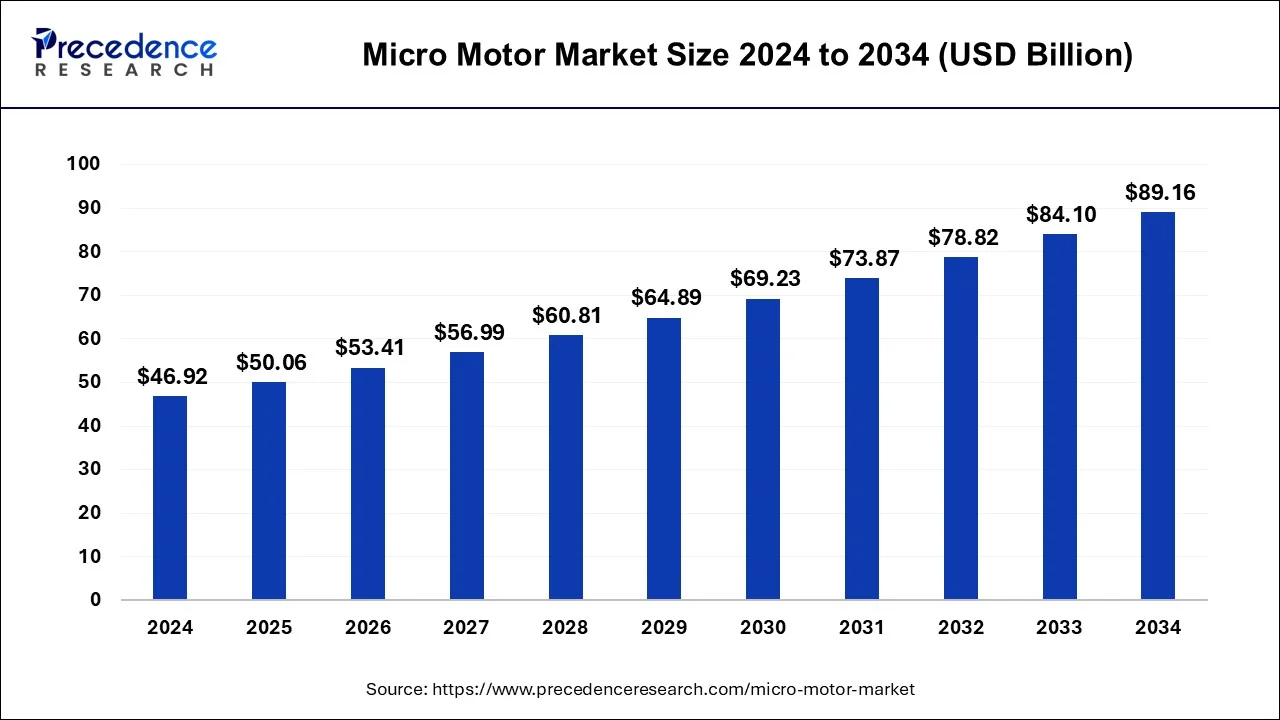
The global micro motor market was valued at USD 53.41 billion in 2026 and is projected to reach USD 94.37 billion by 2035, growing at a CAGR of 6.55% from 2026 to 2035. Market growth is driven by increasing demand for compact, energy-efficient, and high-performance motors across automotive, consumer electronics, healthcare, industrial automation, and robotics applications.
Source: https://www.precedenceresearch.com/micro-motor-market
 Get a Sample
 Table Of Content


The micro motor market size was estimated at USD 50.06 billion in 2025 and is projected to increase from USD 53.41 billion in 2026 to approximately USD 94.37 billion by 2035, growing at a CAGR of 6.55%% from 2026 to 2035. The micro motor market is poised for significant growth, driven by rising demand from the automotive, consumer electronics, and industrial sectors.
Micro Motor Market Key Takeaways
- By Region, Asia Pacific held a majority revenue share of the micro motor market in 2025.
- By Region, North America is expected to grow at the fastest CAGR in the market during the forecast period.
- By technology, the brushed motor segment held a dominant position in the market in 2025.
- By technology, the brushless motor segment is expected to grow at the fastest CAGR in the market between 2026 and 2035.
- By type, the AC segment accounted for a considerable revenue in the market in 2025.
- By type, the DC segment is expected to grow at the highest CAGR in the market during the studied years.
- By power consumption, the 10V-20V segment led the global market in 2025.
- By power consumption, the more than 50V segment is expected to expand rapidly in the market with a CAGR in the coming years.
- By application, the automotive segment registered its dominance over the global market in 2025.
- By application, the medical equipment segment is expected to witness the fastest growth in the market with a CAGR over the forecast period.
Global Micro Motor Market Overview and Key Metrics
The micro motor industry is growing steadily, as more industries are searching for compact, energy-efficient, and high-performance motors. The precision and reliability of micro motors make them a popular choice for various applications, including automotive systems, consumer electronics, healthcare devices, industrial automation equipment, and aerospace applications. Advancements in motor design, miniaturization, and power efficiency are driving the growth of their applications, further supporting the expansion of the market.
Impact of Artificial Intelligence on the Micro Motor Market
AI is driving innovation in the micro motor industry with the help of features like motor control, performance optimization, and predictive maintenance. Implementing AI-driven systems allows for real-time monitoring of motor operations, thereby aiding manufacturers in minimizing energy use and optimizing operational efficiency. AI-powered micromotors offer enhanced precision, responsiveness, and adaptability in complex tasks for industrial automation and robotics. In addition, AI-driven design and manufacturing are driving innovation in products and the creation of more intelligent and efficient micro motor solutions.
What are the Major Trends in the Micro Motor Market?
- Increasing Adoption in Electric Mobility: Micro motors are being used in electric vehicles and related systems, including actuators, HVAC systems, power seats, and battery management components. The shift toward electrification is expanding their application scope.
- Integration with Smart and Connected Devices: The rise of IoT-enabled and smart devices is boosting demand for micro motors with improved control, efficiency, and connectivity. These motors are increasingly designed to support automated and intelligent operation.
- Focus on Energy Efficiency and Low Noise: Manufacturers are prioritizing energy-efficient and low-noise micro motors to meet stricter regulatory standards and consumer expectations, especially in medical, automotive, and home appliance applications.
- Advancements in Precision Engineering and Materials: Technological improvements in magnetic materials, micro-electromechanical systems (MEMS), and precision manufacturing are enhancing performance, durability, and miniaturization capabilities.
Micro Motor Market Growth Factors
- The adoption of micro motors in medical devices is increasing rapidly. Their use in minimally invasive surgical tools, portable diagnostic equipment, and wearable healthcare devices is driving demand for high-precision and compact motor solutions.
- Micro motors are increasingly being integrated into industrial robots, collaborative robots (cobots), and automated machinery, enabling improved motion control, precision, and overall operational efficiency.
- Demand for micro motors is also rising in consumer electronics and compact smart devices, including wearables, gaming gadgets, drones, cameras, and smartphones. This growth is driven by continuous device miniaturization and the addition of advanced functional features.
Market Outlook
- Industry Growth Overview: The micro motor market is expected to grow at a rapid pace between 2026 and 2035 due to increasing demand for compact, high-performance motors in consumer electronics, automotive, medical devices, and industrial applications. Advancements in precision engineering and miniaturization are further driving adoption worldwide.
- Sustainability Trends: To meet sustainability and energy efficiency standards, many manufacturers are now designing micro motors with lower power consumption and recyclable materials.
- Global Expansion: The market is expanding worldwide. Manufacturers are developing new manufacturing facilities and distribution centers in developing economies to reduce costs, improve supply chain, and take advantage of increased demand for precision motors in those areas.
- Startup Ecosystem: Several new companies have entered this industry with innovative products, including "smart" DC Micro Motors (brushless), IoT-enabled (internet of things) motion technology (motor controllers), etc., increasing the level of competition and driving technology growth.
Strategic Growth Opportunities
- High-Growth Commercial Opportunities: Micro motors are witnessing steady growth in industries like EVs, medical devices, robotics, and smart consumer electronics, offering huge business opportunities. The growth is expected to continue with increasing automation and applications in precision engineering in the industry.
- Emerging Technology Opportunities: They have introduced new, innovative developments, including innovations based on their motor-driven systems, and are entering new fields of growth as a result of new technologies like the use of AI for motion control and their ultra-small motor designs.
- Geographic Expansion Opportunities: Asia-Pacific, Latin America, and the Middle East are generating fresh business opportunities due to the expansion of industrialization and investments in manufacturing. Local production capacities and strategic distribution networks can enhance the positioning of the local market in global markets.
- White Space Analysis: There are great prospects in the drive for precision micro motor development in the field of surgical robots, small-sized aerospace parts, wearable medical devices, and drones, where demand is growing. Companies can also tap into motor solutions that are truly individual and application-dependent in the field of emerging industries.
Future Outlook and Strategic Recommendations
- Long-Term Industry Outlook: Sustained growth will be seen in the micro motor market in the long-term, propelled by electrification, automation, and the demand for a high-performance compact motion control solution. Growth is expected to continue to rely heavily on ongoing innovations in materials, vehicle motor efficiency, and smart vehicle control electronics.
- Emerging Business Models: Producers are anticipated to embrace service-as-a-model ways, electronic checking systems, and cooperative product growth with Original Equipment Manufacturers (OEMs). Subscription-model predictive maintenance/ smart motor management solutions will be liked by many.
- Strategic Recommendations for Stakeholders: The companies need to put money into R&D to introduce miniaturized motors with high performance and lower consumption in energy consumption and accelerate linkages with OEMs from automotive, healthcare, and robotics sectors. Long-term competitiveness will be fostered by increasing manufacturing capacity in high-growth areas and by building resilient supply chains.
Market Report Coverage
| Report Coverage | Details |
| Market Size in 2025 | USD 50.06 Billion |
| Market Size in 2026 | USD 53.41 Billion |
| Market Size by 2035 | USD 94.37 Billion |
| Growth Rate from 2026 to 2035 | CAGR of 6.63% |
| Base Year | 2025 |
| Forecast Period | 2026 to 2035 |
| Segments Covered | Type, Technology, Power Consumption, and Application, and region |
| Regions Covered | North America, Europe, Asia-Pacific, Latin America, and Middle East & Africa |
Market Dynamics
Driver
Automotive Electrification
The micro motor market is mainly driven by the increasing proliferation of electric cars and advanced automotive technologies. There are actually several micro motors used in modern-day vehicles that include power windows, seat adjustments, HVAC systems, electric power steering, and battery management. Fuel efficiency, safety, and comfort of vehicles are becoming more and more important, and this is driving significant interest in the evolution of advanced micro motor solutions. The worldwide transition towards vehicle electrification is projected to gain further momentum in the market.
Restraint
Manufacturing Complexity
Micro motors are essential components in various modern devices, yet their production comes with significant challenges. The sophisticated manufacturing methods and precision engineering involved contribute to higher costs, impacting affordability. Additionally, maintaining performance and reliability at such a miniaturized scale presents technical hurdles for manufacturers. Fluctuations in raw material prices and supply chain disruptions further complicate the production process, affecting both profit margins and efficiency. As a result, these factors create barriers for new entrants in the market, making it difficult to gain a foothold in price-sensitive sectors. Consequently, the adoption of micro motors can be hindered, limiting their potential applications in innovative technologies.
Opportunity
Emergence of Healthcare Technologies and Wearable Technologies
The evolution of healthcare technology presents a significant opportunity for micro motor manufacturers. As more healthcare products become wearable, portable, and involve robotic surgical systems, there is an increasing demand for compact and highly reliable motors. Advances in precision engineering are facilitating miniaturization, enabling the development of more efficient medical devices. This trend not only enhances the functionality of these devices but also improves patient outcomes. Furthermore, with the digital healthcare infrastructure expanding rapidly, it is expected to drive substantial market growth in the near future. This combination of innovation and demand underlines the critical role micro motors will play in the advancing landscape of healthcare technology.
Market Segmentation Analysis
Type Insights
Why Did the AC Segment Dominate the Micro Motor Market in 2025?
The AC Segment dominated the market with the largest share in 2025, primarily due to its high reliability, durability, and suitability for continuous-duty operations. AC micro motors require low maintenance and perform efficiently across varying load conditions, making them ideal for a wide range of industrial applications. The growth of industrialization and automation has further reinforced the dominance of AC micro motors, particularly in applications where long operational life and stable performance are critical.
The DC segment is anticipated to expand at a significant CAGR in the coming years, as they are compact in size, efficient, and have better speed control. They are increasingly being used in electric cars, robotics, portable electronics, and medical devices. Advancements in battery-powered systems are also fueling the demand for DC micro motors. The incorporation of smart devices and precision equipment is anticipated to spur growth in the segment.
Technology Insights
How Did the Brushed Motor Segment Lead the Market?
The Brushed Motor Segment held the largest Market Share in 2025, mainly due to its simple design, low cost, and ease of manufacturing. These motors are widely used in household appliances, automotive systems, and other commercial applications where cost efficiency is a key consideration. A well-established supply chain and broad application base continue to support the dominance of brushed motors in traditional use cases.
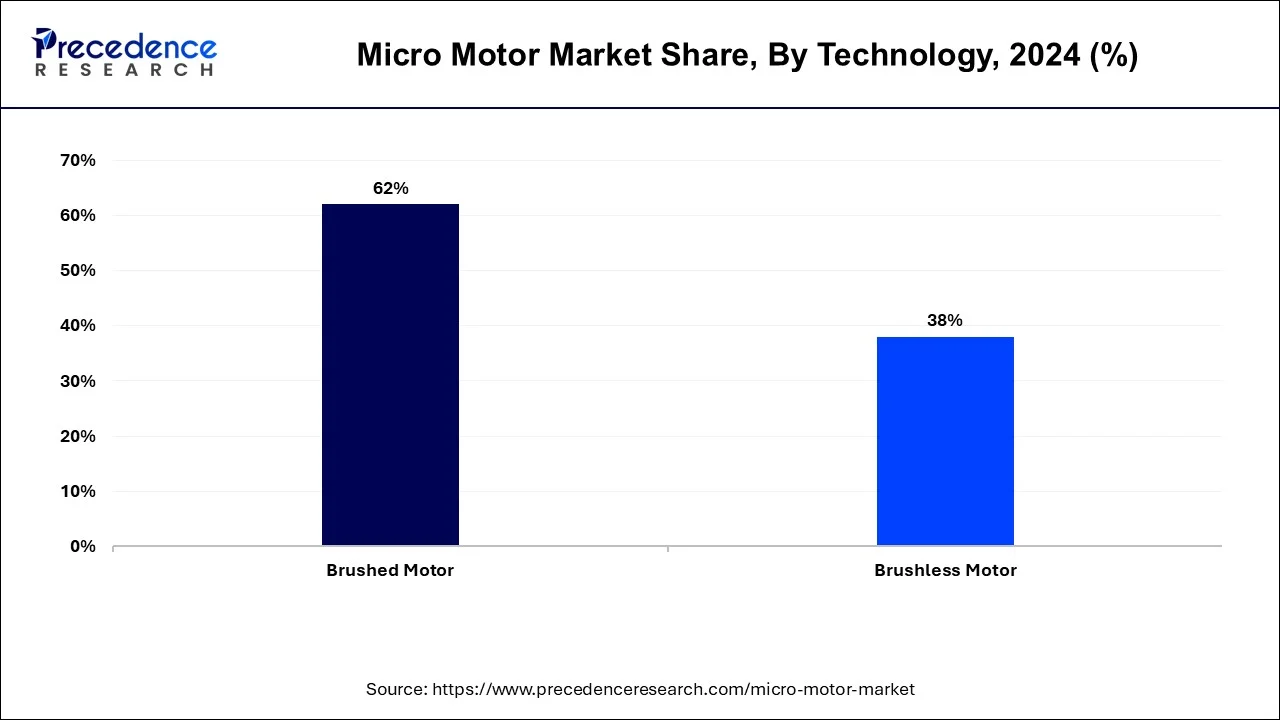
Meanwhile, the brushless motor segment is projected to grow at the fastest rate in the coming years. Brushless motors offer higher efficiency, lower maintenance requirements, and longer operational lifespans. They are increasingly adopted in electric vehicles, drones, medical devices, and industrial automation systems. Advancements in electronic control systems and growing demand for energy-efficient solutions are expected to accelerate the adoption of brushless motor technology across industries.
Power Consumption Insights
The 10V-20V Segment Dominated the Micro Motor Market in 2025
The 10V-20V Segment held the largest Market Share in 2025, as it is widely used across consumer electronics, automotive systems, and industrial applications. Micro motors in this voltage range offer an optimal balance of performance, energy efficiency, and power consumption. They are also highly compatible with portable and battery-operated devices, which further strengthens their demand. With the continued growth in electronic device production and miniaturized applications, this segment is expected to maintain its dominant position.
The more than 50V segment is anticipated to expand at a notable CAGR in the coming years. This is because these higher-voltage micro motors are increasingly used in industrial machinery, electric mobility solutions, and advanced automation systems. Their higher power output and efficiency make them suitable for demanding applications such as electric vehicles and industrial robotics. Ongoing advancements in motor technology and electrification trends are expected to further accelerate growth in this segment.
The below 9V segment is projected to grow at a notable pace due to its features of low power consumption and compactness of the electronic systems. The Energy Efficiency segment is expanding as rising demands for energy efficiency solutions are driving this expansion. With performance now a key concern, manufacturers are working more on making equipment light, compact, and easy to handle. The use of low-voltage electronics continues to grow with a wider variety of ways to use them.
The 21V-50V segment is expected to witness steady growth during the forecast period, with high performance from industrial to commercial. It is widely used in the automotive, electric vehicle, and heavy-duty vehicle sectors. There is a need for extensive use of advanced power management technologies. This segment is a reference to efficiency and performance in harsh environments. Continuous technological advancements make energy saving and safety possible.
Application Insights
Why Did the Automotive Segment Dominated the Micro Motor Market?
The automotive Segment dominated the Market with a major share in 2025, driven by the widespread use of micro motors in applications such as power windows, seat adjustment systems, electric power steering, HVAC systems, and mirror control systems. Rising vehicle production, along with increasing demand for comfort, safety, and convenience features, continues to drive market growth.
The growing adoption of electric and hybrid vehicles further supports demand, as these vehicles typically require a higher number of micro motors compared to conventional vehicles. As automotive electrification accelerates, the segment is expected to maintain its leading position.
The medical equipment segment is anticipated to expand at the fastest CAGR in the coming years. This growth is driven by increasing adoption of micro motors in minimally invasive surgical devices, diagnostic equipment, infusion pumps, and wearable medical devices. The rising demand for precision, compact design, and high reliability in healthcare applications is a key factor supporting this growth trajectory.
The aircraft segment is projected to grow at a notable pace as it seeks to achieve a secure, lightweight electrical system. The rise of aircraft production and modernization of the fleets are helping to drive market growth. Advanced power solutions deliver greater power efficiency and reduced maintenance requirements. New opportunities are opening up for both electric aircraft and hybrid aircraft. Manufacturers are providing high-performance parts that meet tough aviation specifications.
The agricultural equipment segment is expected to witness steady growth during the forecast period, supported by the increase in the adoption of technologies such as precision farming and electrification equipment. For the automated and smart operation of modern agricultural machine there is necessary to create efficient power regimes. Increasing companies are investing in sustainable farming, and there is increasing demand for it. The introduction of GPS, sensors, and autonomous technologies is enhancing equipment modernization.
Market Regional Analysis: North America, Europe, Asia-Pacific
Asia Pacific Micro Motor Market Size and Growth 2026 to 2035
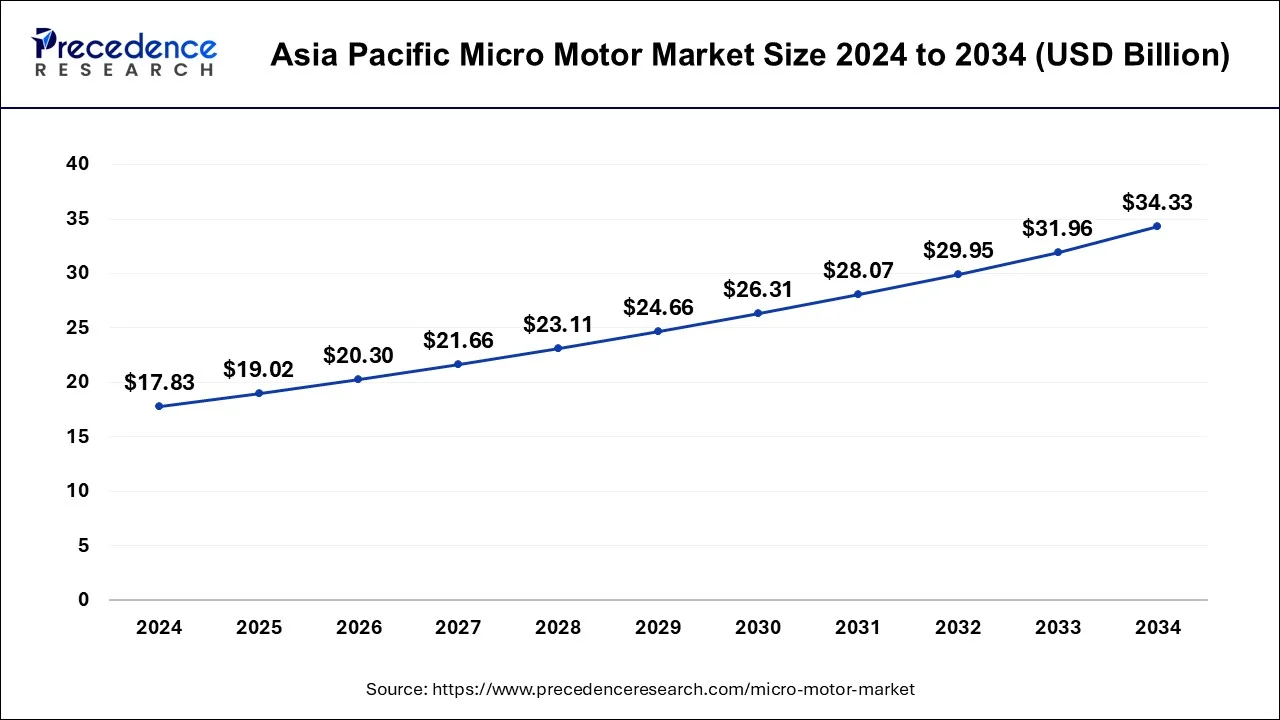
The Asia Pacific micro motor market size was exhibited at USD 20.30 billion in 2026 and is projected to be worth around USD 36.46 billion by 2035, growing at a CAGR of 6.72% from 2026 to 2035.
Why Did Asia Pacific Dominated the Micro Motor Market?
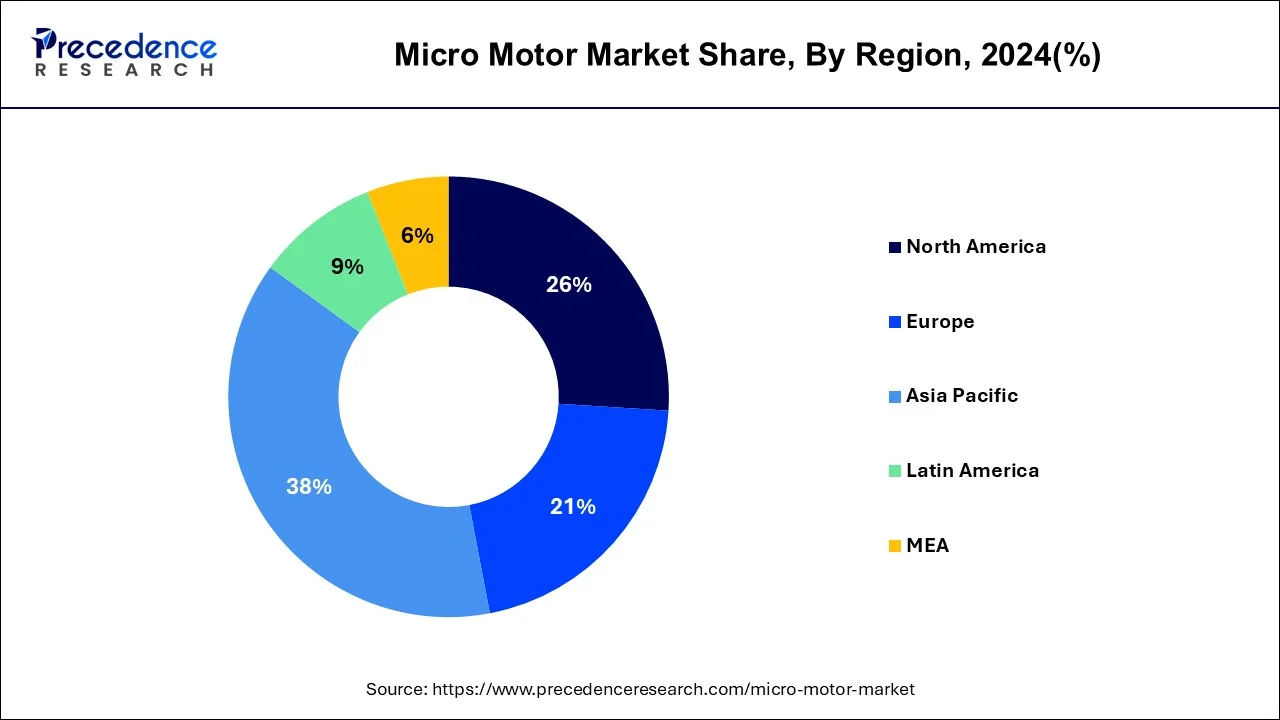
Asia Pacific dominated the micro motor market by capturing the largest share in 2025 due to its strong manufacturing base, rapid industrialization, and large-scale demand from consumer electronics, automotive, and industrial automation sectors. The region benefits from the presence of major production hubs such as China, Japan, and South Korea, along with rising investments in smart manufacturing and advanced technologies. Additionally, supportive government policies and the growing adoption of automation and electronics across emerging economies like India and Southeast Asia further strengthened the region's market leadership.
The demand for micro motors is particularly strong in South Korea, driven by its robust electronics and semiconductor industries. India is also emerging as a promising growth market, fueled by rapid industrialization, increased automobile production, and a booming consumer electronics sector. To capitalize on this potential, efforts are being made to attract investment for motor manufacturing facilities. Additionally, Southeast Asian countries, such as Thailand and Vietnam, are witnessing a rise in the adoption of micro motors within their manufacturing and automotive industries.
China
- China's AI+ Initiative has been gaining momentum and has been further developed to make AI work for manufacturing and industrial automation. The policy is conducive to the production of sophisticated electronic parts and smart production systems.
- China released the Action Plan for Stable Growth of the Electronics Industry, aimed at enhancing the manufacturing and supply chain of the electronics sector domestically. The plan is based on a strategy of scaling up higher end electronica components and industrial innovation.
Japan
- Through a strategic public-private cooperation approach, the Japanese government boosted its investment in the semiconductor industry and power electronics business. The program will enhance manufacturing capability and innovation in technology.
- It is reported that Japan has invested heavily in various aspects of AI, semiconductor technologies, and new manufacturing to boost competitiveness. The program was to consolidate the leadership role of the country in advanced electronics and automation.
India Market Analysis
India is emerging as a high-growth market for micro motors, driven by rapid industrialization, expansion in automotive production, and strong growth in consumer electronics manufacturing. The country is increasingly focusing on strengthening its domestic manufacturing ecosystem through initiatives that promote localization and foreign investment in electronics and precision engineering. Rising adoption of automation, electric vehicles, and smart devices is further accelerating demand for micro motors across multiple end-use industries.
The U.S. represents a key market for micro motors, driven by strong demand from advanced industries such as aerospace, healthcare, robotics, automotive, and industrial automation. The country's leadership in technological innovation and smart manufacturing is accelerating the adoption of high-precision micro motor solutions, particularly in AI-enabled and automated production systems.
Growing investments in electric vehicles, medical devices, and industrial robotics are further strengthening market demand. Additionally, the shift toward sustainability and clean energy technologies is creating new opportunities for micro motor applications across energy-efficient systems and next-generation mobility solutions.
What Makes North America the Fastest-Growing Region in the Market?
North America is considered the fastest-growing region in the micro motor market, driven by increasing adoption of automation technologies, electric vehicles, and advanced medical devices. The United States accounts for the largest share of regional demand due to its strong presence in aerospace, healthcare, robotics, and industrial automation industries. Growing investments in smart manufacturing, AI-enabled production systems, and precision engineering are further boosting the demand for high-performance micro motors. Additionally, the expansion of the electric vehicle sector continues to create new growth opportunities, making technological innovation a key market driver in the region.
U.S.
The Administration made continued progress under the CHIPS and Science Act, which aims to boost semiconductor manufacturing in the United States and help power electronics manufacturers. The goal of the project will be to enhance supply chain resilience to supply chain disruptions in the aerospace, defence, and industrial sectors.
Canada Market Analysis
Canada is witnessing steady growth in micro motor adoption, particularly in healthcare devices, industrial machinery, and renewable energy applications. Government support for advanced manufacturing and clean technology is further encouraging market expansion, along with rising demand for automation and robotics solutions.
How is the Opportunistic Rise of Europe in the Micro Motor Market?
Europe is the second-largest region in the micro motor market and is expected to grow at a significant rate, driven by increasing adoption of electric mobility solutions, industrial automation, and advanced healthcare technologies. The region benefits from a strong industrial base, particularly in automotive manufacturing, robotics, and precision engineering, which supports consistent demand for high-performance micro motors. Additionally, growing investments in Industry 4.0 technologies, energy-efficient manufacturing processes, and supportive government policies are strengthening Europe's position in the global market.
Germany Market Trends
The region benefits from a strong manufacturing base, where demand for high-precision micromotors is on the rise. Regulatory frameworks promoting energy efficiency and sustainability are more such key drivers, encouraging investments in advanced micro motor technologies. The market landscape is marked by a focus on innovation and quality, with many firms investing in research and development initiatives in order to develop cutting-edge micro motor solutions.
- Germany increased investment in semiconductor manufacturing and advanced digitalisation of the industrial sector to grow the digitalisation of the manufacturing sector as a key component of an advanced manufacturing ecosystem in Europe. The project helps advance energy-efficient technologies and resilient industrial supply chains.
- Germany furthered Industry 4.0 with investments in smart factories, automation, and manufacturing technologies. Such investments help boost productivity and drive industrial modernization.
UK Market Analysis
In the UK, the market is growing due to rising demand from key industries such as healthcare, aerospace, consumer electronics, and industrial automation. Increasing adoption of advanced medical devices and precision healthcare equipment is a major driver, as these applications require compact, efficient, and highly reliable micro motors.
At the same time, the expansion of automation in manufacturing and the shift toward smart factories are boosting demand for high-performance motor solutions. Growth in aerospace innovation and consumer electronics miniaturization further strengthens market expansion, supported by the UK's focus on advanced engineering and technology development.
Germany Market Trends
Germany leads the region due to its strong automotive manufacturing industry, advanced industrial automation ecosystem, and global leadership in precision engineering. It is also a key hub for electric vehicle production, robotics, and smart factory development, all of which require high-performance micro motors. In addition, continuous investment in Industry 4.0 technologies and a highly skilled engineering workforce further strengthen Germany's dominant position in the European market.
What Drives the Micro Motor Market in Latin America?
The micro motor market in Latin America is driven by rising automotive production, increasing industrial automation, and growing adoption of consumer electronics across the region. Countries such as Brazil and Mexico are key contributors, supported by expanding manufacturing activities and favorable government initiatives aimed at strengthening industrial development.
Additionally, increasing investments in infrastructure, along with the adoption of digital engineering solutions such as automation and simulation technologies, are further supporting market growth. The rising middle-class population and improving disposable incomes are also boosting demand for compact and efficient electronic devices, which in turn drives the adoption of micro motors.
Brazil Market Trends
The demand for micromotors in consumer electronics and automotive applications is surging in the region, supported by favorable government policies and investments in infrastructure development. The market landscape is evolving steadily, with a mix of established companies and emerging startups focusing on innovation and cost-effective solutions. There is also a growing emphasis on automation and smart technologies, which is expected to further propel the market.
Why is the Micro Motor Market in the Middle East & Africa Growing?
The micro motor market in the Middle East & Africa is growing due to increasing industrialization, expansion of automotive manufacturing, and rising adoption of advanced automation technologies. Countries such as UAE and South Africa are driving regional demand through investments in infrastructure, smart city projects, and industrial diversification initiatives. Additionally, government efforts to reduce dependence on imports and strengthen local manufacturing capabilities are supporting market growth. The rising focus on renewable energy projects, smart infrastructure, and industrial automation is further increasing the demand for high-precision micro motors across various end-use industries.
Saudi Arabia Market Trends
The region's growth is driven by increasing investments in infrastructure and technology, particularly in sectors like renewable energy and automotive. Regulatory initiatives aimed at enhancing industrial capabilities are also gaining traction, fostering market development and creating various opportunities for micro motor applications. The market landscape is characterized by a mix of local and global companies, all of whom are focusing on innovative solutions tailored to regional needs.
UAE Market Analysis
The UAE leads the market due to strong investments in smart city development, infrastructure modernization, and industrial diversification initiatives that increase demand for advanced automation and precision engineering solutions. South Africa is also a key contributor, supported by its relatively developed industrial base, growing automotive sector, and increasing adoption of automation and manufacturing technologies. Together, these countries drive the majority of regional demand in the MEA micro motor market.
Collaboration Landscape
- In October 2025, Mabuchi Motor acquired Nippon Pulse Motor Co., Ltd., and changed its name to MABUCHI MOTOR NPM CO., LTD. The purchase boosts Mabuchi's competence in precision motion control and further extends its footprint in mobility, machinery, and medical applications. (Source: https://solution.mabuchi-motor.com)
Competitive Landscape
Global leaders and regional manufacturers competing across automotive, industrial automation, healthcare, and consumer electronics applications. Key players such as Nidec Corporation, Mabuchi Motor Co., Ltd., Johnson Electric, maxon motor ag, and Faulhaber Group dominate the market through strong R&D capabilities, extensive product portfolios, and established global distribution networks. Competition is primarily driven by innovation in precision, energy efficiency, miniaturization, and cost-effective manufacturing.
Market players are increasingly focusing on brushless motor technologies, smart and IoT-enabled solutions, and high-performance designs to meet the growing demand from electric vehicles, robotics, and medical devices. Companies are also expanding their global footprint by setting up regional manufacturing and R&D centers, particularly in Asia Pacific and North America, to strengthen supply chains and reduce operational costs. Strategic collaborations, mergers, and acquisitions are further intensifying competition as firms aim to enhance technological capabilities and broaden their application reach.
Value Chain Analysis
- Raw Material Sourcing: This stage involves sourcing metals, magnets, and electronic components essential for micro motor production.
- Key Players: Nippon Steel, Sumitomo Metal Industries, and Shin-Etsu Chemical.
- Component Manufacturing: This stage involves the production of critical parts such as rotors, stators, bearings, and windings.
- Key Players: MinebeaMitsumi, Johnson Electric, and Maxon Motor.
- Distribution & Logistics: This stage ensures delivery of micro motors to OEMs and end-users.
- Key Players: RS Components, Digi-Key Electronics, and Allied Electronics.
Market Companies and Their Offerings
- Mitsuba Corporation: Mitsuba Corporation produces precision micro motors, automotive actuators, power window motors, starter motors, and electric drive components. The company is mainly focused on the automotive, industrial, and mobility markets, where it supplies high-efficiency motion control solutions.
- Nidec Corporation: Nidec Corporation has a wide range of brushless DC motors, precision micro motors, servo motors, spindle motors, and traction motor systems. It produces hundreds of products that are widely used in the automotive industry, consumer electronics, industrial automation, robotics, and the healthcare industry.
- Johnson Electric Holdings Limited: Automotive and industrial DC micro motors, motion subsystems, actuators, and integrated drive solutions delivered by Johnson Electric. The company specializes in go/no-go motion technologies of high performance and energy efficiency for global OEMs.
- Mabuchi Motor Co., Ltd.: Mabuchi Motor has a distinctive advantage as the manufacturer of compact DC motors, brushless and precision micro motors for automotive, consumer electronics, medical devices, and industrial equipment. The company emphasizes miniaturisation, durability, and motor technologies for energy-efficient use of electricity.
- ABB Ltd.: ABB Ltd. offers industrial electric motors, servo motors, motion control systems, and automation solutions to manufacturing, robotics, and process industries. The company is based on high-efficiency motor technologies and digitalized motion solutions for industrial applications.
Micro Motor Market Companies
- Mitsuba Corporation
- Nidec Corporation
- Johnson Electric Holdings Limited
- Mabuchi Motors
- Abb Ltd.
- Wellings Holdings Ltd.
- Asmo Co. Ltd.
- Constar
- Maxon Motors Ag
- Buler Motors Gmbh
- Risun Expanse Corp.
- Kin Yat Holdings Ltd.
- Arun Microelectronics Ltd.
- Shenzhen Zhaowei Machinery & Electronics Co. Ltd.
- Citizen Micro Co. Ltd.,
- Dr. Fritz Faulhaber Gmbh & Co.
- Lunar Motors Pvt. Ltd.
- Foshan Shunde Hengxing Micro-Motor Co., Ltd.
- Piezomotor
- Zhengke
Recent Developments
- In August 2025, Nidec Corporation announced the opening of a new manufacturing facility in Vietnam, aimed at increasing production capacity for its micromotor products. This strategic move is likely to enhance Nidec's ability to meet the growing demand in the Asia-Pacific region, while also optimizing its supply chain. The establishment of this facility underscores Nidec's commitment to regional expansion and operational efficiency, positioning the company favorably against its competitors. (Source: https://www.nidec.com)
- In April 2025, Toyota's Chairman Akio Toyoda proposed a USD 42 billion buyout of Toyota Industries to consolidate control and streamline group governance, signaling a major shift in Japan's corporate structure.
- In March 2024, Nidec developed a compact, brushless air suspension motor for vehicles, enhancing responsiveness and comfort. It targets advanced suspension systems in next-gen electric and luxury vehicles.
- In October 2024, Honda launched the N-VAN e, a micro electric van for Japan's delivery sector, offering a 245 km range and spacious cargo capacity to support last-mile logistics.
- In October 2024, Honda unveiled next-gen technologies for its Honda 0 Series EVs, focusing on lightweight design, IoT integration, and energy efficiency, with a new model set to debut at CES 2025.
- In March 2021, The Maxon Group expanded its presence in France. In Beynost, close to Lyon, the firm is spending EUR 10 million in a new Innovation and Production Center.
- In February 2021, Mitsubishi Heavy Industries Machine Tools Co. Ltd., a Japanese company that specialises in motors, machine tools, cutting tools, and associated items, was purchased by Nidec Corporation. The acquisition was made with the intention of expanding our selection of motors and actuators.
Segments covered in the report
By Type
- AC
- DC
By Technology
- Brushed Motor
- Brushless Motor
By Power Consumption
- Below 9V
- 10V-20V
- 21V-50V
- More than 50V
By Application
- Automotive
- Medical Equipment
- Industrial Automation
- Aircraft
- Agricultural Equipment
- Construction & Mining Equipment
- 3D Printing
By Region
- North America
- Europe
- Asia Pacific (APAC)
- Latin America
- Middle East & Africa (MEA)
For inquiries regarding discounts, bulk purchases, or customization requests, please contact us at sales@precedenceresearch.com
Frequently Asked Questions
Tags





Ask For Sample
No cookie-cutter, only authentic analysis – take the 1st step to become a Precedence Research client
 Get a Sample




 sales@precedenceresearch.com
 Schedule a Meeting
