



Stretch Marks Treatment Market Size, Patient Volume, Treatment Adoption Rates, Pricing Analysis, Regulatory Landscape, Clinical Trial Trends, Market Share, and Demand Forecast
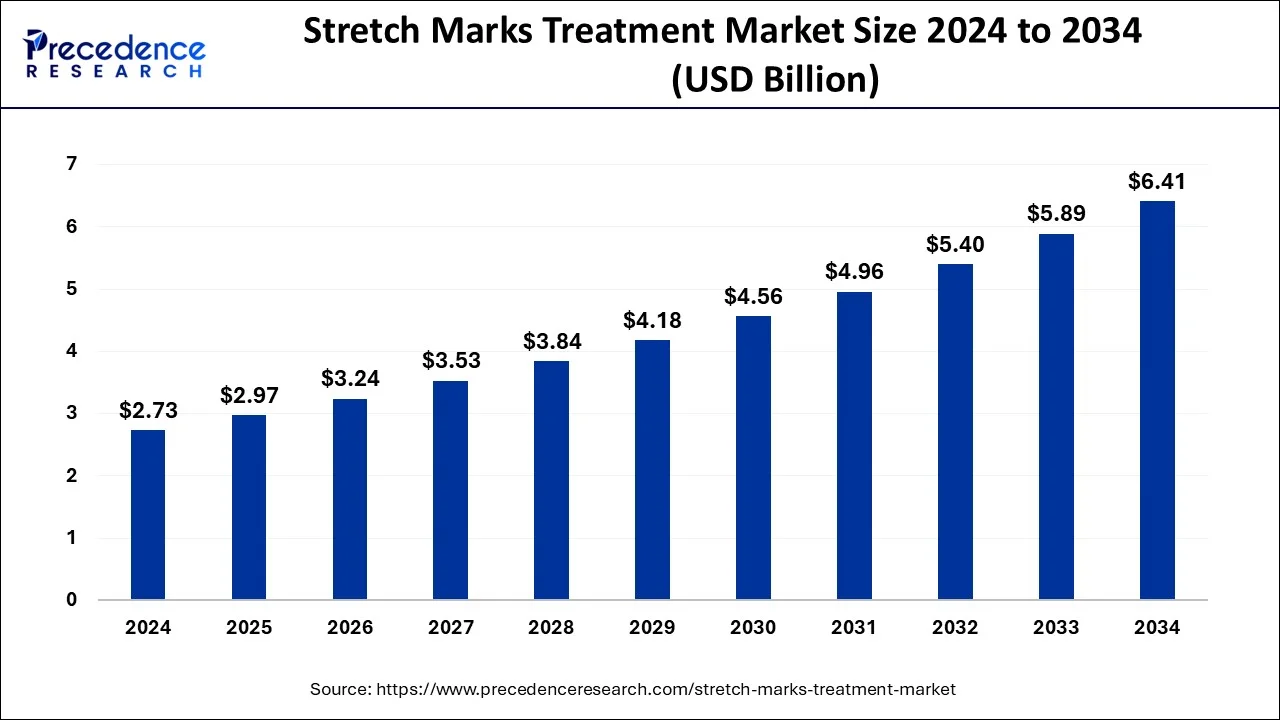
The global stretch marks treatment market is estimated at USD 3.24 billion in 2026 and is expected to grow to around USD 6.93 billion by 2035, registering a CAGR of 8.84% from 2025 to 2035. The market growth is driven by rising obesity prevalence, increasing pregnancy-related demand, growing cosmetic and aesthetic awareness, rising disposable incomes, increasing healthcare infrastructure spending, technological advancements in stretch mark treatments, growing demand for topical skincare solutions, and the rapid expansion of e-commerce and online treatment providers.
Source: https://www.precedenceresearch.com/stretch-marks-treatment-market
 Get a Sample
 Table Of Content


What is the Stretch Marks Treatment Market Size?
The global stretch marks treatment market size is calculated at USD 2.97 billion in 2025 and is predicted to increase from USD 3.24 billion in 2026 to approximately USD 6.93 billion by 2035, expanding at a CAGR of 8.84% over the forecast period from 2026 to 2035. The stretch marks treatment market is driven by rising awareness of aesthetic skincare and body appearance, growing demand from pregnancy related stretch marks and obesity or rapid weight fluctuations.
Stretch Marks Treatment Market Key Takeaways
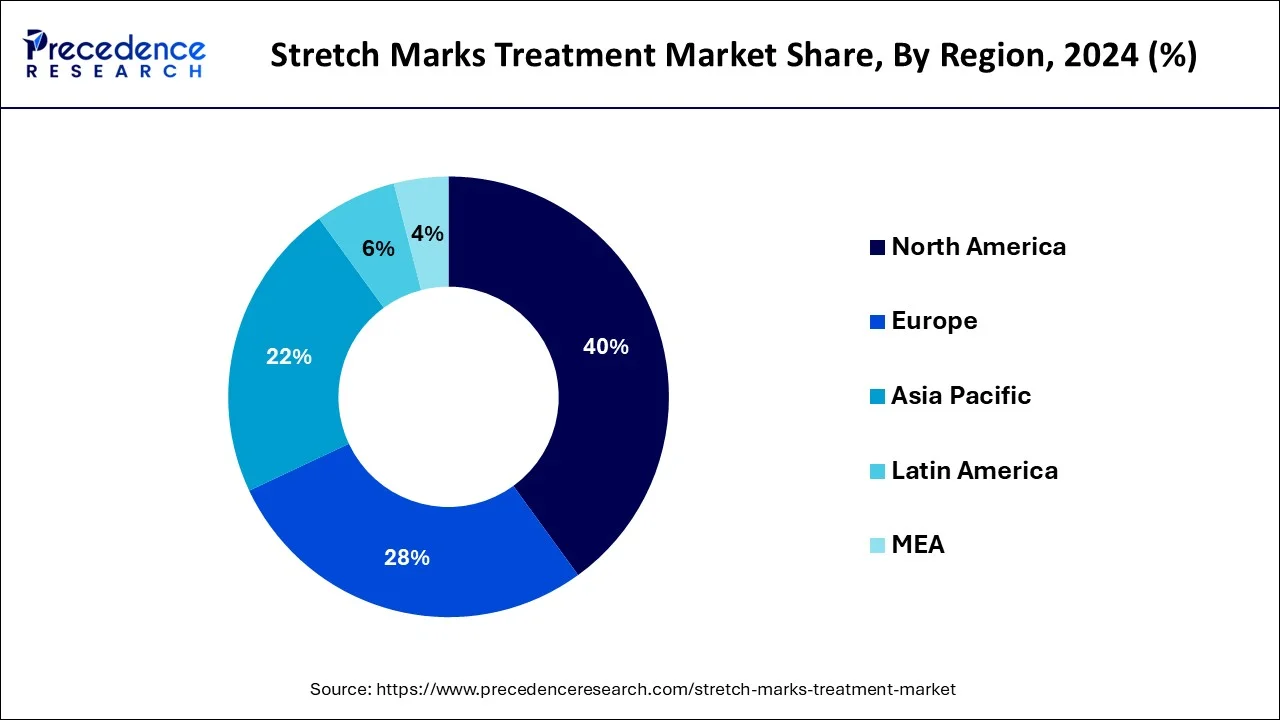
- North America has accounted for 40% of revenue share in 2025.
- By type, topical products had the highest revenue share of 48% in 2025.
- By end use, the hospitals and clinics segment has held a 65% revenue share in 2025.
Stretch Marks Treatment Overview: The Market Snapshot
Stretch marks can result from factors other than underlying diseases. Examples include pregnancy, weight gain associated with obesity, teenage growth spurts, adverse effects of medicine, or a sudden increase in muscle size as a result of weightlifting. Stretch mark treatments are administered in-office by qualified professionals. Depending on location, the operation, and any potential hazards, an individual is expected to be treated by a doctor a dermatologist, a cosmetic surgeon, or plastic surgeon, or a licensed professional.
Artificial Intelligence: The Next Growth Catalyst in Stretch Industry Treatment
Artificial intelligence (AI) is significantly impacting the stretch marks treatment industry by revolutionizing how patients are diagnosed and treated, moving from subjective assessments to objective, data-driven solutions. Advanced machine learning algorithms and computer vision technologies enable high-resolution skin analysis, identifying issues like texture irregularities and pigmentation with greater accuracy than manual observation.
This enhanced analysis allows dermatologists to create highly personalized treatment plans, combining various therapies like fractional lasers and microneedling with tailored skincare regimens for optimal outcomes, while also predicting potential complications and treatment efficacy.
Stretch Marks Treatment Market Outlook: Exploring the Opportunities
- Industry Growth Overview: Growing cosmetic concerns, obesity, and technological advancements are driving the industrial growth in the market.
- Major Investors: Large institutional asset management firms and private equity firms are the major investors in the market.
- Startup Ecosystem: The development of natural plant-based topical solutions and at-home devices, and therapies is the focus of the startup ecosystem.
Stretch Marks Treatment Market Growth Factors
The predominance of unhealthy lifestyles is a major factor fuelling the growth, along with rising obesity issues. Additionally, anticipated to drive the market are growing beauty concerns among expectant mothers. Stretch marks can appear on women during or after pregnancy, and they can also appear on other persons who are developing adolescents.
They are also common in those who experience abrupt weight gain or loss. Teenagers developing stretch marks following an abrupt development spurt is another factor that is significantly driving the market. The market for stretch mark treatments is also being driven by an increase in the number of online treatment suppliers.
- Obesity prevalence is rising as a result of sedentary behavior
- Increasing cosmetic concern by pregnant women to treat stretch marks
- Increasing infrastructure spending for healthcare
Market Trends
- Consumers are increasingly choosing laser therapy, microneedling and radiofrequency because they show visible results and improve skin texture and appearance.
- The growing preference for topical products such as creams, oils, lotions and serums, as they are affordable, easy to apply and can easily integrate into daily routine.
- The rising disposable incomes and growing awareness of aesthetic treatments are growing adoption of stretch mark products.
- The major demand is coming from pregnancy and post partum consumers. Consumers are focusing on choosing ingredients which are fragrance free, botanical and pregnancy safe.
- The rapid expansion of e commerce and online stores is supporting wider product availability of stretch mark products.
Market Scope
| Report Coverage | Details |
| Market Size in 2025 | USD 2.97 Billion |
| Market Size in 2026 | USD 3.24 Billion |
| Market Size by 2035 | USD 6.93 Billion |
| Growth Rate from 2025 to 2034 | CAGR of 8.84% |
| Base Year | 2025 |
| Forecast Period | 2026 to 2035 |
| Segments Covered | By Type, By End Use, and By Distribution Channel |
| Regions Covered | North America, Europe, Asia-Pacific, Latin America and Middle East & Africa |
Market Dynamics
Drivers
Obesity prevalence is rising as a result of sedentary behavior. The market is expanding primarily as a result of the increasing prevalence of obesity in the world and the rising number of pregnancies, which are raising concerns about women's stretch marks. By 2030, one billion people worldwide will be obese, including one in five women and one in seven men, predicts the World Obesity Federation 2022.
According to the aforementioned claims, there is a significant global obesity problem that is contributing to the rise in the prevalence of stretch marks. This ultimately contributes to the market under study expanding. Additionally, both in developed and developing nations, there are a lot of pregnancies, which is increasing the need for stretch mark treatment treatments.
For instance, according to data from the CDC (Centers for Disease Control and Prevention) published in 2021, there were 3,659,289 births in the United States. This will result in more people using stretch mark removal techniques to get rid of stretch marks they acquired after giving birth.
Increasing infrastructure spending for healthcare - The increase in healthcare spending, which helps to improve its infrastructure, is a crucial element influencing the growth rate of the stretch mark treatment market. Additionally, the market for stretch mark treatments will grow as people become more interested in plastic surgery. Additionally, the market for stretch mark treatments will grow as a result of increased disposable income and rising skincare product awareness, including cosmetics. Additionally, the market's growth rate will be accelerated by the growing elderly population and the desire for more therapeutic items to be produced.
Increasing technological advancement - Technology developments, rising product approval rates, partnerships and collaborations between important players, as well as other factors, are all contributing to the market's expansion. For instance, Centella CAST, a component that works on the mechanisms causing stretch mark production, was introduced by Givaudan Active Beauty in May 2022. Stretch marks are diminished by this ingredient's ability to restore skin's elasticity, density, and firmness on four different levels.
Increasing topical skin treatment solution - In comparison to other scar treatments like micro-needling and microdermabrasion, topical scar therapy products are more affordable. Generally speaking, these products are suggested by medical professionals for the treatment of stretch marks during pregnancy.
Additionally, the addition of tretinoin and hyaluronic acid to stretch mark removal solutions will boost market sales. Clinical studies have shown that these chemicals help to lessen the visibility of scars, stretch marks, and blemishes. These products are being offered by brands on a variety of online channels, which is helping the market.
Challenges
High cost associated with the treatment - Stretch mark removal solutions like oils and serums are in high demand due to the high expense of stretch marks removal methods like lasers and microdermabrasion. Furthermore, the dearth of skilled professionals and lack of healthcare infrastructure in developing economies will challenge the stretch marks treatment market. Additionally, a decline in clinical visits due to the COVID-19 outbreak and the lack of awareness will act as restraints and further impede the growth rate of the market during the forecast period of 2025-2034.
Segment Insights
Treatment Type Insights
Due to the rising incidences of stretch marks brought on by pale skin, pregnancy, a history of giving birth to twins or large babies, sudden weight loss or gain, obesity, and other factors, among others, the topical products segment currently dominates the market and is anticipated to do so for some time to come. Additionally, it is anticipated that the usage of corticosteroid drugs will increase the demand for topical products.
The subcategories of topical products are creams, oils and serums, and lotions. Due to rising sales, the creams category is predicted to dominate the market throughout the forecast period. The segment is expanding largely because to manufacturers' increasing attempts to sell creams.
Furthermore, laser treatment is more effective than other treatments, it was anticipated that the laser treatment industry would expand significantly in the years to come. Physicians most frequently employ micro-needling, non-ablative lasers, and fractionated lasers. Since fractional lasers improve skin tone, and texture, and diminish visible indications of aging, their market is expected to expand significantly.
The segment's expansion is being driven by the high demand for anti-aging treatments. Furthermore, the segment is being supported by the big population's demand for non-surgical aesthetic procedures.
End-Use Insights
Why the Hospitals and Clinics Segment Dominates the Stretch Marks Treatment Market?
The hospitals and clinics segment dominated the stretch marks treatment market in 2025. The rise in aesthetic operations in hospitals in main markets including the U.S., Germany, and Japan is credited with the hospital segment's expansion. Additionally, it is projected that growing consumer awareness of aesthetic and cosmetic procedures in developing nations like China and India will promote segment expansion. Consumers seeking stronger results may choose clinical procedures such as fractional lasers and microneedling, which are efficiently delivered by clinics and hospitals.
The home use segment is expected to experience the fastest growth in the stretch marks treatment market during the forecast period due to an increase in the use of topical treatment. Home use stretch mark treatments include creams, oils, serums and lotions. These products are generally affordable and easy to use, hence widely adopted. These products are easily available due to online and e-commerce expansion. Over the foreseeable period, the category is expected to continue to rule.
Distribution Channel Insights
Why Did the Institutional Segment Dominate the Stretch Marks Treatment Market?
The institutional segment held the largest revenue share in the stretch marks treatment market in 2025 because hospitals, dermatology clinics and aesthetic centres provide professional guidance and access to clinically oriented treatments. It provides microdermabrasion, laser therapy, and prescription based products that require trained professionals. The growth of the segment is supported by growing demand for professional and clinically supervised solutions.
The online stores segment is expected to expand rapidly in the stretch marks treatment market, with a CAGR over the forecast period. The segment is growing because it offers convenience, wider product selection, price comparisons, and customer reviews. The growing e commerce platforms and online stores help brands reach a wider customer base outside the major cities, which supports broader product adoption and contributes to the market expansion. Consumers are adopting e commerce shopping for skincare purchases, which further drives market growth.
Regional Insights
U.S. Stretch Marks Treatment Market Size and Growth 2025 to 2034
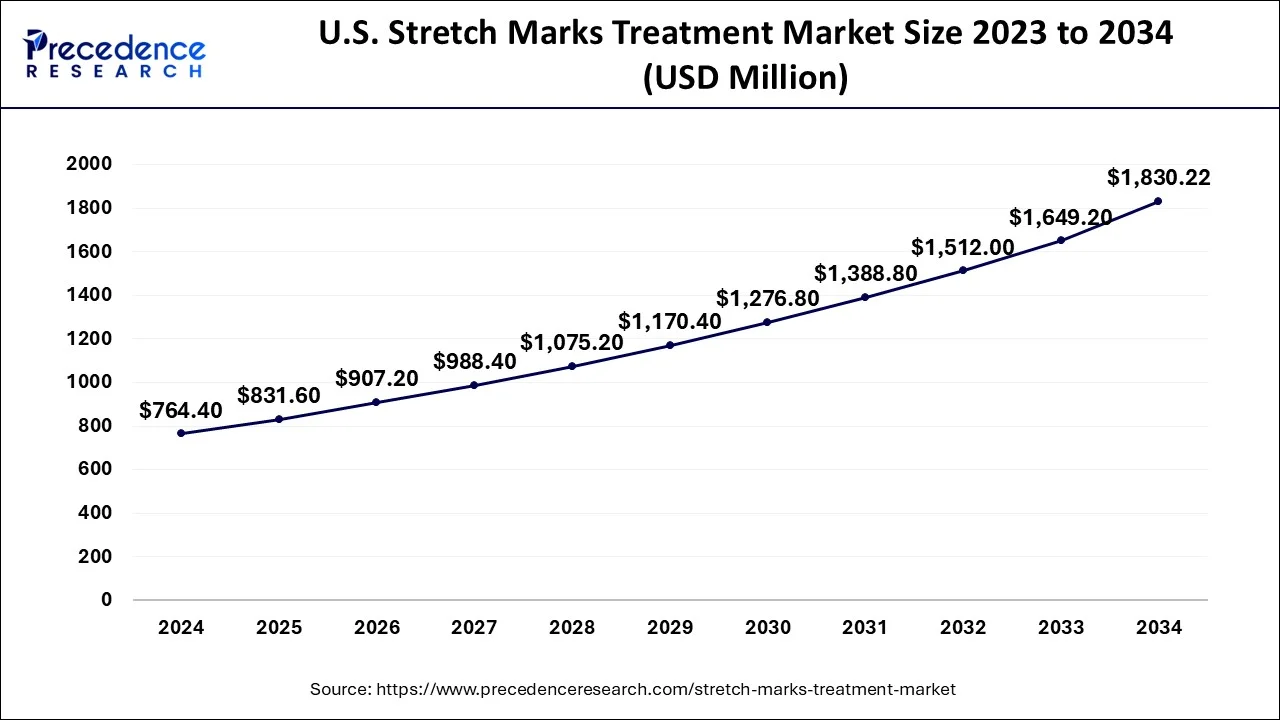
The U.S. stretch marks treatment market size is exhibited at USD 831.60 million in 2025 and is projected to be worth around USD 1830.22 million by 2034, growing at a CAGR of 9.19% from 2025 to 2034.
Advanced Healthcare Dominated North America
North America, Latin America, Europe, Asia Pacific, the Middle East, and Africa are the regional divisions of the stretch marks treatment market. North America generated the most revenue in 2024, and it is anticipated that it will hold this position throughout the projected period. This dominance is attributable to the established healthcare system, widespread use of technologically sophisticated aesthetic laser technologies, and rising demand for aesthetic and cosmetic procedures in North America.
Furthermore, it is projected that the local presence of large firms and their ongoing strategic endeavors will further improve the market environment.
The increased prevalence of obesity, better treatment options, and the sizable target population in this region are additional factors driving the growth of the stretch mark treatment market in this area. For instance, a report from the World Obesity Federation that was released in March 2022 found that 47% of Americans were obese. In the US, it is estimated that 61 million men and 64 million women are obese. One of the main drivers of this market expansion in this region is the enormous increase in obesity in wealthy countries like the United States.
The presence of numerous players in the area is also significantly boosting the regional market. Thus, this ultimately heightens player competition, giving them a chance to develop more inventive strategies and satisfy the expanding global demand. The market for the treatment of stretch marks is therefore anticipated to grow in this area as a result of the aforementioned considerations.
Germany Market Trends
Germany leads the European stretch marks treatment market in 2025, supported by an advanced dermatology sector, strong consumer awareness, and demand for clinically tested skincare. Consumers are preferring laser based procedures due to visible results, while topical products remain important. The region has a presence of leading device manufacturing companies such as Asclepion and Fotona, further supporting market growth. Dermatology clinics offer personalised treatment, including lasers, microneedling and radiofrequency.
What are the Advancements in the Market in Latin America?
Latin America held a considerable share in the stretch marks treatment market in 2025, supported by strong interest in aesthetic care, increasing awareness of body appearance, and expanding access to dermatology clinics. Brazil and Mexico remain leading regional markets in Latin America. The growing adoption of microneedling and minimally invasive treatments is further driving market expansion. The influence of social media is encouraging wider acceptance of stretch mark treatments.
Brazil Market Trends
Brazil accounts for the largest share of the Latin American stretch mark treatment market in 2025, due to its well established aesthetic medicine and cosmetic industry. The country has strong manufacturing facilities that emphasise the development of stretch mark treatments. Brazil has well-established dermatology clinics that increasingly use laser, microneedling, and radiofrequency, which supports wider access to treatment. The demand is supported by rising interest in body contouring and skin improvement procedures, particularly after pregnancy and significant weight changes.
What are the Key Trends in the Market in the Middle East and Africa Region?
The Middle East & Africa held a notable share of the stretch marks treatment market in 2025 as awareness of aesthetic dermatology increases and growing investment in healthcare modernization. The demand is strong, particularly from urban areas due to rising interest in skin rejuvenation procedures and high spending on self grooming. The rising incidence of obesity is further encouraging growing adoption of advanced stretch mark treatment technologies. Social media influence is also supporting market expansion in the Middle East & Africa.
Saudi Arabia Market Trends
Saudi Arabia represents the leading market within the Middle East and Africa stretch marks treatment market in 2025, supported by expanding aesthetic medicine services, private dermatology clinics, and consumer interest in appearance focused skincare. Consumers are preferring advanced stretch mark treatments such as microneedling and radiofrequency due to their visible results. The market is also driven by high disposable incomes and modern healthcare infrastructure offering advanced solutions.
Regional analysis
- Obesity Drives U.S. Market
The growing incidence of obesity in the U.S is increasing the demand for stretch mark treatments. The presence of advanced healthcare systems is increasing the demand for minimally invasive procedures, where the growing beauty awareness is also increasing their demand. - Cosmetic Awareness Shapes Asia Pacific
Asia Pacific is expected to grow significantly in the stretch marks treatment market during the forecast period, due to growing cosmetic awareness. The growing obesity and pregnancy rates are also increasing their demand. The expanding healthcare, investments, and medical tourism are increasing the adoption of advanced technologies and products, which is enhancing the market growth. - Aesthetic Services Transforms China
The growing aesthetic services in China are increasing the demand for stretch mark treatments in China. The minimally invasive cosmetic treatments are also being used along with other topical formulations for stretch marks. The growing postpartum skin care and online platforms are also increasing their use. - Dermatology Infrastructures Fuel Europe's Growth
Europe is expected to grow significantly in the stretch marks treatment market during the forecast period, due to advanced dermatology infrastructures. This is increasing the use of non-invasive treatment options, where the growing rates of obesity are increasing their demand. The companies are also developing various advanced technologies and topical products, which comply with their stringent regulations, driving the market growth.
Stretch Marks Treatment Market Value Chain Analysis: Growth Prospects
1.R&D
The R&D of the stretch mark treatment focuses on the development of new ingredients and energy-based devices to promote collagen and elastin synthesis.
- Key players: L'Oreal, Union Swiss, HRA Pharma.
2.Clinical Trials and Regulatory Approvals
The clinical trials and regulatory approval of the stretch mark treatment focus on the visual appearance, color, texture, skin elasticity, collagen density, and dermal thickness.
- Key players: L'Oreal, Union Swiss, HRA Pharma.
3.Patient Support and Services
Educational resources and product information are provided in the patient support and services for stretch mark treatments.
- Key players: Union Swiss, HRA Pharma.
Competitive Landscape
The stretch marks treatment market is moderately fragmented, with skincare companies, pharmaceutical firms, and aesthetic device manufacturers competing across topical and advanced treatments. The leading companies in the market include Alliance Pharma PLC, Candela Corporation, Helix BioMedix, Inc., Perrigo Company plc (HRA Pharma), Union Swiss Private Limited, Palmer's, Clarins, Cynosure and Dermaclara. Companies are investing in the development of advanced treatments such as laser and other device based treatments to stay competitive in the market.
For future growth in the stretch marks treatment market, companies should focus on clinically supported formulations, safer pregnancy and postpartum products, combination therapies and affordable professional treatments to increase wider adoption.
Top Companies in the Stretch Marks Treatment Market and Their Offerings
- Union Swiss Ltd (Bio Oil) - One of the globally leading companies in scar and stretch marks reduction.
- Key offerings - Bio-Oil Skincare Oil
- Cynosure LLC: The leading developer of light based and radiofrequency aesthetic treatment systems.
- Key offerings - PicoSure and Icon Aesthetic System
- Clarins: The French company offers premium skincare and beauty products.
- Key offerings - Body Partner Stretch Mark Expert and Tonic Body Treatment Oil
- Laboratoires Expanscience (Mustela) - The French company specializing in maternal and infant skincare. The company provides stretch mark creams and oils.
- Key offerings - Mustela Stretch Marks Cream and Stretch Marks Serum
- E.T. Browne Drug Co., Inc. (Palmer's) - A United States based skincare company.
- Key offerings - Palmer's Cocoa Butter Formula Tummy Butter and Stretch Mark Lotion.
- Alliance Pharma PLC (Mederma) - It offers Mederma Stretch Cream Therapy, widely recommended by medical practitioners.
Other Mojor Key Players
- Helix BioMedix, Inc.
- Casmara
- Weleda
- Mama Mio
- Dermaclara
- Strialite
- Concord Medisys
- Helix BioMedix, Inc.
Recent Developments
- In October 2025, Cynosure Lutronic launched the eCO2 3D, a versatile fractional CO2 laser. While CO2 lasers are generally used for deeper resurfacing of a variety of skin conditions, their versatility and precision allow providers to customize treatment depth for various skin concerns, including potentially stretch marks, though the 1540 handpiece is the primary FDA-cleared option for this indication. (https://www.businesswire.com)
Segments Covered in the Report
By Type
- Topical Products
- Creams
- Oils & Serum
- Lotion
- Laser
- Fractional Laser
- Pulse-Dye Laser
- Microdermabrasion
- Others
By End Use
- Hospitals and Clinics
- Home Use
- Specialty Dermatology Centers
By Distribution Channel
- Institutional
- Retail
- Supermarkets and Hypermarkets
- Specialist Retailers
- Medical Retailers
- Online Stores
By Geography
- North America
- Europe
- Asia-Pacific
- Latin America
- The Middle East and Africa
For inquiries regarding discounts, bulk purchases, or customization requests, please contact us at sales@precedenceresearch.com
Frequently Asked Questions





Ask For Sample
No cookie-cutter, only authentic analysis – take the 1st step to become a Precedence Research client
 Get a Sample
.webp)



 sales@precedenceresearch.com
 Schedule a Meeting
