



Variable Frequency Drive Market Size, Manufacturing Efficiency, Production Capacity, Pricing Metrics, Product Innovation, and Industry Outlook
Variable Frequency Drive Market (By Voltage Type: Low Voltage, Medium Voltage; By Application: Pumps, Electric Fan, HVAC, Conveyors, Extruders, Others; By End User: Oil & gas, Industrial, Power, Infrastructure) - Global Industry Analysis, Size, Trends, Leading Companies, Regional Outlook, and Forecast 2026 to 2035
Source: https://www.precedenceresearch.com/variable-frequency-drive-market
 Get a Sample
 Table Of Content


What is the Variable Frequency Drive Market Size?
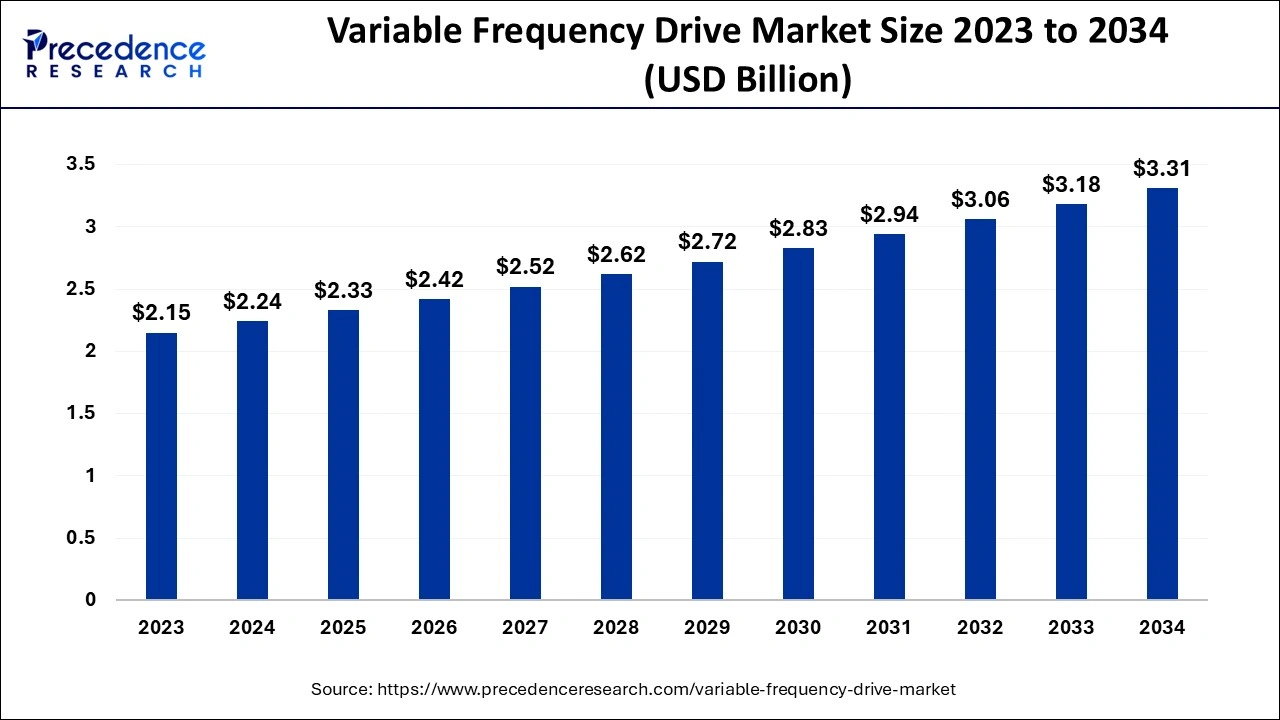
The global variable frequency drive market size is estimated at USD 2.33 billion in 2025 and is predicted to increase from USD 2.42 billion in 2026 to approximately USD 3.43 billion by 2035, expanding at a CAGR of 3.94% from 2026 to 2035. The market is driven by advancements in technology and increasing demand for energy efficiency across various sectors. Industries all over the world are increasingly adopting variable frequency drives to optimize motor control, reduce energy consumption, and enhance operational efficiency.
Market Highlights
- By product, the AC drives segment held 70% of total sales.
- The DC drive product segment is estimated to grow at a CAGR of 5% during the forecast period.
- Based on power range, the low power range segment garnered a revenue share of 41% and the medium power range frequency drive is predicted to grow at a CAGR of 6% from 2026 to 2035.
- By Application, the pumps section contributed 31% of total sales in 2025.
- The HVAC application segment is estimated to grow at a CAGR of 7%.
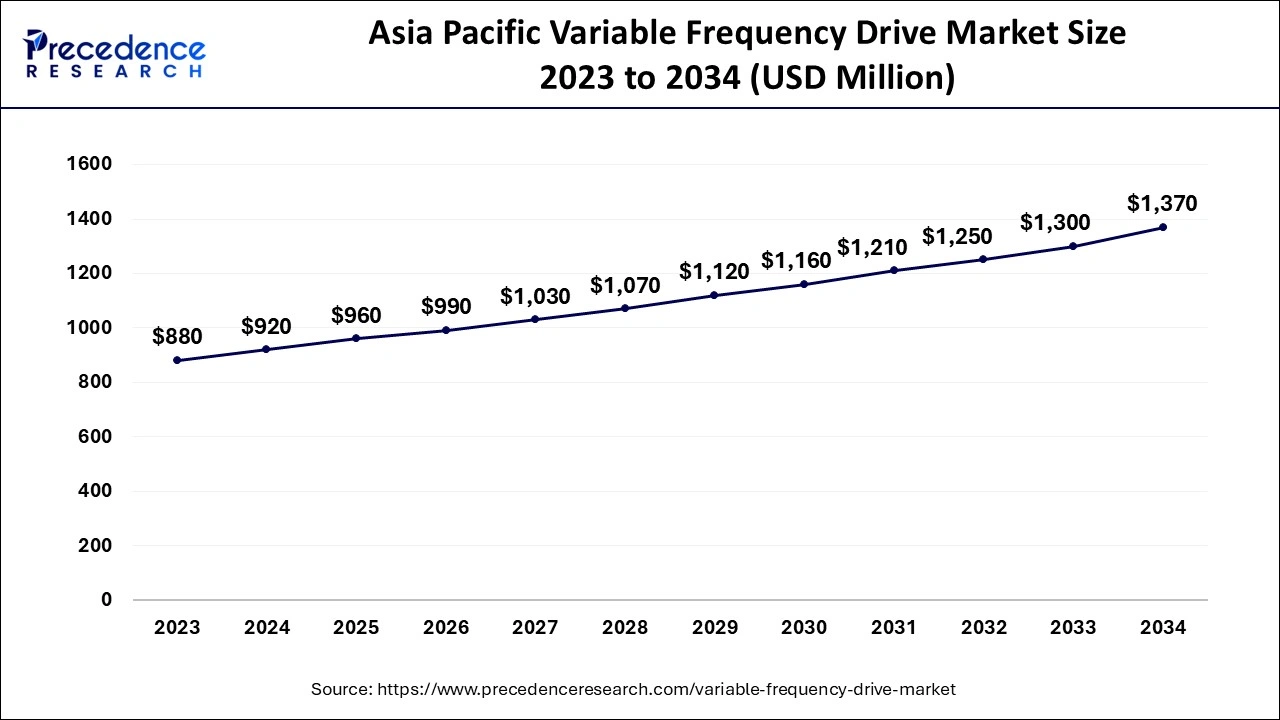
- In 2024, the Asia Pacific region's market was worth USD 920 million.
- Latin America is predicted to grow at a CAGR of 7% over the projection period.
Market Overview
Variable frequency drives (VFD) are an electrical equipment that is used with electric motors, which change the applied voltage supplied to the motor. They help to control the operating speed and also to reduce energy consumption. VFD combines software solutions to monitor the functioning of speed, which thus improves its overall efficiency.
The market is experiencing significant growth due to the increasing emphasis placed by industries on improving their energy efficiency, further optimizing their motor controls, and decreasing their operational costs. The ability to accurately control the speed of electric motors means that VFDs will play a critical role in several sectors, including manufacturing, HVAC (heating, ventilation & air conditioning), oil & gas, and water treatment.
How is AI Revolutionizing the Variable Frequency Drive Market?
Artificial intelligence is causing a significant shift in the Variable Frequency Drive market by predicting maintenance, optimizing power consumption, and transforming automation into an intelligent system. The AI systems are installed to continuously monitor the parameters, predict the faults, and adjust the motor's performance in a real-time manner, which finally results in less downtime and lower maintenance costs. The AI is a great partner for the IoT, as it not only reduces energy usage and increases reliability through controlling the speed and torque of the motors according to the load conditions, but also performs the function of a smart diagnostic that increases the accuracy of the diagnosis and, therefore, the speed of the fault detection and troubleshooting. The tandem of AI and VFD technology not only improves but also expands the area of operations that require sustainable practices in the industry, energy, and building management systems.
Variable Frequency Drive Market Outlook
- Industry Growth Overview: The Drive Molecule, or VFD (Variable Frequency Drive), is set to maintain continuous development due to an increase in Industry Automation, Industrial Electric Power Consumption, and a shift to Smart Control Systems for Motors in Other Industries.
- Sustainability Trends: The need to Improve Energy Efficiency and Lower Carbon Footprint are catalysts for the increased use of VFDs, as companies use VFDs to meet Industry Standards for Reducing Carbon Footprint, Reducing Power Usage, and Meeting Global Standards for Sustainability.
- Global Expansion: Emerging Markets in Asia-Pacific, Latin America, and The Middle East are constructing Industrial Foundations, Creating New Opportunities for Global VFD Producers.
- Startup Ecosystem: Start-ups are Creating Innovative Compact Drive Solutions, Developing AI-Enabled Monitoring Systems for VFDs, and Creating IoT-Enabled VFD Solutions to Provide Enhanced Operational Performance, Predictive Maintenance, and Cost-Effectiveness.
Variable Frequency Drive Market Growth Factors
- The growing trend of industrial automation and interconnectivity is a primary factor behind the increasing demand for VFDs as they enhance control and efficiency.
- The concern for energy efficiency and environmental sustainability is the main reason why industries are starting to use VFDs for power consumption and emissions.
- The investment in infrastructure is going up, and the need for HVAC systems is high, which together fuel the energy-efficient building market for VFDs installation.
- The fast pace of industrialization in the developing countries is increasing the demand for motor control systems, thus the market is growing.
- Pro-govt regulations and tech advancements are the key drivers of VFDs demand across the sectors.
- Industrial automation and interconnected gadgets are the main reasons for the increasing demand for Variable
- Frequency Drives (VFDs) that can control and run more efficiently.
- The energy that is being used is the main concern, and environmental sustainability is facilitating the use of VFDs to reduce the power that is consumed to be reduced.
- The investments that have been made in the infrastructure and the rapid industrialization, especially in the emerging markets, are giving the VFDs a great opportunity for their installations to grow.
- The rising demand for HVAC systems in energy-efficient buildings is one more factor that is driving the market.
supportive Government regulations, and the advancements in technology of drive systems and motor control are major factors in the easy deployment of VFDs in different sectors.
Variable Frequency Drive Market Trends
- Increased Adoption in Renewable Energy: The market is seeing heightened interest from the renewable energy sector. As more and more organizations invest in wind and solar power, the need for efficient motor control systems also grows significantly.
- Focus on Energy Efficiency: A growing emphasis on energy efficiency is shaping the market. Industries are increasingly recognizing the potential cost savings associated with reduced energy consumption, thus prompting companies to invest in advanced variable frequency drive technologies that offer enhanced performance and lower operational costs.
- Integration of Smart Technologies: The integration of smart technologies is transforming the market, opening up various avenues for innovation. With the rise of IoT and automation, variable frequency drives are becoming more intelligent, allowing for real-time monitoring and control. This is likely to enhance operational efficiency and provide valuable data insights for decision-making.
Strategic Growth Opportunities in the Variable Frequency Drive Market
Highest Energy Users
- A large number of energy users are represented by electric motor-driven systems. The organizations that aim to strengthen energy management or meet corporate sustainability goals need to optimize motor-related energy usage. This approach is different for every industry, and this optimization depends on process improvement or modification.
Excellent Features and Wide Applications
- A variable frequency drive is a device used in combination with an AC induction motor. They are useful with centrifugal loads, such as fans and pumps. Popular industrial and commercial applications of variable frequency drives include boiler and chiller feedwater pump motors, variable-loaded air compressors, air handler supply and return fans, cooling tower fans, exhaust fans, and more. They have immense importance in applications with high operating hours. They allow more time to capture energy savings to offset the cost of the equipment.
Exciting Advantages of Variable Frequency Drive
- They offer additional benefits beyond energy savings. One of the advantages are precise speed control for critical processes, like rolling applications. They provide a bridge between the grid and the motor. They allow for lower voltage starting and lower current inrush.
Market Report Coverage and Key Metrics
| Report Coverage | Details |
| Market Size in 2025 | USD 2.33 Billion |
| Market Size in 2026 | USD 2.42 Billion |
| Market Size by 2035 | USD 3.43 Billion |
| Growth Rate from 2026 to 2035 | CAGR of 3.94% |
| Base Year | 2025 |
| Forecast Period | 2026 to 2035 |
| Segments Covered | Product, Power Range, Voltage Type, Application, End User, Geography |
Market Dynamics
Driver
Growth in Industrial Automation and Focus on Energy Efficiency
The growth of industrial automation is a major key driver that is propelling the market. As industries increasingly adopt automated processes to enhance productivity and reduce labor costs, the demand for variable frequency drives is expected to rise. These drives play a vital role in controlling motor speed and torque, which is essential for automated systems. This is likely to create substantial opportunities for the variable frequency drive market, as more manufacturers integrate these technologies into their operations.
The market is also experiencing a surge in demand driven by the increasing emphasis on energy efficiency across various sectors. Industries are actively seeking solutions to reduce energy consumption and operational costs. As organizations strive to meet sustainability goals and regulatory requirements, the adoption of variable frequency drives is likely to become more prevalent.
Restraint
High Installation Costs
Despite promising growth prospects, the market does have its fair share of challenges that can hinder its growth and development. The high costs associated with installing VFD devices are one such challenge. The use of these drives in any industry and application does lead to better efficiency of the process; however, it may result in the deployment of the drive as per the user's requirement for the distribution system, which thus increases the total cost of installation. Moreover, VFDs for applications such as HVAC experience lower power factors, harmonics, and operational noise, which could also affect the distribution capacity of the system, resulting in high overhead costs.
Opportunity
Technological Advancements and Expansion of EV Infrastructure
The market is being propelled by technological advancements in drive systems. Innovations such as improved control algorithms, enhanced energy efficiency features, and the integration of IoT capabilities are transforming the landscape of variable frequency drives. These advancements enable better performance, reliability, and ease of use, thus making them more attractive to end-users. As industries seek to leverage these technologies for improved operational efficiency, the variable frequency drive market is likely to experience robust growth.
The market is also likely to benefit from the expansion of electric vehicle infrastructure. As the automotive sector shifts towards electric vehicles, the need for efficient motor control systems becomes crucial. This is because variable frequency drives are integral to the operation of electric vehicle charging stations and related infrastructure.
Segments Insights
Product Type Insights
Which Product Type Dominated the Variable Frequency Drive Market?
The AC drives segment dominated the market in 2025. This dominance can be attributed to the advantages of AC drives, such as their high power, ease of application compared to others, and low maintenance. These advantages prove to be beneficial to various industries such as automotive, power generation, and food and beverage, as it helps to improve operational efficiency.
The DC drives segment is expected to be the fastest-growing segment during the forecast period. This is because DC technology is more expensive to maintain than AC technology, and its usage in industry is limited. Furthermore, DC technology is not deemed energy-efficient and cannot work in critical settings; these issues are expected to stall market expansion. This segment is rapidly gaining traction due to its precision and performance in applications requiring high torque and speed.
Power Range Insights
Which Power Range Segment Led the Variable Frequency Drive Market?
The low power range segment led the global market in 2025. Low-voltage frequency drives are used in end-use industries to power equipment such as centrifugal pumps, belt conveyors, fans, and centrifugal compressors. Manufacturers are making significant investments in the development of slightly elevated, compact-size, relatively low-voltage drives. As a result, broad use of low-voltage frequency drive technology in industrial verticals, as well as increased investments, are likely to assist the sector in dominating market expansion.
The medium power range drive segment is expected to witness the fastest growth during the projected timeframe. This particular segment provides benefits such as better operating flexibility and greater control, which is one of the main reasons its popularity is rising in many sectors such as wastewater plants, petrochemical, mining, and so on. Furthermore, strong demand from the petrochemical industry is likely to fuel this segment's expansion.
Application Insights
How the Pumps Segment Dominated the Variable Frequency Drive Market?
The pumps segment contributed the largest market share in 2025. Pumps are frequently employed in the treatment of water, metal, and the petroleum industry. These pumps are equipped with adjustable speed drives, which minimize energy usage and lower the cost of pump operation. Thus, the market is witnessing a growing demand for variable frequency drives from the water treatment plant market, oil and gas, and other industries for overcoming the flow rate and improving efficiency. These factors are likely to boost the segment's growth and development.
The HVAC segment is estimated to witness the fastest growth rate throughout the forecast period. The increasing expansion of residential and commercial development activity is expected to enhance consumption for HVAC systems. Connecting a VFD to an HVAC system ensures greater efficiency by managing the speed of blower fans, pumps, or compressors.
Voltage Type Insights
Which Voltage Type Dominated the Market in 2025?
The low voltage segment dominated the global market landscape in 2035. This segment is increasingly used in small-scale applications as well as residential settings for HVAC systems like fans, pumps, etc. This is because these particular applications utilize less energy but also necessitate the need for precise control. Their cost-effectiveness and high energy efficiency make them an attractive and popular option in the market, thus leading to high segmental growth.
The medium voltage segment is expected to have the fastest growth during the forecast period, driven by the trend of automation, water treatment, manufacturing, and agriculture. This segment's growth is also linked to building codes, industrial energy‑efficiency programs and equipment specifications that position low‑voltage VFDs as standard for variable‑torque loads, particularly in water and HVAC applications where energy savings and controllability are primary decision criteria.
End User Insights
Why did the Oil and Gas Segment Lead the Variable Frequency Drive Market?
The oil and gas segment led the market in 2025. This dominance is driven by the need for efficient energy consumption and enhanced operational control, thus highlighting its role in resource extraction and processing. This segment is leveraging these technologies for enhanced performance in drilling, pumping, and processing operations. The need for precision and reliability in these applications has further prompted significant adoption of VFDs.
The industrial segment is expected to grow at the fastest CAGR during the forecast period, with VFDs being increasingly integrated into manufacturing processes in order to optimize machine performance and reduce energy consumption. This includes various industries, such as automotive, food processing, and textiles, where changing automation trends are driving the demand for VFDs. Growth trends are significantly influenced by rising energy costs and environmental regulations, propelling investment in energy-efficient technologies across all segments.
Regional Insights
Asia Pacific Variable Frequency Drive Market Size and Growth 2026 to 2035
The Asia Pacific variable frequency drive market size is evaluated at USD 960 million in 2025 and is predicted to be worth around USD 1,426.67 million by 2035, rising at a CAGR of 4.04% from 2026 to 2035.
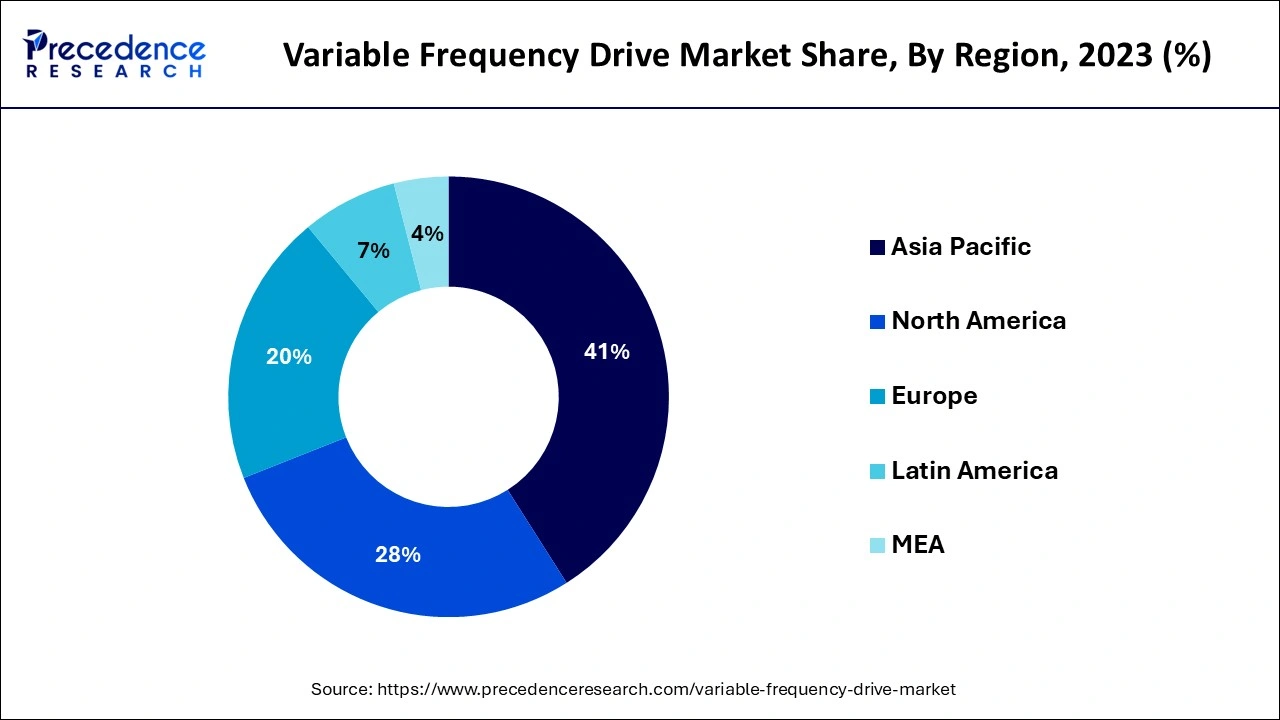
The Asia Pacific region accounted largest revenue share in 2024. Rapid industrialization in developing nations, market liberalization, and increased building activity are all projected to boost regional market expansion. Similarly, increased energy demand is likely to promote energy companies' adoption of VFD, which will help regional growth. Furthermore, the presence of water treatment, large automotive and food & beverage producers operational in the countries such as India, China, and Japan are likely to boost supply for VFD to increase working efficiency and minimize power usage.
Asia-Pacific-Top countries
The Powerhouse of VFD Demand
- China: Extensive use in automotive, steel, and chemical industries; government-backed energy reforms boost demand.
- India: Rapid growth in infrastructure, water treatment, and textile sectors is increasing VFD installation.
- Japan: Advanced manufacturing processes and innovations in robotics fuel high-quality VFD applications.
- South Korea: Leading in consumer electronics and smart factories, integrating AI and automation with motor control.
How is Asia-Pacific leading in the Variable Frequency Drive Market?
The Asia-Pacific region leads the market for VFDs mainly due to strong industrial growth, the development of infrastructure, and government policies that support energy efficiency. The rapid implementation of automation technologies, together with the commitment to less energy consumption, has also expanded the market. Growing manufacturing activities and the modernization of industries are the main factors of the VFDs usage in areas like automotive, construction, and power generation, thereby increasing the region's dominance in the global market.
China Variable Frequency Drive Market Trends
India is a rapidly growing VFD market, which is being supported by government initiatives that are aimed at promoting smart manufacturing and energy-efficient technologies. The development of industrial infrastructure and increased use of automation systems in oil and gas, water treatment, and construction are the key drivers of growth. Apart from that, energy conservation awareness and production facility updation are the most important factors contributing to the domestic VFD solutions.
How Does North America Contribute to the Variable Frequency Drive Market?
North America plays a vital role in the market, driven by strong consumer demand, stringent energy-efficiency regulations, robust industrial automation, and the adoption of smart factory technologies. There is a high demand for variable frequency drives (VFDs) across sectors such as oil and gas, HVAC, and the rapidly growing electric vehicle manufacturing industry. Early adoption of Industry 4.0 principles in North America promotes innovation, integrating VFDs with IIoT systems and setting global trends focused on efficiency and smart optimization.
U.S. Variable Frequency Drive Market Trends
In the U.S., the variable frequency drive market is characterized by technological innovation, stringent regulatory requirements, and a mature industrial sector. Efforts led by energy efficiency standards from agencies like the U.S. Department of Energy (DOE) focus on developing advanced VFDs that include IoT technology and wide-bandgap semiconductors, enhancing performance in high-value sectors such as manufacturing, oil and gas, and HVAC. There is a growing trend to retrofit existing motor-driven systems with smart VFDs to enhance energy efficiency and extend equipment lifespan, supporting market growth.
What are the driving factors of the Variable Frequency Drive Market in Europe?
The VFD market in Europe profited from the implementation of stringent pollution standards, energy-saving regulations, and the rise of renewable energy sources. Governments' investment in infrastructure, water management, and the automation of major industrial processes is are significant growth factor. The increase in the uptake of HVAC systems and the electrification of buildings are other things driving up demand. The emphasis on being environmentally friendly and smart manufacturing is a catalyst for the VFD being deployed widely across various industrial applications.
Europe Powers Ahead: Notable Growth Accelerates the Variable Frequency Drive Market
Europe is still the most advanced developed market for variable frequency drives, being a leader of Innovations in the variable frequency drive industry. The foundation of this innovative industry continues to be based on strict regulation of the EU regarding energy efficiency and an increase in automation and use of smart factories as well as the demand for reducing carbon emissions.
The VFDs used in heating, ventilating and air conditioning (hvac) systems and the vfd demand in electric vehicles and renewable energy projects continue to drive the growth of this market. Furthermore, with the demand for digitalization, predictive maintenance and the increasing use of advanced variable frequency drive technologies, the development of advanced variable frequency drive solutions in Europe will continue to gain a larger share of the overall market.
Germany Variable Frequency Drive Market Trends
Germany is still among the top VFD markets in Europe owing to its significant industrial input and the transition to renewable energy sources. The country's machinery, transport, and power generation focus on automation, energy-saving, and eco-friendliness. Tech advances and supportive legal structures compare the industries adopting Demand across automotive, construction, and process, reinforcing Germany's status as a key European hub for advanced drive systems.
How is Latin America performing in the Variable Frequency Drive Market?
Latin America's market growth is driven mainly by energy efficiency regulations, industrial modernization, and the adoption of automation technologies. The ongoing integration of renewable energy sources and the development of smart grids are among the major factors that promote the deployment of VFDs. Companies are replacing their older systems with energy-efficient ones that are also sustainable, to boost their performance. The region's continuous investment in smart grids, advanced HVAC systems, and high-quality manufacturing is one of the reasons for the VFD market's long-term growth.
Latin America is predicted to grow at a notable CAGR over the projection period, primarily to privatization and urbanization in countries such as Brazil & Mexico. Similarly, growth of the market from end-use industries such as cement, chemicals, and pulp is likely to fuel VFD market expansion in this area.
Latin America Gears Up: Emerging Momentum in the Variable Frequency Drive Market
Latin America is experiencing an increase in the demand for variable frequency drives because of the ongoing updating of infrastructure and growth in the area of industrial activity, which has been increasing. Some of these countries include Brazil, Mexico and Chile. Countries are now investing in making more energy-efficient manufacturing, mining operations and also the water management systems throughout the country.
Through government funding of various programs promoting energy-efficient technologies and a growing demand for the use of smart motors on oil & gas and food processing, there has been a rise in VFD Installation throughout Latin America. higher electricity rates are also motivating industries to incorporate VFDs to decrease the amount of energy they use and also increase the life expectancy of their motors.
Latin America- major factors leading towards the growth of this region
- Energy conservation initiatives by governments to reduce operational costs in utilities and transport.
- Revitalization of oil & gas and mining sectors, requiring robust motor control solutions like VFDs.
- Increased foreign investments in manufacturing and infrastructure projects, especially in Brazil and Mexico.
- Growing demand for clean energy integration, where VFDs support renewable adoption in grid systems.
Mexico Variable Frequency Drive Market Trends:
The market for variable frequency drives in Latin America is mainly ruled by Mexico, wherein the requirements are mainly motivated by the sustainability objectives and industrial automation. The oil and gas, manufacturing, and construction sectors are adopting more and more VFDs. Mexico's push towards modernizing the industrial sector and making it more energy-efficient is in line with the increasing usage of advanced motor controls and interconnected drives in key areas.
What Potentiates the Market in the Middle East & Africa?
In the Middle East & Africa (MEA), the market is driven by extensive infrastructure projects and a strong push for industrialization to diversify economies beyond oil. Rising energy costs and government mandates for energy conservation are encouraging industries to adopt VFDs for applications such as pumps, fans, and compressors, especially in water desalination and HVAC systems. This trend is further sped up by significant investments in clean energy and industrial automation projects.
UAE Variable Frequency Drive Market Trends
Within the Middle East & Africa, the UAE stands out as a key player. Its ambitious economic and sustainability goals, combined with high electricity consumption in commercial and residential buildings, increase the demand for efficient HVAC systems where VFDs are essential for managing energy use. As a regional trade and logistics hub, the UAE attracts significant investment in green hydrogen mega-projects and smart city initiatives, further boosting the need for advanced, energy-efficient motor control solutions.
Government Initiatives in the Variable Frequency Drive Market
China
- In March 2026, the Centre for Research on Energy and Clean Air reported that China has introduced its 15th five-year plan that contributes to the country's momentous growth for 2026 to 2030, including major energy and climate targets. This plan will highly support clean energy across the country and reduce China's carbon dioxide emissions. (Source: https://energyandcleanair.org)
United States
- In June 2025, the Department of Energy (DOE) released its budget request for fiscal year 2026 and reported that it will provide $46.3 billion in budget authority for FY 2026. It has unfolded a golden era of energy dominance and energy innovation that aims to protect the nation. (Source: https://www.energy.gov)
Germany
- In January 2026, RENK Group AG reported its commitment to Germany as a strong business location that drives a secure future. RENK Group has joined the ‘Made for Germany' initiative, which covers 114 leading companies and investors. It has proclaimed investments of up to € 325 million by 2028 in digitalization, innovation, and capacity expansion. (Source: https://www.renk.com)
Brazil
- In February 2026, the Government of Brazil took significant initiatives to advance industrial energy efficiency across the nation. It has launched the Transformative Industrial Energy Efficiency Investments Programme to achieve this goal. It has also signed an agreement for the expansion of the PotencializEE program to the national level with an initial investment of R$ 75 million for energy audits. (Source: https://mitigation-action.org)
Saudi Arabia
- In July 2026, the Kingdom of Saudi Arabia announced progress towards the 2030 agenda for sustainable development. It has been reported that the development approach aims to make a sustainable and comprehensive cultural movement. (Source: https://mep.gov.sa)
Investments in the Variable Frequency Drive Market
- In July 2026, GE Vernova Inc. announced that the company plans to achieve workforce growth by adding more than 80 professionals over the upcoming period to support its increasing capacity. The company is advancing sustainability through the development of a major solar park. It is also modernizing operations with new lean production lines. (Source: https://www.gevernova.com)
- In March 2026, ABB Ltd. announced an investment of $75 million for the expansion of R&D and manufacturing in India. This investment will support critical electrification solutions, metro rail, renewable energy, critical infrastructure, and data centers across five locations. (Source: https://new.abb.com)
- In December 2025, Siemens AG reported its profitability and capital efficiency with a margin range of 17-23% in digital industries, 16-20% in smart infrastructure, 10-13% in mobility, and 15-20% in Siemens financial services. The company considers that a healthy capital structure supports sustainable revenue and profit development. (Source: https://assets.new.siemens.com)
- In July 2026, Rockwell Automation, Inc. modernized end-of-line operations at Ken's Foods that will improve performance, support continued growth, and reduce complexity. Conventional cabinet-based automation architecture slows maintenance, and it further requires technicians to access remote panels to troubleshoot. (Source: https://www.stocktitan.net)
Collaborations in the Variable Frequency Drive Market
- In October 2025, ABB Ltd. announced that it has celebrated half a century of innovation and energy efficiency with variable speed drives. It is adjusting motor performance for variable loads. The company also reported that it supports its customers and partners with its motors, drives, and services. It aims to achieve better safety, reliability, and performance. (Source: https://new.abb.com)
- In March 2026, Siemens and Rittal entered into a strategic partnership for data center energy infrastructure. They aim to establish a standardized infrastructure for power distribution in data centers. (Source: https://press.siemens.com)
- In October 2025, Rockwell Automation Inc. introduced an exciting lineup of new technologies at Automation Fair 2025. Each year, this event unites thousands of customers, industry professionals, and press to see new and next innovations in automation. (Source: https://www.rockwellautomation.com)
- In March 2025, Danfoss and Innomotics strengthened their partnership to offer comprehensive motor and drive solutions. This collaboration was designed to meet the growing demand for these solutions. It will also ensure delivery of efficient, high-quality, and compatible products to customers. (Source: https://www.danfoss.com)
Value Chain Analysis
- Raw Material Procurement (Silicon Wafers, Gases): Very critical to the semiconductor process of VFD are the silicon wafers and specialized gases that the company has sourced in large quantities.
Key Players: Shin-Etsu Chemical, SUMCO, Siltronic - Wafer Fabrication (Front-end): VFD's most important circuits, such as IGBTs, are made in modern cleanroom facilities with precise controls on the silicon wafers.
Key Players: Intel, Samsung - Photolithography and Etching: Light and chemical etching are the two ways used to create minute semiconductor structures through the application of the very intricate electronic circuit pattern.
Key Players: ASML, Nikon, Canon - Doping and Layering Processes: Wafers are doped and layered with materials to determine their particular electrical properties, hence their performance as semiconductors.
Key Players: Lam Research - Assembly and Packaging (Back-end): The cutting, mounting, and encapsulating of chips into the toughest casings take place to produce full VFD modules that are prepared for further union.
Key players: Amkor Technology, ASE Technology Holding, Intel - Testing and Quality Control: The performance, reliability, and safety of each VFD module are confirmed through an extensive functional test.
Key Players: Teradyne, Advantest, KLA Corporation - Distribution to OEMs and Integrators: Logistics management is utilized to facilitate the timely delivery of VFD units to OEMs and System Integrators for installation in their equipment.
Key players: ABB, Siemens, Danfoss - Lifecycle Support and Recycling: To make the product more sustainable and usable, the company offers maintenance, technical support, and recycling at the end of life.
Key players: ABB, Siemens, and Yaskawa - Providers of Components and Technology: Semiconductor and electronic manufacturing companies produce power modules, control units, and software systems used in variable frequency drive (VFD) technology. Leading producers of VFD systems are ABB, Siemens, and Schneider Electric who devote substantial resources to R&D with the goal of improving system performance and connectivity.
- OEMs & System Integration: OEMs (Original Equipment Manufacturers) incorporate VFD systems into their products (i.e., Motors and Pumps) and are responsible for establishing the relationship between the variable frequency drive (VFD) and the equipment, systems and components that VFDs will operate with in the field.
- End-Users/Aftermarket Services: Mass-market applications for VFDs are prevalent in industries such as manufacturing and HVAC, Oil, Gas and Water Utilities; while aftermarket services are focused on maintaining, service/upgrade and digital monitoring capabilities for use on VFD equipment, to improve product service life.
Market Competitive Landscape: Leading Companies and Strategies
The global variable frequency drive market is currently characterized by a dynamic competitive landscape, driven by the increasing demand for energy efficiency and automation across various industries. Key players such as Siemens, Schneider Electric, and ABB are at the forefront, leveraging their technological prowess and extensive portfolios to capture market share.
In terms of business tactics, companies are increasingly localizing manufacturing to reduce lead times and optimize supply chains. The market appears to be moderately fragmented, with a mix of established players and emerging companies all competing for the highest market share. This competitive structure allows for diverse offerings, yet the influence of major players remains quite substantial.
Top Companies in the Variable Frequency Drive Market and Their Offerings
- ABB Ltd: Wide range of low to medium-voltage VFDs emphasizing energy efficiency and remote monitoring.
- Siemens AG: Comprehensive VFD portfolio (SINAMICS range) with deep automation system integration.
- Danfoss A/S: Modular, compact, and robust VFDs for HVAC, water, and material handling applications.
- Rockwell Automation: Integrated VFDs (PowerFlex series) with Allen-Bradley control systems, focusing on performance and safety.
- Schneider Electric: VFDs (Altivar range) focusing on energy savings, connectivity, and integration with building and industrial automation.
Other Key Players
- GE Energy Power Conversion
- Toshiba International Corporation
- Mitsubishi Electric Corporation
- Honeywell International Inc.
- Emerson Industrial Automation
- Fuji Electric Co. Ltd
- Johnson Controls Inc.,
- Eaton PLC
- Hitachi Ltd
Recent Developments
- In March 2026, Schneider Electric introduced next-generation Altivar HVAC variable frequency drives to improve energy efficiency, uptime, and smart building integration. The new drives support HVAC equipment manufacturers with advanced automation, faster commissioning, and improved operational reliability in commercial environments (Source: https://www.automatedwarehouseonline.com)
- In March 2026, Danfoss launched its new Vickers Variable Speed Drive portfolio for industrial hydraulic applications across EMEA. The solutions improve machine efficiency, reduce heat and noise, and deliver energy savings of up to 60% through intelligent motor speed control technology. (Source: https://www.danfoss.com)
- In September 2025, INVT Electric introduced its independently developed 30MVA medium-voltage water-cooled variable frequency drive system. The new solution enhances reliability, energy efficiency, and industrial drive performance for sectors including mining, metallurgy, power, oil, and water conservancy applications. (Source: https://www.invt.com)
- In November 2025, Invertek Drives launched the Optidrive E4 variable frequency drive featuring enhanced diagnostics, Bluetooth and USB-C connectivity, industrial ethernet support, and advanced motor control. The new drive is designed to improve automation efficiency while maintaining simple commissioning and user-friendly operation. (Source: https://www.invertekdrives.com)
- In September 2025, ABB India is investing Rs 140 crore to enhance its LV motor manufacturing facility and introduce rare-earth-free IE5 ultra-premium efficiency motors, strengthening India's manufacturing position. (Source: https://www.constructionworld.in)
- In September 2025, Fuji Electric Corp. of America launches the FRENIC-MEGA (G2) AC drive, enhancing performance and reliability with expanded capabilities for flexibility, efficiency, and control in variable frequency drives. (Source - https://www.businesswire.com)
Segments Covered in the Report
By Product
- AC Drives
- DC Drives
- Servo Drives
By Power Range
- Micro
- Low
- Medium
- High
By Voltage Type
- Low Voltage
- Medium Voltage
By Application
- Pumps
- Electric Fan
- HVAC
- Conveyors
- Extruders
- Others
By End User
- Oil & gas
- Industrial
- Power
- Infrastructure
By Geography
- North America
- U.S.
- Canada
- Europe
- U.K.
- Germany
- France
- Asia-Pacific
- China
- India
- Japan
- South Korea
- Malaysia
- Philippines
- Latin America
- Brazil
- Rest of Latin America
- Middle East & Africa (MEA)
- GCC
- North Africa
- South Africa
- Rest of the Middle East & Africa
For inquiries regarding discounts, bulk purchases, or customization requests, please contact us at sales@precedenceresearch.com
Frequently Asked Questions





Ask For Sample
No cookie-cutter, only authentic analysis – take the 1st step to become a Precedence Research client
 Get a Sample




 sales@precedenceresearch.com
 Schedule a Meeting
