



Cosmetics Market Size, Share, Trends, Growth, and Forecast 2026 to 2035
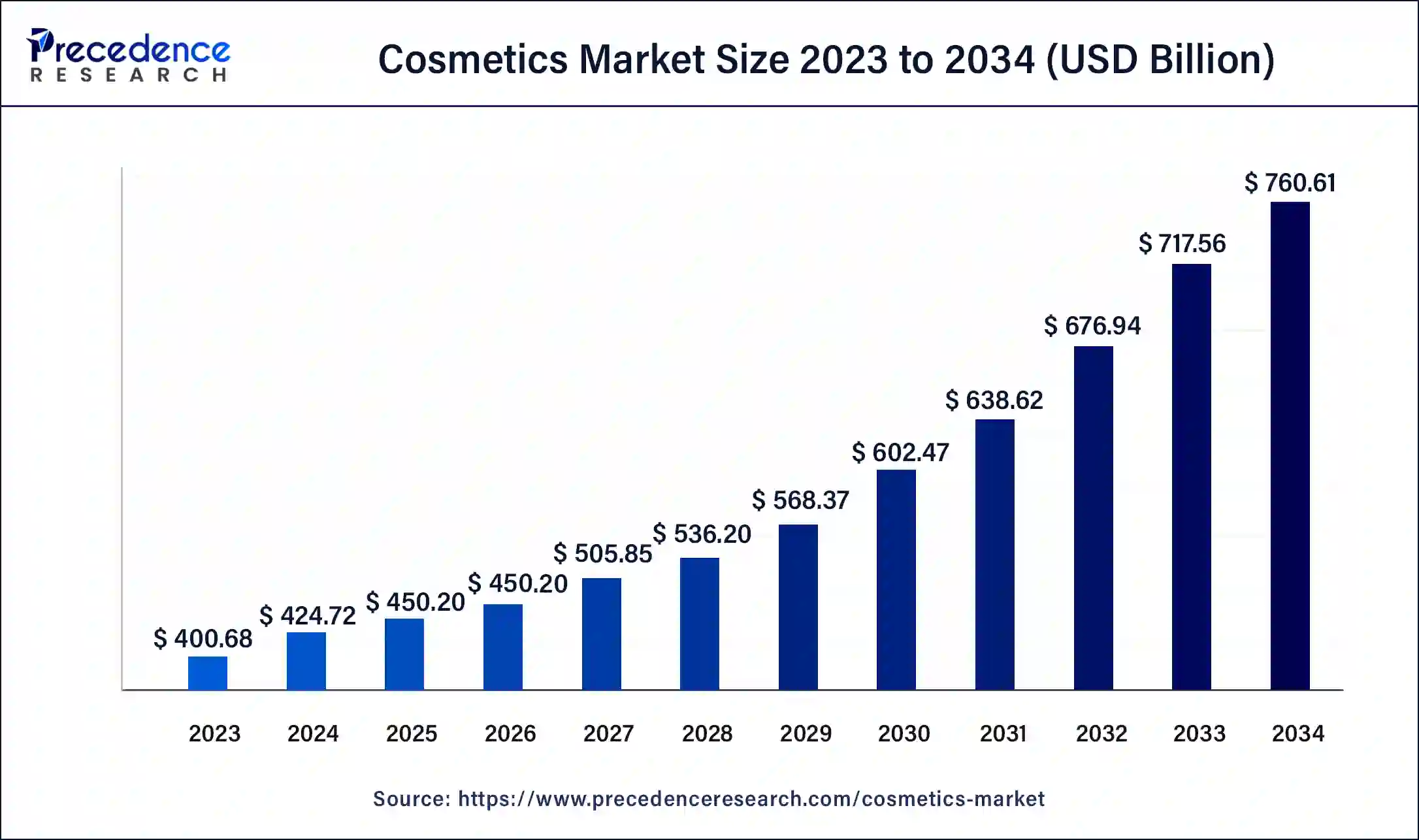
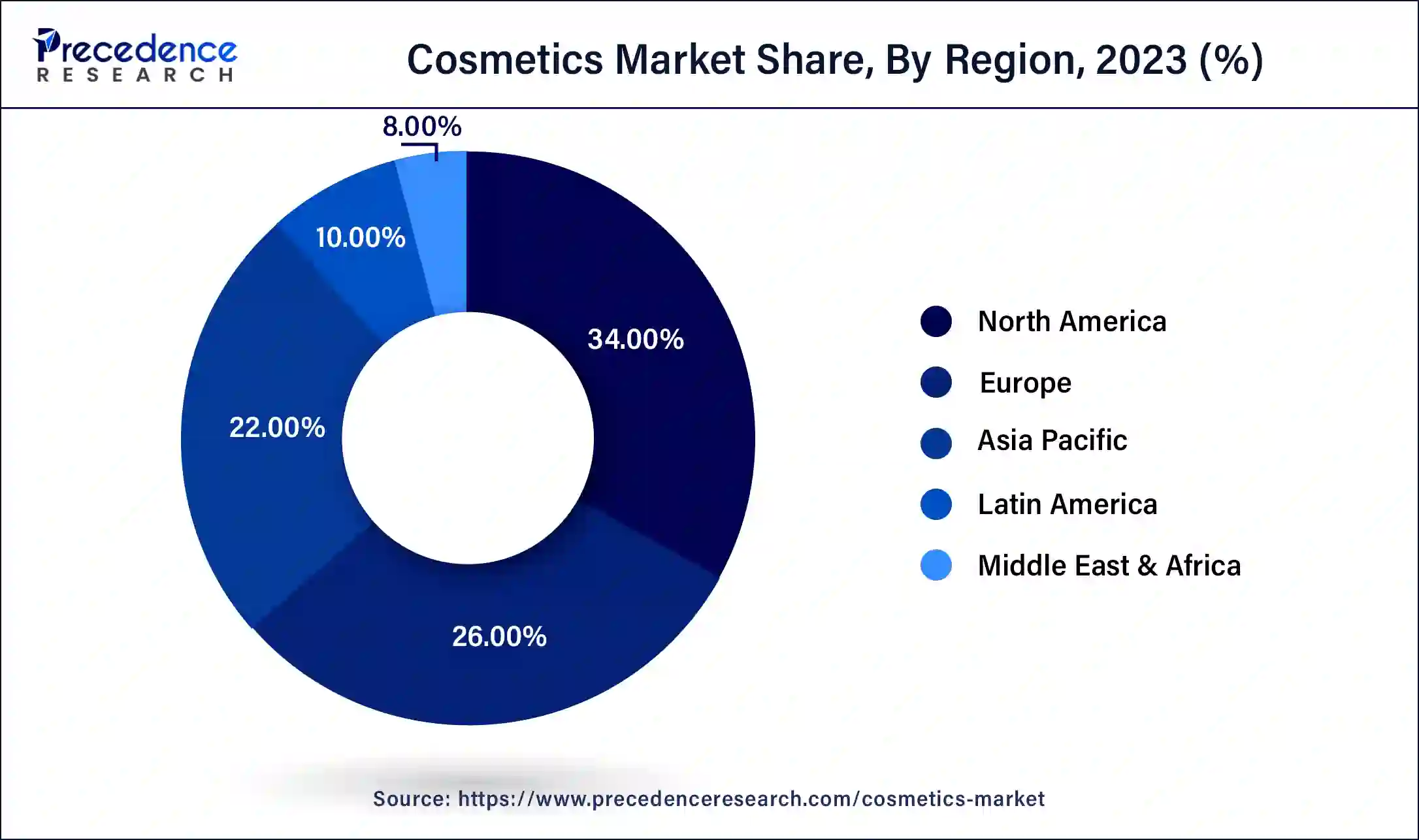
The global cosmetics market was valued at USD 424.72 billion in 2025 and is projected to reach USD 802.04 billion by 2035, growing at a CAGR of 6.56% from 2026 to 2035. Growth is driven by increasing demand for premium and natural beauty products, AI-powered personalization, sustainable cosmetics, and expanding e-commerce channels. North America accounted for the largest market share of 34% in 2025, highlighting strong consumer demand and spending on personal care products.
Source: https://www.precedenceresearch.com/cosmetics-market
 Get a Sample
 Table Of Content


What is Cosmetics Market Size?
The global cosmetics market size accounted for USD 424.72 billion in 2025 and is predicted to increase from USD 450.20 billion in 2026 to approximately USD 802.04 billion by 2035, at a CAGR of 6.56% from 2026 to 2035. Consumers become growingly conscious about the ingredients with rising demand for speciality cosmetic products such as organic and herbal products driving the market.
Market Highlights
- North America led the global market with the highest market share of 34% in 2025.
- By category, the skin & sun care products segment has held the largest market share in 2025.
- By gender, the women segment captured the biggest revenue share in 2025.
- By distribution channel, the hypermarkets/supermarket segment registered the maximum market share in 2025.
Market Overview
Cosmetics are substances or products used to improve or alter the appearance of the face or the fragrance and texture of the body. Cosmetics include various products, including skincare products, haircare products, and makeup products. Growing consciousness among individuals regarding personal appearance and well-being boosts market growth. Companies in the beauty industry are investing in more technologies than ever in an effort to keep their brand current and offer the best products possible to consumers.
How is AI Revolutionizing the Cosmetics Industry?
The cosmetic industry is undergoing a technological revolution, with AI driving significant advancements in product development, consumer experience, and market research. From personalized skincare routines to virtual makeup try-ons, AI is encouraging consumers with innovative tools and improving their overall satisfaction. Cosmetic companies, on the other hand, are using AI to formulate sustainable, market-driven products that meet consumer needs and expectations. As AI continues to evolve, there are more exciting transformations in the cosmetic industry.
Cosmetics Market Growth Factors
- There is rising awareness among people regarding premium cosmetic products and their beneficial impact on the skin. Thus, many people are using these products to look young and beautiful. Moreover, people are becoming increasingly concerned about various skincare issues such as dark circles, dull skin, wrinkles and pimples, which is driving the demand.
- Growing urbanization and growth of the middle class consumers in developed and developing regions have increased the adoption of convenience oriented lifestyle and made cosmetics more desirable for all age group customers, particularly amongst youngsters.
- Digitalization is another driving factor. Influencer marketing, social media platforms, virtual try-on tools, and AI-driven beauty recommendations have revolutionized the way consumers discover, evaluate, and purchase cosmetics.
Cosmetics Market Production, Manufacturing, and Investment Data
- Loreal, a globally leading cosmetics company estimated that the company's sales for year 2022 reached 38.26 billion Euros, the company has witnessed 28% increased e-commerce sales in 2022.
- The sales for overall premium/prestige beauty products in the United States boosted by 15%. Specifically, the sales for skincare increased by 12% in 2022 than 2021, the NPD Group stated.
- In 2022, the United States generated $49.2 billion sales in cosmetics.
- According to the report by Euromonitor, the high-end products will make 54% of the market in China by 2025.
- Puig, a Spanish beauty and fragrance brand stated that its annual revenue grew by 40% in 2022 to 3.620 billion Euros.
- According to the company, the sales for makeup products boosted by 52% as compared to 2021. In March 2023, the United States' exports for beauty products reached up to $607 million.
- In 2022, Amazon generated 23% of its total revenue from the beauty and personal care segment.
Cosmetics Market Trends
- Sustainable and natural cosmetics are evolving from a niche into a cosmetic trend. From biodegradable packaging to refillable solutions and vegan formulas, consumers are expecting beauty brands to back up their sustainability claims with real proof, such as certifications, transparency, and traceable sourcing.
- Cosmetic products that promote overall well-being, such as adaptogenic creams, CBD-infused serums, and aromatherapy mists, are boosting the market. These products address stress, sleep, and mental health.
- Consumers demand products adapted to their personal necessities, from a physiological perspective like skin type and specific skin conditions to an emotional and cultural point of view. This trend of personalization has been boosted by digitalization and data-driven tools.
- For instance, in June 2026, the French biotech startup introduced Byome Derma, a rapid diagnostic solution that enables cosmetic brands to offer personalized skincare recommendations based on consumers' skin microbiome profiles.
Market Scope
| Report Coverage | Details |
| Market Size in 2025 | USD 424.72 Billion |
| Market Size in 2026 | USD 450.20 Billion |
| Market Size by 2035 | USD 802.04 Billion |
| Growth Rate from 2026 to 2035 | CAGR of 6.56% |
| Largest Market | North America |
| Base Year | 2025 |
| Forecast Period | 2026 to 2035 |
| Segments Covered | Category, Gender, Distribution Channel, and region |
| Regional Scope | North America, APAC, Europe, Latin America, MEAN, Rest of the World |
Segment Insights
Category Insights
How Did Skin and Suncare Products Segment Dominate the Cosmetics Market in 2025?
The skin and sun care products segment dominated the market in 2025, driven by Stronger awareness of UV damage, dermatologist influence and a broader shift toward prevention-focused skincare. Brands are actively educating consumers through social media platforms, which has increased the use of sunscreen in skincare. In addition, there is growing demand for skincare products that also hydrate the skin and are suitable for sensitive complexions. Sophisticated consumers are demanding products that not only protect from the sun, but also from these indoor environments as well.
The hair products segment is expected to grow at the fastest rate during the forecast period. Due to increased awareness about personal hygiene, hair health, and style enhancement. Demand for natural and chemical-free options is steadily rising, boosting innovation across product categories. Hair care products include shampoo, conditioner, hair masks, styling products and hair color. The increased popularity of hair coloring and the rising trend of men adopting longer hair have contributed to an increase in the demand for hair repair products.
Gender Insights
Why Did the Women Segment Dominate the Cosmetics Market in 2025?
The women segment dominated the market in 2025 and is expected to grow at the fastest CAGR during the forecast period, driven by psychological, social, and physiological factors. Furthermore, growth in the young and female working population is further anticipated to boost market growth. The value of self-care in recent years has encouraged women to proactively create relaxing self-care experiences through complex skincare routines at home. The demand for organic and natural cosmetics is rising, as women increasingly prefer environmentally friendly and sustainable products over synthetic options.
Distribution Channel Insights
Which Distribution Channel Held the Largest Share of the Cosmetics Market in 2025?
Hypermarkets/supermarket segment held the largest share of the market in 2025, driven by the convenience of finding a wide range of products in one place. Supermarkets and hypermarkets serve as one-stop destinations for consumers to fulfill their daily needs, including cosmetics, while providing a diverse variety of brands and products under one roof. The big shelf space dedicated to cosmetics in these distribution channels allows for a diverse range of choices with different preferences and budgets.
The online sales channels segment is anticipated to grow at the fastest rate during the forecast period. Online shopping provides access to a wide variety of products and the ability to easily compare prices to access the most advantageous rates, making it really attractive for consumers. One of the benefits of e-commerce is the information that can be collected about consumers who have made a purchase. Platforms like Amazon, Tmall and Mercado Libre provide cosmetic brands with strong exposure, enabling them to reach both local and international consumers.
Regional Insights
North America Cosmetics Market Growth Driven by Rising Consumer Spending and Grooming Trends
North America market is a mature market and it includes countries such as U.S., Canada and Mexico. Increase in population and improved lifestyle are the major factors that boost the growth of the cosmetics market. Raising purchasing power in this region is the prime factor which contributes towards the growth of the cosmetics market. Moreover, raising awareness amongst men's regarding the personal grooming has further driven the sales of cosmetics products. Furthermore, unisex cosmetics products such as deodorants have become increasingly popular in this region owing to the associated benefits. This in turn further boosts the growth of the cosmetics market.
What is the Size of the U.S. Cosmetics Market?
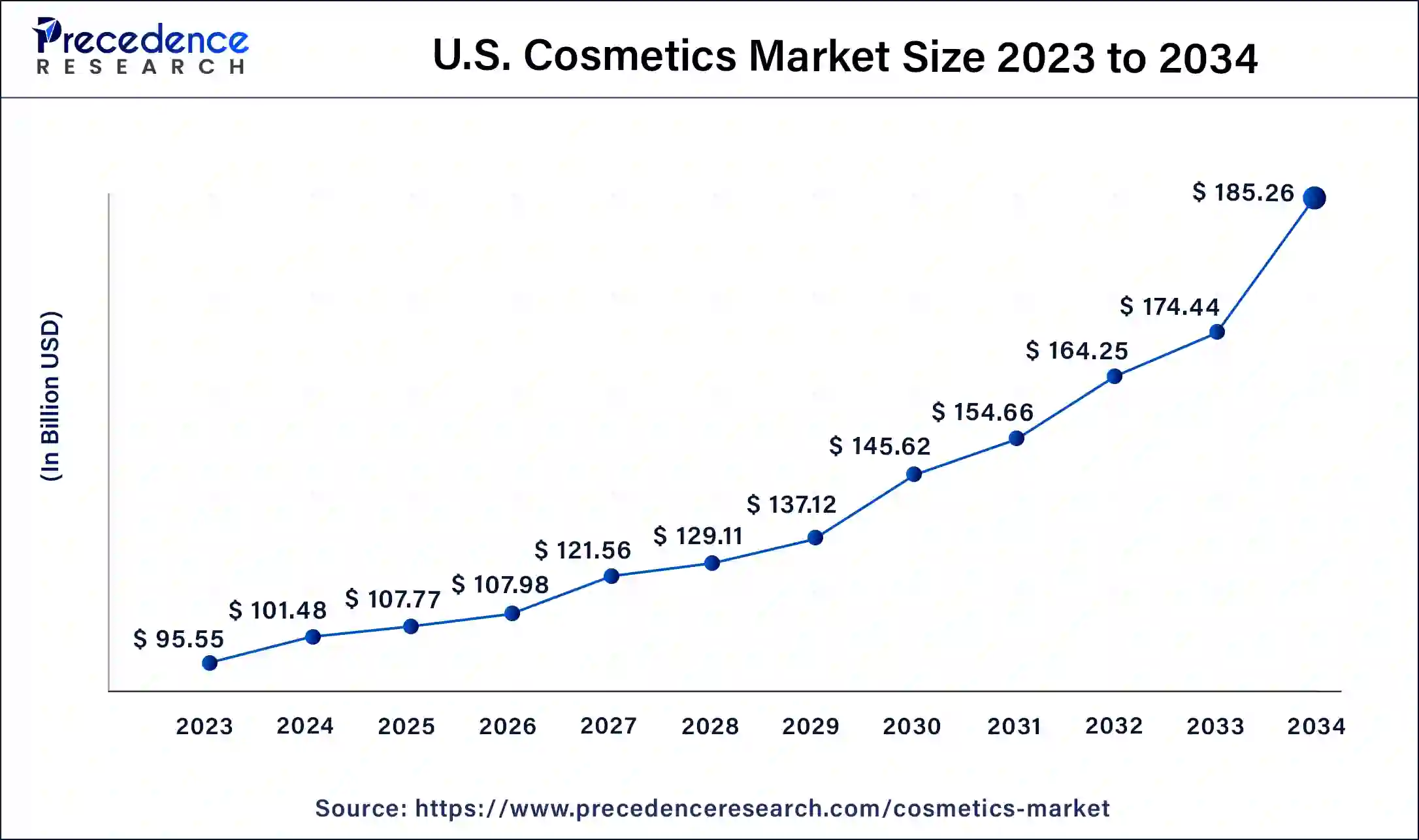
The U.S. cosmetics market size is estimated at USD 101.77 billion in 2025 and is predicted to be worth around USD 195.66 billion by 2035, at a CAGR of 6.76% from 2026 to 2035.
U.S. Cosmetics Market Trends
The U.S. cosmetics market is driven by a strong user shift toward "clean," sustainable, alongside multifunctional products which blend skincare with makeup. Consumers, mainly Gen Z and Millennials, are increasingly demanding products which are organic, vegan, cruelty-free, and packaged sustainably.
What Is Driving Growth in the European Cosmetics Market?
The European cosmetics market is expected to witness significant growth over the forecast period, due to the presence of innovation, sophistication among consumers, and a high cultural connection to fashion and beauty. The shopping experience is being transformed with the latest technological advancements, such as trying on virtual makeup. These tools enable consumers to make better buying decisions, which enhances interaction and improves sales of products. An increasing salon count, beauty schools, and fashion shows also contribute to product awareness and interaction with consumers.
Germany Cosmetics Market Trends
The German cosmetics market is driven by a strong shift toward natural and organic products, e.g., Weleda, Lavera, rising need for sustainable or refillable packaging, and thus, increased adoption of AI-driven, personalized, along with clinically backed skincare.
How Is Sustainability Shaping Consumer Choices in Asia Pacific?
The Asia-Pacific cosmetic market was valued at USD 88.15 billion in 2023 is expanding growth at a CAGR of 6% in the forecast period.
Asia Pacific held the largest market share in 2024. The consumers in the region are getting environmentally conscious, and the shift towards sustainable and natural beauty products is becoming serious. Green tea, rice, ginseng, aloe vera, and botanical extracts are some of the ingredients that the brands are using, and these ingredients are aligned with the holistic health practices and traditional remedies.
K-beauty (Korean) and J-beauty (Japanese) have transformed the whole cosmetics industry in the global market, where simplicity of skin care regimes, well-being, and discoveries are the ultimate priority. Among the key factors of sale are online shopping and social networks backed by influencer marketing and e-campaigns targeted at technology-savvy customers.
- In August 2024, Kay Beauty, a beauty brand based in India, launched a new range of lipsticks, Kay Beauty Hydra Crème Lipstick. As per the brand, 16 new shades are made with hyaluronic acid and lychee extract.
China Cosmetics Market Trends
Cina's market is driven by digital-first strategies such as livestreaming or AI, a shift toward sustainable, eco-friendly packaging, along with high need for functional, ingredient-focused skincare. Domestic brands, like Proya, Florasis, and Judydoll, leverage cultural identity, as well as high-quality, local ingredients, and rapid innovation.
Growing Consumer Preference for Premium and Natural Products Fueling the Latin America Cosmetics Market
Latin America shows a notable growth during the forecast period. It is driven by rising disposable incomes, heightened health consciousness, as well as sustainability. Consumers are prioritizing clean, eco-friendly, together with ethical brands, while social media, urbanization, and the "no-makeup" trend fuel need for high-quality, specialized, and multifunctional beauty items.
Brazil Market Trends
Brazil's booming cosmetics industry is witnessing a surge in demand for natural and sustainable cosmetic products. This market is driven by increasing demand for skin, hair, hygiene, fragrance, and grooming products. Brazilians spend more on beauty and personal care items than Americans do, $230 per person per year, resulting in a total market value of $43 billion. This growth is largely attributed to Brazil's large and emerging middle class, which consists of individuals earning between $10,000 and $24,000 annually.
Rising Beauty Consciousness and E-Commerce Growth Boosting the MEA Cosmetics Market
MEA shows a rapid growth during the forecast period. It is driven mainly by a surge in beauty consciousness and even rapid e-commerce expansion. This, combined with a young demographic, growing disposable incomes, along with a cultural emphasis on self-care, makes the region a global beauty hotspot. Users are shifting from merely now covering skin concerns with makeup to investing in long-term skin health, thus, resulting in increase in the skincare segment.
UAE Market Trends
The cosmetics sector in the UAE is thriving. Driven by a digitally connected population, strong purchasing power, and a growing demand for premium skincare, cosmetics, and fragrances, the country has become one of the region's most dynamic beauty markets. Across the UAE, consumers are becoming more knowledgeable about skincare ingredients such as niacinamide, retinol, peptides, vitamin C, and hyaluronic acid. Artificial intelligence is also reshaping the beauty industry by helping brands deliver highly personalized customer experiences.
Trade Analysis of Cosmetics Market
- In 2024, France emerged as the leading exporter of beauty products, with exports valued at $12.3 billion, followed by South Korea at $8.8 billion and the United States at $6.41 billion.
- The principal importers of beauty products during the same year were China with $8.42 billion, the United States with $7.31 billion, and Hong Kong with $3.49 billion.
- Additionally, France, South Korea, and Italy reported the largest trade surpluses in beauty products, amounting to $9.85 billion, $7.89 billion, and $2.15 billion, respectively.
- The most traded by-products within the beauty product category at the HS6 level in 2024 included beauty, makeup, and suntan preparations not elsewhere classified with totaling $52.8 billion, lip make-up preparations with $5.58 billion, and eye make-up preparations with $5.01 billion.
Competitive Landscape
The competitive landscape of the cosmetics market is evolving, driven by the rising consumer focus on skincare and wellness. Additionally, there is a rising trend towards sustainability and clean beauty, influencing industry dynamics and promoting a shift in consumer buying behavior. Key players are investing in research and development to innovate and differentiate their product lines. The cosmetic industry is highly competitive, with major players like L'Oreal, Unilever, and Estee Lauder boosting the market. Key players in the market are employing various strategies to strengthen their positions amidst intense competition.
Cosmetics Market Companies
- L'Oreal S.A.: L'Oreal S.A. is a global leader in the cosmetics market, providing a comprehensive portfolio of products across skincare, fragrances, makeup, haircare, and hair coloring.
- Oriflame Cosmetics S.A.: Oriflame Cosmetics S.A. offers a broad range of Swedish-inspired, nature-conscious beauty products, which includes skincare, color cosmetics, fragrances, and personal care. Their portfolio impacts science-backed formulations with natural ingredients and also high-quality, sustainable, ethical, and safe, usually using EU Safety Standards.
- Revlon, Inc.: Revlon, Inc. specializes in color cosmetics, skincare, fragrances, hair color, and beauty tools. Their major offerings include long-lasting foundations, lipsticks,eyeliners, and nail products.
- Shiseido Company Limited: Shiseido Company, Limited provides a comprehensive portfolio of high-end, prestige skincare, makeup, fragrances, and suncare products globally.
Other Major Key Players
- Avon Products Inc.
- Kao Corporation
- Skin Food Co., Ltd.
- The Estee Lauder Companies Inc.
- The Procter & Gamble Company
- Unilever Plc.
Recent Developments
- In July 2026, cosmetic giant Kao announced the launch of est Genoluxe Cream, scheduled for September 4. This skincare product is designed to optimize skin condition at the genetic level by forming a specialized, artificial skin-like film infused with beauty ingredients.
- In July 2026, SEIWA KASEI introduced Protesil™ JLH, a hybrid polymer that integrates the hair care advantages of plant protein, the smooth texture of silicone, and the hydrophobic properties of alkyl groups.
- In June 2026, Korean beauty and skincare startup KorinMi secured ₹10 crore from Lotus Herbals' innovation fund to support the expansion of its clinics and accelerate the growth of its direct-to-consumer skincare business in India. The acquired funding will facilitate entry into major urban centers including Mumbai, Bengaluru, and Hyderabad, while further enhancing its portfolio of Korean-made skincare products tailored for Indian consumers.
- In January 2024, BOLD (Business Opportunities for L'Oreal Development), L'Oreal Group's venture capital fund, announced an investment in Timeline, a consumer health company focused on aging and longevity, which has a range of topical skincare products and supplements that use its proprietary technology, Mitopure. With the recent funding, the company hoped to enable further growth in beauty, food, and health.
(Source: https://www.cosmeticsdesign-europe.com) - In July 2024, the U.S. skincare brand Curology launched its non-prescription skincare products at CVS Pharmacy, a U.S.-based retail company. Per the company, the skincare product will be offered at CVS Pharmacy's 3,800 stores nationwide and on its site, CVS.com.
(Source: https://www.prnewswire.com) - In December 2023, Estée Lauder established a partnership with the Stanford Center and made a three-year commitment to fund the latter's new Program on Aesthetics & Culture, which will fund research projects - including 'New Map of Life' post-doctoral fellowships, and other initiatives investigating understandings of longevity and vitality - for a more explicit understanding of perceptions on aging and vitality.
Segment Covered in the Report
By Category
- Skin & sun care products
- Hair care products
- Deodorants & fragrances
- Makeup & color cosmetics'
By Gender
- Men
- Women
- Unisex
By Distribution Channel
- Hypermarkets/Supermarkets
- Specialty Stores
- Pharmacies
- Online Sales Channels
- Other
By Region
- North America
- Europe
- Asia-Pacific
- Latin America
- Middle East & Africa
For inquiries regarding discounts, bulk purchases, or customization requests, please contact us at sales@precedenceresearch.com
Frequently Asked Questions
Tags





Ask For Sample
No cookie-cutter, only authentic analysis – take the 1st step to become a Precedence Research client
 Get a Sample




 sales@precedenceresearch.com
 Schedule a Meeting
