



Anti-Aging Cosmetics Market Size, Key Companies, Company Market Share, Sales Volume, Consumer Demand, Pricing Trends, Distribution Performance, Competitive Positioning, and Growth Forecast
Vidyesh Swar, a Consumer Goods Industry Expert, finds that the anti-aging cosmetics market has reached USD 63.71 billion in 2026 and is projected to reach USD 106.98 billion by 2035, growing at a CAGR of 5.93%. Leading XXX market brands and companies such as Shiseido, Unilever, L’Oreal Paris, Revlon are competing across high-demand segments including By Product, By End User, By Distribution Channel, By Regional.
Source: https://www.precedenceresearch.com/anti-aging-cosmetics-market
 Get a Sample
 Table Of Content


What is the Anti-Aging Cosmetics Market Size?
The global anti-aging cosmetics market size is calculated at USD 60.11 billion in 2025 and is predicted to increase from USD 63.71 billion in 2026 to approximately USD 106.98 billion by 2035, expanding at a CAGR of 5.93% from 2026 to 2035. The anti-ageing cosmetics market is driven by growing disposable incomes, high beauty awareness among the population and rising demand for clinically tested ingredients in anti ageing cosmetic products.
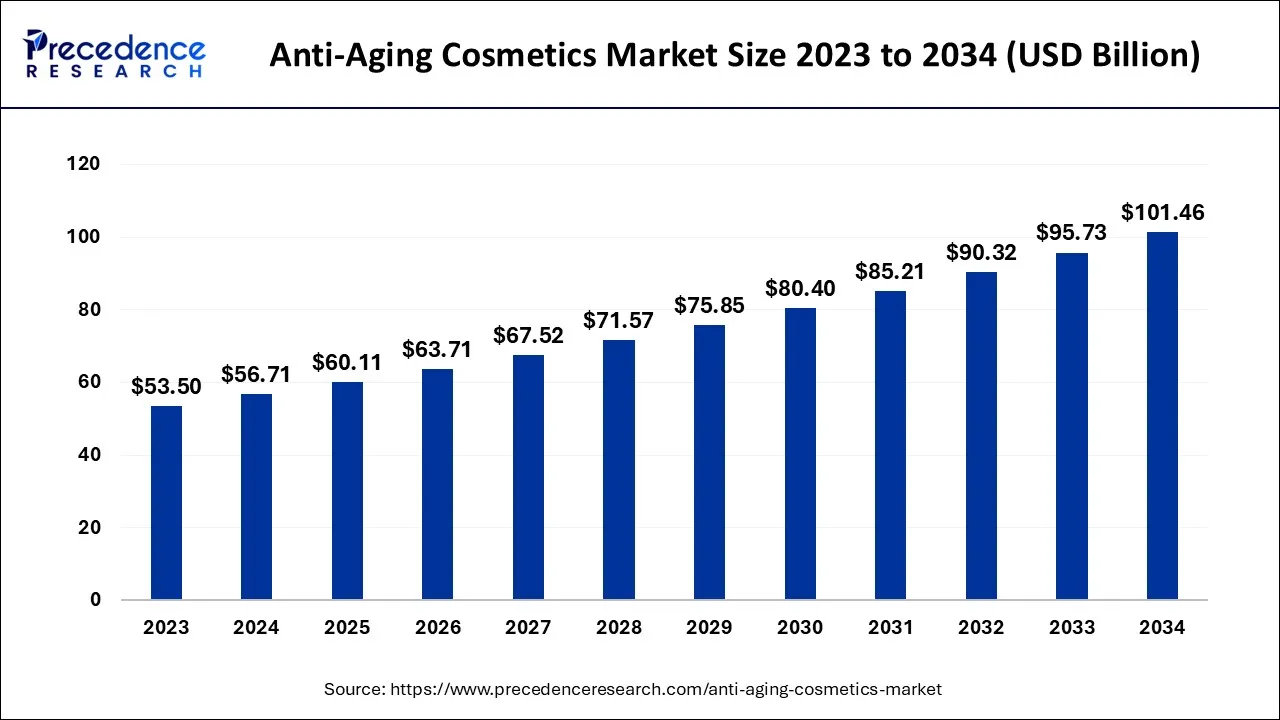
Anti-Aging Cosmetics Market Key Takeaways
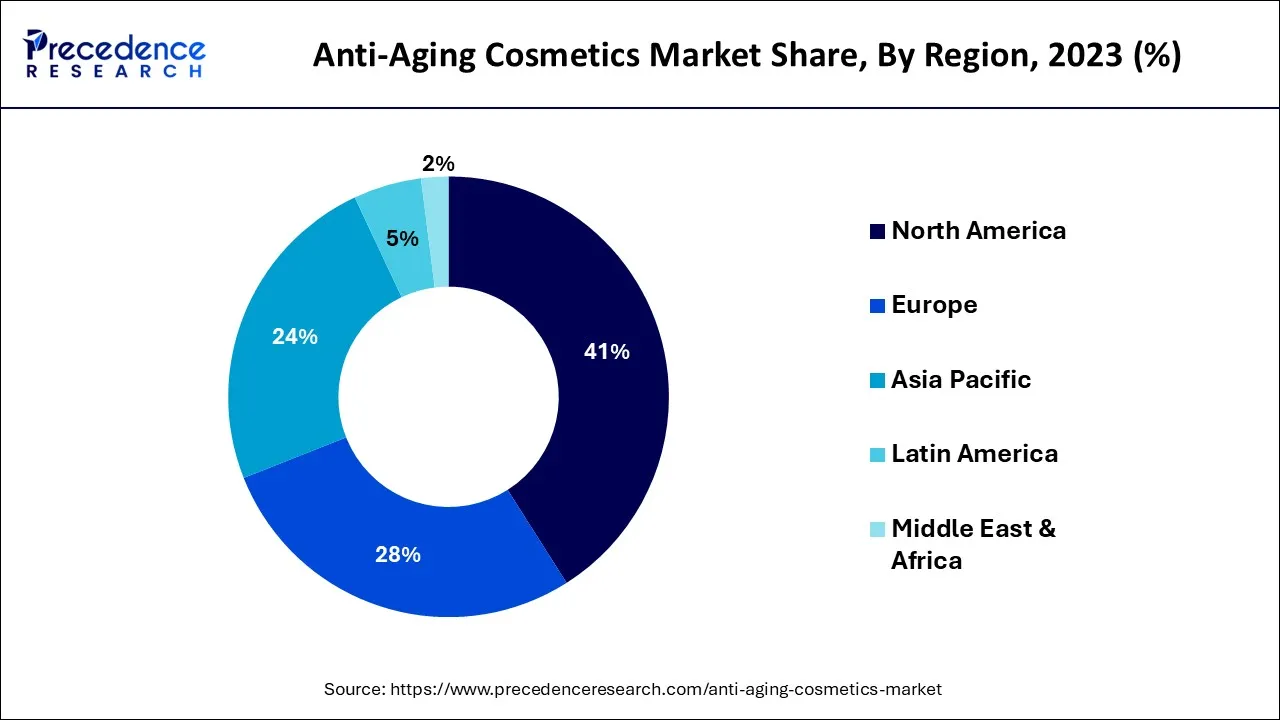
- By Region, North America had the largest market share 41% in terms of size in 2025. The Asia-Pacific and Europe emerge as the largest market in the anti-aging cosmetics market in the anticipated timeframe.
- By Product, the facial cream and lotion segment has held 52% revenue share in 2025. Additionally, eye creams and lotions emerge as a significant segment in the anti-aging cosmetics market.
- By Distribution Channel, hypermarket and supermarket segments hold the largest market share of 47% in 2025. Specialty stores are expected to increase their market share in the forecast period. However, the online store's segment showed significant growth in the anticipated period.
What are Anti-Aging Cosmetics?
Anti-aging cosmetics products are generally used the preventing aging signs on the skin. Skin aging is a natural process, and it cannot be stopped what we can do is to slow down the aging of the skin or prevent the sign of aging. The anti-aging cosmetics are used to prevent the skin from dullness, preventing wrinkles, redness, and poor texture of the skin. Anti-aging products are injectables it can be found in the form of cream, lotion, serum, vitamin tablets, oil, etc. These products are designed for preventing the effects of aging. The global anti-aging cosmetics market revolves around the production and distribution of cosmetics products that claim to hide the appearance of skin aging and to minimize the process of skin aging with multiple chemical balances of the skin.
All skin types need different types of aging treatment according to their need and aging symptoms. Increasing awareness among the population towards their skin and the appearance of how they look is significantly increasing the anti-aging cosmetics market.
- A prominent cosmetic brand based in New York, United States, Estee Lauder's has estimated its annual sales revenue for the forecast year-end of 31 March 2023 is $3.751Bn.
- Procter & Gamble had the largest quarterly organic sales over the 13 years. The financial year of 2023 revenue was $67.7Bn with an increase of 1% to the previous year.
- Beiersdorf, the maker of Nivea disclosed its organic sales are 2.48Bn Euros ($2.71Bn) in the first quarter of the FY and it is increase by 2.22 Bn to the prior year.
- L'OREAL is the globally leading beauty market that deals with several beauty products all over the world. The annual sales revenue of the company in 2022 is 38.26 Bn Euros.
Anti-Aging Cosmetics Market Growth Factors
The global cosmetics industry is growing rapidly owing to the rising demand for cosmetics and personal care products, subsequently promoting the growth of the anti-aging cosmetics market. The rising interest in beauty standards will significantly increase the market rapidly. The anti-aging cosmetics market is one of the leading segments in the cosmetics market. The rising awareness among people both men and women of their skin and appearance to others will end up in an increase in the demand for the anti-aging cosmetics market. The increasing disposable income and consumer interest in cosmetics will rise the market demand of the anti-aging cosmetics market.
The rising aged population in the world will also be one of the factors which will positively affect market demand. The increase in the beauty standards of society and self-consciousness among people all over the world will result in higher sales in the cosmetics industry, especially the anti-aging cosmetics market.
Anti-aging cosmetics include facial creams, lotions, serums, hair care products, etc. The ever-increasing demand for these products for the skincare routine among people will anticipate the rise in the anti-aging cosmetics market. Due to the rise in the demand for the market, the manufacturers established various manufacturing units all over the world. The anti-aging cosmetics market was highly competitive in nature due to the various brands that come to the market.
The increasing population among the countries like India, China, the United States, and Canada is having a large amount of aged population, and their need for a youthful and attractive appearance in society will result in the need for anti-aging cosmetics and these will anticipate the growth in the demand of the anti-aging cosmetics market in these regions.
How is AI contributing to the Anti-Aging Cosmetics Industry?
AI gives its users skin that is not only the healthiest but also the youngest through the digital skin analysis, product recommendations based on big data, progress tracking, and experiencing the effect of the product virtually. The main factors that AI assesses are: the user's face, lifestyle, and the environment in which the user stays.
All these are done to suggest the best routine, pick the right ingredients, and even change the regimen as per the user's skin response. Finally, all these lead to better consumer engagement, satisfaction, and informed purchasing decisions.
Market Outlook
- Industry Growth Overview: The increase in the non-surgical, technology-based skincare demand leads to the constant growth of the anti-aging products that already exist and to the extension of the line.
- Sustainability Trends: Natural ingredients, cruelty-free production, and eco-friendly packaging are the factors that more and more often determine consumers' choice, and the latter is simply the effect of the former alive in the market.
- Global Expansion: Asia-Pacific and North America are the main areas where the demand is being created through the promotion of luxury products, and the digitalization of the beauty industry, along with the growth of skincare awareness.
- Major Investors: The investments made by strategic partners such as L'Oreal, Estée Lauder Companies, Unilever, and Shiseido Co., Ltd. are a good way to boost the innovation pipelines.
- Startup Ecosystem: The new brands are relying on the use of technology, personalized products, and new ingredients to fulfill the needs of the niche anti-aging consumers.
Anti-Aging Cosmetics Market Trends
- Consumers are seeking scientifically validated and dermatologically approved anti-ageing products. The demand is growing for products incorporated with anti-ageing ingredients such as collagen, peptides and retinol.
- Younger populations are incorporating anti-ageing solutions in their early twenties to delay ageing. This also increases demand and supports market expansion.
- The growing e commerce and online beauty platforms are providing wider accessibility of anti-ageing products across international brands.
- The men's skincare segment is also gaining popularity. This encourages manufacturers to develop men's-oriented products which are easy to use and can be integrated into daily routine.
- The growing social media influence and smart marketing campaigns further enable wider adoption of anti aging cosmetic products.
Market Scope
| Report Coverage | Details |
| Market Size in 2025 | USD 60.11 Billion |
| Market Size in 2026 | USD 63.71 Billion |
| Market Size by 2035 | USD 106.98 Billion |
| Growth Rate from 2026 to 2035 | CAGR of 5.93% |
| Largest Market | North America |
| Fastest Growing Market | Asia Pacific |
| Base Year | 2025 |
| Forecast Period | 2026 to 2035 |
| Segments Covered | Product, End User, Distribution Channel, and Region |
| Regions Covered | North America, Europe, Asia-Pacific, Latin America and Middle East & Africa |
Market Dynamics
Drivers
The increasing aged population in the world would drive the anti-aging cosmetics market
The anti-aging cosmetics market is one of the largest market segments of the cosmetics industry. The increasing population in the world would result in a higher demand for the cosmetics market. The increasing geriatric population in the world and rising consumption of anti-aging products like anti-aging facial creams, serums, hair care products, and skincare products would result in higher demand in the anti-aging cosmetics market. Skin aging is caused due to two main factors one is the natural aging process. And the other one is changing environmental conditions are the main cause of early signs of skin aging.
Skin aging leads to several factors such as pigmentation, sensitivity, collagen degradation, skin infection, and problems caused to the younger skin due to pollution. All these factors lead to a higher demand for the anti-aging cosmetics products market. The growing self-consciousness for the appearance of the people especially in urban areas of the country. This would result in higher revenue sales for the anti-aging cosmetic market.
Restraints
The production of low quality products due to higher demand
As the increasing demand for the anti-aging cosmetics market worldwide due to the rise in the geriatric population and changing environmental conditions, the market demand continues to rise rapidly. To meet the rising consumer demand for anti-aging cosmetics, many manufacturers are coming up with low quality products in the market. Such products are often available at the lower prices and chosen widely by consumers. Such products may lead to a serious skin infection, which can restrain the growth of the market by limiting the development of key players.
Opportunities
Rising demand for bio-based anti-aging cosmetics products
Biobased cosmetics are often called organic cosmetics. It is purely made up of bio-based natural products which do not cause any harm to the skin and is purely made up of plants and its 100% cruelty-free properties made it more attractive to consumers. The shifting preferences from fossil-based products to bio-based products will gain more market opportunities in the anti-aging cosmetics market. While consumer preferences towards green products many manufacturers shifting to more bio-based cosmetics products to meet the customers' demand and stay competitive in the market. Additionally, the support of the government regularities for sustainable and bio-based cosmetics products creates a greater marketplace for manufacturers in the future. Hence biobased anti-aging cosmetics would become a great market opportunity for the future demand of the anti- aging cosmetics market.
Segment Insights
Product Insights
In the product segment, the skincare market had the largest market share in 2023. In skincare products, there are various subcategories are including which are facial creams and lotions, facial serums, eye creams, body lotions, etc. Each product has its own significance and properties. Facial creams and lotion are useful for reducing aging signs on the skin such as wrinkles, pigmentation, etc. The growing concern about the skin is owing to the higher market demand for the anti-aging cosmetics market.
Eye cream is also one of the leading-selling products in the anti-aging cosmetics market. The eye cream leads to the treatment of under-eye sensitivity in older age people. It also can be useful for under-eye puffiness due to stress, dark circles, and age lines.
The haircare segment is expected to boost at a noticeable rate in the predicted timeframe. The segment increases due to the rise in baldness among the old and younger age population due to aging and stressful lifestyle.
Distribution Channel Insights
Supermarkets and hypermarkets are one of the leading distribution channels of the anti-aging cosmetics market. Supermarkets and hypermarkets hold a wide range of the brands and products under one roof, which makes it a very convenient option for the consumers to buy or choose their favorite brands and products under one roof. Supermarkets and hypermarkets have attractive discounts on the product which will attract consumers.
The online segment of the distribution channel is expected to grow at a significant rate due to the growing interest in online retailing. It is the most convenient and easy form of distribution channel which can deliver the desired products over the doorstep. Hence the popularity of the online market is increasing rapidly.
The specialty stores had a significant market share in the anti-aging cosmetics market in 2023. The specialty store offers only a certain type of specific brand or product to the consumers. It is the best place for the consumer who is searching for a specific brand or product. The rising demand for a luxurious range of cosmetics products across the globe, especially in economically well-settled countries will boost the growth of the specialty stores segment.
End User Insights
Why has the Women's Segment dominated the Anti-Aging Cosmetics Market?
The women's segment held a dominant position in the anti-ageing cosmetics market in 2025, due to higher daily beauty awareness and greater acceptance. Demand is increasing as young populations are taking early care for healthy ageing by incorporating collagen, retinol, and hyaluronic acid based products from their twenties. This increases the sales of creams, serums and sunscreens. Consumers prefer scientifically validated and dermatologically tested anti ageing products. The rapidly growing online beauty platforms are further supporting wider adoption of anti aging cosmetics products.
The men's segment is expected to grow at the fastest CAGR during the studied period in the anti-ageing cosmetics market due to rising awareness of personal grooming and skincare. Male consumers are seeking products that reduce wrinkles, improve skin hydration and maintain healthy looking skin. Social media influence is encouraging male consumers to adopt skincare in their daily routine to boost confidence and feel good. The growing demand for https://www.precedenceresearch.com/anti-aging-marketanti-ageing products for men is gaining popularity among the men's segment. The growing disposable incomes and expanding e commerce platforms further support the market growth.
Regional Insights
North America Dominated the global Anti-Aging Cosmetics Market
North America dominated the global anti-aging cosmetics market in 2025, the region is expected to maintain its dominance during the forecast period. The North American market will continue its dominance with the increasing demand for cosmetic products in the United States and Canada. The rising interest in societal appearances and self-consciousness would result in the increasing interest in buying skin care products by consumers. The presence of major key players in the region is expected to contribute to the growth of the market during the forecast period.
What is the U.S. Anti-Aging Cosmetics Market Size?
The United States represents the largest share of the anti-ageing cosmetics market in North America. The growth is driven by the rising focus on investments in the cosmetics and personal care industry. The region benefits from high spending on premium skincare and strong product innovations in anti ageing sectors. The strong demand for retinol, peptides and hyaluronic acid formulations is propelling the growth of the market. The well established e commerce businesses and direct to consumer brands are expanding the availability of skincare products and driving market growth.
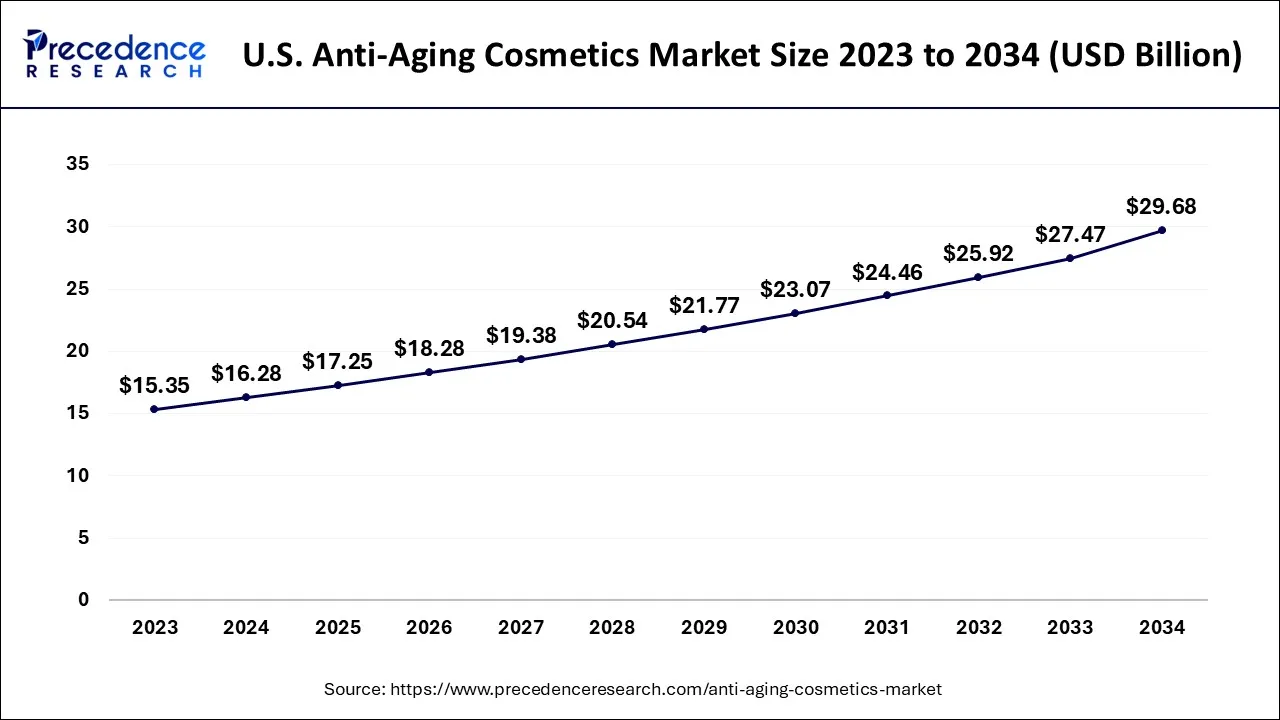
The U.S. anti-aging cosmetics market size is exhibited at USD 17.25 billion in 2025 and is projected to be worth around USD 31.45 billion by 2035, growing at a CAGR of 6.19% from 2026 to 2035.
Europe shows significant market growth over the anticipated timeframe. The European market is considered a major marketplace for the fashion and cosmetics industry. The growing interest in skincare routines and healthy skin will rise up the market over the forecast period. In addition, the willingness of European population to spend on premium and luxury cosmetics has forced manufacturers/key players to develop advanced products in the region, this highlights the growth of the market during the forecast period.
Germany Market Trends
Germany leads the European anti-ageing cosmetics market in 2025 due to early adoption of anti aging skincare in daily routine. Social media influence and growing e commerce platforms are widely encouraging adoption of anti aging cosmetics. The demand is strong for collagen, retinol and peptide based cosmetics, which support skin texture and delay ageing and wrinkles. The country has strict European Union cosmetics regulations for product safety. Consumers prefer clinically tested and dermatologically approved anti aging products.
Asia Pacific is another fastest growing region for the anti-aging cosmetics market. The rising regional population among countries like China and India will be expected to boost the demand for the anti-aging cosmetics market. In the Asia-Pacific region, the higher investment in the cosmetics industries will be one of the market-expanding factors which will give traction to the anti-aging cosmetics market in these regions.
The product development in the region along with the presence of prominent key players and enormous demand for cosmetic products in the region are fueling the growth of the market. For Instance, in November 2022, Amway India one of the leading FMCG direct-selling companies announced the repositioning of its skincare brand artistry. The new launch consists of the renewing and firming solution sets. The products are made up of plant-based botanicals from Nutralite farms and a paraben-free, and vegan skincare product line.
China Market Trends
China accounts for the largest share of the anti-ageing cosmetics market in Asia-Pacific in 2025. The growth is driven by high disposable incomes and growing interest in science based skincare products. China has abundant traditional botanical ingredients based ancient formulations for beauty needs. The domestic skincare market dominates the region due to rich culture and Chinese medicine. It also competes with international brands by offering affordable products. The demand is growing from women and young populations who are seeking preventive skincare routines.
What are the Advancements in the Market in Latin America?
Latin America held a considerable share of the anti-ageing cosmetics market in 2025, supported by rising health awareness, increasing disposable incomes, and strong demand for anti aging beauty products with natural ingredients. The country experiences rising demand for collagen, retinol and hyaluronic acid based formulations that improve skin health. Brazil and Mexico are leading regional markets in the region. The influence of social media and active campaigns from beauty brands, influencers and popular figures further encourages adoption of anti-ageing cosmetics as preventive care across the region.
Brazil Market Trends
Brazil accounts for the largest share of the Latin American anti-ageing cosmetics market in 2025, due to its globally recognized beauty industry and strong consumer focus on personal care. The demand for collagen peptides and anti-ageing cosmetics is continuously rising. The local manufacturers are expanding their product portfolio by integrating natural and sustainably sourced ingredients. The expanding e commerce platforms and pharmacy chains have improved product availability, which further supports the market growth across Brazil.
What are the Key Trends in the Market in the Middle East and Africa Region?
The Middle East & Africa held a notable share of the anti-ageing cosmetics market in 2025 as consumers are increasingly adopting preventive wellness and spending on premium anti aging cosmetics. Demand is growing from a younger population due to interest in preventive skincare and science-backed formulations. Online retail and pharmacies are improving product availability, while international brand collaboration continues to strengthen their regional position, which further contributes to the market growth.
Saudi Arabia Market Trends
Saudi Arabia represents the leading market within the Middle East and Africa anti-ageing cosmetics market in 2025, supported by a younger population, high beauty consciousness, and rising disposable incomes. Consumers are demanding anti aging solutions such as collagen infused skincare and natural ingredients based beauty products, which boosts the market growth. The rapid growth in e commerce, modern retail infrastructure and demand for premium products are creating favourable conditions for sustained market growth in the country.
Anti-Aging Cosmetics Market-Value Chain Analysis
- Product Conceptualization and Design: Concept through research-led development of new formulations, which not only address the problem of aging but also guarantee product differentiation and competitive positioning.
Key Players: L'Oréal, Estée Lauder, Procter & Gamble - Raw Material Procurement: Procurement of the best active ingredients as well as packaging materials at a reasonable price while supplier reliability is maintained.
Key Players: BASF, Ashland, Gattefossé - Manufacturing and Assembly: The process of turning the raw materials into finished cosmetic goods is done under strict controls to ensure the desired quality, consistency, and the ability to mass-produce.
Key Players: Intercos, Cosmetica Laboratories - Branding and Packaging: Constructing the brand identity through proper marketing methods and eco-friendly, attractive packaging designs.
Key Players: Albéa, Aptar Group - Retail Distribution (Online/Offline): Making the products available quickly and easily by using the internet and shops, thus covering a wide range of potential buyers.
Key players: Sephora, Ulta Beauty, Amazon, Walmart
Competitive Landscape
The anti-ageing cosmetics market is highly competitive, with global beauty brands and pharmaceutical companies competing through innovation, performance, scientific validation, and product quality. The leading companies in the market include L'Oréal, Estée Lauder, Shiseido Company, The Procter and Gamble Company, Beiersdorf AG, Oriflame Holdings AG, Revlon, Inc. and Unilever PLC. Companies are expanding their product portfolio by introducing collagen peptides, biotin, and hyaluronic acid extracts that improve skin health. Strategic partnerships, product launches, acquisitions, and investments in clinical research are strengthening market position.
To achieve sustainable growth in the anti-ageing cosmetics market, companies should prioritise clinically tested formulations and clean label ingredients. Companies can invest in digital marketing, influencer collaborations, and expanding into emerging markets to increase global reach.
Top Companies in the Anti-Aging Cosmetics Market and Their Offerings
- L'Oréal - A France based one of the world's largest beauty companies and leading in anti-ageing skincare products.
- Key offerings - Lancome Absolute, Revitalift, CeraVe Anti-ageing, La Roche-Posay Hyalu B5 and SkinCeuticals.
- The Estée Lauder Companies - A United States based company offering premium skincare and luxury anti-ageing products.
- Key offerings - Advanced Night Repair, Revitalizing Supreme+, La Prairie, Re Nutriv, Clinique Smart Clinical Repair
- Procter & Gamble (P&G) - A United States based company offering anti ageing solutions with scientific validations.
- Key offerings - Olay - Regenerist Micro Sculpting Cream and Retinol 24 peptide powered formula.
- Shiseido - A Japan based one of the oldest cosmetic companies combines Japanese skincare traditions with advanced dermatology skin technology.
- Key offerings - Shiseido, Vital Perfection, Benefiance, Bio Performance Skincare, Ultimune Power Infusing Concentrate.
- Beiersdorf - A Germany based company focused on skin health and anti ageing benefits
- Key offerings - Nivea Q10, Eucerin Hyaluron Filler, NIVEA Cellular Expert Lift and La Prairie.
- Unilever - A United Kingdom based company offers affordable and effective anti ageing solutions
- Key offerings - Dermalogica skincare solutions, Pond's Age Miracle, Dove Pro Age and Vaseline Pro Retinol products.
Anti-Aging Cosmetics Market Companies
- Estee Lauder Inc.: Provides an extensive range of prestige anti-aging skincare, which is clinic-based formulated and is seen in the flagship and dermatologist-recommended beauty brands.
- Procter & Gamble: Within a diversified consumer portfolio, anti-aging skincare is offered, and the mass-market outreach and brand trust are the main contributors.
- Beiersdorf Limited: Through a few worldwide recognized skin health emphasizing brands, the company provides science-supported anti-aging treatments.
Other Major Key Players
- pmdbeauty.com & Age Sciences Inc.
- Shiseido
- Unilever
- L'Oreal Paris
- Revlon
- Oriflame Cosmetics
- Avon Products, Inc.
Recent Development
- In July 2026, L'Oréal Paris launched a new formulation designed for visible dark skin spot correction and to improve skin texture and smooth wrinkles. The Revitalift Melasyl Dark Spot Creamy Serum is a clinically tested product that resulted in significantly enhancing overall skin appearance.
- In March 2026, Cetaphil, a Swiss dermatology company, launched a new Healthy Renew Skincare range in India. The new range is designed as a gentle yet high performance alternative to retinol based anti ageing treatments. The new product line uses purified botanical glycopeptides and edelweiss extract to improve skin firmness without irritation.
- In June 2025, Japanese cosmetics giant Shiseido is enhancing its ULTIMUNE serum to lead the anti-ageing market, claiming it can decelerate skin ageing. The beauty industry is evolving, particularly due to Gen Z and Millennials prioritizing well-being and the belief that healthy ageing stems from a balanced lifestyle.
(Source: www.cosmeticsdesign-asia.com - In March 2025, Chemyunion introduces Peptid4 B-Like, a sustainable tetrapeptide for wrinkle reduction. It meets the demand for effective, non-invasive skincare, providing superior results and affordability while adhering to Green Chemistry principles.
(Source: www.cosmeticsandtoiletries.com - In April 2023, Shiseido launched the new ultimate eye powder infusing eye concentrate. Shiseido is known for its excellent anti-aging products and announced this product recently with the same purpose. Ultimate Eye Power Infusing Eye Concentrate contains heart leaf extract, ImuGeneration red technology, and Jujuba fruit extract.
- In Sept 2022, NutriGlow announced the launch of its limited edition anti-aging skincare range, the product will be useful for all skin types for a healthy glow and minimize the signs of the early aging. It is an organic product line that is designed to integrate with the morning-to-night skincare routine. The product is made up of Vitamin C and Hyaluronic Acid for the consumer to fight aging signs like dark spots, hyperpigmentation, and uneven skin tone.
- In Sept 2022, Silab announced the launch of new product ‘Senevisium'. It is the natural active ingredient found in Ginkgo biloba and had the capacity of eliminating the senescent fibroblasts from the immune system. Which is the major reason for the aging process. Its acts traversal the dermis and epidermis for anti-aging actions and create rapid radiance effects.
- In 2023, Peak Bloom Fountain of Youth Launched its product line of anti-aging cosmetics. The product line targets the major reasons for early skin aging.
Segments Covered in the Report:
By Product
- Facial Cream & Lotion
- Facial Mas
- Facial Serum
- Body Wash
- Body Moisturizer
- Eye Cream & Lotion
- Facial Cleanser
- Hair Care
By End User
- Men's
- Womens
By Distribution Channel
- Hypermarket & Supermarket
- Pharmacy & Drug Stores
- Specialty Store
- Online
- Others
By Geography
- North America
- Europe
- Asia-Pacific
- Latin America
- Middle East and Africa
For inquiries regarding discounts, bulk purchases, or customization requests, please contact us at sales@precedenceresearch.com
Frequently Asked Questions





Ask For Sample
No cookie-cutter, only authentic analysis – take the 1st step to become a Precedence Research client
 Get a Sample




 sales@precedenceresearch.com
 Schedule a Meeting
