



Bubble Tea Market Trends, Leading Companies, Company Revenue / Sales Performance, Consumer Preferences, Product Innovation, Distribution Performance, Competitive Landscape, and Industry Outlook
Bubble Tea Market (By Product: Black Tea, Green Tea, Oolong Tea, White Tea; By Component: Liquid, Flavor, Creamer, Sweetener, Others;) - Global Industry Analysis, Size, Trends, Leading Companies, Regional Outlook, and Forecast 2025 to 2034
Source: https://www.precedenceresearch.com/bubble-tea-market
 Get a Sample
 Table Of Content


What is the Bubble Tea Market Size?
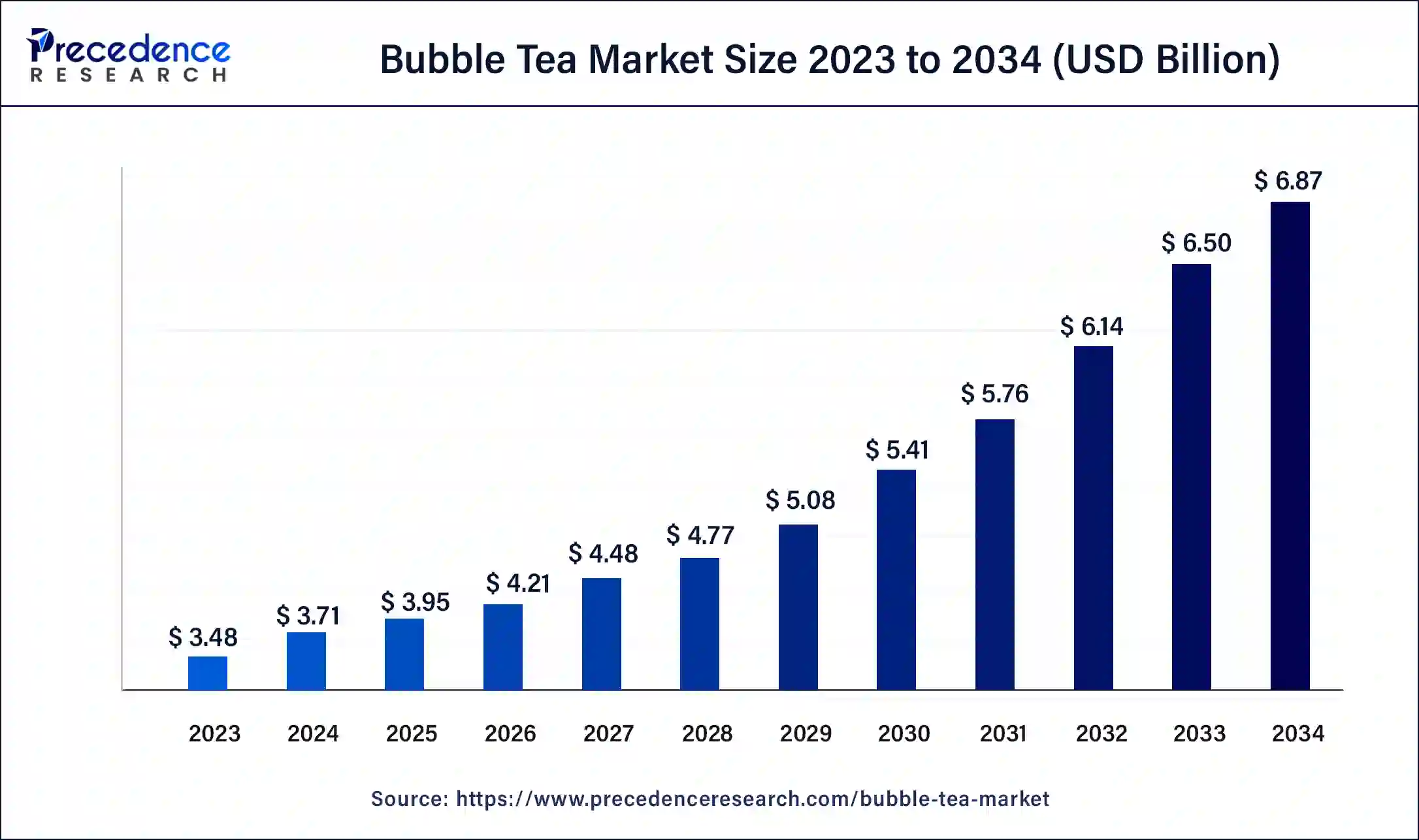
The global bubble tea market size accounted for USD 3.95 billion in 2025, and is calculated to worth around USD 4.21 billion in 2026 and is predicted to reach around USD 6.87 billion by 2034, growing at a CAGR of 6.36% from 2026 to 2034. The global bubble tea market is driven by rising consumer interest in innovative beverages, expanding café culture, social media influence, and increasing availability of customizable bubble tea products.
Market Highlights
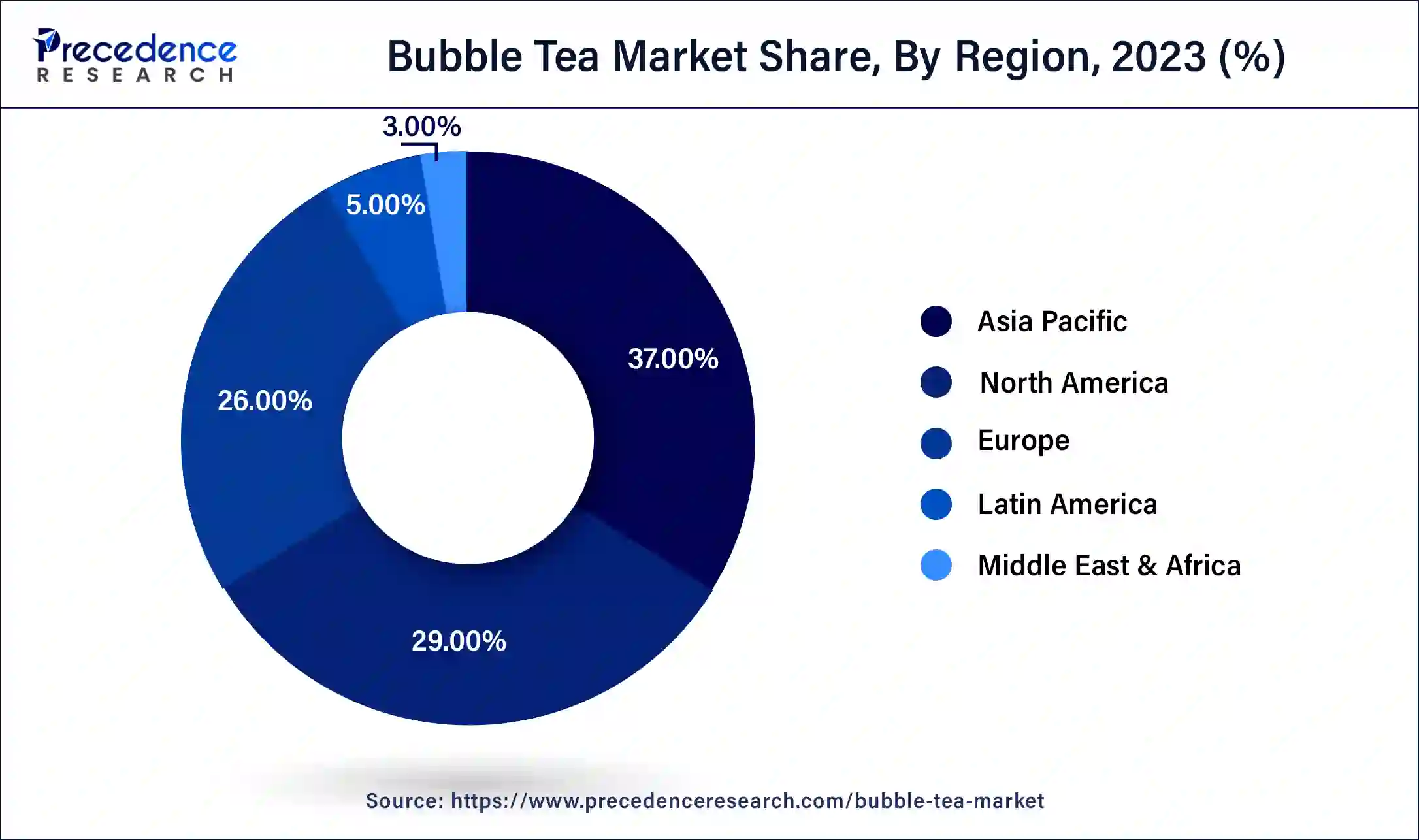
- Asia Pacific holds the majority of share of over 37% in 2025.
- North America is holds as the second-largest market.
- By product, the black tea segment captured more than 47% of revenue share in 2025.
- By product, the green tea segment is expected to record remarkable growth between 2026 and 2034.
- By component, the flavor segment is expected to expand at a CAGR of 8.5% from 2026 to 2034.
Market Size and Forecast
- Market Size in 2025: USD 3.95 Billion
- Market Size in 2026: USD 4.21 Billion
- Forecasted Market Size by 2034: USD 6.87 Billion
- CAGR (2025-2034): 6.36%
- Largest Market in 2024: Asia Pacific
- Fastest Growing Market: North America
Bubble Tea Market Overview
Invented in Taiwan in the late 90s, bubble tea is a cold and frothy drink generally made with cold milk with tapioca pearls known as ‘Boba'. Bubble tea has marked its significance in the food and beverage industry with its unique taste and wide range of flavors. Bubble tea consists of tea, milk, ice, and various flavors.
The presence of tapioca pearls in bubble tea has grown its popularity in recent years, especially among the young generation. Tapioca pearls, the main ingredient of bubble tea, are made of tapioca starch which is derived from cassava. These tapioca pearls are then sweetened with honey and brown sugar to make them soft and chewy. The increased sales of bubble tea are attributed to the proven health benefits of bubble tea. The pairing of sweet and sour tastes with the presence of refreshing tea has developed the popularity of bubble tea across the globe in a brief span.
Bubble Tea Market Growth Factors
The global bubble tea market is expected to witness a significant shift during the forecast period owing to the increasing popularity of fancy drinks in urban areas across the globe. Considering the rising health concerns, consumers are turning away from carbonated and alcoholic beverages to drinks made with natural ingredients; this factor is expected to boost the popularity of bubble tea across the globe. Changing preferences of beverage consumption and easy availability of bubble tea across restaurants and coffee shops are fueling the growth of the bubble tea market.
The rapidly growing adoption of cross-continental food and beverages in many countries is another factor boosting the market's growth. Moreover, the rising adoption of healthy beverages and the availability of a wide range of flavors in bubble tea are promoting the development of the global bubble tea market. However, factors such as the availability of cheap alternatives of beverages in the market and the presence of added sugar in bubble tea are likely to hinder the growth of the bubble tea market.
Future Trends in Bubble Tea Market
- Healthier Options: Consumers will increasingly seek low-sugar, low-calorie, dairy-free and healthy bubble tea options, prompting manufacturers to turn to natural sweeteners, plant-based dairy products, fresh fruit, and nutrient-dense ingredients.
- High-End Flavors: Bubble tea brands will expand their premium offering with exotic fruits, unique teas, artisanal ingredients, and unusual flavors. This trend will make products differ from others and attract adventurous consumers.
- Eco-Friendly Packaging: Increased environmental awareness will lead to the growing demand for biodegradable cups and paper straws. This way bubble tea chains will start paying more attention to eco-friendly packaging as a way to reduce plastic waste and improve their image.
- Digital Ordering: Mobile apps, online ordering, delivery services, customer loyalty programs, and digital payments will gain even more importance. Technology will allow making customized promotions, quick
Market Outlook for the Bubble Tea Market
- Industry Growth Overview: In recent years, bubble tea has transitioned from being a niche beverage in Asia to gaining global prominence as a mainstream product. Available in customizable sweetness, together with various tea bases, milk substitutes, toppings, seasonal flavors, and appealing visuals, the product attracts and retains the attention of young customers.
- Global Expansion: The international expansion of bubble tea is progressing through franchising, delivery platforms, café culture, and consumer interest in Asian beverages. In order to meet local tastes, bubble tea manufacturers are already modifying their menus and making them suitable for the customers in India, Southeast Asia, the Middle East, Europe, and other countries.
- Sustainability Trends: Being heavily reliant on single-use cups, lids, straws, and packaging, the bubble tea industry is rapidly recognizing the importance of sustainability. The companies are working on biodegradable materials, reusable cups, and eco-friendly packaging so as to minimize waste and enhance their sustainability.
- Startup Ecosystem: Startups in the bubble tea sector are utilizing innovative techniques in order to broaden their effect. In particular, innovation is embraced in functional functional boba, health-oriented products, etc.
Bubble Tea Market Scope
| Report Coverage | Details |
| Market Size in 2025 | USD 3.95 Billion |
| Market Size in 2026 | USD 4.21 Billion |
| Market Size by 2034 | USD 6.87 Billion |
| Market Growth Rate from 2026 to 2034 | CAGR of 6.36% |
| Dominating Region | Asia Pacific |
| Fastest Growing Region | North America |
| Base Year | 2025 |
| Forecast Period | 2026 to 2034 |
| Segments Covered | Product, Component, and Region |
| Regions Covered | North America, Europe, Asia-Pacific, Latin America, and Middle East & Africa |
Market Dynamics
Drivers
Proven health benefits of bubble tea
Variants in bubble tea, such as black and green tea, are ideal for supporting the immune system and reducing inflammation. Green bubble tea is high in flavonoids, boosting heart health by lowering blood cholesterol. Oolong is another prominent base ingredient used in the crafting of bubble tea; oolong contains theanine which can improve cognitive functioning by reducing anxiety.
Although the added excess sugar and preservatives in bubble tea may be harmful to human health, bubble tea is proven healthy when consumed with the right ingredients. While the population is turning down carbonated and alcoholic beverages, these proven health benefits of bubble tea are posed to drive the growth of the global bubble tea market by increasing consumption.
Restraint
Presence of artificial preservatives and other harmful ingredients in bubble tea
In order to extend the profit opportunities, multiple operators add preservatives to the tapioca pearls or boba. Such preservatives are proven hazardous to human health. Along with this, added sugar, sweeteners and colors to the boba tea are linked to several harmful and adverse effects on human health.
The Foundation of Consumer, Thailand recently tasted 25 different brands of bubble tea, and it was found that some of the brands have added 19 teaspoons of sugar to each serving of bubble tea. Apart from the sugar content, the researchers have found the presence of heavy metals and preservatives along with sorbic and benzoic acids in the beverage.
These harmful ingredients are linked to heart diseases, diabetes and obesity. As the majority of the population is shifting to a healthy lifestyle, the presence of such hazardous ingredients in bubble or boba tea is observed to act as a restraining factor for the market's growth.
Opportunity
Increasing the crafting of ready-to-drink bubble tea
Traditionally, bubble or boba tea is made by blending all ingredients and adding tapioca pearls with other toppings in it. With the advancements and innovations in the market, consumers deserve to experience a simple and quick bubble tea. Here, crafting ready-to-drink bubble tea can offer lucrative opportunities to the market players. Ready-to-drink bubble tea is easy to consume and provided in bottles, which makes them travel-friendly.
The rising preferences for on-the-way or pick-up beverages demand ready-to-drink bubble tea to enhance convenience for consumers. For instance, in April 2022, a New York-based startup company that focuses on crafting Asian-inspired food and beverages, BubLuv Inc, announced the launch of its highly anticipated BubLuv Bubble Tea.
BubLuv Bubble Tea is the first ready-to-drink with no added sugar or preservatives. The company has stated that the drinks are now available in three exciting flavors at their official online store-Matcha Soy Latte, Passionfruit Oolong Guava and Black Milk Tea.
Segments Insights
Product Insights
The black tea segment dominates the market generating more than 47% of the revenue share in 2023. Black tea as a base ingredient was authentically used in Taiwan for bubble or boba tea; the rising preferences for authenticity in food and beverages have boosted the growth of the black tea segment. Moreover, black tea contains polyphenols, which act as antioxidants for the body by reducing bad cholesterol. Such proven health benefits have grown the demand for black tea as a base ingredient in the global bubble tea market.
At the same time, the green tea segment is expected to witness significant growth due to growing awareness about the unmatched health benefits of green tea across the globe. Green tea also offers a subtle variant in the flavor of bubble tea by adding a nutty and earthy taste to the beverage.
Component Insights
The flavor segment is expected to witness growth at a CAGR of 8.5% during the forecast period. With its unique appearance, packaging and tapioca pearls in bubble tea, the flavor component has grabbed consumer attention; operators usually prefer adding flavored syrups, powders and purees or fresh fruits in bubble tea to enhance its taste. Fruit flavors added to bubble tea offer the beverage a sweet, sour and exciting taste. With the improvement in the beverage, the market players have started adding advanced flavors the bubble tea, such as a flavored latte or Japanese matcha flavor in the bubble tea.
The sweetener remains an attractive segment in the global bubble tea market during the forecast period. Sweetener is added to the bubble tea in order to enhance its flavor by skipping the actual sugar. Some sweeteners even add viscosity and texture to bubble tea. As consumers are becoming more alert about their calorie intake, adding sweeteners can significantly replace sugar.
Regional Insights
Asia Pacific Bubble Tea Market Size and Growth 2025 to 2034
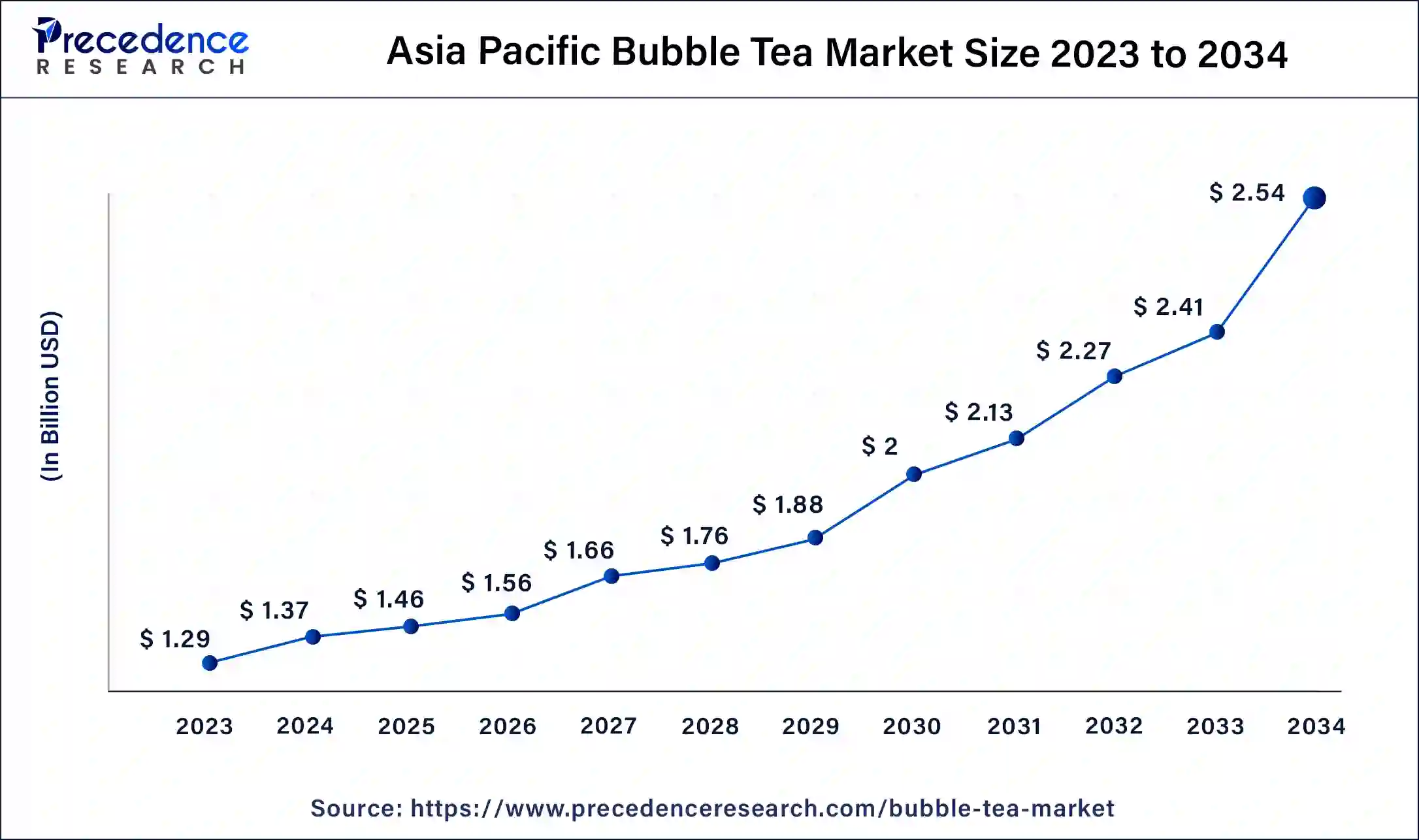
The Asia Pacific bubble tea market size was valued at USD 1.46 billion in 2025 and is expected to be worth around USD 2.54 billion by 2034, at a CAGR of 6.36% from 2025 to 2034.
Asia Pacific holds the largest share of over 37% in 2024. Bubble tea originated in Taiwan, and the major consumer base for bubble tea in the country has fueled the market growth in Asia Pacific. Indonesia and Thailand are the largest markets in Southeast Asia for bubble tea. Being the third largest market for bubble tea in Southeast Asia, Vietnam remains an attractive market during the forecast period.
At the same time, the market in Singapore shows a significant increase due to rising spending power in the country. Enough room for small and large-scale players in the region with the availability of low-cost raw materials is another supportive factor for the growth of the bubble tea market in the Asia Pacific.
China Bubble Tea Market Trends
China ranks among the United States as one of the biggest and most advanced markets for bubble tea in the world. A tough local tea-drinking market, large distribution networks, regular launch of drinks, and popularity with young people make China a relevant country in terms of bubble tea advancement.
The presence of major key players in the region has contributed to the growth of the bubble tea market in Asia Pacific. Gong Cha, Chatime, Bubble Tea House Company, Coco Fresh, CuppoTee company and teatime are a few of the significant players headquartered in Asia Pacific.
North America Bubble Tea Market Trends
North America is emerging as the second-largest bubble tea market due to the younger generation's increased consumption of caffeinated beverages. The rapid adoption of new food and beverage products by North America's food and beverage industry has supported the emergence of various Asian-based food and beverages. The growing popularity of Asia-based food and beverages in North America is expected to boost the growth of the bubble tea market during the forecast period.
U.S. Bubble Tea Market Trends
The U.S. is the most prominent country in North America, thanks to the appeal of the Gen Z and millennial demographics, the rapid pace of boba shop expansion, and the influence of Asian cuisine, along with preferences for customized flavoring, toppings, sweetness, and innovative drink applications.
Europe Bubble Tea Market Trends
European continent is seeing remarkable bubble tea adoption due to the café culture and more demand from younger consumers looking for unique customizable drinks.Major cities are paving way for many bubble tea stores, with fruits flavor and the variety of beverages attracting other customers as well.
United Kingdom Bubble Tea Market Trends
UK is a strong market in the continent and London is the key city for bubble tea sellers and Asian beverage brands. The popularity of bubble tea drinks is being amplified due to huge Gen Z and millennial market, diverse population, and the existing café culture.
Latin America Bubble Tea Market Trends
The comparatively lower tea consumption in Latin America creates an obstacle to the bubble tea market's development. Similarly, the bubble tea market in the Middle East and Africa shows steady growth. However, the changing food consumption trend due to globalization is expected to show a shift in the bubble tea market in Latin America, the Middle East and Africa.
Brazil Bubble Tea Market Trends
Brazil takes the lead in Latin America due to its immense middle class, a well-developed beverage culture, growing food-service sector, and increase interest in Asian consumer products. A trend toward more interesting and vibrant drinks makes bubble tea an attractive option for young consumers, especially millennials and café-goers.
Middle East & Africa Bubble Tea Market Trends
Middle East and Africa is considered to be a developing bubble tea market where international companies are opening stores and getting know-how of Asian cuisine. Urbanization, youth-centered café culture, social media influence, and demand for new products are allowing the bubble tea brands to enter the market.
Saudi Arabia Bubble Tea Market Trends
Saudi Arabia is among prominent markets in the region thanks to its young consumer population, developing café culture, mall traffic, and growing interest toward new natural food and drinks.
Competitive Landscape
The bubble tea market can be termed both competitive and fragmented as established brands compete against small-scale operators and regional players. Low barriers of entry in the industry aid the emergence of new outlets, while their branding and location continue to be major competitive factors.
Some of the prominent market players include bubble tea brand, bubble tea brand, Gong cha, and Koi Thé, with their menu diversification, superior branding, and presence across the world sustaining their businesses. Niche brands rely on quality ingredients and localized flavors.
Manufacturers are being increasingly involved in franchising, geographical expansion, menu innovation, digital ordering, loyalty programs, and strategic alliances.
Barriers to entry for new companies in the market include the costs of branding, outlet locations, supply chain management, compliance with food safety standards, and large number of competitors operating at the local level. Future competition in the industry is expected to be based on product differentiation, healthier formulations, sustainability, and emergence of new markets.
Bubble Tea Market Companies
- Chatime Group
- Gong Cha
- Yummy Towns Holdings Corporationis
- K.O.I The Co. Ltd
- Bobabox Ltd.
- T Bun International
- Troika J C
- Fokus Inc
- Lollicup USA Inc.
- The Bubble Tea Company
- Ten Ren's Tea Time
- Bubble Tea House Company
- Cuppotee
Recent Developments
- In January 2023, originally from Taiwan, a leading global bubble tea market company, Gong Cha achieved a new milestone by expanding its store line in Portugal. The company made its debut in Europe in 2019, and this store will be its first store in Portugal. According to the company's declaration, the store in Portugal will be managed by franchise Amelle Morisot.
- In September 2022, an international bubble tea operator company, Gong Cha, announced the opening of its first outlet at the Merrion Centre, Yorkshire. The operator has 1,500 outlets across the world. The Merrion Centre is planning to expand its choice of Chinese food and beverages with this new opening. Gong Cha in Yorkshire aims to offer a minimum of 20 jobs with this new outlet.
- In April 2022, Del Monte Foods launched the ‘Joyba' new bubbly beverage brand; Del Monte has partnered with New York-based brand design agency CBX in order to ensure the launch's success. Joyba aims to offer multiple flavors of bubble tea, including coffee, strawberry, cherry and lemonade.
Segments Covered in the Report
By Product
- Black Tea
- Green Tea
- Oolong Tea
- White Tea
By Component
- Liquid
- Flavor
- Creamer
- Sweetener
- Others
By Region
- North America
- Europe
- Asia-Pacific
- Latin America
- The Middle East and Africa
For inquiries regarding discounts, bulk purchases, or customization requests, please contact us at sales@precedenceresearch.com
Frequently Asked Questions
Tags





Ask For Sample
No cookie-cutter, only authentic analysis – take the 1st step to become a Precedence Research client
 Get a Sample




 sales@precedenceresearch.com
 Schedule a Meeting
