



Cheese Market Size, Production Volume, Consumption Trends, Pricing Analysis, Export & Import Dynamics, Market Share, and Demand Forecast
The global cheese market is witnessing steady growth, driven by rising demand for convenience foods, premium dairy products, and the growing popularity of Western cuisine worldwide. Advancements in cheese processing, packaging, cold-chain logistics, and AI-powered manufacturing are improving product quality and operational efficiency. The increasing availability of specialty, organic, clean-label, and plant-based cheese, along with expanding retail and foodservice networks, continues to create new growth opportunities. The market is projected to grow from USD 173.79 billion in 2025 to USD 233.23 billion by 2035, registering a CAGR of 2.99% during the forecast period.
Source: https://www.precedenceresearch.com/cheese-market
 Get a Sample
 Table Of Content


Why is the Global Cheese Market Expected to Reach USD 233.23 Billion by 2035?
The global cheese market size accounted for USD 173.79 billion in 2025, and is projected to hit around USD 179.00 billion by 2026, and is anticipated to reach around USD 233.23 billion by 2035, growing at a CAGR of 2.99% from 2026 to 2035. Technological advancements, increasing impact of Western foods, buyer capacity expansion of dairy items, and high consumer demand supported by dairy corporations drive the market.
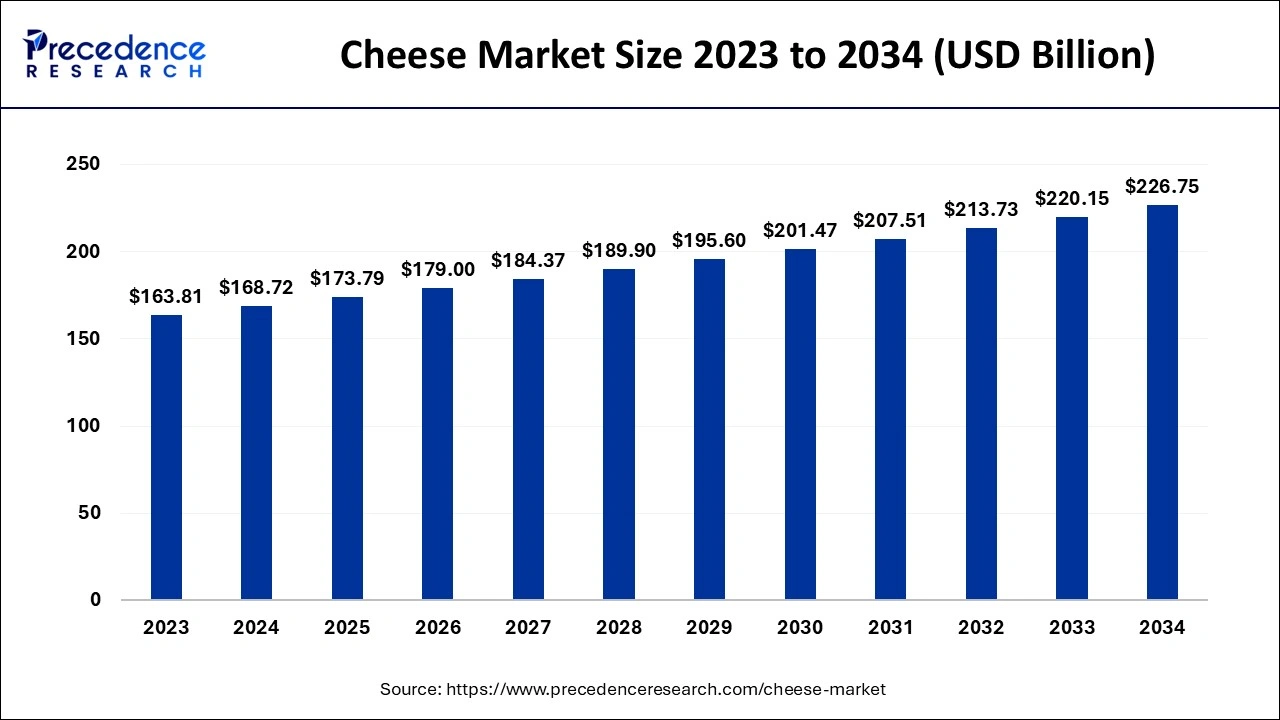
Market Highlights
- Europe contributed more than 38% of market share in 2025.
- North America is expected to grow at the fastest CAGR in the upcoming years.
- By type, the processed segment would exhibit the highest CAGR of 3.2% during 2026 to 2035.
- By type, the cheese powder segment is expected to grow at the fastest CAGR in the upcoming years.
- By product, roquefort segment expected to exhibit CAGR of 4% during 2026 to 2035.
- By product, feta segment is experiencing the fastest growth in the market during the forecast period.
- By distribution channel, others segment would exhibit the highest CAGR of 4% during 2026 to 2035.
- By distribution channel, food service segment is expected to experience the fastest growth in the market during the forecast period.
- By application, the bakery and confectionery segment accounted for a considerable revenue share in the market in 2025.
- By application, the ready meals segment is expected to grow at the fastest CAGR of XX% in the market between 2026 and 2035.
- By source, the animal segment led the global market with a share in 2025.
- By source, the plant segment is expected to gain the highest market share with a CAGR between 2026 and 2035.
Market Overview
The cheese market is vital in the global dairy industry, adapting to food trends, innovation, and diversified applications. Manufacturers focus on specialty, lower-fat, lactose-free, organic, and plant-based cheeses to meet food contact safety compliance. The rising focus on sustainability, responsible sourcing, and value-added dairy products helps brands strengthen their market position amongst global competition.
Market evolution is driven by demand for premium dairy and awareness of protein-rich foods, where cheese is utilized in processed foods, snacks, bakery items, ready meals, and cuisines. The emerging trends are advances in processing, packaging, and logistics that boost quality, shelf life, and market reach. Additionally, the rise of modern retail, online grocery, and foodservice enhances accessibility to cheese.
AI in the Cheese Market
Artificial intelligence is a big help in cheese making by taking over some manual jobs and thus making the whole process more efficient. The use of AI in cheese processing includes managing curd cutting and packaging, and quality checks through the use of sensors and computer vision. The use of predictive analytics helps improve the yield by studying the production variables, cutting down on waste, and guiding the development of the flavor according to consumer preferences. Marketing strategies developed through AI involvement led to increased sales interaction, while logistics are improved by more accurate demand forecasting and better inventory control. To sum up, the cheese industry is greatly benefiting from AI incorporation in terms of productivity, quality, innovation, and quick responses to market changes.
Cheese Market Growth Factors
- Rising Demand for Convenience Foods: the adoption of the cold cuts cheese as an ingredient in easy meals for the increasing preference of quick, ready-to-eat meals is the main reason for the cheese consumption.
- Changing Lifestyles and Urbanization: the hectic life and the increasing number of people living in cities have made cheese a necessary food product for consumers, and hence the rise in cheese consumption.
- Influence of Western Cuisines: the growing acceptance and demand of Western food and fusion cuisines a driving factors for the worldwide demand of cheese.
- Product Innovation and Marketing: producers of cheese are coming up with different flavors, new types of packaging, and innovative advertising techniques to reach out to more customers.
- Nutritional Awareness and Rising Incomes: the increase in cheese being recognized as a nutrient-rich food and the rise in disposable incomes, particularly in the case of emerging markets, are contributing to market expansion.
Future Market Trends in Cheese Market
- Innovative Plant-Based Products: The increasing demand for hybrid and plant-based cheese alternatives arises from the consumers' desire to try dairy-free, lactose-free, and flexitarian products. Manufacturers are increasingly adapting their recipes using oats, almonds, cashews, and precision fermentation methods to guarantee that their products are tasty, nutritious, and appealing.
- Functional Cheese: Cheese that contains probiotics, rich in protein, calcium, vitamins, and having low sodium content is gaining more and more popularity. People who care about their health tend to prefer products that provide digestive process and strong bones without sacrificing flavor.
- Sustainable Production: Sustainability plays a major role in the competition, urging manufacturers to use environmentally friendly packaging, renewable energy, responsible dairy farming, and try to reduce food waste. Manufacturers pay more and more attention to sustainable sourcing.
- Smart Manufacturing: The cheese-making process is rapidly changing due to the use of automation, artificial intelligence, and control of digital quality. New technologies in production help manufacturers improve the efficiency of operations and manage the process seamlessly.
Cheese Market Outlook
- Industry Growth Overview: The cheese market continues to prosper under pressure from rising consumer demand for protein-rich products, upscale dairy goods, and grab-and-go snacks. The innovations in specialized, functional, and clean-label kinds of cheese are enhancing cheese consumption for retail, foodservice, and processed foods on a global scale.
- Global Expansion: Cheese manufacturers ramp up production and marketing efforts in rising markets of Asia-Pacific, Latin America, and the Middle East. Increases in discretionary income, adoption of Western eating habits, and working retail structures contribute to the emergence of new possibilities for local and foreign cheese brands.
- Sustainability Trends: Sustainability activity is transforming the cheese industry due to new ideas in the use of alternative energy, recyclable packaging production, water consumption, methane conversion, and sustainable milk sourcing. The manufacturers are also investing in ecological farming technologies and carbon footprint reduction in order to fully meet environmental standards.
- Startup Ecosystem: The startup sphere is in a state of a rapid expansion with businesses developing cheese made of plants, produced by microbial fermentation, free from lactose, and functional. Digital dairy technologies as well as sustainable ingredient reforms and production technologies are a great investment opportunity.
Future Outlook and Strategic Recommendations for Cheese Market
- Industry Perspective For Long Term: Increasing demand for premium quality, protein-rich and beneficial dairy products is likely to drive the long-term development of the industry. Establishment of various channels for distribution such as foodservice and retail and growing preferences for specialty cheese are going to provide new prospects for advancement of the industry in the long term.
- Novel Business Approaches: Direct sales to customers, subscription-based services providing cheese boxes to customers, private labelling and online food retail are changing the companies' strategies. Farm-to-table branding and upscale products contribute to building customer loyalty.
- Recommendations for Actions: Businesses should invest in eco-friendly production, clean-label technologies, modern processing equipment and recyclable packaging. Growing regional production and improving cold chain logistics in combination with using e-commerce technologies for launching of value-added dairy products will enhance the competitiveness of new entrants.
Market Report Coverage and Key Metrics
| Report Coverage | Details |
| Market Size in 2025 | USD 173.79 Billion |
| Market Size in 2026 | USD 179.00 Billion |
| Market Size by 2035 | USD 233.23 Billion |
| Growth Rate from 2026 to 2035 | CAGR of 2.99% |
| Base Year | 2025 |
| Forecast Period | 2026 to 2035 |
| Segments Covered | Cheese Type, Product, Source, Type, Nature, Distribution Channel, and Region |
| Regions Covered | North America, Europe, Asia-Pacific, Latin America and Middle East & Africa |
Market Dynamics
Driver
Rising Trends in Premium Products and Food Innovation
The cheese market is increasing as consumers prefer premium, authentic cheeses such as aged cheddar, mozzarella, gouda, blue cheese, and feta. Manufacturers focus on new flavours, artisanal approaches, and value-added products with improved textures and nutritional benefits, driving the market. Interest in global cuisines encourages the use of these cheeses at home, in gourmet retail, speciality shops, and foodservice, including upscale restaurants, making premiumization and culinary variety crucial for market growth.
Restraint
Stringent Dairy Guidelines and Storage Limitation
A major restraint in the cheese market is the complex regulatory compliance overseeing dairy, food safety, labelling, and trade. Strict hygiene, certification, and export standards raise costs for small- and medium-sized producers. As cheeses require refrigerated transport and specialised storage infrastructure, this increases logistics costs, limiting market growth.
Opportunity
Extension of Specialty and Clean-Label Cheese Products
An important opportunity in the market is the growing demand for specialty and clean-label cheeses, as consumers are adopting simple, natural, minimally processed dairy products without artificial additives. Improved focus on transparent sourcing, sustainability, and premium dairy creates opportunities for diversification and continuous market growth.
Segments Insights
Cheese Type Insights
What Made the Cheese Products Segment Dominate the Cheese Market?
The cheese products segment led the market in 2025, valued for traditional and value-added alternatives in the retail and food service sector. The cheese products involved block, shredded, diced, sliced, spread, and specialty cheeses for restaurants, commercial, residential, and manufacturers. The move towards innovation in packaging, flavours, and convenience fuels its premium adoption in household cooking and fast food, supporting evolution in established and emerging ecosystems.
The cheese powder segment is expected to grow at the fastest CAGR in the upcoming years, due to its benefits in industrial food and processing infrastructure. Cheese powder, concentrated flavor, long shelf life, and ease of handling are essential for dry recipes lacking fresh cheese. The rising consumer shift towards convenience foods and the growth of food manufacturing drive demand for cheese powder. Additionally, food producers utilised cheese powder in snacks, crackers, seasonings, noodle soups, pulps, pasta, and ready-to-eat foods.
Product Insights
How did the Roquefort Segment hold the Largest Share in the CheeseMarket?
The Roquefort segment dominated the market in 2025 because it offers legacy, blue veins, a creamy texture, and rich flavour, manufactured from sheep milk. As consumers seek gourmet dairy for fine dining, cheese platters, and luxury gastronomic uses, boosting the segment's implementation. As the increasing preference for speciality and artisanal cheeses drives Roquefort expansion, especially through speciality stores and upscale economies.
The feta segment is experiencing the fastest growth in the market during the forecast period, driven by the popularity of fresh, Mediterranean-style foods. Increasing consumer focus on healthy diets and authentic ethnic cuisines has boosted demand in retail and foodservice, driving innovations such as reduced-sodium and dairy product solutions. Feta is the fastest-growing due to its lower fat content, salty taste and brittle texture, making it vital for salads, wraps, baked goods, packaged meal, and vegetable dishes.
Source Insights
Why did the Animal Segment Dominate the Cheese Market?
The animal segment held the highest share of the market in 2025, supported by traditional dairy practices and consumer preference for processed milk. Animal-originated cheese provides higher nutritional content. Milk from cows, goats, sheep, and buffalo offers unique qualities that yield diverse cheese textures and flavors. Emerging innovations in breeding, milk quality, and processing improve efficiency and enable the formation of premium and speciality cheeses to meet market demands.
The plant segment is expected to witness rapid growth over the forecast period, due to rising consumer focus on sustainability, ethics, and dietary alternatives. The plant-based cheese ingredients include cashews, almonds, soy, peas, and oats, which align with manufacturers' use of advanced food technology to improve the melting, texture, and flavour of cheeses. Additionally, growing retail availability and innovation are making plant-based cheese a resilient alternative to dairy.
Type Insights
Which Type Segment s the Largest Share in the Cheese Market?
The processed segment dominated the market in 2025, driven by its reliable flavor, functionality, and cost-effectiveness, is vital for the food industry. Processed cheese is utilized in fast food, frozen foods, catering, and packaged goods, requiring consistent quality and melting properties, which are accelerating the segment's expansion. Innovations such as lower-fat alternatives and easy packaging, promoted by strategic partnerships, boost processed cheese acceptance and align with changing diets.
The natural segment is experiencing the fastest growth in the market during the forecast period, due to steady demand for traditional methods without extensive processing, where natural cheese delivers authentic flavour and health benefits. The increasing demand for organic, local, and premium dairy brands is accelerating the vast adoption of natural cheese on a global and domestic scale. Food consumers prefer minimally processed dairy with recognisable, clean-label ingredients and better taste, ensuring segment expansion.
Nature Insights
How did the Conventional Segment Dominate the Cheese Market?
The conventional segment dominated the market in 2025 due to its high production capacity, competitive prices, and extensive distribution infrastructure. Dairy processors improve efficiency and ensure product consistency to meet growing international demand across retail, foodservice, and industrial sectors. The variety of formats and reliable supply chains keep it popular among mainstream consumers.
The organic segment is experiencing the fastest growth in the market during the forecast period, driven by consumer trust in sustainable farming and natural dairy, which is fueling the market expansion. The growing consumer base associates organic cheese with higher cheese quality, animal welfare, and eco-friendly methods, making it essential to the food sector. The certification programs, retail expansion, and substantial investment boost its long-term segment growth.
Distribution Channel Insights
Which Distribution Channel Segment Led the Cheese Market?
The retail segment led the market in 2025, offering a widespread range of domestic and imported cheeses. The significance of the retail distribution channel is shown by effective merchandising and rising demand for packaged dairy products. Modern supermarkets, specialty stores, convenience outlets, and online platforms are expanding their premium cheese selections and enhancing convenience with services like home delivery and online shopping.
The food service segment is expected to experience the fastest growth in the market during the forecast period, driven by increased cheese use in commercial kitchens, hotels, cafes, catering, and quick-service restaurants. Long-term strategic alliances between cheese manufacturers and foodservice providers strengthen food sector infrastructure. The diversified menus, international cuisines, and gourmet dining boost the demand for cheese-based dishes and high-volume consumption.
Application Insights
How the Bakery and Confectionery Segment Dominated the Cheese Market?
The bakery and confectionery segment held the highest market share in 2025 because cheese enhances flavor, texture, moisture, and product diversification. The increasing consumer adoption of cheese in indulgent bakery items made with real dairy is driving innovation and new product development. In bakery and confectionery applications, cheese is used in cheesecakes, pastries, breads, croissants, fillings, cookies, and luxury sweetmeats.
The ready meals segment is expected to witness rapid growth over the forecast period, accelerated by consumer demand for quick, quality options. As we move towards urban lifestyles and convenience foods, manufacturers are increasing the variety of cheese to make ready meals more appealing. Cheese adds richness and nutrients to pasta, casseroles, pizzas, rice dishes, and microwaveable foods.
Regional Insights
What is the Europe Cheese Market Size?
The Europe cheese market size is evaluated at USD 66.02 billion in 2025 and is predicted to be worth around USD 90.14 billion by 2035, rising at a CAGR of 3.16% from 2026 to 2035
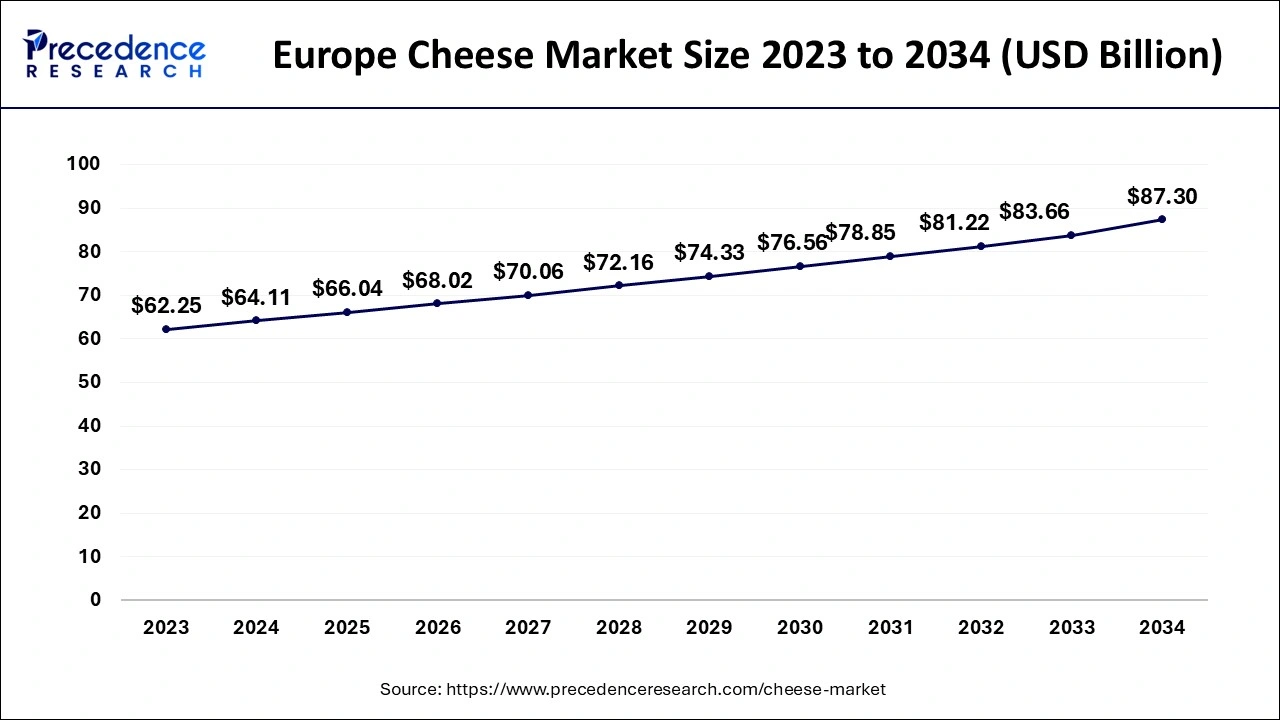
What Makes Europe the Dominant Region in the Cheese Market?
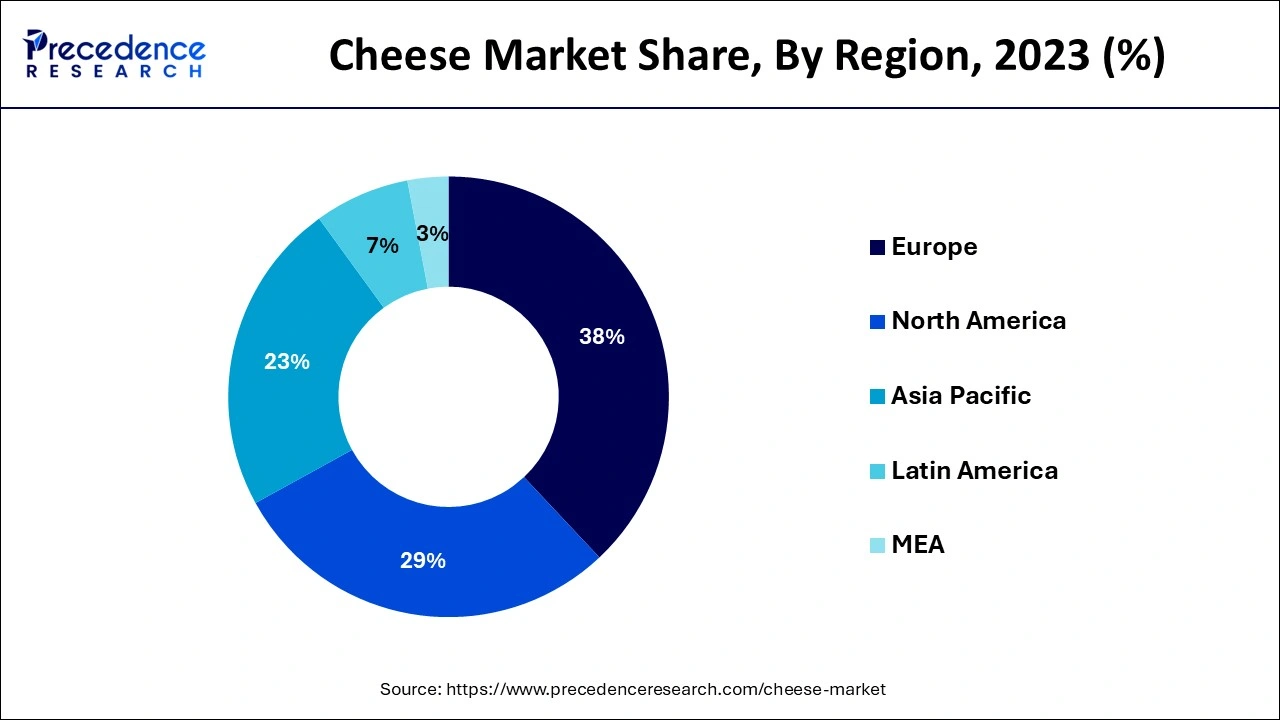
Europe dominated the cheese market by capturing a 38% share in 2025. This is due to its centuries-old cheese-making traditions and a wide variety of both artisanal and industrially produced cheeses. The region benefits from advanced dairy infrastructure, strict quality control standards, and well-established supply chains that ensure consistent production and distribution. Additionally, strong consumer demand for premium and specialty cheeses, along with substantial export activities, reinforces Europe's leadership in the global cheese market.
In 2024, Europe is busy with almost 38% of the cheese piece of the pie. As of now, the worldwide cheese market development is driven ascent in number of speedy help cafés (QSRs) in the creating areas and right now settled QSR outlets in the created locales. Furthermore, longer time span of usability of cheese items, ascend in extra cash, and expansion sought after for protein-rich food move the market development. Nonetheless, undesirable added substances and fixings in handled cheese, and transient nature of the items are supposed to hamper the market development during the cheese market gauge period.
The rising utilization of pizza and other European-style quick food varieties shows up as a crucial purchaser pattern, especially among youngsters. Accordingly, the cheese market in Asia is amassed in enormous urban areas, where the normal top level salary portion of the populace essentially resides. A sharp increment has been seen in purchaser interest for bundled suppers containing cheese. Additionally, tax decreases and expanded duty rate quantities have brought down cheese costs, helping imports.
In 2024, Europe is busy with almost 38% of the cheese piece of the pie. As of now, the worldwide cheese market development is driven ascent in number of speedy help cafs (QSRs) in the creating areas and right now settled QSR outlets in the created locales. Furthermore, longer time span of usability of cheese items, ascend in extra cash, and expansion sought after for protein-rich food move the market development. Nonetheless, undesirable added substances and fixings in handled cheese, and transient nature of the items are supposed to hamper the market development during the cheese market gauge period.
The rising utilization of pizza and other European-style quick food varieties shows up as a crucial purchaser pattern, especially among youngsters. Accordingly, the cheese market in Asia is amassed in enormous urban areas, where the normal top level salary portion of the populace essentially resides. A sharp increment has been seen in purchaser interest for bundled suppers containing cheese. Additionally, tax decreases and expanded duty rate quantities have brought down cheese costs, helping imports.
France Market Analysis
France is a major contributor to the European cheese market due to its rich cheese-making heritage, diverse range of high-quality cheeses, and strong domestic and international demand. The country's well-established dairy industry, strict quality standards, and global reputation for premium and specialty cheeses enable it to maintain a leading position in both production and exports across Europe.
What Makes North America the Fastest-Growing Region in the Market?
North America is expected to grow at the fastest rate in the cheese market due to increasing consumer demand for processed, specialty, and artisanal cheeses. Rising disposable incomes, growing awareness of diverse cheese varieties, and expansion of the foodservice and retail sectors are driving market growth. Additionally, innovations in cheese products, convenient packaging, and strong distribution networks further accelerate adoption across the region.
U.S. Market Analysis
The U.S. is the major contributor to the North American cheese market due to its large-scale dairy industry, high domestic consumption, and strong presence in both retail and foodservice sectors. Additionally, advanced production technologies, a wide variety of cheese products, and significant exports help the U.S. maintain a leading position in the regional market.
How is the Opportunistic Rise of Asia Pacific in the Cheese Market?
Asia Pacific is expected to witness significant growth in the upcoming period. This growth is driven by factors such as increasing urbanization, rising disposable incomes, and dietary shifts, especially among younger generations. The growing popularity of cheese in various dishes, coupled with the expanding fast-food delivery and restaurant chains, fuels market growth. The region is also benefiting from innovations in cheese varieties, such as plant-based and low-fat options, catering to health-conscious and vegan consumers. Countries such as China, Japan, and South Korea are leading players in the market due to their growing urbanization and westernization of diets.
China Market Trends
The Chinese market is driven by the increasing consumption of Western foods and convenience foods contributed to the increased use of cheese. Urbanization and the growth of e-commerce in groceries made the products easily available. Investments in cold chain infrastructure and dairy production in the country help foster the market.
What Potentiates the Market in Latin America?
The cheese market in Latin America is expected to grow steadily in the coming years. This growth is driven by the rising demand for convenient and protein-rich food products, changing dietary habits, and a growing working population. Increasing urbanization and the expansion of the foodservice sector, particularly quick-service restaurants and bakeries has helped to boost cheese consumption all across the region. Additionally, the region is showing a strong preference for premium and specialty cheeses, thus encouraging manufacturers to diversify their product offerings. Brazil, Argentina, Chile, and Colombia are leading players in the region due to their strong dairy farming traditions and growing urban populations. Moreover, the region also boasts a robust domestic production and consumption, driven by widespread culinary use.
Brazil Market Trends
Brazil can be identified as an emerging market due to the rising consumption of dairy products and the increasing middle class. Demand for flavoured cheese variants fueled the growth in demand. The growth in supermarket and restaurant chains provided better availability of the products. Rising knowledge about high-protein diets propels the market.
What Opportunities Exist in the Middle East & Africa for the Market?
The Middle East & Africa (MEA) offers significant opportunities in the cheese market, driven by shifting consumer preferences towards more westernized dietary habits and the increasing popularity of cheese as a key ingredient. The region is also witnessing rapid urbanization as well as a rise in disposable incomes, which further fuels the demand for cheese. The UAE and Saudi Arabia are leading players, driven by evolving food habits and expanding retail and hospitality sectors. Health-conscious consumers are also contributing to the demand for low-fat and organic cheese options, compelling manufacturers to innovate and diversify their product offerings.
UAE Market Trends
The UAE is recognized as a substantially expanding region owing to the demand from expatriates and the consumption pattern of premium food products. Heavy dependence on imports helped ensure the availability of different types of cheese. Development in the hospitality and tourism industries resulted in growth in food service requirements. Increased liking for gourmet cheese aided in the development of the premium segment.
Market Competitive Landscape: Leading Companies and Strategies
The cheese market faces concentrated competition amongst multinational dairy firms, domestic producers, and specialty cheese makers, which focus on innovation, cheese quality, and brand appreciation. Companies are focusing on clean-label, organic, plant-based, and premium packaging of cheese to meet consumer demands.
Leading brands are expanding premium and specialty cheese volumes through investments in advanced manufacturing and increased global distribution. Continuous product diversification and R&D investments align with strategies like acquisitions, collaborations, and sustainable practices, which are crucial for future market growth.
Value Chain Analysis
- Raw Material Procurement: Getting milk of the highest quality and keeping the supplier relations stable.
Key players: Dairy Farmers of America, Fonterra - Processing and Preservation: Changing the nature of milk through cheese making using the techniques that protect the product's taste and safety.
Key Players: Lactalis Group, Saputo Inc. - Quality Testing and Certification: Performing checks on safety, flavor, and the fitness for consumption of every batch.
Key Players: FSSAI (Food Safety and Standards Authority of India), Bureau of Indian Standards (BIS) - Packaging and Branding: Packaging the product to be protective, informative, and attractive all at once.
Key Players: Amcor, Mondi plc - Cold Chain Logistics and Storage: The cheese is being stored and transported under controlled temperature conditions.
Key Players: Snowman Logistics, Americold Realty Trust - Distribution to Retail and HoReCa: Making an efficient product delivery to retail and food service networks.
Key Players: Jumbotail, Food Service India Pvt. Ltd. - Retail Sales and Marketing: The cheese is being advertised through focused campaigns and in-store merchandising.
Key Players: Walmart Inc., Amazon.com - Waste Management and Recycling: Not only managing the waste that comes from production, but also encouraging the modern disposal techniques as the main way of disposal.
Key players: Waste Management, Inc., Veolia
Cheese Market Companies
- Glanbia (Ireland)
- Saputo (Canada)
- Arla Foods (UK)
- BEL Group (France)
- Fonterra (New Zealand)
- FrieslandCampina (Netherlands)
- Dalter Alimentari Spa (Italy)
- The Kraft Heinz Company (US)
- Amul (India)
- DMK Deutsches Milchkontor GmbH (Germany)
- Meiji Holdings (Japan)
Recent Developments
- In April 2026, Kerrygold launched Kerrygold Cream Cheese in the UK and entered the cheese industry, building on the brand's continued momentum in butter. Kerrygold Cream Cheese was developed to deliver a rich, natural taste and smooth texture, using simple ingredients.
- In December 2025, Those Vegan Cowboys raised €6.25M to scale its animal-free dairy protein using precision fermentation. The startup secured regulatory clearance and planned a 2026 U.S. launch. The recombinant casein was tested in the German dairy giant, Hochland Group.
(Source: https://www.greenqueen.com ) - In April 2025, ?Gellert Global Group acquired Heartisan Foods, the specialty cheese manufacturer and distributor. (Source: https://www.vendingmarketwatch.com)
- In March 2025, Paras Dairy launched its premium cheese brand ‘Galacia' at the AAHAR 2025 exhibition. (Source: https://www.hotelierindia.com)
- In March 2025, Cheese manufacturer Sargento launched several new products, many of which involved collaborations with other food companies. It involves sliced Natural American Cheese, as well as three varieties of Seasoned Shredded Cheese, and three cheese and cracker snacking combinations of Shareables. (Source: https://www.supermarketperimeter.com)
- In January 2025, Plant-based foods company?Misha's Inc. acquired Vertage, an innovative dairy-free cheese company. (Source: https://www.foodmanufacturing.com)
Segments Covered in the Report
By Cheese Type
- Cheese Products
- Cheese Powder
By Product
- Mozzarella
- Cheddar
- Feta
- Parmesan
- Roquefort
- Others
By Source
- Animal
- Plant
By Type
- Natural
- Processed
By Nature
- Conventional
- Organic
By Distribution Channel
- Retail
- Food Service
- Food Manufacturers
By Application
- Bakery & Confectionery
- Snacks & Cereals
- Ready Meals
- Sweet & Savory Snacks
- Sauces, Dressings, Dips, and Condiments
- Other Applications (creams & desserts, processed meat & egg products, and side dishes)
By Region
- North America
- Latin America
- Europe
- Asia-pacific
- Middle and East Africa
For inquiries regarding discounts, bulk purchases, or customization requests, please contact us at sales@precedenceresearch.com
Frequently Asked Questions
Tags





Ask For Sample
No cookie-cutter, only authentic analysis – take the 1st step to become a Precedence Research client
 Get a Sample




 sales@precedenceresearch.com
 Schedule a Meeting
