



Specialty Cheese Market Size, Key Companies, Company Expansion Strategies, Food Processing Capacity, Sales Performance, Export Analysis, Consumer Preferences, Company Investment Strategies, and Market Positioning
Specialty Cheese Market (By Product: Fresh Cheese, Aged Cheese, Soft Cheese, Blue Cheese, Flavored Cheese; By Form: Blocks, Sliced, Shredded, Others; By Distribution Channel: Supermarkets And Hypermarkets, Speciality Stores, Online, Others) - Global Industry Analysis, Size, Trends, Leading Companies, Regional Outlook, and Forecast 2026 to 2035
Source: https://www.precedenceresearch.com/specialty-cheese-market
 Get a Sample
 Table Of Content


What is the Specialty Cheese Market Size?
The global specialty cheese market size is calculated at USD 41.13 billion in 2025 and is predicted to increase from USD 43.48 billion in 2026 to approximately USD 71.39 billion by 2035, expanding at a CAGR of 5.67% from 2026 to 2035. The demand for the specialty cheese market is derived from the industry's rising demand for high-quality food products. The rising disposable income of the urban population leads to increased spending on these products.
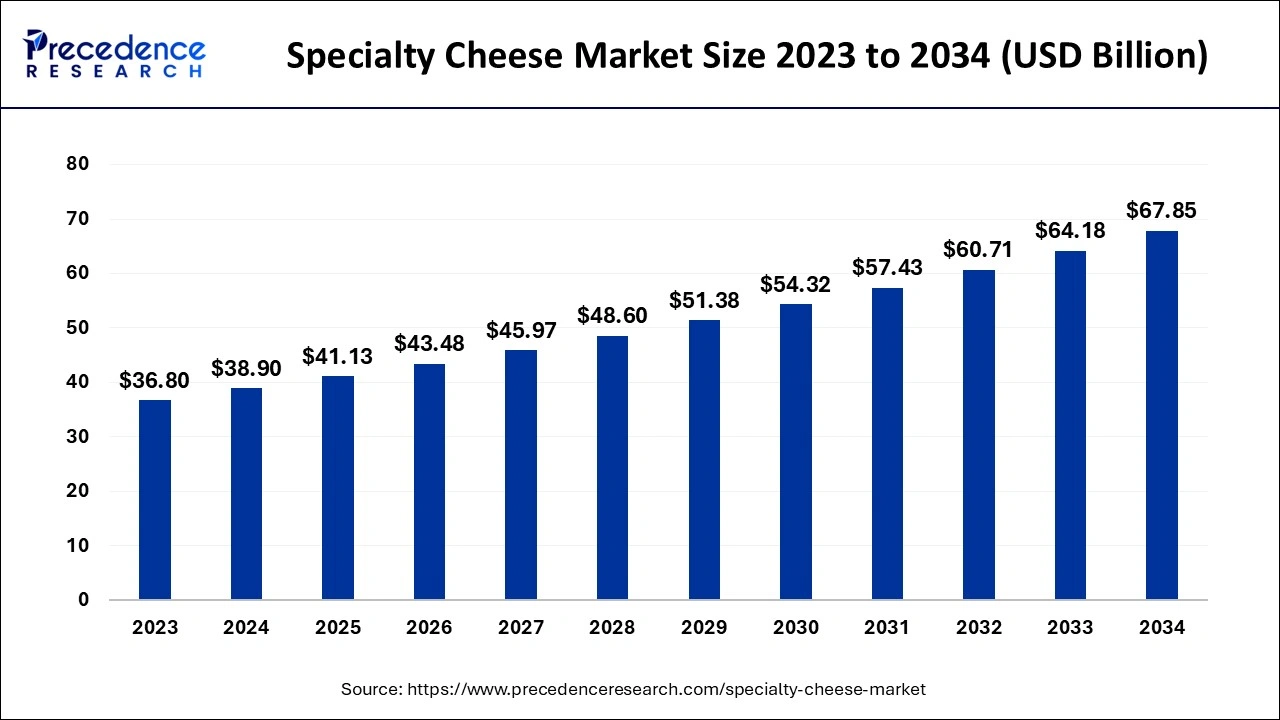
Speciality Cheese Market Key Takeaways
- Europe dominated the specialty cheese market with the largest market share of 49% in 2025.
- Asia Pacific is expected to expand at a fastest CAGR of 6.72% during the forecast period.
- By product, the fresh cheese segment contributed the highest market share of 36% in 2025.
- By product, the flavored cheese segment is expected to grow at a significant CAGR of 6.72% during the forecast period.
- By form, the cheese blocks segment accounted for the largest market share of 41% in 2025.
- By form, the shredded cheese segment is expected to grow at a notable CAGR of 6.21% during the forecast period of 2026 to 2035.
- By distribution channel, the supermarkets and hypermarkets segment has held the biggest market share of 51% in 2025.
- By distribution channel, the online segment is predicted to grow at the fastest CAGR of 7.11% during the forecast period of 2026 to 2035.
What is Specialty Cheese?
Specialty cheese is a high-quality cheese made in limited quantities, with unique flavors and textures compared to normal cheese. These products are made from various cow, goat, and sheep milk sources with a unique processing technique. The specialty cheese market is gaining popularity due to unique product varieties like blue cheese, aged gouda, truffle brie, and others. These cheeses are often produced by local producers focusing on quality rather than quantity. Consumers are increasing their preferences towards high-quality food products, increasing the demand for specialty cheese in the food industry.
How Can AI Help the Growth of the Speciality Cheese Market?
The rise of technologies like artificial intelligence (AI) and machine learning (ML) is significantly helping to enhance manufacturing processes in the food industry. The specialty cheese market is growing significantly as these technologies are helping optimize the production process by monitoring the temperature and fermentation that play a crucial role in cheese making. This automation reduces the overall operating costs, making them preferable. Additionally, AI algorithms play a crucial role in analyzing huge datasets that can track consumer preferences and uses towards a single product. Additionally, AI is expected to be a major contributor to product innovation in the coming years.
What are the Growth Factors in the Specialty Cheese Market?
- Rising disposable incomes in urban areas are leading to increased spending on healthier and premium food options, which stands out as a major growth factor in the specialty cheese market.
- The rising global influence of culinary dishes through the help of social media is leading to the widespread use of specialty cheese all over the world.
- The rise of online shopping platforms is leading towards smooth home-based delivery options for consumers, leading to the expansion of the product.
- The increasing use of cheese with multiple cuisines and dishes like wines and meets is leading towards increasing demand for these products in multiple uses.
Specialty Cheese Market Trends
- Growing Demand for Calcium: Cheese is a high source of calcium, which is important for managing the rigid teeth and bones. Regular consumption can assist in developing bone density and lowering the risk of osteoporosis.
- Technological Advancements: Advanced technologies, such as AI and machine learning algorithms, are integrated to enable forecasting and replenishment capabilities to support the availability and manage perishables, facilitating a smooth supply chain.
- Need for High-Quality Cheeses: Specialty cheese for quality-conscious consumers emphasizes artisanal production, clean labels, and transparent sourcing. The increasing demand for preservative-free cheese and cheese derived from natural sources promotes the market.
- Cheese-Based Snacking Revolution: Consumers are increasingly preferring rich and creamy cheese dips to enhance their traditional snacking experience into a sophisticated gourmet experience.
The Increasing Trend of Cheese Consumption Among Consumers
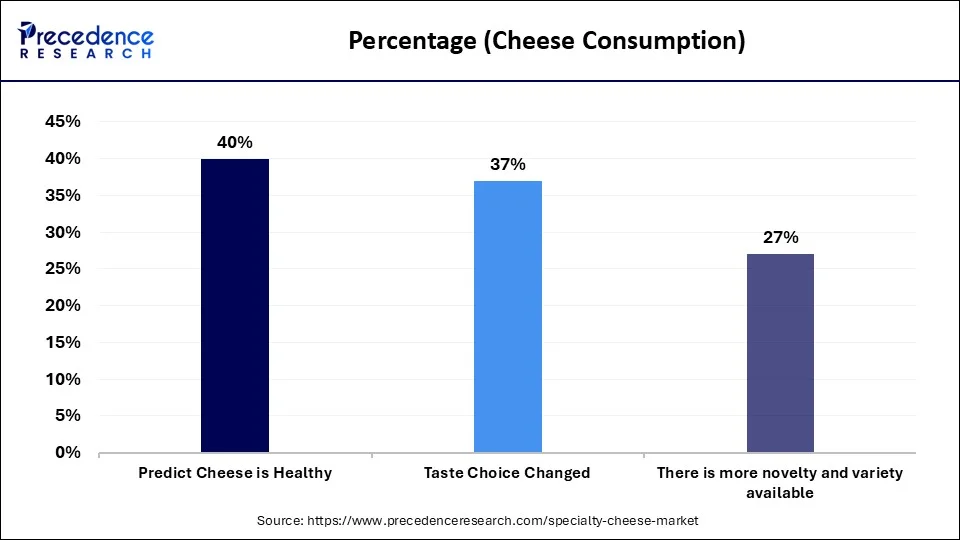
(Source: Cheese, Glorious Cheese: Bold Flavors And Formats Power Dairy Cheese Innovation)
Specialty Cheese Market Outlook
- Industry Growth Overview: The specialty cheese market is expected to experience a strong upturn from 2025 to 2030, driven by increasing demands for artisanal, premium, and locally produced cheese categories, which have increased due to heightened consumer focus on gourmet food, protein-centric diets, and clean label products. North America and Europe will continue to dominate sales, while greater demand for Western-style cheese is rising in the Asia Pacific.
- Sustainability Trends: Sustainability is impacting the specialty cheese market as consumer demand shifts toward organic, pasture-raised, and ethically sourced dairy products. Producers focus on low-carbon farming, recyclable packaging, and animal welfare. Many European dairies are decreasing energy usage by switching to renewable energy instead of conventional power sources, while also decreasing water usage and increasing brand equity, complying with new sustainability metrics.
- Global Expansion: Top cheese manufacturers in the specialty cheese market have made investments into premium dairy opportunities in the Asia Pacific, the Middle East, and Latin America in response to the robust growth in that geography. Manufacturers have made investments in distribution partnerships, local aging facilities, and flavors oriented around cultural preferences. European producers have made major entries into Japan, South Korea, and the United Arab Emirates to cement a first-mover advantage in premium artisanal cheese.
- Major Investors: Interest from private equity and strategic investors has picked up due to healthy profit margins, strong branding potential, and stable long-term demand. Investment firms have focused on artisanal small-scale cheese producers, goat cheese brands, and specialty aging operations.
- Startup ecosystem: The specialty cheese startup ecosystem matured quickly, with newcomers focusing on plant-based artisanal cheese, small-scale aging technology, and precision-fermented dairy proteins. Companies in the U.S., Europe, and India attracted investment by offering lactose-free, clean-label, and scalable sustainability alternatives to cheese.
Market Scope
| Report Coverage | Details |
| Market Size by 2035 | USD 71.39 Billion |
| Market Size in 2026 | USD 43.48 Billion |
| Market Size in 2025 | USD 41.13 Billion |
| Market Growth Rate from 2026 to 2035 | CAGR of 5.67% |
| Largest Market | Europe |
| Base Year | 2025 |
| Forecast Period | 2026 to 2035 |
| Segments Covered | Product, Form, Distribution Channel, and Regions |
| Regions Covered | North America, Europe, Asia-Pacific, Latin America and Middle East, & Africa |
Market Dynamics
Drivers
Increasing demand for gourmet foods
The increasing influence of the urban lifestyle has drastically changed lifestyle dynamics, which has led to the demand for premium-quality ingredients. The widespread influence of health and wellness has led to the rising adoption of premium foods like these cheeses. The specialty cheese market is gaining significant popularity due to the rising disposable incomes, which leads to increasing spending on these products. The adoption of foreign food culture is also leading to a massive demand for specialty foods that can be added to various food items. Many supermarkets and general stores have started selling these products, which are expected to play an impactful role in product expansion.
Expansion of the global food service industry
Rapid urbanization has led to changing consumer preferences towards ready-to-eat food options due to their busy lifestyles. The specialty cheese market is becoming popular due to its rising use by restaurants and cafes that use these cheeses in dairy products. Additionally, digital transformation has become a major factor due to the growth in online food delivery, where individuals can access these products easily with one click. The rising travel and tourism industry has become a prominent factor driving market growth. Online food delivery platforms like Uber Eats, DoorDash, GrubHub, and many more are some of the major contributors in the United States.
Restraint
Price sensitivity
Specialty cheese has witnessed prominent growth in developed regions, but some factors can still hamper the market's growth. The specialty cheese market has yet to make its mark in underdeveloped or low-income regions as it is usually higher in cost. Additionally, these populations are not often familiar with premium food products, which can restrict the demand for specialty cheese in these regions. Rural areas also often have a lower smartphone penetration rate.
Opportunities
The rising shift toward organic products
The increasing awareness regarding the benefits of organic products is leading to multiple opportunities in the specialty cheese market. This has led to the elimination of harmful pesticides used in the production of cheeses. Many companies are adopting the use of organic products, which might help them set their brand image and gain more consumers, which will benefit their business. Additionally, there is a rising trend of clean-label products.
Rising focus on sustainable production
The increasing environmental concerns have led to an increasing focus on organic farming, which helps reduce the environmental impact. The specialty cheese market is also experiencing significant changes due to the changing government regulations that lead to multiple changes in the food industry. These changes also focus on reducing the waste generated during the whole production process, which can also be beneficial in reducing costs. Many companies are investing heavily, which can help them adopt sustainable production.
Segment Insights
Product Insights
The fresh cheese segment stood dominant in the market in 2025. This product has a soft texture and is highly moist, which is considered shortly after its production. The specialty cheese market is experiencing significant growth due to the widespread use of fresh cheese in day-to-day life. Mozzarella, ricotta, cottage, etc, are some of the types of fresh cheese that are commonly used and considered affordable. Additionally, the dominance is attributed to the healthy appeal of the product, which can be a crucial player in boosting market growth. The rising adoption of fresh cheese is observed in the food service industry.
The flavored cheese segment is expected to grow at a significant CAGR in the market during the forecast period of 2026 to 2035. These products are often mixed with different flavors during the production process. The growth of the specialty cheese market is caused by the rising demand for gourmet foods that use these types of cheese. The increasing influence of global and premium cuisine options stands out as a major growth factor that contributes to the market growth.
Form Insights
The cheese blocks segment accounted for the largest share of the market in 2025. These products are produced in solid block shapes that are cut or sliced into pieces before consumption. The specialty cheese market is experiencing significant demand due to the rising use of these products in multiple foods. Additionally, the widespread use leads to mass production, making it a cost-effective solution for commercial use. These products also have a larger shelf-life due to their longevity, making them a prominent option.
The shredded cheese segment is expected to grow rapidly in the market during the forecast period of 2026 to 2035. The specialty cheese market is gaining significant popularity due to the use of shredded cheese in pizza and tacos. These products are ready to use, which gains more demand in the food service industry. Additionally, the increasing trend for global cuisine at home leads to an increasing demand for ready-to-use products. Many companies are investing heavily.
Distribution Channel Insights
The supermarkets & hypermarkets segment led the global market in 2025. The dominance of the segment is attributed to the well-established consumer base of these platforms. These markets usually have a consumer base that relies on grocery shopping, which makes them a popular distribution option due to the dominance of consumers. The specialty cheese market is experiencing significant demand due to the rising number of global chains that have established their consumer base by providing various products at a discounted rate. Additionally, the physical shopping experience helps in increasing consumer satisfaction.
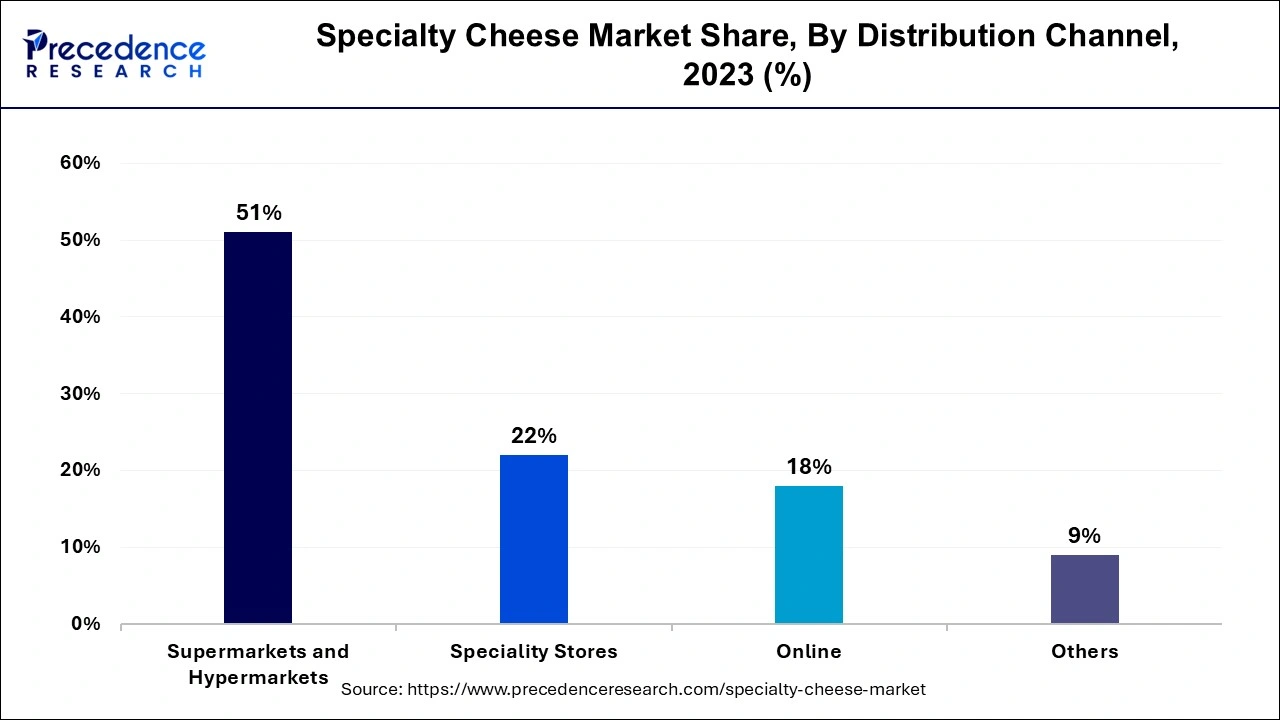
The online segment is anticipated to grow at the fastest rate in the market during the forecast period of 2026 to 2035. The growth of the segment is attributed to the changing lifestyles, which have played a vital role in changing consumer shopping preferences. The specialty cheese market is growing significantly due to the convenience and availability of multiple shopping options that provide doorstep delivery. The increasing partnerships between global chains and online delivery platforms are anticipated to play a vital role in the upcoming years. The consumers are getting attracted as these platforms are providing vouchers and coupons to attract more consumers.
Regional Insights
Europe Specialty Cheese Market Size and Growth 2026 to 2035
The Europe specialty cheese market size is evaluated at USD 21.31 billion in 2026 and is projected to be worth around USD 35.44 billion by 2035, growing at a CAGR of 5.81% from 2026 to 2035.
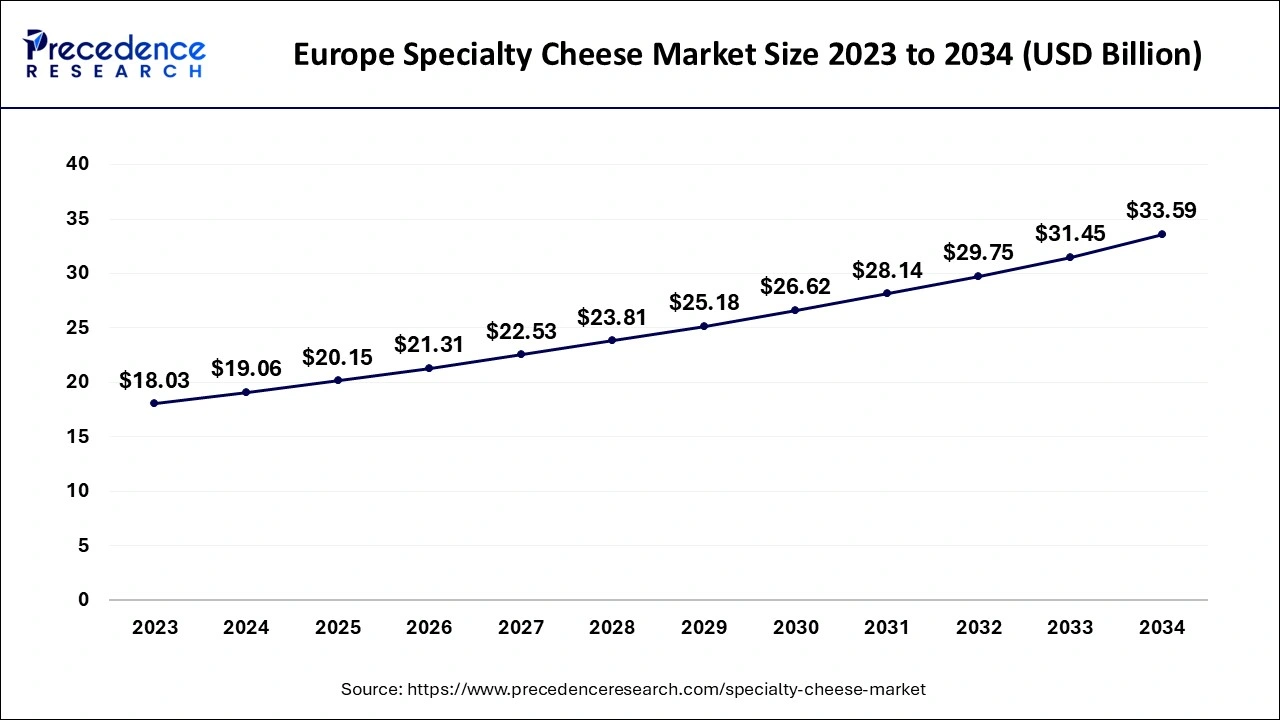
Europe held a significant share of the specialty cheese market in 2025. The dominance of the region is attributed to the well-established user base of cheese in countries like France, Italy, and others. The region is home to dishes like pizza, which uses cheese on a large basis. The cheese also originated from the European country Poland, which makes it a prominent player due to its authenticity. Many European companies produce premium cheese that is sold on a large scale.
In Europe, the UK led the market owing to the consumer interest in artisanal and premium cheeses. Consumers are also seeking unique flavor profiles and affordable luxury which leads to a surge in sales of regional and specialty farmhouse cheeses. Also, there is an increasing need for aged varieties and artisanal cheeses with unique origins, impacting positive market growth further.
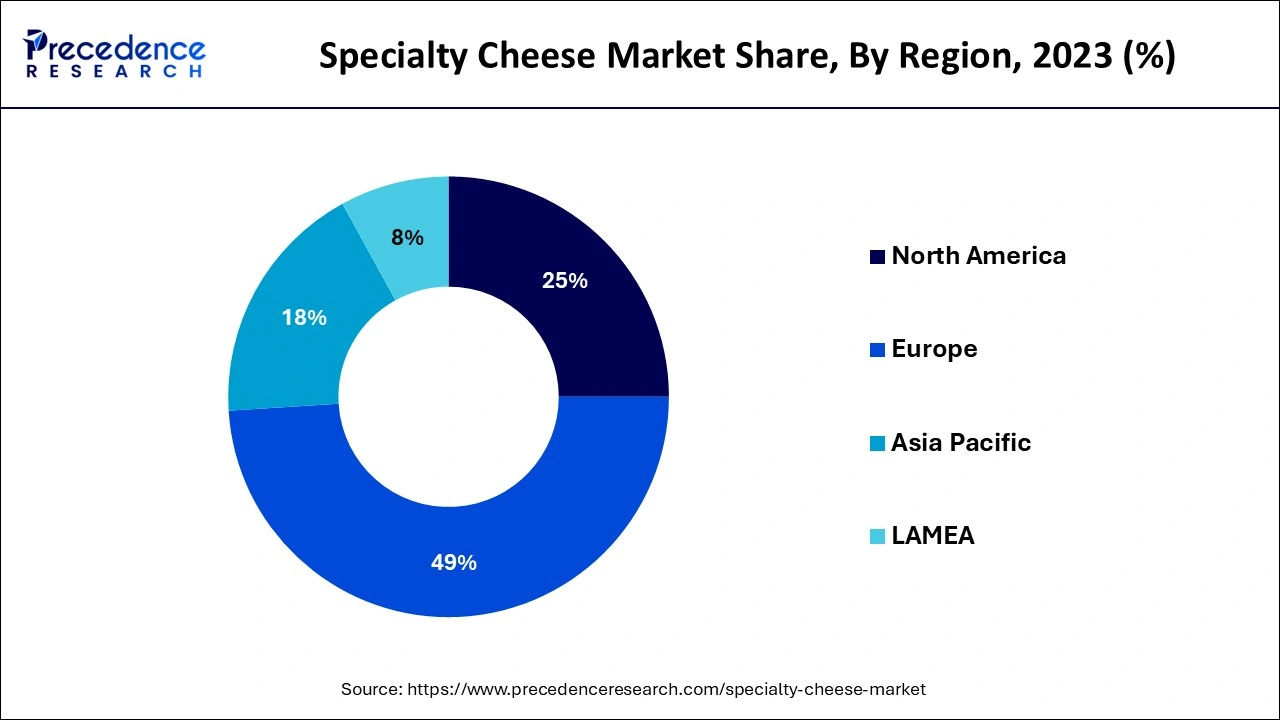
Asia Pacific is anticipated to expand at a considerable rate in the market during the forecast period of 2026 to 2035. The growth of the region is attributed to the changing food preferences in the urban areas of China, Japan, Korea, and India. The rising tourism and travel in the region have become major growth factors that play a crucial role in contributing to the specialty cheese market. The rising urbanization also leads to the expansion of online food delivery platforms. Additionally, there is an increasing use of premium cheese in fast food.
In Asia Pacific, China dominated the market in 2023, by holding the largest market share due to growing disposable incomes, the surge in Western influence, and changing dietary habits. Moreover, urban areas generally see higher cheese consumption because of factors such as growing exposure to diverse food options and raised restaurant options.
Latin America is expected to grow at a notable CAGR over the forecast period. The growth of the region can be attributed to the ongoing urbanization, surge in disposable incomes along shifting consumer preferences. Furthermore, market players are introducing a variety of specialty cheeses such as plant-based alternatives, those with added flavors, and lactose-free options, driving market growth soon.
Why did North America Experience Steady Growth in the Specialty Cheese Market?
North America experienced steady growth driven by robust demand for natural, organic, and specialty cheeses. The region had sophisticated dairy technology, high consumer spending, and a preference for premium food. Growth was also driven in part by snacking trends, flavored cheese innovations, and the expansion of retail for both traditional and specialty cheese. Opportunities emerged in sections such as plant-based specialty cheese, artisanal aging houses, and export growth potential toward Asia Pacific and Latin America, offering strong potential in developing North America as a competitive market.
U.S. Specialty Cheese Market Trends
The U.S. led the region, reflecting high demand for all things artisanal, organic, and flavored cheeses. Large dairy companies invested in new aging techniques and specialty cheese product lines to compete with the increasing consumer demand. Growth was supported by various food service chains and growing consumer interest in gourmet snacks. The U.S. established its opportunities in plant-based specialty cheese, seasonal flavored cheese, and production geared toward export opportunities. As well, strong distribution networks further solidified the United States' advantage in its region.
Why did Latin America Experience Rapid Growth in the Specialty Cheese Market?
Latin America experienced rapid growth as consumers sought premium dairy and Western-style cheese options. Additionally, countries invested in local dairy farm improvements to boost processed cheese exports. Urbanization, expansion of food stores, and income growth were also sources of demand in the region. Latin America also showed promise with flavored cheese, cheese blends for the baked goods category, and affordable artisanal cheese options. Investment in modern processing plants helped to reinforce Latin America's position in the global specialty cheese industry.
Brazil Specialty Cheese Market Trends
Brazil was the leading country in the region due to its large dairy industry and strong demand for specialty cheese. Brazil invested in upgrading processing plants and was, in turn, able to offer additional premium cheese options that catered to consumers in the urban sector. Growth was further generated by supermarket chains and food service companies that were expanding. Brazil also benefited from interest in artisanal brands, cheese snacks that have visible flavor profiles, and the opportunity to leverage export-quality dairy.
Why did the Middle East and Africa Experience Steady Growth in the Specialty Cheese Market?
The Middle East and Africa saw growth due to increased high-end food consumption driven by rising incomes and more tourism. The region has obtained higher-quality cheese imports and built out some modern retail formats in this sector. Growth has also been provided as western cuisine becomes increasingly consumed, as well as the expansion of the hospitality sector, and a growing interest in gourmet products. There has also been a surge of opportunity for flavored cheese packaging, food service supply, and producing blended specialty cheese at an affordable cost.
Saudi Arabia Specialty Cheese Market Trends
Saudi Arabia was the largest market in the region, as it had a demonstrated demand for high-end as well as imported cheese. Commodity demand generated investments into modern retail outlets as well as investments into cold chains. Growth has surged as consumers sought to eat more gourmet as well as international cuisines. Saudi Arabia has seen opportunities in flavored cheese, bakery cheese blends, and high-end food service supply. Strong tourism demand and expansion of hospitality continue to support the leading position in the region.
Supply Chain Analysis of the Specialty Cheese Market
- Raw Material Procurement: Raw materials, such as high-quality milk powders, functional dairy ingredients, and cheeses and butter facts are procured from trusted vendors to avoid contamination and maintain hygiene.
Key Players: Ingredex, Eleftheria Cheese, and Useforg - Processing and Preservation: Processed cheese is produced by integrating one or several types of natural cheese and other ingredients such as preservatives, emulsifiers, salt, and stabilizers. Such mixtures are then heated and transformed into a product that has a smooth texture and stable flavor. For preserving, specialty cheese paper controls humidity and airflow, which helps store cheese healthily, or cover the cheese in butcher or parchment paper.
Key Players: Eleftheria Cheese, IFF, Dairy Craft, and Kase Cheese - Quality Testing and Certification: ISO 23319:2022 is a standard for processed cheese and cheese items for analyzing the fat content by using a gravimetric procedure. The standard serves as an in-depth step-by-step process for checking the fat content of a cheese. While ISO 8262-3:2005 mentioned the Weibull-Berntrop gravimetric procedure for checking the fat content in milk-based foods, in which the standard Rose-Gottlieb process is unsuitable, as it has high carbohydrate content, free fatty acids, and lumps.
Key Players: Food Safety Net Services (FSNS), Envitro Labs, and ITC Labs - Packaging and Branding: The selection of a cheese packaging machine relies on the kind of product, the required production needs, and the preservation method. The cheese industry needs hygienic, secure, and high-quality packaging solutions that ensure durability, freshness, and perfect product display.
Key Players: Printpack, Design Womb, Winpak, and Amcor. - Distribution to Retail, HoReCa: Hotels, restaurants, and cafes that offer burrata dishes commonly sell at a luxury price compared to regular cheese dishes. Using luxury Italian cheese helps restaurants stand out in the excessively competitive hospitality industry. In terms of luxury dining, the premium ingredients are not just food products but are business machines that develop complete restaurant branding and user experience.
Key Players: Lactalis Group, Arla Foods, Emmi Group, and Saputo, Inc. - Waste Management and Recycling: The cheese manufacturing sector generates large amounts of whey, which is costly to dispose of. The Wheypack LIFE project has discovered the capability of digesting the whey in terms of E. The coli bacteria remove the strains that feed on the whey protein and convert it into polyhydroxybutyrate (PHB) plastic.
Key Players: Swankote Energy, Casella Waste Systems, Inc., and Biffa Group.
Competitive Landscape of the Specialty Cheese Market
The specialty cheese market is highly consolidated as the structure runs under a monopolistic competition frame, which changes into an average adjusted oligopoly at the worldwide partnership. The highly personalized retailers that concentrate on education-driven curation, sales, and further expert direction of Certified Cheese Specialists. Key players, such as Lactalis Group, Emmi Group, Sargento Foods, Inc., and Uplands Cheese, are some of the major suppliers and distributors of specialty cheeses globally.
In terms of mergers, the Gellert Global Group, which owns the specialty cheese subsidiary Atlanta Corporation, has obtained Wisconsin-based Heartisan Foods, which is a producer and distributor of private and branded-label flavored and specialty cheese products, from Landon Capital Partners and Ronin Equity Partners. The market faces considerable challenges, such as complex supply chain requirements and premium price points compared to processed cheese. However, the integration of advanced technologies and the increasing trend toward preservative-free cheeses present future growth opportunities of the market.
Specialty Cheese Market Companies
- Lactalis Group
- Emmi Group
- Sargento Foods Inc.
- Groupe Savencia Fromage & Dairy
- Murray's Cheese
- Saputo Inc.
- Arla Foods
- Fonterra Co-operative Group
- Bel Group
- Zanetti S.P.A
Partnerships in the Specialty Cheese Market
- In January 2026, Schuman Cheese revealed its newest merger with Wyke Farms, which is the United Kingdom's largest individual cheese manufacturer. With the help of collaboration, Schuman will behave as the current supplier for Wyke Farms and its sub-brands, which include Ivy's Reserve, present across butter and British cheddars in the U.S. Market. (Source: https://www.dairyfoods.com)
- In June 2026, the Dairy Business Innovation Alliance (DBIA) announced its partnership with the Center for Dairy Research (CDR) and the Wisconsin Cheese Makers Association (WCMA), which has revealed a current infusion of USD 2.9 million in terms of Dairy Business that permits 28 Midwestern dairy businesses. (Source: https://www.wischeesemakersassn.org)
Recent Developments
- In May 2026, Kraft Natural Cheese revealed the launch of its current Lactose-Free product series, which has developed its profile to match rising demand for dairy options that assist a range of dietary demands without compromising taste.
(Source: https://www.businesswire.com/news/home/20260520141716/en/Kraft-Natural-Cheese-Expands-Portfolio-With-New-Lactose-Free-Product-Line - In January 2026, Belgioioso Cheese announced the launch of its current Hispanic Selection cheese collection, which enters the retail industry. The collection is crafted from fresh cow's milk to deliver authentic taste, consistent quality, and exceptional performance across a wide range of uses, from melting and cooking to fresh applications. (Source: https://www.specialtyfood.com)
- In January 2026, Somerdale International, which is the top importer of the finest Irish and British cheese located in the United States, announced that it is developing its series with the further addition of Cashel Blue, a handcrafted, sumptuous Irish Cheese. (Source: https://www.specialtyfood.com)
- In January 2026, Terrapin Ridge Farms will continue to build its presence in the cream cheese dip space by introducing two seed oil-free dips and a shelf-stable product by entering in January 2026. (Source: https://www.delimarketnews.com)
- In November 2025, Black Creek Cheese, which is a luxury cheddar brand, entered Wisconsin's rich dairy tradition, enthusiastically disclosing its brand identity, which honors its beginning while praising the future of artisanal cheese. (Source: https://www.businesswire.com)
- In November 2024, Président launched a new specialty imported cheese in the U.S. that has a combination of Swiss and gouda flavors. Called Leerdammer, the creamy, nutty cheese was created in Holland in 1974 and is one of Europe's leading hard cheeses, the company said. (Source: https://www.supermarketperimeter.com)
- In December 2024, Bergader announced the successful launch of its flagship edible cheeses in the U.S. market, celebrated for their rich flavor and Bavarian craftsmanship. In collaboration with Abbey Specialty Foods, Bergader has achieved significant retail penetration, enhanced by impactful marketing campaigns and industry recognition. (Source: https://perishablenews.com)
- In October 2024, Saputo announced that it launched Wensleydale and Vandersterre cheeses to meet demand in the United States market. According to a press release, the new Wensleydale Cheeses include Mango Ginger, Hot & Spicy Cheddar, and Truffle Cheddar. (Source: https://www.delimarketnews.com)
- In August 2024, Bergader and Abbey Speciality Foods launched the innovative edible Blue Cheese line, featuring trendy packaging and versatile products like edible Cream and Cheese Cubes, aimed at captivating younger consumers starting September 2024.
- In January 2024, Arla Foods launched a strategic review of the Melton Mowbray specialty cheese site, employing 60 people.
- In December 2023, A Friendly Bread innovated gourmet convenience with its frozen grilled cheese sandwiches made from sourdough bread, targeting busy millennials and older consumers seeking high-quality, comforting meals.
Segments Covered in the Report
By Product
- Fresh Cheese
- Aged Cheese
- Soft Cheese
- Blue Cheese
- Flavored Cheese
By Form
- Blocks
- Sliced
- Shredded
- Others
By Distribution Channel
- Supermarkets And Hypermarkets
- Speciality Stores
- Online
- Others
By Geography
- North America
- Asia Pacific
- Europe
- Latin America
- Middle East and Africa
For inquiries regarding discounts, bulk purchases, or customization requests, please contact us at sales@precedenceresearch.com
Frequently Asked Questions
Tags





Ask For Sample
No cookie-cutter, only authentic analysis – take the 1st step to become a Precedence Research client
 Get a Sample




 sales@precedenceresearch.com
 Schedule a Meeting
