



Closed System Transfer Device Market Trends, Leading Companies, Company Revenue / Sales Performance, Procedure Volume, Healthcare Spending, Technology Adoption, Reimbursement Analysis, Cost Structure, Market Penetration, and Growth Outlook
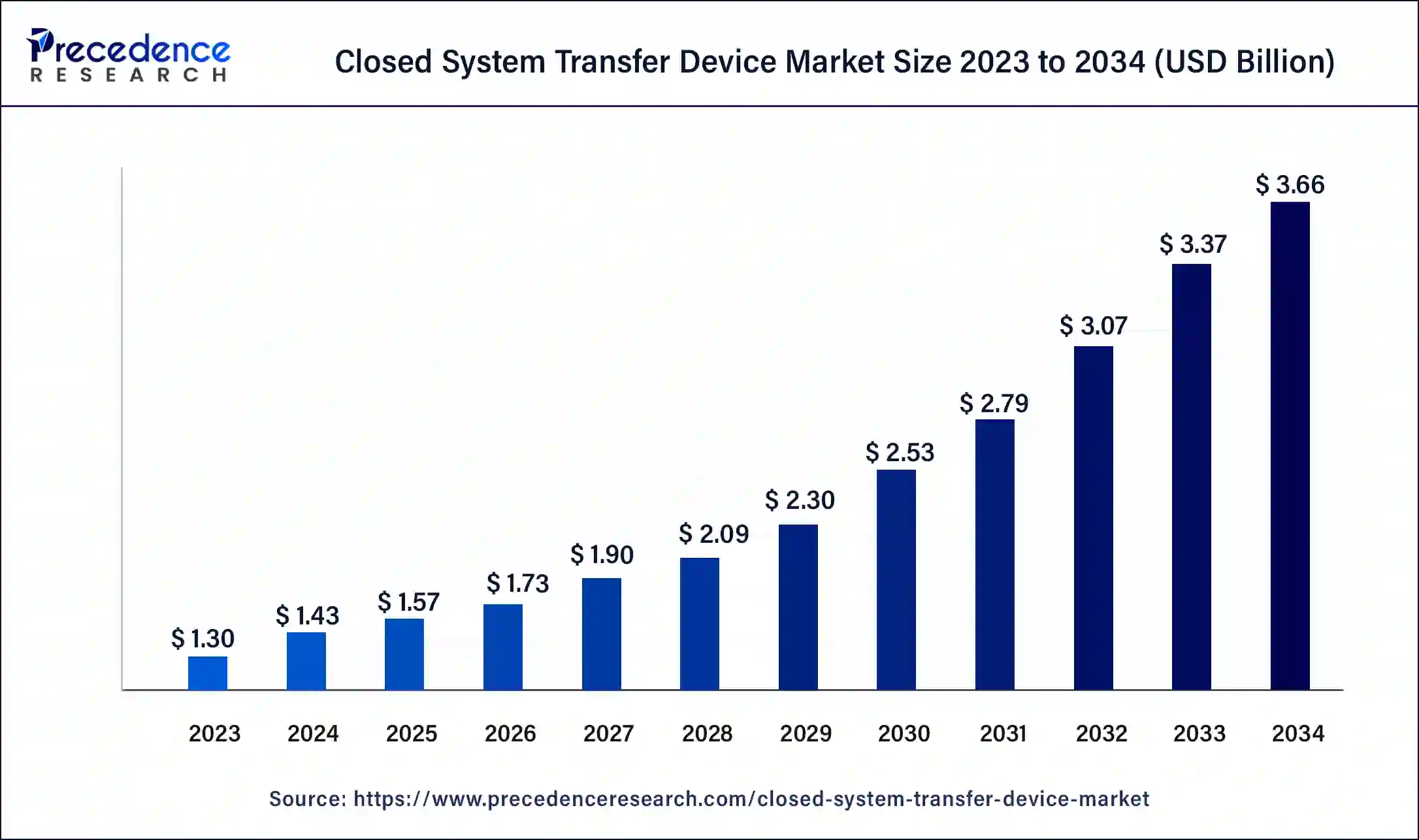
Closed System Transfer Device Market was valued at USD 1.57 billion in 2025 and is projected to grow from USD 1.73 billion in 2026 to USD 3.96 billion by 2035, expanding at a CAGR of 9.69%. The market is driven by the rising incidence of cancer, increasing demand for safe handling of hazardous drugs, and stringent regulatory requirements for occupational safety in healthcare settings. Growing adoption of advanced membrane-based and needleless technologies, along with smart system integration and expanding oncology care infrastructure, is further accelerating market growth.
Source: https://www.precedenceresearch.com/closed-system-transfer-device-market
 Get a Sample
 Table Of Content


What is Closed System Transfer Device Market Size?
The global closed system transfer device market size accounted for USD 1.73 billion in 2026 and is predicted to reach around USD 3.96 billion by 2035, growing at a CAGR of 9.69% from 2026 to 2035.
Market Highlights
- North America led the global market with the highest market share in 2025.
- By Type, the membrane-to-membrane systems segment had the biggest market share in 2025.
- By Closing Mechanism, the push-to-turn systems segment is estimated to hold the highest market share in 2025.
- By End User, the hospitals segment has held the largest revenue share in 2025.
Market Size and Forecast
- Market Size in 2025: USD 1.57 Billion
- Market Size in 2026: USD 1.73 Billion
- Forecasted Market Size by 2035: USD 3.96 Billion
- CAGR (2026-2035): 9.69%
- Largest Market in 2025: North America
- Fastest Growing Market: Asia Pacific
Technological Innovation and Smart System Integration
The development of membrane-based and diaphragm-based technologies has led to safer and more efficient drug transfer systems. Healthcare facilities can improve their compliance tracking and inventory management systems while handling hazardous drugs safely through the integration of digital healthcare platforms and connected monitoring systems.
Growth Factors
- Increasing prevalence of cancer
- Growing need for regulatory compliance for the safe handling of harmful drugs
- Rising adoption of closed-system transfer devices for transferring hazardous drugs
- Increasing use of CSTDs in emerging markets
Major Trends in the Closed System Transfer Device Market
- New Ways to Keep Health Workers Safe: Health institutions are adopting specialized containment technologies and mandatory safety enforcement to comply with strict safety regulations, such as NIOSH guidelines designed to protect personnel from hazardous antineoplastic drugs. Evidence from clinical studies indicates that these technologies significantly eliminate surface contamination on pharmacy equipment compared to traditional methods
- Adoption of Smart Vial Adapters Lowering Waste and Boosting Safety: Medical vial adapter devices extend drug stability by maintaining single- and multi-dose sterility past traditional windows to minimize waste, while featuring ergonomic and smart designs like double-membrane tech and color-alignment mechanisms to prevent user errors and ease hospital workflows. These advancements also improve affordability and user experience in healthcare settings.
Market Outlook
- Industry Growth Overview: Growing awareness, stringent regulations, and increasing cancer incidences are contributing to the industrial growth in the market.
- Major Investors: Large healthcare and medical device corporations and private equity firms are the major investors in the market. ICU Medical, Inc., Baxter International, and B. Braun Melsungen AG are some of the major investors.
- Startup Ecosystem: The startup ecosystem is focusing on enhancing the usability, compatibility with different drug delivery systems, integration with advanced technologies, and reducing drug waste of the closed system transfer device
Market Scope
| Report Highlights | Details |
| Market Size in 2025 | USD 1.57 Billion |
| Market Size in 2026 | USD 1.73 Billion |
| Market Size by 2035 | USD 3.96 Billion |
| Growth Rate from 2026 to 2035 | CAGR of 9.69% |
| Dominating Region | North America |
| Fastest Growing Region | Asia Pacific |
| Base Year | 2025 |
| Forecast Period | 2026 to 2035 |
| Segments Covered | Type, Component, End User, Closing Mechanism, and Region |
| Regions Covered | North America, Europe, Asia-Pacific, Latin America, and Middle East & Africa |
Market Dynamics
Drivers
Rising Chemotherapy Demand and Safety Regulations
The rising number of cancer cases leads to increased chemotherapy drug demand, which requires more secure methods of drug handling. Healthcare institutions must implement closed system transfer devices because regulations mandate these systems for protecting staff members and preventing contamination events.
Growing Awareness and Expansion of Biologic Drugs
Healthcare professionals are becoming more aware of the dangers that hazardous drug vapors and aerosols present to their safety. The increasing use of complex biologic drugs drives the need for sophisticated transfer systems that maintain sterile conditions and minimize contamination hazards while protecting safety during drug preparation and administration.
Restraints
High Adoption Costs in Developing Healthcare Systems
The expensive closed system transfer devices create difficulties for developing regions because their healthcare budgets are restricted. The operational expenses for buying equipment, installing it, and training personnel create obstacles that make it difficult for smaller hospitals and healthcare facilities to implement their affordable drug safety solutions.
Workflow Challenges and Product Compatibility Issues
The use of closed system transfer devices in medical facilities creates programming difficulties for pharmacists and nurses, which makes staff members unwilling to use these devices. The systems have operational limitations because they cannot work with all drug containers and vials, which results in inconsistent hazardous drug protection across different healthcare settings.
Opportunities
Emerging Market Expansion and Healthcare Modernization
Countries like China and India experience high growth potential because their healthcare systems advance and their focus on occupational safety increases. The development of additional cancer treatment centers, together with growing understanding of dangerous drug handling practices, has led to wider use of advanced closed system transfer devices.
Segment Insights
Type Insights
Membrane-to-Membrane Systems Segment Seized Foremost Market Stake in 2025
Membrane-to-Membrane Systems segment recorded the prime market share in the global closed-system transfer device Market in 2025. The membrane-to-membrane transference devices use the dual membrane system among the syringe and vial further supports to isolate the medical preparation. The factors such as reduced contamination risk, and ease of usage of the double-membrane systems confirm the safety expected to increase the usage of the membrane-to-membrane transmission devices over the estimated period.
The needleless systems are projected to grow at the highest CAGR during the forecast period mainly due to benefits such as needle-free transmission of drugs. Moreover, new product launches are expected to contribute to the high growth of needleless systems.
Closing Mechanism Insights
Push-To-Turn Systems Projected to Rulethe Closing Mechanism Segment of Closed System Transfer Device Market Revenue
Closed system transfer devices are rapidly being employed for the safe transfer of harmful medical preparations. High research and development activity in closed-system transfer devices for the transfer of oncology medications is the major reason for the high revenue share of closed-system transfer devices.
The luer-lock systems segment is anticipated to have the fastest growth during the forecast period, due to their exceptional compatibility and global baseline integration. This growth is further attributed to the seamless interface with standard clinical hardware like IV catheters and disposable syringes without requiring specialized adapters. Workflow efficiency is also improved by its integration into daily routines due to secure attachment features. Regulatory and technical validation functions safely as terminal closures on standard luer-lock disposable syringes.
Components Insights
What made the Vial Access Devices Segment Dominate the Market?
The vial access devices segment dominated the market in 2025, mainly stemming from its exceptional pressure equalization functions and high-volume consumption during initial drug reconstitution. Incorporation of elastomeric double-membrane technologies prevents vapour leakage and the escape of hazardous drug outside the system. Additionally, it also secures the initial puncture point where liquid leakage and aerosolization risks occur during oncology drug reconstitution.
The bag/line access devices segment is expected to have the fastest growth during the forecast period. This growth is mainly due to infusion workflow integration, safe fluid delivery, and regulatory compliance. This growth is further attributed to infusion workflow integration, safe fluid delivery, and regulatory compliance. Integrated components strengthen safety protocols across complex oncology environments. Modular accessory kits provide control over multi-variable infusion processes. Government health and safety descriptions from sources.
End User Insights
How did the Hospital Segment Dominate the Market?
The hospital segment dominated the market in 2025, mainly due to centralized chemotherapy compounding, stringent regulatory compliance mandates, and high patient volumes necessitating hazardous drug administration. Centralized compounding also results in the high-volume preparation of hazardous antineoplastic medications occurring within centralized hospital pharmacy departments. Hospitals prioritize mitigating low-level chemical vapor exposure and surface contamination for nursing and pharmacy staff.
The clinics and oncology centers segment is anticipated to have the fastest growth during the forecast period, mainly due to expansion of outpatient chemotherapy and decentralized cancer treatment networks. Increasing preference for outpatient chemotherapy procedures also transforms drug preparation and handling outside traditional inpatient hospital settings. Compliance with regulatory and occupational health bodies accelerates device adoption in ambulatory and clinic environments.
Regional Insights
North America is Estimated to be the Largest Market for Closed System Transfer Device
The research report covers key trends and prospects of closed system transfer device products across different geographical regions including North America, Europe, Asia-Pacific, Latin America, and Middle East and Africa. Geographically, the closed system transfer device market is conquered by North America owing to a high incidence of cancer and the presence of a sophisticated healthcare framework. On the other hand, Asia-Pacific is anticipated to witness a rapid growth rate, on account of increasing healthcare expenditure and growing investment by major manufacturers to launch new products.
What is the U.S. Closed System Transfer Device Market Size?
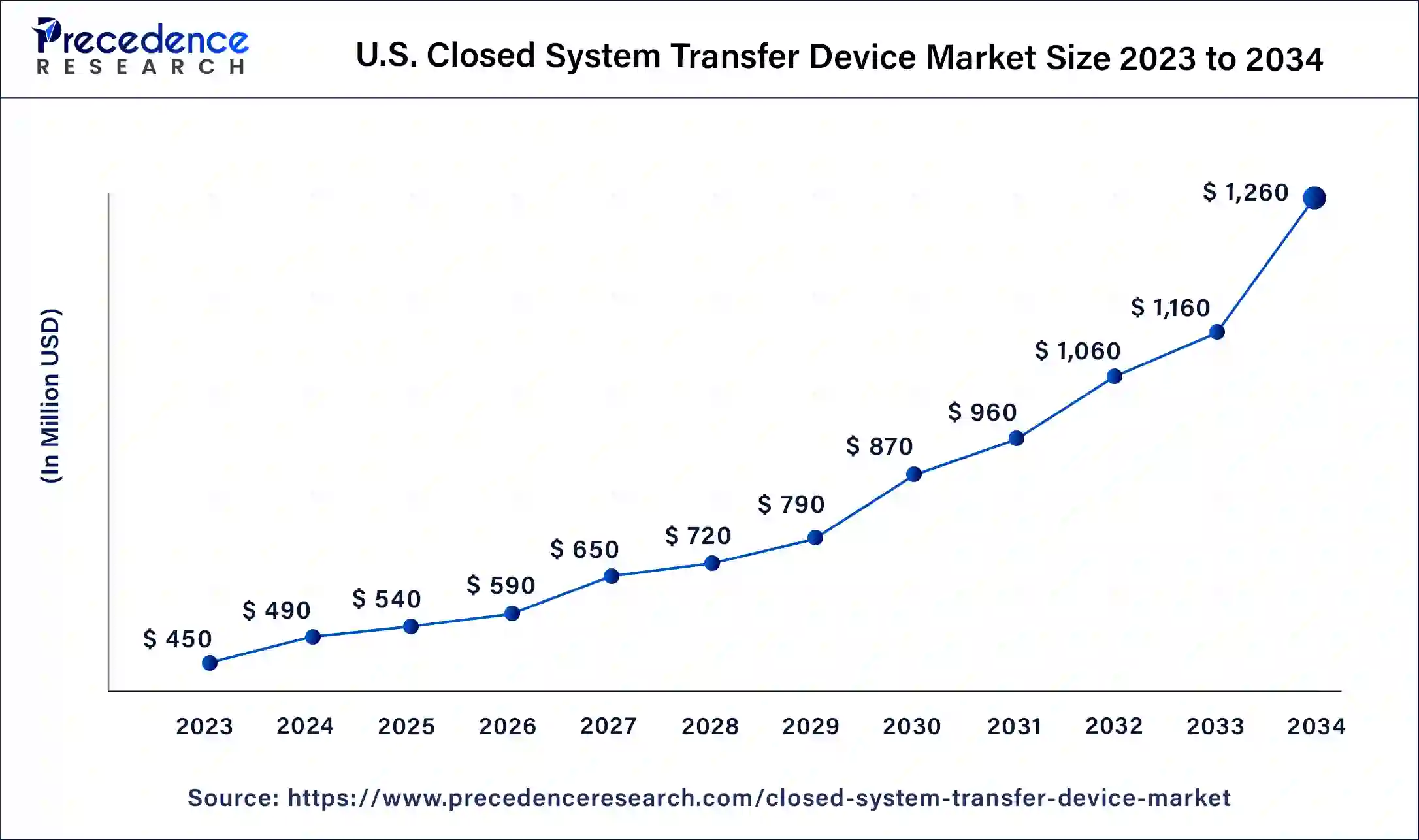
The U.S. closed system transfer device market size is valued at USD 540 million in 2025 and is expected to be worth USD 1,360 million by 2035, at a CAGR of 9.68% from 2026 to 2035.
Regulations Propelling the U.S Market
The presence of robust regulations and the healthcare system is increasing the use of the closed system transfer device in the U.S. At the same time, the growing incidences of cancer are increasing their use, where the industries are also focusing on enhancing the systems, which are driving their innovations.
Rising Cancer Burden Powering Asia Pacific Healthcare
Asia Pacific is expected to host the fastest-growing closed system transfer device market during the forecast period, driven by increasing cancer incidences. The expanding healthcare is increasing its adoption, where the growing awareness is also encouraging its use. To comply with the regulation of safe drug-compounding practice, its use is increasing.
Expanding Oncology Sector Fuels India
The growing oncology sector in India is increasing the adoption and use of closed system transfer devices. Moreover, growing cancer cases and safety awareness are also increasing their use. The government investments are also supporting their adoption.
Safet Compliance Leads Europe
Europe is expected to grow significantly in the closed system transfer device market during the forecast period, as stringent regulations with robust safety standards are increasing the use. Moreover, advanced healthcare and increasing healthcare investments are increasing their utilization. The companies are collaborating to develop new such systems, promoting the market growth.
Safety Awareness: Transform the UK market
The UK is driven by growth in health awareness, with the increasing use of closed system transfer devices for safety purposes. The growing cancer burdens and government initiatives are enhancing their adoption rates, where the industries are also contributing to these advancements.
What are the Key Trends in the Closed System Transfer Devices Industry in Latin America?
Latin America is expected to witness substantial growth in the market. This growth is driven by several factors, including the expanding healthcare infrastructure, rising awareness of safety protocols, and increasing government initiatives aimed at improving healthcare quality. Countries like Brazil and Mexico are players, with their large populations and increasing prevalence of chronic diseases, including cancer.
Brazil Closed System Transfer Devices Market Trends
The country is seen making several investments in healthcare technology, and increasing collaborations between local manufacturers and international companies are enhancing the availability of advanced CSTDs. Key trends include stricter regulatory guidelines and a growing focus on occupational safety, encouraging hospitals and clinics to adopt advanced CSTD solutions.
Additionally, the market is evolving with technological advancements such as needle-free systems, click-to-lock mechanisms, and user-friendly designs, along with increasing collaborations and innovation among manufacturers to enhance product efficiency and safety.
MEA's Growing Closed System Transfer Devices Industry
The Middle East and Africa are expected to witness steady growth over the forecast years. This growth is due to various factors such as increasing prevalence of healthcare-associated infections, the rising demand for safe drug handling, and the growing awareness of the importance of infection control in healthcare settings. The region is also witnessing a shift towards advanced technologies that enhance safety and efficiency in drug transfer processes. Countries like the UAE, Saudi Arabia, and South Africa are leading players.
Saudi Arabia Closed System Transfer Devices Market Trends
The country is witnessing several notable trends. Innovations in product design and technology are gaining traction, with manufacturers focusing on developing user-friendly and efficient devices that enhance safety. Additionally, technological advancements such as needle-free designs, user-friendly systems, and integration with automated compounding and smart infusion technologies are shaping the market's evolution.
Strengthening Safety: Value Chain Analysis
- R&D: The R&D of the closed system transfer device is focused on the integration of physical CSTD products with pharmacy automation to streamline compounding workflows, with enhanced compatibility and safety of the devices.
Key players: ICU Medical, Inc., Equashield, and Braun Melsungen. - Clinical Trials and Regulatory Approvals: The clinical trial and regulatory approval of the closed system transfer device involve the performance, safety, and compatibility evaluation.
Key players: NIOSH, ICU Medical, Inc., Equashield - Healthcare Workers Support and Services: Extensive clinical education, technical support, and training programs are provided to the healthcare workers in support and services of the closed system transfer device.
Key players: ICU Medical, Inc., Braun Melsungen.
Key Players in Closed System Transfer Devices Market and Their Offerings
- Becton, Dickinson, and Company: The company provides products like PhaSeal System, PhaSeal Optima System, and Texium.
- ICU Medical, Inc.: Devices such as the ChemoLock system, ChemoClave system are provided by the company.
- Braun Melsungen: The company offers OnGuard with Tevadaptor
- Equashield: Equashield II, Equashield Pro are offered by the company.
- Corvida Medical: The HALO System is provided by the company
Recent Developments
- In December 2025, B. Braun Medical launched a unique initiative to enhance supply chain resiliency and safeguard patient care in medical devices and pharmaceuticals. The initiative includes a comprehensive product portfolio, featuring DEHP-free items, IV solutions, nutrition containers, Vascular Access, Pain Control, and Closed System Transfer Devices. (Source: https://www.mddionline.com)
- In September 2025, EQUASHIELD launched CellSHIELD, a revolutionary device for cell and gene therapy manufacturing, enhancing safety and efficiency with a fully closed, sterile, disposable system, setting new industry standards. (Source: https://www.prnewswire.com)
Segment Covered in the Report
By Type
- Needleless Systems
- Membrane-to-Membrane Systems
By Closing Mechanism
- Color-To-Color Alignment Systems
- Push-To-Turn Systems
- Click-To-Lock Systems
- Luer-Lock Systems
By Component
- Syringe Safety Devices
- Vial Access Devices
- Accessories
- Bag/Line Access Devices
By End User
- Clinics & Oncology Centers
- Hospitals
- Others
By Region
- North America
- Europe
- Asia-Pacific
- Latin America
- Middle East & Africa
For inquiries regarding discounts, bulk purchases, or customization requests, please contact us at sales@precedenceresearch.com
Frequently Asked Questions





Ask For Sample
No cookie-cutter, only authentic analysis – take the 1st step to become a Precedence Research client
 Get a Sample
.webp)



 sales@precedenceresearch.com
 Schedule a Meeting
