



Cloud Kitchen Market Size, Key Companies, Company Expansion Strategies, Software Deployment, Enterprise Adoption, Operational Efficiency, Technology Trends, Company Investment Strategies, and Market Positioning
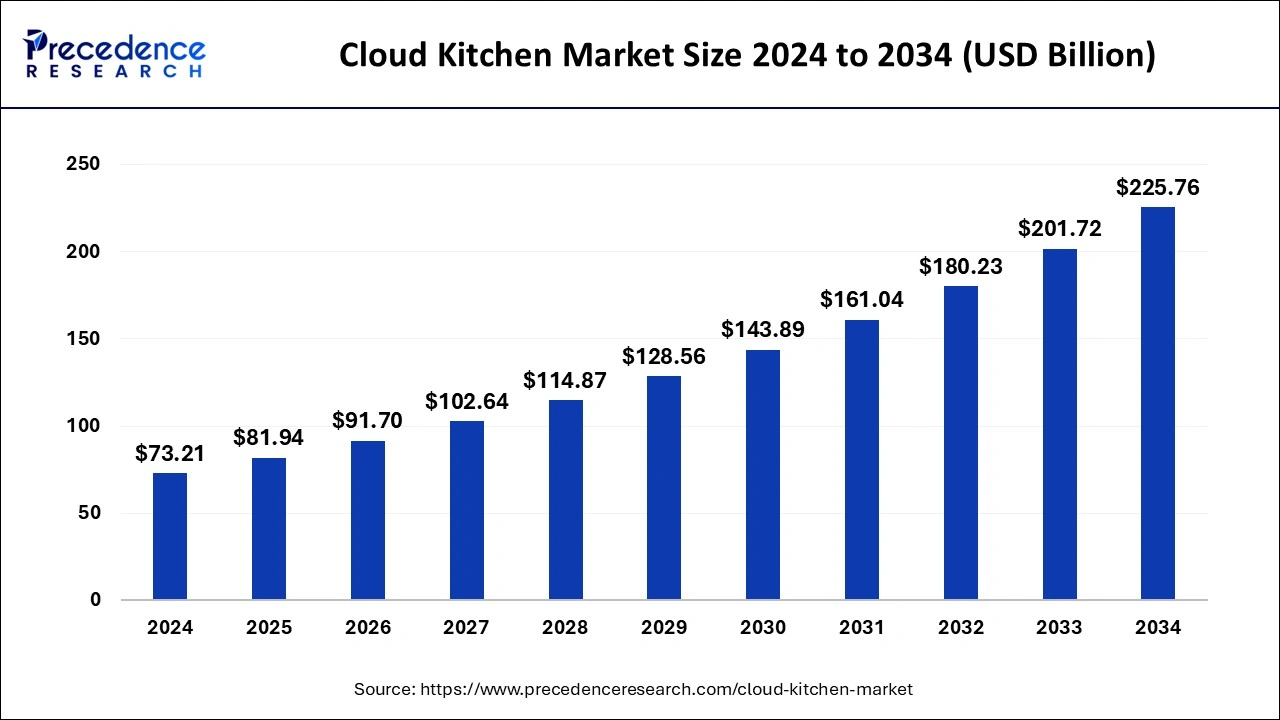
The global cloud kitchen market was valued at USD 91.70 billion in 2026 and is expected to reach USD 248.10 billion by 2035, expanding at a CAGR of 11.72% from 2026 to 2035. Growth is driven by rising demand for online food delivery, busy urban lifestyles, increasing smartphone and internet penetration, and the rapid adoption of AI-powered kitchen management, automation, and delivery technologies. The expansion of shared kitchens, digital ordering platforms, and delivery-first business models is further creating significant growth opportunities across the global food service industry.
Source: https://www.precedenceresearch.com/cloud-kitchen-market
 Get a Sample
 Table Of Content


Why is the Cloud Kitchen Market Growing So Rapidly Worldwide?
The global cloud kitchen market size is accounted at USD 81.94 billion in 2025 and predicted to increase from USD 91.70 billion in 2026 to approximately USD 248.10 billion by 2035, representing a CAGR of 11.72% from 2026 to 2035. The global cloud kitchen market growth is attributed to the increasing preference for convenient dining options, the increasing busy lifestyles and urbanization, and the rise of food delivery apps.
Key Takeaways
- Asia-Pacific dominated the market in 2025.
- North America is expected to grow at the fastest CAGR between 2026 and 2035.
- By type, the independent cloud kitchen segment generated the biggest market share in 2025.
- By type, the commissary/shared kitchen segment is expanding at the fastest CAGR between 2026 and 2035.
- By nature of operation, the single-brand segment accounted for the largest market share in 2025.
- By nature of operation, the hybrid model segment is projected to grow at a solid CAGR between 2026 and 2035.
- By cuisine type, the ethnic cuisine segment captured the highest market share in 2025.
- By cuisine type, the health-conscious and organic food segment is poised to grow at a healthy CAGR between 2026 and 2035.
- By order source, the online food aggregators segment contributed the highest market share in 2025.
- By order source, the restaurant-owned platforms and websites segment is growing at a strong CAGR between 2026 and 2035.
- By technology platform, the order and delivery management software segment held a major market share in 2025.
- By technology platform, the AI, robotics, and automation segment is expected to expand at a notable CAGR from 2026 to 2035.
- By end-user, the startups and small enterprises segment held a major market share in 2025.
- By end-user, the delivery aggregators segment is expected to expand at a notable CAGR from 2026 to 2035.
Market Size and Forecast
- Market Size in 2025: USD 81.94 Billion
- Market Size in 2026: USD 91.70 Billion
- Forecasted Market Size by 2035: USD 248.10 Billion
- CAGR (2026-2035): 11.72%
- Largest Market in 2025: Asia Pacific
- Fastest Growing Market: North America
Market Overview
A cloud kitchen is a delivery-only food preparation facility that does not have a dine-in area or storefront staff. These kitchens rely solely on online food delivery apps and direct-to-consumer websites to process orders. This model maximizes profitability by reducing the high costs associated with prime real estate and traditional dining operations. The market is driven by rapid urbanization, increasing smartphone usage, and a booming online food delivery sector. A structural shift in consumer habits, along with the expansion of food delivery platforms, makes this model highly appealing for food entrepreneurs with minimal upfront capital.
How AI is Revolutionizing the Cloud Kitchen Market?
Artificial Intelligence has become an essential part of our technology in recent years. Artificial Intelligence plays a very important role, from controlling the apps to every device. AI-generated robots can cook customer's favorite food delivered to their doorstep. The installation cost of AI is cost-effective and does not need any manpower. Orders can be accepted by voice commands, with the help of Artificial Intelligence. Customers can easily receive the same treatment as restaurants through their devices and prevent long lines to place their orders at restaurants. The number of daily sales is estimated to go up with less investment in human labor fancy infrastructure, with the installment of Artificial Intelligence. AI-generated restaurants do not require hiring people to track, take orders, cook, and deliver orders. All one needs is an AI assistant to handle all functions. Due to these advanced and convenient AI trends, AI will take food apps and other businesses to a higher level and further revolutionize the growth of the cloud kitchen market.
Market Trends
- The growing demand for food coupled with the rising global population, rising disposable income, increased demand for conveniences, and proliferation of digital technologies are the major factors that drive the global cloud kitchen market.
- The rising preferences for online food delivery over the dine-in experience and the rapid growth and penetration of the various online food delivery apps such as Zomato, Swiggy, EatSure, and Grubhub have exponentially supported the growth of the global cloud kitchen market.
- The ease of doing business and favorable government policies regarding food delivery and kitchens have made it easier to start a cloud kitchen. There are various organizations that train and guide people to start their own cloud kitchens. This has boosted the number of small and independent cloud kitchens, especially in developing countries.
- The increased penetration of the internet, growing adoption of smartphones, and adequate support from food delivery platforms have contributed to the growth of the cloud kitchen market.
- The increasing demand for online food delivery services has forced restaurateurs to start cloud kitchen outlets in order to serve online customers. The increasing penetration of social media and the digital marketing strategies adopted by the top market players is significantly contributing to the market growth.
- The doorstep delivery of food and the availability of 24/7 customer care support are boosting the adoption of food delivery apps among global customers. Cloud kitchens are gaining popularity as operating costs are lower and the profit margins are higher compared to those of the restaurants. Further, flexibility in operations is another major factor that has supplemented the growth of the cloud kitchen across the globe.
Cloud Kitchen Market Outlook
- Industry Growth Overview: The cloud kitchen will experience high growth between 2025 and 2030 as a continued increase in online food delivery drives expansion with low operating costs. The growth of delivery platforms and changing consumer behavior in the Asia-Pacific and North America will support stronger expansion rates for niche cuisines and premium meals.
- Sustainable Practices Trends: Cloud kitchens adopt eco-friendly packaging, energy-efficient appliances, and waste-reducing systems. Brands such as Rebel Foods and Kitopi are incorporating sustainable sourcing and AI-powered inventory control to reduce food waste and ensure they are able to align operations with sustainability goals globally, while meeting consumers' expectations for greener food delivery.
- Global Expansion: Leading brands are expanding into emerging regions, including Southeast Asia, the Middle East, and LATAM, to capture growing online consumers. Partnerships with delivery aggregators and real estate developers are facilitating faster setups and scales with high-demand urban cores.
- Key Investors: Venture capital and private equity firms are firmly invested in scalable, technology-driven kitchen concepts. These big investors have invested in delivery-first brands and more complex infrastructure startups for high-margin returns in the digital food system.
- Startup Ecosystem: The startup ecosystem has a vibrant community of players developing automation, virtual branding, and AI-driven optimization of menus. CloudEats in the Philippines and Karma Kitchen in the UK are good examples of developing traction with shared kitchen space and data-led culinary development.
Market Report Coverage and Key Metrics
| Report Coverage | Details |
| Market Size in 2025 | USD 81.94 Billion |
| Market Size in 2026 | USD 91.70 Billion |
| Market Size by 2035 | USD 248.10 Billion |
| Market Growth Rate from 2026 to 2035 | CAGR of 11.72% |
| Largest Market | Asia Pacific |
| Base Year | 2025 |
| Forecast Period | 2026 to 2035 |
| Segments Covered | Type, Deployment Types, Solutions, Product, Nature, and Region |
| Regions Covered | North America, Europe, Asia-Pacific, Latin America and Middle East & Africa |
Market Dynamics
Driver
Increasing Adoption of the Digital Delivery Shift
The cloud kitchen model is revolutionizing the food service industry by minimizing front-of-house real estate costs, allowing operators to focus exclusively on food preparation and delivery. Government initiatives aimed at expanding digital infrastructure have accelerated this delivery-first strategy, enabling businesses to optimize kitchen space, scale efficiently, and lower operating expenses compared to traditional dine-in restaurants.
Restraint
The Profit Drain of Third-Party Apps
Despite its potential, the market faces challenges due to oversaturation and a heavy reliance on third-party food delivery platforms. Operators struggle with high customer acquisition costs while competing for visibility within aggregator apps. Low entry barriers have led to identical virtual brands flooding the market, creating fierce competition. Furthermore, stringent safety compliance mandates pose regulatory challenges that all virtual food hubs must navigate to operate legally.
Opportunity
Expanding Reach and Margins through ONDC and AI
The market is poised for significant opportunities to reach previously untapped consumer bases. Government-backed digital commerce initiatives, such as the Open Network for Digital Commerce (ONDC), greatly reduce entry barriers, lower customer acquisition costs, and enable independent kitchens to compete fairly against larger chains. Additionally, leveraging data analytics and AI for dynamic menu pricing and demand forecasting helps maximize profitability in different regions.
Market Segmentation Analysis
Type Insights
How did the Independent Cloud Kitchen Segment Dominate the Cloud Kitchen Market?
The independent cloud kitchen segment dominated the market in 2025, primarily due to minimal overhead costs, operational flexibility, and higher profit margins associated with digital integration. By eliminating physical storefronts and dine-in spaces, operators avoid heavy infrastructure expenses. Independent owners maintain direct control over their brand identity and menu choices, allowing them to innovate and adapt to local consumer preferences. These kitchens leverage smartphone apps, quick commerce, and third-party food delivery platforms to engage directly with consumers.
The commissary/shared kitchen segment is anticipated to experience the fastest growth during the forecast period. This growth is driven by its efficient and cost-effective infrastructure, where multiple brands share space and equipment. By eliminating front-of-house operations, businesses can avoid costly retail rents. This model allows multiple restaurant brands to operate out of a single facility, making it highly scalable for regional delivery aggregators looking to expand without committing to long-term property leases. This is a primary catalyst for the surge in new food technology entrepreneurs.
Nature of Operation Insights
What made the Single Brand Segment Lead the Cloud Kitchen Market?
The single brand segment led the market in 2025, primarily because it empowers food operators to scale rapidly while maintaining lower capital and real estate costs. These kitchens manage their own menus, supply chains, and kitchen environments directly, resulting in higher profit margins and stronger local customer loyalty. They fully embrace local consumer preferences by adopting direct-to-consumer digital ordering and utilizing third-party delivery aggregators to expand their market reach. Regulatory authorities have streamlined the approval processes for delivery-only businesses.
The hybrid models segment is expected to grow the fastest during the forecast period. This is due to its ability to offset the risks associated with purely delivery-only models by establishing physical locations that build customer trust and capture diversified revenue streams. By generating income through direct sales, dine-in options, and take-away services, these models reduce the high commission fees charged by third-party delivery aggregators. Official municipal and economic reports from organizations highlight hybrid approach transforms anonymous ghost kitchens into visible, community-integrated operations.
Cuisine Type Insights
Why did the Ethnic Cuisine Segment Dominate the Cloud Kitchen Market?
The ethnic cuisine segment dominated the market in 2025, with growth driven by rapid urbanization and the development of digital food delivery infrastructure that enables the offering of specialized, authentic meals at lower operational costs. The high demand for diverse and culturally rich flavors encourages businesses to invest in quality, authentic ingredients. As internet penetration expands, government economic data indicates a surge in online food ordering. Ethnic kitchens leverage delivery aggregators to bring traditional meals to wider geographic areas while optimizing their real estate and staffing.
The health-conscious and organic food segment is projected to experience the fastest growth during the forecast period. This growth stems from the adoption of niche diet menus, transparent nutritional tracking, and the use of fast-delivery apps. Cloud kitchens are responding to the demand for high-protein, calorie-counted, and preservative-free foods. By utilizing digital ordering systems, operators can provide detailed ingredient listings and customized meal plans tailored to macronutrient needs. The agility of the ghost kitchen model allows operators to cater to health-focused consumers and busy professionals.
Order Source Insights
How did Online Food Aggregators Segment Dominate the Cloud Kitchen Market?
The online food aggregators segment dominated the market in 2025 due to its unmatched reach, data analytics capabilities, and effective delivery logistics. Government sources report that advancements in digital infrastructure and smartphone adoption bolster reliance on these third-party services. State-backed open networks offer an extensive digital consumer base to bypass the significant marketing costs typically associated with direct-to-consumer operations. These platforms provide vital consumer behavior and sales data, enabling operators to optimize their menu items, pricing, and operational efficiency.
The restaurant-owned platforms and websites segment is expected to grow the fastest during the forecast period. This is driven by the ability to bypass high aggregator commissions and maintain full ownership of customer data. By owning their platforms, kitchens can collect essential consumer data, which allows for targeted marketing and personalized upselling. Operators utilize their own websites to implement loyalty programs, discounts, and subscription models that promote repeat orders. Many brands are integrating AI-powered chatbots and recommendation engines to streamline the ordering process and increase average order values.
Technology Platform Insights
What made the Order and Delivery Management Software Segment Dominate the Cloud Kitchen Market?
The order and delivery management software dominated the market in 2025 as it enabled centralized aggregation, delivery fleet optimization, and automated kitchen routing. This software consolidates incoming orders from various third-party delivery apps and direct websites into a single dashboard, reducing errors and wait times. It instantly directs orders to specific preparation stations and incorporates real-time inventory management to automatically update stock levels as ingredients are used. Also, the software employs automated dispatch and mapping algorithms to maximize delivery radius.
The AI, robotics, and automation segment is expected to experience the fastest growth during the forecast period, primarily due to advancements in predictive demand and inventory management, automated kitchen operations, and regulatory compliance. AI systems analyze historical data, weather forecasts, and local events to accurately predict demand. Platforms are utilizing connected Kitchen Display Systems and robotic arms to synchronize preparation times, ensuring food consistency and increasing the speed of order processing. AI-driven IoT sensors also automate and log essential health and safety checks.
End-User Insights
How did the Startups and Small Enterprises Segment Lead the Cloud Kitchen Market?
The startups and small enterprises segment led the market in 2025. This growth is driven by a shift away from expensive dine-in real estate, with operators scaling through shared infrastructure and delivery apps. Government-backed schemes help small enterprise owners secure funding for working capital and kitchen equipment. Simplified licensing through the FSSAI Registration Portal provides rapid regulatory compliance and localized consumer trust. Regional programs offer incentives for branding, packaging, and the digital expansion of delivery-only food units.
The delivery aggregators segment is projected to grow fastest during the forecast period. This is due to the establishment of shared infrastructure hubs, the use of consumer data, and the facilitation of SaaS-like analytics for independent commercial kitchens. These companies analyze local search queries and purchasing habits to create proprietary, delivery-only menus, preparing meals exclusively for their platforms and expanding localized food options. They share order heatmaps, trending cuisines, and customer retention metrics with their cloud kitchen partners to adapt menus targeting specific demographics.
Market Regional Analysis: North America, Europe, Asia-Pacific
What is the Asia Pacific Cloud Kitchen Market Size?
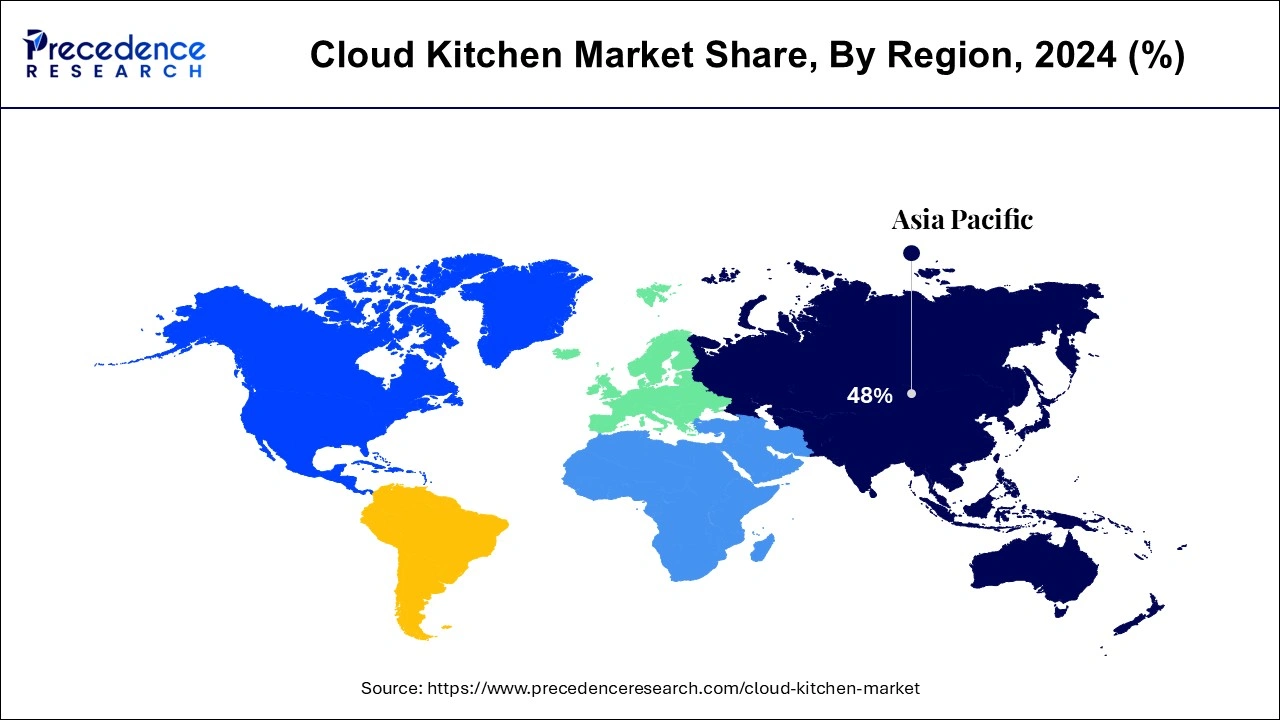
Asia Pacific was the leading cloud kitchen market that garnered a market share of more than 60% in 2025. Asia Pacific is the home to more than half of the global population which provides a huge consumer base. The rapid urbanization, rising disposable income, busy and hectic lifestyle, rising penetration of the internet, and the increasing adoption of the smartphones are some of the significant macroeconomic factors that drives the growth of the cloud kitchen market in Asia Pacific. Moreover, the presence of huge youth population and the rising demand for food along with the rising population is supplementing the market growth. The countries like China and India are showing promising growth opportunities for the market players owing to the strong economic growth in the region. The rising demand for the international cuisines and rising preferences for the food delivery over dine-in is supplementing the growth of the Asia Pacific cloud kitchen market. For this, the Asia Pacific is also estimated to be the fastest-growing market.
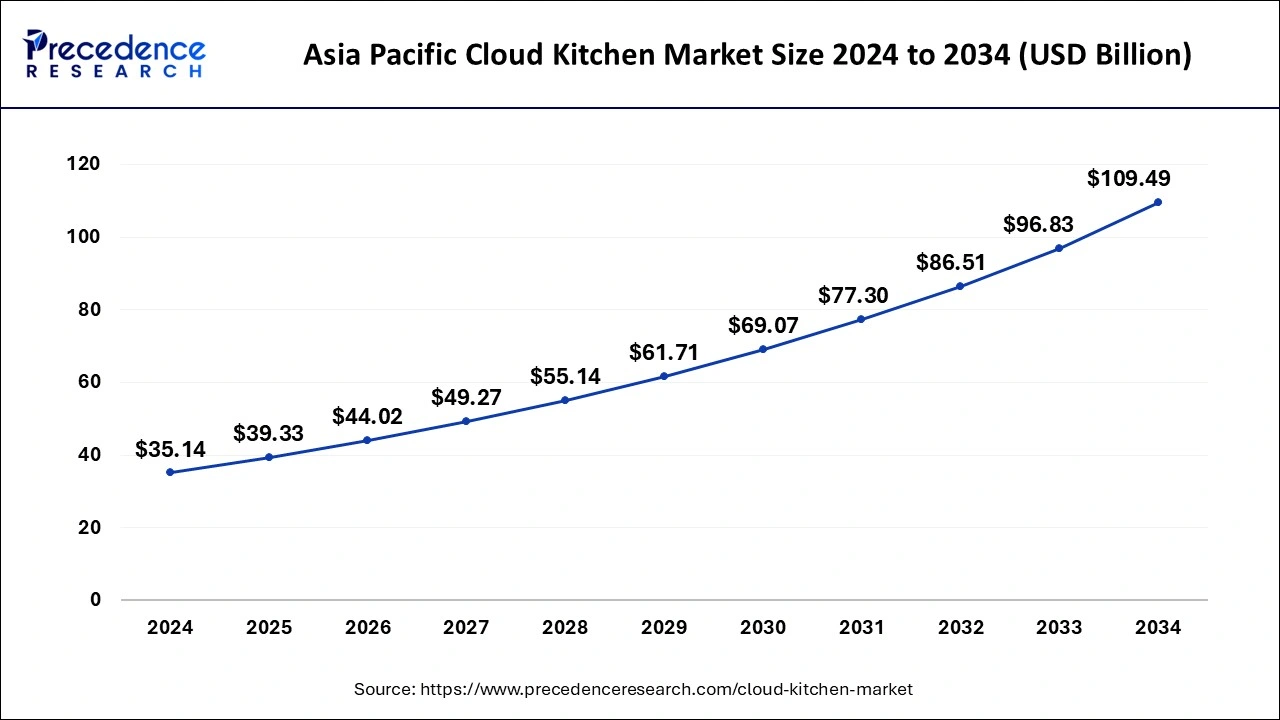
The Asia Pacific cloud kitchen market size is evaluated at USD 39.33 billion in 2025 and is predicted to be worth around USD 120.59 billion by 2035, rising at a CAGR of 11.86% from 2026 to 2035.
India has quickly become a stronghold player in the Asia Pacific cloud kitchen market. The youth population, with its technology-led behavior in harmony with the increasing lure of food delivery platforms like Zomato, Swiggy etc. and the advancements in cloud kitchens as a concept has only increased demand for virtual kitchens. Coupled with high urbanization, disposable incomes and the preference of eaters for quick and inexpensive meals, it has rendered cloud kitchens a very lucrative and appealing business idea. With startups like Rebel Foods, EatSure and increasingly other companies developing multi-brand kitchen models, cloud kitchens are gaining traction in sectors and expanding aggressively. Finally, lower operating costs compared to traditional restaurants create exciting opportunities for entrepreneurs/investors across India due to acceptable business models.
How did North America Dominate the Cloud Kitchen Market?
North America is expected to achieve the fastest growth during the forecast period, driven by rising disposable incomes, changing urban lifestyles, and global digital adoption, which foster a growing demand for app-based food delivery. Official consumption data from the USDA confirms a sustained structural shift toward spending on food away from home. The U.S. FDA regularly updates food codes and safety guidelines, aligning with these modern regulatory environments to facilitate controlled, digitized, and contactless order fulfillment, which supports fast delivery networks and smart device integration for profitability.
U.S. Market Trends
The U.S. plays a distinctive role in this region, characterized by advanced kitchen automation, high-density multi-brand virtual kitchens, and AI integration in inventory forecasting. Federal programs support food service, restaurant, and agricultural technology entrepreneurs by providing resources for scaling, commercialization, and regulatory compliance. These initiatives include SBA Business Resources for launching asset-light operations and USDA Innovation Funding for food science and safety compliance.
United Kingdom - Europe's Virtual Food Pioneer
The United Kingdom led the European cloud kitchen market due to its well-established delivery platforms like Deliveroo and Just Eat. Cloud kitchen operators have focused more on healthier menus and convenient delivery options, which have aligned nicely with evolving consumer habits and faster overall growth of the market.
Europe Cloud Kitchen Market
Cloud kitchens became a significant feature of the European foodservice landscape, providing a diverse range of cuisines and dining options to urban consumers. This shift in consumer behavior has increased the proliferation of cloud kitchen facilities in major European cities, catering to a wide range of tastes and preferences. Major cities such as Paris, London, Berlin, and Madrid have become hotspots for cloud kitchen facilities, catering to urban dwellers seeking convenient and diverse dining options.
For instance, Keatz, a restaurant chain that operates without physical locations and creates food exclusively for delivery, raised $13 million to expand its network of cloud kitchens across Europe. Keatz was launched in 2016 and currently operates 10 cloud kitchens in Germany, the Netherlands, and Spain.
Latin America - Flavor Meets Innovation
Latin America is seeing the rapid adoption of cloud kitchens due to its high percentage of youth, smartphone penetration, and expanded food delivery culture. The sectors affordable kitchen rentals and the emergence of app-based platforms have enabled small businesses to rapidly and seamlessly enter the digital food market.
Brazil presents the strongest demand for the cloud kitchen segment, largely fueled by urbanization and working lifestyles. Food delivery platforms such as iFood have partnered with cloud kitchens, creating large opportunities for local restaurants to grow without the fixed costs of retail kitchens.
Middle East & Africa - The Desert's Digital Feast
The Middle East & Africa experienced steady growth from an increase in online delivery and smartphone usage. New virtual food brands benefited from affordable rental kitchens and heightened tourism activity, particularly in major cities such as Dubai and Riyadh.
The UAE has the largest cloud kitchen market in the MEA region, with a tech-friendly population and a large expat population base. Cloud kitchens accelerated rapidly as brands leveraged advanced analytics and AI to optimize their menu management, reduce costs, and account for varied food preferences.
Strategic Recommendation for Stakeholders
Operators must ensure that their cloud kitchen has a well-designed, user-friendly website optimized for search engines. Also, check that the cloud kitchen is prominently featured on major food delivery platforms like Uber Eats, DoorDash, and Grubhub. Use data from food delivery platforms to know consumer preferences, peak ordering times, and popular dishes. Optimize your listings with attractive photos, detailed descriptions, and competitive pricing. This helps businesses to gain profit. Consumers are increasingly drawn to brands that demonstrate a commitment to environmental responsibility. Cloud kitchens should also focus on advanced delivery solutions, such as AI-driven route optimization or contactless delivery options. There is a rising trend towards health-conscious eating. Cloud kitchens that provide nutritious, organic, or dietary-specific options are likely to attract a health-conscious consumer base.
Future Outlook and Strategic Recommendations
Emerging business models
Cloud kitchen business models help businesses expand an existing restaurant or start a virtual brand at a minimal cost. This model enables them to scale their operations and explore new markets. A brand-owned cloud kitchen model operates under one brand and focuses only on delivering a specialized menu. A multi-brand cloud kitchen operates multiple brands within a single facility, each providing distinct cuisines. Imagine running multiple cuisines like Italian, Indian, and Mexican, all from one kitchen. Delivery platform-owned kitchens handle everything from orders to delivery. With this model, owners can rent a kitchen and focus only on cooking. Kitchen as a Service (KaaS) is a model in which businesses rent out fully equipped kitchen spaces to food operators. This model is a need for startups or businesses seeking to scale without the hassle of investing in a permanent location.
Market Competitive Landscape: Leading Companies and Strategies
The global cloud kitchen market is highly consolidated and established, with major operators like Rebel Foods, Kitopi, Curefoods, and CloudKitchens focusing on scalable brand models and kitchen automation to meet the exponential surge in online food delivery. For instance, operators use U.S. International Trade Administration resources to scale through strategic partnerships and virtual franchise programs.
Looking forward, many established players and startups, including ZOIL, Zomato, and Swiggy, are heavily investing in AI-driven demand forecasting, while emerging entrants face strict regulatory and food safety barriers. Furthermore, intense competition from many delivery aggregators acts as a major restraining factor, making unit-level profitability challenging for new independent operators.
Cloud Kitchen Market Companies
- Kitchen United: Offers shared kitchen facilities, turnkey systems, and technology that assist restaurant brands in providing an efficient method of expansion and delivery operations to densely populated urban market areas.
- Rebel Foods: Rebel Foods is a multi-brand cloud kitchen based on proprietary Rebel OS that can easily expand brands, scale operations, and manage internet restaurant platforms worldwide.
- DoorDash Kitchen: Provides ghost kitchen services with the assistance of the logistics system and data analytics, to empower restaurants to expand to new delivery markets and streamline their operations.
- Zuul Kitchen: Offers a ZuulOS platform that allows virtual food halls, batched deliveries, and multi-brand order management that enhances operational efficiency and coordination of delivery.
- Keatz: Operates multi brand cloud kitchens across Europe, preparing delivery optimized meals from a single kitchen space under several virtual restaurant brands.
- Kitopi: Provides end to end cloud kitchen operations and technology support for restaurants to scale delivery only services without managing physical storefronts.
- Ghost Kitchen Orlando: Runs delivery only kitchens that host a variety of virtual food brands from a central location in Florida, enabling efficient food delivery without dine in facilities.
- Dahmakan: Offers healthy, ready to eat meals via a direct to consumer cloud kitchen model, focusing on nutritious and convenient food delivered to customers.
- Starbucks: Through its Star Kitchen initiative, delivers Starbucks' coffee, snacks, and light meals via cloud kitchen operations to meet rising delivery demand.
- CloudKitchens: Provides shared commercial kitchen spaces, integrated technology, and support services for delivery focused restaurants and virtual brands.
Recent Investments
- In February 2026, the UAE-based cloud kitchen platform Kitopi raised $50 million in a growth capital round led by EvolutionX, a private credit provider backed by Temasek and DBS Bank. This funding comes after Kitopi achieved profitability and will be used to scale its homegrown brands in high-growth GCC markets, including the UAE, Saudi Arabia, Qatar, Bahrain, and Kuwait, while also accelerating its regional and international franchising strategy.
- In July 2025, EatClub, a Mumbai-based cloud kitchen startup, successfully raised Rs 185 crore which is approximately $22 million in a funding round led by global venture capital giant Tiger Global, following a major fundraising and strategic reorganization effort.
Recent Developments
- In February 2026, the UAE-based cloud kitchen platform Kitopi raised $50 million in a growth capital round led by EvolutionX, a private credit provider backed by Temasek and DBS Bank. This funding comes after Kitopi achieved profitability and will be used to scale its homegrown brands in high-growth GCC markets, including the UAE, Saudi Arabia, Qatar, Bahrain, and Kuwait, while also accelerating its regional and international franchising strategy.
- In July 2025, EatClub, a Mumbai-based cloud kitchen startup, successfully raised Rs 185 crore which is approximately $22 million in a funding round led by global venture capital giant Tiger Global, following a major fundraising and strategic reorganization effort.
- In March 2026, Wagg n Dine launched in Chennai at Taj Connemara, specializing in fresh, human-grade meals for pets. Their offerings include natural ingredients delivered to doorsteps, serving as an alternative to processed pet food. The pet care industry in India is growing at over 20%, with a booming pet cloud kitchen sector. (https://www.chennaionline.com )
- In April 2025, Akkineni Naga Chaitanya launched Scuzi, a cloud kitchen in Hyderabad, focusing on comfort food with a global twist. Inspired by his travels, the menu offers gourmet-style dishes combining familiar flavors and innovative preparation, catering to diverse palates for a unique dining experience. (https://www.bwhotelier.com )
- In October 2024, a culinary venture, Karigari by Chef Harpal Singh Sokhi announced the launch of its first cloud kitchen in Noida Sector 4. This marked an important milestone in the brand's continued growth and a key step in its strategy to expand into Tier 1 and Tier 2 cities across India.
- In February 2024, Healthy Food brand Salad Days launched its first cloud kitchen and expanded its operations in Mumbai. The aim behind this launch was to establish a strong foothold across Mumbai's key districts such as Khar, Lower Parel, and Andheri West.
- In December 2024, India's leading cash-flow-based financing platform, Velocity earmarked 200 Cr in 2025 to accelerate and support growth in the cloud kitchen ecosystem and restaurants across India.
Segments Covered in the Report
By Type
- Independent Cloud Kitchen
- Commissary/Shared Kitchen
- Kitchen Pods
- Aggregator-Owned Cloud Kitchens
- Restaurant-Branded Cloud Kitchens
By Nature of Operation
- Single Brand
- Multi-Brand
- Hybrid Models
By Cuisine Type
- Fast Food (Burgers, Pizzas, etc.)
- Ethnic Cuisine (Indian, Chinese, Mexican, etc.)
- Health-Conscious & Organic Food
- Gourmet & Premium Offerings
- Others
By Order Source
- Online Food Aggregators (Swiggy, Zomato, Uber Eats, DoorDash, etc.)
- Restaurant-Owned Platforms/Websites
- Phone Orders
- Walk-in/Takeaway (limited cases)
By Technology Platform
- Kitchen Management Systems
Order & Delivery Management Software - POS & Payment Gateways
- Inventory & Supply Chain Software
- Customer Engagement & Loyalty Tools
- AI, Robotics & Automation (e.g., smart kitchens, robot chefs)
By End-User
- Startups & Small Enterprises
- Established Restaurant Chains
- Delivery Aggregators
- Catering Services
By Region
- North America
- Latin America
- Europe
- Asia-pacific
- Middle and East Africa
For inquiries regarding discounts, bulk purchases, or customization requests, please contact us at sales@precedenceresearch.com
Frequently Asked Questions
Tags





Ask For Sample
No cookie-cutter, only authentic analysis – take the 1st step to become a Precedence Research client
 Get a Sample




 sales@precedenceresearch.com
 Schedule a Meeting
