



Controlled Substance Market Size, Key Companies, Company Market Share, Patient Volume, Treatment Adoption Rates, Pricing Analysis, Regulatory Landscape, Competitive Positioning, and Demand Forecast
Controlled Substance Market (By Drug: Opioids, Stimulant, Depressants, Cannabinoids; By Application: ADHD, Pain Management, Depression, Sleep Disorder, Cough Suppression, Anxiety, Seizures, Others; By Distribution: Hospital Pharmacy, Retail Pharmacy, Online Pharmacy) - Global Industry Analysis, Size, Trends, Leading Companies, Regional Outlook, and Forecast 2026 to 2035
Source: https://www.precedenceresearch.com/controlled-substance-market
 Get a Sample
 Table Of Content


What is the Controlled Substance Market Size?
The global controlled substance market size is calculated at USD 98.70 billion in 2025 and is predicted to increase from USD 103.97 billion in 2026 to approximately USD 165.36 billion by 2035, expanding at a CAGR of 5.30% from 2026 to 2035. Increased research and development (R&D) activities are expected to support the invention of a better drug delivery system; subsequently, the global controlled substance market will show significant growth.
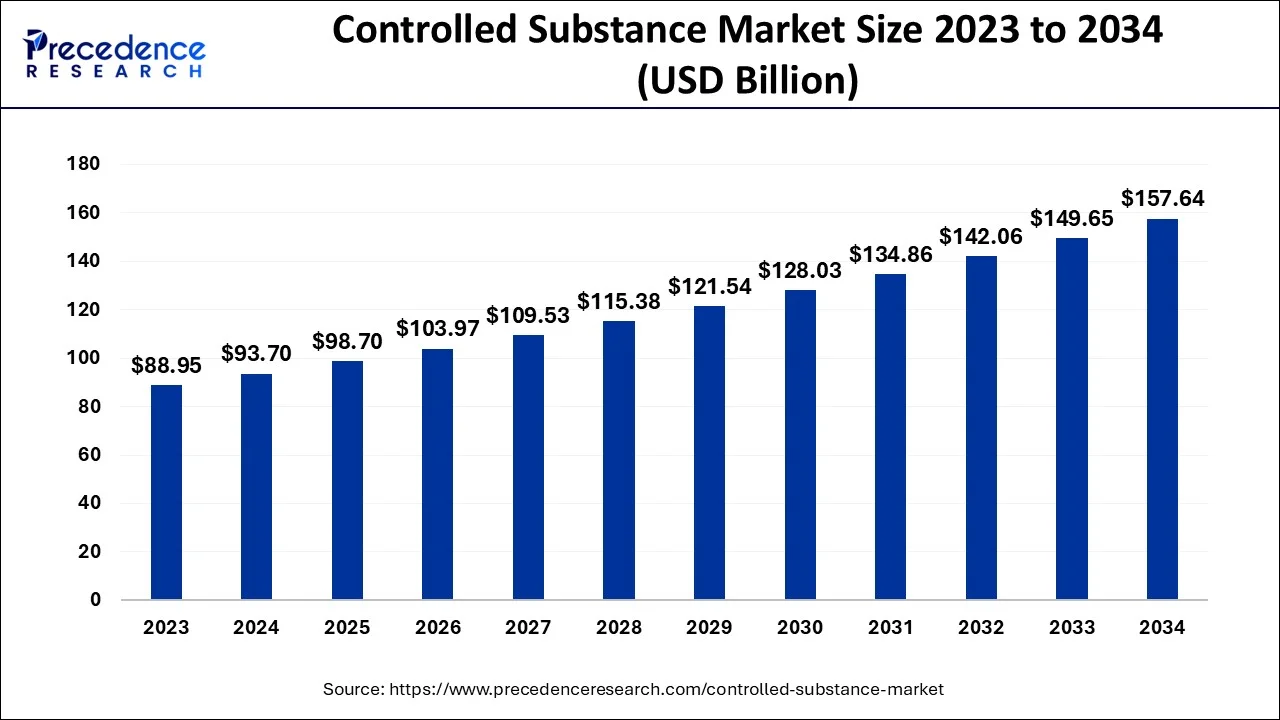
Controlled Substance Market Key Takeawayes
- North America region dominated the market in 2025.
- By drug, the opioid segment dominates the market.
- By application, the ADHD segment leading the market.
- By distribution, the retail pharmacy segment is predicted to the fastest-growing market from 2026 to 2035.
What is a Controlled Substance?
Controlled substances are the type of drugs that governments highly control. The restrictions associated with controlled substances are imposed on the drugs' manufacturing, sale, usage, handling, and distribution. Controlled substances can be highly addictive. Overusing such drugs can cause multiple side effects and physical and mental dependence, which are the primary reasons behind the stringent regulations imposed on the controlled substance market.
Morphine, Valium, and Ritalin are the few widely prescribed controlled substances on the market. Moreover, medications such as Xanax, Restoril, Adderall, Dexedrine, Lunesta Focalin, Concerta, Klonopin, and Ambien are controlled drugs. Controlled medications are used to treat hypertension, anxiety, insomnia, travel disorders, cognitive issues, depression, attention deficit hyperactivity disorder (ADHD), fatigue, narcolepsy, and many other problems.
The controlled substances are prescribed by doctors/physicians after understanding patients' overall physical and mental conditions and considering all risk factors associated with controlled drugs. The primary aim of controlled medications is to reduce pain and provide quality healthcare to patients. There has been significant growth in the awareness of controlled substances as they help manage multiple issues.
The global controlled substance market is projected to grow with increasing approvals for e-prescription for controlled substances. E-prescriptions are considered a key trend in the market. The global controlled substance market focuses on the utility and rapid adoption of electronic prescribing methods as they are convenient for both patients and healthcare providers.
How is AI Influencing the Controlled Substance Industry?
Artificial Intelligence is transforming the controlled substance industry by accelerating drug discovery, improving manufacturing precision, enhancing supply chain logistics, and improving compliance with strict regulatory requirements. AI algorithms determine vast biological data, such as genomics and proteomics, to detect potential drug targets, enhancing the speed and even success rate of finding promising molecules.
AI-powered software determines large datasets of prescription behaviors along with inventory management to identify anomalies in real-time, assisting hospitals and clinics in detecting theft or diversion by staff.
Market Outlook
- Industry Growth Overview: The market continues to expand due to the high incidence of chronic diseases and the innovations in making pain and mental health treatment more effective and appealing.
- Sustainability Trends: Pharmaceutical operations are the main source of sustainability reminders that eco-friendly chemistry, responsible water use, and consumer-friendly packaging are the forces constantly gaining power.
- Global Expansion: Global expansion moves faster due to the newfound markets, partnerships outside the country, and more effective networks for the trade of pharmaceuticals.
- Major Investors: The companies that provide the most financing are UPM Pharmaceuticals, Johnson & Johnson, Merck & Co., Inc., AbbVie Inc., Grünenthal, Novartis AG, and Pfizer Inc.
- Startup Ecosystem: The startups are working hard on digital health integration, compliance technologies, and innovations addressing safe controlled substance management.
Market Scope
| Report Coverage | Details |
| Market Size in 2025 | USD 98.70 Billion |
| Market Size in 2026 | USD 103.97 Billion |
| Market Size by 2035 | USD 165.36 Billion |
| Growth Rate from 2026 to 2035 | CAGR of 5.30% |
| Largest Market | North America |
| Fastest Growing Market | Asia Pacific |
| Base Year | 2025 |
| Forecast Period | 2026 to 2035 |
| Segments Covered | Drug, Application and Distribution |
| Regions Covered | North America, Europe, Asia-Pacific, Latin America and Middle East & Africa |
Market Dynamics
Physicians are prescribing controlled substances to provide a high-therapeutic efficacy for patients, which has boosted the global controlled substance market growth in recent years. The adoption of controlled substances in pain management during the treatment of multiple diseases over-prescription is a significant driver for the growth of the controlled substance market.
The World Health Organization (WHO) is focused on improving the availability of controlled substances globally, along with appropriate policies and regulations. This has propelled the growth of the market.
Increased research and development (R&D) investment to discover controlled drugs is a driving factor in the controlled substance market. The increasing prevalence of chronic diseases such as diabetes, cancer or hypertension demands controlled medications in the market, subsequently aiding the growth of the global controlled substance market.
Controlled drugs are capable of offering treatment for an extended period. Considering the advantages of controlled drugs, the demand for opioids, stimulants, and depressants is likely to surge during the forecast period. Moreover, strengthening the distribution network owing to the development of pharmaceutical infrastructure is propelling the growth of the global controlled substance market.
On the other hand, a lack of awareness about controlled drugs is likely to hamper the global controlled substance market growth. Stringent regulations imposed by governments in different countries are major restraining factors for market growth. There are several prolonged and short-term side effects caused by controlled drugs, and the risk of side effects is likely to create an obstacle to market growth.
Covid-19 Impacts
The spread of the deadly coronavirus led to a prolonged lockdown in 2020. The pandemic adversely affected the global controlled substance market and showed uncertainties in the market revenue during 2020-2021. The overall controlled substance market was affected during the Covid-19 pandemic due to a halt in the production cycle. All imports and exports of ingredients required to produce controlled drugs/substances were paused due to imposed restrictions on moving, halted airline travel and closed borders. This impacted the supply chain.
Controlled substance manufacturing companies were forced to shut down in order to contain the spread of coronavirus, which led to a shortage of stock globally. Scientists/researchers focused on developing novel drugs for fighting against coronavirus; thus, the controlled substance market faced negligence. During this period, research, innovation and sales of new controlled substances were hampered.
Controlled substances are widely used to treat ADHD, depression and sleep disorders. Patients suffering from such a disorder require immediate access to medicine/drugs. The imposed restrictions challenged the continuity of the treatment as hospital visits were reduced during the lockdown period.
With the growing challenge of balancing the increased demand and shortage of controlled substances, the International Narcotics Control Board held a meeting on 19th March 2021 (during the pandemic phase) with competent authorities of twenty-two countries. The conference/meeting aimed to discuss the supply problems and find best practices for making controlled substances available in the market. To facilitate the availability of controlled substances, countries were advised to review their import and export authorization policies.
Employees working in the pharmaceutical industry for the controlled substance market lost jobs during the pandemic due to the negatively impacted global economy. Due to the imposed lockdown, the global controlled substance market adopted a remote work culture. However, these impacts showed up in the initial phase of the lockdown.
The supply chain, manufacturing units and other essential services required for the production of controlled drugs and chemicals were allowed to reopen with few relaxations due to increased demand for controlled substances needed for the treatment of ADHD, depression, cough and other disorders.
Segment Insights
Drug Insights
The global controlled substance market is segmented into opioids, stimulants, depressants and cannabinoids. Among all, the opioid segment dominates the global controlled substance market. Opioids are pain-relieving drugs that are widely used in the treatment of cancer. The increasing prevalence of cancer across the globe has been a major driving factor for the growth of the opioids segment. Despite multiple benefits, many healthcare providers are focused on reducing the use of opioids. The step is to prevent patients from getting addicted to opioid drugs.
Application Insights
The global controlled substance market is segmented into ADHD, pain management, depression, sleep disorder, cough suppression, anxiety, seizures and others. The rising prevalence of attention deficit hyperactivity disorder (ADHD) and the newest drug discovery have made ADHD a leading segment of the global controlled substance market.
ADHD envelops impulsivity, due to which behavior is affected. The cause of ADHD is still indistinct. Growing awareness about mental illness and increased research and development activities in the neuroscience field has fueled the segment's growth.
Furthermore, the pain management segment is expected to show noticeable growth during the forecast period. Controlled substances in the pain management segment are widely used to treat cancer to reduce discomfort. The increasing number of cancer cases globally has boosted the number of opioid prescriptions, considered a primary cause that aids the growth of the pain management segment in the controlled substance market.
Controlled substances/drugs such as Benzodiazepines treat sleep disorders and insomnia. Rising cases of such illnesses have boosted the demand for controlled substances. The increased demand makes the sleep disorder segment the fastest-growing global controlled substances market.
Distribution Insights
The global controlled substance market is segmented into hospital pharmacies, retail pharmacy & online pharmacies. The retail pharmacy segment is the fastest-growing global controlled substance market segment. Retail pharmacies are licensed and provide patients with medications at retail prices. The ease of access to the retail pharmacy has boosted the segment's growth. Many governments worldwide have allowed retail pharmacies to access and prescribe controlled drugs.
However, the hospital pharmacy segment is maintaining growth as hospital pharmacies hold a separate unit/department for ordering, dispensing, transporting and prescribing controlled pharmaceuticals. Hospital pharmacies are still the most preferred distributors of controlled drugs that aid the growth of the segment in the global market.
Regional Insights
How is North America leading in the Controlled Substance Market?
North America is a leading region in the controlled substance market. Increased numbers of patients and developing healthcare infrastructure have boosted the demand for controlled substances in North America. The rising investments in research and development (R&D) activities, majorly in the U.S. and Canada, have surged the market's growth in North America. Europe is expected to witness significant growth in the upcoming years.
The presence of major key players and relaxation in the prescription policies by several governments and governmental bodies are driving factors for the growth of the controlled substance market in Europe. However, the high-cost medications for treating ADHD, depression and other disorders are likely to hamper the European controlled substance market.
North America is at the forefront of the market because of its sophisticated healthcare systems, strict regulatory enforcement, and the large number of patients suffering from chronic neurological, cardiovascular, and oncological diseases. The market is experiencing the emergence of new opportunities thanks to the introduction of abuse-proof drug formulations and digital health integration, which will make it possible to prescribe, monitor, and engage patients securely in the treatment process through the regulated therapeutic pathways.
U.S. Controlled Substance Market Trends
The U.S. promises a lot of growth potential, as changing and maturing regulatory scenarios will be the main driver of this growth. The pharmaceutical industry that the United States leads in already includes secure telemedicine, and that is constantly evolving in the area of controlled substances. Not only is this development supporting compliance, but also safeguarding the entire process in terms of accuracy monitoring and responsible medical usage on a nationwide scale.
How is Asia-Pacific performing in the Controlled Substance Market?
Asia Pacific is considered the fastest-growing region in the controlled substance market. Favoring government policies for the development of controlled drugs has propelled the market's growth in Asia Pacific. Along with this, Latin America is also expected to witness growth in the controlled substance market due to the increased demand for medically prescribed drugs in Colombia. The controlled substance market in developing countries of the Middle East and Africa is showing steady growth. The market will significantly boost in Latin America and MEA during the forecast period of 2026-2035.
Asia-Pacific is the region with the fastest growth rate, and that is due to industrial expansion, more healthcare awareness, and stronger pharmaceutical manufacturing. Opportunities are in cost-effective production, foreign investment inflow, and building up regulated manufacturing capabilities to handle the flow of secured supply chains for the substances that are controlled substances.
India Controlled Substance Market Trends
India is a focal point for growth, and the reason for this is the country's huge generics production and the government's support of domestic production through various initiatives. The potential for growth lies in the areas of absolute production, research in the field of controlled substances, and supply chain development that would be in line with regulatory and quality standards that are flexible and evolving.
What are the driving factors of the Controlled Substance Market in Europe?
Europe is a somewhat old market that still has a small amount of regular growth. The strict standards of regulation ask for this quality, no less than that. One of the sustainability scenarios that the pharmaceutical industry has to cope with also affects the case of Europe, which makes the grants of AI in compliance systems and the processes of advanced manufacturing the main areas of investment, as they enhance the operational efficiency and control of substance oversight.
Germany Controlled Substance Market Trends
Germany has an impeccable combination of pharmaceutical engineering and disciplined regulation. The country gives a lot of support to innovations like high-compliance manufacturing, controlled substance API development, and secure production workflows. This will be a very good place for companies whose priorities are precision, safety, and regulatory excellence.
Latin America Controlled Substance Market: Pharmaceutical Demand and Access Trends
Latin America's market shows notable growth during the forecast period. Latin American countries are witnessing an increasing need for affordable healthcare solutions, mainly in the form of generic medicines. These countries have been grappling with the high expense of branded drugs, and generics present a cost-effective alternative that can cater to the large middle-income population.
It is experiencing an increase in chronic diseases such as diabetes, cardiovascular diseases, and even cancer, largely due to lifestyle changes, urbanization, and an aging population. As healthcare systems become more sophisticated, there is a rising demand for medicines to treat these chronic conditions.
Argentina Controlled Substance Market Trends
Argentina's market is driven by the fact that laboratories are free to set expenses and adjust them in line with inflation. However, high inflation along with limited consumer purchasing power continues to cause difficulties in market stability. Cold chain logistics for pharmaceuticals like vaccines and biologics are becoming more sophisticated, boosted by strict Good Distribution Practice (GDP) requirements.
Navigating Regulation and Demand: MEA Controlled Substance Market Analysis
MEA's market shows rapid growth during the forecast period. It is driven by evolving consumer preferences, which favor digital-first engagement channels. Modern buyers thus increasingly prioritize seamless online access, personalized digital experiences, and rapid delivery options, reflecting broader shifts toward e-commerce and telehealth solutions.
UAE Controlled Substance Market Trends
UAE's market is driven by an aging population, rising chronic pain cases, and significant healthcare infrastructure investments. The UAE has significantly tightened drug laws and enforcement, including enhanced penalties and centralized control under bodies like the Emirates Drug Establishment and the National Anti-Narcotics Authority, which aim to strengthen compliance, licensing oversight, and public safety.
Controlled Substance Market-Value Chain Analysis
- R&D: R&D is the process of finding new controlled substances and improving manufacturing techniques under very strict scientific and regulatory oversight.
Key Players: Pfizer, Johnson & Johnson, Novartis - Clinical trials and regulatory approvals: Clinical trials and regulatory approvals consist of a series of human testing and the obtaining of permission from the authorities before a product can be marketed.
Key Players: IQVIA, Covance, FDA, EMA - Formulation and final dosage: The formulation and final dosage preparation process involves the transformation of the active ingredients into stable and accurate dosage forms that are suitable for controlled medical use.
Key Players: Teva, Mylan - Packaging and serialization: During packaging and serialization, secure containment is provided, and traceability is assured through unique identification for compliance and supply chain transparency.
Key Players: Gerresheimer, West Pharmaceutical Services - Distribution to hospitals and pharmacies: Distribution to hospitals and pharmacies of controlled substances requires the use of specialized logistics to ensure that the transport is secure and that there is access only to authorized personnel.
Key Players: McKesson, Cardinal Health, AmerisourceBergen
Controlled Substance Market Companies
- Merck & Co. Inc: Merck is present in the area of controlled substances through the development and marketing of various pharmaceutical products that are under regulation and are effective in different therapeutic areas.
- Johnson & Johnson: Johnson & Johnson has a diversified drug development and advanced medical technology platforms that put them at the forefront in the field of controlled substances.
- Orbis Biosciences: Orbis Biosciences provides the pharmaceutical industry with technologies for controlled release delivery, which makes it possible to accurately dose the most powerful and closely monitored pharmaceutical compounds.
Other Major Companies
- Aradigm Corporation
- Corium International
- G.W. Pharmaceuticals
- Lannett
Recent Developments in the Controlled Substance Industry
- In August 2025, Saudi Arabia introduced online clearance permits for prescribed medications, aimed at aiding travelers and improving efficiency. The SFDA provides details on obtaining these permits for controlled drugs, including narcotics and psychotropics, through its Controlled Drugs System (CDS).
(Source: news.az) - In May 2025, the WHO's new guideline promotes balanced national policies for controlled medicines, ensuring safe, equitable, and affordable access. Presented at the Seventy-eighth World Health Assembly, it addresses treatment of pain, mental health, and substance use disorders.
(Source: who.int) - In December 2022, a leading biotech company in the U.S., AbbVie, announced that the company received approval from the U.S. Food & Drug Administration (FDA) for its Cariprazine (Vraylar) as an adjunctive therapy for major depressive disorders in adults.
- In December, the government of Yukon, a Canadian territory, announced the expansion of pharma services. Pharmacists in Yukon can now access and prescribe controlled substance medicines for travel-related disorders.
- In December 2022, Spark Biomedical announced a strategic partnership with AcuityMD. The partnership aims to promote Spark's noninvasive therapeutic to treat withdrawal symptoms caused due to opioid disorder. Spark's therapy offers a controlled tool that sends mild impulses to the brain to help alleviate opiate symptoms.
- In December 2022, The New Zealand government amended the Misuse of Drugs Regulations 1997. The amendments will allow prescribers to issue signature-exempt prescriptions for controlled drug medicines. The controlled medication for ADHD will be covered by a single e-script which will be helpful for patients that have to visit G.P. for regular prescriptions from rural areas.
- In June 2022, Bicycle Health, a virtual opioid use disorder treatment startup, raised $50 million in a series B funding round led by InterAlpen Partners for virtual opioid use disorder treatment.
- In May 2022, the U.S. Food and Drug Administration (FDA) approved Quelbree, a non-stimulant medication for ADHD in adults. Quelbree received approval from the FDA in 2021 to treat ADHD in kids under six years of age.
- In April 2022, the government of Florida took a step towards expanding telemedicine facilities. The government decided to remove prior restrictions on prescription controlled substances in telemedicine. The new law in Florida now allows telemedicine prescriptions for controlled substances with very few and narrow exceptions.
Segments Covered in the Report
By Drug
- Opioids
- Stimulant
- Depressants
- Cannabinoids
By Application
- ADHD
- Pain Management
- Depression
- Sleep Disorder
- Cough Suppression
- Anxiety
- Seizures
- Others
By Distribution
- Hospital Pharmacy
- Retail Pharmacy
- Online Pharmacy
By Geography
- North America
- Europe
- Asia-Pacific
- Latin America
- The Middle East and Africa
For inquiries regarding discounts, bulk purchases, or customization requests, please contact us at sales@precedenceresearch.com
Frequently Asked Questions





Ask For Sample
No cookie-cutter, only authentic analysis – take the 1st step to become a Precedence Research client
 Get a Sample
.webp)



 sales@precedenceresearch.com
 Schedule a Meeting
