



Sleep Disorder Market Size, Share, and Trends 2026 to 2035
Sleep Disorder Market (By Disorder: Restless Legs Syndrome, Narcolepsy, Insomnia, Sleep Apnea; By Product: Diagnostics, Therapeutics; By End-user: Hospitals & Sleep Laboratories, Home Care Settings & Individuals) - Global Industry Analysis, Size, Trends, Leading Companies, Regional Outlook, and Forecast 2026 to 2035
Source: https://www.precedenceresearch.com/sleep-disorder-market
 Get a Sample
 Table Of Content


What is the Sleep Disorder Market Size?
The global sleep disorder market size is calculated at USD 31.79 billion in 2025 and is predicted to increase from USD 35.61 billion in 2026 to approximately USD 94.82 billion by 2035, expanding at a CAGR of 11.55% from 2026 to 2035.
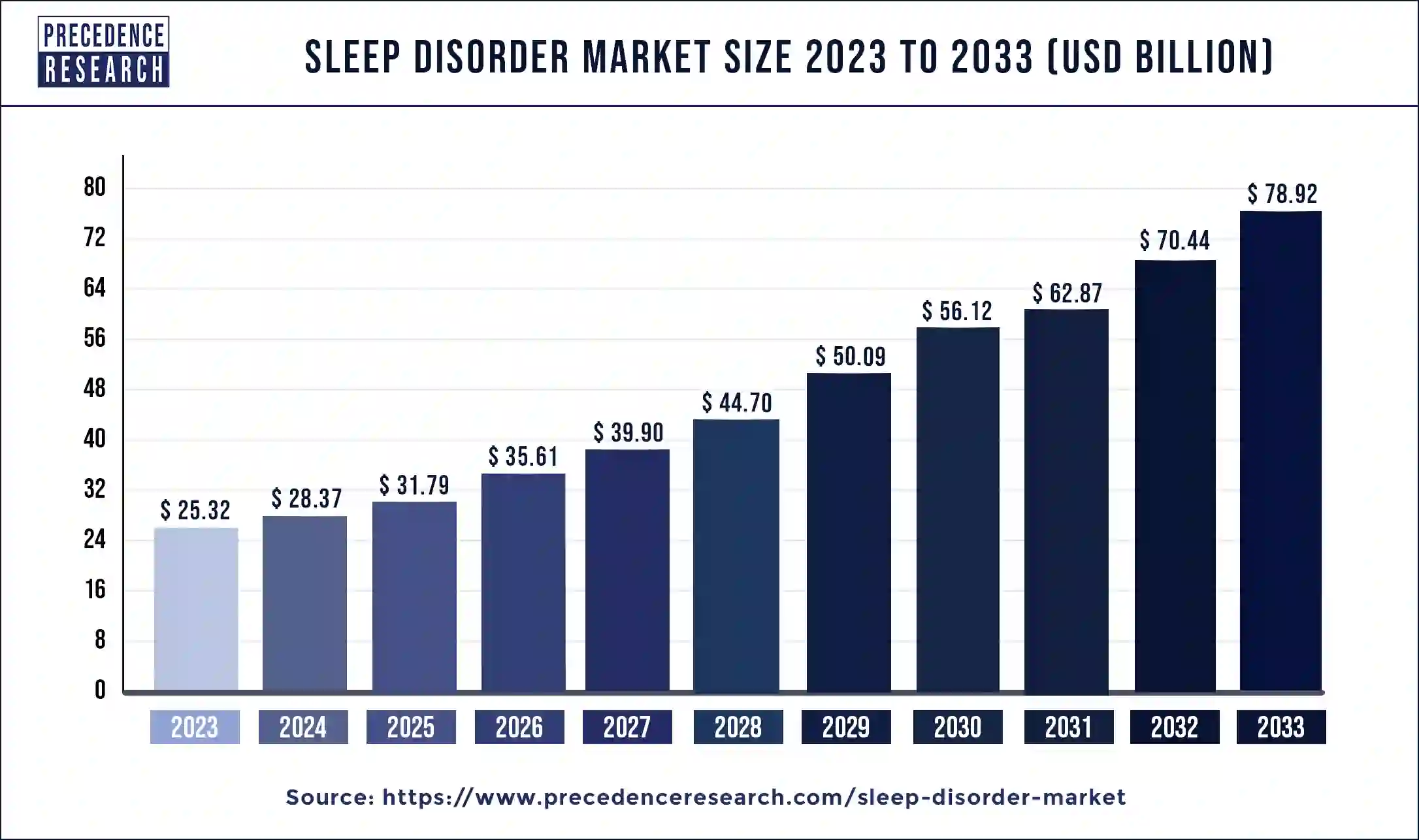
Sleep Disorder Market Key Takeaways
- North America dominated the global sleep disorder market in 2025.
- Asia Pacific is expected to show the fastest growth during the forecast period.
- By type, the sleep apnea segment dominated the market in 2025.
- By type, the insomnia segment is estimated to grow at the fastest CAGR during the forecast period.
- By product type, the diagnostics segment dominated the sleep disorder market in 2025.
- By end-user, the hospitals & sleep laboratories segment held the dominating position in 2025.
- By end-user, the home care settings & individuals segment is expected to grow at the fastest CAGR during the forecast period.
Market Overview
Sleep disorders refer to conditions where the sleep patterns are disrupted, which affects the quality and quantity of sleep. Some common types of sleep disorders are sleep apnea, insomnia, narcolepsy, and restless leg syndrome. These conditions can lead to irregular sleep patterns, which can cause daytime fatigue and sleepiness. These conditions are increasing rapidly due to several factors like stressful lifestyles, irregular sleep patterns, an increasing geriatric population, and many more. These factors significantly affect overall health and quality of life.
The sleep disorder market refers to the diagnosis, treatment, and managing various conditions related to sleep disorders. The sleep disorder market has gained significant attention due to various factors, including the influence of Western work culture, various health conditions due to rapid urbanization, etc. These factors have resulted in increasing stress levels, which has increased the demand for convenient diagnosis and treatment related to sleep disorders. The industry has witnessed growth due to technological advancements like CPAP therapies and wearable devices, which help individuals monitor their health and opt for similar treatments.
What is the Sleep Disorder Market?
The sleep disorder market includes the diagnosis, treatment, and management of various conditions related to sleep disorders. These disorders impact the quality, quantity, and timing of the sleep one is able to achieve at night. Common sleep disorders include insomnia, restless legs syndrome, narcolepsy, and sleep apnea. Modern lifestyles characterized by high stress levels, erratic work schedules, and excessive use of digital devices negatively affect sleep health. As the costs associated with treating sleep problems continue to rise, there has been widespread commercialization of treatment options.
Sleep Disorder Market Growth Factors
- A significant contributor to sleep disorders is the prolonged exposure to smartphones, laptops, and televisions. The blue light emitted from these screens interferes with the production of melatonin, the hormone responsible for regulating sleep.
- The growth of the sleep disorder market during the forecast period can be attributed to several factors, including the expansion of telemedicine services for sleep disorders, the rising adoption of wearable sleep trackers, an increase in home-based diagnostic testing, and the growth of cognitive behavioral therapy applications.
- The rising rates of sleep disorders globally are benefiting the sleep disorder market by increasing the demand for healthcare providers and medical device manufacturers, among others.
- The proliferation of digital health technologies has led to the development of online platforms and mobile apps that offer CBT for insomnia. These resources provide access to evidence-based cognitive and behavioral techniques to a wider audience, particularly to those who may lack access to in-person therapy.
Market Outlook
- Industry Growth Overview: The sleep disorder market is growing rapidly due to the rising prevalence of insomnia and sleep apnea and increased awareness of health and wellness. Technological advancements, such as wearables, AI, and telemedicine for better diagnosis, are also driving the growth of the market.
- Global Expansion: The market is expanding worldwide due to the rising prevalence of insomnia, sleep apnea, and other sleep-related conditions, coupled with growing awareness of the health impacts of poor sleep and increasing adoption of diagnostic and therapeutic solutions. Emerging regions offer opportunities through improving healthcare infrastructure, rising disposable incomes, telemedicine adoption, and increasing access to advanced sleep monitoring devices and treatments.
- Major Investors: Major investors in the market include pharmaceutical companies, medical device manufacturers, and healthcare technology firms, such as ResMed, Philips Respironics, and Merck. They contribute by developing innovative therapies, advanced diagnostic devices, and digital health solutions, while also funding research, clinical trials, and market expansion to improve access and treatment adoption worldwide.
Market Scope
| Report Coverage | Details |
| Sleep Disorder Market Size in 2025 | USD 31.79 Billion |
| Sleep Disorder Market Size in 2026 | USD 35.61 Billion |
| Sleep Disorder Market Size by 2035 | USD 94.82 Billion |
| Sleep Disorder Market Growth Rate | CAGR of 11.55% from 2026 to 2035 |
| Largest Market | North America |
| Base Year | 2025 |
| Forecast Period | 2026 to 2035 |
| Segments Covered | Disorder, Product, End-user, and Regions |
| Regions Covered | North America, Europe, Asia-Pacific, Latin America, and Middle East & Africa |
Sleep Disorder Market Dynamics
Drivers
Upsurge in sleep disorders
According to a study, the current number of sleep disorders among adults has increased by around 50 to 70 million. The dynamics have drastically changed with the evolution and increasing technologies. Many people are currently living an unhealthy lifestyle, which usually leads to various medical conditions, including sleep disorders like insomnia, sleep apnea, and Restless legs syndrome (RLS). These medical conditions have witnessed a rapid surge, where conditions like insomnia affect approximately 30% of the adult population worldwide. This also includes various environmental factors like noise and light pollution. This is basically due to the increasing concrete jungle and lack of biodiversity. The increasing rates of global disorders are potentially benefiting the global sleep disorder market as they are increasing the demand for healthcare providers, medical device manufacturers, and many more.
Increasing awareness regarding sleep disorders
Many healthcare professionals, along with organizations and governments, have been constantly spreading awareness regarding the adverse health impacts of sleep disorders. Sleep disorders are one of the increasing conditions among the adult population due to various factors that have affected their overall health. One of the professional's reports stated that sleep disorders are severely affecting people economically due to the lack of productive time.
The increasing number of educated population regarding the effects of sleep disorders is helping people to suspect their problems and cure them at an early stage. This is increasing the demand for various treatment options and is also driving the growth of various healthcare service providers.
Restraint
Higher costs of treatments
The higher costs of various medical drugs and therapies could hinder the growth of the sleep disorder market. There are many recent technological advancements in developed regions, but the lack of connectivity increases the costs of drugs and other devices. The higher costs are not affordable by the middle-class population due to limited salary income. Therefore, health insurance companies should include sleep disorder treatments in their policies to increase the number of people opting for health insurance, resulting in more demand for sleep disorder treatment and therapies.
Opportunities
Increasing technological advancements
The increasing technology is expected to boost the growth of various diagnostic tools like portable sleeping monitoring machines, wearable sensors, etc. The trending AI is also expected to play a vital role in the sleep disorder market as many researchers are utilizing the AI algorithm to track people's sleeping cycles and preferences. There have also been many recent advancements in wearable devices. Recently, a company named Zansors came up with a new wireless wearable patch device that measures human breathing patterns using a microphone and an accelerometer, which helps track recorded movement. This would help the companies work on the customer preferences and open many opportunities for the industry professionals.
Demand for telemedicine
Due to the increasing competitors in the healthcare sector, telemedicine has gained significant attention in recent years. It refers to the use of audio-visual technology for treating patients, which provides cost-effective treatment to patients compared to other treatment options. These services remove geographical barriers and create a wider option for the patients. Telemedicine is rapidly gaining as it targets the main population that is suffering from sleep disorders, i.e., the geriatric population. Various upcoming monitoring devices will significantly contribute as they will provide better patient analysis. These factors are considered to bring significant growth in the sleep disorder market.
Segment Insights
Type Insights
Which Type of Sleep Disorder Dominated the Market in 2025?
The sleep apnea segment dominated the sleep disorder market with the largest share in 2025, driven by a combination of factors including obesity, aging, and lifestyle factors. Another main reason behind rising sleep apnea rates is simply increased awareness. There are two types of this condition, Obstructive Sleep Apnea (OSA) and the less common Central Sleep Apnea (CSA). More and more people are learning about sleep apnea and the serious consequences that can arise if it remains untreated. These factors boost the demand for various therapies and medications for sleep disorder treatment.
Insomnia is expected to grow at the fastest CAGR during the forecast period due to the changing dynamics in human lifestyles, night shift jobs, changing work schedules, jet lag, and many other factors. Around 1 in 3 adults worldwide have insomnia symptoms. About 10% of adults have chronic insomnia, which lasts at least three months. The increasing mental health problems in the current generations majorly drive the global insomnia segment growth. The insomnia treatment market is advancing significantly due to the growing demand for non-habit-forming pharmaceutical therapies.
By Product Insights
Why Did the Diagnostics Segment Dominate the Sleep Disorder Market in 2025?
The diagnostics segment dominated the global sleep disorder market in 2025 due to the rising need for early detection of sleep disorders and the increased use of sophisticated polysomnography. Physicians can establish precise diagnoses and formulate effective treatment programmes because of PSG's comprehensive evaluation of sleep phases, architecture, and different sleep disorders.
The therapeutics segment is expected to grow at the fastest rate during the forecast period due to the growing number of sleep disorders around the world. Therapies are treatments and inventions that aim to manage the symptoms related to sleep disorders. Device-based treatments are also evolving. Pharmaceutical and device innovation remains active across several sleep disorders therapeutics. The FDA's premarket approval of LivaNova's Aura6000 hypoglossal nerve stimulation system illustrates continued diversification of therapeutic tools.
End user insights
Which End User Segment Dominated the Sleep Disorder Market in 2025?
The hospitals & sleep laboratories segment dominated the sleep disorder market in 2025, driven by the growing number of sleep disorders, which has resulted in the demand for more specific treatments. Hospitals and sleep laboratories provide treatment options like polysomnography and HSAT for people suffering from sleep disorders. Additionally, they offer 24/7 emergency support through quick response teams that can be at the patient's bedside right away to aid those in severe distress.
The homecare settings & individuals segment is expected to witness the fastest growth during the forecast period, driven by advancements in the homecare setup. People prefer homecare setups that are easy and convenient to use. The rising number of sleep apnea device users is driving the growth of homecare settings in the sleep disorder market. Home health care plays a vital role in managing sleep disorders by offering personalized care plans tailored to individual patient needs.
Regional Insights
Which Region Dominated the Sleep Disorder Market in 2025?
North America dominated the sleep disorder market in 2025. Substantial investments in research and development, along with a sophisticated healthcare infrastructure, contribute to market growth. It is estimated that 50 to 70 million Americans have sleep disorders, and approximately one in three adults does not consistently achieve the recommended amount of uninterrupted sleep necessary for good health. Growing cultural awareness of health and wellness is driving the industry forward, as more people seek holistic and natural solutions in addition to prescription medications.
U.S. Sleep Disorder Market Trends
The U.S. sleep disorder market is expanding due to the rising prevalence of conditions such as sleep apnea, insomnia, and restless legs syndrome. Increased health awareness and the integration of technologies like artificial intelligence and wearable devices for remote monitoring via telemedicine are also contributing factors. The Institute of Medicine estimates that between 50 million and 70 million adults in the U.S. report experiencing chronically disturbed sleep.
Europe Sleep Disorder Market Trends
Europe sleep disorder market is expected to experience significant growth. The diagnosis and treatment of sleep disorders are gaining popularity across European nations due to heightened concerns regarding sleep-related health and well-being. The total annual cost of sleep disorders in Europe is estimated at nearly €423 billion, representing approximately 3% of the combined GDP of high-income European countries and about a quarter of the region's total neurological disease burden. Key factors driving market expansion in this region include an aging population and increased awareness of the negative health impacts associated with sleep disorders.
Germany Sleep Disorder Market Trends
Germany's sleep disorder market is growing due to rising stress levels, increased adoption of telemedicine, technological innovations, and a shift toward non-drug therapies like CBT-I. About 10% of the population in Germany suffers from chronic sleep disorders. The "iSleep Well" project, funded by the German Research Foundation with more than two million euros, aims to make necessary therapies more accessible to individuals with sleep disorders through online services.
Asia Pacific Sleep Disorder Market Trends
Asia Pacific is expected to experience the fastest growth during the forecast period. In the Asia-Pacific region, the aging population, increasing prevalence of obesity, growing awareness about sleep disorders, advancements in therapeutic devices, improvements in diagnostic equipment, and enhancements in healthcare infrastructure are all contributing to the rapid growth of the sleep disorder market. Technological advancements, including portable sleep monitors and advanced polysomnography devices, have made diagnosing sleep disorders more accurate and convenient.
India Sleep Disorder Market Trends
In India, the growing middle class and wellness-conscious urban population have spurred the rapid expansion of the sleep disorder market. There is a surge in demand for products ranging from sleep-tracking wearables and meditation apps to high-end mattresses and supplements. Digital platforms like Headspace and Calm are gaining popularity, offering guided meditation and sleep aids. The integration of telemedicine and remote monitoring solutions is transforming the management of sleep apnea in India, making diagnosis and treatment more accessible.
Middle East and Africa Sleep Disorder Market Trends
The Middle East and Africa region presents significant opportunities in the sleep disorder market. This potential arises from the increasing recognition of sleep disorders as a public health issue and the establishment of specialized sleep clinics, particularly in Gulf Cooperation Council (GCC) countries. The region is also experiencing a gradual adoption of portable diagnostic devices and CPAP systems. As consumers become more health-conscious, the demand for innovative sleep solutions continues to grow. These solutions could be integrated with smart home systems or combined with healthcare technologies.
Saudi Arabia Sleep Disorder Market Trends
In Saudi Arabia, there is likely a high prevalence of sleep disorders, including obstructive sleep apnea, due to rising rates of obesity and diabetes. Studies conducted in Saudi cities have reported a sleep disorder prevalence of 21% in Riyadh and 26% in the Eastern Province. The demand for sleep disorder medicine is expected to increase significantly in the Saudi population. Therapeutic devices and masks remain key market segments, bolstered by the rise of e-commerce and homecare trends, which enhance accessibility and promote market growth.
Latin America Sleep Disorder Market Trends
The sleep disorder market in Latin America is growing steadily, driven by rising urban stress levels and increasing awareness of sleep health across the region. There is a growing understanding of the connection between sleep health, productivity, and mental well-being, leading to a proportional increase in demand for sleep aids and wellness products. Additionally, there is heightened interest in wellness and preventive healthcare, which is fueling demand for non-pharmaceutical sleep solutions.
Brazil Sleep Disorder Market Trends
Brazil's sleep disorder market is thriving due to the increasing prevalence of sleep disorders, improved consumer understanding of sleep health, and a shift toward non-prescription, natural, and herbal sleep aids. Factors such as urban stress, prolonged screen exposure, and worker fatigue are driving demand for easy-to-use formats like gummies and capsules. The rise of e-commerce and wellness marketing has further facilitated the spread of these products across various age groups.
Competitive Landscape
The competitive landscape of the sleep disorder market is characterized by several key players striving to provide comprehensive solutions for diagnosing and managing various sleep-related conditions. Prominent pharmaceutical companies, medical device manufacturers, sleep clinics, and telemedicine providers are actively engaged in offering a range of products and services.
The sleep disorder market is adapting to rapid technological advancements, as vendors recalibrate their portfolios to focus on connectivity, data integration, and diverse therapy options. As diagnostics shift to at-home solutions, mask-free therapies gain traction, and CPAP platforms evolve into data-driven services, the competitive landscape will be rapidly redefined in the future.
Sleep Disorder Market Companies
- ResMed Inc.: The company provides a wide range of sleep health products and services, such as CPAP and biPAP devices for treating sleep apnea, different masks, portable and automated sleep apnea machines like the AirMini, and digital health tools like Dawn (Generative AI-Enabled Health Concierge) and the myAir app for tracking and managing treatment.
- Philips Respironics: It provides a variety of sleep health solutions, with a primary focus on the diagnosis and treatment of sleep apnea and associated respiratory conditions. Although the firm has experienced large recalls for earlier products, its portfolio includes sleep treatment devices, masks, and diagnostic equipment.
- Compumedics Limited: It provides a wide range of sleep health products for use at home and in the lab. From hardware and data collection to sophisticated analytical software and administration systems, their range encompasses the full diagnostic procedure.
- Fisher & Paykel Healthcare: It provides a variety of cutting-edge solutions for treating obstructive sleep apnea (OSA), including heated humidifiers intended to enhance patient comfort and treatment compliance, CPAP equipment like the F&P SleepStyleTM, and several CPAP mask designs.
- Natus Medical Inc.: It offers a full range of equipment, materials, and software for clinical sleep problem diagnosis. From data collection to analysis and reporting, the services cover every step of carrying out sleep research.
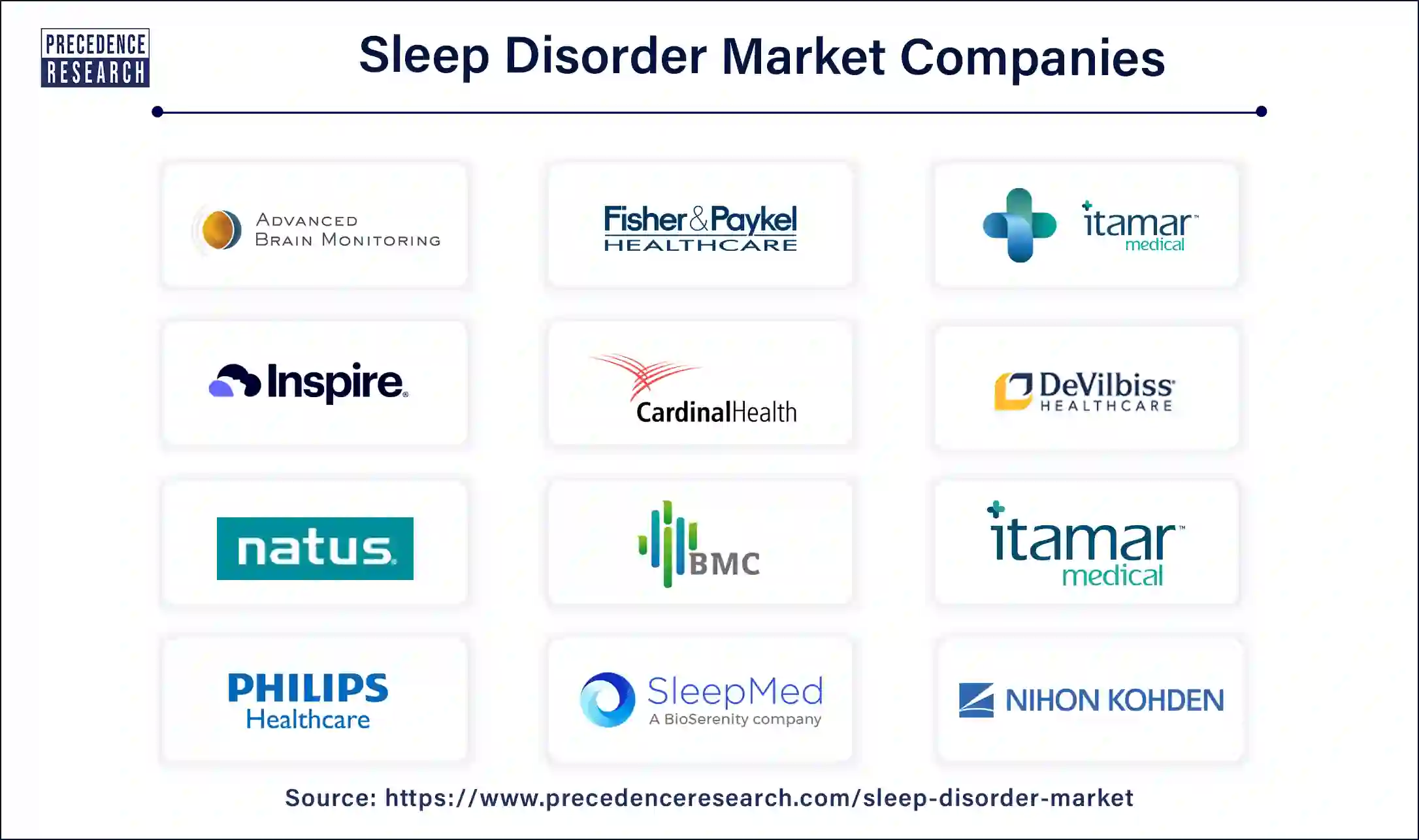
Other Major Key Players
- Becton, Dickinson, and Company
- Itamar Medical Ltd.
- Nihon Kohden Corporation
- Medtronic plc
- DeVilbiss Healthcare
- Cardinal Health
- NovaSom, Inc.
- Advanced Brain Monitoring
- SleepMed Inc.
- Sefam
- BMC Medical Co., Ltd
- Inspire Medical Systems
- Sleep Number Corporation
- Koninklijke Philips NV.
- Natus Medical Incorporated
- Compumedics Limited
Recent Developments
- In January 2026, Inogen Inc., a medical technology company with a focus on respiratory products for home use, unveiled a new line of continuous positive airway pressure (CPAP) masks, thereby marking its entry into the sleep apnea market. The company has indicated that the Aurora CPAP masks will broaden its respiratory care portfolio beyond oxygen therapy to include treatment for obstructive sleep apnea, a condition that affects millions of patients globally.
- In Jan 2025, the National Sleep Foundation (NSF), celebrating its 35th year, shared new population sleep health data and insights at CES2025 in Las Vegas, marking a decade since its first SleepTech Summit at CES in 2015.
- In March 2024, the American Academy of Sleep Medicine (AASM) released a guideline report for diagnosing and curing ‘sleep apnea.' The report suggested CPAP therapy as the first-line treatment for sleep apnea cases.
- In April 2022, Oxysleep Max Care started a sleep disorder center with many rehabilitation facilities. The center uses holistic and modern science technologies to help reduce stress and detoxify the body.
Segments Covered in the Report
By Disorder
- Restless Legs Syndrome
- Narcolepsy
- Insomnia
- Sleep Apnea
- Obstructive Sleep Apnea
- Central Sleep Apnea
- Complex Sleep Apnea
By Product
- Diagnostics
- Actigraphy Systems
- Polysomnography Devices
- Respiratory Polygraph
- Sleep Screening Devices
- Pulse Oximeter
- Wearables
- Therapeutics
- Cognitive Behavioural Therapy
- Therapeutic Devices
By End-user
- Hospitals & Sleep Laboratories
- Home Care Settings & Individuals
By Geography
- North America
- Asia Pacific
- Europe
- Latin America
- Middle East & Africa
For inquiries regarding discounts, bulk purchases, or customization requests, please contact us at sales@precedenceresearch.com
Frequently Asked Questions





Ask For Sample
No cookie-cutter, only authentic analysis – take the 1st step to become a Precedence Research client
 Get a Sample




 sales@precedenceresearch.com
 Schedule a Meeting
