



Direct-to-Consumer Genetic Testing Market Size, Key Companies, Company Product Portfolio, Hospital Procurement Trends, Manufacturing Capacity, Sales Performance, Regulatory Approvals, Company Market Share, and Fore
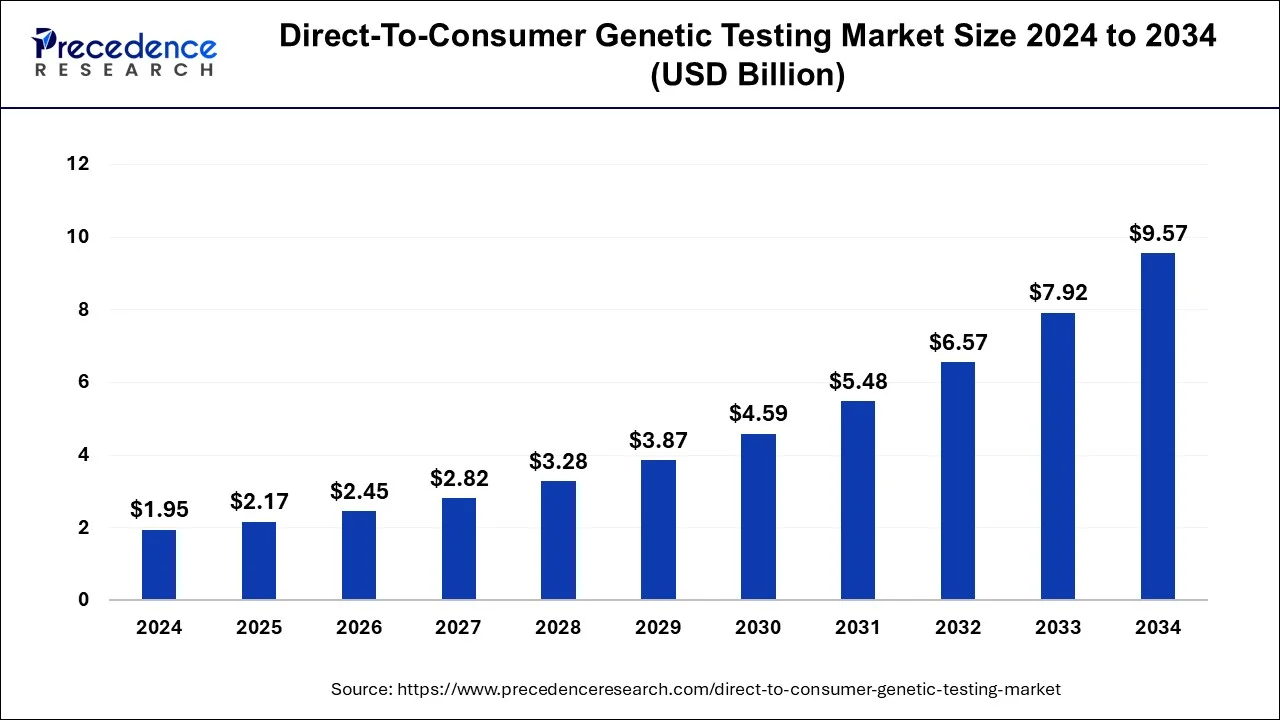
Deepa Pandey, a Healthcare Industry Expert, highlights that the direct-to-consumer genetic testing market has reached USD 2.45 billion in 2026 and is on track to reach USD 11.02 billion by 2035, advancing at a CAGR of direct-to-consumer genetic testing market 17.64%. Key direct-to-consumer genetic testing market companies shaping the market include Identigene, Karmagenes, Living DNA, Mapmygenome, while major growth segments By Test Type, By Technology Type, and By Distribution Channel and By Regions.
Source: https://www.precedenceresearch.com/direct-to-consumer-genetic-testing-market
 Get a Sample
 Table Of Content


What is the Direct-to-Consumer Genetic Testing Market?
The global direct-to-consumer genetic testing market size was estimated at USD 2.17 billion in 2025 and is predicted to increase from USD 2.45 billion in 2026 to approximately USD 11.02 billion by 2035, poised to grow at a CAGR of 17.64% over the forecast period 2026 to 2035. The direct-to-consumer genetic testing market is driven by growing demand for at-home genetic health insights and personalized wellness testing.
Market Highlights
- By region, North America dominated the global Market in 2025.
- By region, the Asia Pacific is expected to grow at the fastest CAGR during the forecast period.
- By test type, the predictive testing segment dominated the market in 2025.
- By test type, the nutrigenomics testing segment is expected to grow at the fastest rate during the forecast period.
- By technology, the whole genome sequencing segment contributed the biggest revenue share in 2025.
- By technology, the targeted analysis segment is expected to witness the fastest growth over the forecast period.
- By distribution channel, the online platform segment accounted for the highest revenue share in 2025.
- By distribution channel, the OTC segment is expected to grow at the fastest CAGR during the forecast period.
How does AI impact the Direct-to-Consumer Genetic Testing Market?
The direct-to-consumer genetic testing market is witnessing transformative growth due to AI integration. Adopting AI techniques such as deep learning and machine learning provides new computational approaches to streamline major analytical issues in direct-to-consumer genetic testing. They process and analyze vast amounts of genetic data, leading to precise interpretation of genetic information. AI helps to improve understanding of genomic variation concerning disease and health and enhance discovery in genetic testing. AI can identify complex patterns within large datasets of phenotype and genetic information, leading to discoveries about the genetic basis of traits and diseases. AI can generate personalized testing that is tailored to genetic interests and profiles.
Advancing the Direct-to-Consumer Genetic Testing Market Through Targeted Genomic Innovations
The direct-to-consumer genetic testing market is the segment of the genetic testing market geared toward consumer-sold tests, which provide information on ancestry, inherited traits, health markers, and genetics for disease risk. Most of these testing kits are available online and in stores, and are performed on a swab of the inside of the mouth and saliva. The growing consumer interest in health testing and preventative medicine, personalised treatment, and family histories is driving market growth.
Direct-to-Consumer Genetic Testing Market Growth Factors
- The global direct-to-consumer genetic testing market is expanding at a rapid pace due to the rising awareness among consumers about the benefits of gene-based therapies.
- The growing interest in pharmacogenetics is expected to boost market growth.
- Rising advancements in gene sequencing technologies contribute to market expansion.
- Increasing approvals for gene therapy further fuels the growth of the market. For instance, in December 2023, the U.S. FDA approved two cell-based gene therapies, Casgevy and Lyfgenia, for treating sickle cell disease (SCD) in patients aged 12 years and above.
- The rising demand for personalized therapies also propels market growth.
Market Outlook
- Market Growth Overview: The direct-to-consumer genetic testing market is expected to grow significantly between 2025 and 2034, driven by the rising personalized healthcare, growing technological advancements, and strong consumer interest in heritage and family history, which remains a core driver.
- Sustainability Trends: Sustainability trends involve data privacy and security, technological advancement and accuracy, and a shift towards personalization and actionable insights.
- Major Investors: Major investors in the market include Venture Capital, Ancestry.com, 23andMe, MyHeritage, Color Health, and Tech Giants.
Market Trends
- Consumers are using genetic testing for preventive care. The genetic testing can provide a complete genetic profile, including inherited health risks, carrier status and wellness traits.
- The major growth driver of genetic testing is interest in knowing family history and ethnic origin testing.
- The integration of artificial intelligence in genetic testing helps in analysing complex genetic data faster and gives personalized results. This is making results easier to understand and making the process easier.
- The genetic testing now offers diet, metabolism and drug response profiles. This helps the consumers to monitor nutrition intake and also supports the medication compatibility.
Market Scope
| Report Coverage | Details |
| Growth Rate from 2026 to 2035 | CAGR of 17.64% |
| Market Size in 2025 | USD 2.17 Billion |
| Market Size by 2035 | USD 11.02 Billion |
| Largest Market | North America |
| Base Year | 2025 |
| Forecast Period | 2026 to 2035 |
| Segments Covered | By Test Type, By Technology Type, and By Distribution Channel |
| Regions Covered | North America, Europe, Asia-Pacific, Latin America and Middle East & Africa |
Market Dynamics
Drivers
Increase trend toward direct-to-consumer genetic testing boosting the market growth
The public understanding and acceptance of genetic testing are steadily increasing. A national survey found that awareness has increased dramatically in the United States, and a social media survey found that 47% of users are familiar with the direct-to-consumer concept. Across many sectors, there is an apparent rise in customers seeking customized products & experiences, with a rising willingness to pay for the identification & addressing of unique needs.
Customers are trying to express willingness to undergo testing & pay for genetic testing services. According to a recent survey conducted in the United States with a sample size of 2,000 people, 33% said they would be willing to pay for and use the advice provided by a direct-to-consumer genetic testing company.
Restrains
Privacy corns restrain the market growth
More than 65% of individuals are willing to use home direct-to-consumer genetic testing services. Privacy is one of the main concerns, especially the potential sharing of data with third parties, including pharmaceutical and insurance companies and consumer health. Almost all the respondents willing to use the service have concerns about a company owning their DNA profiles.
In submitting a sample for processing, individuals provide sensitive information about themselves and family members with whom they share a genetic link. Leakage of such data could negatively impact these individuals across various areas, including employment prospects, relationships, and insurance premiums. Cyber security breaches, database password & service hacking, Human error, or oversight by data custodians pose a risk.
Opportunities
Rising pharmacogenetic research Provide lucrative opportunities
The growing interest in pharmacogenetics is expected to expand the DTC genetic testing industry. Since genetic variations determined in Pharmacogenetics are expected to boost the DTC genetic testing industry. Since genetic variations determine which medical treatment is most likely to succeed, Pharmacogenetics is a dogmatic example of gene based personalization. In addition, the Interpretation and regulation of personalized tests depend on the knowledgeable user. Rising demand in business can be attributed to service providers' detailed description of test analytical and clinical validity.
Moreover, this individualized testing costs much lower than traditional genetic analysis. Furthermore, Direct to consumer genetic testing results are obtained rapidly with easy and noninvasive technologies. These variables will increase the market share worldwide.
Segment Insights
Test Type Insights
The predictive testing Segment Held the Largest Share of the Direct-To-Consumer Genetic Testing Market in 2025
The predictive testing segment held a dominant position in the market in 2025 owing to the mounting importance of knowing about genetic susceptibility to chronic and inherited diseases. Interests included an increased knowledge of preventive healthcare, early risk assessment, and the ease and convenience of undergoing testing at home. There is growing interest in personalized healthcare management without visiting clinics.
The nutrigenomics testing segment is expected to witness strong growth during the forecast period as consumers search for certain nutritional plans that suit their consumption with genetic and physiological info. An increasing number of cases of obesity, diabetes, and heart disease are making gene-based dietary recommendations a more attractive choice for preventing diseases. Additionally, the growing concerns over health and the growing consumer genomics services are boding well for the growth in the segment.
The carrier testing segment is projected to grow at a notable pace, driven by increased awareness levels with family planning decisions. New technologies are being refined for eventual use by consumers to identify the genetic conditions they may be "carriers" for and pass on to their offspring, especially where a family history exists. Rising demand for in-home reproductive health testing and genetic counselling support should lead to increased demand.
Technology Insights
The Whole Genome Sequencing Segment Dominated the Direct-To-Consumer Genetic Testing Market in 2025
The whole genome sequencing segment dominated the market in 2025 as it is able to generate a whole genome picture, including both coding and non-coding regions of the genome. The continued adoption is being encouraged by declining sequencing costs, which are helping foresee that increasing personal quest to better genetic analysis.
The targeted analysis segment is expected to grow significantly during the forecast period due to the growing need for more relevant, more specific, and more practical genetic insights for specific diseases. Specially advantageous to consumers who desire information on hereditary cancer-related diseases, metabolic diseases, or health problems associated with lifestyle. There is expected to be a high growth as it is of low cost and provides relevance to the condition-specific testing market.
The single-nucleotide polymorphism chips segment is projected to grow at a notable pace, as it is widely utilized in ancestry testing and trait testing application is scalable and cost-effective. The use of SNP chip technology speeds up testing of common genetic variants, which are widely employed in expanded-scale genetic testing for consumers. It may have a wide usage across both genetic testing major DTC players, which will lead to steady demand.
Distribution Channel Insights
The Online Platforms Segment Dominated the Direct-To-Consumer Genetic Testing Market in 2025
The online platforms segment dominated the market in 2025, as it offers an easy process of ordering from this segment, doorstep availability of samples, and online delivery of results. Online communications have become more attractive to customers since it will provide them with privacy, various test options, and no travelling to a healthcare service. A good level of digital engagement and were aggressively marketing online, further augmenting their successful performance in achieving segment leadership.
The over-the-counter market is expected to witness immense growth in the retail sales of retail pharmacies, supermarkets, and health food stores. The convenience of buying test products, especially where online healthcare services may not be so readily accessible. The increase in awareness of personal health monitoring is also likely to shift the position of OTC.
Regional Insights
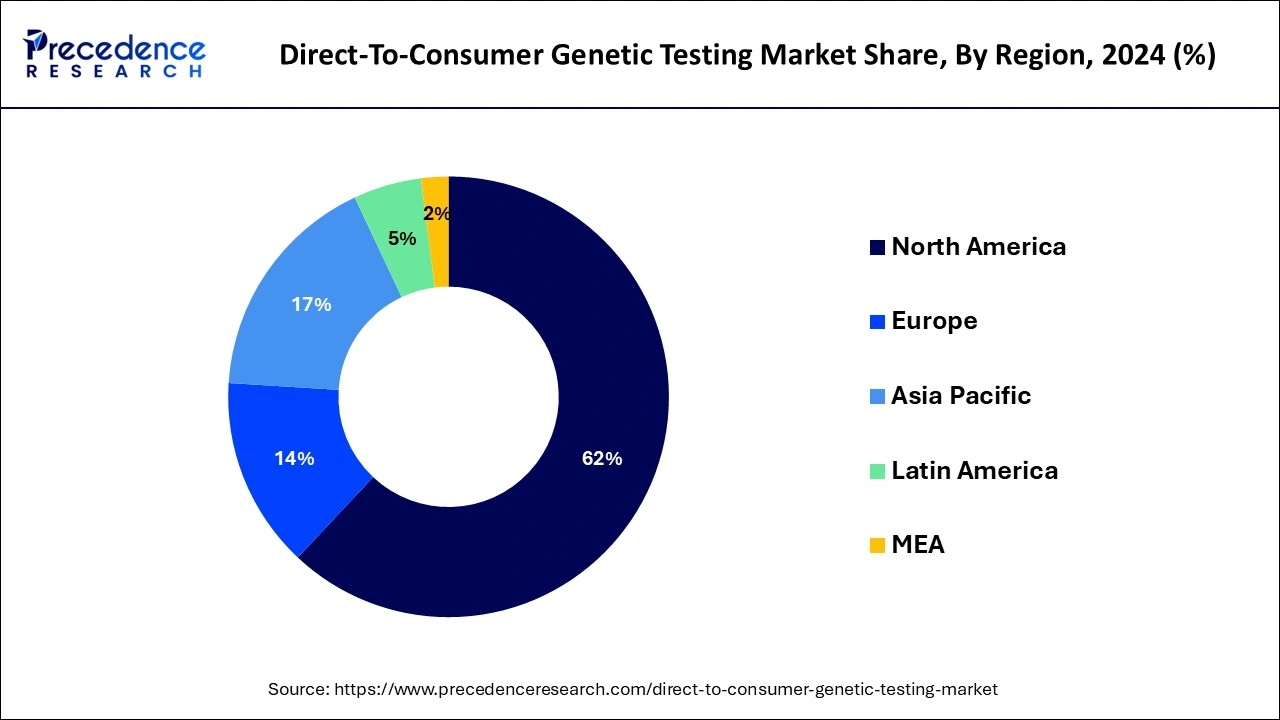
North America will lead the Global Direct-To-Consumer Genetic Testing Market in 2025
North America dominated the global market in 2025 due to the customer awareness about genetic testing, while at the same time offering the world's most advanced digital use of healthcare. Merchants will benefit from the direct-to-consumer genetic testing companies, Internet connectivity, and increased interest in ancestry testing, wellness testing, and disease susceptibility testing. The market is likely to expand in the region due to the rising personalised medicine and preventative care emphasis.
U.S. Market Trends
The U.S. market is anticipated to grow significantly, driven by the growing demand by consumers for tailored health reports and in-home wellness care services, and ancestry testing. The usage of digital health platforms is solid, the DTC test kits have a wide market, and a growing awareness of the risks of inherited diseases is creating market growth. The nation also boasts top genomics businesses, sophisticated lab infrastructure, and huge investments in healthcare.
What is the U.S. Direct-to-Consumer Genetic Testing Market Size?
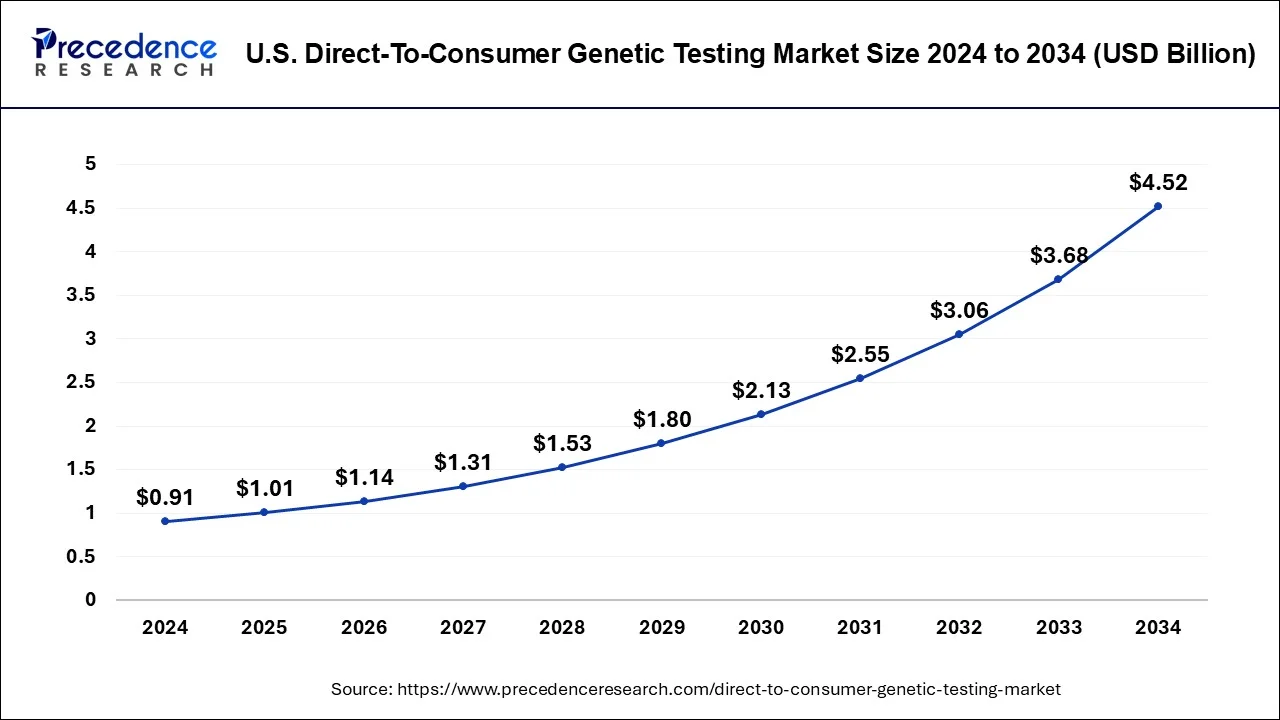
The U.S. direct-to-consumer genetic testing market size reached USD 1.01 billion in 2025 and is expected to be worth around USD 5.21 billion by 2035, poised to grow at a CAGR of 17.83% from 2026 to 2035.
In addition, rising demand for personalized genetic testing services in the region and an increase in the prevalence of chronic and genetic disorders boost the market growth. According to Globocon 2020, 2,281,658 new cancer cases will be diagnosed in the United States in 2020, with 612,390 deaths. Breast cancer had the highest incidence of all cancers, with 253,465 points, followed by lung (227,875), prostate (209,512), and colon cancer (101,809).
The increasing number of product approvals and subsequent launches by the U.S. Food and Drug Administration (FDA) and the high concentration of key players involved in research activities to innovate novel genetic testing products are expected to drive market growth in North America. For example, F. Hoffmann-La Roche Ltd launched the AVENIO Tumor Tissue CGP Kit in October 2021, a comprehensive genomic profiling kit designed to make tailored cancer research more accessible. This kit allows for the comprehensive genomic profiling of solid tumors derived from formalin-fixed paraffin-embedded (FFPE) tissue samples. Furthermore, one of the primary reasons for developing the carrier testing segment in Latin America is acquisition and expansion.
Advancements in the Direct-To-Consumer Genetic Testing Market in Europe
Europe is expected to witness significant market growth throughout the forecast period as personalised medicine grows in importance, along with preventative health screening and ancestry testing; the demand for genealogy testing is ongoing. DTC genetic testing is gaining momentum as a growing number of consumers are interested in their disease risk status. Growth will be fueled by awareness about genomics, more healthcare services being provided online via the Internet, and an increasing focus on health data tools.
Germany Market Trends
Germany market is anticipated to grow significantly, driven by the growing trend of preventive diagnostics and the growing interest in personalised wellness testing. DTC genetic tests are becoming increasingly popular in Germany for consumers to use for ancestry purposes, or for health risk or nutrition-oriented lifestyle planning. The country has a well-established health system, with advanced laboratory facilities and an emerging trend of digital health.
Asia Pacific is Undergoing the Fastest Growth in the Direct-To-Consumer Genetic Testing Market
Asia Pacific is expected to grow at the fastest rate in the market with the increase in the demand for custom wellness programs, growing gross personal income, and health consciousness in the region. The at-home diagnostics service is gaining momentum in the region as the Internet is becoming increasingly ubiquitous and digital healthcare services become more prevalent. Companies are developing new markets such as China, Japan, India, and South Korea that incorporate an interest in genetic information and genetic applications for disease prevention, fitness, and nutrition planning.
China Market Trends
China's direct-to-consumer genetic testing market is anticipated to grow significantly, driven by the rising demand for preventive genetic services, rising middle-class incomes, and enabling policies of the Government towards biotechnology development. Growing consumer interest exists to learn more about their genetic testing in areas of well-being, nutrition, ancestry, and disease risk predisposition. Take-up is being fuelled by the growing number of test kits at home, the evolving digital health ecosystem, and digested genomics.
Key Trends in the Direct-To-Consumer Genetic Testing Market in Latin America
Latin America is expected to witness significant growth in the market, driven by the growth of the middle class, growing awareness of health and medical services, increasing access to digital healthcare services, etc. At-home genetic testing is a growing trend amongst consumers, with services for ancestry, disease risk, and wellness customization. rdg/va has seen growth in DTC testing kit usage due to better penetration in e-commerce and the availability of the kit in greater numbers across the region.
Brazil Market Trends
Brazil's direct-to-consumer genetic testing market is anticipated to grow significantly, driven by the growing understanding of the significance of genetic health and the growth of online health platforms. With a large population, a fast-growing middle class, and high acceptance for digital engagements, DTC tests are a sweet project for digital adoption. Home genetic testing for consumption is becoming popular, as is predictive testing and other types of genetic testing for inheritance of diseases, such as nutrigenomics.
Growth of the Middle East and Africa in the Direct-To-Consumer Genetic Testing Market
The Middle East and Africa region is expected to witness significant growth in the market as preventive healthcare, digital diagnostics, and personalized services are gaining emphasis. The growing access to healthcare and awareness of the risks of inherited disease is causing an increase in direct-to-consumer genetic testing. The investments in private healthcare are increasing, and the growing importance of family healthcare planning and the growth of interest in lifestyle management are also positively impacting the market.
Saudi Arabia Market Trends
The Saudi Arabian market is anticipated to grow significantly, due to the increasing modernization of healthcare, the level of awareness of genetic diseases, and the uptake of Digital Health solutions. Increased consumers' interest in genetic testing for inherited diseases, as well as in optimizing health and planning for the future for prevention. The improved genomic medicine will push for the development of the market, as well as increasing government investment in healthcare technology and precision medicine.
Competitive Landscape
The direct-to-consumer genetic testing market has key players such as Identigene, Karma, Gene, and others specializing in ancestry testing and health prediction, whereas MyHeritage focuses on personal well-being testing and services. Companies are positioned with a growing number of digital portals and an expanded test suite, as well as advanced genome analysis capabilities. For instance, My Heritage has been steadily growing its consumer DNA testing product line with the addition of whole genome sequencing, and Mapmygenome continues to develop personalized DNA data analysis.
The direct-to-consumer genetic testing industry is poised to change thanks to a few trends, all powered by AI: interpretation, whole genome sequencing, and a growing focus on preventative health information. Advancements in personalized reports, data privacy regulations, and linking with digital health and wellness platforms will likely be hot topics for companies.
Direct-to-Consumer Genetic Testing Market Companies
- Ancestry provides reports on ethnic origins and connects individuals with potential relatives by comparing their DNA to vast ancestral databases.
- Color Health, Inc. focuses on health-related genetic testing, offering assessments for inherited risk of common conditions like cancer and heart disease.
- Easy DNA offers a broad range of DNA tests, including ancestry analysis and various relationship tests like paternity and maternity testing.
- FamilyTreeDNA specializes in genealogical DNA testing, offering Y-chromosome (Y-DNA, mitochondrial DNA (mtDNA), and autosomal DNA testing to help customers trace paternal and maternal lineages.
- Full Genome Corporation is a smaller player focusing on niche and advanced genomic services, including whole genome sequencing and analysis.
- Helix OpCo LLC acts as a platform for various third-party partners to offer an array of DNA-powered products and insights.
Other Major Key Players
- Identigene
- Karmagenes
- Living DNA
- Mapmygenome
- MyHeritage
- Pathway genomics
- Genesis Healthcare
- 23andMe
Collaborative landscape
- In August 2025, Ultima Genomics Inc. partnered with Gene by Gene to broaden access to high quality, cost effective DNA sequencing. Gene by Gene joined as a Certified Service Provider offering whole genome sequencing. Ultima's high tech platforms are used to run large scale genetic tests and clinical research work.
- In July 2026, Nucleus Genomics, a company focused on integrating advanced genetic technology into fertility care, collaborated with Southern California Reproductive Centre (SCRC), a fertility clinic. The partnership aimed to provide Genetic Optimization Services to patients undergoing IVF. It helps to understand the embryo's complete genetic profile.
Recent Developments
- In April 2026, PrecisionLife partnered with Ovation.io to launch GLP-1 response genetic tests. The partnership leverages Ovation's multi omics and longitudinal clinical data and PrecisionLife's advanced analytics platforms to introduce the genetic mechanism of response to GLP-1 medication. These will benefit patients by avoiding ineffective treatments.
- In August 2026, Labcorp Holdings launched the Marker by Labcorp Genetic Health Panel, a direct to consumer genetic testing service. The product checks over 100 genes to identify health conditions such as cancer, heart disease and metabolic disorders.
- In April 2026, BGI Group was invited to be a part of the development of the first international standard, ISO/TS 20738:2026, focusing on data analysis requirements of direct-to-consumer (DTC) genetic testing. It is hoped this can help achieve consistency and clarity for the interpretation of genomic data in the market of DTC testing and ease regulatory alignment. (Source: https://en.genomics.cn)
- In September 2025, Promega entered the in-depth study of molecules using a line of next-generation reverse transcriptase products by forming a collaboration with Watchmaker Genomics. The goal of the agreement is to improve the sensitivity, robustness, and reproducibility of RNA-based clinical and/or diagnostic applications. (Source: https://www.promega.in)
- In February 2025, Targeted Genomics became the first company to receive FDA clearance for its celiac disease direct-to-consumer genetic health risk test, GlutenID. Consumers can estimate the chance of celiac disease by using a type of saliva test with the aid of HLA genes without anyone's involvement. (Source: https://www.biospace.com)
Segments Covered in the Report
By Test Type
- Nutrigenomics Testing
- Predictive Testing
- Carrier Testing
- Others
By Technology Type
- Target Analysis
- Single Nucleotide Polymorphism (SNP) chips
- Whole Genome Sequencing (WGS)
- Others
By Distribution Channel
- Online Platforms
- OTC
By Geography
- North America
- Europe
- Asia-Pacific
- Latin America
- Middle East and Africa
For inquiries regarding discounts, bulk purchases, or customization requests, please contact us at sales@precedenceresearch.com
Frequently Asked Questions





Ask For Sample
No cookie-cutter, only authentic analysis – take the 1st step to become a Precedence Research client
 Get a Sample



 sales@precedenceresearch.com
 Schedule a Meeting
