



Esoteric Testing Market Size, Key Companies, Company Market Share, Patient Volume, Treatment Adoption Rates, Pricing Analysis, Regulatory Landscape, Competitive Positioning, and Demand Forecast
Esoteric Testing Market (By Type: Infectious Diseases Testing, Endocrinology Testing, Oncology Testing, Genetics Testing, Toxicology Testing, Immunology Testing, Neurology Testing, Other Testing; By Technology: Chemiluminescence Immunoassay, Enzyme-Linked Immunosorbent Assay, Mass Spectrometry, Real-Time PCR, DNA Sequencing, Flow Cytometry, Other Technologies; By End User: Independent & Reference Laboratories, Hospital-Based Laboratories) - Global Industry Analysis, Size, Trends, Leading Companies, Regional Outlook, and Forecast 2026 to 2035
Source: https://www.precedenceresearch.com/esoteric-testing-market
 Get a Sample
 Table Of Content


What is the Esoteric Testing Market Size?
The global esoteric testing market size is estimated at USD 37.08 billion in 2025 and is predicted to increase from USD 41.05 billion in 2026 to approximately USD 100.94 billion by 2035, expanding at a CAGR of 10.53% from 2026 to 2035. The availability of various types of esoteric tests and their potential to help confirm the diagnosis of some diseases drive the demand for esoteric testing.
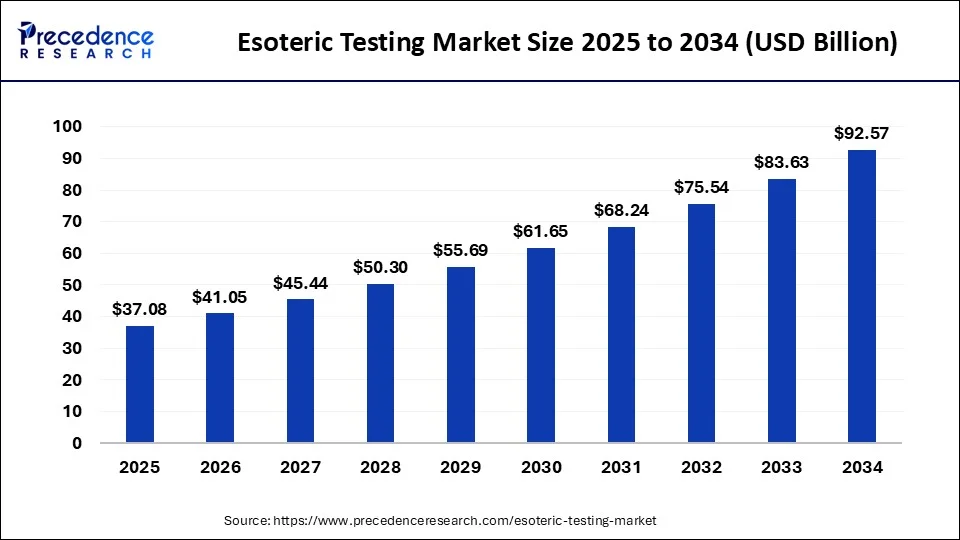
Esoteric Testing Market Key Takeaways
- North America dominated the global market with the largest market share of 44% in 2025.
- By type, the Infectious disease testing segment contributed the highest share of 32% in 2025.
- By technology, the chemiluminescence immunoassay (CLIA) segment accounted highest share in 2025.
- By teste type, endocrinology segment held the biggest market share of 20% in 2025.
- By technology, ELISA segment was valued at USD 6.2 billion in 2025.
- North America esoteric testing market is expected to grow at a CAGR of 10.82% from 2026 to 2035.
Market Overview
Esoteric testing enables the examination of uncommon substances or compounds that are typically not studied in a medical lab. Large commercial laboratories frequently contract out challenging testing to standard and specialist testing centers. Therefore, as diagnostic test technology progresses, tests that are currently thought to be esoteric may end up being commonplace in a short period. Committed research & development professionals usually produce this. These tests are requested by doctors when they require more detailed information than routine lab testing to finish a diagnosis, determine a prognosis, or select and track a treatment plan.
Esoteric testing frequently requires the use of sophisticated tools and equipment, as well as skilled personnel to conduct the test and analyse the results. Generally speaking, these tests are much more significant and performed more regularly than standard tests. Esoteric testing includes, for example, tests in endocrinologists, genetics, immunological, microbiological, molecular techniques, cancer, serological tests, and toxicology. The field of clinical techniques is the one within esoteric clinical studies that is expanding the quickest. Finding medical technologists with the requisite training and paying employees the higher wages that respective skill sets require are two issues faced by labs that perform such procedures. Furthermore, the materials needed for these tests can be costly, especially as they are infrequently purchased in sufficient quantities to be eligible for the economy of scale.
Allergy, platform pathologists for complicated anatomic abnormalities, indicators for bones, genetic analysis, HLA genotyping, autoimmune response functional assays, and environmental toxicological are just a few of the competencies that are accessible in the labs that do these tests. Among the institutions that perform these procedures in the U. S. are Architects Facility, Mayo Healthcare Laboratory, Analysis and information Corporation, and Medical Corporations of America, as well as an increasing number of specialized esoteric testing centers that provide proprietary esoteric assays. Examples of such specialty testing lab businesses are Myriad Genomics, Genetic Healthcare, and Basis Medicine.
How can AI improve the Esoteric Testing Market?
AI and ML play a vital role in laboratory medicine, laboratory testing, interpretation, and results reporting. AI techniques, superfast cloud computing, and robotics have immense potential to revolutionise modern laboratories. This is achieved by creating and reporting laboratory test results of patients and automating physical sample processing. AI is used in esoteric testing for advanced data interpretation, pattern recognition, accelerating laboratory throughput, powering precision and personalized medicine, clinical decision-support, and evidence creation.
What's Causing the Country-Wide Expansion of the Global Esoteric Testing Market?
The esoteric testing market is growing rapidly as healthcare systems increase their demands for advanced diagnostics to better manage the testing for complex and rare diseases that require esoteric testing. Specialized esoteric tests, such as molecular diagnostics and genetic testing, now play a key role in recommending early diagnosis, precision testing, and personalized care.
Major drivers increasing the use of esoteric testing in health care systems are the rising awareness of chronic illnesses, increased successful adoption of laboratory automation, and advancements in the field of genomics, all of which have led to more doctors routinely ordering esoteric tests in hospitals, specialized laboratories, and research environments.
Esoteric Testing Market Growth Factors
- Globally, the major objective of healthcare practitioners is to add value to patients and provide high-quality medical treatment. Health care organizations are eager to adapt their business models, offer their services for fair prices, and concentrate on enhancing patient health. This has caused a significant focus on outsourcing complicated clinical tests, which has contributed to global growth trends in the obscure diagnostics market. It is more probable also that the industry is expected to grow considerably within the next decade as a result of the numerous specializations seen in the medical field as well as the wide variety of application areas of esoteric testing from across domains of serological testing, pharmacology, bacteriology, diagnostic tools, genetics, cardiology, immunology, and forensic science.
- The necessity need personalized genomics technologies in healthcare has extended the reach of forecasting and analyzing medication responses, pharmaceutical expansion, and the increasing prevalence of diseases. Furthermore, the industry's expansion would be constrained in the predicted timeframe by strict laws and a lack of expertise in emerging markets. In turn, this will neutralize the adverse effects of the obstacles to the economic surge during the following few years. These tests are carried out after additional details outside of regular laboratory tests are needed for an accurate diagnosis of a condition, to create a forecast, or to choose and oversee a therapy course of action. Because esoteric analysis uses complicated machines and equipment, competent professionals are needed to test the study hypotheses and analyze the data.
- High price, the testing will be carried out by specialized and autonomous medical research facilities. The size of the specialized market studied will be driven by the increase in complex disorder occurrences and awareness campaigns for these diseases' early detection and treatment. In addition, third-party telecommunications companies have placed a focus on improving the efficiency of their global supply chain, assuring that healthcare units have only access to systems. The growth of the specialized testing sector will be hampered by a scarcity of expertise and a dearth of training programs on the subject for recent graduates.
- Additionally, the expense of the materials required to conduct these tests results in externalities, further reducing the business's potential. In the coming years, the desire for specialized testing should increase due to the increasing frequency of highly contagious viral diseases including cancer, diabetes, and other similar conditions. Moreover, the development of esoteric research will be accelerated over time by technical developments like antidote mechanization, standardization of cutting-edge instruments, and analytic software. Business expansion will be aided by rising interest in pharmacogenomics as well as increasing funding for the creation of cutting-edge body identification testing methods.
Esoteric Testing Market Trends
- Blood-Based Neurological Biomarkers: The Esoteric testing market is transforming the diagnosis of complex cognitive decline. There is a rapid shift toward commercial deployment of blood tests and therapeutic monitoring. Federal guidance supports these biomarkers in standard therapeutic monitoring of patients with newly approved therapies.
- Comprehensive Genomic Profiling: Oncology remains the primary driving force for esoteric diagnostic developments. Moreover, the multi-panel liquid biopsy tests can detect genomic alterations across various solid tumor types. Esoteric tests are widely used post-surgery to identify trace amounts of tumor DNA.
- Direct-to-Consumer Genetic Testing: It is expected to drive the market because these direct-to-consumer genetic tests are widely used for ancestry and genetic health insights. They encourage people to take proactive measures in managing their health. With the increasing focus of healthcare systems on preventive care, esoteric testing has become an essential tool in routine diagnostics.
Market Outlook
- Industry Growth Overview: The industry will continue to grow as health care providers increasingly direct attention to early detection, personalized therapies, and high-complexity diagnostics. The integration of molecular technologies, along with advancements in laboratory automation, will fuel adoption at all levels.
- Sustainability Trends: Green laboratory practices, less waste generated through reagents, energy-efficient diagnostic platforms, and green laboratory protocols for sample processing are all gaining importance as companies look to move towards more sustainable testing practices.
- Global Expansion: A global network of diagnostics is growing as labs utilize partnerships with large reference labs across Asia, Latin America, Europe, and the Middle East to improve access to higher-level advanced tests.
- Startup Ecosystem: Startups focused on AI-driven diagnostics, genomics-based testing (e.g., liquid biopsy), and decentralized laboratory operational solutions (e.g., CLIA) are changing the landscape with point-of-care rapid esoteric testing solutions that provide high precision, low-cost greater access to high-complexity testing capability.
Market Scope
| Report Coverage | Details |
| Market Size by 2035 | USD 100.94 Billion |
| Market Size in 2026 | USD 41.05 Billion |
| Market Size in 2025 | USD 37.08 Billion |
| Market Growth Rate from 2026 to 2035 | CAGR of 10.53% |
| Dominated Region | North America |
| Base Year | 2025 |
| Forecast Period | 2026 to 2035 |
| Segments Covered | Type, Technology, End User, and Region |
| Regions Covered | North America, Europe, Asia-Pacific, Latin America and Middle East & Africa |
Market Dynamics
Driver
What are the Key Growth Factors for the Esoteric Testing Market?
There is a rising demand for precision medicine because esoteric testing potentially enables healthcare providers to identify molecular and genetic markers. It further allows them to deliver personalized treatment plans. The growing awareness of rare and complex diseases and improved diagnostic capabilities also drive the expansion of esoteric testing.
Restraint
What Challenging Factors Impose on the Esoteric Testing Market?
Despite the growing demand for esoteric testing, the emerging challenges facing the market include the complexity of data interpretation, high costs, and a limited number of specialty laboratories. Esoteric tests have become more expensive than routine diagnostics. It remains one of the few barriers for patients and caregivers, specifically in markets with limited healthcare coverage.
Opportunity
How do Technological Advancements Expand the Esoteric Testing Market?
Advancements in technology and healthcare are expected to drive the continued growth of esoteric testing. The emerging trends include AI and ML, which offer exciting opportunities to interpret complex laboratory test results of patients more quickly and accurately. The government initiatives also support the early detection and treatment of diseases in regions where healthcare infrastructure is expanding.
Segments Insight
Type Insights
How does the Infectious Diseases Testing Segment Dominate the Esoteric Testing Market in 2025?
The infectious diseases testing segment dominated the market in 2025, owing to the availability of some common types of infectious disease testing, which include molecular tests, serological tests, antigen tests, culture tests, blood tests, and imaging. It contributes to early detection and diagnosis, outbreak investigation, monitoring, and surveillance.
The endocrinology testing segment is expected to grow at the fastest CAGR in the market during the forecast period due to the importance of these tests in identifying conditions like diabetes, thyroid disorders, adrenal gland disorders, reproductive health, and growth disorders. These tests provide crucial information about hormone levels and hormonal imbalances.
Technology Insights
What made Chemiluminescence Immunoassay the Dominant Segment in the Esoteric Testing Market in 2025?
The chemiluminescence immunoassay segment dominated the market in 2025, owing to the key features and advantages of CLIA analyzers, which are fully automated and utilize sensitive substrates. They are a popular choice among potential consumers due to unmatched throughput, reliable results, compact design, seamless integration, and enhanced sample handling.
The enzyme-linked immunosorbent assay segment is estimated to grow at the fastest rate in the market during the predicted timeframe due to its high specificity, high sensitivity, quantitative analysis, and wide applicability. The ELISA technology is applied in many fields such as medical diagnosis, biological research, the pharmaceutical industry, environmental monitoring, and food safety.
End User Insights
How did the Independent & Reference Laboratories Segment Dominate the Esoteric Testing Market in 2025?
The independent & reference laboratories segment dominated the market in 2025, owing to supply availability, distribution, workflow optimization, etc. They aim to reduce costs and ensure supply availability. They enhance revenue and drive efficiency through quality products, supply chain resiliency, and tailored services.
The hospital-based laboratories segment is anticipated to grow at the fastest rate in the market during the upcoming period due to the benefits of having an in-hospital laboratory, which include efficient and timely diagnostic services, enhanced patient care and safety, streamlined workflow, and communication. Moreover, hospital-based laboratories ensure cost and time savings, flexibility, customization, and adaptability to changing healthcare requirements.
Regional Insights
What is the U.S. Esoteric Testing Market Size?
The U.S. esoteric testing market size is evaluated at USD 12.36 billion in 2026 and is predicted to be worth around USD 31.08 billion by 2035, rising at a CAGR of 10.79% from 2026 to 2035.
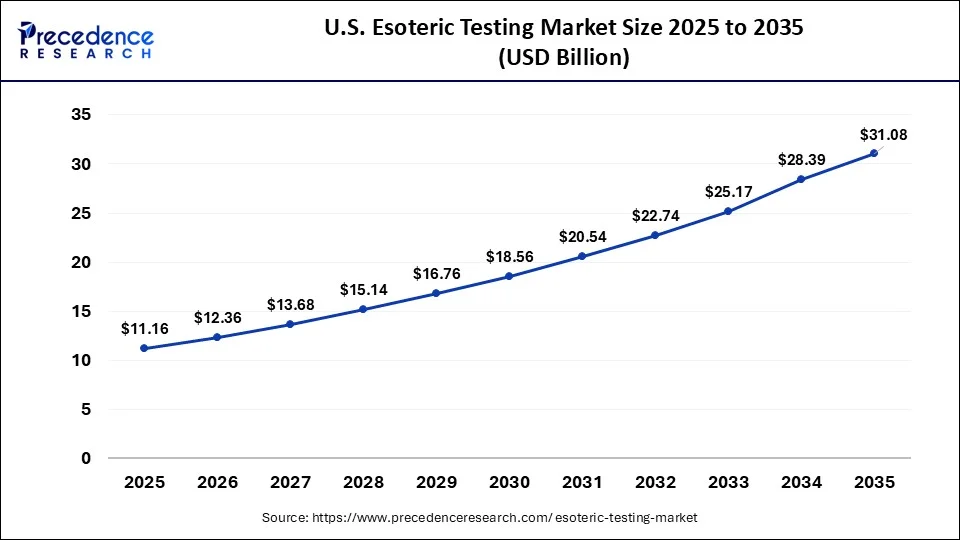
The biggest portion of the international market was controlled by the United States, which accounts for the largest share. This enormous global unit health spending, the sizable number of elderly and medical conditions such as diabetes clients, and the existence of top corporations in the area all contribute to North America's predominance. Due to an increased incidence of degenerative illnesses, growth in the screening procedures, and technical advancements in obscure screening, North America liberated the global market of exotic diagnostics throughout 2023 and therefore stays estimated to continue doing so during the projected timeline.
Moreover, due because of an increase in the incidence of degenerative illnesses, a start rising in policy measures for clinical testing, a massive rise in the supply of Enzyme-linked immunosorbent assay as well as RT-PCR tests, and an increased public understanding of the advantages of personality testing, India is predicted to have had the fastest growth from next upcoming year. The world's largest portion of the world market was in the United States, followed by the UK. The significant market percentage in the United States is likened to the nation's well-established obscure factors driving the growth, which is fueled by rising healthcare spending per person, the presence of major market players, growing utilization take effective measures, the nation's increasing prevalence, and indeed the development of personalized medicine.
North America: U.S. Esoteric Testing Market Trends
The U.S. market is expanding rapidly, driven by growing demand for specialized diagnostics in areas like oncology, rare diseases, and genetics. Technological advances, especially next generation sequencing, liquid biopsies, and AI based data interpretation, are making these sophisticated tests more powerful and accessible. Laboratories are increasingly investing in automation and cloud based platforms to scale up capacity and reduce turnaround times.
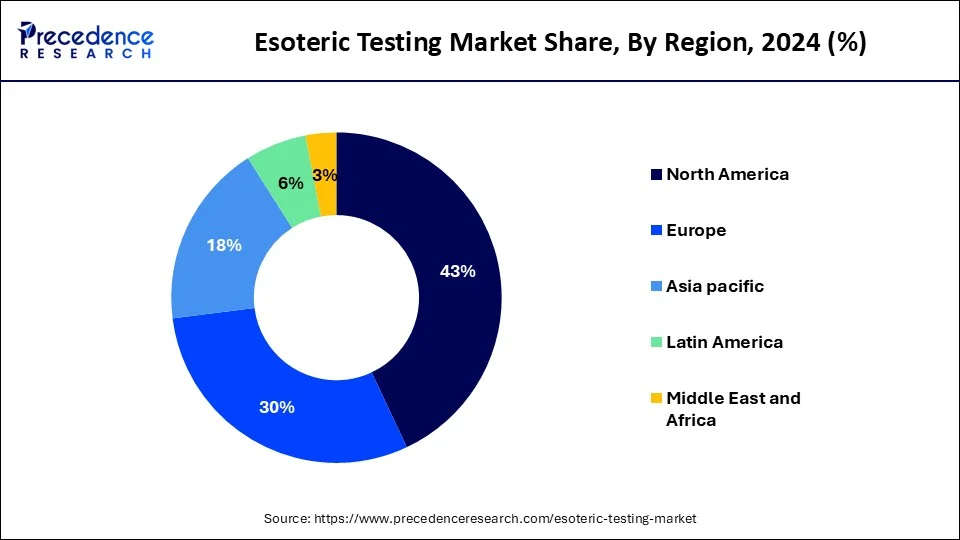
What Factors Are Making Europe a Global Center for Innovative Esoteric Diagnostics?
Europe remains a leader in esoteric testing due to having strong healthcare ecosystems and oversight regulations to ensure the accuracy and reliability of diagnostic tests. A formalized approach with widespread adoption of molecular diagnostics is combined with increasing investment in developing new R&D initiatives, as well as major early disease screening programs.
Germany Esoteric Testing Market
Germany, the U.K., France, and the Nordics have strong laboratory networks with more established reference laboratories. We look at how these and other advances in personalized medicine, genomics-driven care, and rare disease diagnostic detection will lead Europe to continue to be a pioneer in the advance of diagnostic technology.
Latin America Esoteric Testing Market
Latin America is becoming a potential region of interest for esoteric testing due to modernization in healthcare systems and investment in more advanced pathology services, for countries including Brazil, Mexico, and Argentina, to enhance laboratory and department construction, which improves the capacity for high-complexity diagnostics related to infectious diseases, cancers, and rare diseases.
Broader cooperation with international reference laboratories and growing private healthcare investments are bringing improvements to test accessibility. Medical tourism and regional emphasis on preventative diagnostic services will increase demand for more specialized and higher precision testing.
Brazil Market Trends
The Brazilian market is driven by increased investments in diagnostic capabilities and a growing interest in genetic and molecular tests. Growth was also spurred by increasing knowledge of early diagnosis, consumer genetic testing, and consolidation within reference labs.
Which Factors Drive the Esoteric Testing Market in Asia-Pacific?
Asia-Pacific is expected to grow at a considerable CAGR in the upcoming period, driven by improving healthcare infrastructure, rising awareness of advanced diagnostic solutions, increasing healthcare spending, and the expansion of laboratory networks. The increasing incidence of chronic and rare diseases, growing demand for sophisticated diagnostics, and healthcare infrastructure expansion also foster the market. Increased funding for genomics, enhanced laboratory capacity, and higher knowledge of early diagnosis are additional growth drivers for the market.
China Market Trends
The Chinese market is driven by rapid advancements in genomics, supportive government initiatives, and rising demand for early disease detection significantly boosted market growth. Supportive government initiatives and rising demand for early disease detection further accelerated market expansion.
Which Factors Drive the Esoteric Testing Market in the Middle East and Africa?
The Middle East and Africa region is expected to grow at a notable CAGR in the market in the foreseeable future, due to the high prevalence of diseases, growing demand for personalized medication and molecular diagnostics, and increased funding for healthcare infrastructure and knowledge about early diagnosis of diseases.
UAE Market Trends
The UAE is considered to be a significantly growing area due to strong government initiatives and healthcare investments. The UAE market is also driven by the increased usage of genetics and molecular tests and the development of advanced medical facilities.
In what ways does the Esoteric Testing Value Chain promote Accuracy, Efficiency, and Global Access?
The value chain starts with biotechnology companies which develop complex assay technologies, as labs take on these assays for testing, they integrate automated testing systems to achieve higher precision, and then there are an array of service providers, such as Quest Diagnostics, LabCorp, and Eurofins Scientific, who underpin all of the esoteric testing value chain by enabling innovation, processing large numbers of tests and distributing test across channels and countries.
Supply Chain Analysis
R&D
- This stage prioritizes biomarker discovery and identification, assay engineering and technology selection, analytical and clinical validation, and regulatory compliance.
- Key Players: Adaptive Biotechnologies Corporation, Cardio Diagnostics Holdings, Inc., BPGbio, Inc., Caris Life Sciences, Exact Sciences Corporation, etc.
Distribution to Hospitals, Pharmacies
- The primary functions of this stage are cold chain logistics, supply of kits and consumables, reverse logistics, and reagent-rental management.
- Key Players: Quest Diagnostics Incorporated, Labcorp, Sonic Healthcare Limited, ARUP Laboratories, Mayo Clinic Laboratories, F. Hoffmann-La Roche Ltd, etc.
Patient Support and Services
- The core components of this stage are financial assistance, co-pay programs, insurance navigation, at-home collection support, and genetic counselling.
- Key Players: Quest Diagnostics, Labcorp, IQVIA, ARUP Laboratories, Mayo Clinic Laboratories, Sonic Healthcare, etc.
Competitive Landscape
The esoteric testing market is driven by the rising healthcare transition toward personalized and precision medicine, and continuous advancements in advanced genomic and molecular diagnostic technologies. The top companies like Quest Diagnostics provide cardiometabolic testing and neurology diagnostics, while Labcorp provides precision oncology and rare disease diagnostics. The other core product offerings of Mayo Clinic Laboratories are neuroimmunology testing, therapeutic drug monitoring, and many others. The top industrial players are expanding their R&D pipelines through liquid biopsy, precision medicine, and automated next-generation sequencing.
Esoteric Testing Market Companies
- ACM Global Laboratories (US)
- ARUP Laboratories (US).
- Baylor Esoteric and Molecular Laboratory (US)
- BioAgilytix Labs (US)
- BP Diagnostic Centre SDN BHD (Malaysia)
- BUHLMANN Diagnostics Corp (BDC, US)
- Cerba Xpert (Belgium)
- Eurofins Scientific (Luxembourg)
- Flow Health (US)
- Foundation Medicine (US)
- Georgia Esoteric & Molecular Laboratory, LLC (US)
- H.U. Group Holdings, Inc. (Japan)
- Helius Limited (Australia)
- HealthQuest Esoterics (US)
- Kind star Global (Beijing) Technology, Inc. (China)
- Labcorp (US)
- Leo Labs, Inc. (India).
- Mayo Foundation for Medical Education and Research (US)
- National Medical Services Inc. (NMS) (US)
- OPKO Health (US).
- Quest Diagnostics (US
- Sonic Healthcare Limited (US)
- Stanford Clinical Pathology (US)
- Thyrocare Technologies Ltd. (India)
Recent Developments
- In January 2026, SGS launched its new, state-of-the-art UKAS-accredited testing facility in the UK. This launch will enhance electrical and electronic testing and certification services. It aims to deliver world-class compliance solutions for businesses globally. (Source: https://www.sgs.com/en-in)
- In January 2026, Labcorp announced its transformation from a traditional lab network into a full-stack digital diagnostics platform, combining AI, at-home testing, and clinical trial services into a sprawling healthcare engine. The company offers advanced testing, including esoteric and reference tests. (Source: https://www.ad-hoc-news.de)
- In April 2025, Qiagen announced that it has advanced its plans to launch three new sample preparation instruments by 2026 to improve laboratory automation. The company aims to expand options for high and low-throughput laboratory demands. (Source: https://corporate.qiagen.com)
Segments are Covered in the Report
By Type
- Infectious Diseases Testing
- Endocrinology Testing
- Oncology Testing
- Genetics Testing
- Toxicology Testing
- Immunology Testing
- Neurology Testing
- Other Testing
By Technology
- Chemiluminescence Immunoassay
- Enzyme-Linked Immunosorbent Assay
- Mass Spectrometry
- Real-Time PCR
- DNA Sequencing
- Flow Cytometry
- Other Technologies
By End User
- Independent & Reference Laboratories
- Hospital-Based Laboratories
By Geography
- North America
- U.S.
- Canada
- Europe
- U.K.
- Germany
- France
- Asia-Pacific
- China
- India
- Japan
- South Korea
- Malaysia
- Philippines
- Latin America
- Brazil
- Rest of Latin America
- Middle East & Africa (MEA)
- GCC
- North Africa
- South Africa
- Rest of the Middle East & Africa
For inquiries regarding discounts, bulk purchases, or customization requests, please contact us at sales@precedenceresearch.com
Frequently Asked Questions
Tags





Ask For Sample
No cookie-cutter, only authentic analysis – take the 1st step to become a Precedence Research client
 Get a Sample
.webp)



 sales@precedenceresearch.com
 Schedule a Meeting
