



Exotic Pets Market Size, Companies, Share, Patient Volume, Treatment Adoption Rates, Pricing Analysis, Regulatory Landscape, Competitive Positioning, and Demand Forecast
Exotic Pets Market (By Pet Type: Reptiles & Amphibians, Birds, Small Mammals, Aquatic & Exotic Fish, Other Exotic Pet; By Product & Service Type: Pet Food & Nutrition Products, Healthcare & Veterinary Services, Grooming & Maintenance Products, Habitat & Enclosure Equipment, Training & Behavioral Services; By End-User: Individual/Households, Pet Adoption & Rescue Centers, Zoos & Educational Centers) - Industry Analysis, Size, Trends, Leading Companies, Regional Outlook, and Forecast 2026 to 2035
Source: https://www.precedenceresearch.com/exotic-pets-market
 Get a Sample
 Table Of Content


What is the Exotic Pets Market Size?
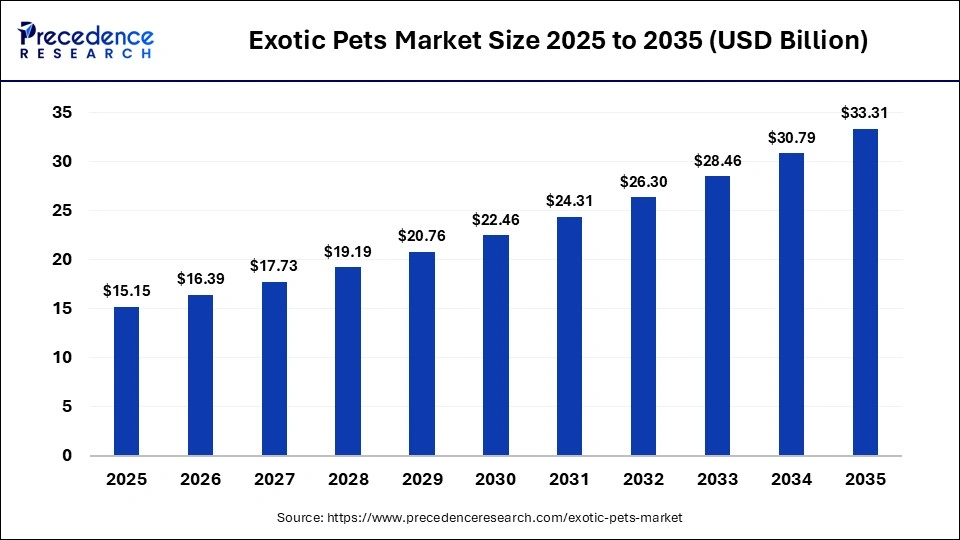
The global exotic pets market size was calculated at USD 15.15 billion in 2025 and is predicted to increase from USD 16.39 billion in 2026 to approximately USD 33.31 billion by 2035, expanding at a CAGR of 8.20% from 2026 to 2035. The market is witnessing substantial growth due to increased interest in unique companionship, supported by a growing infrastructure of specialized products, vet care, and online resources.
Market Highlights
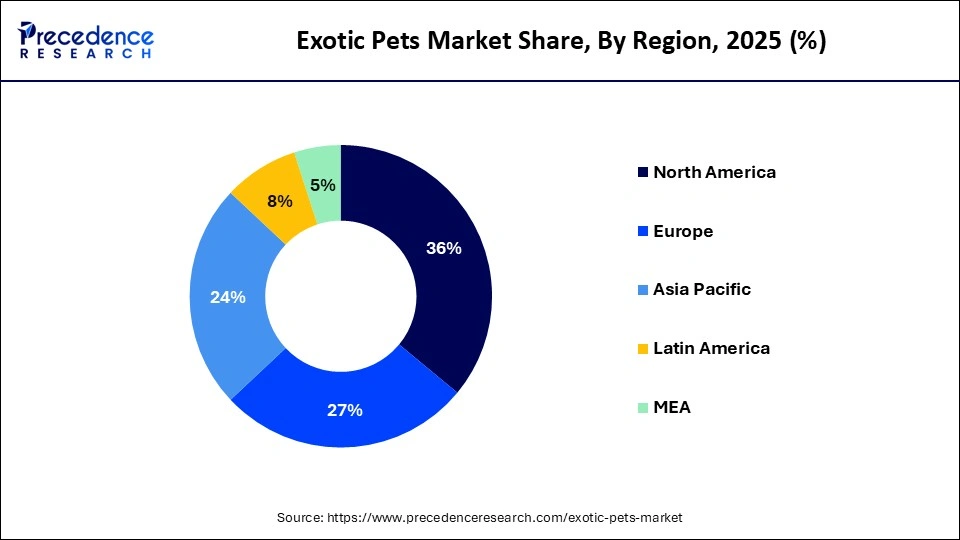
- North America dominated the market with around 36% of the market share in 2025.
- The Asia Pacific is expected to grow at the fastest CAGR between 2026 and 2035.
- By pet type, the reptiles and amphibians segment captured the highest market share of 28% in 2025.
- By pet type, the small mammals segment is poised to grow at a healthy CAGR between 2026 and 2035.
- By product & service type, the pet food & nutrition products segment generated the biggest market share of around 34% in 2025.
- By product & service type, the healthcare & veterinary services segment is expanding at the fastest CAGR between 2026 and 2035.
- By end-user, the individual/household segment accounted for the largest market share of about 81% in 2025.
- By end-user, the pet adoption & rescue centers segment is projected to grow at a solid CAGR between 2026 and 2035.
What is the Exotic Pets Market?
The global exotic pets market involves the breeding, sale, and ownership of non-traditional companion animals such as reptiles, birds, small mammals, fish, amphibians, and other specialty species that are kept primarily for companionship and hobby purposes. The market is influenced by rising demand for unique pets, status, and urbanization, with significant growth fueled by e-commerce and specialized products and veterinary care. Globally valued in billions, it's expanding rapidly with species-specific innovations in food and habitats, catering to millennials and Gen Z seeking alternatives to cats and dogs, with birds and reptiles being popular segments.
How will AI transform the Exotic Pets Market?
Artificial intelligence (AI) is transforming the exotic pets market by enhancing pet care and welfare for legal owners and providing essential tools to combat the illegal wildlife trade. AI-powered wearable devices and smart home cameras track vital signs and activity levels, allowing owners and veterinarians to detect early signs of illness or stress, which is especially critical for species with less-understood health indicators. In clinics, AI assists veterinarians with rapid, accurate diagnostics by analyzing large volumes of data, including medical images and lab results, to identify anomalies such as tumors or fractures in species with less-understood health indicators.
Market Scope
| Report Coverage | Details |
| Market Size in 2025 | USD 15.15 Billion |
| Market Size in 2026 | USD 16.39 Billion |
| Market Size by 2035 | USD 33.31 Billion |
| Market Growth Rate from 2026 to 2035 | CAGR of 8.20% |
| Dominating Region | North America |
| Fastest Growing Region | Asia Pacific |
| Base Year | 2025 |
| Forecast Period | 2026 to 2035 |
| Segments Covered | Pet Type, Product & Service Type, End-User, and Region |
| Regions Covered | North America, Europe, Asia-Pacific, Latin America, and Middle East & Africa |
Segment Insights
Pet Type Insights
How Did the Reptiles and Amphibians Segment Dominate the Exotic Pets Market in 2025?
The reptiles and amphibians segment dominated with around 28% market share in 2025. This is mainly due to their low maintenance, quiet nature, apartment suitability, unique appeal to younger generations, increased availability of specialized vet care, and the pet humanization trend. Many reptiles are quiet, calm, and don't need daily feeding, fitting modern, busy lifestyles and smaller living spaces. Their unique looks and behaviors also attract younger demographics seeking distinctive pets, with social media amplifying their popularity and encouraging adoption.
The small mammals segment is expected to have the fastest growth, with the highest CAGR. This growth is mainly fostered by urbanization, which makes compact pets ideal for small spaces; changing lifestyles favoring low-maintenance companions; and their suitability as first-time pets. They are often considered good starter pets for families and first-time owners due to their relatively easy care and compact size. This is due to managed care, leading to high demand for specialized food and supplies, especially through booming e-commerce channels and subscription models.
Product & Service Type Insights
What Made the Pet Food & Nutrition Products Segment Lead the Exotic Pets Market in 2025?
The pet food & nutrition products segment led with around 34% market share in 2025. This is mainly due to higher demand for species-specific, high-quality, and specialized nutrition. Exotic pets such as birds, reptiles, and small mammals have highly specific and often complex dietary requirements for optimal health. Increased owner awareness, through online resources and veterinary advice, helps prevent common issues like metabolic bone disease or nutritional deficiencies. A growing focus on preventive care to ensure longevity and health encourages consistent purchase of high-quality food and nutritional supplements.
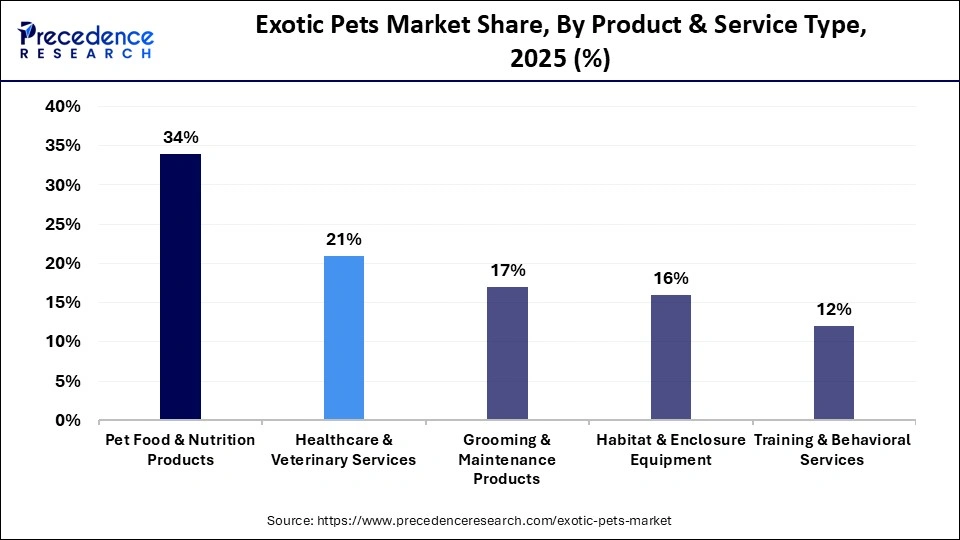
The healthcare & veterinary services segment is expected to experience the fastest growth, with the highest CAGR. This is mainly due to pet humanization, increased awareness, and tech integration. AI-powered diagnostics and health trackers help in the early detection of issues, improving outcomes for complex exotic pets. Lifestyle changes, a desire for unique companionship, and therapeutic benefits are increasing the appeal of exotic pets, boosting demand for their specific needs. Veterinary clinics are expanding to offer tailored services for reptiles.
End-User Insights
Why Did the Individual/Household Segment Dominate the Exotic Pets Market in 2025?
The individual/household segment dominated with around 81% market share in 2025. This is mainly because of key socio-economic and lifestyle trends that drive demand for unique animal companionship. This dominance is further fostered by the increasing trend of viewing pets as integral family members, which encourages owners to spend more on their care for exotic species. Many exotic pets, such as certain reptiles, birds, and small mammals, are perceived as requiring less space and daily attention, making them suitable for urban living and busy modern lifestyles.
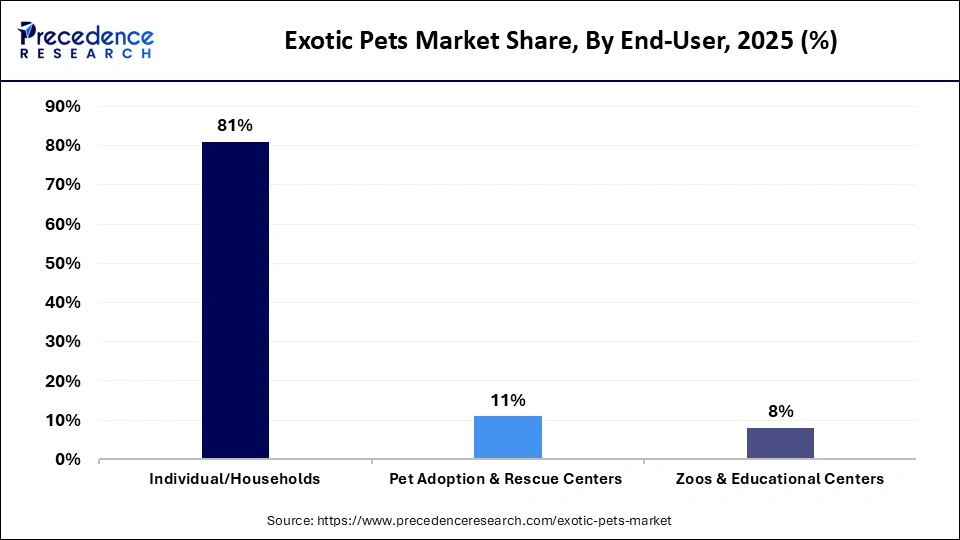
The pet adoption & rescue centers segment is anticipated to have the fastest growth, with the highest CAGR. This is mainly due to increasing pet humanization, increased awareness of animal welfare, and demand for specialized care. Better-trained exotic veterinarians and accessible services reduce perceived risk for owners. Millennials and Gen Z, with higher disposable incomes and global outlooks, are leading this trend, favoring unique companions. Online adoption platforms and virtual fairs make it easier to find and adopt exotic animals, increasing accessibility.
Regional Insights
How Big is the North America Exotic Pets Market Size?
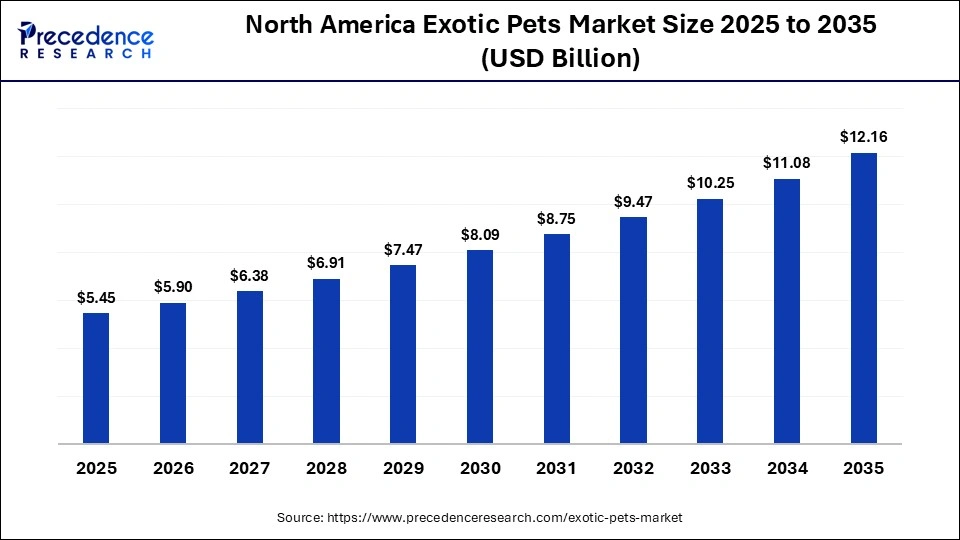
The North America exotic pets market size is estimated at USD 5.45 billion in 2025 and is projected to reach approximately USD 12.16 billion by 2035, with a 8.36% CAGR from 2026 to 2035.
How Did North America Dominate the Exotic Pets Market in 2025?
North America dominated with around 36% market share in 2025. This is mainly due to high disposable incomes, evolving lifestyle preferences, and a well-developed infrastructure for specialized pet care products and veterinary services. It boasts a robust ecosystem of specialized veterinary hospitals/clinics, trained exotic animal veterinarians, and a wide range of species-specific products. Social media platforms normalize and popularize exotic pet ownership, while e-commerce provides convenient access to a vast array of specialized products and educational resources, overcoming geographical barriers and encouraging investment in high-quality care products and services.
In May 2025, the reintroduction of the Captive Primate Safety Act offered a federal solution that is required to prohibit the private ownership and interstate or foreign commerce of nonhuman primates for the cruel pet trade. To accomplish this, the bill supported by the Animal Legal Defense Fund (ALDF) amends the Lacey Act to prohibit the private possession of nonhuman primates.
What is the Size of the U.S. Exotic Pets Market?
The U.S. exotic pets market size is calculated at USD 4.09 billion in 2025 and is expected to reach nearly USD 9.18 billion in 2035, accelerating at a strong CAGR of 8.42% between 2026 and 2035.
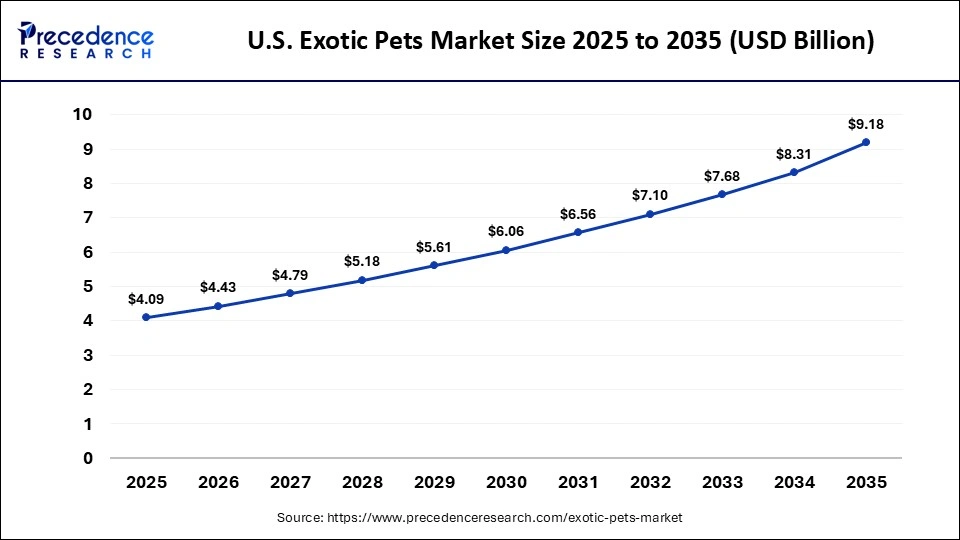
U.S. Exotic Pets Market Trends
The U.S. plays a significant role within the region, primarily due to a strong pet-ownership culture, urban lifestyles, and social media influence. The U.S. also leads in the associated pet care industry, including specialized veterinary services, pharmaceuticals, and pet products for exotic species. Additionally, federal laws like the Lacey Act and the Animal Welfare Act exist, while private ownership is largely governed by a patchwork of inconsistent state laws, which creates loopholes exploited by traders.
What is the Asia Pacific Exotic Pets Market Size?
The Asia Pacific exotic pets market size is expected to be worth USD 8.16 billion by 2035, increasing from USD 4.09 billion by 2025, growing at a CAGR of 8.40% from 2026 to 2035.
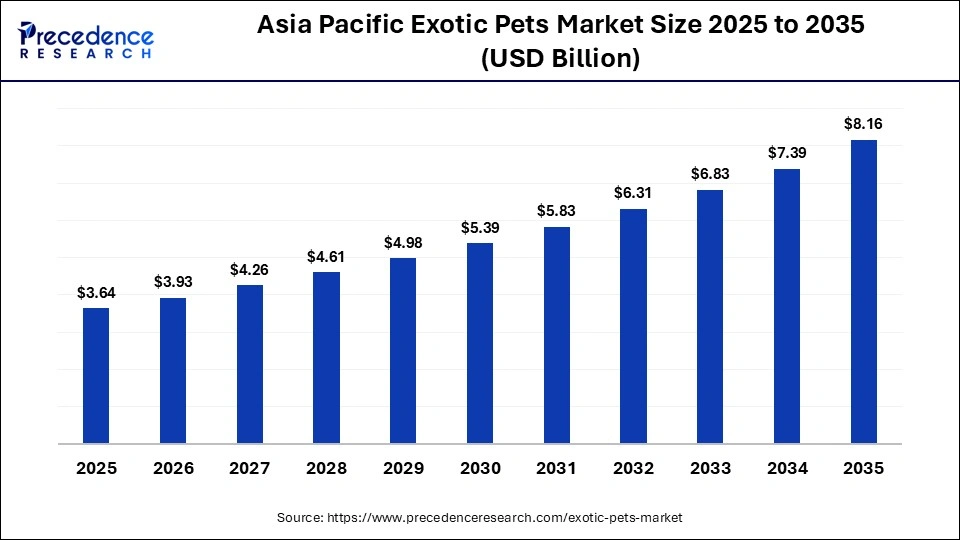
Why Will Asia Pacific Be Considered the Fastest Growing Region in the Exotic Pets Market in 2025?
Asia Pacific is anticipated to have the fastest growth, with the highest CAGR. This is due to rising disposable incomes, increasing urbanization, the humanization of pets, and expanding access to specialized products and veterinary care. Economic growth across the region, particularly in countries like China, India, and South Korea, has created a burgeoning middle class with greater financial flexibility to spend on premium and non-traditional pets. A significant cultural shift is occurring, where pets are increasingly considered members of the family. This trend drives owners to invest heavily in their pets' well-being, fueling the market for exotic species.
India Exotic Pets Market Trends
India plays an emerging role within the region, mainly due to increasing disposable incomes, urbanization, and the desire for status symbols, with animals like marmosets, macaws, and exotic reptiles being popular choices. India is a CITES signatory and has strict penalties under the Wildlife (Protection) Act, 1972 for native species trade. The Ministry of Environment, Forest, and Climate Change also introduced new rules, requiring owners to register their exotic animals on a government portal to foster compliance.
What is the Europe Exotic Pets Market Size and Growth Rate?
The Europe exotic pets market size has grown strongly in recent years. It will grow from USD 4.09 billion in 2025 to USD 9.16 billion in 2035, expanding at a compound annual growth rate (CAGR) of 8.40% between 2026 and 2035.
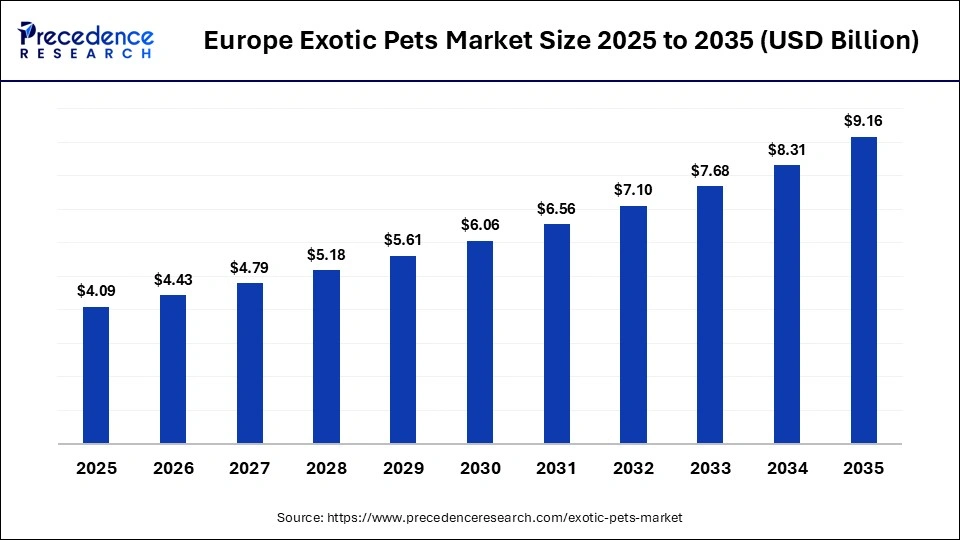
What Potentiates the Exotic Pets Market in Europe?
The market in Europe is majorly driven by rising consumer interest in unique and non-traditional companion animals, supported by increasing disposable incomes and lifestyle diversification. Growing awareness of exotic pet care, along with the availability of specialized veterinary services and premium pet products, further supports market growth. Additionally, favorable regulatory frameworks and online platforms have improved accessibility to premium pet care services, increasing the ownership of exotic pets in the region.
Exotic Pets Market Value Chain Analysis
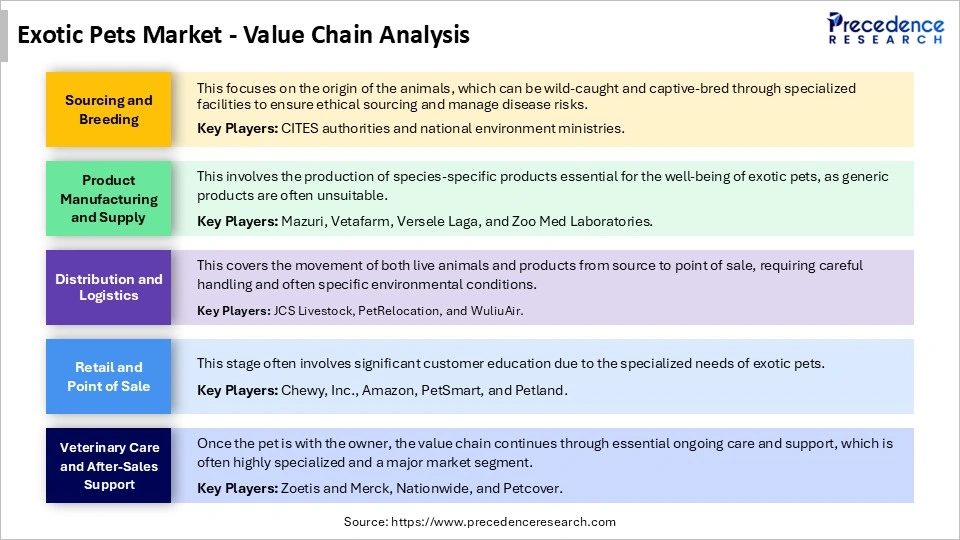
Who are the Major Players in the Global Exotic Pets Market?
The major players in the exotic pets market include Zoo Med Laboratories, Oxbow Animal Health, Mazuri (PMI Nutrition International), Versele Laga, Vetafarm, Kaytee (Central Garden & Pet), Arcadia Reptile, The Birdcare Company, Merck Animal Health, and Zoetis Inc.
Recent Developments
- In April 2025, Zoetis received FDA approval for a new label indication for Simparica Trio, which now prevents Dipylidium caninum infections by eliminating vector fleas in treated dogs. This makes Simparica Trio the only canine combination parasiticide that targets flea tapeworm infections at the source. Jared Shriver, President of U.S. Operations at Zoetis, highlighted the company's commitment to innovative parasiticide solutions and ongoing research.(Source: https://news.zoetis.com)
- In October 2025, Acasta Health launched MYPETFIT, India's first AI-powered health and wellness assessment platform for pets, designed by veterinarians and scientists. It offers personalized insights to support preventive care and enhance pet wellbeing.(Source: https://creature-companions.in)
- In January 2025, Revelation Pharma announced its new animal-focused division, Revelation Animal Health. This will fill a critical gap in the animal health market by providing custom-compounded medications tailored to each animal's specific needs. From companion pets to exotic animals in zoos and aquariums, it will support animals big and small with unmatched expertise, along with delivering the tailored solutions veterinarians trust, with the scale and efficiency to provide exceptional care.(Source: https://www.prnewswire.com)
Segments Covered in the Report
By Pet Type
- Reptiles & Amphibians
- Lizards
- Snakes
- Turtles & tortoises
- Frogs & salamanders
- Birds
- Parrots & macaws
- Finches & canaries
- Other avian species
- Small Mammals
- Hedgehogs
- Ferrets
- Sugar gliders
- Rabbits (exotic breeds)
- Aquatic & Exotic Fish
- Other Exotic Pets (invertebrates, specialty species)
By Product & Service Type
- Pet Food & Nutrition Products
- Healthcare & Veterinary Services
- Grooming & Maintenance Products
- Habitat & Enclosure Equipment
- Training & Behavioral Services
By End-User
- Individual/Households
- Pet Adoption & Rescue Centers
- Zoos & Educational Centers
By Region
- North America
- Europe
- Asia-Pacific
- Latin America
- Middle East & Africa
For inquiries regarding discounts, bulk purchases, or customization requests, please contact us at sales@precedenceresearch.com
Frequently Asked Questions
Tags





Ask For Sample
No cookie-cutter, only authentic analysis – take the 1st step to become a Precedence Research client
 Get a Sample
.webp)



 sales@precedenceresearch.com
 Schedule a Meeting
