



Ferulic Acid Market Size, Key Companies, Company Market Share, Production Capacity, Raw Material Pricing, Export & Import Analysis, Manufacturing Cost, Competitive Positioning, and Demand Forecast
Ferulic Acid Market (By Type: Synthesis, Natural; By Application: Cosmetic, Pharmaceutical Intermediates, Others; By Packaging: Interior Packaging, Exterior Packaging) - Global Industry Analysis, Size, Trends, Leading Companies, Regional Outlook, and Forecast 2026 to 2035
Source: https://www.precedenceresearch.com/ferulic-acid-market
 Get a Sample
 Table Of Content


What is the Ferulic Acid Market Size?
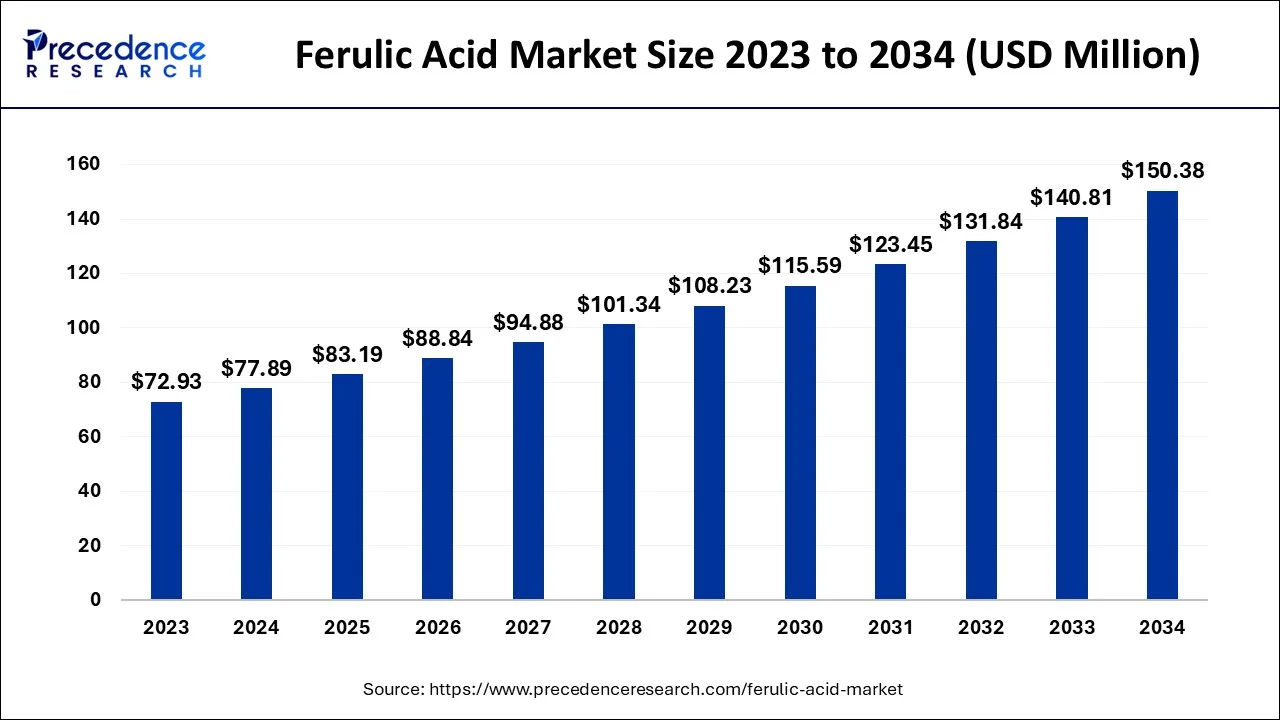
The global ferulic acid market size is calculated at USD 83.19 million in 2025 and is predicted to increase from USD 88.84 million in 2026 to approximately USD 159.55 million by 2035, expanding at a CAGR of 6.73% from 2026 to 2035.
Market Highlights
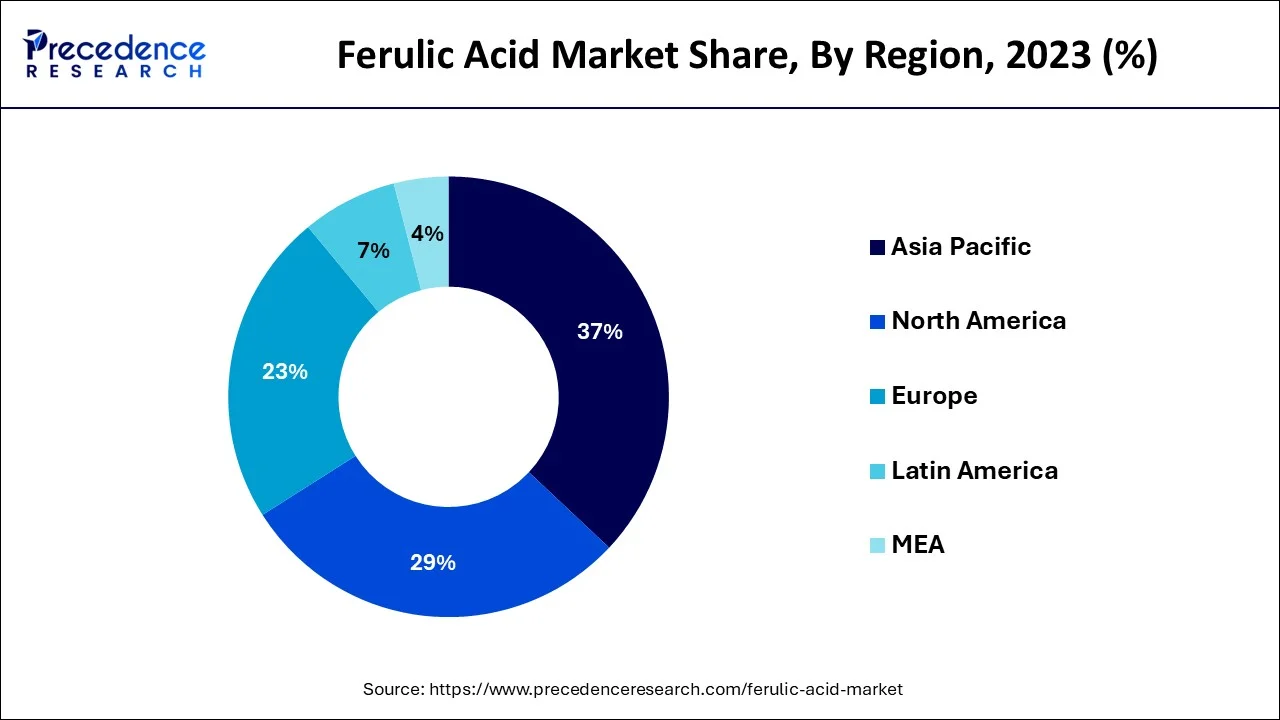
- Asia Pacific dominated ferulic acid market in 2025.
- By type, the Natural segment dominated the market in 2025.
- By application, the Cosmetic segment led the market in 2025.
Market Overview
Ferulic acid is a naturally occurring molecule that may be discovered in plant cell walls and is a member of the hydroxycinnamic acid family. Ferulic is a powerful antioxidant that is an active substance (common natural phenol phytochemical). 4-Hydroxy-3-methoxy cinnamic acid is the chemical formula, and its molecular composition is C10H10O4. Because it is an effective free radical scavenger, ferulic acid has already been added to food to reduce lipid peroxidation. Large amounts of ferulic acid are removed from rice bran oil. Because ferulic acid is a potent antioxidant, it slows down the aging process by removing free radicals from the skin.
Additionally, ferulic acid assists to regenerate skin that has previously been overplayed to the sunlight and shields us from UV damage. Additionally, it improves the effectiveness and stability of both vitamin E and vitamin C. Due to developments in the pharmaceutical production industry, there has been an increase in demand for organic ferulic acid in that international market. Natural ferulic acid's advantageous characteristics have been a major factor in the expansion of the world market. Trans-ferulic acid, commonly known as natural ferulic acid, is obtained using rice bran.
Organic ferulic acid has an edge over other acids because of its capacity to prevent oxidation. As a result, it is anticipated that the global market for natural ferulic acid would generate considerable profits in the coming years. Natural ferulic acid could be used to reduce the harmful effects of various free radicals, and this is a major factor in driving market demand. Additionally, natural ferulic acid is used to stabilize vitamin E and vitamin C preparations. Natural ferulic acid has a variety of other qualities which have helped make it more well-known.
Ferulic Acid Market Growth Factors
This substance is essential in reducing the production of free radicals and improving the efficiency of different antioxidants including vitamins C, E, and A. Due to its effectiveness in fading age spots and wrinkles, it is frequently used as an anti-aging serum. Due to the increased popularity of dermal fillers and the expanding medical tourism industry, which offers numerous prospects for expansion, the worldwide anti-aging total market is anticipated to surpass in 2025. The market for natural ferulic acid should develop even faster because of increased affluence and rising stress levels brought on by fast-paced lives.
The use of organic ferulic acid in the processed food business should be encouraged by rising health consciousness and demographic changes. The size of the global processed food market exceeded in 2018 as a result of growing consumer awareness of food safety, which is a sign of enormous growth potential. Due to its antioxidizing properties, it is crucial for preventing heart disorders and decreasing cholesterol. Additionally, it is essential for avoiding bacterial infection and food deterioration. The growing market of packed baby food brought on by an increase in parents working and the rising popularity of natural baked goods should increase the market share of organic ferulic acid.
The market's expansion may be hampered by the potential for adverse reactions to ferulic acid due to pre-existing allergies to its demographics, including wheat, corn, and barley. This could cause redness, itchy rash, hives, and epidermal peeling. Upon inhalation, the substance may potentially induce breathing difficulties and exacerbate medical disorders like chronic bronchitis and emphysema. However, the majority of cosmetic producers make sure to use organic ingredients, which reduces these negative health consequences and should accelerate market growth.
Key Trends in the Ferulic Acid Market
- Technological advancements in extraction methods are helping to enhance the quality and yield of ferulic acid, benefiting both food and cosmetic applications.
- The increasing consumer awareness regarding natural products and the expansion of the cosmetics and personal care sector are propelling market growth.
- Regulatory frameworks all over the world are seen to be evolving to support the use of ferulic acid in various applications. This regulatory support facilitates market growth.
- The ferulic acid market is increasingly influenced by sustainability and ethical sourcing initiatives. As consumers become more environmentally conscious, there is a growing demand for products that are sourced and produced ethically.
Market Outlook
- Market Growth Overview: The ferulic acid market is growing rapidly due to its increasing use as a natural antioxidant in food, beverages, cosmetics, and nutraceuticals. Rising awareness of its health benefits, including anti-inflammatory and anti-aging properties, is further fueling demand.
- Global Expansion: The market is expanding worldwide as demand surges in Asia-Pacific, Europe, and North America, driven by the growing preference for natural and functional ingredients. Emerging regions like Latin America and the Middle East offer opportunities due to increasing health-conscious consumer bases and expanding food and personal care industries.
- Sustainability Trend: Sustainability trends are reshaping the market by driving the preference for plant-derived ferulic acid over synthetic alternatives. Eco-friendly extraction processes and biodegradable product formulations are becoming key differentiators for manufacturers.
- Major Investors: Key investors include large nutraceutical, cosmetic, and specialty chemical companies that fund R&D for advanced extraction technologies and product development. Venture capital and strategic partnerships also support startups focusing on natural antioxidants, helping expand production capacity and market reach.
Market Scope
| Report Coverage | Details |
| Market Size in 2025 | USD 83.19 Million |
| Market Size in 2026 | USD 88.84 Million |
| Market Size by 2035 | USD 159.55 Million |
| Growth Rate from 2026 to 2035 | CAGR of 6.73% |
| Base Year | 2025 |
| Forecast Period | 2026 to 2035 |
| Segments Covered | Type, Application, Packaging, and region |
Market Dynamics
Key Market Drivers
- Ferulic acid Is not toxic: Due to the non-toxic nature of this ferulic acid, demands in the international market for organic ferulic acid have been increasing. The fact that ferulic acid could be utilized with soy products, cereals, juices, and dried fruits is crucial in terms of market expansion.
- Increasing use of canned meat: The demand for canned meat preservation has grown recently, which has benefited the international market for organic ferulic acid. Organic ferulic acid is suitable for use in this field because it is non-toxic.
- Significant demand for naturally occurring ferulic acid: In the coming years, the market for pure ferulic acid is anticipated to grow significantly. This is a significant market development dynamic that has drawn the attention of well-known investors. The development of the international market has also been aided by the continuous sector of pharmaceutical testing and research. The demand for organic ferulic acid has recently increased dramatically due to the expansion of the chemicals sector. Investigating the developments of the abovementioned market sectors for pure ferulic acid on a worldwide scale is crucial. Knowing the growth rates of the worldwide ferulic acid market depends heavily on these sectors.
Key Market Challenges
Most companies buying natural materials for cosmetics
- The possibility of an allergic response to ferulic acid due to a history of hypersensitivity to its ingredients, such as barley, corn, and wheat, may restrain the market growth. A rash, peeling skin, hives, redness, and itching may result from this. The chemical can cause respiratory irritation and make conditions like emphysema and chronic bronchitis worse when breathed.
- However, the majority of cosmetic manufacturers make it a point to use organic ingredients, which minimizes these harmful health effects and should support market growth.
Key Market Opportunities
- Creation of a unified pharmaceutical testing and research industry: The global market has grown as a result of the creation of a unified industry for pharmaceutical testing and research. Due to the expansion of the chemicals industry, the demand for natural ferulic acid has increased significantly on a global scale recently. The world's natural ferulic acid market has benefited recently from the rise in demand for canned preserved food.
Segment Insights
Type Insights
Ferulic acid can be found naturally throughout nature and is derived from plant leaves and seeds. Because of its conjugation to the cell membrane, it gives stiffness. Ferulic acid is created via biological reactions in plants. Commonly occurring commercial plants that contain ferulic acid include pineapple, oats, wheat, and rice. Additionally, it can be found in grasses, grains, flowers, and vegetables. The industry for ferulic acid as a whole is dominated by natural ferulic acid, which is anticipated to expand at a healthy rate throughout the projected period.
The two types of natural ferulic acid are called against form and sequence form. Against form is tinted white powder, whereas the Sequence form is yellow. Although synthesized ferulic acid is available on the market, it is not widely used globally. The chemical synthesis method is used to create synthesized ferulic acid, which is produced from rice bran oil and utilized extensively in the manufacture of cosmetics. Physical properties like antibacterial, antioxidant, anti-inflammatory, and hepatoprotective are displayed by synthesized ferulic acid. It is known that consuming ferulic acid from diet and medication can prevent heart and liver disorders. Currently making up the second-largest portion of all ferulic acid, synthesized ferulic acid is expected to experience rapid growth in the coming years.
Application Insights
By 2035, the world's natural ferulic acid industry from pharmaceutical formulations should expand by more than 6.7% due to rising medicine affordability and more public understanding of health issues. This chemical is frequently used to treat cancer, diabetes, and inflammation while also preventing microbial growth. It reduces sperm viability, protects against cardiac disease, and covers up the unpleasant flavors and odours of medications. Organic ferulic acid development should be accelerated by major economic growth, medical advancements, and manufacturing attempts to target the specialty disorders sector. Due to rising demand for ready-to-eat food products, the worldwide economy for natural ferulic acid used as a food preservative is anticipated to reach million in the anticipated timeframe. In addition to stabilizing natural oils in foods and preventing autoxidation, it also slows the growth of harmful bacteria like Staphylococcus aureus, E. coli, and bacillus subtilis. It is anticipated that increasing industrialization and rising consumer demand for longer-lasting food goods will speed category expansion.
In 2025, the market for natural ferulic acid used in cosmetics applications in the world was surpassed in part because of the growth of e-commerce and the negative effects of climate patterns on healthy skin. It improves the skin's absorption of vitamin C from personal care products and stops it from oxidizing. This chemical suppresses the production of melanin, which stops the skin from darkening by absorbing harmful UV rays from sunshine. The market for natural ferulic acid would continue to increase as demand for organic components and male acceptance of apparel products rise.
Regional Insights
What is the Asia Pacific Ferulic Acid Market Size?
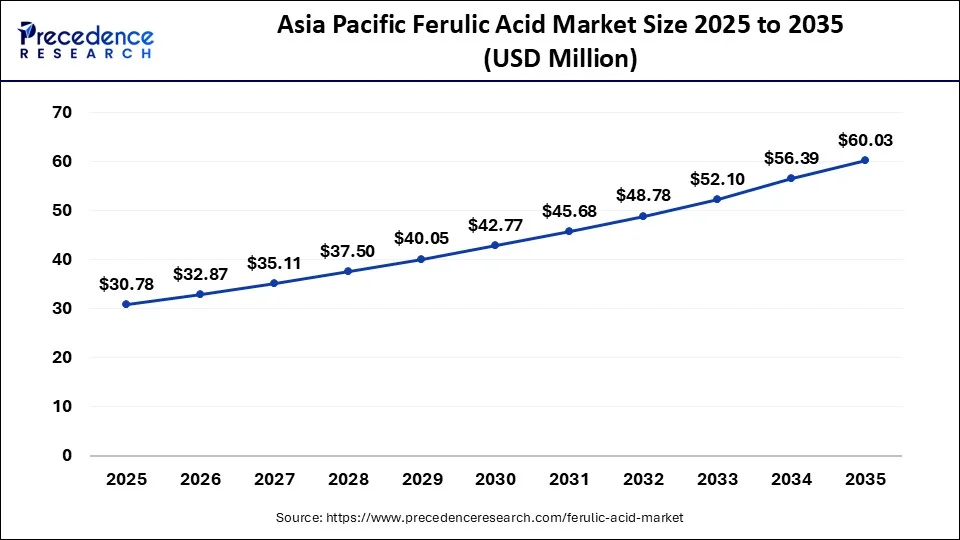
The Asia Pacific ferulic acid market size is evaluated at USD 32.87 million in 2026 and is predicted to be worth around USD 60.03 million by 2035, rising at a CAGR of 6.91% from 2026 to 2035.
By 2033, the processed food market in the Asia Pacific, headed by India, Japan, and China, should surpass million due to rapid urbanization and the expansion of the online retail industry. Due to its capacity to stop ingredient photo-oxidation and lack of toxicity, this product is frequently utilized as a food ingredient and is especially well suited for dried fruits, cereals, juices, and soy products. Increasing government initiatives to grow the economy in the food industry together with rising canned consumption of meat due to its low price should support the organic ferulic acid industry.
North America, led by Mexico, Canada, and the U.S., should experience growth of over 5.5%, primarily because of a rise in chronic conditions and growing public awareness of the importance of children's health. Along with lowering free radicals produced in muscles, this substance also enhances lipid profiles, decreases oxidative stress, and decreases cardiovascular disease risk. Increased demand for preventative healthcare, rising healthcare expenditures, and substantial technological advancements could all help to boost the organic ferulic acid industry growth in the area. Regarding the rise of novel medical procedures and personalized pharmaceuticals, the UK, and Europe, led by Germany, and France, outperformed in 2018. Alzheimer's disease, diabetes, atherosclerosis, cancers, and coronary heart disease can all be effectively treated with it. The market share growth for natural ferulic acid is expected to quicken due to rising biopharmaceutical adoption and the region's low tax and interest rates.
Why Europe is Growing Notably in the Ferulic Acid Market?
The European market for ferulic acid is basically moulded by one major factor, strong consumer demand for natural and effective cosmetic and nutraceutical ingredients. In response to high regulatory requirements and demand for the safety of the ingredient, suppliers are obliged to provide well-documented, standardized extracts and clinical research backing. European beauty brands frequently utilize ferulic acid in anti-aging serums and photoprotection combinations which thus, which are thus the main drivers of the premium product segments. Sustainability and traceability are becoming progressively more important; brands are focusing on transparency of the source and eco-friendly extraction.
- France and Germany are at the forefront in formulation science and premium cosmetics, where ferulic acid is deeply integrated into high-end serums and medical-grade skincare.
- The UK boasts a lively nutraceutical and natural beauty market that is fast in the adoption of proven actives; thus, ferulic acid is commonly combined with vitamins C and E. Scandinavia strongly support clean, beauty concepts and eco-friendly sourcing; thus, supply chains that are transparent are getting the greatest attention.
- Italy and Spain demonstrate a robust demand for cosmeceutical and food supplement segments, and heavily rely on the traditional use of plant extracts.
Why Latin America is Growing Notably in the Ferulic Acid Market?
Latin America is a potential market that could offer a lot of advantages for ferulic acid both in cosmetics and as a functional food, due to the region's rich botanical traditions and the beauty and wellness markets that are on the rise. Consumers are gradually becoming more inclined towards natural, plant-based actives, and formulators are increasingly exploring the use of antioxidant blends with the inclusion of ferulic acid.
- Brazil as the largest beauty and personal care market in Latin America, Brazil shows a significant demand for products containing ferulic acid. The country's rich biodiversity allows for the sourcing of various natural ingredients, leading to a growing trend in plant-based and organic cosmetics.
- Brazilian consumers are increasingly looking for effective anti-aging solutions, driving integration of ferulic acid into skincare formulations. Each country in Latin America presents unique characteristics and opportunities for the ferulic acid market, mainly driven by increasing consumer awareness of health, beauty, and sustainability trends.
Why Middle East & Africa is Growing Notably in the Ferulic Acid Market?
The Middle East & Africa account for a progressively developing market for ferulic acid, where the demand is a result of rising beauty awareness, expanding retail networks, and healthcare modernization in selected countries. On one hand, the segments of premium skincare in the urban centres are opening their arms to proven antioxidant actives, on the other hand, the interest in functional food is slowly increasing. A very limited local production capacity situation has led to imports dominating the market and therefore, buyers are mostly concerned with proven efficacy and brand reputation.
- The UAE is the leader in the Gulf when it comes to the uptake of luxury beauty retail and an expanding investment in dermatology clinics that make use of advanced actives.
- Saudi Arabia is in the process of fast retail and wellness sectors modernization, therefore, there is an increasing number of opportunities for premium cosmeceuticals.
- South Africa is showing the initial enthusiasm for nutraceuticals and natural cosmetics, which is being further supported by local R&D and botanical sourcing.
Value Chain Analysis
- Raw Material Sourcing: The primary sources of ferulic acid are plant-based materials such as rice bran, wheat bran, corn husks, and oats. Companies in this stage focus on sustainable sourcing, ensuring consistent supply and quality for downstream production.
Key players: Rising Sun Oils, Cargill, Archer Daniels Midland (ADM), BASF - Extraction & Production: Ferulic acid is extracted using chemical, enzymatic, or fermentation methods. This stage adds value by producing high-purity ferulic acid suitable for food, cosmetic, and pharmaceutical applications, and innovations in green extraction methods are gaining importance.
Key players: BASF, Changzhou Cofresh Biotech, Wuhan Youcheng Technology, AksharChem
Top Companies in the Ferulic Acid Market & Their Offerings
- Hubei Yuancheng: Information about Hubei Yuancheng's specific ferulic acid offering was not available in the search results; the company is likely a general chemical supplier, and ferulic acid itself is widely studied for its antioxidant properties.
- Hunan Huacheng Biotech, Inc.: This company provides a high-purity ferulic acid powder (99% assay) as a cosmetic-grade natural active ingredient sourced from plants.
- Leader Okayasu Co., Ltd.: This company's specific ferulic acid product could not be determined from the search results, though the name "Leader" is associated with ferulic acid-based cosmetic peels from a different entity (Leaderma).
- Oryza Oil & Fat Chemical Co., Ltd: They produce natural ORYZAFERULIX ferulic acid, extracted from Japanese rice bran, which is used as a natural antioxidant, UV absorber, and deodorant in cosmetic and food applications.
- Shanghai Bettersyn Biotech: Specific product details for ferulic acid from this company were not available in the search results.
- Sisco Research Laboratories Pvt. Ltd. (SRL): SRL likely offers ferulic acid as a laboratory chemical or research-grade material, consistent with its profile as a chemical supplier, though specific product information was not found in the search results.
- Suzhou Leader Chemical Co., Ltd.: Information regarding Suzhou Leader Chemical Co., Ltd.'s specific ferulic acid offerings was not available in the search results.
Tateyamakasei: Specific product details for ferulic acid from this company were not available in the search results. - Top Pharm Chemical Group: Information regarding Top Pharm Chemical Group's specific ferulic acid offerings was not available in the search results.
TSUNO CO., LTD.: This company is a producer of natural ferulic acid derived from rice bran as a functional ingredient for cosmetic and food use. - Xian App-Chem Bio (Tech) Co., Ltd.: Specific product details for ferulic acid from this company were not available in the search results, though other Chinese producers offer a similar high-purity powder.
- Yuansen: Information on Yuansen's specific ferulic acid offering was not available in the search results; it may be a general supplier of plant-derived ingredients.
- Zhejiang Delekang Food Co., Ltd.: This company offers natural ferulic acid powder suitable for use in food, nutritional supplements, and cosmetics, emphasizing its antioxidant benefits.
Recent Developments
- In February 2025, a recent study conducted by researchers from Wuhan Polytechnic University and Kansas State University explored the effects of ferulic acid on colon cancer cells across different stages of classification. The researchers found that ferulic acid significantly reduced cell viability in all three cell lines in a dose-dependent manner, with the HCT-116 cells showing the greatest sensitivity. (Source: https://www.news-medical.net)
- To attract a broader customer base, top vendors like Kingherbs and Hunan Huachung Biotech are concentrating on raising their marketing costs. These businesses' yearly revenue is expected to increase because of, this technique.
- To create new and enhanced products, Fat Chemical and Oryza Oil, and is working on important research and development projects.
Segments Covered in the Report
By Type
- Synthesis
- Natural
By Application
- Cosmetic
- Pharmaceutical Intermediates
- Others
By Packaging
- Interior Packaging
- Exterior Packaging
By Geography
- North America
- Europe
- Asia-Pacific
- Latin America
- Middle East & Africa (MEA)
For inquiries regarding discounts, bulk purchases, or customization requests, please contact us at sales@precedenceresearch.com
Frequently Asked Questions
Tags





Ask For Sample
No cookie-cutter, only authentic analysis – take the 1st step to become a Precedence Research client
 Get a Sample




 sales@precedenceresearch.com
 Schedule a Meeting
