



Lactic Acid Market Size, Production Capacity, Raw Material Pricing, Export & Import Analysis, Manufacturing Cost, Market Share, and Demand Forecast
Lactic Acid Market (By Raw Material: Corn, Sugar Cane, Cassava, Other Crops; By Application: Poly Lactic Acid, Pharmaceuticals, Personal Care, Food & Beverages, Industrial, Others; By Form: Liquid, Form; By Source: Natural, Synthetic; By End-User) – Global Industry Analysis, Size, Trends, Leading Companies, Regional Outlook, and Forecast 2025 to 2034
Source: https://www.precedenceresearch.com/lactic-acid-market
 Get a Sample
 Table Of Content


What is the Lactic Acid Market Size?
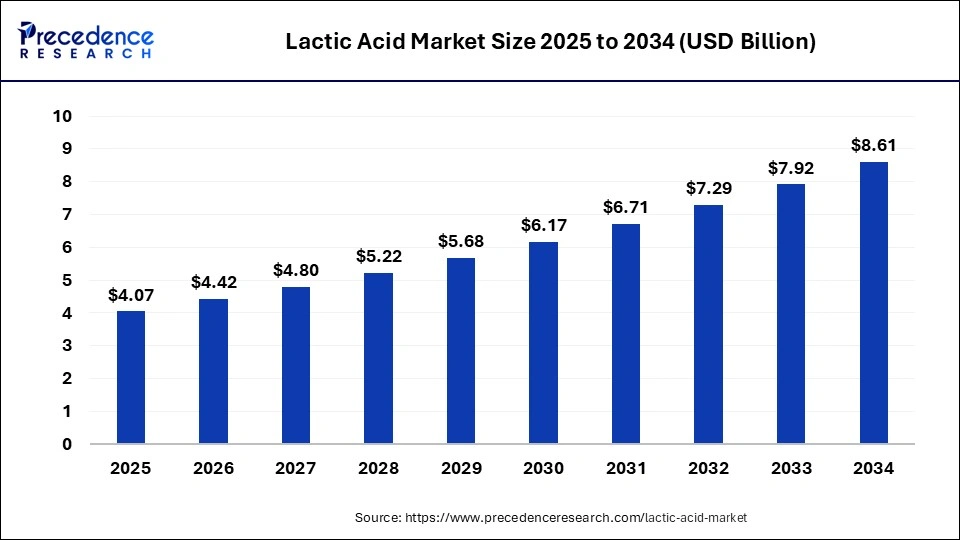
The global lactic acid market size is calculated at USD 4.07 billion in 2025 and is predicted to increase from USD 4.42 billion in 2026 to approximately USD 8.99 billion by 2035, expanding at a CAGR of 8.25% from 2025 to 2034. The lactic acid market is driven by the increasing demand for biodegradable plastics and sustainable food ingredients.
Lactic Acid Market Key Takeaways
- By Region, North America held a majority revenue share of the lactic acid market in 2025.
- By Region, Asia Pacific is expected to grow at the fastest CAGR in the market during the forecast period.
- By raw material, the sugar cane segment held a dominant position in the market in 2025.
- By raw material, the corn segment is expected to grow at the fastest CAGR in the market between 2026 and 2035.
- By application, the poly lactic acid segment accounted for a considerable revenue market in 2025.
- By application, the food and beverages segment is expected to grow with the highest CAGR in the market during the studied years.
- By form, the liquid segment led the global market in 2025.
- By source, the natural segment registered its dominance over the global market in 2025.
- By source, the synthetic segment is expected to witness the fastest growth in the market with a CAGR over the forecast period.
- By end-user, the packaging segment dominated the global market in 2025.
- By end-user, the textile segment is expected to gain the highest market share with a CAGR between 2026 and 2035.
Market Overview
There has been an increase in the use of lactic acid in different types of industries across all the developed as well as the developing economies which has led to the growth of the market. Along with the use of lactic acid in the food and beverage industry there has also been a growing demand for this product in the Pharmaceutical industry.
Apart from the developed nations India Indonesia as well as China has a great demand for lactic acid in the food and beverages industry. This is a form of organic acid which has been used in different types of the industrial applications lactic acid is also widely used in the cosmetics industry. This product is expected to have probiotic properties vote happens to be a form of bacteria which is beneficial for the human beings. Lactic acid also plays a very important role in various food products which need processing. Dairy industry also makes use of lactic acid for the fermentation process. Lactic acid is also used for the curing of sausages meat as well as fish.
Lactic acid is extremely useful as it happens to be a disinfectant agent. It is also used in topical application in the cosmetics industry. Lactic acid is also used in the manufacturing of a polymer which is of a biodegradable format. In the United States there is a greater use of lactic acid which is made through the process of fermentation. It is largely used in the food industry of the United States
During the pandemic there was a great demand for Poly lactic acid which is used in the manufacturing of disposable cutlery items. It was also used in manufacturing containers that were microwave safe as well as food containers in order to store food beard there was a greater demand for Poly lactic acid for the manufacturing of these items as it provides a better look to these containers and it also provides a surface which is extremely resistant to the oil from the food. The increasing spread of pandemic created a greater demand for this product. As it provided better sanitation and prevented the spread of virus.
Key AI Integration in the Lactic Acid Market
AI's impact is reshaping the lactic acid market, driving improved production processes, product quality, and supply chain management. The use of AI-driven predictive analytics optimises the fermentation process parameters, cuts down on resource usage, and saves precious time. AI can also be leveraged to predict when manufacturing machines need maintenance, which decreases downtime and maintenance costs.
Lactic Acid Market Growth Factors
That has been a great demand for lactic acid in many industries due to the amount of benefits offered by this product. This product is extremely beneficial for skin and therefore it is used in the manufacturing of different cosmetics. It is also used in the chemical industries as well as the pharmaceutical industries for the production of different medicines. For curing meat or sausages lactic acid is used in the food industry. It is also used for the fermentation process in the dairy industry. There is a good demand for lactic acid as it is widely used in canned vegetables. It is also used for the fermentation process of yogurt. Olives and many different types of vegetables make use of lactic acid for being pickled. There is a great demand for the production of Poly lactic acid which makes use of lactic acid. This polymer is manufactured through the fermentation process. This product is a biodegradable product. There is a growing demand for lactic acid in the cosmetic industry as well as the Pharmaceutical industry. Due to a growing demand for probiotic drinks lactic acid is expected to see a growth in the coming years as it contains a wide range of beneficial bacteria.
Lactic acid is also used in the personal care industry. Due to an increased use of Poly lactic acid in the manufacturing of polymers there is a great demand for lactic acid in the European region as well as the North American region. As this product is useful in manufacturing different packaging material for the food industry there is a growing demand for lactic acid in many nations. It is also used in the manufacturing of the packaging used for the take away items. As there is a growing demand for different types of innovative products like the Poly lactic acid the market is expected to grow in the coming years. Bio plastics are used on a large scale in the packaging industry and it accounts to about 65%. Therefore there shall be a growing demand for this product during the forecast period. There is a growing demand for lactic acid in the food and the beverages industry as this product has reduced or substituted different types of toxic materials from this industry.
The use of various synthetic chemicals happens to change the texture as well as the flavor of the food products in order to provide a better shelf life for the product. But the increased use of lactic acid is due to its benefits of not changing the flavor of the food products while it is used as a preservative. The different types of cheese flavors available in the market are due to the use of lactic acids. In order to increase the shelf life of various products lactic acid is used widely in the food and beverages industry. It is also used in the production of baked food items.
Lactic acid helps in regulating the acidity of the raw material of the baked goods. They shall be great opportunities for the growth of this market in the coming years due to its wild usage in the manufacturing of single use tableware, automotives, food packaging as well as textiles.
Recent Trends
- Growing focus on bio-based lactic acid production using renewable feedstocks like corn, sugarcane, and food waste to support sustainability goals.
- Rising demand in bioplastics (PLA) for packaging and other eco-friendly applications due to stricter plastic regulations.
- Expanding use in food, beverage, cosmetics, and personal-care products as a natural preservative, pH regulator, and ingredient for clean-label formulations.
- Feedstock price fluctuations and regulatory requirements are key challenges affecting production and cost efficiency.
- Companies are innovating with more efficient fermentation technologies to increase yield and reduce environmental impact.
- Integration with circular economy strategies is becoming important, using waste streams as raw materials for lactic acid production.
- Bioplastics (PLA) Demand: Primary driver is the surge in demand for eco-friendly, biodegradable PLA plastic in packaging and textiles.
- Sustainable Production: Shift towards efficient fermentation processes using renewable feedstocks (corn, sugarcane, waste).
- "Clean-Label" Food Use: Growing use as a natural preservative and flavor enhancer in food and beverages due to consumer demand for natural ingredients.
Market Outlook
- Industry Growth Overview: The lactic acid market is growing steadily, driven by the need for biodegradable plastics, pharmaceutical, food and drink, and cosmetics. Its adaptability in uses such as flavoring agents, bioplastics, and preservatives encourages market growth. Adoption is growing in areas that prioritize clean label and sustainable products.
- Sustainability Trends: Manufacturers are focusing on bio-based production using renewable feedstock and reducing environmental impact. Lactic acid is increasingly used in biodegradable plastics and eco-friendly packaging solutions. Companies are also improving fermentation processes to enhance yield and energy efficiency.
- Startup Ecosystem: Startups create sustainable lactic acid solutions and cutting-edge fermentation technologies. To increase production, many work with food, pharmaceutical, and packaging companies. Additionally and coming companies are investigating specialized uses for biodegradable materials and specialty chemicals.
Market Scope
| Report Coverage | Details |
| Market Size by 2035 | USD 8.99 Billion |
| Market Size by 2026 | USD 4.42 Billion |
| Market Size by 2025 | USD 4.07 Billion |
| Growth Rate from 2026 to 2035 | CAGR of 8.25% |
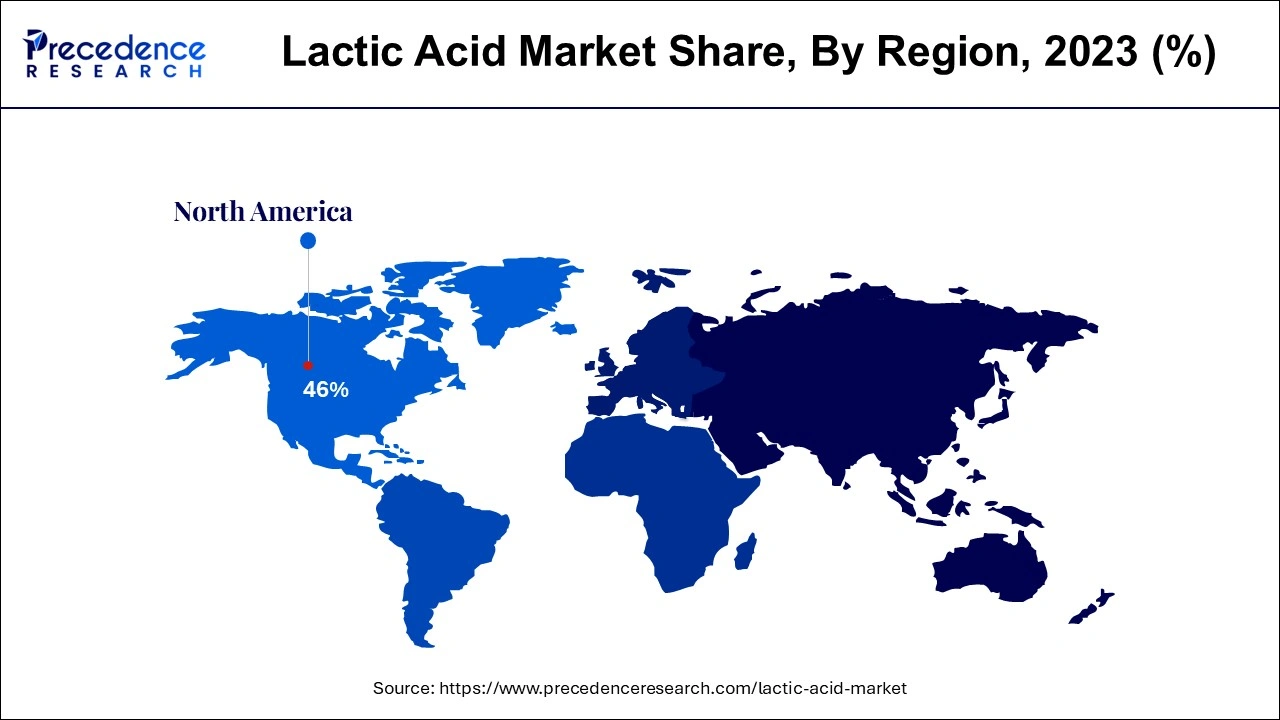
| North America Market Share in 2025 | 46% |
| Base Year | 2025 |
| Forecast Period | 2026 to 2035 |
| Segments Covered | Raw Material, Application, Form, Source, End-User, Geography |
Market Dynamics
Driver
Rising Demand for Biodegradable Plastics
The key material used for the production of polylactic acid is lactic acid, a biodegradable, compostable bio-based plastic, and is used in various packaging, consumer goods, textile, and agri-areas. Due to increased government regulations against the use of single-use plastics, the world is moving towards sustainable materials. Bio-based substitutes are being made to lower the amount of carbon emissions and implement circular economy initiatives by manufacturers.
Restraint
Fluctuating Raw Material Prices
Agricultural feedstocks like corn, sugarcane, cassava, and others that serve as a carbohydrate source still affect the lactic acid market, with price fluctuations. Crop production conditions can significantly impose costs due to fluctuations in crop yields, poor weather, international trade regulations, and the interrupting nature of the supply chain. These changes in prices affect long-term business planning due to the volatility and uncertainty of prices for manufacturers.
Opportunity
Expanding Applications in Food and Pharmaceuticals
The growing applications in various sectors such as the food, pharmaceutical, personal care, and cosmetics sectors are creating lucrative market opportunities for lactic acid. Lactic acid is a very common food preservative and acidity regulator, as well as a food preservative and an ingredient to control the pH of food processing and an antimicrobial agent. In the pharmaceutical field, it is used as an excipient and is increasingly being used as a delivery system for drugs and as a biodegradable medical material.
Segmental Insights
Raw Material Insights
On the basis of the raw material, the sugar cane segment is expected to have the largest market share in the coming years. The sugar cane segment has dominated the market in the past with the largest market share in terms of revenue. The raw sugar which is derived from a sugar cane is one of them most important raw material used for the production of lactic acid. Grow sugar is available on a large scale and it is widely used in the manufacturing of lactic acid has the sugar cane segment is expected to dominate the market in the coming years.
Apart from the sugar cane segment the cone segment will also grow well during the forecast period. It is abundantly available in nature and does not cost a lot therefore this segment is also expected to grow well in the coming years. Corn segment is expected to grow well as this is a sustainable product and there shall be a growing demand for it in the coming years. Apart from the use of sugar cane and corn, yeast is also used as a raw material in the manufacturing of lactic acid. This option happens to be slightly expensive.
The corn segment is expected to witness strong growth during the forecast period owing to its high availability and lower production cost. Lactic acid production is making extensive use of corn as one of the feedstocks used for production because of its high carbohydrate content and supply reliability. It has well-developed agricultural facilities that enable a steady supply of raw materials for industrial-scale fermentation.
The cassava segment is projected to grow at a notable pace due to the high starch content of cassava and the possibility of employing cassava as raw material for the production of lactic acid. However, when cassava is available, it has gained increased popularity as a replacement feedstock. Its use in the industry is growing due to the increasing demand for renewable and sustainable raw materials.
Application Insights
On the basis of application, the Poly lactic acid segment will dominate the market in the coming year period this segment had the largest market share in the recent years. There is a wide range of biodegradable plastic available across the globe but this segment is expected to have the largest market share due to its characteristics of being strong as well as durable. This plastic also appears to be more transparent compared to the other biodegradable plastics and hence this segment is expected to have the largest market share in the coming years. There has been an increase in the demand for the biodegradable plastics due to its use in the automotive market. There is a growing demand for various lightweight materials which could be used in the interior of the automobiles or the automotives. Different parts of the engine or various parts used in the interior of the automotives or manufactured using the Poly lactic acid. There's a growing demand for this product as it helps in improving the performance of the vehicles by reducing the overall weight. There is a growing demand for the efficient and tough bio plastics that are sustainable. The increased use of this material will help in providing better fuel efficiency to the vehicles. Due to all of these reasons the market for the segment is expected to grow.
There has been an increased use of lactic acid in the food and beverages industry as attempts in providing a better shelf life to these products. It does not change the flavor or the texture of these food items and therefore there will be a growth in the demand for this product. It inhibits the development of the microorganisms that hamper the product. There's an increased use of lactic acid in the meat and the seafood industry. It is also used in the processing of various poultry items. Lactic acid is also used in the manufacturing of various drugs and the market for lactic acid in the Pharmaceutical industry has grown in the recent years. There are many characteristics of lactic acid that makes it a better option for usage in the Pharmaceutical industry. Lactic acid happens to be a great pH regulator and do to this there is an increased use of lactic acid in the manufacturing of the pharmaceutical products. Various benefits of the use of lactic acid in improving the texture of the skin Will provide a good market for this product in the cosmetics industry.
The pharmaceuticals segment is projected to grow at a notable pace. Lactic acid is an important excipient, a pH adjustment agent, as well as an intermediate in the pharmaceutical industry. Healthcare and an increase in Pharma Research are boosting the demand for products. There is growing development of drug systems that can be biodegraded, providing expanded applications for it.
The personal care segment is expected to witness steady growth during the forecast period as consumers' demand for natural and bio-based skin care products has grown. Lactic acid is also known as a skin regenerating agent and is a very popular component in skin exfoliation, anti-ageing gels, and moisturizers. There is an increasing awareness of premium skin care solutions, and products are being used.
Form Insights
How the Liquid Segment Dominated the Lactic Acid Market?
The liquid segment dominated the market in 2025 because it is less complicated to handle and has the ability to be used in various industries, being soluble. The most common applications of liquid lactic acid involve the production of lactic acid for food applications, pharmaceuticals, cosmetics, and chemicals. Provides greater Industry process compatibility and assists product formulation.
Source Insights
Which Natural Segment Led the Lactic Acid Market?
The natural segment dominated the market in 2025 due to the demand for products natural, renewable, and eco-friendly. The production of lactic acid in nature is more valuable than the production of man-made lactic acids due to its applications in the pharmaceutical and cosmetics industry as well as food and bioplastics. The environmentally friendly use of renewable raw materials is encouraged by supportive regulations that are affecting the manufacturers.
The synthetic segment is expected to witness notable growth due to the high demand for special applications in the field of industry and chemicals. Synthetic lactic acid meets in terms of purity and quality standards in the manufacturing process. Continuous technology advances with further enhancements in competitiveness and efficiency in production. Production of specialty chemicals in industry is growing, and so is the specialty chemicals market.
End-user Insights
Which Factors Contributed to the Packaging Segment Growth in the Lactic Acid Market?
The packaging segment dominated the market in 2025, led by an increase in the requirement for packaging materials to be biodegradable and compostable. The product of polylactic acid is one of the most critical raw materials produced for lactic acid production, as polylactic acid is a widely used biodegradable plastic. Investments in bio-based materials are growing as a result of consumer demand for sustainable packaging materials.
The textile segment is expected to witness notable growth due to the rising popularity of sustainable textiles and eco-friendly textile production. Lactic Products have been taking the place of synthetic fibers. The Coffman Company is among the top textile companies that would like to minimize its impact on the environment while using renewable materials. The market is the increased demand for sustainable fashion products among consumers.
The electronics segment is expected to grow steadily, as the demand for biodegradable materials for electronics parts and packaging is increasing. As part of environmental legislation, companies are making efforts to change their manufacturing processes to adopt sustainable materials. As the design of electronic products is continuously innovated, it is expected to bring up new applications or expansion of use for bio-based materials.
The automotive segment is projected to witness stable growth during the forecast period as the use of lightweight and sustainable materials for automobiles is picking up. The automobiles made from biobased lactic acid make cars more fuel-efficient and environmentally friendly. The idea of governmental incentives that encourage the reduction of carbon emissions boosts the use of renewable materials.
Regional Insights
What are the Key Trends of the Lactic Acid Market in North America?
North America dominated the global market in 2025 due to the presence of well-established bioplastics and food production businesses in the region. The market is growing due to robust demand for biodegradable packaging. This area is endowed with developing technologies in biotechnology and fermentation. The growth of investments in sustainable chemicals is allowing production to increase. Enabling legislation and the environment are enabling faster use of bio-based materials.
U.S. Lactic Acid Market Size and Growth 2026 to 2035
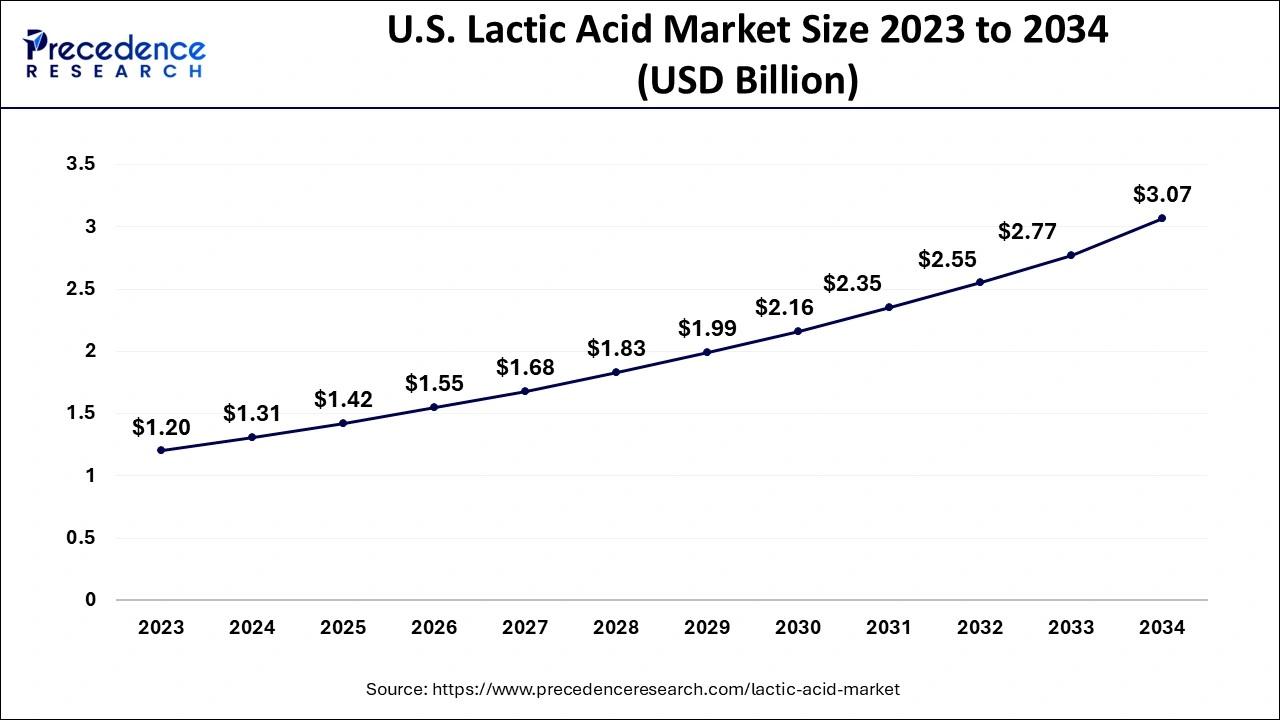
U.S. market is anticipated to grow significantly, as the demand for biodegradable plastics and sustainable packaging materials is rising. Lactic Acid Use in Food and Beverage is increasing as a preservative and Acidity Regulator. The market is expanding, driven by an increasing number of investments in the production of bioplastics. New technology is emerging in the fields of fermentation, which is increasing efficiencies for production.
The U.S. lactic acid market size is evaluated at USD 1.31 billion in 2025 and is predicted to be worth around USD 2.87 billion by 2035, rising at a CAGR of 8.16% from 2026 to 2035.
Asia Pacific is Undergoing the Fastest Growth in the Lactic Acid Market
Asia Pacific is expected to grow at the fastest rate in the market owing to the rapid industrialization and bioplastics manufacturing in the region. The production of sustainable packaging helps to drive growth in the market. New opportunities are emerging in increased processing and pharmaceutical manufacturing. Governments are using environmental measures to encourage bioproducts.
China Market Trends
China's Lactic Acid Market is anticipated to grow significantly. The country is expanding production of bio-based chemicals to accommodate increasing demand at home. The encouraging thing is that increasing support of government sustainability of the environment encourage adoption. The food processing and pharmaceutical industries, which are rapidly expanding, are driving consumption.
Advancements in the Lactic Acid Market in Europe
Europe is expected to witness significant market growth throughout the forecast period due to strong environmental regulations promoting sustainable materials. The bioplastics industry is well established in the region, and the lactic acid business is thriving. Up-scaling of investments in circular economy efforts is helping to stimulate innovation. Applications of products in the food, medicine, and beauty products industries are still growing.
Germany Market Trends
Germany market is anticipated to grow significantly, due to rising usage of biodegradable plastics in the packaging and automotive sectors. Product innovation is supported by the country's robust chemical industries. Sustainable materials are seeing increased investment in industries and are driving demand. Lactic acid manufacturers keep on expanding into lactic acid uses for food and beverage applications.
Key Trends in the Lactic Acid Market in Latin America
Latin America is expected to witness significant growth in the market as a result of its rising demand for sustainable packaging and bio-based chemicals. As available feedstocks increase with expanding agricultural resources, there is a great opportunity to produce lactic acid. Increasing investment in the food-processing and pharmaceutical sectors backs up product demand. Government campaigns aimed at industrial sustainability are helping market growth.
Brazil Market Trends
Brazil lactic acid market is anticipated to grow significantly, due to a generous supply of sugarcane feedstock and expansion of lactic acid manufacturing industries. There is a rise in investment in biodegradable plastics production in the country. Lactic acid is used more and more by food and beverage manufacturers. The government is leading the growth of industrial activities for renewable chemicals.
Growth of the Middle East and Africa in the Lactic Acid Market
The Middle East and Africa region is expected to witness significant growth in the market due to investments in sustainable industrial development. Product adoption is being aided by the increasing demand for biodegradable packaging materials. The food processing and pharmaceutical industries are growing throughout the area. Governments are pushing diversification into bio-based manufacturing sectors.
Saudi Arabia Market Trends
Saudi Arabia market is anticipated to grow significantly, driven by the rising investments in sustainable manufacturing and industrial diversification. The growing demand from food processing/ food processing/food packaging industry is encouraging product utilization. Increased investment in the health service and in pharmaceuticals is providing new growth opportunities. R&D funds in biotechnology and advanced manufacturing are improving production capability.
Value Chain Analysis
- Raw Materials Procurement: Lactic acid is primarily produced from carbohydrates like corn, sugarcane, and molasses. Manufacturers focus on sourcing high-quality and sustainable feedstocks to ensure consistent production and eco-friendly operations.
- Retail Sales and Marketing: Through direct sales and distributors, lactic acid is supplied to the food, pharmaceutical, cosmetic, and bioplastics industries. Marketing highlights its bio-based origin, adaptability, and use in sustainable and clean-label products.
- Waste Management and Recycling: Efficient handling of fermentation residues and by-products reduces environmental impact. Companies also focus on recycling and valorizing waste streams to support sustainability and circular economy initiatives.
Competitive Landscape
The lactic acid market includes biochemical manufacturers and bio-based chemicals, fermentation technologies, and sustainable materials companies. Leading in the international market are Corbion, DuPont, Henan Jindan Lactic Acid Technology, Sulzer, and Musashino Chemical, each with a significant market share. Leading companies are stepping up investments in production capacity expansion, advanced fermentation technologies, product innovation, and strategic collaborations to gain a competitive advantage.
Moreover, the companies are increasingly getting integrated with their international business partners, including the food, pharmaceutical, personal care, and bioplastics industry. Some of the major issues are low price volatility of raw materials, regulatory compliance & competition from other bio-based materials. The market is being fueled by increasing demand for biodegradable plastics, sustainable chemicals, and progress in fermentation methods.
Lactic Acid Market Companies
- Corbion (Netherlands)
- DuPont (US)
- Henan Jindan Lacic Acid Technology (China)
- Sulzer (Switzerland)
- Mushashino Chemical (Japan)
- Jungbunzlauer (Switzerland)
- FoodChem International (China)
- Cargill (US)
- Galactic (Belgium)
- DOW (US)
- Unitika (Japan)
- Vaishnavi Biotech (India)
- Spectrum Chemicals (US)
- Godavari Bio-refineries (India)
- ProAgro GmbH (Austria)
- Qingdao Abel Technology (US)
- Vigon International (US)
- Henan Xinghan Biology Technology (China)
- Danimer Scientific (US)
- COFCO BioChemical (China)
Collaboration Landscape
- In September 2025, TotalEnergies Corbion inked a strategic distribution deal with Multi Trade Group for expanding Luminy PLA bioplastics in the UAE, Saudi Arabia and beyond in the Middle East region. It enhances the flow of sustainable lactic acid-based materials in the region. (Source: https://totalenergies-corbion.com)
- In March 2025, TotalEnergies Corbion, along with Benvic, applied new initiatives for increased low-carbon Luminy PLA compounds for automotive, electronics, healthcare, and consumer goods markets. The partnership will help to scale up the use of bio-based materials in several sectors. (Source: https://totalenergies-corbion.com)
Recent Developments
- In Sep 2025, Sulzer Management Ltd and TripleW unveiled a collaboration to launch the world's first PLA (polylactic acid) bioplastic fully derived from food-waste-based lactic acid, enabling scale‑up of circular manufacturing processes. Source - Sulzer
- In Apr 2024, SK Geo Centric announced a new sustainable microbial fermentation method to produce lactic acid with lower cost and fewer by‑products, supporting bio‑based plastic (PLA) feedstock production. Source - Chemical Engineering
Segments Covered in the Report
By Raw Material
- Corn
- Sugar Cane
- Cassava
- Other Crops
By Application
- Poly lactic acid
- Pharmaceuticals
- Personal care
- Food and beverages
- Industrial
- Others
By Form
- Liquid
- Form
By Source
- Natural
- Synthetic
By End-User
- Packaging
- Textile
- Electronics
- Automotive
- Biomedical
- Other
By Geography
- North America
- U.S.
- Canada
- Europe
- U.K.
- Germany
- France
- Asia-Pacific
- China
- India
- Japan
- South Korea
- Malaysia
- Philippines
- Latin America
- Brazil
- Rest of Latin America
- Middle East & Africa (MEA)
- GCC
- North Africa
- South Africa
- Rest of the Middle East & Africa
For inquiries regarding discounts, bulk purchases, or customization requests, please contact us at sales@precedenceresearch.com
Frequently Asked Questions





Ask For Sample
No cookie-cutter, only authentic analysis – take the 1st step to become a Precedence Research client
 Get a Sample




 sales@precedenceresearch.com
 Schedule a Meeting
