



Muscle Stimulator Market Size, Key Companies, Company Market Share, Patient Volume, Treatment Adoption Rates, Pricing Analysis, Regulatory Landscape, Competitive Positioning, and Demand Forecast
Muscle Stimulator Market (By Product Type: Neuromuscular Electrical Stimulation, Functional Electrical Stimulation, Transcutaneous Electrical Nerve Stimulation, Interferential, Burst Mode Alternating Current, Micro Current Electrical Neuromuscular Stimulator, Others; By Modality: Handheld, Portable, Table Top; By Application: Pain Management, Neurological Disorder, Musculoskeletal Disorder, Others; By End-user: Hospitals, Ambulatory Surgical Centers, Physiotherapy Clinics, Sports Clinics, Home Care) - Global Industry Analysis, Size, Trends, Leading Companies, Regional Outlook, and Forecast 2026 to 2035
Source: https://www.precedenceresearch.com/muscle-stimulator-market
 Get a Sample
 Table Of Content


What is the Muscle Stimulator Market Size?
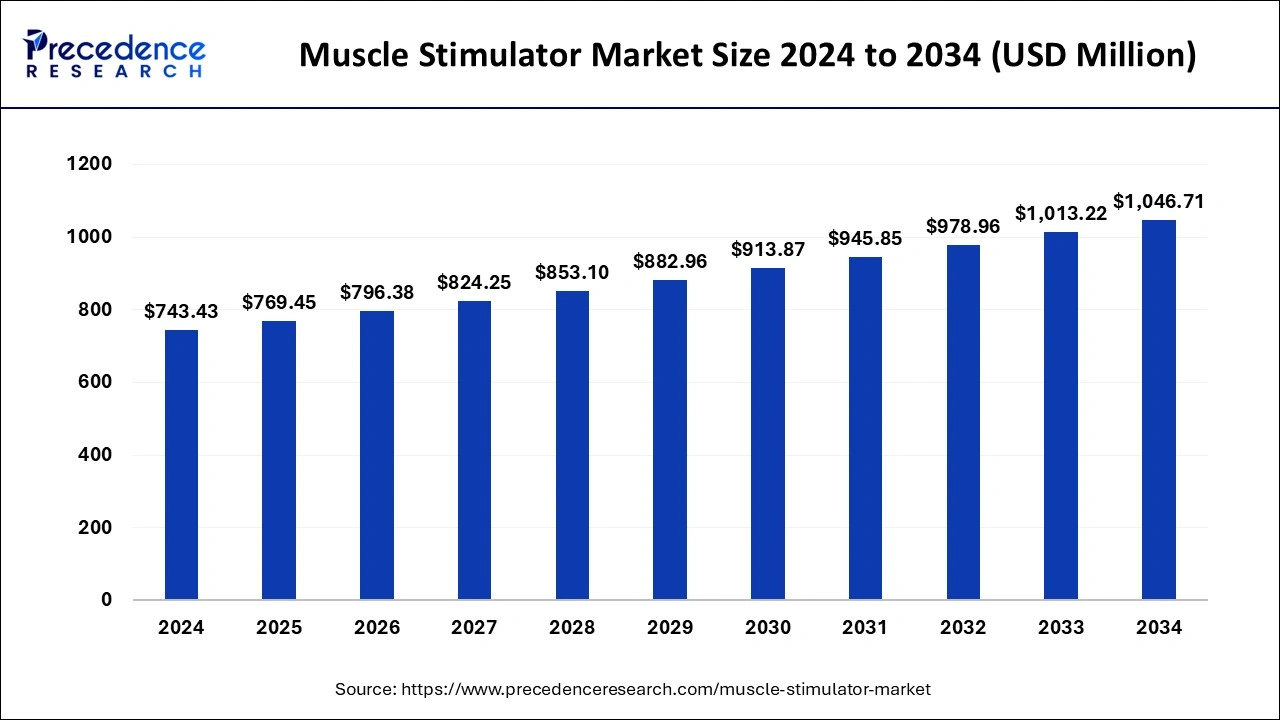
The global muscle stimulator market size is calculated at USD 769.45 million in 2025 and is predicted to increase from USD 796.38 million in 2026 to approximately USD 1080.71 million by 2035, expanding at a CAGR of 3.46% from 2026 to 2035. The market growth is attributed to increasing demand for non-invasive therapeutic solutions and advancements in muscle stimulation technologies.
Muscle Stimulator Market Key Takeaways
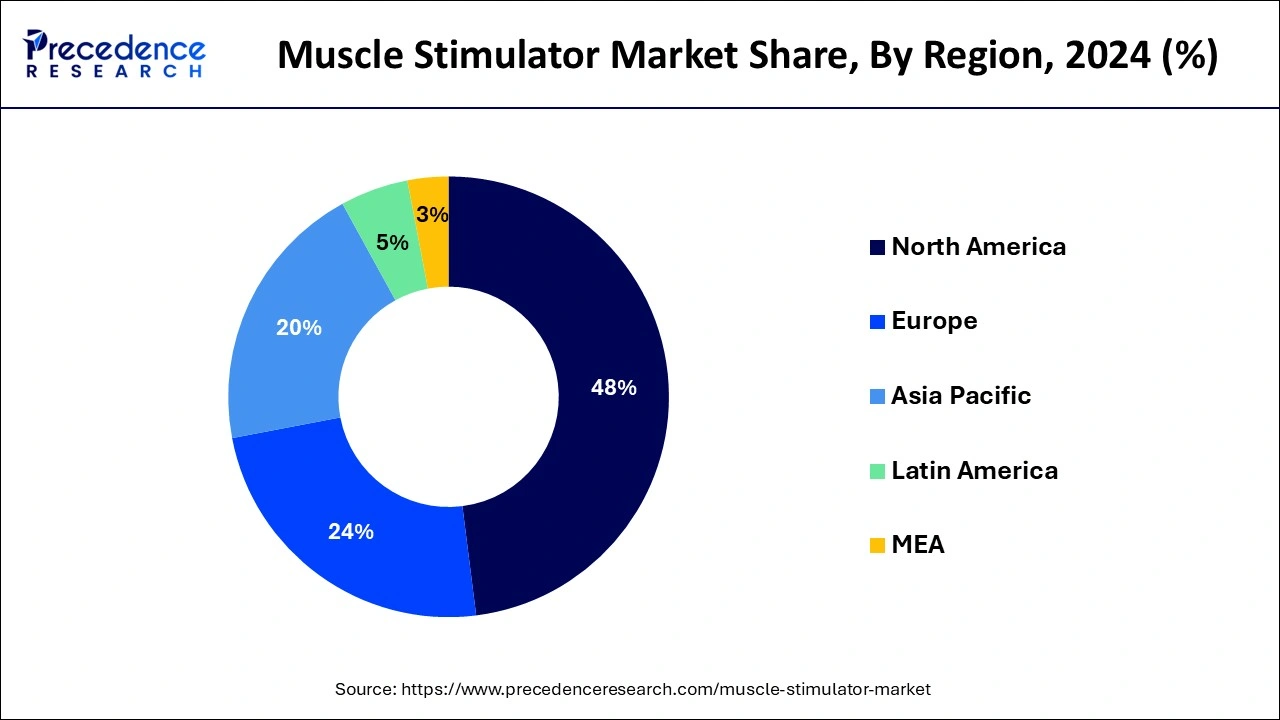
- By Region, North America held a majority revenue share of the muscle stimulator market in 2025.
- By Region, Asia Pacific is expected to grow at the fastest CAGR in the market during the forecast period.
- By product type, the transcutaneous electrical nerve stimulation segment held a dominant position in the market in 2025.
- By product type, the neuromuscular electrical stimulation segment is expected to grow at the fastest CAGR in the market between 2026 and 2035.
- By modality, the portable segment led the global market in 2025.
- By modality, the handheld segment is expected to expand rapidly in the market with a CAGR in the coming years.
- By application, the pain management segment registered its dominance over the global market in 2025.
- By application, the neurological disorder segment is expected to witness the fastest growth in the market with a CAGR over the forecast period.
- By end-user, the physiotherapy clinics segment dominated the global market in 2025.
- By end-user, the hospitals segment is expected to gain the highest market share with a CAGR between 2026 and 2035.
What is the Muscle Stimulator?
Muscle stimulators are electric devices that are used to treat muscle pain and spasms. Muscle stimulators' primary priorities are enhancing muscle motility, blood flow, muscle trimming, and muscular power muscle motility, blood flow, muscle trimming, and muscular power. Muscles can be made to contract and relax by supplying or conducting electrical currents outside of the mortal body. It has been created in such a manner that electronic equipment is used to transport the current to a requested area of the body in mortal people through a series of operators/electrodes that are nothing but adhesive pads.
Patients with a wide range of physiological disorders affecting respiratory, cardiovascular, neurological, intestinal, and skeletal muscle function find it difficult and complex to recover from long-term therapy (ICU) for COVID-19 in these cases muscle stimulators help work normally and back to the daily routine. Small electrical impulses are employed in the skeletal muscle as part of a procedure called neuromuscular stimulation (NMES) to induce contractions when people find it difficult or impossible to do work. NMES has been linked to advantages such as increased muscle and bone strength, enhanced blood flow, and decreased edema. Moreover, COVID-19 patients utilize simulators to control their pain, therefore the category is anticipated to expand as a result of the pandemic.
Impact of Artificial Intelligence on the Muscle Stimulator Market
Integrating artificial intelligence (AI) algorithms monitor muscle activity and adjust simulation parameters in real time, which further enhances patient outcomes. AI also helps in the predictive maintenance of muscle stimulators to reduce their downtime and enhance their efficiency. Furthermore, machine learning (ML) algorithms boost the capabilities of muscle stimulators and help develop new ones.
Key factors influencing future market trends
- Rising Wearable Muscle Stimulation Devices: Due to their enhanced usability, accessibility, and effective treatment, wearable muscle stimulators are gaining popularity among their target users, including rehabilitation and fitness enthusiasts. Unlike traditional devices requiring clinic visits, these devices for athletes, people suffering from chronic pain, and fitness enthusiasts are very user-friendly as well as visually appealing, so people can use them at home.
- Rising usage in Sports Performance and Rehabilitation: Muscle simulators are utilized in sports management for various purposes, including rehabilitating injuries for prevention and repair, enhancing recovery rates, and boosting muscle strength.
Growing Emphasis on Home-Based Healthcare Options: The increasing need for at-home health and wellness devices is impacting the use of muscle stimulators. The transition towards self-care and home rehabilitation is sparking advancements in user-friendly devices that provide clinic-level outcomes at home, particularly for elderly individuals and the management of chronic conditions.
Muscle Stimulator Market Growth Factors
- Increasing Prevalence of Neuromuscular Disorders: The rising cases of conditions like multiple sclerosis and spinal cord injuries is anticipated to boost the adoption of muscle stimulators.
- Growing Geriatric Population: The global aging demographic is projected to drive demand for therapeutic muscle stimulators to address mobility and pain management issues.
- Surging Interest in Post-Surgical Rehabilitation: An increasing focus on faster recovery after surgeries is expected to spur the adoption of muscle stimulators into recovery protocols.
- Expanding Sports Medicine Applications: The growing focus on injury prevention and recovery in professional and amateur sports is anticipated to create new avenues for muscle stimulator use.
- Rising Awareness of Benefits of Non-invasive Therapies: Heightened consumer awareness about the benefits of non-invasive and drug-free pain management methods is likely to boost market growth.
- Technological Advancements in Wearable Devices: The inclusion of muscle stimulation technologies in wearable health devices is expected to attract tech-savvy consumers and fitness enthusiasts.
- Increased Funding for Healthcare Innovations: Governments and private investors are investing in healthcare technologies, which is likely to boost the development and accessibility of muscle stimulators.
Market Scope
| Report Coverage | Details |
| Market Size in 2025 | USD 769.45 Million |
| Market Size in 2026 | USD 796.38 Million |
| Market Size by 2035 | USD 1080.71 Million |
| Growth Rate from 2026 to 2035 | CAGR of 3.46% |
| Dominating Region | North America |
| Fastest Growing Market | Asia Pacific |
| Base Year | 2025 |
| Forecast Period | 2026 to 2035 |
| Segments Covered | Product Type, Modality, Application, and End-user |
| Regions Covered | North America, Europe, Asia-Pacific, Latin America, and Middle East & Africa |
Market Dynamics
Drivers
Growing Popularity of Fitness and Rehabilitation Programs
The growing popularity of fitness routines and rehabilitation programs among health-conscious individuals is anticipated to fuel market growth. Global health concerns were in the spotlight in 2023, with 56% of the adult population practicing exercise consistently compared to the 2020 report, which recorded 50%, as stated by WHO. Adults are engaging in regular physical exercises, which calls for adopting new forms of fitness products such as muscle stimulators. As of a January 2024 commentary, 18.4% of individuals aged 16 and older in the UK reported having a long-term musculoskeletal (MSK) condition. This figure has increased since 2022 but is lower compared to 2019. The rise in MSK conditions highlights the need for physical therapy and the development of related therapeutic products. Furthermore, the increase in the number of physiotherapy sessions worldwide further fuel the market in the coming years.
The rising usage of muscle stimulators among physiotherapists and advancements in medical devices are also driving the market growth. Additionally, increasing outer muscle problems are anticipated to support market growth. Wrong body pose, absence of wellness exercises, and unhealthy eating routines cause outer muscle problems.
Restraint
Limited Awareness and Accessibility in Rural Areas
Limited awareness and accessibility in rural areas are likely to restrain the muscle stimulator market, particularly in underserved regions. Rural areas have a low adoption rate, as people in these areas are not fully aware of such devices. The United Nations Department of Economic and Social Affairs (2023) has indicated that more than half the rural-based healthcare providers in developing countries lack the facilities and resources to avail of state-of-the-art therapeutic tools such as muscle stimulators. Lack of infrastructure, low health care, and weak training of health care personnel also limit this restraint, thereby limiting the market growth.
Opportunity
High Demand for Non-invasive Pain Management Solutions
High demand for non-invasive pain management solutions is likely to create immense opportunities in the market. Transcutaneous electrical nerve stimulation (TENS) is beneficial for arthritis and other chronic muscular pain conditions without any side effects as a muscle stimulator. As stated by the CDC, in 2023, 24.3% of adults experienced chronic pain, while 8.5% had chronic pain that frequently limited their life or work activities. Therefore, non-surgical treatments are becoming a growing area of interest.
Segment Insights
Product Insights
The Transcutaneous Electrical Nerve Stimulation (TENS) segment held the major share in 2025 and is expected to keep up with its predominance over the analysis period. The developing pervasiveness of joint inflammation and growing sports wounds are a portion of the unmistakable variables enlarging the market development. As per the Centers for Disease Control and Prevention (CDC), in 2017, around 54.4 million U.S. grown-ups were determined to have joint pain. This number is expected to be 78 million by 2040. This developing pervasiveness of joint pain is supposed to drive development over the projected period.
On the other hand, Neuromuscular Electrical Stimulation (NMES) is supposed to be the fastest developing section during the study period. This muscle trigger is for the most part used to reestablish or supplant engine capacities in patients who experienced upper engine neuron harm because of stroke or Spinal Cord Injury (SCI). As per the factsheet introduced by the National Spinal Cord Injury Statistical Center in 2019, in the U.S. around 17,730 instances of SCI are enlisted consistently and at present, 291,000 individuals are experiencing this condition. As the commonness of SCI is expanding, the interest in NMES is expected to increase over the study period.
The functional electrical stimulation segment is projected to grow at a notable pace owing to its application growth in neurosciences rehabilitation, muscle recovery, etc. It is useful in the treatment of patients suffering from nerve-related disorders to restore muscle function. Increasing incidence of stroke, spinal cord injuries, and mobility disabilities backs up demand. Stimulation accuracy and patient comfort have been upgraded with technological improvements.
The interferential segment is expected to witness steady growth during the forecast period due to its application in the treatment of pain and muscle rehabilitation. Widely used to treat chronic pain and sports injuries. New in the design of the devices is an increase in efficiency and user-friendliness. The progressive increase in preference for alternatives to medications to manage pain has a positive impact on the market.
Modality Insights
The portable devices market has the largest share in 2025 and is assessed to witness the most remarkable CAGR of 4.4% during the forecast period. Versatile muscle triggers are utilized broadly for forestalling muscle decay, unwinding muscle fits, overseeing persistent agony because of joint inflammation, and expanding blood flow. Also, many central participants in the market are offering different creative triggers under this portion.
For example, the organization NeuroMetrix, Inc. offers a versatile help with discomfort pack, which is a TENS unit that fits like support on patients and gives the feeling of relief from discomfort. The organization Zynex, Inc. is offering JetStream, a versatile framework that can be utilized at home for treatment. OMRON Corporation is as of now giving a little measured compact electrotherapy TENS gadget that can be utilized for giving help with sore and throbbing muscles. These elements are expected to drive the worldwide muscle trigger market development over the estimated period.
The handheld segment is expected to grow significantly during the forecast period owing to the growing trend towards portable and convenient muscle stimulators. Compact designs are designed to allow ease of use by patients to use devices in the home and in moving situations. There have been developments in technology to improve devices' features and usability.
The tabletop segment is projected to grow at a notable pace as it is being used by hospitals, rehabilitation centers, and physiotherapy centers. Such devices provide specialized stimulation options and several therapy options. For professional treatments, healthcare professionals prefer tabletop systems. Higher recovery rates of patients in physical rehabilitation are expected to drive the growth of the market.
Application Insights
Pain management applications have a major market share of 56% in 2025. Developing utilization of muscle triggers for overseeing intense and constant agony and developing pervasiveness of joint inflammation is the central point expected to drive the portion market over the analysis period.
This section is expected to develop at a huge rate inferable from expanding geriatric population that experiences muscle torment and the developing commonness of constant torment. For example, as per the CDC, in 2016 20.4% of grown-ups in the U.S., were experiencing ongoing torment, and 0.8% of U.S. grown-ups had a high effect of ongoing torment. A comparable circumstance is pervasive in numerous European and Asian nations. This developing commonness of persistent agony is expected to drive market development over the forecast period.
The neurological disorder segment is expected to grow steadily during the forecast period due to the increase in the prevalence of diseases affecting muscle control and mobility. There are many different uses of the muscle stimulators in the management of stroke, spinal cord injury, and nerve disorders. The supportive therapies are being adopted better and better as there is increased demand for them.
The musculoskeletal disorder segment is projected to grow at a healthy pace due to the increasing number of muscle injuries, arthritis, and chronic pain. Demand for sports medicine care is rising because of the aging and rising number of sports injuries. Muscle stimulators are good at providing effective pain relief and recovery assistance.
End-user Insights
The physiotherapy facilities segment holds the market with the highest share and is expected to witness the most significant CAGR of 4.7% during the period of analysis. Developing the inclination of physiotherapists toward triggers when contrasted with manual procedures is the main reason for the development of these segments.
On the other hand, increasing patient visits for looking for exciting treatments and the accessibility of these treatments at a reasonable expense at physiotherapy centres are the central point expected to drive the market development. Likewise, the clinical repayment given to patients looking for these treatments is additionally expected to drive segment development over the study period.
The hospitals segment is expected to witness notable growth with its corresponding growth rate. Muscle stimulators are applied to different parts of a hospital's medical departments, such as neurological/orthopedic treatments. High levels of patient admissions for musculoskeletal conditions back load/sustaining demand. Adoption is facilitated by investment in healthcare infrastructure.
The ambulatory surgical centers segment is expected to grow steadily, attributed to the rising number of outpatient surgeries that will call for the provision of rehabilitation facilities after surgery. Muscle stimulators help recover from surgeries and injuries. Minimally invasive procedures gaining popularity promote uptake.
The sports clinics segment is projected to witness stable growth during the forecast period as the demand for recovery from injuries as well as improving athletic performance solutions is growing. Muscle stimulators are quite popular for use in the recovery process of athletes. The increase in participation in sporting activities makes injury management demands greater.
Regional Insights
North America Dominates the Muscle Stimulator Market
North America dominates the market in 2025 and is probably going to keep up with its situation over the analysis period. The presence of key members, huge speculations by legislatures for the advancement and improvement of clinical gadgets, and the early display of novel muscle triggers are enhancing the development of the region. Besides, the high buying force of customers and expanded reception of trend-setting innovations and inventive clinical gadgets are additionally expected to drive the development.
Additionally, strategic initiatives such as new product launches by prominent market players to expand their presence in the region, fueling the region's major share in the muscle stimulator market. For instance, in May 2025, AirLife, a leading North American manufacturer and distributor of consumable medical devices for anesthesia and respiratory care, announced launch of the MYOTouch Muscle Stimulator, the only FDA cleared muscle stimulator for Posterior Sagittal Anorectoplasty (PSARP) and laparoscopic repair of anorectal malformations (ARM), from birth through adolescence.
What is the U.S. Muscle Stimulator Market Size?
The U.S. promotes market growth through its digital health solutions. There is an accelerated increase in home care service usage. The growing elderly population creates a higher demand for treatment solutions that focus on pain management and rehabilitation.
There is a strong shift toward portable and wearable devices with smart connectivity, reflecting growing consumer preference for home-based rehabilitation and fitness applications, while increasing FDA approvals and the expansion of applications in physiotherapy, sports medicine, and rehabilitation are further supporting market development and innovation.
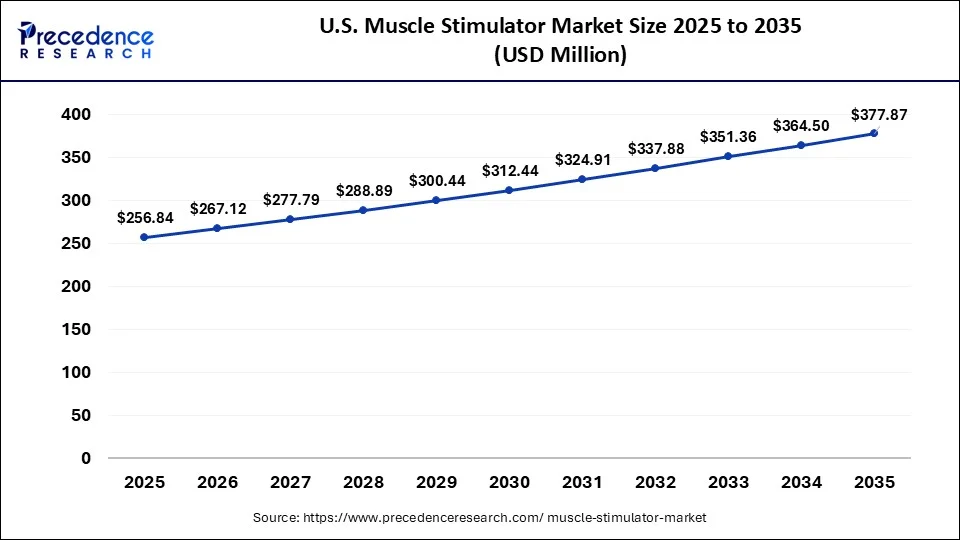
The U.S. muscle stimulator market size was estimated at USD 267.12 million in 2026 and is predicted to be worth around USD 377.87million by 2035, at a CAGR of 3.94% from 2026 to 2035.
The Asia Pacific is expected to be the fastest developing area during the forecast period. Developing mindfulness connected with wellbeing and wellness, growing reception of agony the executives' treatments, and rising utilization of brilliant gadgets for keeping up with wellbeing are the key development energizers of the area. Additionally, expanding instances of sports wounds in this area are ready to work up the interest for muscle triggers during the period of analysis.
- In April 2025, KGMU doctors collaborated with School of International Biodesign Synergising Healthcare Innovation & Entrepreneurship (SIB SHInE) have developed a medical device to assist in surgeries for children born with imperforate anus, an anorectal malformation, a condition which affects one in every 5,000 newborns. The device, which has received a utility patent, is called the 'Portable Muscle Stimulator.
China Muscle Stimulator Market Trends
China establishes better accessibility through its local production facilities, which continue to expand. E-commerce platforms enable products to reach wider audiences at faster rates. The improved healthcare infrastructure system supports better technology adoption. The market requires both economical and modern rehabilitation equipment and fitness training devices.
Why is the European Muscle Stimulator Market Witnessing Growth?
The European muscle stimulator market is witnessing growth, fueled by the increasing prevalence of musculoskeletal disorders. There is a rising need in Germany and the UK to utilize muscle stimulators in treating muscle atrophy, spasms, and chronic pain. The European League Against Rheumatism (EULAR) estimates that there are almost 120 million people in Europe with musculoskeletal diseases, and musculoskeletal disorders contribute to becoming one of the main causes of disability and lost productivity.
Also, this market is experiencing high adoption attributed to the increasing use of muscle stimulators in sports medicine and fitness. Use of the devices by athletes and sports teams in Europe is on the rise as they employ the products to improve muscle performance, injury prevention, and recovery after injuries. Market expansion is also favored by the growing interest in fitness programs and physiotherapy exercises. The UK market sees an increase in the number of sales because of the high healthcare budgets, concentration on innovative treatment approaches, and high numbers of patients with different musculoskeletal diseases.
Germany Muscle Stimulator Market Trends
The German market leads the implementation of rehabilitation solutions, which include physiotherapy services. The popularity of fitness activities drives people to use EMS through fitness programs. The clinics purchase new electrotherapy equipment to enhance their treatment options. The market for performance recovery solutions and chronic pain relief products continues to grow.
Key Trends in the Muscle Stimulator Market in Latin America
Latin America is expected to witness significant growth in the market with the development of healthcare facilities. Growing awareness of rehabilitation therapies is driving the market's adoption. High expenditure on healthcare is improving access to advanced medical devices. Growth as increasing demand is placed on non-invasive pain management. The market is growing due to physiotherapy and rehabilitation centers.
Brazil Market Trends
Brazil muscle stimulator market is anticipated to grow significantly. There is an increasing prevalence of orthopedic diseases and neurological diseases in the country. Access to services aids in spreading device use. The more aware people become of the benefits of physical therapy, the more in demand physical therapy becomes.
Growth of the Middle East and Africa in the Muscle Stimulator Market
The Middle East and Africa region is expected to witness significant growth in the market owing to the efforts towards healthcare modernization and rehabilitation services. The growing incidence of chronic diseases encourages the usage of muscle stimulation devices. Access to advanced therapies has improved due to the development of healthcare infrastructure. The increasing investments in medical technology add to the growth of the market.
Saudi Arabia Market Trends
Saudi Arabia market is anticipated to grow significantly due to a surge in healthcare investments and its adoption of new and futuristic rehabilitation technologies. Rise in the incidence of musculoskeletal conditions is fueling the demand for the market. Healthcare modernization programs are driving access to medical devices. Expansion of rehabilitation centres, facilities, and hospitals adds to growth.
Value Chain Analysis-Muscle Stimulator Market
- R&D: In the field of pain management and rehabilitation applications, companies spend money on R&D to develop even more sophisticated muscle stimulators that are more effective, portable, connected, and user-friendly.
- Key Players: Zynex, Inc., Zimmer MedizinSysteme GmbH, EMS Physio Ltd.
- Clinical trials and Regulatory Approvals: Manufacturers carry out clinical evaluations; once the manufacturers get the regulatory approval, they can introduce the products to various markets, ensuring that the products' safety, performance, and compliance with health and safety requirements.
- Key Players: Zynex, Inc., Motive Health, Inc., Longest Medical
- Patient Support and Services: To make the device user-friendly and to assist patients in utilizing the device correctly according to the treatment process to improve the experience of the patient, companies offer training, technical support, maintenance service, as well as customer assistance for the device.
Competitive Landscape
Muscle stimulators are a competitive market, with key players EMS Physio Ltd, Liberate Medical, OG Wellness Technologies Co, Ltd, RS Medical, and Zimmer MedizinSysteme GmbH striving to innovate and expand market share. As the companies try to build their presence in the market, they are investing in the latest and best stimulation technology, transplanting effective equipment into their portfolios and making strategic partnerships.
Digital connectivity, smart controls, and tailored therapy capabilities are becoming the standard features in new drug delivery systems to optimize therapeutic outcomes. Healthcare organizations, rehab facilities, and sports clinics are partnering with companies to enhance the expansion of their businesses. There is continued competition in the market due to the increased demand for non-invasive therapies and home rehabilitation services.
Muscle Stimulator Market Companies
- AxioBionics : The company develops wearable stimulation garments that provide customized solutions for pain relief, muscle recovery, and rehabilitation through their therapeutic products.
- Beurer GmbH: The company produces portable TENS and EMS equipment, which enables users to achieve muscle stimulation and pain relief while providing relaxation through its heat therapy function.
- BioMedical Life Systems: The company provides professional electrotherapy equipment, which includes TENS, EMS, and HVPS products that support both rehabilitation and clinical pain relief treatment.
- Colfax Corporation (Enovis): The company develops electrotherapy equipment that helps patients recover from muscle injuries and supports their rehabilitation process while managing their pain in both clinical settings and at home.
Other Major Key Players
- EMS Physio Ltd.
- Liberate Medical
- OG Wellness Technologies Co., Ltd.
- RS Medical
- Zimmer MedizinSysteme GmbH
- Zynex Medical
Latest Announcement by Industry Leader
- In November 2024, Katalyst, a leader in Electro Muscle Stimulation (EMS) fitness, today unveiled the Gen4 Suit, the latest advancement in its award-winning product lineup, reaffirming its commitment to enhancing strength training through faster, safer, and more effective solutions. Having completed hundreds of thousands of workouts on our platform, we've gained valuable insights into how our customers use Katalyst at home, on the road, and in commercial settings, said Bjoern Woltermann, Founder and CEO of Katalyst. With Gen4, we aim to offer an even more personalized, convenient, and premium fitness experience, ensuring that strength training is accessible to everyone.
Recent Developments
- In February 2026, Zynex, Inc. agreed to join in-network providers with Humana to offer greater access to Zynex's NexWave electrotherapy system used to treat pain and rehabilitative therapies to patients. It's a cocktail of non-invasive methods of treating chronic pain and neuromuscular pathologies: TENS, NMES, and IFC. (Source: https://zynexmed.investorroom.com)
- In December 2025, Longest Medical received FDA clearance for the 2320 Series electrotherapy devices, which will allow for their use in clinical rehabilitation and in pain management. More powerful electromagnetic waves are added to the system as "muscle stimulants" and "muscle rehabilitation". (Source: https://www.longestmedical.com)
- In November 2025, Motive Health, Inc. was FDA 510 (k) cleared to market the wireless and app-controlled muscle strengthening with controlled muscle stimulation device, Motive Muscle Stimulator for Lower Back, to be used at home. (Source: https://www.accessdata.fda.gov)
- In December 2024, Tesai Care announced the launch a pioneering clinical trial with heecap to prevent respiratory muscle atrophy in mechanically ventilated patients. The launch of a clinical trial for the heecap device, aiming to demonstrate its safety in preventing respiratory muscle atrophy in patients who have required mechanical ventilation (MV) during their hospitalization in an Intensive Care Unit (ICU), a condition that affects over 3 million people globally each year.
- In April 2023, Chula launched the latest parkinson's gloves to reduce tremors Doctors at King Chulalongkorn Memorial Hospital have developed lightweight and easy-to-use Parkinson's gloves that can automatically reduce tremors, allowing patients to enjoy social life and reducing side effects from medication and risk from brain surgery. Tremors, slowness, and stiffness are the noticeable symptoms of patients with Parkinson's disease (PD), especially the hand tremors found in 70 percent of patients. PD patients become disabled and lack quality of life.
- In February 2025, Lumenis Be. Ltd., a leading energy-based medical device company for eye care and aesthetic solutions, launched of OptiLIFT, a new, proprietary Dynamic Muscle Stimulation technology (DMSt) for toning facial muscles to address lower lid laxity and impaired blinking without the need for surgery. OptiLIFT is the latest innovation by Lumenis, the inventor of OptiLIGHT, the first and only intense pulsed light (IPL) device granted authorization by the FDA for dry eye management.
- In July 2023, Motive Health (formerly CyMedica Orthopedics) introduced the Motive Knee, an FDA-cleared muscle stimulation device designed for knee pain relief, now available for direct consumer use without a prescription. Clinically proven to alleviate knee pain, the device strengthens the quadriceps muscles and aims to revolutionize non-invasive knee pain management.
- In March 2023, Neuro20 Technologies received FDA 510(k) clearance for its Neuro20 Pro System, a wearable whole-body electrical muscle stimulator suit, along with its accompanying software and operating system designed for treating neuromuscular injuries and diseases.
Segments Covered in the Report
By Product Type
- Neuromuscular Electrical Stimulation
- Functional Electrical Stimulation
- Transcutaneous Electrical Nerve Stimulation
- Interferential
- Burst Mode Alternating Current
- Micro Current Electrical Neuromuscular Stimulator
- Others
By Modality
- Handheld
- Portable
- Table Top
By Application
- Pain Management
- Neurological Disorder
- Musculoskeletal Disorder
- Muscle Rehabilitation
- Muscle Atrophy
- Muscle Toning & Strengthening
- Muscle Spasticity & Spasms
- Others
By End-user
- Hospitals
- Ambulatory Surgical Centers
- Physiotherapy Clinics
- Sports Clinics
- Home Care
By Geography
- North America
- Europe
- Asia-Pacific
- Latin America
- Middle East & Africa (MEA)
For inquiries regarding discounts, bulk purchases, or customization requests, please contact us at sales@precedenceresearch.com
Frequently Asked Questions
Tags





Ask For Sample
No cookie-cutter, only authentic analysis – take the 1st step to become a Precedence Research client
 Get a Sample
.webp)



 sales@precedenceresearch.com
 Schedule a Meeting
