



Stryker Launches Innovative Handheld Robotic System to Transform Knee Replacement Surgery
Published: 11 Feb 2026
Author: Precedence Research



With a limited market release aimed at total knee replacement procedures, Stryker Corporation, a prominent name in global medical technology, recently unveiled its most recent surgical innovation, the Mako RPS (Robotic Power System), marking a significant milestone in orthopedic care. With this announcement, Stryker continues its longstanding robotics legacy by extending the well-liked Mako suite into a handheld robotic platform that seeks to give surgeons a tool that feels familiar while incorporating the precision of robots.
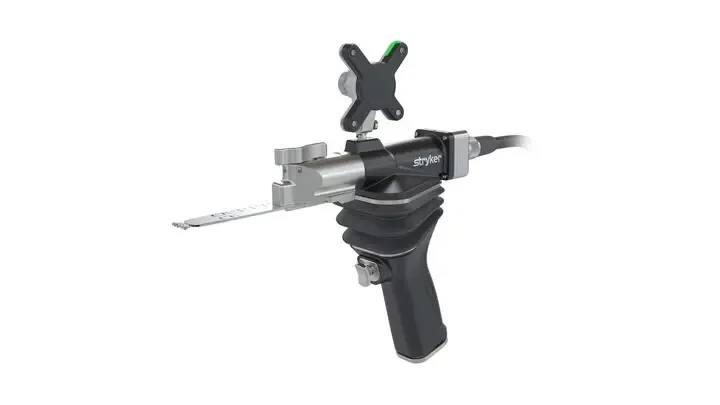
Historically, larger fully automated units that need specialized training and operating room changes have been the foundation of robotic systems for joint surgery. But the new Mako RPS alters that by fusing sophisticated robotic guidance with a conventional power tool's ergonomic feel. It enhances the surgeon's hand rather than replacing it by combining intraoperative planning with a robotically enabled saw that reacts to the movements of the surgeon. Accordingly, the tool helps maintain cuts in line with pre-operative plans while removing the need for cutting blocks and enabling surgeons to operate however they see fit.
Stryker created a handheld system to seamlessly integrate with its current technologies, including the Q Guidance multi-specialty navigation platform and the Triathlon Total Knee System, providing a seamless experience within its orthopedic ecosystem. The new platform is particularly appealing to surgeons who desire robotic accuracy without the complexity of complete robotic arm systems, according to company leadership. With millions of joint operations already being performed globally under the Mako brand, the RPS seeks to expand robotic-assisted surgery into practices and environments that might have previously chosen to use traditional instruments.
Stryker's strategy to make cutting-edge surgical technology more easily accessible, efficient, and flexible for a range of clinical settings is reflected in the introduction of the Mako RPS. It may increase the use of robotic knee surgery techniques, according to early cases, and appeal to smaller hospitals and ambulatory surgical centers that value accuracy but want a gradual learning curve for robotic developments. According to industry observers, the devices' phased rollout represents another advancement in orthopedic robotics, improving surgeon control while upholding strict guidelines for patient care and surgical results. It also demonstrates Stryker’s commitment to making robotic surgery more accessible. It further underlines the company’s leadership in orthopedic innovation.
Stryker's permanent innovation exhibits its devotion to promoting orthopedic surgery it also portends a future in which more clinical settings across the world will need to use robotic-assisted procedures.