



Tissue Paper Market Revenue, Leading Companies, Company Technology / Innovation, Product Adoption, Consumer Preferences, Pricing Analysis, Inventory Performance, Competitive Positioning, and Demand Trends
Tissue Paper Market (By Product Type: Paper Tissues (made from pulp), Wet Wipes, Facial Tissue, Others; By Application: At Home, Away From Home; By Distribution Channel: Offline, Online) - Global Industry Analysis, Size, Trends, Leading Companies, Regional Outlook, and Forecast 2026 to 2035
Source: https://www.precedenceresearch.com/tissue-paper-market
 Get a Sample
 Table Of Content


What is the Tissue Paper Market Size?
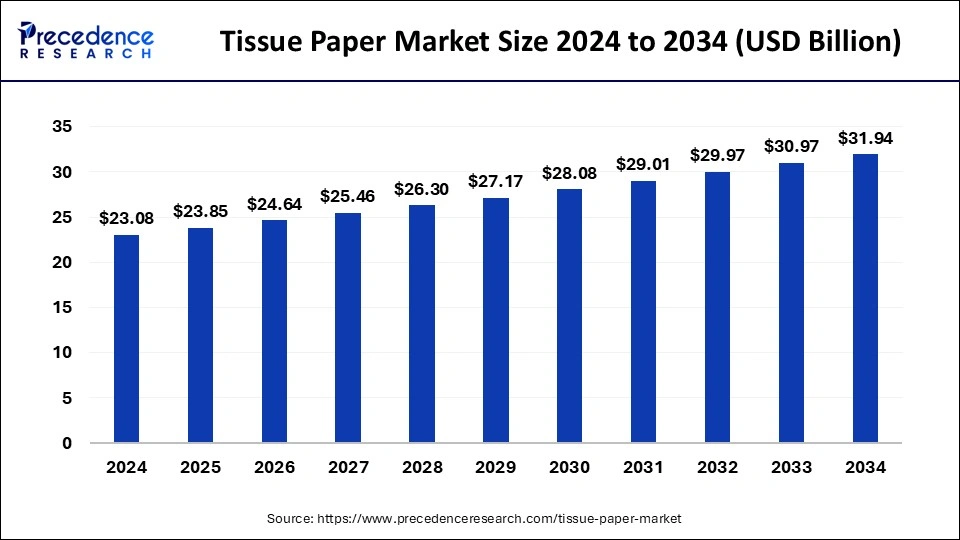
The global tissue paper market size is estimated at USD 23.85 billion in 2025 and is predicted to increase from USD 24.64 billion in 2026 to approximately USD 32.93 billion by 2035, expanding at a CAGR of 3.28% from 2026 to 2035. The tissue paper market is driven by the increasing awareness among homes and business facilities of the importance of putting essential sanitation and hygiene procedures into place.
Tissue Paper Market Key Takeaways
- The global tissue paper market was valued at USD 23.85 billion in 2025.
- It is projected to reach USD 32.93 billion by 2035.
- The tissue paper market is expected to grow at a CAGR of 3.28% from 2026 to 2035.
- Asia Pacific dominated the tissue paper market with the largest revenue share of 34% in 2025.
- North America is expected to expand at a CAGR of 4% during the forecast period.
- By product type, the paper tissues (made from pulp) segment has contributed more than 43% of revenue share in 2025.
- By product type, the facial tissue segment is projected to grow at a CAGR of 4.03% during the forecast period.
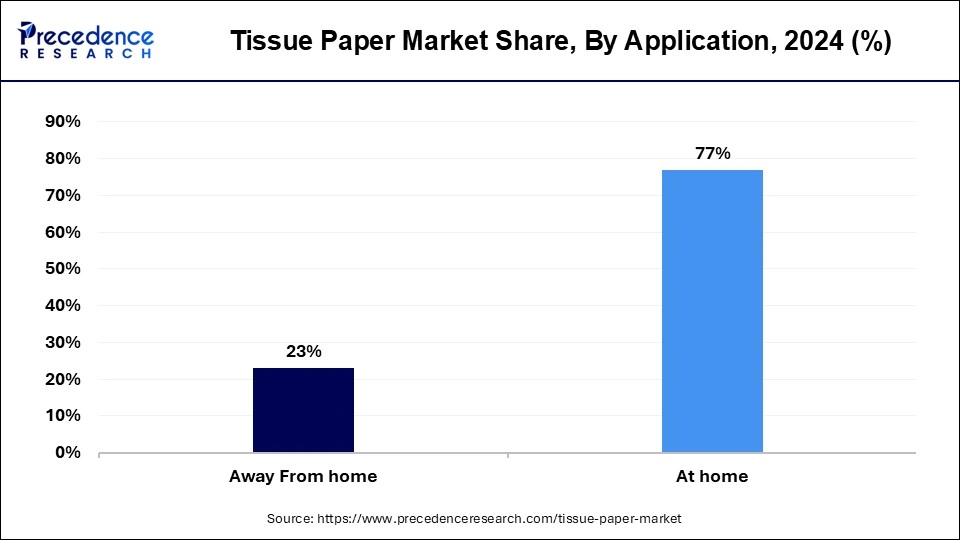
- By application, the at home segment has held the largest revenue share of 77% in 2025.
- By application, the away from home segment is observed to be the fastest growing in the tissue paper market during the forecast period.
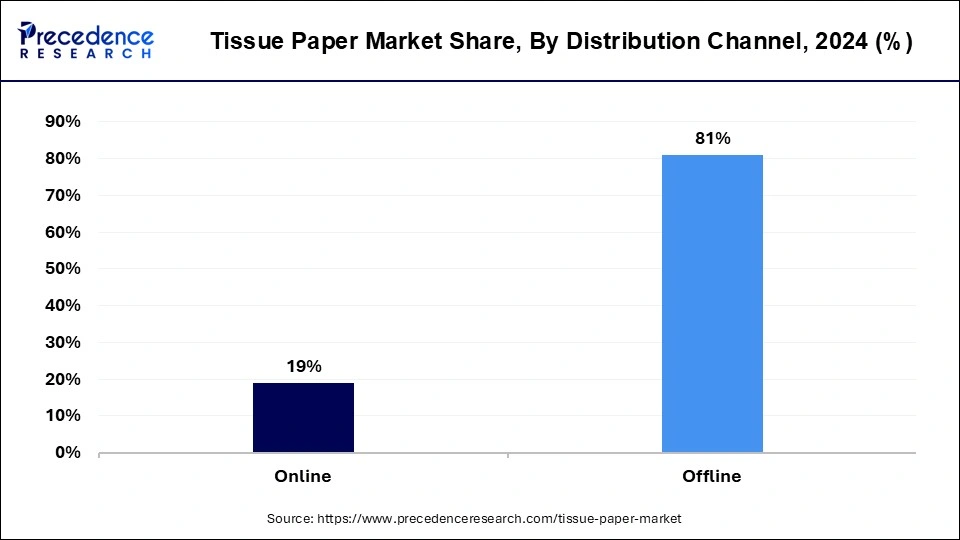
- By distribution channel, the offline segment has generated more than 81% of revenue share in 2025.
- By distribution channel, the offline segment shows significant growth in the market during the forecast period.
Market Overview
The tissue paper market includes producing, supplying, and marketing tissue paper goods such as paper towels, napkins, toilet paper, and facial tissues. These goods are mainly used for cleanliness and hygiene in the commercial, industrial, and residential sectors. The market is diverse, with players ranging from big multinational firms to smaller regional producers, and it is defined by a persistent need for products that are creative, sustainable, and reasonably priced.
Products for everyday usage, such as tissue paper, are necessary and consistently in demand. As a result, the market for tissue paper is more stable and less vulnerable to economic changes compared to other industries. The tissue paper market, present in both developed and developing countries, reflects a wide range of customer preferences and financial circumstances.
How is Technology Contributing to the Tissue Paper Market?
The technological advancement in the tissue paper market features TAD, 3D printing, smart manufacturing, AI, and automation. Through-air-drying technology helps to dry the paper web through forced hot air. It produces soft and absorbent tissues. Smart manufacturing and 3D printing ease the production process and enhance the customization of products, making way for new tissue paper products. AI and automation in tissue paper manufacturing play a crucial role in improving and enhancing the product and product quality.
Nanocellulose is a sustainable advancement to the tissue paper market. The biodegradable and renewable materials used in traction. It acts as an alternative to traditional fibers used in tissue paper production. The advancement is supporting the growth and sustainable efforts of the market globally.
Tissue Paper Market Growth Factors
- Increasing people's understanding of good hygiene is essential, especially in developing nations.
- Tissue paper becomes increasingly in demand as the travel and hospitality industries grow.
- Increasing residential and commercial areas result from growing populations and urbanization, necessitating additional hygiene products. This drives the growth of the tissue paper market.
- Due to rising disposable income, customers may now be able to afford to spend more on personal hygiene goods.
Market Outlook
- Market Growth Overview: The tissue paper market is expected to grow significantly between 2025 and 2034, driven by the rising disposable income and urbanization, heightened hygiene awareness, expansion of commercial sectors, and shift towards sustainability and eco-friendly demand.
- Sustainability Trends: Sustainability trends involve alternative fibers and raw materials, eco-friendly and plastic-free packaging, and green production processes.
- Major Investors: Major investors in the market include Kimberly-Clark Corporation, Procter & Gamble Company, Essity AB, and Georgia-Pacific LLC.
Market Scope
| Report Coverage | Details |
| Market Size by 2035 | USD 32.93 Billion |
| Market Size in 2026 | USD 23.85 Billion |
| Market Growth Rate from 2026 to 2035 | CAGR of 3.28% |
| Largest Market | Asia Pacific |
| Base Year | 2025 |
| Forecast Period | 2026 to 2035 |
| Segments Covered | Product Type, Application, Distribution Channel, and Regions |
| Regions Covered | North America, Europe, Asia-Pacific, Latin America, and Middle East & Africa |
Market Dynamics
Driver
Increasing global population boosts the demand for essential consumer goods
Basic hygiene supplies become increasingly crucial as population density increases. This covers tissue paper for sanitary, home, and personal hygiene needs. Population expansion increases the total volume of tissue paper needed, even in constant per capita consumption. Increased infrastructure spending often results from population increase, especially in developing nations where it helps to distribute better and make consumer goods like tissue paper more accessible. Improved distribution networks guarantee that tissue paper reaches outlying and underdeveloped areas, increasing usage in the aggregate.
Restraint
Fluctuating pulp prices
The primary raw material used in tissue paper production is pulp. Changes in pulp prices directly impact the costs of production. Manufacturers' profit margins may be negatively affected by increased production costs brought on by rising pulp prices unless they can pass these costs down to customers. Tissue paper is a high-volume, generally low-margin product. Cost increases for raw materials, even modest ones, can have a significant financial impact. This limits the growth of the tissue paper market.
Opportunity
Advancements in manufacturing technologies
Using automated equipment, the entire production process, from pulp processing to packaging, can be streamlined. This lowers labor expenses and speeds up production. Because robots can perform operations like cutting, folding, and packaging accurately, there will be less waste and a consistent output quality.
Technologies like digital printing and laser cutting, which appeal to niche markets, make customized tissue paper goods with distinctive patterns and designs possible. By experimenting with alternative materials and procedures, manufacturers can create novel products that appeal to consumers who are concerned about their health and the environment. Examples of such products are hypoallergenic or biodegradable tissue papers. This opens an opportunity for the tissue paper market.
Segment Insights
Product Type Insights
The paper tissues (made from pulp) segment dominated the tissue paper market in 2025. Customers now prefer paper tissues over cloth ones due to increased hygiene and health consciousness. The COVID-19 pandemic further raised this awareness, resulting in an increase in demand for disposable hygiene products. Paper tissues are convenient for use as face tissues, napkins, and paper towels, among other things. Because of their single-use nature, they are perfect for rapid clean-ups and personal hygiene.
In general, it is less expensive to make and buy paper tissues. Manufacturing-scale economies make mass-market-friendly pulp-based tissues affordable. Because the production processes are well-established and the raw materials (wood pulp) are easily obtainable, a steady supply and stable prices are guaranteed.
The facial tissue segment shows a significant growth in the tissue paper market during the forecast period. Facial tissues are now more practical and aesthetically pleasing for customers due to various packaging alternatives such as pocket packs, travel-sized packs, and beautiful box designs. With the availability of facial tissues in a wider range of retail locations, such as supermarkets, convenience stores, and online platforms, their accessibility has increased.
Because of their convenience and hygienic advantages, disposable face tissues are replacing traditional fabric handkerchiefs in some areas. Adopting Western lifestyles in developing nations has resulted in a rise in the use of face tissues, as these tissues are commonly utilized for personal cleanliness in Western societies.
Application Insights
The at home segment dominated in the tissue paper market in 2025. Tissue paper goods, such as paper towels, napkins, facial tissues, toilet paper, and other tissue paper items, are available in the at-home market. Their diversity makes them more enticing and versatile, meeting consumers' varying demands and tastes. Tissue paper goods are a household staple since they are readily available and practical for daily use. The convenience of acquiring these products from brick-and-mortar establishments and internet retailers has increased their use.
Well-known brands of tissue paper have developed a significant consumer base and commercial presence. Efficient marketing techniques and reliable product quality have maintained dominance in the at-home market. The at-home market is growing due to ongoing product innovation, such as introducing premium and eco-friendly tissue paper products that have drawn quality-sensitive and environmentally conscious consumers.
The away from home segment is observed to be the fastest growing in the tissue paper market during the forecast period. Disposable income rises with economic growth, especially in emerging nations. This economic growth increases the demand for AFH tissue goods, raising expenditures on upgraded infrastructure and amenities in public and commercial areas. Manufacturers constantly develop innovative items, including eco-friendly tissue alternatives, more absorbent paper towels, and sophisticated dispensers specifically for the AFH market. These innovations support market expansion by meeting the unique requirements of many industries.
Distribution Channel Insights
The offline segment dominated the tissue paper market in 2025. One significant benefit of offline shopping is that items may be acquired immediately, especially for regular needs like tissue paper. Customers don't have to wait for delivery schedules, which, for many, is a decisive issue. In offline environments where they can easily carry large quantities, bulk buying is more convenient for consumers who would otherwise choose to stock up on tissue paper to avoid making frequent purchases.
The online segment shows a significant growth in the tissue paper market during the forecast period. Online purchases of tissue paper items have become simpler for customers because of the growth of e-commerce platforms worldwide. Online shopping is becoming increasingly popular among consumers since it's convenient. It lets them explore a wide selection of products, compare prices, and read reviews from other customers without leaving their homes. This change in customer behavior is anticipated to increase demand for tissue paper items sold online.
Regional Insights
What is the Asia Pacific Tissue Paper Market Size?
The Asia Pacific tissue paper market size was exhibited at USD 8.11 billion in 2025 and is projected to be worth around USD 11.51 billion by 2035, poised to grow at a CAGR of 3.56% from 2026 to 2035.
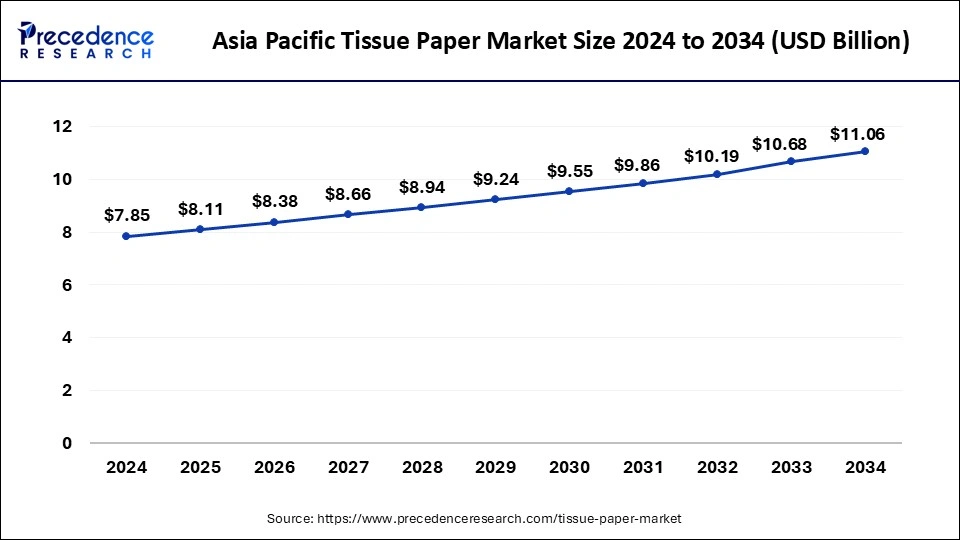
Asia-Pacific dominated the tissue paper market in 2025. Consumers in Asian countries are increasingly spending money on tissue paper and other personal care and hygiene products. The market is expanding due to the increased demand for premium and higher-quality tissue paper goods brought about by rising disposable incomes. Asia-Pacific countries' consumer preferences have been impacted by exposure to Western lifestyles and cleanliness standards, which has resulted in a rise in the use of tissue paper products. The increasing awareness of hygiene and convenience among urban populations drives the demand for disposable tissue products.
The well-established retail and distribution networks in Asia Pacific ensure the efficient availability and accessibility of tissue paper products. Supermarkets, hypermarkets, convenience stores, and online retailers provide a wide array of tissue paper brands and products, catering to diverse consumer preferences and needs.
China Tissue Paper Market Trends
China's shift towards eco-friendly, high-end products, such as bamboo pulp, has seen significant growth in rural areas compared to urban centres. The industry is experiencing rapid expansion in napkins and facial tissues, supported by the adoption of Through-Air-Drying (TAD) technology and sustainable, plant-based materials. With the exports showing significant growth, major producers are focusing on smart, automated, no-touch dispensers for the recovering commercial sector.
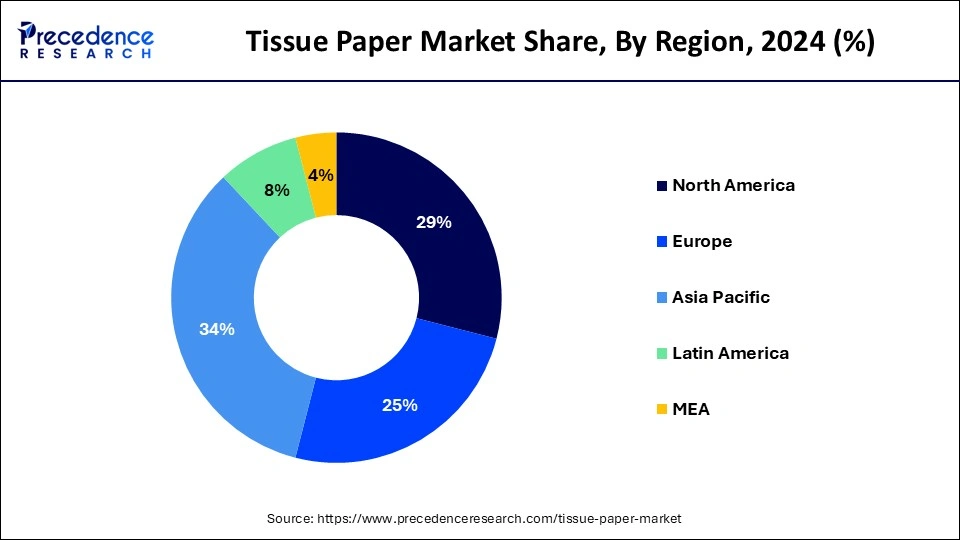
North America shows a significant growth in the tissue paper market during the forecast period. Sustainable products are becoming more and more popular as consumers show a preference for eco-friendly tissue created from recycled materials. Major North American corporations are implementing sustainable practices to appeal to environmentally sensitive consumers, such as decreasing carbon footprints and procuring raw materials responsibly.
Currently, North America is dominating the tissue paper market. North America follows Western culture. The sanitation and hygiene factor are measured by the equal preferences of every individual. Tissue paper products are a basic requirement of the region. The rising demand for tissue paper, by default, accelerates the production and manufacturing volume.
U.S. Tissue Paper Market Trends
The U.S. trends towards premium, high-quality, and soft products while accelerating the adoption of eco-friendly materials, such as bamboo and recycled pulp. Increased hygiene consciousness is driving steady demand, with e-commerce and subscription models streamlining purchases for consumers. The strategy evaluation emphasizes sustainability and convenience in a post-pandemic market.
Europe is a significant marketplace for the tissue paper industry. Europe boasts one of the highest per capita consumption rates of tissue paper products in the world. This high demand is driven by the widespread use of tissue paper in households, workplaces, and public facilities. Products such as toilet paper, facial tissues, kitchen towels, and napkins are staples in European homes and institutions, reflecting the continent's developed and hygiene-conscious consumer base.
Germany Tissue Paper Market Trends
Germany's eco-friendly and high-quality products, growing demand for specialized, premium products, manufactures are aligning with environmental standards to meet consumer demand for biodegradable materials. The increased mobility and a return to the office, along with the needs of an aging population, are driving demand for AFH tissue products like paper towels and napkins.
What are the Advancements in the Tissue Paper Market in Latin America?
Latin America is expected to grow substantially throughout the forecast years. This growth is driven by rapid urbanization and increasing disposable incomes. Regulatory frameworks in the region are also gradually evolving to support sustainable practices, allowing for growth opportunities. Countries like Brazil and Mexico are leading players in the region.
Brazil Tissue Paper Market Trends: Companies in the region are seen investing in marketing strategies to educate consumers about the benefits of organic products, which is expected to drive further growth in the upcoming years.
What are the Key Trends in the Tissue Paper Market in the Middle East and Africa Region?
The Middle East and Africa region is expected to witness steady growth in the upcoming years. This growth is driven by increasing awareness of environmental issues and a shift towards sustainable products. Regulatory frameworks are still gradually developing, but initiatives to promote sustainability are gaining traction, thus encouraging market growth. Countries like South Africa and the UAE are leading players.
Saudi Arabia Tissue Paper Market Trends: The market landscape is characterized by a mix of established companies and new entrants, all focusing on product innovation and sustainability. As consumer awareness increases, the demand for organic tissue products is expected to rise even more.
Value Chain Analysis of the Tissue Paper Market
- Raw Material Sourcing & Pulping
The chain begins with the procurement of virgin wood pulp or recycled fibers. This stage involves cleaning, washing, and bleaching the pulp to create a clean, white, or specialized pulp slurry ready for paper production.
Key Players: Suzano S.A., Domtar Inc., Resolute Forest Products. - Tissue Paper Manufacturing
The pulp is transferred to paper machines (often using Through-Air-Dried (TAD) technology), where it is formed, pressed, dried, and creped on a Yankee dryer to create softness.
Key Players: Kimberly-Clark Corporation, Procter & Gamble Company, Georgia-Pacific LLC, Essity AB, Asia Pulp & Paper (APP) Sinar Mas. - Distribution and Retail Channels
The packed products are distributed through various channels, with offline retail controlling a significant portion of sales, though online sales are growing rapidly.
Key Players: Walmart, Amazon, Target, Bunzl.
Tissue Paper Market Companies
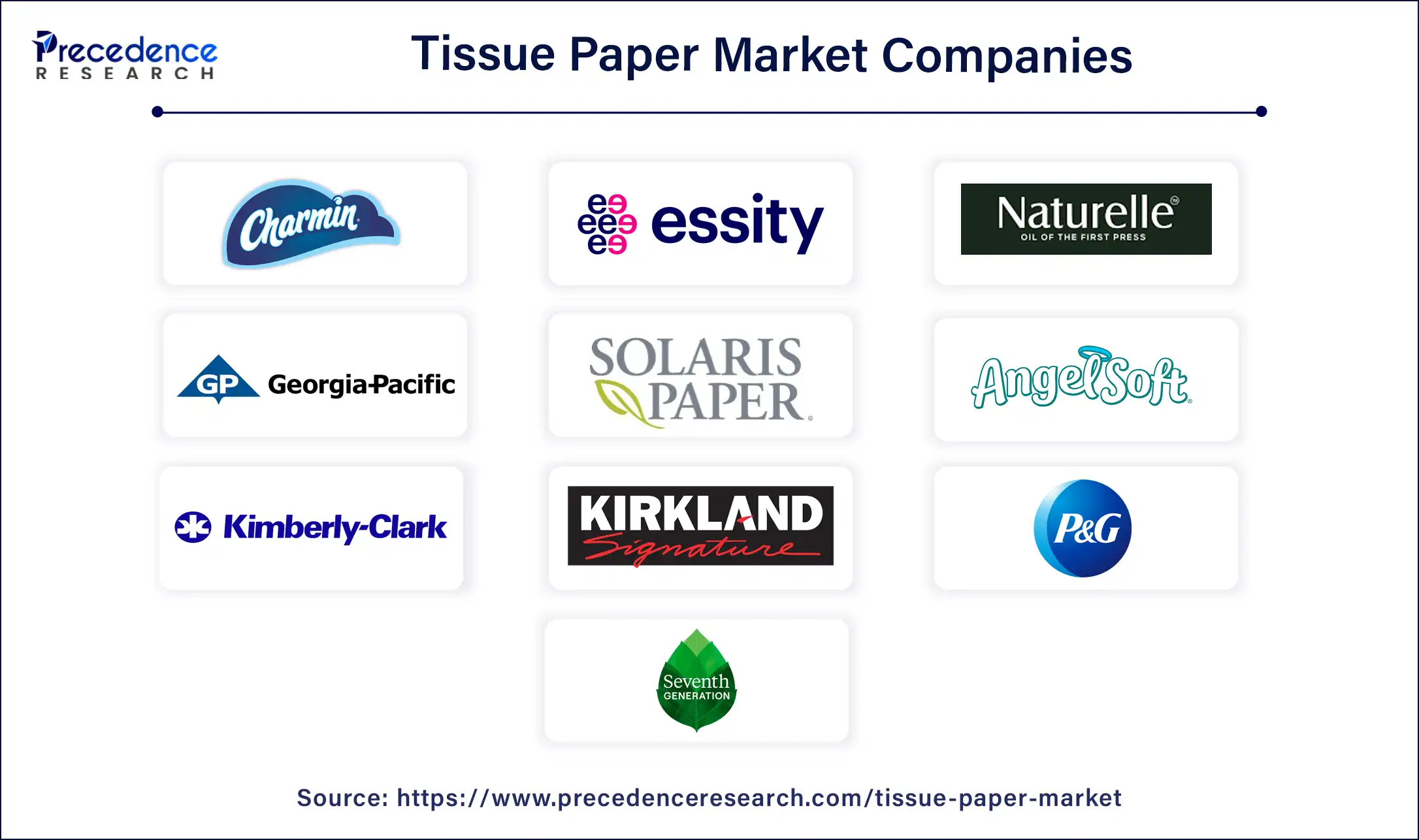
- Procter & Gamble (Cascade): As a major global player, P&G dominates the premium tissue market by utilizing extensive R&D to enhance product softness and absorption, alongside implementing AI-driven supply chain optimizations.
- Kimberly - Clark: Kimberly-Clark is a global leader in the personal care sector, manufacturing a wide range of branded tissue products like Kleenex, Scott, and Cottonelle.
- Essity: As the world's second-largest supplier of consumer tissue, Essity offers a vast portfolio including Tork, Tempo, and Zewa, with a strong focus on sustainability, such as developing products from wheat straw.
- Charmin Paper: Charmin contributes to the premium toilet paper segment by focusing on superior softness and, specifically, high absorbent "cushiony" products designed to reduce consumption per use.
- Angel Soft: Angel Soft contributes to the market by focusing on value, offering "softness that lasts" and ensuring wide distribution, making it a leading brand in the competitive, budget-conscious, multi-ply tissue category.
- Cascades: Cascades holds a distinct market position by focusing on eco-friendly, sustainable tissue solutions, often utilizing recycled fibers to appeal to environmentally conscious consumers.
Other Major Key Players
- Naturelle
- Kirkland Signature (Costco)
- Georgia- Pacific
- Solaris Paper
- Seventh Generation
Recent Developments
- In September 2023, Kochi-based Pepco, a tissue paper production company, launched a new tissue paper brand, Kenin. The product is a combo pack for multiple roles, such as kitchen rolls, facial tissues, perfume tissues, and dispenser tissue. (Source- https://www.thehindubusinessline.com)
- In March 2025, the cities of Shibushi and Osaki, Japan, are turning used diapers into toilet paper. Tissue paper made from unusual waste is a thoughtful initiative in the tissue paper market. (Source - https://www.thecooldown.com)
- In December 2023, Tesco initiated packaging its pocket tissues in recyclable paper to save almost 35 tonnes of new soft plastic created yearly. The UK's biggest supermarket said the change to its own-brand pocket tissue multipacks may save more than 55 million pieces of soft plastic.
- In July 2023, Sybron embarked on SySoft Luxury Bamboo Toilet Tissue, made from 100% bamboo and plastic-free packaging.
Segments covered in the report
By Product Type
- Paper Tissues (made from pulp)
- Wet Wipes
- Facial Tissue
- Others
By Application
- At Home
- Away From Home
By Distribution Channel
- Offline
- Online
By Geography
- North America
- Asia Pacific
- Europe
- Latin America
- Middle East & Africa
For inquiries regarding discounts, bulk purchases, or customization requests, please contact us at sales@precedenceresearch.com
Frequently Asked Questions
Tags





Ask For Sample
No cookie-cutter, only authentic analysis – take the 1st step to become a Precedence Research client
 Get a Sample




 sales@precedenceresearch.com
 Schedule a Meeting
