



Cadmium Telluride Market Size, Key Companies, Company Market Share, Chip Production Volume, Wafer Capacity, Technology Adoption, Pricing Trends, Competitive Positioning, and Demand Analysis
Cadmium Telluride Market (By Source: Tellurium, Cadmium; By Application: Solar PV, Optical Lenses and Windows, Electro-Optic Modulator, Nuclear Spectroscopy, Infrared Optical Material; By End User: Residential, Commercial, Industrial, Utility) - Global Industry Analysis, Size, Trends, Leading Companies, Regional Outlook, and Forecast 2026 to 2035
Source: https://www.precedenceresearch.com/cadmium-telluride-market
 Get a Sample
 Table Of Content


What is the Cadmium Telluride Market Size?
The global cadmium telluride market size is estimated at USD 4.11 billion in 2025 and is predicted to increase from USD 4.54 billion in 2026 to approximately USD 10.84 billion by 2035, representing a noteworthy CAGR of 10.18% between 2026 and 2035.
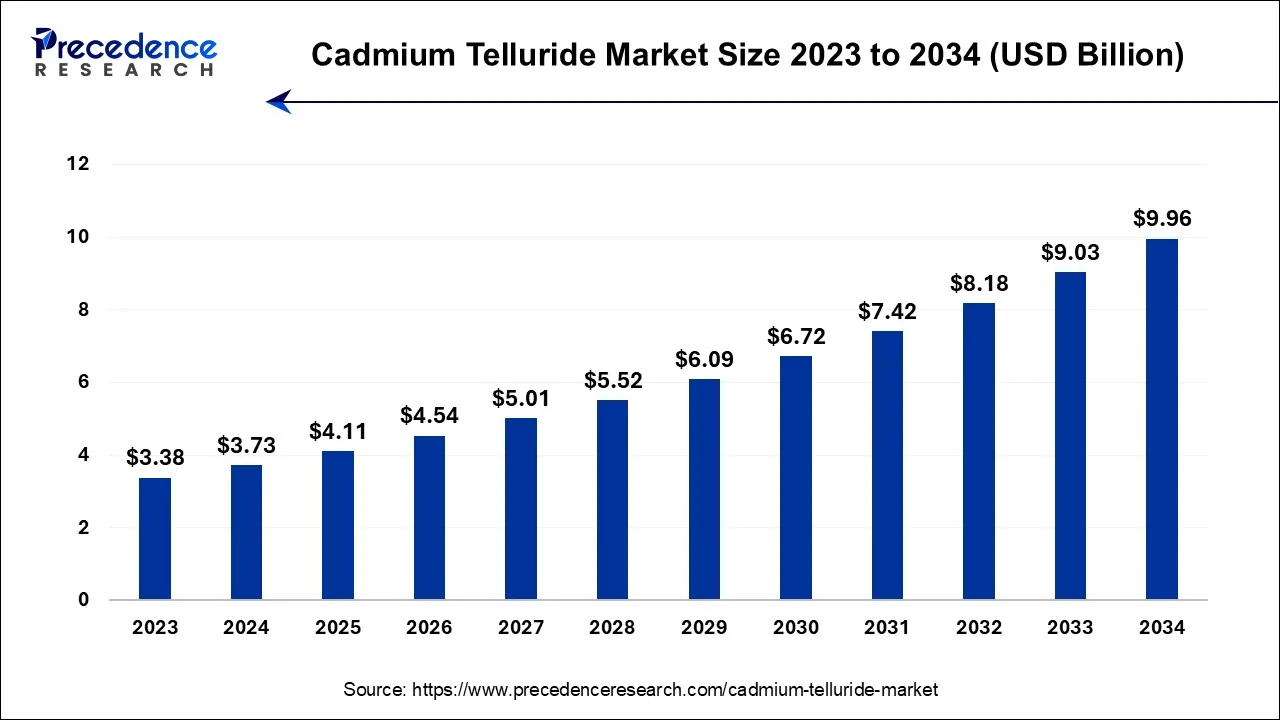
Cadmium Telluride Market Key Takeaways
- North America led the market with the biggest market share of 42% in 2025.
- Asia-Pacific is projected to expand at the fastest CAGR during the forecast period.
- By Source, the tellurium segment has held the major revenue share of 63% in 2025.
- By Source, the cadmium segment is anticipated to grow at a remarkable CAGR of 7.8% during the projected period.
- By Application, the solar PV segment contributed more than 39% of revenue share in 2025.
- By Application, the nuclear spectroscopy segment is estimated to grow at the fastest CAGR over the projected period.
- By End Users, the commercial segment had the largest market share of 57% in 2025.
- By End Users, the industrial segment is anticipated to grow at the fastest CAGR over the projected period.
Market Overview
Cadmium telluride (CdTe) is a semiconductor material used in thin-film photovoltaic (PV) solar cells. It has gained prominence in the solar industry due to its cost-effectiveness and high energy conversion efficiency. CdTe solar cells are constructed by depositing a thin layer of CdTe material onto a substrate. They absorb sunlight to generate electricity, making them suitable for solar panels. CdTe solar cells are known for their relatively low production costs and good performance in real-world conditions, especially in areas with high sunlight exposure. However, concerns about the toxicity of cadmium have prompted ongoing research into safety and recycling processes for these solar cells.
Cadmium Telluride Market Growth Factors
These solar cells are notably lauded for their cost-effectiveness and remarkable energy conversion efficiency, positioning them as an attractive option for solar panel production. A primary catalyst for the market's expansion is the affordability factor associated with CdTe solar cells, offering a cost-efficient alternative to conventional silicon-based panels. This affordability plays a pivotal role in democratizing solar energy access, making it more attainable for a wider spectrum of consumers and businesses, consequently expediting the adoption of renewable energy sources.
Moreover, CdTe solar cells exhibit robust energy conversion efficiency, particularly in regions with ample sunlight, making them well-suited for various applications. As a thin-film technology, CdTe cells offer flexibility and lightweight characteristics, expanding their usability beyond traditional solar panels. Additionally, the environmental benefits of CdTe technology, with a lower carbon footprint compared to some alternatives, align with sustainability goals and contribute to their growing popularity.
However, the industry also faces notable challenges. Cadmium, a key component in CdTe cells, raises concerns due to its toxicity. To address this, significant efforts are underway to develop recycling and safe disposal solutions. Moreover, CdTe technology encounters competition from other thin-film technologies and traditional silicon-based solar panels. Nonetheless, opportunities lie in ongoing research and development efforts to improve CdTe solar cell performance and sustainability.
Additionally, expanding into emerging markets with a growing demand for affordable and efficient solar solutions presents lucrative business prospects for CdTe manufacturers. In conclusion, the CdTe market's growth trajectory is driven by cost-efficiency, efficiency gains, and environmental benefits, though it must navigate challenges while capitalizing on emerging opportunities in the dynamic solar energy landscape.
Market Scope
| Report Coverage | Details |
| Growth Rate from 2026 to 2035 | CAGR of 10.18% |
| Market Size in 2025 | USD 4.11 Billion |
| Market Size in 2026 | USD 4.54 Billion |
| Market Size by 2035 | USD 10.84 Billion |
| Largest Market | North America |
| Base Year | 2025 |
| Forecast Period | 2026 to 2035 |
| Segments Covered | By Source, By Application, and By End User |
| Regions Covered | North America, Europe, Asia-Pacific, Latin America, and Middle East & Africa |
Market Dynamics
Driver
High energy conversion efficiency and thin-film advantages
High energy conversion efficiency and thin-film advantages are two pivotal factors propelling the market demand for cadmium telluride (CdTe) solar technology. The remarkable energy conversion efficiency of CdTe solar cells makes them highly sought after in the renewable energy sector. These cells exhibit a strong ability to convert sunlight into electricity, especially in regions blessed with abundant sunlight. This translates into higher electricity production from a given area of solar panels, resulting in increased energy yields. In a world where maximizing energy generation is crucial, the high efficiency of CdTe cells positions them as a top choice for solar panel installations.
Moreover, the thin-film characteristics of CdTe solar cells confer several advantages. Their lightweight and flexible nature allows for versatile applications, including integration into building materials and the development of flexible solar panels. This flexibility in design and installation expands the potential deployment scenarios for CdTe technology, making it adaptable to various settings and paving the way for innovative solar solutions. As a result, the market demand for CdTe technology continues to surge, driven by the desire for high energy yields and the versatility afforded by its thin-film attributes. These factors position CdTe as a competitive and favored option in the solar energy landscape, contributing to its growing prominence.
Restraints
Competition from silicon and toxicity concerns
The cadmium telluride (CdTe) market, while witnessing significant growth, faces notable restraints that influence its market demand. One key challenge is the intense competition posed by traditional silicon-based solar panels. Silicon solar cells have long been the dominant technology in the solar industry and enjoy a well-established market presence. The familiarity and trust in silicon technology can make it difficult for CdTe to gain widespread acceptance, despite its cost-efficiency and efficiency gains. CdTe manufacturers need to continuously innovate and demonstrate superior performance to compete effectively with silicon.
Additionally, concerns regarding the toxicity of cadmium, a key component in CdTe solar cells, pose a substantial restraint. Environmental and health concerns have prompted regulatory scrutiny and public apprehension. To address this issue, the CdTe industry must invest in research and development to reduce cadmium usage, develop recycling programs, and implement safe disposal methods. Overcoming these concerns and differentiating itself from silicon-based competitors will be crucial for CdTe technology to realize its full market potential and drive sustainable growth in the solar energy sector.
Opportunities
Technological advancement and grid integration
Technological advancements and grid integration play pivotal roles in surging the market demand for cadmium telluride (CdTe) technology. Continuous technological advancements in CdTe solar cells have led to improved efficiency and performance, making them a more attractive option for solar energy generation. Apart from this, research and development efforts are focused on enhancing the energy conversion efficiency of CdTe cells, narrowing the performance gap with traditional silicon-based cells. As CdTe technology evolves, it becomes more competitive and cost-effective, driving greater adoption across residential, commercial, and industrial sectors.
Moreover, the seamless integration of CdTe solar systems into existing grids is a critical factor driving market demand. CdTe technology offers the flexibility to connect to grid networks efficiently. As governments and utilities worldwide invest in expanding renewable energy sources, CdTe's compatibility with grid integration solutions ensures a stable and reliable energy supply. This integration is crucial for balancing energy production and demand, particularly in regions with fluctuating weather conditions. As a result, CdTe technology contributes to grid stability and reduces reliance on non-renewable energy sources, further accelerating its market demand.
Impact of COVID-19
The cadmium telluride (CdTe) market, like many industries, experienced the impacts of the COVID-19 pandemic. The initial disruptions included supply chain interruptions, factory closures, and logistical challenges, which led to temporary slowdowns in manufacturing and project installations. Uncertainty in the financial markets also affected investment decisions and delayed some solar projects. However, the pandemic also underscored the importance of resilient and sustainable energy sources.
Governments and organizations recognized the value of renewable energy, including CdTe technology, in ensuring a more resilient energy infrastructure. As a result, stimulus packages and policy support were directed toward renewable energy initiatives, bolstering the CdTe market's recovery.
Additionally, remote work and the digitalization of industries highlighted the importance of reliable and efficient energy sources, further driving interest in solar technologies like CdTe. While the pandemic posed initial challenges, it ultimately accelerated the transition to renewable energy sources, making CdTe solar technology a critical component of the global energy landscape.
Segment Insights
Source Insights
According to the source, the Tellurium segment held 63% revenue share in 2023. Tellurium, a rare metalloid, is a vital component in CdTe solar cells. It enables efficient sunlight absorption and conversion into electricity. The CdTe market's growth is influenced by the availability and supply of Tellurium, which can be limited due to its scarcity. Therefore, efforts are being made to explore alternative materials or recycling methods to ensure a stable Tellurium supply.
The cadmium segment is anticipated to expand at a significantly CAGR of 7.8% during the projected period. Cadmium, a heavy metal, forms the other component of CdTe solar cells. While CdTe cells offer cost-effective solar solutions, the toxicity of Cadmium raises environmental and health concerns. As a result, the industry is focused on reducing Cadmium usage and developing recycling and safe disposal methods, aligning with sustainability trends in the solar energy sector. These trends emphasize the importance of sustainable material sourcing and environmental responsibility in the CdTe market.
Application Insights
Based on the application, solar PV segment is anticipated to hold the largest market share of 39% in 2023. Cadmium telluride (CdTe) solar cells are extensively employed in the solar photovoltaic (PV) sector due to their compelling cost-efficiency and impressive energy conversion efficiency. A significant trend in this application is the relentless pursuit of enhancing CdTe technology to boost its efficiency while simultaneously driving down production costs. This dedication to innovation positions CdTe solar cells as a competitive and sustainable option for generating electricity from sunlight.
Furthermore, another noteworthy trend in the CdTe market is the growing integration of CdTe PV systems into a diverse range of projects. These include residential, commercial, and utility-scale installations, collectively contributing to the substantial expansion of global solar energy capacity. This widespread adoption underscores CdTe technology's versatility and adaptability, making it a key player in the ongoing transition towards renewable energy sources and sustainable power generation solutions.
On the other hand, the nuclear spectroscopy segment is projected to grow at the fastest rate over the projected period. Nuclear spectroscopy relies on CdTe detectors to analyze gamma-ray emissions in diverse scientific and industrial settings. A notable trend in this field centers on enhancing detector performance, with a focus on achieving higher resolution and sensitivity for more precise measurements.
The CdTe market in nuclear spectroscopy thrives on its reputation for reliability and accuracy in identifying nuclear materials and monitoring radiation levels. This reliability finds applications in various sectors, including nuclear research, medical diagnostics, and security. The CdTe technology's ability to provide precise and dependable data makes it an indispensable component in these critical fields.
End Users Insights
In 2023, the Commercial segment had the highest market share of 57% on the basis of the installation. In the commercial sector, there is a growing trend toward integrating CdTe solar panels into buildings' architectural designs. This trend, known as building-integrated photovoltaics (BIPV), allows commercial structures to generate renewable energy while maintaining aesthetic appeal. Additionally, commercial properties are increasingly using CdTe solar technology to offset energy costs and reduce their carbon footprint, contributing to sustainability goals.
The Industrial segment is anticipated to expand at the fastest rate over the projected period. Industrial facilities are leveraging CdTe solar systems to meet their energy demands efficiently. Large-scale industrial complexes are installing CdTe panels on rooftops and unused spaces to generate clean electricity for their operations. The industrial sector's focus on energy efficiency and environmental responsibility aligns with the adoption of CdTe technology, which offers cost-effective and eco-friendly energy solutions. As a result, the CdTe market is witnessing increased uptake by both commercial and industrial users, driven by sustainability goals and cost savings.
Regional Insights
What is the U.S. Cadmium Telluride Market Size?
The U.S. cadmium telluride market size accounted for USD 4.11 billion in 2025 and is expected to be worth around USD 10.84 billion by 2035, growing at a CAGR of 10.18% from 2026 to 2035.
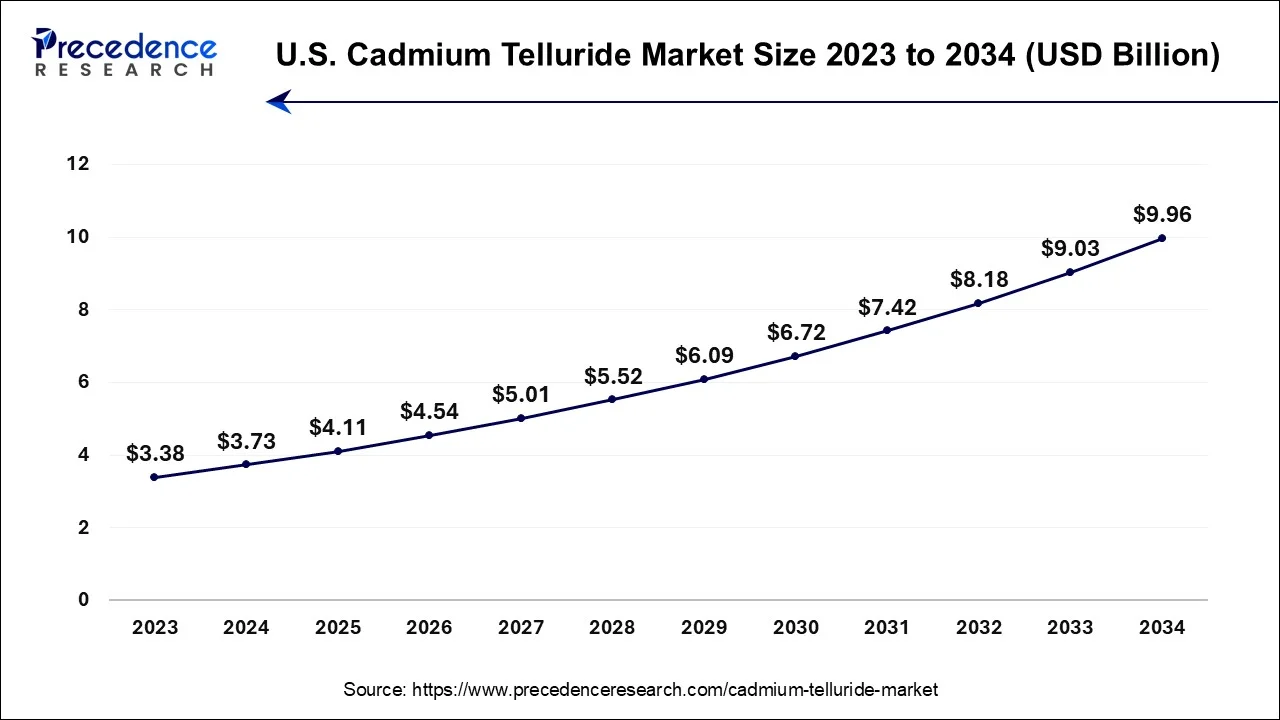
How did North America dominate the Cadmium Telluride Market in 2025?
North America has held the largest revenue share 42% in 2023. The North American cadmium telluride (CdTe) market is witnessing substantial growth, driven by increased awareness of renewable energy and environmental concerns. The United States, in particular, is a key player, with CdTe technology gaining traction for its cost-effectiveness and efficiency.
A notable trend is the integration of CdTe solar systems into commercial and residential buildings, contributing to energy sustainability goals. Government incentives and a growing number of utility-scale projects are fueling the adoption of CdTe technology, making it a prominent player in the region's renewable energy landscape.
U.S. Cadmium Telluride Market Trends
The U.S. market for cadmium telluride is expanding due to manufacturing efficiency and broad supply chains. Utility-scale solar projects favor CdTe for its cost efficiency and strong performance in high temperatures. Federal incentives and domestic manufacturing support are accelerating CdTe production capacity.
- In January 2024, the National Renewable Energy Laboratory (NREL) awarded $1.8 million on behalf of the U.S. Department of Energy Solar Energy Technologies Office (SETO) to fund seven projects to support the development of cheaper and more efficient cadmium telluride solar cells.
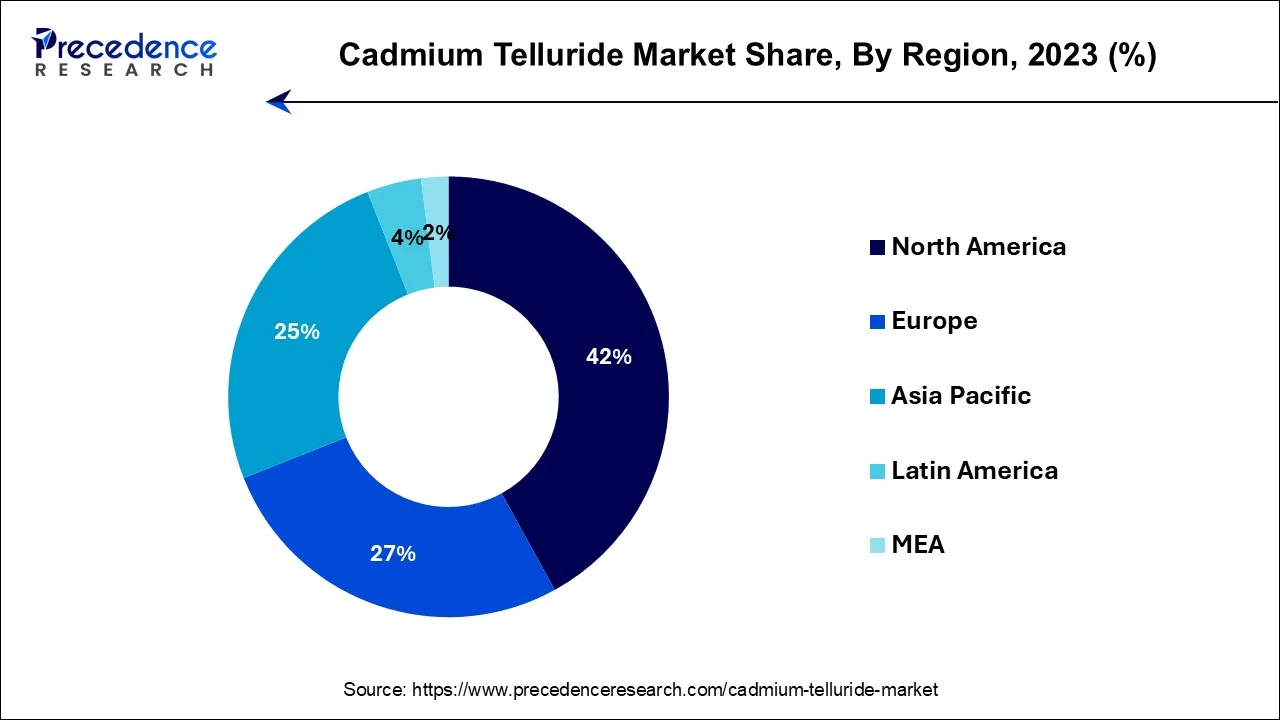
How is the Rapid Growth of the Asia Pacific in the Cadmium Telluride Market?
Asia-Pacific is estimated to observe the fastest expansion. The Asia-Pacific CdTe market is experiencing rapid expansion, primarily powered by countries like China and India. Governments in the region are actively promoting solar energy as part of their renewable energy agendas. A notable trend is the development of large-scale CdTe solar installations, both grid-tied and off-grid, to meet the surging energy demands. Technological advancements and decrease in installation costs are making CdTe technology an attractive choice. Moreover, the region's solar potential and increasing energy needs are propelling CdTe's prominence in Asia-Pacific's renewable energy transition.
India Cadmium Telluride Market Analysis
India progresses through the expansion of manufacturing capacity, tax and duty incentives, and sustainable demand. In September 2025, the Indian Ministry of New and Renewable Energy (MNRE) added 4.8GW of annual solar cell nameplate capacity to its Approved List of Models and Manufacturers (ALMM) List-II. Technology improvements are helping improve efficiency and reduce costs. Dependence on imported raw materials remains a key challenge.
How is the Noteworthy Progress of Europe in the Cadmium Telluride Market?
Europe is expected to grow at a notable rate in the market in 2025, owing to innovation in tandem cells, emission norms, and reduced import dependency. Government policies and EU green initiatives are supporting local CdTe production and imports. CdTe modules are valued for their cost-effectiveness and high performance in varying climates. Technological advancements are improving module efficiency and sustainability. In July 2025, UK researchers planned to develop a new type of cadmium telluride PV panels for space applications.
How is the Substantial Growth of the Cadmium Telluride Market within South America?
South America is expected to experience significant growth during the forecast period, driven by a surge in large-scale solar capacity, cost-effective manufacturing, and global collaborations. Technological improvements are enhancing module efficiency and durability. Limited local manufacturing and dependence on imports pose challenges to market growth.
How is the Middle East and Africa Gaining Momentum in the Cadmium Telluride Market?
MEA is expected to grow at a lucrative rate in the market in the coming years, driven by regulatory reforms, sustainability targets, and massive utility-scale project pipelines. The Middle East has accelerated solar manufacturing, driven by the increased demand and clean energy goals. Countries like the UAE, Saudi Arabia, and Egypt are investing in large-scale solar projects. CdTe modules are preferred for their efficiency in high-temperature and arid conditions
Cadmium Telluride Market-Value Chain Analysis
- Raw Material Procurement (Silicon Wafers, Gases)
This stage focuses on semiconductor powders and speciality gases that are used in vapour deposition processes.
Key Players: First Solar, Solar Frontier, Antec Solar & Calyxo, Shin-Etsu Chemical Co., Ltd., SUMCO Corporation. - Distribution to OEMs and Integrators
This stage is driven by medical and semiconductor integration, supply chain resilience, and the utility-scale solar sector.
Key Players: Xinte Energy, CNBM, First Solar, Antec Solar & Calyxo, Toledo Solar. - Lifecycle Support and Recycling
This stage is accelerated by industrial scaling and technology, capacity expansion, and innovation methods.
Key Players: First Solar, Inc., Veolia Environment S.A., 5N Plus, Umicore.
Cadmium Telluride Market Companies
- First Solar, Inc.
- Abound Solar
- PrimeStar Solar
- Antec Solar Energy AG
- Calyxo GmbH
- Lucintech, Inc.
- Global Solar Energy, Inc.
- Xunlight Corporation
- Advanced Solar Power (Hangzhou) Co., Ltd.
- Astronergy Solar
- AVANCIS GmbH & Co. KG
- NexPower Technology Corp.
- Xian Longi Silicon Materials Corp.
- China Sunergy Co., Ltd.
- Hanwha Q CELLS Co., Ltd.
Recent Developments
- In September 2025, Calyxo GmbH launched revolutionary reverse deflection on its second-generation CVAC system.
(Source: https://www.urotoday.com/) - In January 2024, First Solar, the US thin-film manufacturer, opened a 3.3GW manufacturing plant in India. The plant is located in Tamil Nadu, enabling the production of First Solar's Series 7 thin film cadmium telluride modules. (Source: https://www.pv-tech.org )
- In 2023, JinkoSolar signed a MoU with Failte Solar to provide 200 MW of N-Type Tiger Neo Modules for the Irish Distribution Generation Market, highlighting their commitment to supplying renewable energy solutions.
- In 2023, QCells, a South Korean company, intends to establish a comprehensive silicon-based solar supply chain in the U.S. The plan includes breaking ground in Georgia in the first quarter for a facility capable of manufacturing 3.3 GW of solar ingots, wafers, cells, and finished panels.
- In 2020, Trina Solar has successfully acquired Nclave, a Spanish solar tracker system manufacturer. Nclave's smart tracker system is a key component of Trina Solar's comprehensive smart photovoltaic solution, TrinaPro, further strengthening their position in the solar industry.
Segments Covered in the Report
By Source
- Tellurium
- Cadmium
By Application
- Solar PV
- Optical Lenses and Windows
- Electro-Optic Modulator
- Nuclear Spectroscopy
- Infrared Optical Material
By End User
- Residential
- Commercial
- Industrial
- Utility
By Geography
- North America
- Europe
- Asia-Pacific
- Latin America
- Middle East and Africa
For inquiries regarding discounts, bulk purchases, or customization requests, please contact us at sales@precedenceresearch.com
Frequently Asked Questions
Tags





Ask For Sample
No cookie-cutter, only authentic analysis – take the 1st step to become a Precedence Research client
 Get a Sample




 sales@precedenceresearch.com
 Schedule a Meeting
