



Renewable Energy Market Revenue, Leading Companies, Company Project Pipeline, Renewable Energy Adoption, Infrastructure Investment, Operational Efficiency, Company Market Share, Competitive Positioning, and Growth Trends
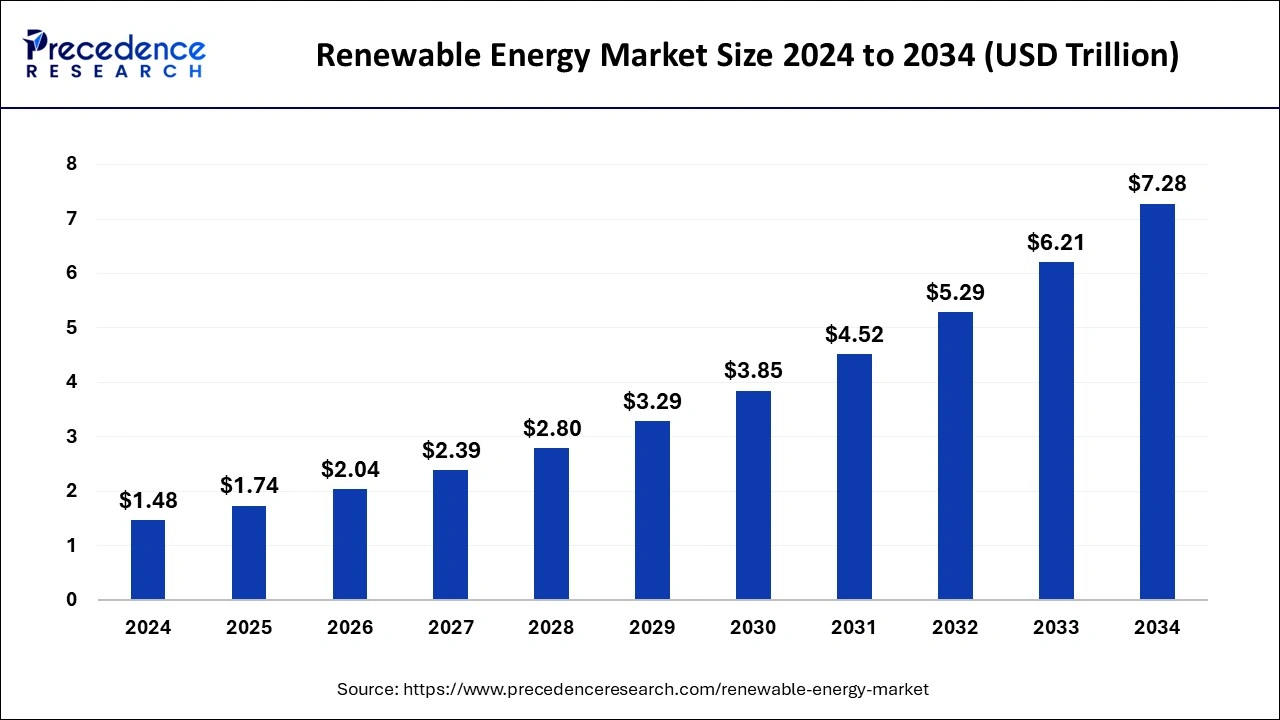
According to energy and power expert Laxmi Narayan, the renewable energy market has reached USD 2.04 trillion in 2026 and is expected to grow to USD 8.25 trillion by 2035, registering a CAGR of 16.84%. The renewable energy market companies such as Xcel Energy Inc., EDF, National Grid Renewables, are playing a key role in market expansion, with major opportunities emerging across by product, by application and region.
Source: https://www.precedenceresearch.com/renewable-energy-market
 Get a Sample
 Table Of Content


What is the Renewable Energy Market Size?
The global renewable energy market size accounted for USD 1.74 trillion in 2025 and is predicted to increase from USD 2.04 trillion in 2026 to approximately USD 8.25 trillion by 2035, representing a CAGR of 16.84% from 2026 to 2035. The increasing global demand for clean energy is propelling the expansion of the renewable energy market.
Renewable Energy Market Key Takeaways
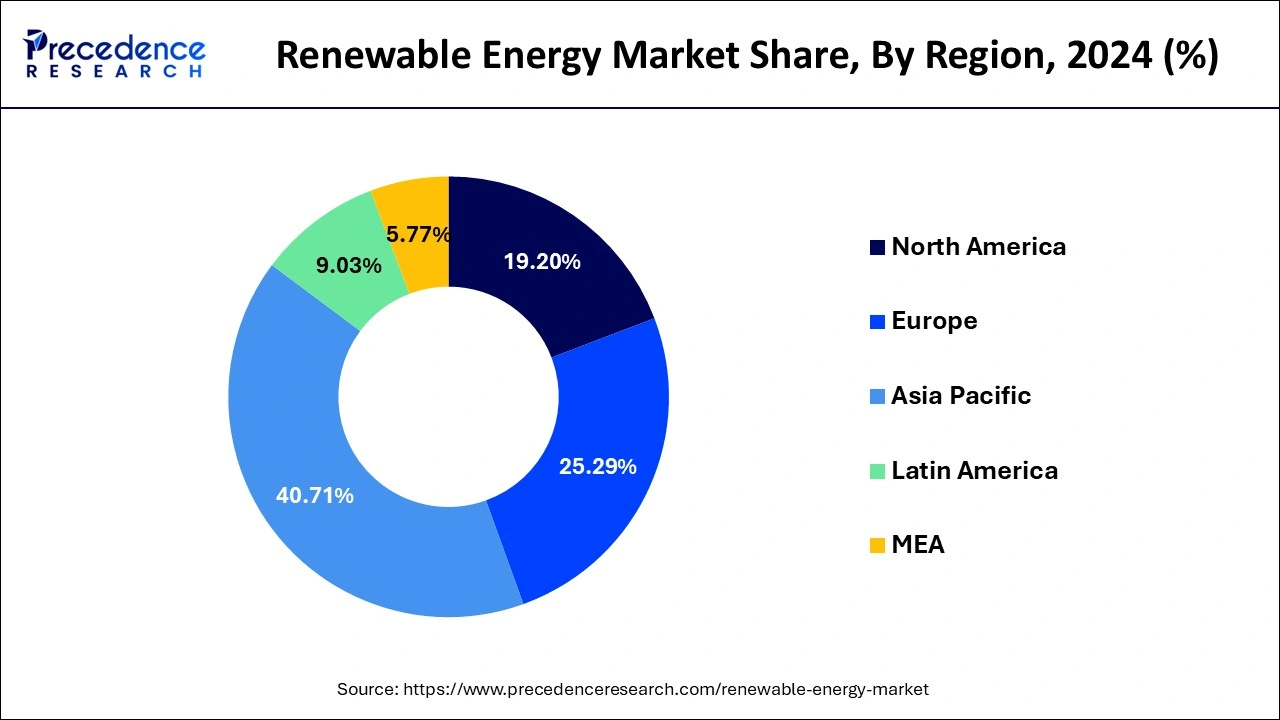
- Asia Pacific dominated the global market with the largest market share of 40.71% in 2025.
- North America is projected to expand at a notable CAGR during the forecast period.
- By type, the hydroelectric power segment contributed the highest market share in 2025.
- By type, the solar segment is expected to grow at a significant CAGR from 2026 to 2035.
- By end user, the residential segment captured the biggest market share in 2025.
- By end user, the commercial segments are estimated to be the fastest-growing segment during the forecast period.
AI in the Renewable Energy Market: Transforming Efficiency and Reliability
The advancements in Artificial Intelligence have transformed the energy and power industry, particularly in the renewable energy sector. Companies are now employing AI within their manufacturing facilities to expedite the development of advanced products. Furthermore, AI enhances the accuracy of energy supply and demand forecasts, optimizes energy storage and distribution, and automates essential energy systems. It also supports better resource integration and aids in predicting energy production to meet future needs. Consequently, the integration of AI in renewable energy solutions has positively shaped the industry's trajectory.
- In July 2024, Orennia Inc launched Ion_AI. Ion_AI is an AI-based platform designed to help in analyzing the trends of renewable energy such as solar, wind and some others in different parts of the world.
Renewable Energy Market Growth Factors
There are several renewable energy sources, including wind, hydropower, solar, geothermal, and bioenergy, collectively meeting approximately 7% of the global energy demand. This percentage is projected to rise considerably in the coming years.
Key drivers of growth include heightened awareness of fossil fuels environmental impact, government initiatives promoting clean energy adoption, efforts to reduce carbon emissions from both public and private sectors and increasing consumer acceptance of green energy. Additionally, the surge in industrialization and urbanization in developing countries is anticipated to boost demand for renewable sources such as geothermal and solar energy during the forecast period.
The increasing developments in technology are resulting in the decline in costs of renewable energy, and the increasing competitiveness of battery storage systems is positively impacting the growth of the renewable energy market.
The global rise in concerns regarding climate change and ESG issues is driving significant investments in the adoption of renewable energy sources. To promote sustainability and protect the environment, both developed and developing economies are providing subsidies to the corporate sector to facilitate the transition to clean and green energy. These incentives and pressures are key contributors to the growth of the renewable energy market worldwide.
Major Trends in the Renewable Energy Market
- Immersive Data Center and AI Power Demands: Increasing demand for commercial data centers and advanced computing further enhances electricity consumption. Technology hyperscalers increasingly fund and co-locate renewable power purchase agreements (PPAs) to prevent strained grid interconnection queues in the public and private sectors.
- Expansion of Solar and Storage: Battery storage costs continue to fall to record lows, making hybrid setups competitive with traditional fossil-fuel plants. Utility-scale solar paired with battery energy storage systems (BESS) is growing rapidly to combat generation intermittency.
- Technological Advancements in the Smart Grids: AI's explosive power demand is testing grid limits and sustainability targets. AI in smart microgrids, along with machine learning models, now optimizes real-time energy forecasting, load balancing, and asset management for fluctuating renewable supplies.
- Decentralized and Distributed Generation: Local generation capacity is growing quickly, driven by government-backed rooftop solar and agricultural solar projects. Communities and businesses are increasingly adopting localized microgrids to enhance energy security and lessen dependence on long-distance transmission.
Renewable Energy Market Outlook
- Industry Growth Overview: The renewable energy market is poised for massive growth between 2026 and 2035. This growth is primarily driven by strong government policies, declining technology costs, and the urgent need for energy security and decarbonization.
- Technological Innovation: The energy industry is adopting advanced hardware such as solar and wind systems, along with digitalization and AI, to enhance grid integration and asset management. This approach improves value chain optimization, operational efficiency, and promotes circular economy initiatives, including bioenergy and waste-to-energy.
- Global Expansion: Market leaders are expanding in the Asia-Pacific region, primarily China and India, which are the largest and fastest-growing markets. Meanwhile, North America and Europe are making significant investments in R&D, while emerging markets in the MEA and Latin America are increasing capacity due to government initiatives and international partnerships.
- Major Investors: Major investors, including venture capital firms, private equity, and corporate leaders, are investing in renewable energy to achieve ESG goals. Key players include the European Investment Bank, Goldman Sachs, BlackRock, and corporations like General Electric, NextEra Energy, and Siemens Gamesa, focusing on infrastructure improvements such as grid upgrades and storage solutions.
- Startup Ecosystem: The startup ecosystem is thriving, emphasizing innovative solutions in energy storage, advanced solar and wind technology, and energy management software. Companies such as Form Energy, Ecozen Solutions, Solugen, and Lhyfe are gaining significant funding by providing scalable, cost-effective, and sustainable alternatives to traditional energy processes.
Future Outlook and Strategic Recommendations for Renewable Energy Market
Long-Term Industry Outlook
These industry outlooks emphasize non-fossil fuel sources that exceed installed power capacity by meeting or surpassing initial timelines. High system reliability leads to significant upgrades in transmission corridors and the integration of battery energy storage.
Decentralized and rural applications are expanding, driven by nationwide agricultural solar initiatives. Solar and wind energy are pivotal for capacity increases, with emerging offshore wind and floating solar projects gaining considerable traction.
Emerging Business Models
Emerging business models in energy include distributed rooftop systems like the PM Surya Ghar Muft Bijli Yojana that encourage household-level generation and micro-investments. Agrovoltaic integration fosters localized rural utility models.
Virtual power purchase agreements (VPPAs) are establishing procurement frameworks that separate green power transactions from physical delivery. To ensure consistent and reliable energy supply, hybrid and round-the-clock solutions are essential for managing solar, wind, and pumped storage resources.
Strategic Recommendations for Stakeholders
Policymakers are advised to streamline inter-state transmission approvals and adopt market-based ancillary service regulations. Investors should concentrate on hybrid generation assets with co-located storage to mitigate curtailment challenges, while manufacturers should prioritize production-linked incentives to enhance domestic wafer, cell, and module production, thus reinforcing the green energy corridor.
Statistical Data
- In FY 2025-26, India has made significant strides toward being a global leader in the field of renewable energy.
- The country was ranked as the 3rd largest in the world in terms of installed renewable energy, behind only Brazil.
- The total non-fossil fuel capacity was at 283.46 GW, compared to renewable energy capacity of 274.68 GW.
- Solar continued its strong expansion, with the highest annual capacity growth in the history of the solar industry.
- The transition towards a low-carbon energy system was continued with renewable energy sources accounting for 26.2% of electricity production. (Source: https://www.pib.gov.in)
Market Scope
| Report Coverage | Details |
| Market Size by 2035 | USD 8.25 Trillion |
| Market Size in 2026 | USD 2.04 Trillion |
| Market Size in 2025 | USD 1.74 Trillion |
| Market Growth Rate from 2026 to 2035 | CAGR of 16.84% |
| Largest Market | Asia Pacific |
| Base Year | 2025 |
| Forecast Period | 2026 to 2035 |
| Segments Covered | Product, Application, and Region |
| Regions Covered | North America, Europe, Asia-Pacific, Latin America and Middle East & AfricaMarket Dynamics |
Market Dynamics
Drivers
Technological Developments and Other Factors Accelerates the Market Growth
The rapid advancements in technology are contributing to reduced costs associated with renewable energy, while increasing competitiveness in battery storage systems is further fostering growth in this market. Heightened global concerns regarding climate change and Environmental, Social, and Governance (ESG) issues are attracting investments toward renewable energy adoption.
Various governments, from developed and developing regions, are providing subsidies to encourage the corporate sector's transition to clean and sustainable energy. Collectively, these elements play a crucial role in propelling the global renewable energy market forward.
Restraint
Lack of Workforce and Other Issues Hinders the Industry
The renewable energy market faces significant challenges affecting its daily operations. A primary issue is the shortage of skilled professionals, which disrupts the industry. Additionally, weather-related concerns and the substantial capital required to establish renewable energy plants further hinder the progress of the renewable energy sector.
Opportunity
Advancements in Energy Storage Systems to Create Opportunities
The renewable energy sector is actively developing advanced energy storage systems to enhance usage durations. Key technologies are emerging for storing solar and wind energy for emergency use, while governments worldwide are prioritizing these systems to ensure energy reliability during crises.
Battery companies are investing in high-quality energy storage solutions, indicating a strong trend within the industry. Consequently, the rapid evolution of energy storage technology is anticipated to provide substantial growth opportunities for market participants in the near future.
Segments Insight
Product Insights
The solar power segment is leading due to global demand for eco-friendly energy sources. Several government initiatives promoting the adoption of solar energy for commercial and residential use are facilitating industrial growth. Additionally, significant investments by companies in the development of high-quality solar panels for electricity generation are contributing to the expansion of the market.
The hydropower segment is expected to experience progress during the forecast period, driven by rising demand for sustainable energy in developing countries. Key factors contributing to market expansion include increased investments in off-grid energy solutions and electrification efforts in remote areas. Additionally, government initiatives aimed at reducing emissions are further propelling the growth of the renewable energy sector.
Application Insights
The industrial segment is at the forefront of the renewable energy market. The increasing number of manufacturing companies globally has heightened the demand for renewable energy sources, significantly contributing to market growth. This expansion is further propelled by rising investments from power industries in developing high-grade renewable energy solutions. Additionally, the escalating need for clean electricity within the industrial sector and advancements in solar energy are key factors driving the market's growth.
The commercial segment is projected to grow at the highest CAGR, driven by a spike in corporate offices and the adoption of PV modules in hotels and hospitals. Technological refinements in renewable energy related to the commercial sector are expected to support the growth of renewable energy across the world.
Regional Insights
Asia Pacific Renewable Energy Market Size and Growth 2026 to 2035
The Asia Pacific renewable energy market size was evaluated at USD 710 billion in 2025 and is predicted to be worth around USD 3,357 billion by 2035, rising at a CAGR of 16.81% from 2026 to 2035.
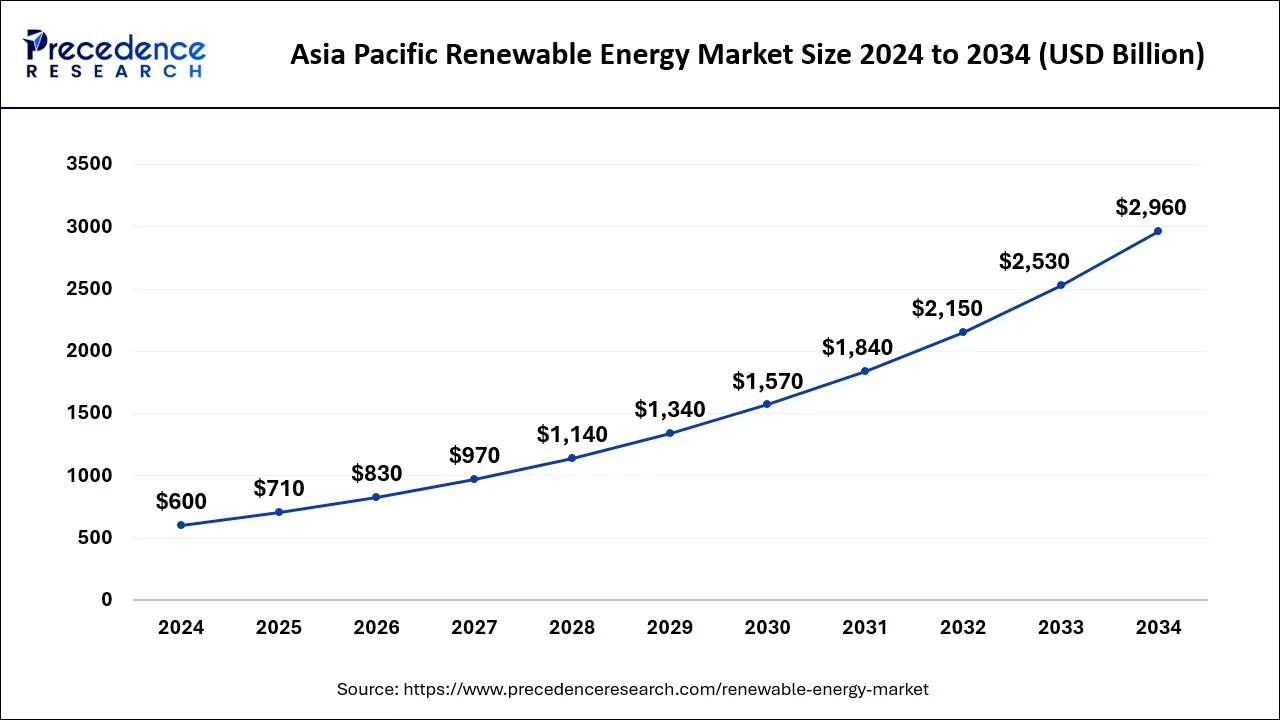
Asia Pacific was the dominant renewable energy market with a market share of over 40.71% in 2025. It is estimated that more than half of the world's renewable energy consumption occurs in the Asia Pacific region. This has been driven by rapid industrialization and urbanization, leading to increased pollution levels. Additionally, a growing population and a rise in residential projects are significantly boosting electricity demand in the region.
The renewable energy market is expanding rapidly in emerging economies like India and China, driven by economic growth and industrialization. Government initiatives are essential for the adoption of renewable energy across various applications. The rising electricity demand and significant investments in industrialization are fueling substantial spending on solar energy infrastructure. By 2017, China had emerged as the largest manufacturer of bioelectricity and a leading producer of wind energy, hydropower, and solar photovoltaics.
What Makes North America the Fastest-Growing Market?
North America is projected to lead in renewable energy market growth during the forecast period. This growth is primarily driven by a rising awareness of deteriorating environmental conditions, supportive government initiatives focused on minimizing carbon footprints, and increased investments in renewable energy sources.
In North America, heavy manufacturing industries are creating heightened demand for renewable energy. This trend is bolstered by a growing emphasis on developing high-quality solar panels for residential applications alongside significant government investments in renewable energy sources. Furthermore, the industrial expansion is fueled by the presence of various renewable energy solution providers, including NextEra Energy, Brookfield Renewable, and General Electric.
NextEra Energy partnered with Entergy in June 2024 to develop 4.5 GW solar energy storage projects.
U.S. Renewable Energy Market Trends
The U.S. maintains a leading role in the global market, influencing technological innovation and private investment. This is bolstered by progressive federal policies, notably the Inflation Reduction Act (IRA), which has facilitated the mobilization of hundreds of billions of dollars in capital. As the world's second-largest market for installed renewable capacity, the U.S. actively promotes research and development in cutting-edge technologies, including efficient solar energy, large-scale battery storage, and smart grid systems. Such efforts contribute to accelerating the worldwide transition to a clean energy economy.
How is the Opportunistic Rise of Europe in the Renewable Energy Market?
Europe is seeing substantial growth in the global market, fueled by strict EU climate objectives such as the Green Deal and the REPowerEU plan. The surge is largely attributed to advancements in wind and solar energy, particularly the expansion of offshore wind in the North Sea. Prominent trends include the adoption of energy storage solutions and smart grid technologies, along with the gradual elimination of coal and nuclear energy in various countries in Europe.
Rising carbon prices and extensive public and private investments are expediting this transition, with an emphasis on enhancing energy efficiency and creating a strong green hydrogen economy to address challenging sectors.
Germany Renewable Energy Market Trends
Germany plays a pivotal role in the European renewable energy sector, propelled by robust political support, feed-in tariffs, and aggressive national climate objectives targeting a predominantly carbon-neutral electricity supply. However, the nation encounters challenges concerning grid expansion and stability as it assimilates increasing amounts of variable renewable energy sources. Additionally, Germany is prioritizing the development of a national green hydrogen strategy to facilitate future imports while strategically phasing out nuclear and coal power.
A Deep Dive into Latin America's Renewable Energy Landscape
Latin America is emerging as a key player in the global market, driven by rising energy demand, supportive government policies, and a focus on decarbonization. The region is drawing substantial international investment in large-scale projects, particularly in utility-scale solar and wind energy. Notable trends include the expansion of grid infrastructure to accommodate variable renewable energy sources, the burgeoning green hydrogen production in countries such as Chile and Brazil, and the application of renewable energy to power heavy industries, including mining.
Brazil Renewable Energy Market Trends
Brazil has a strong renewable energy portfolio that includes significant biomass, wind, and solar electricity in addition to hydropower. Energy security objectives, national climate policies, and a strong regulatory framework that promotes private investment all have an impact on this dynamic industry. Notable developments include the rapid expansion of wind and solar energy to diversify the power supply, the use of sugarcane biomass to produce electricity, and the emerging green hydrogen industry.
What Factors Support the Growth of the Middle East and Africa Renewable Energy Market?
The MEA renewable energy market is witnessing significant growth, fueled by ambitious government targets aimed at reducing reliance on fossil fuels and utilizing abundant, low-cost solar and wind resources. Key drivers include mandatory renewable portfolio standards and national visions that support this transition.
The region is also positioning itself as a potential major exporter of green hydrogen and green ammonia. Moreover, substantial international investments are being directed toward large-scale initiatives, exemplified by projects like NEOM in Saudi Arabia and the Hyphen project in Namibia.
Saudi Arabia Renewable Energy Market Trends
Saudi Arabia is rapidly transitioning its energy sector from oil dependency to a forefront position in clean energy production. The National Renewable Energy Program (NREP) is pivotal, focusing on large-scale solar and wind projects to harness the country's abundant solar and wind resources, aiming to produce some of the world's lowest-cost power, particularly in green hydrogen and ammonia for global export.
Value Chain Analysis
- Material Sourcing and Component Manufacturing - This stage involves acquiring raw materials and producing core equipment, such as solar panels, wind turbines, and batteries, while focusing on sustainable sourcing and quality control.
Key Players: Siemens Gamesa, Vestas, JinkoSolar, Trina Solar, Tesla, LG Chem. - Project Development and Financing - Planning, site identification, permitting, securing the funding needed for projects, managing risks, and optimizing resource use.
Key Players: NextEra Energy Resources, Invenergy, Ørsted. - Installation and Construction (EPC) - Managing logistics and the physical setup of systems on-site through Engineering, Procurement, and Construction contractors, requiring engineering expertise and efficient project management.
Key Players: Bechtel, Quanta Services. - Energy Production and Operation - Ongoing operation, maintenance, and monitoring of facilities to generate electricity efficiently, supported by predictive maintenance technologies and smart grid integration.
Key Players: GE Renewable Energy Services, NextEra Energy, Duke Energy. - Transmission, Distribution, and Sales - Incorporating generated energy into the power grid, managing flow, and selling power to end-users requires grid balancing and storage solutions.
Key Players: National Grid, Berkshire Hathaway Energy.
Competitive Landscape
The renewable energy market is characterized by fragmentation, with utilities and independent power producers competing on project portfolios and technology. Major players include Xcel Energy Inc., EDF, National Grid Renewables, and Innergex, all of which possess significant renewable assets.
Mergers and expansions are common strategies for growth in this sector. In June 2026, the U.S. Department of Energy (DOE) introduced the i2X program aimed at accelerating the integration of renewable energy into the electric grid. This initiative stands out due to its incorporation of an AI-driven grid, energy storage solutions, and digital monitoring. However, substantial capital requirements and regulatory hurdles pose ongoing challenges for market entry.
Top Companies in the Renewable Energy Market and Their Offerings
- Enel SpA: Global development and management of wind, solar, geothermal, and hydro power projects through Enel Green Power.
- Acciona: Focuses exclusively on renewable energy generation, including wind, solar PV, hydro, and thermal solar power, plus green hydrogen solutions.
- The Tata Power Company Limited: Integrated renewable solutions provider in India, offering solar (utility-scale/rooftop), wind energy, and microgrid projects.
- General Electric: Global leader in manufacturing, installation, and servicing of wind turbines through its spun-off GE Vernova entity.
ABB: Provides technology, equipment, and services like inverters, generators, and battery storage systems that enable renewable energy generation and grid integration.
Other Major Key Players
- Xcel Energy Inc.
- EDF
- National Grid Renewables
- Innergex
- Invenergy
Industry Leaders Announcements
- In October 2024, Gavin Adda, the CEO of Peak Energy announced that the rapid evolution and numerous opportunities in Asia's energy landscape is majorly driven by the growing demand for renewable energy sources.
Recent Developments
- In June 2026, Kyro Capital introduced the ₹100 crore Kyro India Opportunities Fund – I, aimed at investing in growth-stage Indian firms preparing for public listings, focusing on renewable energy and related sectors. (Source: https://www.saurenergy.com)
- In June 2026, SOCOMEC and IFCCI launched Project Edu-Sustain, a CSR initiative promoting education, renewable energy, and plastic waste management in India, focusing on clean energy, education, and environmental sustainability for community development. (Source: https://thecsruniverse.com)
- In June 2026, Repsol is enhancing its position in renewable fuels by opening its second 100% renewable fuel plant in Puertollano, capable of producing 200,000 tons annually, complementing the 250,000 tons produced at the Cartagena facility. (Source: https://biofuels-news.com)
- In December 2024, Abb announced to acquire Gamesa Electric Business. This acquisition is done for strengthening the Renewable Power Conversion Portfolio of ABB.
- In November 2024, ACCIONA Energía announced to invest around 1 billion EURO. This investment helps in enhancing the 626 MW hydro portfolio of the company.
- In November 2024, Enel Group announced an investment of 12 billion EUROS. This investment is done for strengthening the renewable energy portfolio.
Segments Covered in the Report
By Product
- Hydropower
- Wind Power
- Solar Power
- Bioenergy
- Others
By Application
- Industrial
- Residential
- Commercial
By Geography
- North America
- Europe
- Asia-Pacific
- Latin America
- Middle East & Africa (MEA)
For inquiries regarding discounts, bulk purchases, or customization requests, please contact us at sales@precedenceresearch.com
Frequently Asked Questions
Tags





Ask For Sample
No cookie-cutter, only authentic analysis – take the 1st step to become a Precedence Research client
 Get a Sample




 sales@precedenceresearch.com
 Schedule a Meeting
