



Renewable Energy Certificate Market Revenue, Leading Companies, Company Project Pipeline, Renewable Energy Adoption, Infrastructure Investment, Operational Efficiency, Company Market Share, Competitive Positioning, and Growth Trends
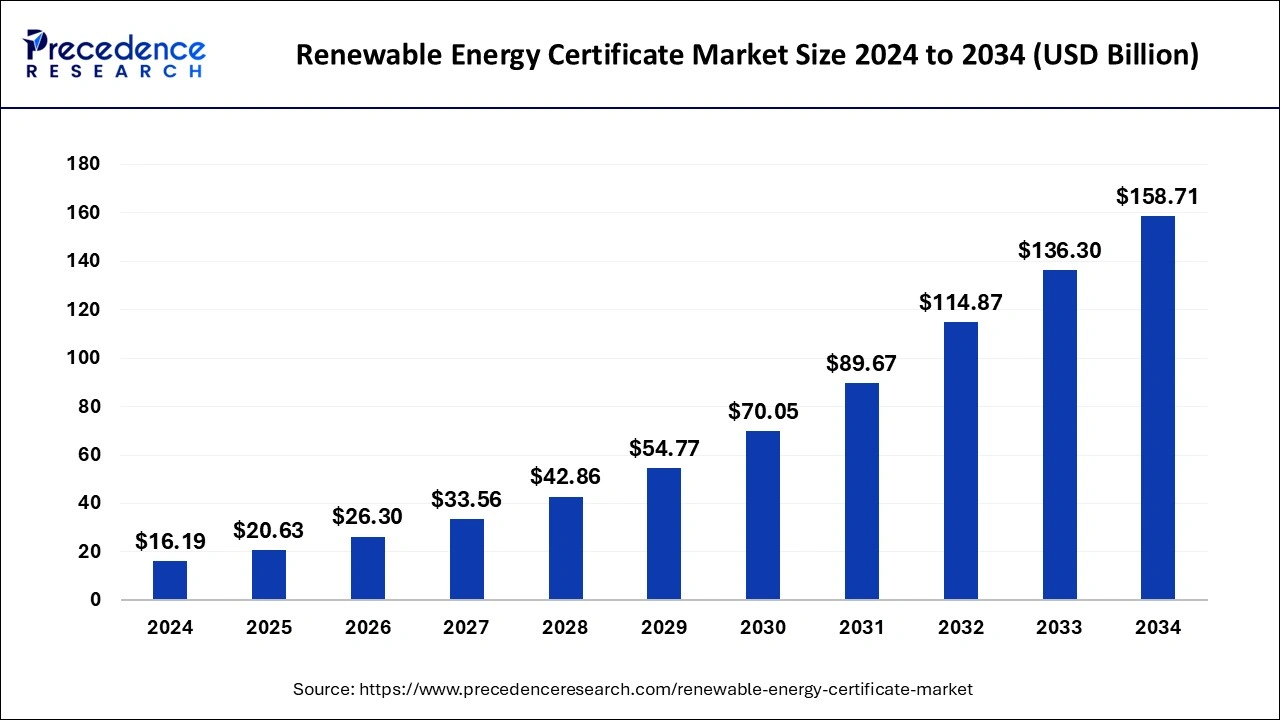
The global renewable energy certificate market is estimated at USD 26.30 billion in 2026 and is expected to grow to around USD 165.52 billion by 2035, registering a CAGR of 23.15% from 2026 to 2035. The market growth is driven by rising corporate demand for clean energy, growing net-zero and sustainability commitments, stringent government regulations promoting renewable energy adoption, increasing renewable power generation, growing awareness of environmental impacts, rising investments in solar and wind projects, and expanding corporate procurement of renewable energy certificates.
Source: https://www.precedenceresearch.com/renewable-energy-certificate-market
 Get a Sample
 Table Of Content


Renewable Energy Certificate Market Size and Forecast 2026 to 2035
The global renewable energy certificate market was valued at USD 26.30 billion in 2026 and is expected to reach USD 165.52 billion by 2035, poised to grow at a CAGR of 23.15% during the forecast period 2026 to 2035. The renewable energy certificate market is driven by rising corporate demand for clean energy and growing net zero commitments.
Renewable Energy Certificate Market Key Takeaways
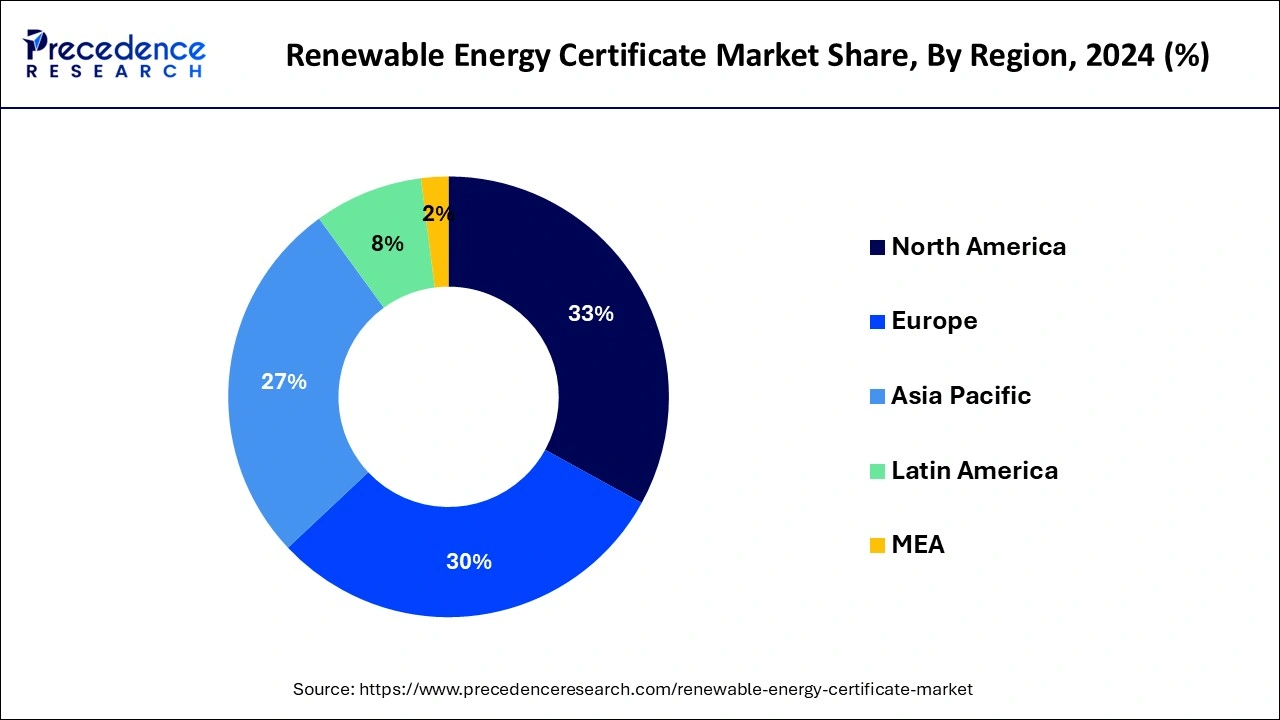
- North America led the global market with the highest market share of 33% in 2025.
- Europe region is estimated to expand the fastest CAGR between 2026 and 2035.
- By energy Type, the solar energy segment has held the largest market share in 2025.
- By capacity, the 5000 KWH segment captured the biggest revenue share in 2025.
- By end use, the compliance segment registered the maximum market share in 2025.
Market Overview
The renewable energy certificate (REC) market plays an important role in accelerating clean energy adoption. REC includes a certificate representing the environmental benefits of one megawatt-hour of electricity generated from renewable sources such as solar, wind, hydropower, biomass and geothermal energy. These certificates allow businesses, utilities and governments to demonstrate that they support renewable energy consumption, even if they use power generated from the conventional electricity grid. The growing investment in renewable power generation, strict climate policies, and rising corporate demand for carbon reduction are driving the market expansion.
Renewable Energy Certificate Market Growth Factors
The growth of the global renewable energy certificate market is driven by rising demand for the various types of power and the government policies that mandate a company to meet the required targets to use renewable energy. The increased pollution levels, ozone layer depletion, and global warming are the major issues that compelled governments across the globe to adopt certain policies in order to reduce their carbon footprint. The acquisition of the renewable energy certificate implies that 1MWh of power or electricity is generated by using the eligible and specified source of renewable energy. The increased consciousness regarding the deteriorating conditions of the environment across the globe is a major driver of the global renewable certificate market. The burgeoning sales of solar panels, micro hydro-power plants, and micro wind turbines are supplementing the growth of the renewable energy certificate market. The implementation of strict government regulations regarding the use of renewable energy sources is the most prominent factor that is expected to drive the growth of the global renewable energy certificate market.
The adoption of micro hydro power plants is supported by the presence of canals, water streams, and various resources of flowing water. Moreover, the heavy investments in innovations in the field of communication technology and rising demand for reducing GHG emissions are significantly fueling the demand for renewable energy certificates. Further, rising investments in the development of a hydropower plant that produces electricity of around 100 KW using flowing water sources are supplementing the market growth. The rising preference for green energy is fostering revenue generation through the trade of renewable energy certificates across the globe. The growing focus of the consumers, government, and corporations on attaining sustainability is a major factor that plays a crucial role in the growth of the market across the globe.
Market Trends
- The renewable energy certificate market is driven by increasing focus on sustainability and rapid shift towards cleaner energy sources.
- The government has imposed stringent guidelines on climate, which encourages adoption of renewable energy usage.
- The growing technological advancement in renewable energy is enhancing efficiency and cost effectiveness of energy generation
- The growing awareness of environmentally friendly solutions influences consumers to adopt cleaner energy solutions.
Market Outlook
- Industry growth overview - The renewable energy certificate market is expanding as renewable electricity generation increases, and governments are also encouraging the adoption of clean energy through supportive policies.
- Global expansion - The renewable energy certificate market is dominated by Europe and North America and is expanding across Asia Pacific, Latin America and the Middle East due to rapid industrialization and growing investment in renewable energy.
- Sustainability trends - Businesses are increasingly purchasing renewable energy certificates to reduce carbon emissions, improve ESG performance and comply with sustainability goals.
- Startup ecosystem - Startups in the renewable energy certificate market are introducing digital certificate marketplaces and blockchain based tracking that are helping businesses to simplify renewable energy procurement.
- Major Investors - Renewable energy developers, infrastructure funds and multinational corporations are increasingly investing in renewable projects and certificate trading platforms. The major investors include Statkraft AS, Shell Energy, NextEra Energy Inc, 3Degrees Group Inc., and STX Group.
Market Scope
| Report Highlights | Details |
| Growth Rate from 2026 and 2035 | CAGR of 23.15% |
| Market Size in 2026 | USD 26.30 Billion |
| Market Size by 2035 | USD 165.52 Billion |
| Largest Market | North America |
| Base Year | 2025 |
| Forecast Period | 2026 and 2035 |
| Segments Covered | Energy Type, Energy Type, Capacity, Geography |
| Regions Covered | North America, Europe, Asia-Pacific, Latin America, and Middle East & Africa |
Market Dynamics
Driver
Increased awareness among the public about the environmental impact of traditional energy sources such as fossil fuels prompt a growing demand for sustainable energy alternatives. Consumers are increasingly seeking cleaner and renewable sources of energy to reduce carbon emissions and combat climate change. As public awareness of sustainability issues grows, consumers increasingly prioritize products and services from companies that demonstrate environmental responsibility. Many businesses, in turn, adopt renewable energy sources and purchase renewable energy certifications to align with consumer preferences and meet their corporate sustainability goals. Thereby, the factor acts as a major driver for the renewable energy certification market.
Restraint
Lack of investors in the industry
Renewable energy projects often have higher initial capital costs compared to conventional fossil fuel-based energy projects. The lack of investment can make it challenging for renewable energy developers to cover these upfront expenses, delaying project implementation or reducing the scale of deployment. The absence of consistent and supportive policy frameworks for renewable energy can deter investors and developers from committing funds to projects. Uncertainty surrounding government incentives, subsidies, tax credits, and renewable energy targets may create a volatile investment environment, discouraging long-term investments in the renewable energy certification market.
Opportunity
Rising government efforts
Government incentives and financial support programs, such as grants, loans, and subsidies, help reduce the upfront costs of renewable energy projects and facilitate their development. renewable energy certifications enhance project revenue streams and improve project economics, making renewable energy investments more attractive to developers and investors. Government involvement in renewable energy certification markets often includes establishing regulatory frameworks, market rules, and standardization measures to ensure transparency, credibility, and integrity in renewable energy certification transactions. Clear rules and standards promote market liquidity, investor confidence, and participation in renewable energy certification trading.
Segments Insights
Energy Type Insights
Based on the energy type, the solar energy segment dominated the market with the largest revenue share in 2025. The solar power is obtained from the conversion of the solar heat into electricity. It is one of the most popular and essential sources of renewable energy. Solar power is obtained from sunlight by either using concentrated solar energy or photovoltaic. Photovoltaic is popular for medium and small-size applications. The growth of this segment is driven by the rising applications of solar energy in a wider variety of products such as calculators and remotes. Further, the rising government initiatives and government investments to develop solar panels and increase their adoption across the globe have fueled the growth of this segment. The rising investments from the private sector to develop solar power plants on a large scale are expected to further foster the growth of the solar energy renewable energy certificate market across the globe.
Capacity Insights
Based on the capacity, the 5000 KWH segment dominated the global renewable certificate market in 2024, in terms of revenue. This is attributable to the rapidly growing number of wind and solar farms across the globe owing to the rising demand for renewable energy. The extensive usage of fossil fuels has resulted in its depletion and hence the demand for various renewable energy sources is growing rapidly across the globe.
End Use Insights
Why the compliance Segment Dominates the Renewable Energy Certificate Market?
The voluntary segment is expected to experience the fastest growth in the renewable energy certificate market during the forecast period. The segment is growing as businesses, educational institutions, technology firms, and retailers purchase RECs to meet sustainability commitments beyond regulatory requirements. Companies voluntarily purchase RSCs to support renewable electricity procurement goals and satisfy commitments under programs like RE100. Consumers are preferring environmentally responsible brands, and growing corporate net zero targets are further driving demand for the renewable energy certificate market.
Based on the end use, the compliance segment dominated the global renewable certificate market in 2024, in terms of revenue. This is simply attributed to the increased government initiatives to promote the adoption of green energy and implementation of regulations regarding meeting the targets of minimum-level use of renewable energy.
Regional Insights
North America's Dominance in the Renewable Energy Certificate Market
North America dominated the global renewable certificate market in 2024, in terms of revenue. Renewable energy certificates are non-tangible energy commodities that can be easily traded in a country like the US. The compliance and the voluntary are the two prominent markets in the US. The increased demand for renewable or green power in the region has significantly boosted the market growth in the region. The region is characterized by the presence of several technologically advanced companies that have huge energy requirements that foster the development of renewable energy sources. Further, the government initiatives to promote the growth of renewable energy certificates have significantly contributed to the growth of this region.
U.S. Renewable Energy Certificate Market Size and Growth 2026 to 2035
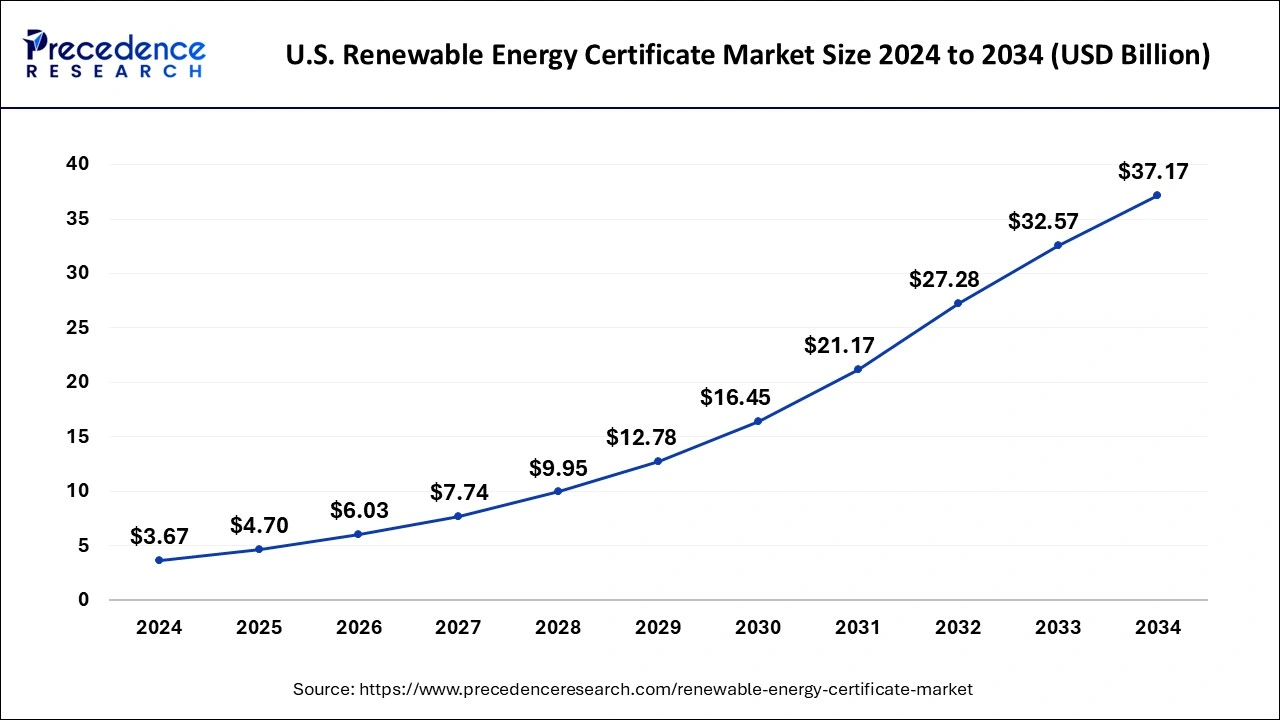
The United States represents the largest share of the renewable energy certificate market in North America. The growth is driven by well established state Renewable Portfolio Standards (RPS) and active voluntary technology companies, and commercial buyers rely on RECs to meet renewable electricity targets and sustainability commitments. The country is investing in solar and wind projects as growing demand for clean power increases, which also supports market growth. Robust corporate renewable energy purchasing, increasing renewable energy capacity, and sophisticated REC tracking systems are additionally fostering market expansion in the United States.
The U.S. renewable energy certificate market accounted for USD 4.70 billion in 2025 and is projected to expand to USD 40.32 billion by 2035, at a CAGR of 23.98% between 2026 to 2035.
On the other hand, Europe is estimated to be the most opportunistic market during the forecast period. This is attributed to the rising demand for green energy across multiple industries. Moreover, increased consciousness regarding the deteriorating environmental conditions has forced the European government to heavily invest in the development of the renewable energy certificate market.
Germany Market Trends
Germany leads the European renewable energy certificate market in 2025 due to its strong renewable energy base and commitment to climate neutrality. The country has dense industrial consumers that voluntarily purchase green certificates to meet sustainability goals. The country's Guarantee of Origin (GO) certificate system supports transparent verification of renewable electricity consumption for businesses. The supportive European Union policies and cross border electricity trading further support Germany's growth in the renewable energy certificate market.
Which Factors Influence the Considerable Growth of the Asia Pacific Market?
Asia Pacific is expected to grow at the fastest CAGR in the renewable energy certificate market during the forecast period. The growth is driven by governments increasing renewable energy deployment and corporations increasing clean electricity procurement. Countries such as China, India, Japan, and South Korea are expanding REC and I-REC participation to support decarbonization goals. The increasing renewable energy adoption and increasing power generation capacity of the region further support market growth. The growing industrialization, large scale renewable investments, and stronger ESG commitments are creating significant opportunities for market growth.
China Market Trends
China accounts for the largest share of the renewable energy certificate market in Asia-Pacific in 2025. The growth is driven by massive investment in solar, wind, and hydroelectric power. The reformed government policies are encouraging green electricity consumption and carbon reduction, which has influenced industries such as manufacturers, utilities and multinational companies to participate and adopt. The country is increasingly purchasing green certificates to comply with international sustainability requirements. The growing investment is further accelerating the transition to clean energy in China.
What are the Advancements in the Market in Latin America?
Latin America held a considerable share of the renewable energy certificate market in 2025, supported by abundant renewable resources and expanding clean energy investments. Countries such as Brazil, Chile, Colombia, and Mexico are promoting renewable generation through hydropower, wind, solar, and biomass. The rising corporate sustainability efforts, increasing global demand for renewable energy verification, and expanding investment in clean energy are further boosting market growth across Latin America.
Brazil Market Trends
Brazil accounts for the largest share of the Latin American renewable energy certificate market in 2025, with extensive hydropower, wind, and rapidly expanding solar generation. The country has become one of the largest issuers of International Renewable Energy Certificates (I-RECs), attracting strong participation from domestic industries and multinational companies. Government programs like Proinfa and different tax benefits have influenced private and foreign investment in renewable energy development. The country's commitment to meet sustainability goals, along with the government's supportive policies, further enhances market expansion.
What are the Key Trends in the Market in the Middle East and Africa Region?
The Middle East & Africa held a notable share of the renewable energy certificate market in 2025, driven by diversification of the energy mix and increasing investment in renewable power generation. Governments in the region are introducing ambitious renewable targets to meet sustainability goals and increase adoption of renewable energy solutions. Companies in the Middle East & Africa are increasingly utilizing RECs to support the region's sustainability targets and also comply with carbon regulations. The continuous investment in solar and wind projects is expected to strengthen regional certificate trading over the coming years.
Saudi Arabia Market Trends
Saudi Arabia represents the leading market within the Middle East and Africa renewable energy certificate market in 2025, as Vision 2030 accelerates large scale solar and wind development. The country has significantly increased I-REC issuance, highlighting rapid renewable capacity expansion and rising corporate demand for certified green electricity. Government initiatives such as the National Renewable Energy Program are accelerating project implementation and also attracting significant foreign investments. The growing renewable infrastructure in Saudi Arabia is also supporting the market growth of the country.
Competitive Landscape
The renewable energy certificate market is moderately consolidated, with established energy exchanges, certificate registries and sustainability solution providers. The leading companies in the market include 3Degrees, Inc., REDEX, Shell Energy, South Pole, Statkraft, EDF Trading Limited, Enel Spa and Ecohz. The companies are strengthening their market presence by improving certificate verification systems and offering transparent tracking services that meet international standards. Strategic collaboration, acquisitions, mergers and partnerships with renewable energy producers and corporate buyers are increasing as demand for certified green electricity grows.
To strengthen the company's position in the renewable energy certificate market, companies should invest in digital certificate management, expand into fast growing emerging economies and enhance cross border certificate compatibility.
Top Companies in the Renewable Energy Certificate Market and Their Offerings
- 3Degress, Inc: It is a United States based company offering voluntary and compliance RECs and Scope 2 matching.
- STX Group: It is a Netherlands based company and a global environmental commodity trader and liquidity provider. Its key offerings include high volume, cross border trading Europeans Gos and global I-RECs with specialized supply chain decarbonization products.
- Ecohz: a pioneer in global renewable energy solutions offering aggregated global I-REC portfolios and long term energy sourcing strategies tailored to RE100 standards.
Renewable Energy Certificate Market Companies
- Central Electricity Regulatory Commission
- Green-e Energy
- Environmental Tracking Network of North America
- Western Area Power Administration
- General Services Administration
- US Environment Protection Agency and Defense Logistics Agency Energy
Recent Developments
- In December 2025, STX Group, a leading global environmental commodities trading and climate finance firm, launched its STX climate Tech platform to streamline the procurement, management, and compliance monitoring of Energy Attribute Certificates (EACs), which encompass renewable energy certificates for Scope 2 decarbonizations. This advancement highlights the rising utilization of digital and automated REC management systems designed to improve corporate sustainability compliance and accelerate decarbonization initiatives.
- In January 2026, Nextpower and Abunayyan Holding established Nextpower Arabia, a partnership in Riyadh aimed at promoting solar energy in the MEMA region. The initiative features a Jeddah manufacturing site expected to become operational in Q2 2026, manufacturing solar trackers and generating 2,000 jobs. This program supports Saudi Vision 2030, enhancing clean energy objectives and economic diversification.
- In March 2024, KBank and INNPOWER partnered to unveil a renewable energy certification platform for Thailand. This initiative aims to promote the expansion of renewable energy utilization in Thailand. KBank has also launched a wide range of products and services under the concept while the collaboration offers opportunity for large businesses to achieve net zero emissions target.
Segments Covered in the Report
By Energy Type
- Wind Power
- Solar Energy
- Gas Power
- Hydro-electric Power
By End Use
- Compliance
- Voluntary
By Capacity
- 0-1000 KWh
- 1000-5000 KWH
- Greater that 5000 KWH
By Geography
- North America
- U.S.
- Canada
- Europe
- U.K.
- Germany
- France
- Asia Pacific
- China
- India
- Japan
- South Korea
- Rest of the World
For inquiries regarding discounts, bulk purchases, or customization requests, please contact us at sales@precedenceresearch.com
Frequently Asked Questions





Ask For Sample
No cookie-cutter, only authentic analysis – take the 1st step to become a Precedence Research client
 Get a Sample




 sales@precedenceresearch.com
 Schedule a Meeting
