



Power Generation Market Size, Share and Trends 2026 to 2035
Power Generation Market (By Type: Hydroelectricity, Fossil Fuel Electricity, Nuclear Electricity, Solar Electricity, Wind Electricity, Geothermal Electricity, Biomass Electricity, Other Electricity; By End-User: Industrial, Commercial, Residential, Transportation; By Source: Conventional/Non-Renewable Source, Renewable Source; By Grid: Off Grid, On Grid) - Global Industry Analysis, Size, Trends, Leading Companies, Regional Outlook, and Forecast 2026 to 2035
Source: https://www.precedenceresearch.com/power-generation-market
 Get a Sample
 Table Of Content


What is the Power Generation Market Size?
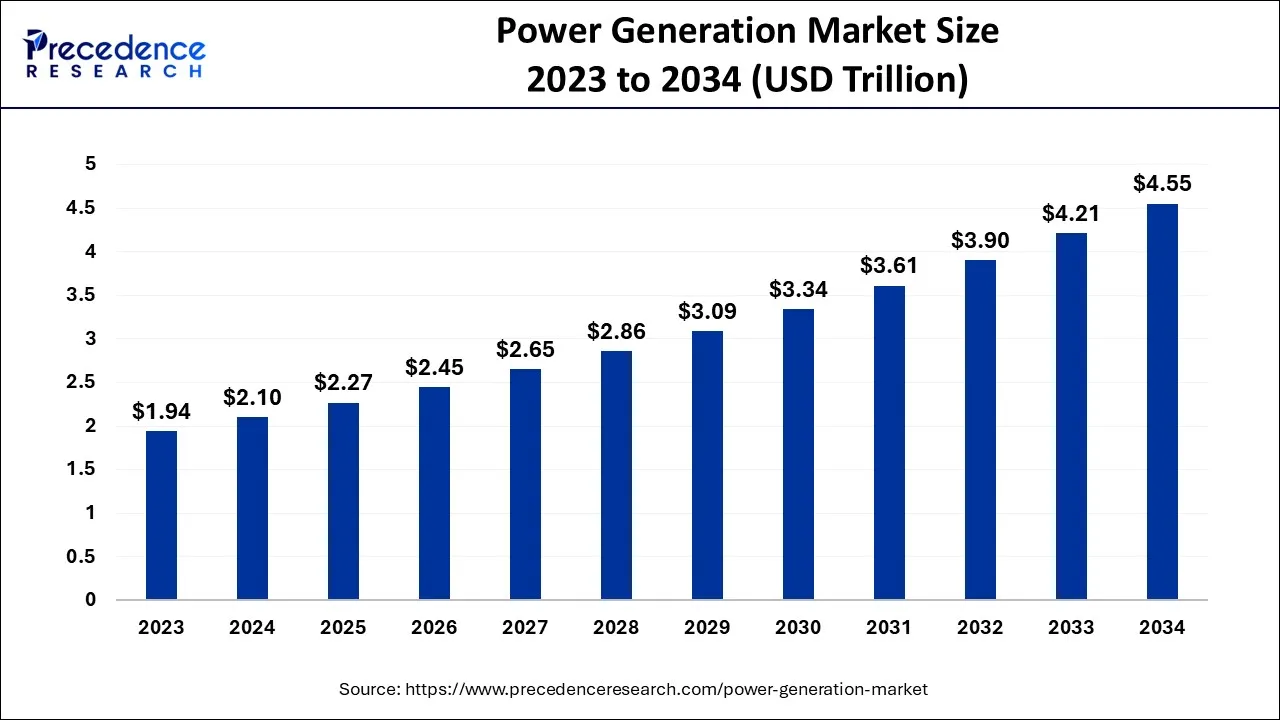
The global power generation market size is calculated at USD 2.27 billion in 2025 and is predicted to increase from USD 2.45 billion in 2026 to approximately USD 4.87 billion by 2035, expanding at a CAGR of 7.93% from 2026 to 2035.
Market Highlights
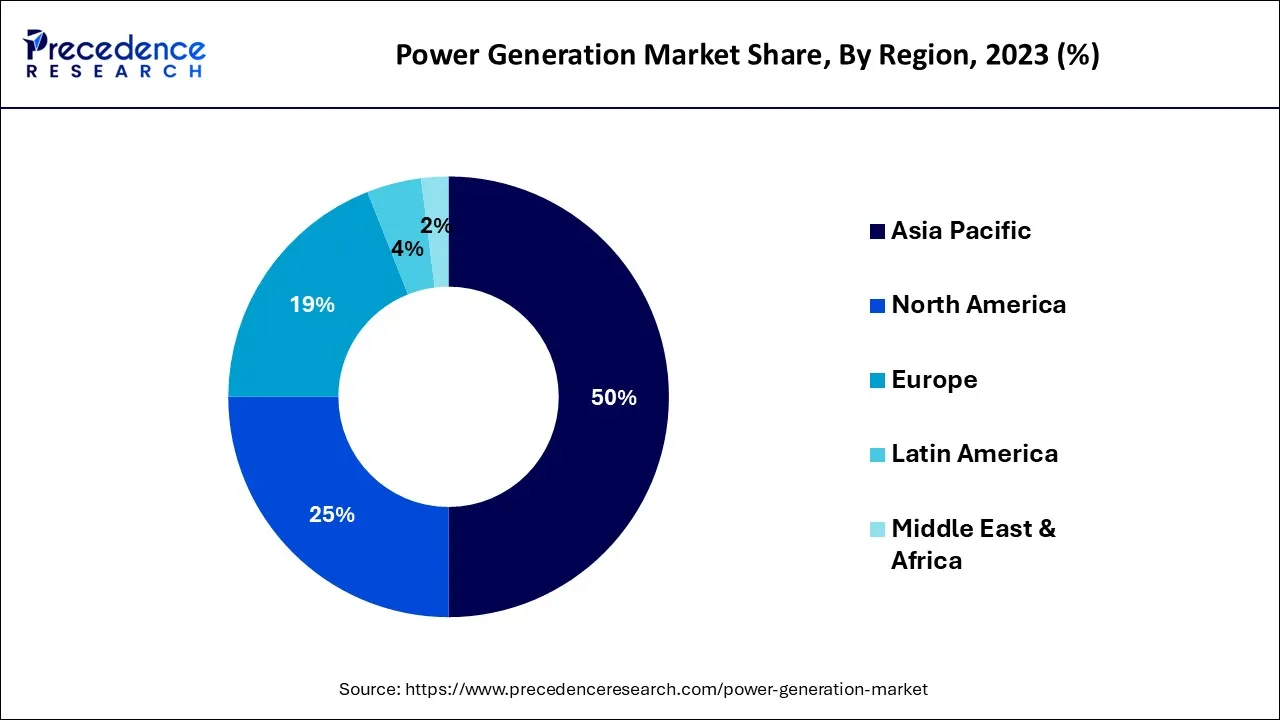
- Asia Pacific led the global market with the highest market share of 50% in 2025.
- By end-user, the endpoint security segment residential has the biggest market share of 36% in 2025.
- By type, the fossil fuel segment has held the highest market share of 57% in 2025.
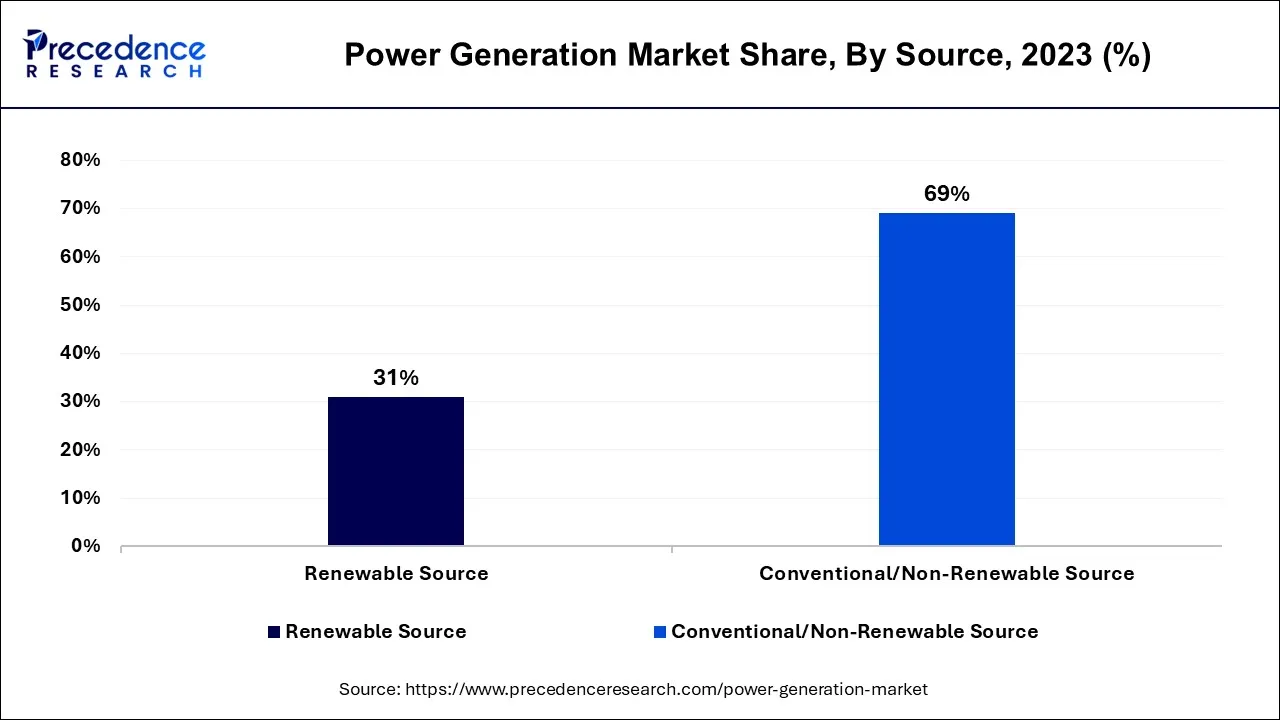
- By source, the non-renewable segment registered a maximum market share of 69% in 2025.
Strategic Overview of the Global Power Generation Industry
As electricity is one of the essential commodities of modern economies and is responsible for providing a rising share of energy services. The demand of electricity is expected to increase as a consequence of increased household incomes, with the increased rate of electrification of transport and heat, and surging demand for digitally connected devices and air conditioners.
Artificial Intelligence: The Next Growth Catalyst in Power Generation
Artificial Intelligence (AI) is transforming the power generation market by shifting systems from reactive to predictive and autonomous models. Major energy companies are leveraging AI-driven predictive maintenance to identify potential failures in turbines and generators before they occur, potentially cutting maintenance costs by up to 42% and reducing unplanned downtime by half.
Additionally, AI is critical for the integration of volatile renewable sources, using deep learning to forecast wind and solar output with high precision, which has been shown to increase the financial value of these energy sources by roughly 20%. Beyond generation, AI-powered smart grids are now acting as a "digital nervous system," coordinating real-time load balancing and autonomous trading across decentralized networks.
Power Generation Market Growth Factors
The power generation market has experienced a great demand due to various factors like increasing population with eventually increasing the number of consumers with rapid urbanization. The growing demand of electricity is expected to increase in the future due to the rising share of energy services. The economic growth of a nation is possible through the growth of its infrastructure in terms of power. It leads to the overall welfare of a country. Developing the existing power infrastructure and creating new power infrastructure is extremely important for the growth of an economy
Sustainable ways are gaining popularity to introduce affordable power in many nations across the globe especially in the developing nations. Constant efforts are being made by the government in the recent times to reduce power shortage and create a surplus by installing more grids and increasing the network of distribution. The number of investments made for power generation in the developed as well as the developing nations of the world has grown in the recent times and this is expected to play a significant role in the growth of the market.
- Increase in investment of various market players.
- Environmental sustainability is a major factor leading to an increased use of renewable source of energy for the development of power.
- Increasing population of various nations across the globe is another factor driving the growth of power generation market.
- Rapid urbanization is one of the major reasons creating more demand for electricity.
- Industrialization in the developing nations across the globe is having a positive impact on the power generation market.
- As the income of the consumers is increasing the amount of electricity consumed at the homes is also increasing.
- Technological advancements and development are expected to have a major impact on the demand of electricity across the globe.
- Fluctuating temperatures and changes in the season may have a major impact on the consumption of electricity as such weather conditions could increase the consumption of electricity at homes.
Power Generation Market Outlook
- Industry Growth Overview: The global power generation market is expected to grow significantly from 2025 to 2034, driven by rising worldwide electricity demand, rapid urbanization, and the urgent shift to sustainable energy sources to meet climate goals. This results in a dual focus on expanding both conventional and renewable capacities.
- Shift to Renewable Energy: The accelerating shift to renewable energy is a major trend. The integration of large-scale energy storage systems is crucial for grid stability. Another key trend is the digitalization of power systems, with AI and smart grid technologies enabling real-time monitoring and improved efficiency. Advanced nuclear technologies, like small modular reactors (SMRs), are also gaining interest.
- Global Expansion: The market is expanding worldwide, with significant opportunities in emerging regions. Increasing investments in local power infrastructure and supportive government policies across Asia-Pacific and Latin America are driving demand for new-generation solutions.
- Major Investors: Large energy and technology corporations such as General Electric (GE), Siemens AG, and Mitsubishi Power are primary investors. Investment is also significantly driven by government agencies and large-scale private investments in renewable energy projects.
- Startup Ecosystem: A vibrant startup ecosystem is focusing on disruptive innovations in software and specialized hardware. Startups are attracting funding for developing AI-driven energy management systems, sustainable materials for next-generation solar cells, and decentralized energy solutions.
Market Scope
| Report Coverage | Details |
| Market Size in 2025 | USD 2.27 Trillion |
| Market Size in 2026 | USD 2.45 Trillion |
| Market Size by 2035 | USD 4.87 Trillion |
| Growth Rate from 2026 to 2035 | CAGR of 7.93% |
| Largest Market | Asia Pacific |
| Base Year | 2025 |
| Forecast Period | 2026 to 2035 |
| Segments Covered | By Type, By Phases, and By Distribution Channel, and region |
| Regions Covered | North America, Europe, Asia-Pacific, Latin America, and Middle East & Africa |
Market Dynamics
Drivers
- Increase in population: The rapid increase in the population is serving as the key market driver for the power generation market. In the previous year, significant economic growth has been registered in many developing nations across the globe. The increasing population is one of the factors driving the growth of the global power generation market. Attractive growth opportunities and good potential will be provided by the nations like Mexico, Russia, Argentina, South Africa, South Korea, Indonesia, Thailand, Taiwan, China, Brazil, and India. The government policy is in these regions is supporting the growth of the global power generation market. Other favorable factors are the presence of renewable sources of energy production in most of these nations which have led to an increased amount of power generation through a sustainable source. The offered opportunities by the developing countries have given chance to future market players of the power generation market.
- Rise in urbanization: The rise in urbanization in developing countries have given the speedy increase in demand for electricity, which has eventually forced the respective governments across the world to revamp various initiatives to ensure adequate power supply on their country.
- Popularization of smart grid technologies: Smart grid technologies have gained popularity in the whole world due to the significant benefits in account to it efficiency and reliability. The surge in demand of smart grid has been expected as the major aspect that will affect the growth of the global power generation market in the upcoming years.
Key Market Challenges
- Old power generation infrastructure: The existing generation equipment and the system mostly rely on aging infrastructure they really struggle to meet the growing advance demand of electricity. The developing countries are especially suffering from infrastructure aging problems as the replacement requires high investment, so adding a significant inhibitor to the market.
- The decline in investment: The decline in investment in the power sectors is the biggest challenge in market growth. The investment in the coal-fired plant had already descended by 11% and the investment in gas-fired generation is affected by delays in gas-rich emerging economies.
Opportunities
- Conventional biomass combustion causes various environmental pollution and is primarily used in rural areas of most developing countries for various purposes like cooking and small agricultural activities. So to avoid the population hazards it has been the largest opportunity for the power generation market growth.
Segment Insights
Type Insights
The fossil fuel segment has dominated the power generation market in recent times with the maximum share in terms of the revenue generated through this type of power generation. On average, about 57% of the total share is held by the fossil fuel segment. The fastest compound annual growth rate will be registered by the solar segment in the anticipated time frame as this type of segment is gaining popularity due to several benefits offered by this type and the easy availability of solar energy will have a positive impact on the growth of this segment.
End-User Insights
The power generation market is segmented by end-user into Industrial, Commercial, Residential, and Transportation. As compared to all the other end users of electricity largest share is held by the residential segment in the power generation market and this accounts for 36% of the entire share in the market.
The fastest growth will be registered by the transport segment as the use of electricity in this segment has grown tremendously in recent times due to an increased need for transportation for various reasons. Industrial use of electricity in various sectors like the healthcare sector, chemical industries, food, and beverages industry, and manufacturing industries have shown significant growth and this is expected to be the case during the forecast period.
Source Insights
Based on the source, the non-renewable source segment holds a dominant position as compared to the other source and this accounts for 69% of the total share of the global power generation market. The highest compound annual growth rate will be registered by the renewable source of the power generation market.
Renewable sources provide constant energy and the use of advanced technologies like storage and carbon capture are expected to play a significant role in the growth of this market.
Grid Insights
Based on the type of grid used the on-grid segment has occupied the maximum market share of about 98% and it shall continue to grow during the forecast period. In the coming years there shall be an increase in the popularity of the off-grid segment and several favorable factors will influence the growth of this segment in the long run leading to a higher compound annual growth rate in the years to come.
Regional Insights
Asia Pacific Power Generation Market Size and Growth 2025 to 2034
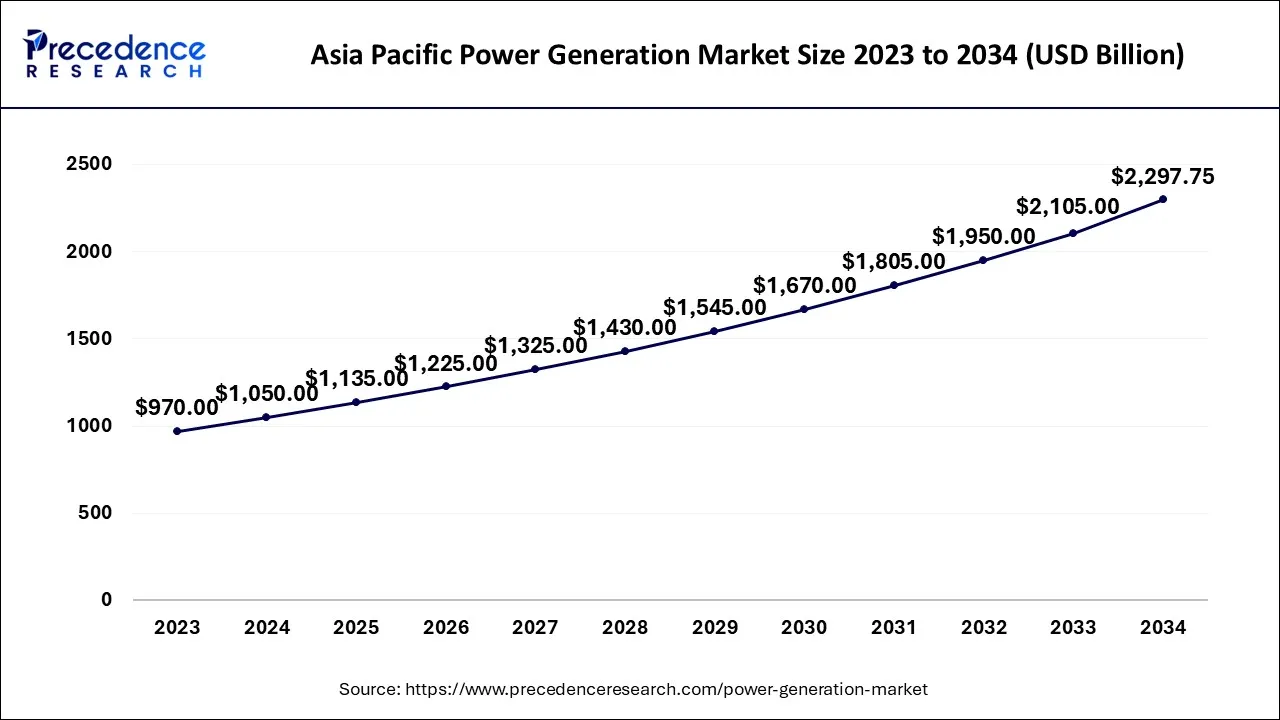
The Asia Pacific power generation market size is accounted for USD 1,135.00 billion in 2025 and is projected to be worth around USD 2,297.75 billion by 2034, poised to grow at a CAGR of 8.15% from 2025 to 2034.
What Makes Asia Pacific the Fastest-Growing Region in the Power Generation Market?
Asia Pacific dominated the power generation market due to rapid industrialization, urban expansion, and rising electricity demand driven by large and growing populations. Significant investments in renewable energy, grid modernization, and diversified power infrastructure, especially in China, India, and Southeast Asia, are accelerating capacity additions. Additionally, supportive government policies and increased private-sector involvement in clean, sustainable energy projects further sustain the region's strong growth momentum.
In the past maximum share was held by the Asia Pacific region as the amount of power generated in this region was maximum. The growth of this market has been increasing in European and North American nations. Africa and Middle East regions will show significant growth in the years to come. The government support received by the countries in the Asia Pacific region will lead to major improvements in various projects undertaken by the government. The growing demand for power generation will have a significant impact on developing the infrastructure required for new projects.
Renewable energy sources are being utilized in a sound manner and this is expected to play a significant role in the growth of the power generation market of the Asia Pacific region during the forecast period. The use of solar energy and wind energy for power generation in the Asia Pacific region is largely because a major part of its area comes under the equator. Such favorable conditions will have a significant impact on the growth of this market in the Asia Pacific region. Technological advancements in the North American region will lead to employing efficient power generation activities for the increasing demand.
How is North America contributing to the Power Generation Market?
North America's power generation industry is modernizing, diversifying, and investing in grid infrastructure, shifting from fossil fuels to renewable energy sources like solar, wind, and energy storage. This transition is driven by federal decarbonization goals, new regulations, and private sector investments in advanced technologies such as carbon capture. The U.S. is leading the market, fueled by sustainability initiatives and technological progress. Major trends include the prominence of solar and wind energy, the integration of energy storage for grid stability, and the continued use of natural gas. Large investments are being made in grid upgrades to improve resilience and support decentralized energy resources.
What Potentiates the Growth of the European Power Generation Market?
The market in Europe is driven by strict decarbonization targets and strong government incentives for renewable energy. The market is primarily propelled by substantial investments in offshore wind and solar photovoltaic technologies, along with a focus on improving grid flexibility and energy storage. The region emphasizes integrated energy systems and green hydrogen development to meet the goals of the European Green Deal. Leading companies invest heavily in smart grid technologies and carbon capture, utilization, and storage solutions to stay competitive and ensure a reliable, sustainable energy supply.
Germany Power Generation Market Trends
Germany is a leader in the power generation sector, driven by its renowned engineering expertise and the ambitious Energiewende policy. The country is a hub for R&D in wind and solar power, with a strong focus on integrating a high share of variable renewable energy into its grid. The market is significantly influenced by the planned phase-out of nuclear and coal power, which necessitates large investments in natural gas as a transition fuel, energy storage systems, and expanding its transmission network.
How is the Opportunistic Rise of Latin America in the Power Generation Market?
Latin America plays a unique role in the global power generation industry, driven by abundant natural resources such as hydroelectric potential, extensive solar irradiation, and increased investments in modernizing aging energy infrastructure. The region focuses on expanding electrification to rural areas and diversifying its energy mix to enhance energy security. Growth in the industrial sector and urbanization are increasing electricity demand and promoting renewable energy projects and regional power integration efforts.
Brazil Power Generation Market Trends
Brazil dominates the Latin American market, supported by major investments in large-scale hydroelectric projects, an increasing reliance on bioenergy from sugar cane, and growing wind and solar capacity. The demand for reliable electricity to support industry and the large population is driving the need for diverse energy sources. The market also benefits from government auctions for new projects and initiatives aimed at improving energy efficiency and grid stability.
What Factors Boost the Middle East & Africa Power Generation Market?
The market in the Middle East & Africa is expanding rapidly, driven by swift population growth, infrastructure development, and economic diversification into technology and industry sectors. Demand for large-scale solar PV and CSP projects remains high in the Middle East, while electrification rates are rising throughout Africa. Investments in advanced gas-fired power plants and modern grid technologies are boosting growth, along with a growing focus on energy efficiency and sustainability.
UAE Power Generation Market Trends
The UAE plays a key role in the power generation industry because of its ambitious technological and sustainable energy goals. The country invests heavily in large solar parks, including the well-known Mohammed bin Rashid Al Maktoum Solar Park in Dubai, and is exploring nuclear power through the Barakah plant. As a regional hub for innovation and technology, it attracts investments in data centers and high-efficiency gas turbines, accelerating the adoption of advanced power solutions.
Value Chain Analysis
- Fuel Procurement / Primary Energy Acquisition
This involves exploring, extracting, processing, and transporting energy sources such as fossil fuels or harnessing renewable energy.
Key Players: ExxonMobil, Chevron, and NextEra Energy. - Manufacturing and Production
Here, energy sources are converted into electricity at power plants using various technologies.
Key Players: NextEra Energy, Duke Energy, GE Renewable, and Siemens Gamesa. - Transmission
Electricity is sent over long distances through high-voltage lines and substations to minimize energy loss.
Key Players: PJM Interconnection, ERCOT, and CAISO. - Supply / Retail & Customer Services
This involves selling electricity to consumers, including billing and customer support, with evolving services like energy monitoring.
Key Players: Southern Company, TXU Energy Retail Co, LLC, and Constellation NewEnergy, Inc.
Top Companies in the Power Generation Market
- Enel SpA: Global utility leader with a massive focus on renewable energy (hydro, wind, solar) and smart grid technology.
- Electricite De France SA (EDF): Large European producer with a diverse mix, heavily reliant on nuclear power, alongside thermal and renewables.
- State Power Investment Corporation (SPIC): One of China's top state-owned generators, covering coal, hydro, wind, solar, and nuclear with a focus on clean energy.
- E.ON SE: German utility focusing primarily on energy networks (power distribution grids) and integrated customer solutions.
- Engie: Global group committed to energy transition, with generation focusing on natural gas and renewables, alongside specialized energy services.
Other Key Players
- Huaneng Power International, Inc.
- Exelon Corp
- Endesa SA
- Datang International Power Generation Company Limited
- Inter RAO UES
- Power Grid Corporation of India Limited
- NTPC Limited
- Tata Power
- Adani Power
- NHPC Limited
- Guodian Corporation
- Hokkaido Electric Power Company
- Tohoku Electric Power Co
- AGL Energy
- EDF Energy
- RWE
- Scottish Power
- Centrica
Recent Developments
- In March 2025, General Electric (GE) and Vestas Wind Systems announced a major strategic collaboration to merge their renewable energy businesses, creating a new global leader in the wind sector. The collaboration that enables allowance of supply, installation, and commission of the turbines. (Source: vestas.com)
- In December 2025, NLC India and PTC India signed an agreement to develop 2,000 MW of renewable energy projects, focusing on solar, wind, and battery storage. The agreement follows the Memorandum of Understanding (MoU). (Source: solarquarter.com)
- Smart power India and Adani solar signed a memorandum of understanding which is a non-commercial and non-financial agreement which aims at promoting the use of solar panels for the rural areas in India.
- Commercial operations for a power generation plant located in Rajasthan which is about 80 megawatts shall provide a total of 160 megawatts and this announcement was made in the year 2021.
- Assam government entered into a collaboration with SJVN in 2022 for developing the projects of renewable energy and hydro energy for this state.
- The government of UK announcement in the year 2021 of making an investment of U.S. dollar 1.2 billion by using private investments and public investments for the green project undertaken by India and they shall support in reaching this nation's target of gaining 450 gigawatts of renewable energy by the end of 2030.
Segments Covered in the Report
By Type
- Hydroelectricity
- Fossil Fuel Electricity
- Nuclear Electricity
- Solar Electricity
- Wind Electricity
- Geothermal Electricity
- Biomass Electricity
- Other Electricity
By End-User
- Industrial
- Commercial
- Residential
- Transportation
By Source
- Conventional/Non-Renewable Source
- Renewable Source
By Grid
- Off Grid
- On Grid
By Region
- North America
- Europe
- Asia-Pacific
- Latin America
- The Middle East and Africa
For inquiries regarding discounts, bulk purchases, or customization requests, please contact us at sales@precedenceresearch.com
Frequently Asked Questions





Ask For Sample
No cookie-cutter, only authentic analysis – take the 1st step to become a Precedence Research client
 Get a Sample




 sales@precedenceresearch.com
 Schedule a Meeting
