



Cogeneration Equipment Market Size, Key Companies, Company Market Share, Power Generation Capacity, Energy Consumption, Pricing Trends, Investment Analysis, Competitive Positioning, and Demand Forecast
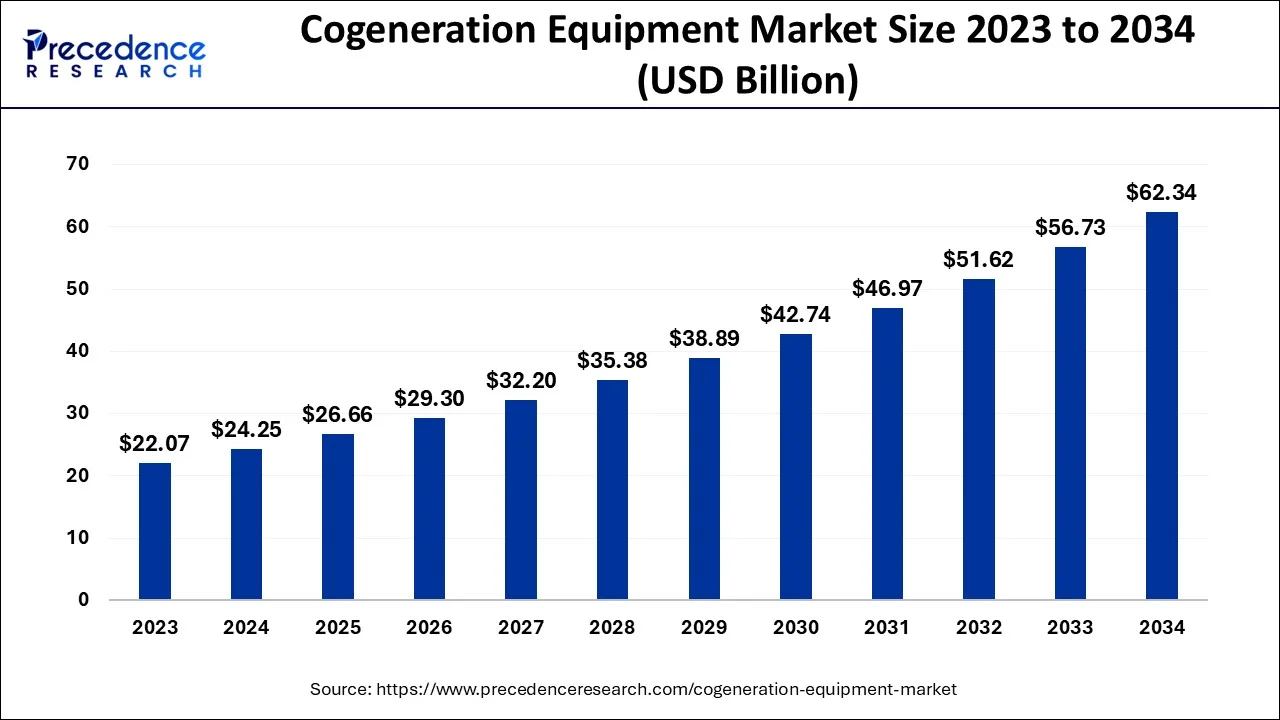
The global cogeneration equipment market size accounted for USD 29.30 billion in 2026, grew to USD 29.30 billion in 2025 and is predicted to surpass around USD 66.27 billion by 2035, representing a healthy CAGR of 9.90% between 2026 and 2035. The North America cogeneration equipment market size is calculated at USD 9.94 billion in 2025 and is expected to grow at a fastest CAGR of 10.02% during the forecast year.
Source: https://www.precedenceresearch.com/cogeneration-equipment-market
 Get a Sample
 Table Of Content


Cogeneration Equipment Market Size and Forecast 2026 to 2035
The global cogeneration equipment market size is estimated at USD 29.30 billion in 2026 and is anticipated to reach around USD 66.27 billion by 2035, expanding at a CAGR of 9.53% from 2026 to 2035. The cogeneration equipment market is driven by increasing demand for efficient power generation solutions that can reduce the emission of pollutants.
Cogeneration Equipment Market Key Takeaways
- By Region, North America held a majority revenue share of the cogeneration equipment market in 2025.
- By Region, Asia Pacific is expected to grow at the fastest CAGR in the market during the forecast period.
- By fuel, the natural gas segment held a dominant position in the market in 2025.
- By fuel, the biogas segment is expected to grow at the fastest CAGR in the market between 2026 and 2035.
- By capacity, the high capacity segment accounted for a considerable revenue in the market in 2025.
- By capacity, the medium capacity segment is expected to grow with the highest CAGR in the market during the studied years.
- By technology, the steam turbine segment led the global market in 2025.
- By technology, the gas turbine segment is expected to expand rapidly in the market with a CAGR in the coming years.
- By application, the commercial segment registered its dominance over the global market in 2025.
- By application, the industrial segment is expected to witness the fastest growth in the market with a CAGR over the forecast period.
AI in the Market
AI for cogeneration systems assists in planning and operating cogeneration processes for maximizing efficiency and reliability via online data analysis. Operational efficiency is enhanced by predictive maintenance, thereby reducing downtime and increasing asset life. Systems are automated to respond to energy demands while ensuring steady power output. Simulations are performed by AI to identify potential scenarios regarding the configuration of the system and its operation strategies that would improve Combined Heat and Power solutions. Developers manage to save on fuel consumption, maintenance costs, and operations through this intervention. For energy management, AI would integrate miscellaneous data sources for scenario-based planning.
Market Overview
This system is mainly related to the utilization of energy in two different forms at the same time which provides more benefits than using a single energy system. The utilization of thermal energy and mechanical energy proves to be cost effective and suitable for the environment when used efficiently in a responsible manner. The devices that help to utilize the various energies in the cogeneration equipment like the compressor pump, steam turbines, motor air compressor, gas turbines and combustion chamber are said to be the cogeneration equipments. Usually, the same manufacturing plant is utilized in order to produce energy and reuse the heat by utilizing steam turbine and then followed by a gas turbine. It helps in production of more energy by utilizing less space and equipments which helps to produce more revenue over a period of time. With the help of a cogeneration equipment the utilization of energy is done up to 90%. Around 40% of the total energy is stored in the form of electrical energy. Around 50% of the total energy is converted in the form of heat. The remaining 10% of energy might be lost during the process.
The major equipments that are utilized in this code generation system are engines, steam turbines, gas turbines, combustion chamber, stationary nozzle, rotor, rigged and rotating pallets, generator, condenser, boiler, pump and others. These various equipments play a very important role in the cogeneration equipment which help to capture the different type of energy is produced end process it in a format that can be utilized in order to perform productive work. This system it's finding greater acceptance by numerous manufacturers as a result of the increasing global climate change and pollution which is created by the factories during the manufacturing process. In order to deal with the various environmental concerns a rapid demand for the cogeneration equipment is observed in the current market which will help it to produce a considerable revenue during the forecast period. In the process of cogeneration is very cost effective as compared to the individual generation of energy which requires greater use of equipments and manpower. The supply of energy is secured to a great extent as a result of its accountability and maximum utility which helps to boost the demand for the cogeneration equipment during the forecast period.
The rising demand of gas infrastructure around the world has boosted the demand for this advanced technology which proves to be a major factor that will facilitate growth. Moreover, the high cost which is associated with the cogeneration equipment and its development proves to be a great challenge for the developing economies. The regulatory framework which is involved in the cogeneration equipment it's projected to be a restraining factor during the growth phase of the market. Lack of skilled labor force in order to deal with the advanced technology hampers the growth of the market.
Cogeneration Equipment Market Growth Factors
- The rising demand for sustainable development and recycling of energy resources has boosted the demand for cogeneration equipments.
- The rapid increase in the gas infrastructure all over the world has boosted the need to have a cogeneration equipment which helps to produce multiple formats of energy in order to increase the productivity of a single plant which is used for generation of energy.
- The rapid research and development which is carried out by the key market players in order to increase the production of energy by combining the systems to form a cogeneration pattern has proved to be a driving force for the growth of the market.
- As the world is increasingly turning toward sustainability and energy recycling, cogeneration systems are witnessing growing adoption.
- With the extension of gas infrastructure across the world, it has provided and continues to provide help for efficient energy generation within various industries.
- Incentives and policies from governments that promote solutions with renewable and efficient energies see deployment.
- Market growth is gaining momentum, with ever-increasing demand for electricity arising from increased adoption of electric vehicles and industrialization.
- R&D induced advancements set upon hybrid and multi-fuel systems to create efficiency and economy will strongly push the penetration of the market.
The increase in demand of electricity as a result of the rapid use of electric vehicles during the present times has boosted the demand for cogeneration equipment which helps to increase the production of energy in order to meet the requirement. The infrastructure which is required in order to perform cogeneration it's quite expensive, hence cannot be afforded by the developing nations. On the other hand, the developed nations have shown a tremendous growth in the market as a result of rapid adoption of cogeneration equipment. The conversion process of a particular form of energy requires a number of equipments which imposes an additional cost on the manufacturer.
Various lucrative offers and schemes which are proposed by the government in order to encourage the adoption of cogeneration equipment in order to meet the current demand of energy. The rapid changes observed in the global environment has also boosted the demand for cogeneration equipment in order to reduce the combustion and utilization of fossil fuels. The various major types of fuels which are produced with the help of this system are diesel, natural gas and biogas. The other types of energy produced include thermal energy, solar energy, wind energy and electrical energy. The developed have shown a tremendous transformation by adopting renewable sources of energy on a large scale in order to deal with the rapidly growing climate change and environmental pollution.
The production of energy with the help of a cogeneration equipment is very cost effective and helps to produce a greater output with minimum use of energy and space. This helps the manufacturers to increase their revenue returns over a period of time. The occurrence of the pandemic had a significant effect on the growth of the cogeneration equipment as a result of the strict lockdown and the stricted movements which were imposed by the government all over the world in order to control the spread of infection. the transportation facilities were greatly hampered which affected the transport of energy resources Who stuff as a result of the restricted movements the demand for fuel energy Was hampered to a great extent.
Market Scope
| Report Coverage | Details |
| Market Size in 2026 | USD 29.30 Billion |
| Market Size by 2035 | USD 66.27 Billion |
| Growth Rate from 2026 to 2035 | CAGR of 9.53% |
| Base Year | 2025 |
| Forecast Period | 2026 to 2035 |
| Segments Covered | Fuel, Capacity, Technology, Application, and Geography |
Market Dynamics
Driver
Rising Demand for Energy-Efficient Combined Heat and Power Systems
The growing demand for energy-efficient power, particularly useful heat, generation systems. Industrial energy use is growing, and this is driving interest around co-generation technologies to lower operating costs. Governments around the world are encouraging the use of cogeneration through their regulatory frameworks, incentives, and decarbonization policies.
Restraint
High Initial Capital Costs and Complex System Integration
Project development costs rise as the systems' complexity grows and engineering demands place new stresses. Atmospheric COâ‚‚ emission reduction is often a financial constraint for small and medium-sized enterprises. In some applications, investments may be deterred due to long payback periods. Price volatility of the fuels affects the cost-effectiveness of cogeneration systems.
Opportunity
Expansion of Renewable Fuel-Based and Distributed Cogeneration Systems
The increasing investment in distributed energy generation is turning CHP systems into more commonly requested systems. The development of the smart grid is opening up new avenues in energy management. The market is growing due to increased demand for resilient power solutions in commercial and industrial facilities.
Segmental Insights
Fuel Insights
The biogas segment is expected to witness strong growth during the forecast period due to governments' initiatives to promote renewable energy and waste-to-energy. Cogeneration systems using biogas aid in cutting GHG emissions and also enhance waste management efficiency. Growing investments in agricultural and municipal waste processing plants boost demand for waste. The technological developments are increasingly enhancing the efficiency of the biogas-fuelled CHP technology.
The residential segment is projected to grow at a notable pace. Homeowners are being encouraged to cut down electricity bills by using cogeneration technologies because of the increasing price of electricity. Incentives are offered by the government for building residential buildings that are more efficient in energy use, which helps with installation. A growing demand for reliable backup has helped spur adoption of systems.
The coal segment is expected to witness steady growth during the forecast period because of the ready availability of coal resources in these areas. Preliminary utilization of coal-based CHP systems continues to be a cost-effective way of energy generation in the developing economies. Upgrading of plant equipment, particularly those that are coal-fired, includes the installation of efficient cogeneration systems. Compliance with operational requirements is being supplemented by improvements in emission control technology.
Capacity Insights
The medium capacity segment is expected to grow significantly during the forecast period as it is backed by an increase in requirement for commercial buildings, hospitals, universities, and medium-size industrial units. Such systems offer the best compromise between the costs incurred and the amount of energy saved. Demand growth in the decentralized power industry enables the market to activate and grow. Medium-capacity CHP units are versatile units that can be used in a variety of applications.
On the basis of capacity, the high-capacity segment has dominated the sector as a result of its feasibility and cost-effective feature. High productivity is the key requirement of any gas or fuel in order to reduce the total investment made on the production process.
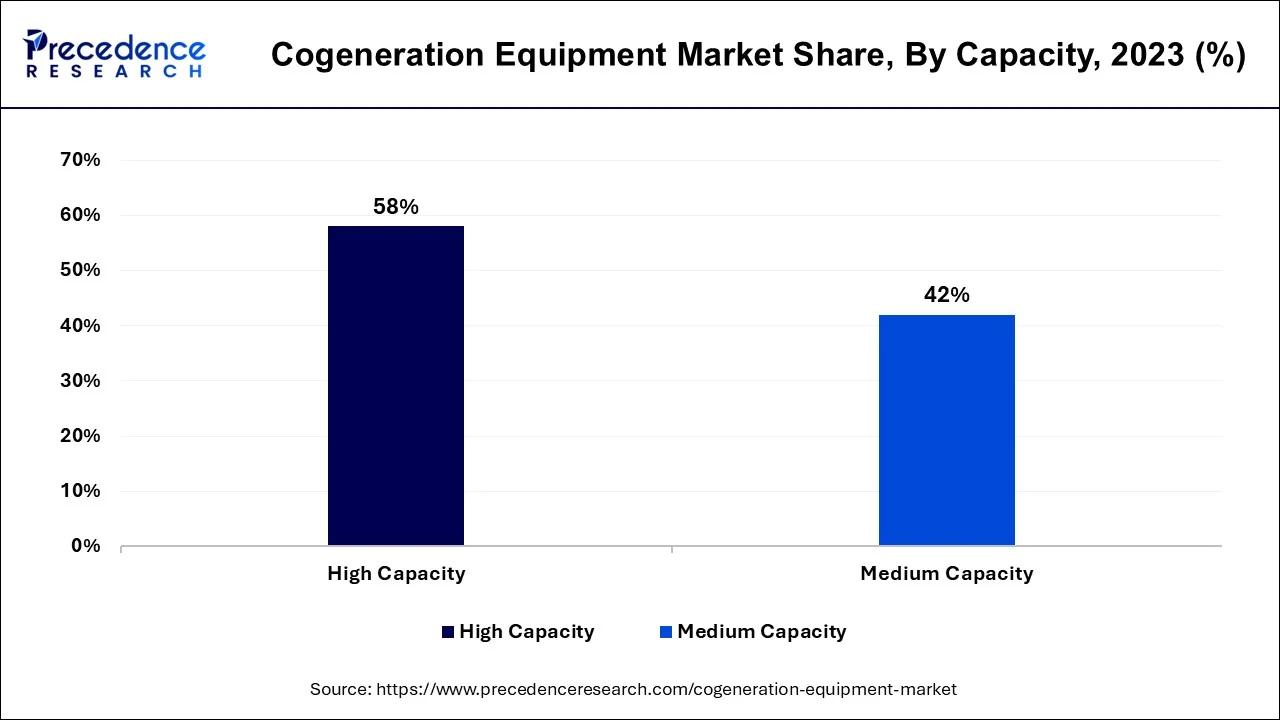
A higher capacity fuel is it required in the paper mills and pulp industry where a huge production in terms of quantity is present. The cement industry forms another sector very high-capacity fuel is very essential to be used. On the other hand, the medium capacity type is attributed to show a steady rise as a result of its cost effectiveness.
Technology Insights
On the basis of technology, the steam turbines have dominated the segment as a result of its huge contribution to the global market of cogeneration equipment. As a result of the increasing demand for steam turbines all over the world the market is expected to show a further growth during the future.
The gas turbines prove to be the next segment which has shown a considerable growth as a result of its extensive demand in the market. The combined steam turbines is also expected to perform decently in the global market.
The combined steam segment is projected to grow at a healthy pace owing to its high thermal efficiency and can be used in district heating and larger industries. The technology can be used to generate more power from waste heat. Adoption is driven by an increase in demand for industrial energy optimization. Additional investments in utility-scale CHP projects make it a significant contributor to demand.
The reciprocating engine segment is expected to experience considerable growth during the forecast period. They have a very quick response to changing energy requirements, and therefore are appropriate for distributed generation. Installation is cheaper than larger turbine systems, so turning the idea into reality is encouraged. An ongoing evolution of technology is maximizing fuel economy and reducing emissions.
Application Insights
The residential segment is expected to grow steadily, driven by increasing adoption of energy-efficient systems for home heating and power generation. Residential CHP installations are incentivised by raising awareness about reducing carbon emissions. Sustainable housing projects are financed by government subsidies that promote market demand. With the rising price of electricity, many homeowners are looking into investing in efficient energy solutions.
On the basis of application, the commercial sector has shown a tremendous growth and hence dominated the segment. With the increasing demand and supply of goods a rapid increase is experienced in the commercial sector. the industrial sector forms the next segment which has shown a considerable growth as a result of the rapid manufacturing process which takes place with the increasing demand of goods.
The industrial sector produces a huge amount of energy which can be reused in multiple forms by the industry itself. The cogeneration equipments are used on a large scale in this sector in order to minimize the amount of pollution spread in the environment and maximize its productivity. The residential sector has also shown a steady rise as a result of the increasing awareness among the people regarding the global climate change. Multiple cogeneration equipments are utilized in the modern residential zones in order to fulfill the power demands of the people.
Regional Insights
Why Did North America Dominate the Cogeneration Equipment Market?
North America dominated the global market in 2025 due to the advanced level of energy infrastructure and CHP technologies. Continuous deployment thanks to strong industrial and commercial demand. Government rules are set in favor of investments in energy-saving systems. There are well-established natural gas distribution facilities within the study area for CHP. There is a strengthening focus on lowering carbon emissions, which is adding to the adoption.
U.S. Cogeneration Equipment Market Size and Growth 2024 to 2034
U.S. market is anticipated to grow significantly, attributed to increasing investments in distributed energy systems and industrial energy efficiency. The more electric power required, the greater the push for implementation of CHP in commercial and manufacturing settings. Government policies that encourage decarbonisation encourage more efficient power production technologies. Modernizing inadequate electrical facilities promotes the replacement of equipment.
The U.S. cogeneration equipment market size is evaluated at USD 7.65 billion in 2026 and is predicted to be worth around USD 17.01 billion by 2035, rising at a CAGR of 9.35% from 2026 to 2035.
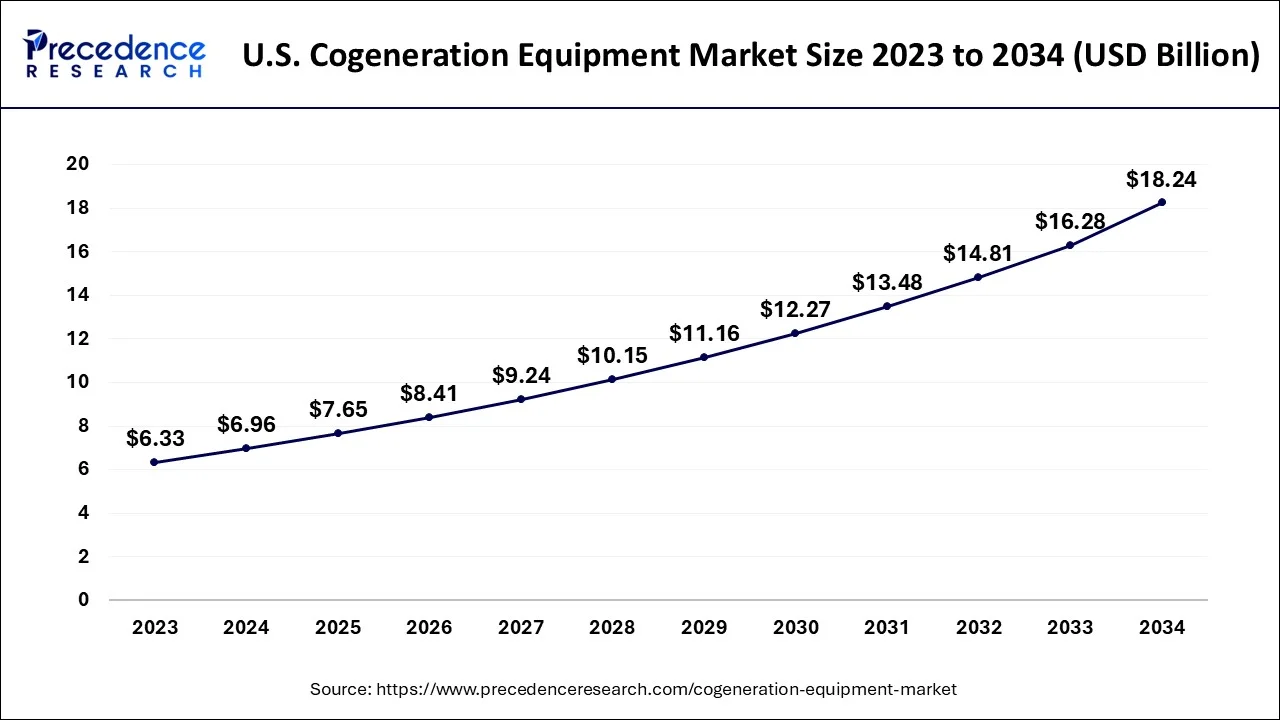
On the basis of geography, North American market has dominated the segment as a result of its rapid development and industrialization. with the increasing population the demand and supply chain of goods has also rapidly increased. This leads to the utilization of a huge amount of energy which needs to be fulfilled by the use of cogeneration equipments in order to avoid further global warming. With the rapid use of cogeneration equipment in the manufacturing units multiple sources of energy are created which are utilized by the industries itself.
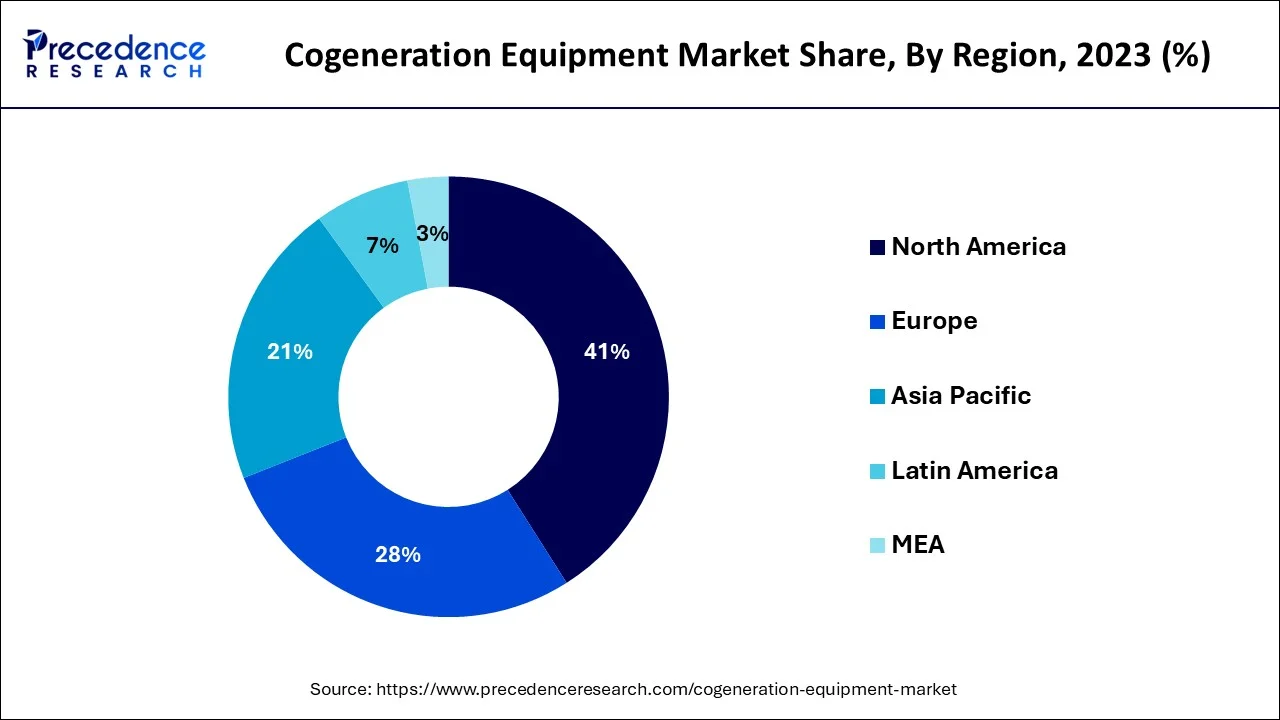
The European market has also shown a considerable growth as a result of its rapid urbanization and industrialization. The use of cogeneration equipment in the various sectors has helped to boost the demand for cogeneration equipment. The Asia Pacific region which is developing rapidly has also contributed considerably as a result of the increasing industrialization in this region.
Asia Pacific is Undergoing the Fastest Growth in the Cogeneration Equipment Market
Asia Pacific is expected to grow at the fastest rate in the market as the region is experiencing rapid industrialisation and urbanisation within emerging economies. As electricity demand has been increasing, investments in decentralized electricity generation are taking place. Energy efficiency measures are encouraged by the promotion of policies and the availability of energy infrastructure. Growth of manufacturing leads to a need for a reliable energy supply.
China Market Trends
China's cogeneration equipment market is anticipated to grow significantly, due to the increasing industrial output and the government's push towards energy efficiency. Demand for reliable electricity and heating systems is growing due to rapid urbanisation. District heating investments are contributing to the deployment of CHP. Further expansion of natural gas use further supports market demand.
Advancements in the Cogeneration Equipment Market in Europe
Europe is expected to witness significant market growth throughout the forecast period. Governments keep on providing favorable regulations and incentives to support the deployment of CHPs. Hybrid cogeneration systems are facilitated by increased integration of renewables. Modernisation of district heating infrastructure is able to assist equipment demand. The introduction of technology improves system efficiency and environmental performance.
Germany Market Trends
Germany market is anticipated to grow significantly, with its effectual power generating technologies and firm governmental support for the energy transition. CHP investments in the industrial sector continue in the country in the interest of reducing other energy costs. Advanced cogeneration technologies can find applications in the context of a growing share of renewables in electricity generation. Technology is continually new, enhancing the efficiency of the system.
Key Trends in the Cogeneration Equipment Market in Latin America
Latin America is expected to witness significant growth in the market driven by a growing push towards industrial energy efficiency and infrastructure modernization. Growth in manufacturing activity adds to the demand for CHP systems. Governments invest in decentralized and reliable energy. A high electricity demand promotes the use of efficient power generation technologies.
Brazil Market Trends
Brazil cogeneration equipment market is anticipated to grow significantly. Biomass-based CHP is enabled by the outstanding performance of the country's agriculture sector. Several initiatives to promote the use of renewable energy are put in place by the government and support market growth. The industry is investing in effective energy systems to decrease operational costs. Increased electricity demand is beneficial for distributed generation projects.
Growth of the Middle East and Africa in the Cogeneration Equipment Market
The Middle East and Africa region is expected to witness significant growth in the market led by industrial diversification and development of energy infrastructure. Investing in oil, gas, and petrochemical businesses encourages CHP adoption. Energy efficiency in industry is encouraged through government measures. The district cooling and district heating market expands with the increase in investments in the district heating and district cooling infrastructure.
Saudi Arabia Market Trends
Saudi Arabia market is anticipated to grow significantly. As investments are made in petrochemical and manufacturing industries, a primary need is for CHP systems. The country's priority on energy efficiency supports the implementation of energy equipment. Developing more natural gas production supports market adoption. Advanced cogeneration is promoted by more investment in smart industrial facilities.
Value Chain Analysis Cogeneration Equipment Market
- Resource Extraction: To achieve reliable input of energy and essential import of fuel, primary fuels for the cogeneration systems include natural gas, coal, biomass, and biogas from suppliers.
- Key Players: ExxonMobil, Chevron Corporation, TotalEnergies
- Power Generation: By combining CHP technologies, cogeneration equipment produces both useful heat and electricity, enhancing fuel efficiency, reducing operating costs, and greenhouse gas (GHG) emissions.
- Key Players: Siemens Energy, Kawasaki Heavy Industries Ltd., Mitsubishi Heavy Industries
- Distribution Network Management: Local energy grids and district heating systems efficiently deliver generated electricity and thermal energy, ensuring reliable energy supplies for industrial, commercial, and residential consumers.
- Key Players: Schneider Electric, ABB Ltd., Eaton Corporation plc
Competitive Landscape
Energy equipment manufacturers and CHP technology providers are key players in the cogeneration equipment market. Global players include Tecogen Inc., Kawasaki Heavy Industries Ltd., Robert Bosch GmbH, Siemens AG, and General Electric. Companies pay attention to product innovation, energy efficiency, and emission reduction. Advanced CHP technologies are a part of portfolios, which helps reinforce the market position.
In addition, partnerships and a global distribution list are used for companies to expand its develop. Their investments are in systems of energy management for the digital era and in those compatible with renewable fuels. The growth is expected to continue to be competitive, driven by the growing interest in efficient distributed power generation.
Cogeneration Equipment Market Companies
- Tecogen
- Kawasaki heavy industries Ltd
- Robert BOSCH Gmbh
- Siemens
- General Electric
- Clarke Energy
- 2G Energy AG
- Sundrop Fuels Inc.
- Mitsubishi heavy industries Ltd
- A.B. HOLDING S.P.A.
Recent Development
- In July 2025, Mitsubishi Heavy Industries launched the SGP M450, a joint gas cogeneration system with Toho Gas, capable of hydrogen co-firing at 15 vol% and 450kW power output.
https://www.mhi.com/news/25070402.html - In December 2024, the UNDP in Ukraine provided six gas-piston cogeneration units to Kharkiv as part of the Green Energy Recovery Programme, supported by Norway, Sweden, and the EU.
https://www.undp.org/ukraine/press-releases/ukraine-receives-gas-piston-cogeneration-units-support-kharkivs-critical-energy-needs
Segments Covered in the Report
By Fuel
- Natural Gas
- Biogas
- Residential
- Coal
By Capacity
- High Capacity
- Medium Capacity
By Technology
- Steam Turbine
- Combined Steam
- Reciprocating Engine
- Gas Turbine
By Application
- Commercial
- Industrial
- Residential
By Geography
- North America
- Europe
- Asia-Pacific
- Latin America
- Middle East & Africa (MEA)
For inquiries regarding discounts, bulk purchases, or customization requests, please contact us at sales@precedenceresearch.com
Frequently Asked Questions





Ask For Sample
No cookie-cutter, only authentic analysis – take the 1st step to become a Precedence Research client
 Get a Sample




 sales@precedenceresearch.com
 Schedule a Meeting
