



Dental Services Market Size, Key Companies, Company Production Capacity, Patient Volume, Treatment Adoption Rates, Pricing Analysis, Regulatory Landscape, Clinical Trial Trends, Market Share, and Demand Forecast
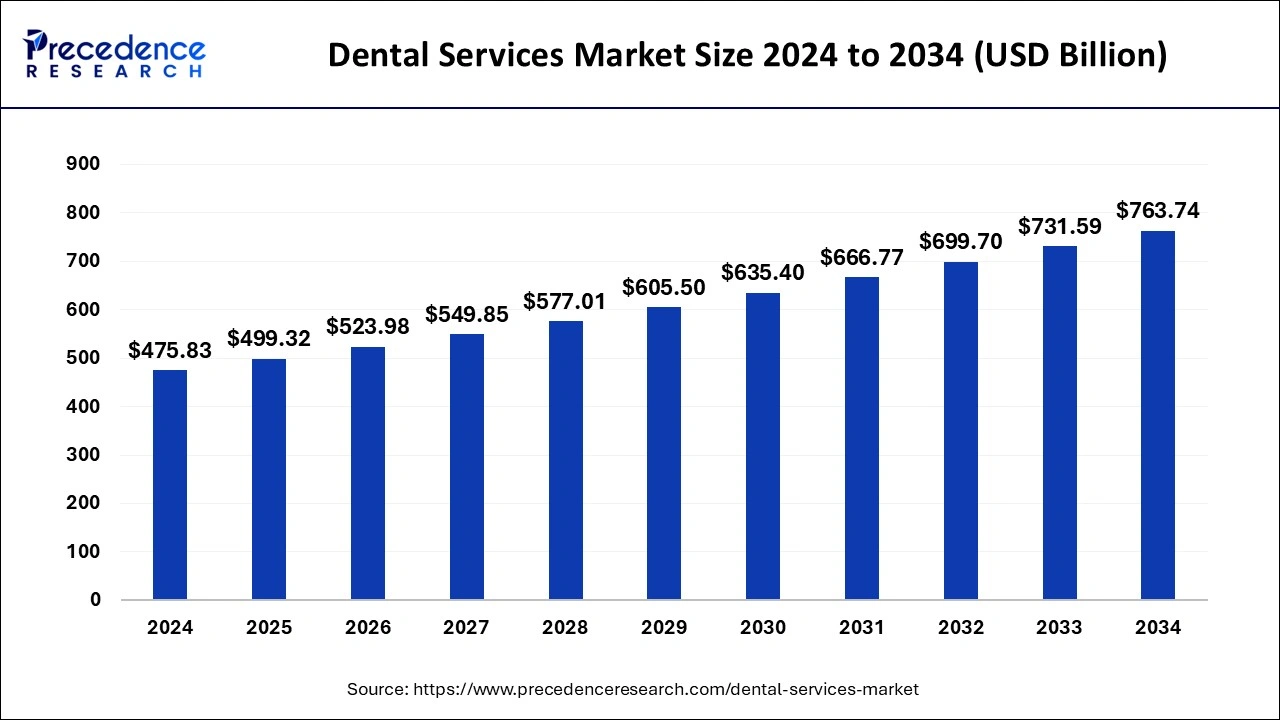
The global Dental Services Market was valued at USD 523.98 billion in 2026 and is projected to reach USD 795.72 billion by 2035, expanding at a CAGR of 4.77% from 2026 to 2035. Market growth is driven by the rising prevalence of oral diseases, increasing demand for cosmetic and restorative dental procedures, and rapid adoption of digital dentistry technologies such as AI-powered diagnostics, CAD/CAM systems, 3D imaging, and teledentistry. Growing oral health awareness, expanding dental tourism, and investments in advanced dental infrastructure are further supporting global market expansion.
Source: https://www.precedenceresearch.com/dental-services-market
 Get a Sample
 Table Of Content


What Is Driving the Growth of the Dental Services Market?
The global dental services market size was valued at USD 499.32 billion in 2025 and is projected to grow from USD 523.98 billion in 2026 to USD 795.72 billion by 2035, registering a CAGR of 4.77% from 2026 to 2035. The market is expanding steadily, driven by rising oral disease prevalence, increasing demand for cosmetic dental procedures, and the adoption of digital dentistry technologies.
Dental Services Market Key Takeaways
- North America dominated the market with a major market share of 46% in 2025.
- Asia Pacific is expected to grow at the fastest CAGR between 2026 and 2035.
- By procedure, the non-cosmetic dentistry segment contributed the highest market share in 2025.
- By procedure, the cosmetic dentistry segment is growing at a strong CAGR between 2026 and 2035.
- By service, the oral surgery segment held a major market share in 2025.
- By service, the orthodontics & prosthodontics segment is expected to expand at a notable CAGR from 2026 to 2035.
- By end user, the dental clinics segment generated the biggest market share in 2025.
- By end user, the hospitals segment is expanding at the fastest CAGR between 2026 and 2035.
Global Dental Services Market Overview
The dental services market involves the diagnosis, prevention, and treatment of oral diseases, tooth loss, and structural defects. This market generates revenue from clinics and practitioners and is categorized into three main areas, including preventive care for maintaining oral hygiene, restorative treatments like root canals and dentures for repairing damage, and cosmetic procedures such as implants and teeth whitening to enhance appearance. The growth of this market is driven by the increasing prevalence of oral diseases, advancements in technology, and a heightened consumer focus on aesthetic procedures, which fuel the demand for routine care and improved treatment precision.
How is AI Transforming the Dental Services Market?
Artificial Intelligence (AI) is revolutionizing the global market by improving precision in X-ray and 3D image analysis, assisting in treatment planning, and automating administrative tasks. AI algorithms are shifting dentistry from reactive, human-reliant assessments to highly precise, data-driven workflows. For instance, AI can instantly analyze dental radiographs and intraoral scans to detect early signs of cavities, gum disease, and anatomical irregularities, often identifying issues that a human eye might overlook. AI is widely used in orthodontics and implantology to model precise changes before operations commence.
Major Trends in the Dental Services Market
- Transformation of Workflows with AI and CAD/CAM: AI-assisted diagnostics help detect early signs of decay and gum disease, allowing for precise orthodontic treatment planning. Technologies like 3D printing and CAD/CAM enable same-day crowns, veneers, and aligners, leading to increased investment in digital workflows that enhance treatment accuracy and patient convenience.
- Growing Demand for Cosmetic and Restorative Dentistry: With an increased focus on aesthetics driven by social media and an aging population, cosmetic procedures are in high demand. Invisible orthodontics are becoming popular among adults and teens, replacing traditional metal braces. Lasers are also being used more frequently for pain-free gum sculpting, cavity removal, and accelerated teeth whitening.
- Consolidation and the Rise of Dental Service Organizations (DSOs): The market is experiencing a shift towards corporate consolidation and the establishment of organized dental chains. DSOs handle the business and administrative aspects of dental clinics, allowing dentists to focus on clinical care while scaling operations, standardizing treatment, and expanding access to specialized procedures.
- The Shift toward Proactive Oral Health: As awareness of oral hygiene increases, the focus is shifting toward convenience and early, remote intervention. Teledentistry platforms are being utilized for video consultations, reducing the need for in-office visits and allowing for preventative care rather than only reacting to emergencies.
Dental Services Market Growth Factors
The growing prevalence of dental caries and other oral diseases among the global population is driving the demand for the dental services across the globe. According to the data published by the FDI World Dental Federation, in 2015, around 3.5 billion people were suffering from some kind of oral diseases across the globe. The most common oral health condition was the untreated decay of permanent teeth. The various other factors that drive the market include the rising popularity of dental tourism, increasing demand for the cosmetic dentistry, growing dental implants, and technological advancements in dental services.
The growing awareness regarding oral health among the population, rising disposable income, and rising investments in developing healthcare infrastructure are the key factors responsible for the growth of the dental services market globally. The surging importance of dental support organizations is playing an important role in altering the delivery model of the dental services. The growth of various dental support organizations has significantly fostered the in-house dental services. Dental support organizations are centers that make contracts with the dental service providers and offers management services to provide non-clinical dental services to the consumers. According to the American Dental Association, around 16.3% of the dentists of US were partnered with dental support organizations in 2017. The introduction of invisible teeth braces or aligners have gained rapid traction among the consumers. Moreover, the growing concerns among the young population regarding their aesthetic appearances have encouraged the growth of the global dental services market.
Market Outlook
- Industry growth Overview: The demand for the dental services industry is being driven by developing digital dentistry solutions such as CAD/CAM systems,3D imaging, lasers, and clear aligners, which creates possibilities for worldwide dental tech companies to reveal localized and advanced solutions.
- Global Expansion: Across various cultures, regular practices have continued to encourage oral hygiene routines. In several Middle Eastern and African countries, Miswak sticks have been made from the Salvadora persica tree, which is widely used for its natural antibacterial elements. Such twigs have been utilized for centuries as environment-friendly choices to current toothbrushes, which market oral cleanliness with less environmental impact.
- Sustainability Trends: Sustainable practices place importance on utilizing non-toxic and secure materials for fillings, prosthetics, and several other dental implements. This lowers the risk of different feedback and markets complete patient health. Dental practices that concentrate on sustainability are more likely to use environmentally friendly sterilization and cleaning procedures and are less likely to release toxic volatile compounds.
- Startup Ecosystem: The startup companies are concentrating on virtual care platforms and tele dentistry. Such digital solutions allow patients to consult with dentists remotely, which enables educational links, and even receive a particular diagnosis from the convenience of their homes. Tele dentistry not only develops access to care, specifically in undeveloped spaces, but also promotes higher flexibility and ease for practitioners and patients alike. Additionally, there is a rising importance on eco-friendliness and sustainability within the dental industry.
Market Report Coverage and Key Metrics
| Report Highlights | Details |
| Market Size by 2025 | USD 499.32 billion |
| Market Size by 2026 | USD 523.98 billion |
| Market Size in 2035 | USD 795.72 billion |
| Growth Rate from 2026 to 2035 | CAGR of 4.77% |
| Base Year | 2025 |
| Forecast Period | 2026 to 2035 |
| Largest Market | North America |
| Fastest Growing Market | Asia Pacific |
| Segments Covered | Procedure, Service, End User, and Region |
| By Procedure |
|
| By Service |
|
| By End User |
|
| Regions Covered | North America, Europe, Asia-Pacific, Latin America, and Middle East & Africa |
Dental Services Market Dynamics
Drivers
Increasing Prevalence of Oral Diseases
The dental services market is primarily driven by the increasing prevalence of oral diseases such as dental caries, periodontal conditions, and tooth loss, which are rising due to changing dietary habits and poor oral hygiene. Growing awareness of oral health and its connection to overall health is also encouraging more people to seek preventive and routine dental care. Additionally, expanding access to dental insurance and improvements in dental technologies such as digital imaging, laser dentistry, and minimally invasive procedures are further supporting market growth.
- According to the World Health Organization (WHO), oral diseases pose a major health burden for many countries, affecting people throughout their lifetime and even causing death. It is estimated that oral diseases affect nearly 3.7 billion people.
The Rapid Shift Toward AI-Powered and Digitized Workflows
Digital dentistry and AI are transforming clinical practices by optimizing diagnostics and treatment planning. Technologies such as AI-enabled caries detection, 3D printing, and teledentistry are streamlining workflows, improving accuracy, and reducing appointment times. This technological shift enhances the patient experience, alleviates dental anxiety, and provides holistic, evidence-based care while facilitating high-efficiency operations.
- For instance, Overjet is an FDA-cleared dental AI platform adopted by major DSOs to standardize clinical care, increase treatment acceptance, and automate insurance documentation, thus improving diagnostic accuracy and operational efficiency. (Source: https://www.who.int)
Restraint
High Procedure Costs and Out-of-Pocket Expenditures
Despite its revolutionary potential, the dental services market often faces obstacles due to the high out-of-pocket costs associated with advanced procedures, limiting accessibility. The industry struggles with health insurance reimbursement structures, where global trends heavily rely on out-of-pocket payments for cosmetic and restorative care. Furthermore, workforce shortages and disparities in care access hinder broader commercialization and market penetration.
Opportunity
Teledentistry and Preventive Care Subscriptions
The market is rapidly moving toward preventive care through tech-enabled teledentistry platforms and subscription-based oral health models. This approach expands market reach to younger and geographically isolated demographics, offering a less intimidating way to access routine checkups. Propelled by rising health awareness and booming dental tourism in certain regions, these virtual and bundled service models are paving the way for long-term, high-margin preventive treatments.
Expert Opinion
As per our industry expert, the dental services market holds strong growth potential, supported by increasing oral healthcare awareness, rising demand for preventive and cosmetic procedures, and the growing adoption of advanced dental technologies. The expert believes that digital dentistry, AI-driven diagnostics, minimally invasive treatments, and personalized dental care solutions play a crucial role in improving service efficiency and expanding patient engagement. Increasing investments in dental infrastructure, organized dental networks, and technologically advanced clinics are expected to create significant opportunities for market players.
Our industry expert believes that the market is poised for continued expansion as consumers increasingly prioritize oral health as an essential component of overall wellness. The expert highlights that opportunities in dental implants, orthodontics, aesthetic dentistry, and preventive care are expected to accelerate due to demographic changes, rising disposable income, and improved access to dental services. Additionally, emerging markets and innovative care delivery models are likely to provide further avenues for growth by addressing affordability, accessibility, and evolving patient expectations.
Dental Services Market Segmentation Analysis
Procedure Insights
How Does the Non-Cosmetic Dentistry Segment Dominate the Market in 2025?
The non-cosmetic dentistry segment dominated the dental services market with the largest share in 2025. This is due to the increasing cases of tooth loss among a growing geriatric population, a focus on preventive oral care, and continuous advancements in implant technology that address both functional and aesthetic needs. Routine check-ups, cleanings, and early interventions are experiencing a surge, driven by greater public awareness of the systemic health benefits of oral hygiene. The adoption of digital dentistry has made these procedures faster, more precise, and less invasive, leading to higher patient retention and satisfaction.
The cosmetic dentistry segment is expected to grow at the fastest rate during the forecast period. This segment's growth is attributed to a strong emphasis on personal aesthetics, the influence of social media, and technological advancements that make these more accessible and minimally invasive. Popular procedures such as composite bonding, porcelain veneers, crowns, and teeth whitening are in high demand as patients seek solutions for stains, discolorations, and structural imperfections. Innovations like digital smile design, 3D printing, and laser dentistry enhanced the comfort of cosmetic treatments while reducing recovery times.
Service Insights
What Made Oral Surgery the Leading Segment in the Dental Services Market?
The oral surgery segment led the market in 2025. This is primarily due to an increasing aging population, a rapid rise in permanent tooth loss among adults, and an escalating demand for dental implants and complex maxillofacial procedures. Dental implants hold a significant share of the surgical segment because of their high success rates, durability, and ability to mimic natural teeth. The growing geriatric population is particularly vulnerable to tooth decay, periodontal diseases, and resulting permanent tooth loss, necessitating surgical interventions, improved patient access, and coordinated care.
The orthodontics & prosthodontics segment is expected to experience the fastest growth during the forecast period. This growth is driven by shifting demographic trends, technological innovations, and an increasing consumer focus on aesthetic and corrective dental procedures. Advances such as 3D printing, AI-enabled diagnostics, and machine learning have made orthodontic treatment planning and prosthodontic manufacturing more precise. Social media and an increased emphasis on personal grooming are boosting the popularity of cosmetic prosthodontics while maintaining oral functionality.
End User Insights
Why Did the Dental Clinics Segment Dominate the Dental Services Market?
The dental clinics segment held a dominant position in the market in 2025, primarily due to a strong shift toward outpatient care, higher cost efficiency, and rapid technological adoption within private practices. Many patients prefer private practice clinics for the immediate availability of specialized consultants who offer localized, patient-centric treatment. Solo and group dental clinics are quick to integrate cutting-edge tools, providing them with a technological edge over larger hospital setups. These clinics are the primary choice for elective enhancements and are experiencing rapid growth worldwide.
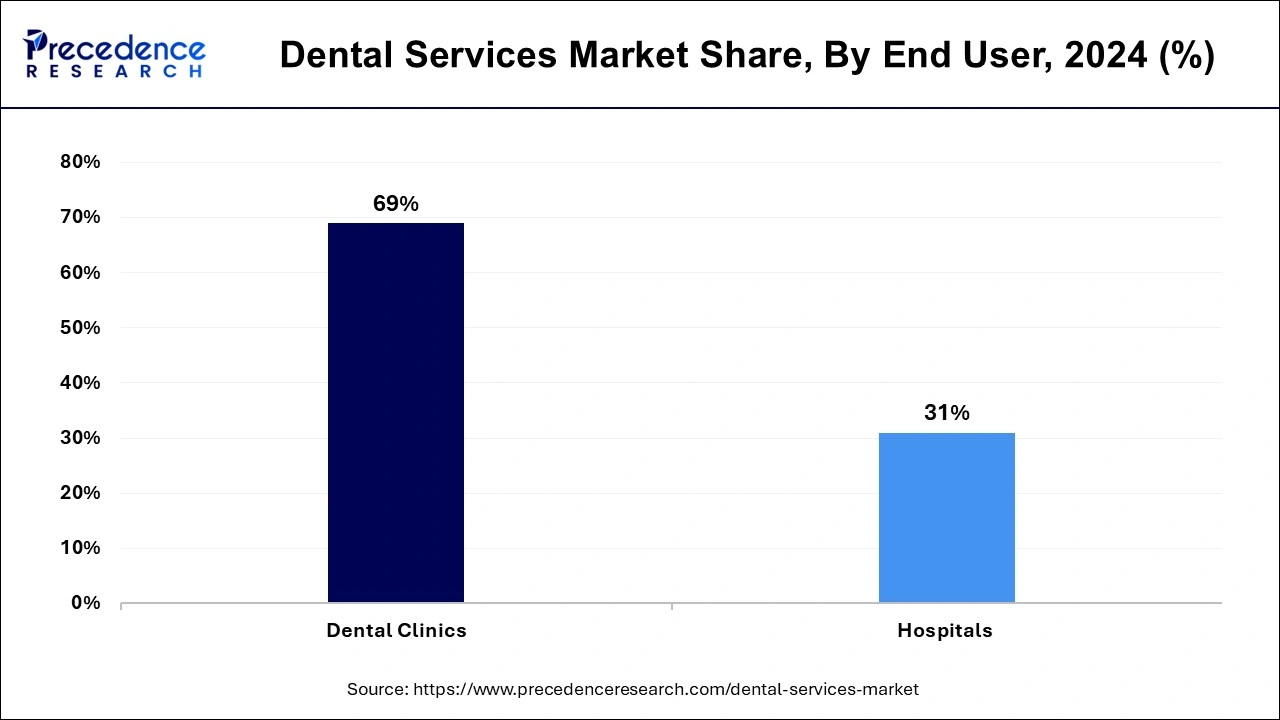
The hospitals segment is projected to grow at the fastest CAGR during the forecast period. This is mainly due to modernized healthcare infrastructure, an increase in complex oral surgeries, and the surging integration of multidisciplinary care. Hospitals offer a holistic approach to patient health, enabling seamless collaboration between dental professionals and other medical specialists for patients with underlying systemic conditions. They possess the resources to invest in expensive, advanced dental equipment, which attracts patients seeking sophisticated restorative and surgical treatments.
Dental Services Market Regional Analysis
What Made North America the Dominant Region in the Dental Services Market?
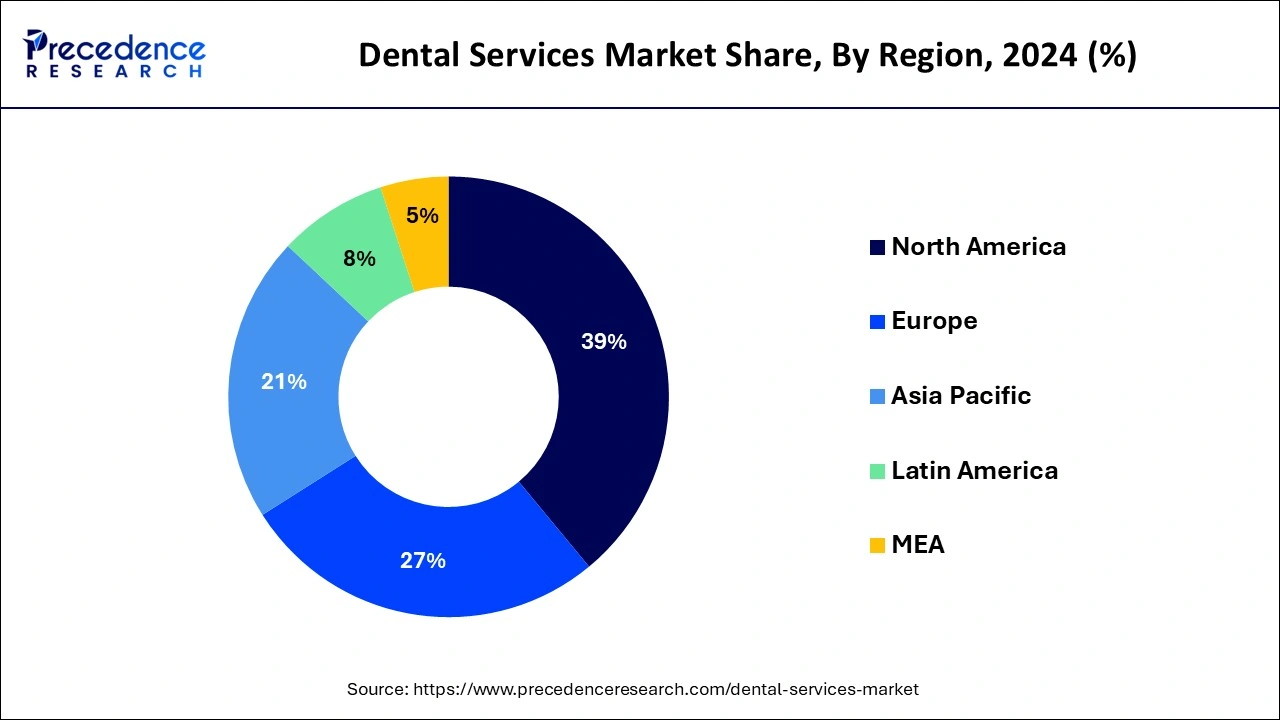
North America dominated the market with the largest share in 2025, driven by its strong healthcare infrastructure, consolidated insurance coverage, a growing aging demographic, and widespread consumer awareness of cosmetic aesthetics. The rising demand for cosmetic dentistry is a key segment driving market expansion. The increasing population of senior citizens often requires restorative care, implants, and dentures. The rise of DSOs, which leverage private equity funding and economies of scale to standardize and streamline care delivery, further contributes to this growth.
What is the U.S. Dental Services Market Size and Growth?
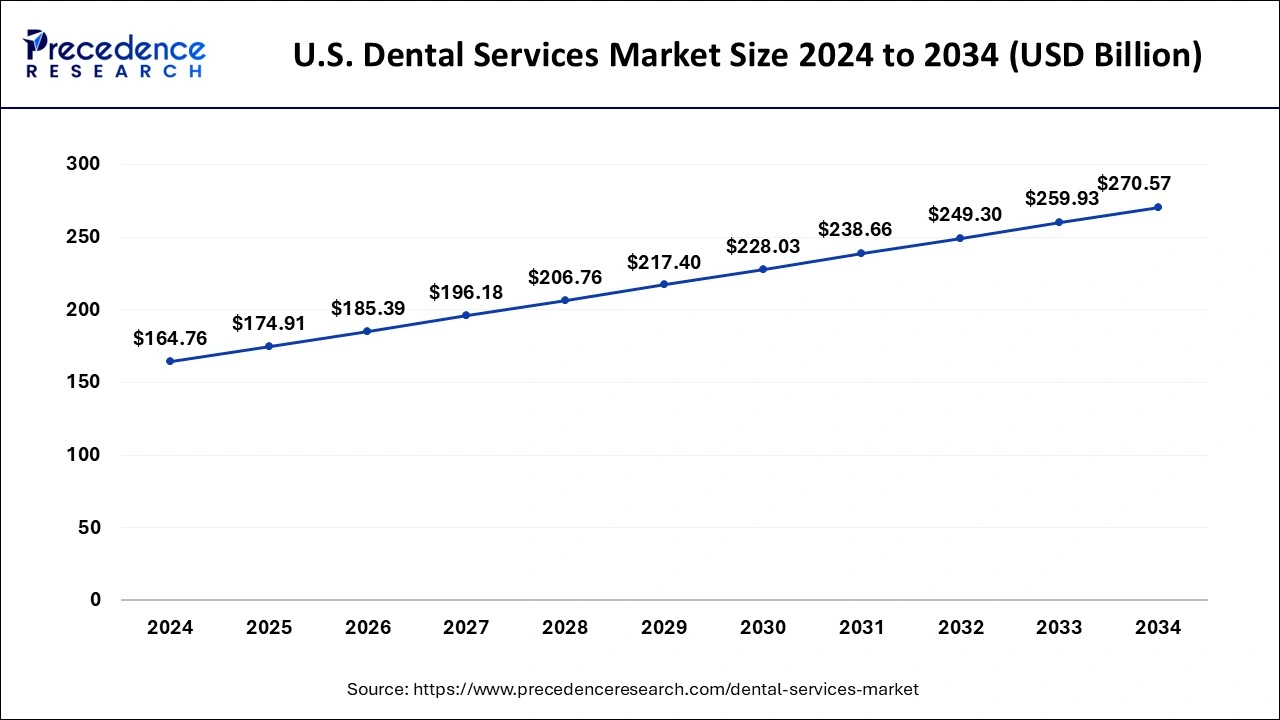
According to a healthcare consultant at Precedence Research, the U.S. dental services market size is estimated at USD 185.39 billion in 2026 and is projected to reach nearly USD 281.20 billion by 2035, with a CAGR of 4.86% from 2026 to 2035.
U.S. Market Trends
The U.S. plays a dominant role within the region, primarily due to robust private health insurance and expanded Medicare Advantage dental benefits. The American Dental Association Health Policy Institute tracks and addresses the fiscal challenges faced by independent practices, launching ongoing monitoring efforts to adapt fee-for-service models in light of rising operational costs.
What Makes Asia Pacific the Fastest-Growing Region in the Dental Services Market?
Asia Pacific region is expected to experience the fastest growth during the forecast period. This is due to increasing disposable incomes, rapid urbanization, a growing aging demographic, and the rapid expansion of dental tourism in many countries. The burgeoning middle class in emerging economies is increasingly afford advanced cosmetic procedures, implants, and orthodontic treatments. Countries like Japan and Australia are seeing demographic shifts result in a higher prevalence of tooth decay, gum disease, and an increased need for prosthetic solutions, reducing chair time and improving diagnostic accuracy.
India Market Trends
India has established itself as a rapidly expanding global hub for dental tourism, providing treatments at significantly lower prices compared to Western countries. The market is shifting from individual neighborhood clinics to organized corporate chains like Clove Dental. Additionally, government initiatives such as the National Oral Health Programme aim to standardize care and improve accessibility.
How is the Opportunistic Rise of Europe in the Dental Services Market?
Europe is experiencing notable growth in the market, primarily due to an aging population, a surge in cosmetic dentistry, and extensive digital transformation. There is an increasing consumer focus on aesthetic dental procedures such as teeth whitening, veneers, and clear aligners, which are often funded out-of-pocket by private consumers. Greater awareness of oral hygiene and long-term preventive care is encouraging patients to seek routine cleanings and check-ups, resulting in a steady flow of patients for clinics offering high-quality, cost-effective procedures.
Germany Market Trends
Germany plays a significant role in the European market due to its advanced clinical infrastructure, a blend of statutory and private health insurance, and high out-of-pocket investments in cosmetic dentistry. Germany is also home to global dental manufacturing leaders, including Dentsply Sirona and Straumann Group, making it a hub for cutting-edge dental technology research and development.
What Drives the Latin American Dental Services Market?
The market in Latin America is primarily driven by the expanding dental tourism and increasing demand for cosmetic dentistry. The high prevalence of oral diseases in countries like Brazil and Mexico has led to a widespread consolidation of private practices into larger networks, making it a key destination for cross-border patients seeking high-quality dental care at lower costs. Aesthetic trends among young adults significantly influence cosmetic dentistry and orthodontic treatments, attracting patients to premium private clinics.
Brazil Market Trends
Brazil has established a prominent position within the region, featuring the largest dental ecosystem and hosting all global dental professionals. This growth is driven by volume, making Brazil the global leader in dental implant revenue. Public access to dental care is expanding through initiatives like Oral Health Teams and the Family Health Strategy, alongside substantial government investments in digital health, teledentistry, and 3D applications.
Why is the Dental Services Market Within the Middle East & Africa Gaining Momentum?
The market in the Middle East & Africa is expanding due to the high prevalence of oral diseases and substantial government investments in healthcare infrastructure. Key countries in the region, particularly Turkey, the UAE, and Egypt, have positioned themselves as premier medical tourism hubs, offering advanced aesthetic and restorative procedures at competitive prices. Local governments are prioritizing national health initiatives and investing in the modernization of clinics and hospitals.
The UAE Market Trends
The UAE is establishing itself as a leading center for medical tourism in the region, specializing in high-end cosmetic dentistry and prosthodontics while leveraging state-of-the-art facilities and streamlined services to attract international patients. The UAE is focusing on launching new preventive screening programs and implementing the unified Dubai Dental Protocol.
Trade Analysis
- In the period between May 2024 and April 2025, buyers has globally imported 93 shipments of a Dental Service.
- These shipments were being assisted by 92 exporters and bought by 86 official worldwide buyers.
- Vietnam, Russia, and Colombia have come up as the leading three Dental service importing countries.
- In another scenario, the United Kingdom, the United States, and China are the leading three exporting countries.
(Source: https://www.volza.com) - United Kingdom has exported 265 shipments, followed by the United States with 175 shipments, and lastly China with 112 shipments, ranking as the biggest worldwide Dental service exporters.
(Source: https://www.volza.com)
Government Initiatives
- In January 2025, the National Oral Health Programe launched an oral health initiative under which the dental health status of the population present across all the age groups is being lowered as the oral disease load effects are identified with assistance and services of affordable, accessible, appropriate, acceptable, and comprehensive oral health care.
(Source: https://phd.maharashtra.gov.in) - In August 2025, AIIMS Bhopal officially conducted a landmark Oral Health Survey in the state of Madhya Pradesh that disclosed the actual burden of oral and dental diseases across the state. This feedback is published in the honored World Health Organization (WHO) Journal for Public Health from the South-East Asia Region.
(Source: https://www.pib.gov.in) - In September 2025, the Global Oral Health Action Plan 2023-2030 (GOHAP) and WHA76(9) set a worldwide direction for integrating eco-friendly sustainability into oral health systems. It is one of the worldwide focuses that is for 90% of countries to use measures for decreasing or avoiding the application of dental amalgam by the year 2030.
(Source: https://www.who.int)
Key Regulations for the Dental Services Market
|
Regulations |
Primary Focus |
Implication |
|
The Dentists Act (1948/2023) |
Licensing and Qualifications |
Prohibits unqualified practitioners, outlining mandatory educational credentials and legal registration requirements for all practicing dentists and dental hygienists. |
|
Code of Ethics Regulations |
Patient Safety and Ethics |
Mandates strict rules against aggressive corporate advertising, fee-splitting, and misrepresentation of credentials, while requiring meticulous maintenance of medical records for at least three years. |
|
Clinical Establishments Act |
Clinic Infrastructure |
Requires dental clinics to adhere to standardized infrastructure guidelines, building safety protocols, and transparent display of practitioner qualifications on signboards. |
|
BARC Radiation Guidelines |
Radiology and Equipment Safety |
Mandates that dental clinics utilizing X-ray equipment must register with agencies accredited by the Atomic Energy Regulatory Board, ensuring regular personnel radiation monitoring. |
|
Bio-Medical Waste Rules |
Infection Control |
Enforces stringent sterilization, segregation, and disposal protocols for hazardous biological and sharp waste, protecting the environment and public health. |
Market Competitive Landscape: Leading Companies and Strategies
The global dental services market is well-established and characterized by an aging population, rising cosmetic consciousness, and increasing disposable incomes. Major players like Clove Dental and Apollo Dental are driving growth through nationwide clinic expansions. A notable industry trend is the integration of AI diagnostics and CAD/CAM systems to enhance treatment precision. For example, Apollo Dental has invested ₹100 crore to open facilities that incorporate CBCT and digital radiography.
Emerging players such as Pearl, Overjet, and CareStack are poised to capitalize on significant future opportunities in subscription-based preventive care and the growing dental tourism sector. However, market penetration remains challenging for these emerging players and solo clinics due to the high costs associated with adopting advanced dental technologies and intense price competition from established corporate chains.
Investment Landscape
- In June 2026, o15 Capital Partners (“o15”0, with the help of its o15 Emerging America Credit Opportunities (“EACO”) investment and is branch were delighted to reveal an USD15 million mezzanine debt investment in terms of Lone Peak Dental Group (“Lone Peak” or “Company”), have an pediatric specialty dental services organization (“DSO”) initially delivers to Medical -approved underserved and children communities located across United States.
(Source: https://www.prnewswire.com) - In April 2026, Health Minister Nesbitt revealed funding of Euro 28 million for actual dental services. The health minister has stated that the investment can assist in developing availability for patients, while the planned long-term reforms are for dental services, which are on a growth track.
(Source: https://www.health-ni.gov.uk) - In February 2026, President Donald Trump officially signed the USD 1.2 trillion bipartisan investment bill on 3 February, which ended the partial government shutdown. The Senate and House have officially accepted the 2026 budget package, which delivers a full-year investment for the Department of Health and Human Services and expands funding for the Department of Homeland Security.
(Source: https://adanews.ada.org)
Dental Services Market Companies
- Pacific Dental Services
- Dental Services Group
- Q & M Dental Group
- Apollo White Dental
- Coast Dental
- Axiss Dental
- Gentle Dental of New England
- Abano Healthcare Group
- Smile 360
- Healthway Medical Corporation
Key Companies & Market Share Insights
The market is moderately fragmented with the presence of several local companies. These market players are striving to gain higher market share by adopting strategies, such as investments, partnerships, and acquisitions & mergers. Companies are also spending on the development of improved services. Moreover, they are also focusing on maintaining competitive pricing.
Recent developments and advancements in the dental services market such as introduction of invisible braces and tray system, laser dentistry techniques, advanced digital X-Ray technology, innovative tooth repair materials, and instant teeth whitening procedures will help the market growth in the forthcoming years.
Recent Developments in the Dental Services Market (2025–2026)
- In May 2026, Laxmi Dental Limited will reveal the launch of “i Scope 360”, which is a completely integrated AI-linked remote dental tracking ecosystem that mixes oral health assessment, aligner tracking and virtual consultations into one linked platform.
(Source: https://www.expresshealthcare.in) - In April 2026, Koelnmesse and dmg events will disclose the opening of the annual International Dentistry Exhibition and Meeting in Saudi Arabia (IDEM Saudi Arabia). The inaugural program will be executed from September 27 to 29 September at the Riyadh International Convention and Exhibition Center.
(Source: https://www.dental-tribune.com) - In June 2026, Parkview Dental Partners announced the opening of a de novo practice in Westchase, Tampa, further expanding its presence in the region to a total of 26 practices. CEO Rene Sauerteig emphasized the opportunity to provide exceptional care in a rapidly growing community. This expansion underscores Parkview's strategy of partnering with established practices and developing new locations. (Source: https://themalaysianreserve.com)
- In February 2026, Henry Schein One launched Image Verify, an AI-driven solution aimed at enhancing the claims experience in dentistry. Integrated into Dentrix and Dentrix Ascend, it seeks to streamline claims submission and reduce errors, making the revenue cycle more efficient. Dr. Ryan Hungate highlighted that this innovation ultimately helps practices speed up reimbursements and minimize administrative burdens. (Source: https://www.businesswire.com)
- In April 2026, the Technology Association of Oregon (TAO), Moda Health, and ALLtech Benefits partnered to offer customized, enterprise-class health benefits for Oregon tech companies with 2-50 employees. Leveraging collective buying power, providing competitive rates, virtual care, and wellness support to help smaller firms attract and retain top talent. (Source: https://oregonbusiness.com)
- In March 2025, the Delhi health minister launched a mobile dental van in Delhi at Maulana Azad Institute of Dental Sciences as a part of the National Health Mission. This launch aims to provide dental services in the state.
Segments Covered in the Report
By Procedure
- Cosmetic Dentistry
- Non-Cosmetic Dentistry
By Service
- Dental Implants
- Orthodontics
- Periodontics
- Root Canal - Endodontics
- Cosmetic Dentistry
- Laser Dentistry
- Dentures
- Oral and Maxillofacial Surgery
- Smile Makeover
- Others
By End User
- Dental Clinics
- Hospitals
By Region
- North America
- Europe
- Asia-Pacific
- Latin America
- Middle East & Africa
For inquiries regarding discounts, bulk purchases, or customization requests, please contact us at sales@precedenceresearch.com
Frequently Asked Questions





Ask For Sample
No cookie-cutter, only authentic analysis – take the 1st step to become a Precedence Research client
 Get a Sample




 sales@precedenceresearch.com
 Schedule a Meeting
