



Endometrial Cancer Market Size, Share and Trends 2026 to 2035
Endometrial Cancer Market (By Type of Cancer: Endometrial Carcinoma, Uterine Sarcomas, Others; By Type of Therapy: Immunotherapy, Radiation Therapy, Chemotherapy, Other of Therapies Synthetic Source; By Diagnosis Method: Biopsy, CT Scan Hysteroscopy, Pelvic Ultrasound, Other Diagnosis Methods) - Global Industry Analysis, Size, Trends, Leading Companies, Regional Outlook, and Forecast 2026 to 2035
Source: https://www.precedenceresearch.com/endometrial-cancer-market
 Get a Sample
 Table Of Content


What is Endometrial Cancer Market Size?
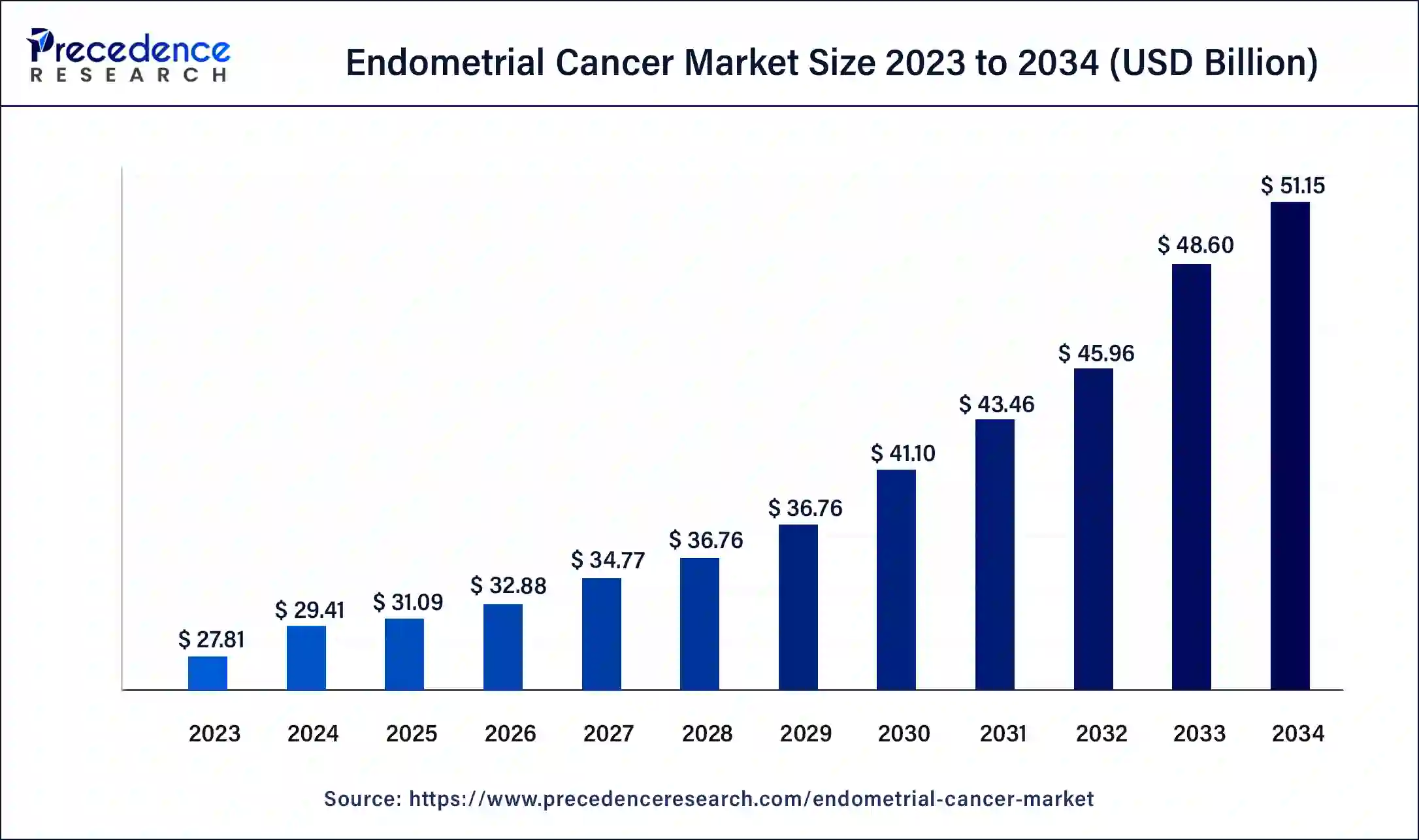
The global endometrial cancer market size is calculated at USD 31.09 billion in 2025 and is expected to reach around USD 53.76 billion by 2035, expanding at a CAGR of 5.63% from 2026 to 2035.
Market Highlights
- The North America region contributed more than 41% of market share in 2025.
- The Asia-Pacific is estimated to expand the fastest CAGR between 2026 and 2035.
- By type of cancer, the endometrial carcinoma segment held the largest market share in 2025.
- By type of cancer, the uterine sarcomas segment is anticipated to grow at a remarkable CAGR between 2026 and 2035.
- By type of therapy, the chemotherapy segment has generated the major share in 2025.
- By type of therapy, the radiation therapy segment is expected to expand at the fastest CAGR over the projected period.
- By diagnosis method, the biopsy segment has contributed the largest market share of market share in 2025.
- By diagnosis method, the pelvic ultrasound segment is expected to expand at the fastest CAGR over the projected period.
Market Overview
Endometrial cancer is a type of cancer that begins in the lining of the uterus, called the endometrium. The uterus is where a baby grows during pregnancy. In endometrial cancer, cells in the endometrium start to grow out of control, forming a tumor. This cancer usually affects women after menopause, but it can also happen before menopause. Endometrial cancer can cause symptoms like abnormal vaginal bleeding, pelvic pain, or pain during urination. The exact cause of this cancer is not always known, but factors like hormone imbalances, obesity, and a history of certain conditions can increase the risk. Treatment options for endometrial cancer may include surgery, radiation therapy, chemotherapy, or hormone therapy. Early detection and treatment are important for better outcomes, so it's essential for women to pay attention to any unusual symptoms and seek medical advice promptly.
Endometrial Cancer Market Data and Statistics
- According to the Australia New Zealand Gynaecological Oncology Group, each year, over 3,000 Australians and 700 New Zealanders receive a diagnosis of uterine cancer. The incidence of uterine cancer in Australia has doubled over the past two decades, and globally, there is an anticipated increase of over 50% in endometrial cancer diagnoses by 2040.
- A September 2022 update from Cancer Australia reported an estimated 3,343 new cases of uterine cancer in Australia for 2022. Similarly, a May 2022 update from the Canadian Cancer Society suggested around 8,100 Canadian women would likely be diagnosed with uterine cancer in 2022. Endometrial cancer, also known as uterine cancer, originates in the endometrium, the lining of the uterus, as stated by a May 2021 update from the Mayo Clinic.
- Research published in February 2022 on PubMed indicated that combining Lenvatinib and Pembrolizumab resulted in extended progression-free survival and overall survival rates compared to chemotherapy for patients.
- According to statistics from the American Cancer Society in 2022, there are over 600,000 endometrial cancer survivors in the United States. The American Cancer Society also states that chemotherapy drugs such as doxorubicin (Adriamycin), liposomal doxorubicin (Doxil), cisplatin, and docetaxel (Taxotere) are commonly used in the treatment of endometrial cancer.
Endometrial Cancer Market Trends
- Rising incidence and patient awareness The number of endometrial cancer cases is growing due to aging populations, obesity, and hormonal imbalances, leading to a higher demand for early diagnosis and treatment.
- Shift toward targeted and immunotherapy treatments Precision medicine and immunotherapies are becoming more common, offering better outcomes and fewer side effects compared to traditional chemotherapy.
- Advancements in diagnostics and early detection New genomic and biomarker-based tests are improving early detection, helping doctors provide faster and more effective treatment options.
- Strong growth in emerging regions Asia-Pacific and Latin America are witnessing rapid growth due to improved healthcare systems, rising awareness, and increased access to advanced treatments.
- High cost and limited accessibility challenges Expensive therapies and uneven reimbursement policies remain key barriers, highlighting the need for affordable and widely available treatment options.
Endometrial Cancer Market Growth Factors
- The aging population contributes to the growth of the endometrial cancer market, as the risk of developing this cancer increases with age. With populations around the world aging, particularly in developed countries, there's a larger pool of individuals at risk, driving demand for screening, diagnosis, and treatment services.
- Obesity is a significant risk factor for endometrial cancer. As obesity rates continue to rise globally, particularly in Western countries and urban areas of developing countries, the incidence of endometrial cancer is expected to increase. This trend fuels demand for interventions targeting obesity-related risk factors and for treatments addressing endometrial cancer itself.
- Ongoing research and development efforts have led to advancements in endometrial cancer treatment options. These include targeted therapies, immunotherapies, and combination therapies that offer improved efficacy and reduced side effects compared to traditional treatments. As these treatments become more widely available, they drive market growth by improving patient outcomes and expanding the addressable market.
- Efforts to raise awareness about endometrial cancer risk factors, symptoms, and the importance of early detection contribute to market growth. Screening programs targeting high-risk populations, along with public health campaigns promoting awareness, encourage more individuals to seek medical evaluation, leading to earlier diagnosis and treatment initiation.
- Advances in understanding the genetic and molecular basis of endometrial cancer drive innovation in diagnostics and therapeutics. Biomarker discovery, genomic profiling, and molecular testing technologies enable personalized treatment approaches tailored to individual patients' genetic profiles. As precision medicine gains traction in oncology, the demand for genetic and molecular testing in endometrial cancer management grows, fueling market expansion.
- Investments in healthcare infrastructure, particularly in emerging markets, contribute to market growth by improving access to screening, diagnostic, and treatment services for endometrial cancer. Expansion of healthcare facilities, adoption of advanced medical technologies, and capacity building in oncology care enhance the overall management of endometrial cancer, driving market demand.
Market Outlook
- Industry Growth Overview: The endometrial cancer market is expanding due to increased diagnosis rates and better treatment options. Demand is being driven by increased awareness, improved screening, and the rising prevalence of risk factors like age and obesity. The market is currently dominated by North America, with the Asia Pacific experiencing the fastest growth. High treatment costs restricted access in some areas, and late-stage diagnoses in some populations are among the difficulties.
- Sustainability Trends: Personalized treatments that improve results, such as immunotherapies and targeted therapies, are becoming more popular. Additionally, improving patient care are developments in radiation and chemotherapy, minimally invasive surgery, and diagnostics. To lessen the overall burden of disease, there is an increasing emphasis on affordable treatment, early detection, and preventative measures.
- Global Expansion: Due to its sophisticated healthcare system and high level of awareness, North America has a sizable share. Asia Pacific and other developing regions are expanding quickly as more patients are diagnosed and healthcare access improves. Pharmaceutical companies support global expansion by expanding their operations to meet demand in various regions and introducing new therapies.
Endometrial Cancer Market Scope
| Report Coverage | Details |
| Global Market Size in 2025 | USD 31.09 Billion |
| Global Market Size in 2026 | USD 32.88 Billion |
| Global Market Size by 2035 | USD 53.76 Billion |
| Growth Rate from 2026 to 2035 | CAGR of 5.63% |
| Largest Market | North America |
| Base Year | 2025 |
| Forecast Period | 2026 to 2035 |
| Segments Covered | Type of Cancer, Type of Therapy, Diagnosis Method, and Region |
| Regions Covered | North America, Europe, Asia-Pacific, Latin America, and Middle East & Africa |
Market Dynamics
Drivers
Increasing awareness and screening programs
Increasing awareness and screening programs play a crucial role in boosting demand for the endometrial cancer market. As more people become aware of the risk factors and symptoms associated with endometrial cancer, they are more likely to seek medical attention for early diagnosis and treatment. This heightened awareness leads to an increase in the number of individuals undergoing screening tests, such as Pap smears and transvaginal ultrasounds, to detect abnormalities in the uterus lining.
Moreover, screening programs targeting high-risk populations, such as postmenopausal women or those with a family history of the disease, further contribute to market demand. By identifying endometrial cancer at an early stage, these programs enable timely intervention and improve treatment outcomes. Additionally, public health campaigns focused on raising awareness about the importance of regular screenings and early detection help reduce stigma surrounding the disease and empower individuals to take proactive steps towards their health. Overall, increasing awareness and screening programs not only save lives by detecting endometrial cancer early but also drive demand for related medical services and products.
Restraint
Stigma associated with gynecological cancers
The stigma surrounding gynecological cancers, including endometrial cancer, acts as a significant restraint on market demand. Many individuals may feel embarrassed or uncomfortable discussing symptoms or seeking medical attention for gynecological issues due to societal taboos or misconceptions. This stigma can lead to delayed diagnosis and treatment, as affected individuals may avoid seeking help until the cancer has progressed to a more advanced stage. As a result, there is a reduced demand for screening services, diagnostic tests, and treatment options in the endometrial cancer market.
Furthermore, stigma can also impact research funding and public health initiatives aimed at raising awareness and improving access to care for gynecological cancers. The reluctance to openly discuss these cancers may result in limited advocacy efforts and insufficient support for initiatives focused on early detection and prevention. Overall, the stigma associated with gynecological cancers creates barriers to accessing healthcare services, diminishes market demand for endometrial cancer-related products and services, and hinders efforts to effectively address the disease.
Opportunity
Rising adoption of minimally invasive surgical techniques
The rising adoption of minimally invasive surgical techniques presents significant opportunities in the endometrial cancer market. Minimally invasive procedures, such as laparoscopic or robotic-assisted surgeries, offer several advantages over traditional open surgeries. These techniques typically result in smaller incisions, reduced blood loss, shorter hospital stays, and faster recovery times for patients undergoing treatment for endometrial cancer. As a result, more patients may be inclined to undergo surgical intervention, leading to increased demand for related medical devices, instruments, and surgical equipment.
Moreover, the shift towards minimally invasive surgical techniques aligns with the broader trend towards patient-centered care and improved clinical outcomes. Patients often prefer less invasive treatment options that offer quicker recovery and fewer complications. Healthcare providers also benefit from reduced healthcare costs associated with shorter hospital stays and decreased post-operative care requirements. Consequently, the rising adoption of minimally invasive surgical techniques not only enhances patient satisfaction and clinical outcomes but also creates new opportunities for growth and innovation in the endometrial cancer market.
Segment Insights
Type of Cancer Insights
The endometrial carcinoma segment held the highest market share in 2025. Endometrial carcinoma, a type of endometrial cancer, originates in the lining of the uterus. In the endometrial cancer market, the endometrial carcinoma segment focuses on diagnosis, treatment, and research specific to this cancer type. Trends in this segment include advancements in targeted therapies, genetic testing for personalized treatment approaches, and the development of minimally invasive surgical techniques. As awareness grows and research continues, the endometrial carcinoma segment plays a crucial role in addressing the unique needs of patients with this type of cancer.
The uterine sarcomas segment is anticipated to witness rapid growth at a significant CAGR during the projected period. Uterine sarcomas represent a subset of endometrial cancers that originate in the muscles or connective tissues of the uterus. While less common than endometrial carcinomas, uterine sarcomas present unique challenges in diagnosis and treatment due to their aggressive nature. Recent trends in the endometrial cancer market indicate a growing focus on precision medicine and targeted therapies tailored to specific subtypes of uterine sarcomas, aiming to improve outcomes for patients facing this challenging disease.
Type of Therapy Insights
The chemotherapy segment has held the biggest market share in 2025. Chemotherapy is a type of cancer treatment that uses drugs to kill cancer cells or slow their growth. In the endometrial cancer market, chemotherapy involves the administration of powerful medications to target and destroy cancer cells in the body. Despite being a standard treatment option, there is a growing trend towards personalized chemotherapy regimens tailored to individual patients' needs, aiming to maximize effectiveness while minimizing side effects. Additionally, ongoing research focuses on developing new chemotherapy drugs and combination therapies to improve treatment outcomes.
The radiation therapy segment is anticipated to witness rapid growth over the projected period. Radiation therapy is a type of treatment for endometrial cancer that uses high-energy rays to target and destroy cancer cells. It can be delivered externally through a machine outside the body (external beam radiation) or internally using radioactive materials placed near the tumor (brachytherapy). In the endometrial cancer market, radiation therapy is witnessing a trend towards advancements in technology, such as intensity-modulated radiation therapy (IMRT) and image-guided radiation therapy (IGRT), allowing for more precise and targeted delivery of radiation, minimizing damage to surrounding healthy tissues.
Diagnosis Method Insights
The biopsy segment has held the largest market share in 2025. Biopsy, a crucial diagnostic method in endometrial cancer, involves the removal and examination of a small tissue sample from the uterus lining. It helps confirm the presence of cancer cells and determines the cancer's type and stage. Trends in endometrial cancer diagnostics show a growing preference for minimally invasive biopsy techniques, such as hysteroscopy-guided biopsies and endometrial sampling. These methods offer greater accuracy, reduced discomfort, and quicker results, contributing to their increasing adoption in clinical practice.
The pelvic ultrasound segment is anticipated to witness rapid growth over the projected period. The pelvic ultrasound segment in the endometrial cancer market refers to the use of ultrasound imaging to detect abnormalities in the pelvic region, including the uterus and surrounding tissues. This diagnostic method involves the use of sound waves to create images of the pelvic organs, helping healthcare professionals identify potential signs of endometrial cancer, such as thickened endometrial lining. A trend in this segment involves the increasing adoption of advanced ultrasound technologies, such as transvaginal ultrasound, for more accurate and detailed imaging, aiding in early detection and diagnosis.
Regional Insights
U.S. Endometrial Cancer Market Size and Growth 2026 to 2035
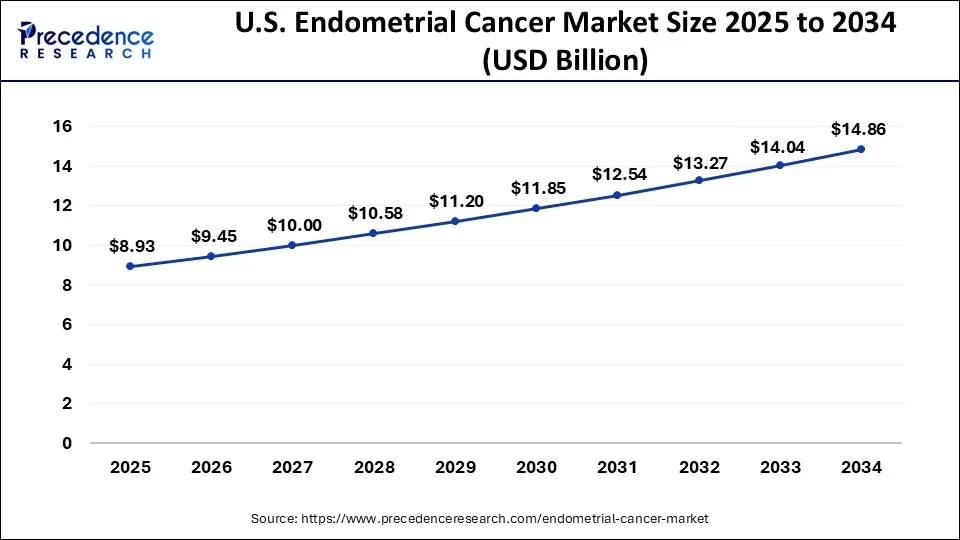
The U.S. endometrial cancer market size is estimated at USD 8.93 billion in 2025 and is projected to surpass around USD 15.68 billion by 2035 at a CAGR of 5.82% from 2026 to 2035.
North America held a share of 41% in the endometrial cancer market in 2025 due to several factors. Firstly, the region boasts advanced healthcare infrastructure and high healthcare expenditure, facilitating widespread access to screening, diagnosis, and treatment services. Additionally, North America has a significant prevalence of endometrial cancer, attributed in part to lifestyle factors such as obesity. Furthermore, the region is at the forefront of research and development, leading to the introduction of innovative therapies and diagnostic technologies, further consolidating its dominant position in the market.
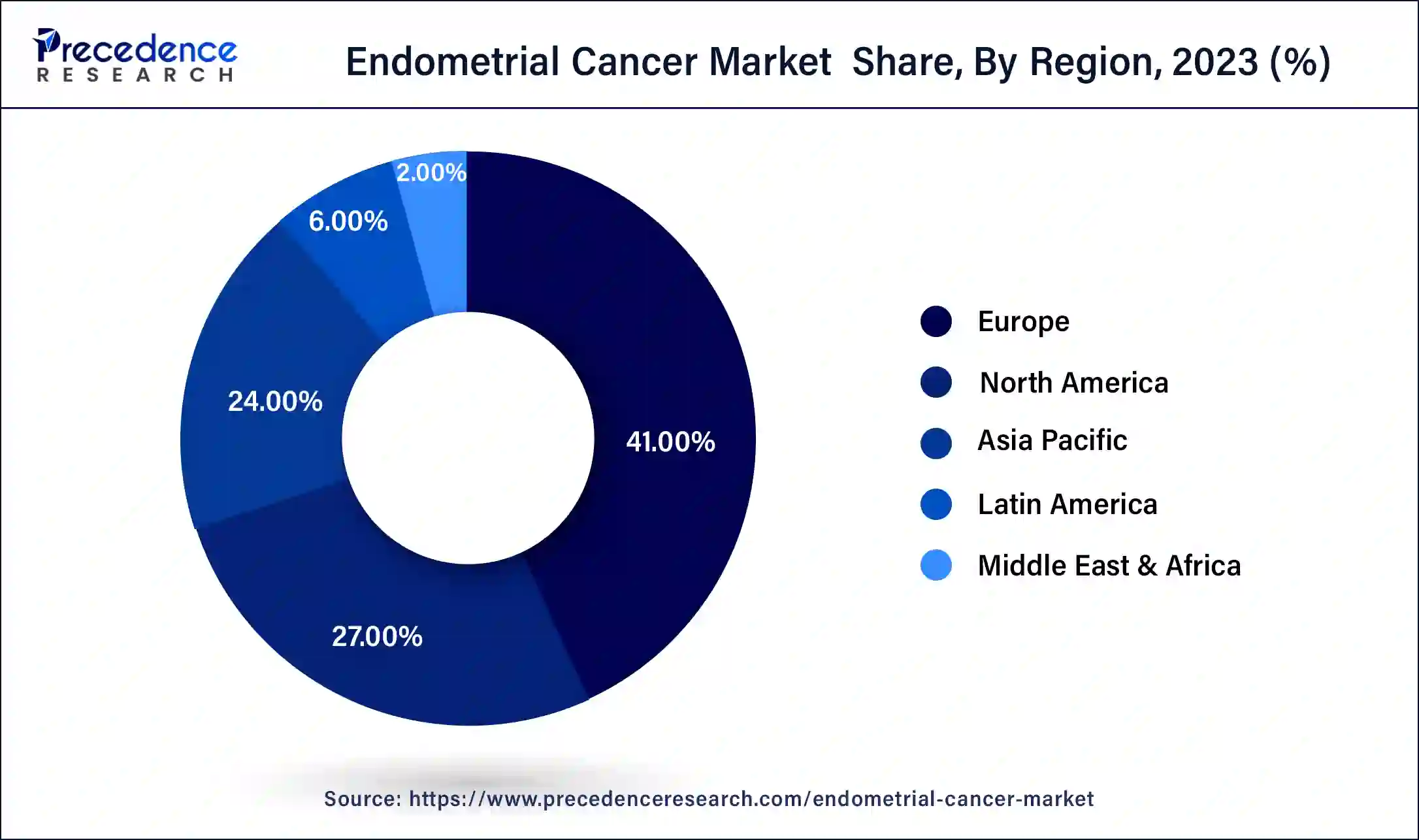
Asia-Pacific is experiencing rapid growth in the endometrial cancer market due to several factors. These include increasing awareness about gynecological cancers, improving healthcare infrastructure, raising disposable incomes, and expanding access to medical services. Additionally, demographic shifts, such as aging populations and changing lifestyles, contribute to the growing prevalence of endometrial cancer in the region. Furthermore, advancements in medical technologies and treatment options, coupled with government initiatives to promote early detection and screening programs, further drive market expansion in the Asia-Pacific region.
Meanwhile, Europe is experiencing notable growth in the endometrial cancer market due to several factors. These include increasing awareness about the disease, improved access to healthcare services, advancements in diagnostic technologies, and rising incidences of endometrial cancer. Additionally, supportive government initiatives and favorable reimbursement policies contribute to market expansion. Moreover, collaborations between healthcare organizations and research institutions drive innovation in treatment options and enhance patient outcomes. Overall, these factors combined create a conducive environment for the growth of the endometrial cancer market in Europe.
Value Chain Analysis
- R&D This stage involves developing new therapies, including targeted drugs, immunotherapies, and hormonal treatments. Companies like Pfizer, AstraZeneca, and GSK focus on discovering effective, safe, and personalized treatment options. Clinical research and innovation drive improved outcomes and reduced side effects for patients.
- Distribution to Hospital Pharmacies Pharmaceutical companies distribute approved therapies through hospital pharmacies, oncology centers, and specialty distributors. Key players such as Roche, Novartis, and Eli Lilly ensure timely delivery, cold-chain maintenance (if required), and compliance with local regulations. Efficient distribution is critical to meet patient demand and treatment schedules.
- Patient Support and Services After therapy initiation, companies provide patient education, adherence programs, nutritional guidance, and follow-up monitoring. Organizations like Pfizer, AstraZeneca, and Roche offer support services to improve treatment compliance, manage side effects, and enhance overall patient quality of care.
Endometrial Cancer Market Companies
- Merck & Co., Inc.
- AstraZeneca PLC
- Pfizer Inc.
- GlaxoSmithKline PLC
- Novartis AG
- Roche Holding AG
- Bristol Myers Squibb
- Johnson & Johnson
- Eli Lilly and Company
- AbbVie Inc.
- Sanofi
- Takeda Pharmaceutical Company Limited
- Bayer AG
- Amgen Inc.
- Celgene Corporation
Recent Developments
- In March 2024, GlaxoSmithKline (GSK) reported Phase III study results showing a combination of Jemperli (dostarlimab) + chemotherapy significantly improved overall survival and progression‑free survival in advanced/recurrent endometrial cancer.
- In May 2024, Merck & Co. announced that a late‑stage trial of Keytruda (pembrolizumab) combined with chemotherapy in high‑risk endometrial cancer post‑surgery failed to meet its disease‑free survival endpoint.
Segments Covered in the Report
By Type of Cancer
- Endometrial Carcinoma
- Uterine Sarcomas
- Others
By Type of Therapy
- Immunotherapy
- Radiation Therapy
- Chemotherapy
- Other of Therapies Synthetic Source
By Diagnosis Method
- Biopsy
- CT Scan Hysteroscopy
- Pelvic Ultrasound
- Other Diagnosis Methods
By Region
- North America
- Europe
- Asia-Pacific
- Latin America
- Middle East and Africa
For inquiries regarding discounts, bulk purchases, or customization requests, please contact us at sales@precedenceresearch.com
Frequently Asked Questions





Ask For Sample
No cookie-cutter, only authentic analysis – take the 1st step to become a Precedence Research client
 Get a Sample




 sales@precedenceresearch.com
 Schedule a Meeting
