



ePharmacy Market Size, Key Companies, Company Product Portfolio, Hospital Procurement Trends, Manufacturing Capacity, Sales Performance, Regulatory Approvals, Company Market Share, and Forecast
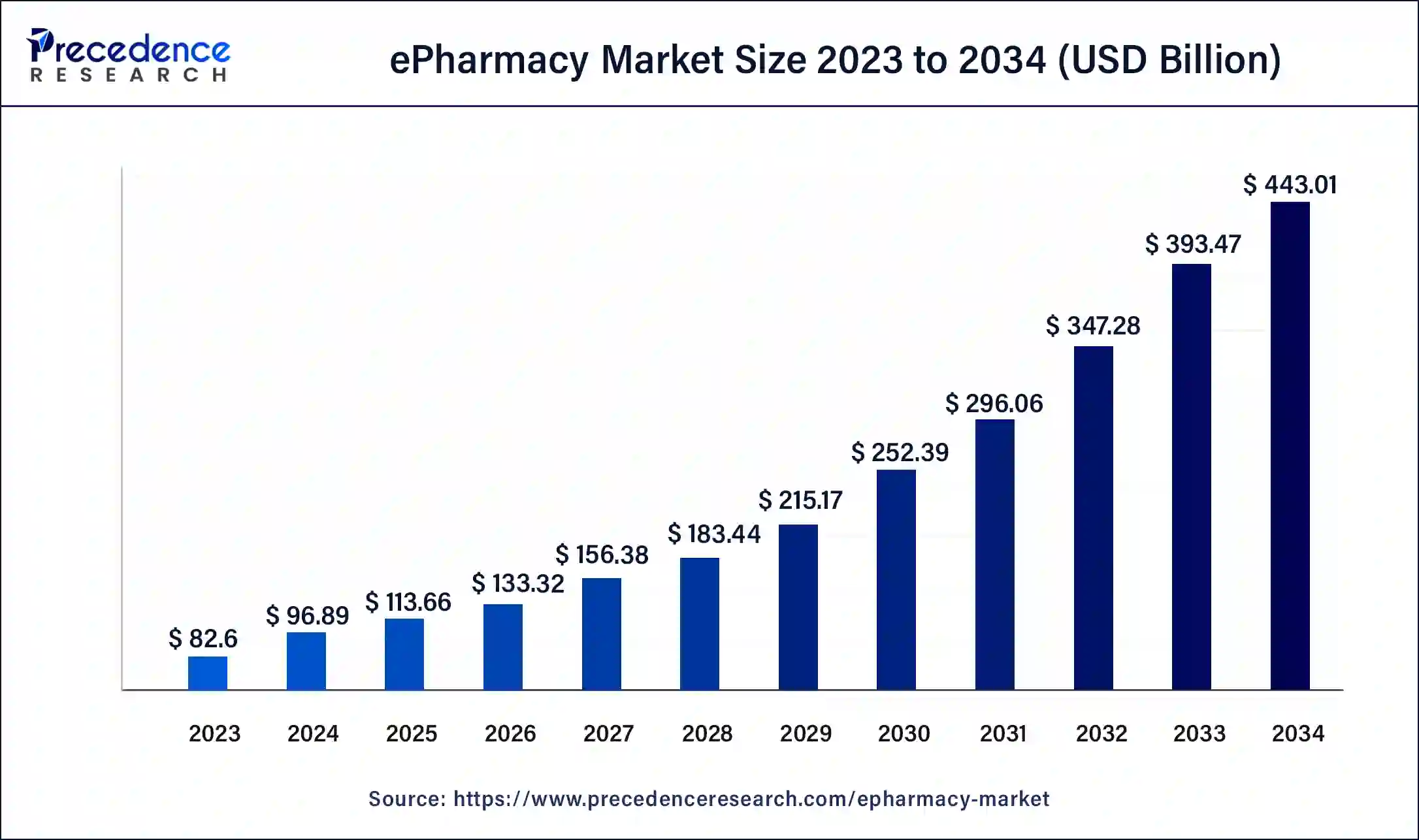
Deepa Pandey, a Healthcare Industry Expert, highlights that the epharmacy market has reached USD 113.66 billion in 2026 and is on track to reach USD 490.32 billion by 2035, advancing at a CAGR of 15.74%. Key epharmacy market companies shaping the market include rowlands pharmacy, giant eagle, walmart, docmorris, walgreen, while major growth segments span drug type, product type, end-user, platform, payment method.
Source: https://www.precedenceresearch.com/epharmacy-market
 Get a Sample
 Table Of Content


What is the ePharmacy Market Size?
The global ePharmacy market size accounted for USD 113.66 billion in 2025 and is expected to reach around USD 490.32 billion by 2035, expanding at a CAGR of 15.74% from 2026 to 2035. The North America ePharmacy market size reached USD 34.69 billion in 2025.
ePharmacy Market Key Takeaways
- By region, North America captured the largest share of 42% in 2025.
- By region, the market in Asia Pacific is expected to grow at a significant pace in the coming years.
- By drug type, the over-the-counter drugs segment held a large share of the market in 2025.
- By drug type, the prescription drugs segment is anticipated to grow rapidly during the forecast period.
- By product type, the dental segment accounted for major market share in 2025.
- By end-user, the primary care centers segment held the largest share of the market in 2025.
- By end-user, the home care settings segment is projected to expand at a high growth rate.
- By platform, the app-based segment is projected to expand at a high CAGR during the forecast period.
- By payment method, the online payment segment dominated the market in 2025.
What is the ePharmacy?
ePharmacy or electronic pharmacy refers to online platforms where individuals are able to purchase healthcare products or medicines over the internet. These platforms provide access to a wide range of healthcare products, even to individuals in remote areas with limited physical pharmacies. These platforms often deliver products directly to consumers' doorsteps, saving time visiting a physical pharmacy and providing a convenient way to purchase healthcare products.
The epharmacy market has been expanding at a significant growth rate. With changes in consumer behavior, the COVID-19 pandemic has prompted several industries, including healthcare and pharmaceutical, to turn to the online market. Furthermore, preventive measures imposed by the government during the pandemic forced individuals to adopt digital healthcare technologies to reduce unnecessary hospital visits, accelerating the adoption of online pharmacies across the globe over the past few years. For instance,
- According to the Digital Health Statistic 2024 By Adoption, Usage, and Impact, between 2020 and 2021, the number of health apps available via Google Play Store for Android users reached more than 65,300 thousand during the last quarter of 2021. About 3 in 10 adults reported that they were using at least one health app on their smartphone in 2022.
How is AI contributing to the ePharmacy Industry?
ePharmacy is being transformed by AI to enhance safety and efficiency. It judges prescriptions, minimizes errors, and warns about possible drug interactions. Inventory systems forecast demand trends and reduce shortages and wastages. AI assists in customized treatment based on insights about patients.
Chatbots aid in compliance and notifications. Automation of the workflow increases the speed. These features improve patient outcomes, streamline pharmacy, and facilitate more responsive digital healthcare services across platforms.
Market Scope
| Report Coverage | Details |
| Market Size by 2035 | USD 490.32 Billion |
| Market Size in 2025 | USD 113.66 Billion |
| Market Size in 2026 | USD 133.32 Billion |
| Growth Rate from 2026 to 2035 | CAGR of 15.74% |
| Base Year | 2025 |
| Forecast Period | 2026 to 2035 |
| Segments Covered | Drug Type, Product Type, End-user, Platform, Payment Method, and Region |
| Regions Covered | Asia Pacific, North America, Europe, Latin America, Middle East and Africa |
ePharmacy Market Growth Factors
The increasing penetration of e-commerce has facilitated the market to gain a wider consumer base. The popularity of e-commerce has increased over the years owing to the widespread availability of well-established transportation infrastructure and logistics solutions, leading to increased adoption of online platforms among people to purchase medicines.
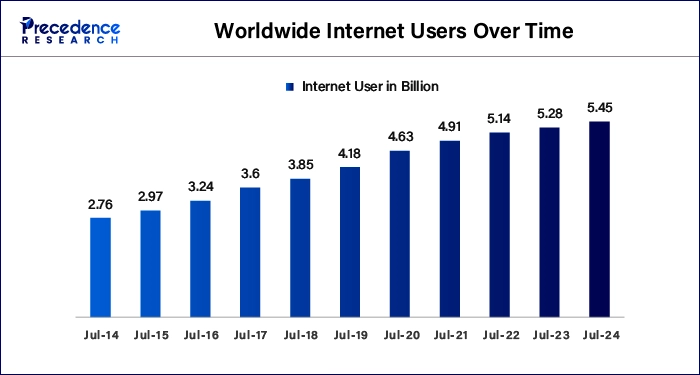
The rising trend of digitization is revolutionizing the healthcare industry, encouraging hospitals, clinics, nursing homes, and pharmacies to adopt digital technologies to streamline their operations. This, in turn, boosts the usage of online platforms to purchase various healthcare products and medicines. Moreover, the increasing proliferation of the internet encourages people to use online platforms to purchase goods, which is likely to fuel the market during the forecast period. For instance,
- According to DataReportal, as of July 2024, a total of 5.45 billion people across the globe were using the internet, which is equivalent to 67.1% of the world's total population.
Market Dynamics
Drivers
Convenience and the growing usage of smartphones
One of the key factors driving the epharmacy market is the convenience offered by online pharmacies. These pharmacies allow consumers to order required healthcare products and medicines from the comfort of their homes. This reduces the need to frequently visit physical pharmacies and saves time. Online pharmacies often offer discounts, which make medications more affordable. Additionally, some online pharmacies sell generic medicines at low cost, attracting a large number of low and middle-income consumers. Huge discounts, free home deliveries, easy payment options, and easy replacement and refund policies offered by these pharmacies significantly contribute to the growth of the market.
The growing usage of smartphones is another major factor boosting the growth of the global epharmacy market. The widespread use of smartphones has made it easier for people to access online pharmacies. The proliferation of smartphones led to a significant increase in the number of tech-savvy customers, resulting in an increased demand for online pharmacies. For instance,
- According to a report, approximately 1.39 billion smartphones were sold worldwide in 2022 and about 1.34 billion units were sold in 2024.
Regulations & Compliance
In August 2023, pharmaceutical firms that sell drugs through the internet received CDSCO show-cause notices issued on February 8th and February 9th of 2023. The companies declare they function as simply intermediary platforms that link pharmaceutical customers to licensed pharmacies through their online platform for providing sales facilitation.
Existing Restraints
Stringent regulations and security concerns
Stringent regulations associated with online pharmacies hinder market growth. Sales of prescription medicines through online pharmacies are highly regulated in some regions, including North America and Europe. Additionally, compliance with varying legal frameworks and licensing requirements create barrier to entry and operation, limiting the growth of the market.
Security concerns related to online transaction and sensitive patient data pose challenges for online pharmacies, as unauthorized access to patient data leads to frauds and cybercrimes. Moreover, the presence of unauthorized pharmacies that sells pharmaceuticals that have not been approved by the FDA further hamper the global market. For instance,
- In May 2024, FDA has sent a warning letter to online pharmacies or website operators, stating that they are engaged in illegal or unlawful activities that violate the U.S. Federal Food, Drug, and Cosmetic Act.
Emerging Opportunities
Emergence of mHealth Technologies
The emergence of mHealth technologies creates immense opportunities in the market. The growing adoption of smart and wearable devices for healthcare purposes has influenced the demand for mHealth technologies that provide convenient access to healthcare services from remote locations. These technologies also bridge care gaps by enabling patients to communicate with physicians or pharmacists. Moreover, the rising trend of ePrescription in the healthcare industry is propelling the market. ePrescribing allows doctors to send prescriptions directly to pharmacists, improving overall patient care and medication adherence.
Segment Insights
Drug Type Insights
The over-the-counter (OTC) drugs segment held a large share of the market in 2025 and is anticipated to grow at a considerable CAGR during the forecast period. Along with the rising trend of self-care and self-medication, the demand for over-the-counter (OTC) medicines is increasing. OTC medicines are readily available, making them a popular choice for consumers seeking quick solutions for their healthcare need. These medicines allow people to manage common health issues without requiring a prescription. This convenience factor boosts the segment. Furthermore, the easy availability of a wide range of OTC products for common ailments, such as cold, flu, and fever, is expected to drive the growth of the segment.
The prescription drugs segment is projected to grow significantly during the forecast period due to the rising prevalence of chronic diseases and growing geriatric population. Some chronic diseases require frequent medical checkup and ongoing medication, thereby boosting the demand for prescription medicines. Moreover, the growing aging population is expected boost the demand for prescription medicines, as geriatric people often take prescribe medicines to manage age-related health conditions. For instance,
- According to the World Health Organization (WHO), the number of people aged 80 years or older is projected to triple between 2020 and 2050 to reach 426 million.
Product Type Insights
The dental segment accounted for major market share in 2025. The segment is projected to hold the largest share of the market in the coming years due to the rising awareness and importance of oral health. Convenience of purchasing dental products through websites of online platforms and the availability of a wide range of products encourage people to access online pharmacies. Moreover, several epharmacies are offering teledentistry services, attracting more consumers. The increasing instances of oral diseases are also boosting the segment. For instance,
- According to the report published by WHO in March 2024, oral diseases affect approximately 3.5 billion people every year.
End-user Insights
The primary care centers segment held the largest share of the market in 2025 owing to the increasing adoption of e-prescriptions among primary care providers in developed countries, such as the US and Canada. Primary care providers often purchase large amounts of stock. However, online pharmacies offer discounts and doorstep delivery, making them suitable for primary care providers to buy products from these pharmacies. Several primary care institutions are partnering with online pharmacies to provide services in remote locations. The convenience of accessing primary care services through online pharmacies is further boosting the segment.
The home care settings segment is anticipated to grow rapidly during the forecast period. The growth of the segment is attributed to the rising trend of self-medication. Advancements in technology have made home care possible. Patients are seeking ways to manage their health from the comfort of their homes. However, online pharmacies allow patients to directly communicate with pharmacists, making them viable options for home care.
Platform Insights
The app-based segment is projected to expand at a high CAGR during the forecast period due to the rising adoption of smartphones. App-based platforms place a plethora of pharmaceutical products at users' fingertips, allowing users to gain instant access to a variety of medications and healthcare products. Pharmacy apps provide personalized recommendations based on previous purchases, enhancing the shopping experience. Furthermore, the rising number of pharmacy apps is expected to boosts the segment. For instance,
- In April 2024, NetMeds launched a new app that allows users to order medicines and track orders.
Payment Method Insights
The online payment segment dominated the market in 2025 and is expected to expand at a significant pace in the coming years owing to the growing trend of go cashless and digital transactions. Consumers are becoming more accustomed to paying for goods online, including healthcare products. The availability of various payment options, such as digital wallets and online banking, enhances the flexibility and ease of making purchases. Additionally, online payment options often come with discounts, thereby fueling the segment.
Regional Insights
What is the U.S. ePharmacy Market Size?
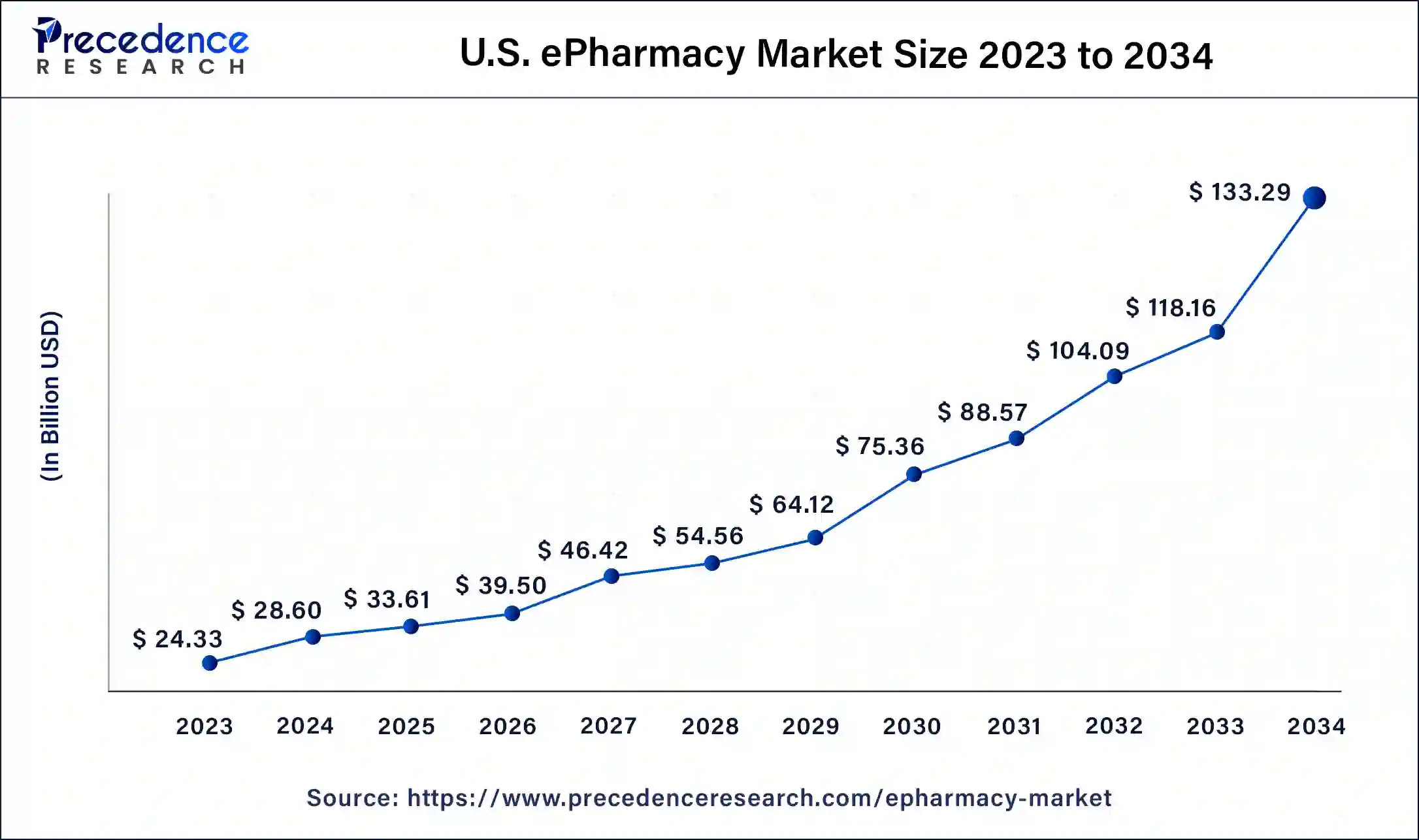
The U.S. ePharmacy market size was estimated at USD 33.61 billion in 2025 and is predicted to be worth around USD 147.71 billion by 2035, at a CAGR of 15.96% from 2026 to 2035.
North America captured the largest share of the market in 2025 due to the surging adoption of e-commerce, the rising geriatric population, the growing prevalence of chronic diseases, and the high acceptance of healthcare technologies. It is estimated that the geriatric population will constitute around 24% of the total US population by 2060. Moreover, more than half of the US population is suffering from one or more chronic diseases. The rising adoption of telehealth platforms and the growing popularity of ePrescription has supported the growth of the ePharmacy market in the region. Around 80% of the population in the US use ePharmacy. The rising shift toward the direct-to-patient model is expected to foster the market in North America during the forecast period.
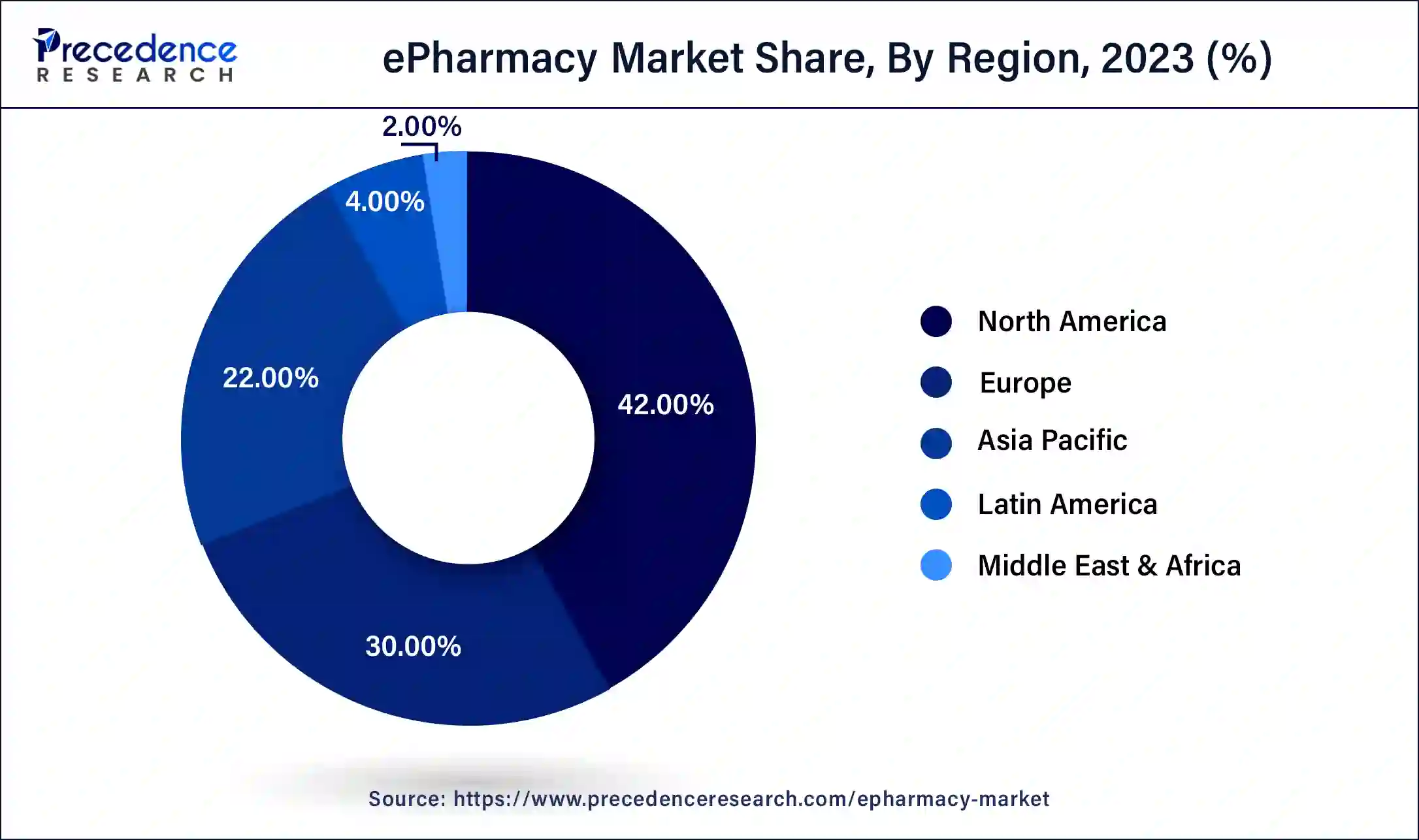
The market in Asia Pacific is expected to expand at a significant growth rate during the forecast period. The market growth in the region is attributed to the rising penetration of internet, growing adoption of smartphones, and the growing popularity of e-commerce. Moreover, the rising government initiatives to boost the adoption of healthcare technologies among the population and support the healthcare industry propel the market. For instance,
- The government of India has started an initiative “Jan Aushidhi program” under the flagship Digital India to educate people and make generic medicines available at affordable prices.
India ePharmacy Market Trends
Digital healthcare ecosystems help India expand. Demand in urban and rural regions is motivated by the extension of access. Platforms combine consultations, diagnostics, and medicine delivery. Firms, such as PharmEasy, Tata 1mg, and Apollo, reinforce their presence. An increase in small towns enhances accessibility. Increasing digital awareness and access to health services keep amping up adoption among varied population groups.
There is significant growth in the potential of the ePharmacy industry in emerging economies such as India, due to its large population and fast digital transformation. The growth, a combination of government initiatives to encourage and promote digital technology adoption, and internet penetration and smartphone usage, is rapidly increasing the number of online healthcare services. E-commerce has accelerated ePharmacy expansion through its provision of convenient shopping with vast medication availability and delivery without human contact.
- In February 2023, the Network of Maharashtra by People Living with HIV/AIDS (NMP+) established TAAL+ as India's initial e-pharmacy initiative supervised by people who live with HIV/AIDS. The e-pharmacy enables patients with HIV or any chronic condition to place medicine orders online for home delivery service throughout India.
What Are the Driving Factors of the ePharmacy Industry in Europe?
Europe is expected to grow at a significant rate during the forecast period. Europe develops because of effective regulatory systems. E-prescriptions lead to rapid healthcare system adoption. Market growth is spearheaded by countries such as Germany and the UK. Accessibility is enhanced by the integration of cross-border prescription systems. Older populations create pressures to find care at home. Compliance and safety are some of the things that help online pharmacies build trust.
Germany ePharmacy Market Trends
E-prescriptions are mandatory, and e-prescriptions are expanding in Germany. Pharmacies are being transformed very quickly by digital systems. Prescription filler websites are taking off. Discounted models appeal to money-conscious buyers. The deterioration of physical pharmacies increases dependence on the Internet. There is strong engagement in chronic care segments.
Company Profile
CVS Health Corporation
- Headquarters: Woonsocket, Rhode Island, U.S.
- Founded: 1963
- Business overview: CVS Health Corporation is a major healthcare company originally founded as a chain of drug stores and offers comprehensive care services. The company's key activities are operating retail locations, medical clinics, and pharmacy benefit management services, as well as supporting its customers.
- Products: Aetna Health app, CVS Caremark app, CVS Health app, and CVS Specialty app.
- Geographic presence: The Company operates across the U.S. and serves medical members in certain countries outside the U.S.
- Revenue: CVS Health reported USD 415.086 billion in revenue for the fiscal year 2026.
DocMorris
- Headquarters: Frauenfeld (TG), Switzerland
- Founded: 1993
- Business overview: DocMorris operates at the compelling intersection of healthcare, technology, and e-commerce, with a primary focus on customer-centric digital healthcare and accelerating medication efficacy. It provides comprehensive digital health services, including an e-commerce pharmacy, marketplace, and professional health products and services.
- Offerings: It offers a marketplace for health and personal care products, technology solutions, and telemedicine services, and online distribution of prescription and over-the-counter (OTC) medications, health, beauty, and personal care products, and digital services.
- Geographic presence: It operates in Germany, the Netherlands, Spain, France, and Switzerland.
- Revenue: The Company reported revenue of ₹106.37 billion in 2024.
Express Scripts
- Headquarters: St. Louis County, Missouri, U.S.
- Founded: 1986
- Business overview: Express Scripts is a renowned pharmacy benefit management company that is transforming the healthcare industry. Express Scripts works as an intermediary between health insurers, pharmacies, and patients, managing prescription drug benefits on behalf of its clients with safe and effective medications.
- Offerings: pharmacy benefit management services, specialty pharmacy services, home delivery pharmacy.
- Geographic Presence: Its business operates across the U.S., and among its largest clients is the U.S. Department of Defense's TRICARE program.
Amazon Pharmacy
- Headquarters: Spring, Texas
- Founded: 2020
- Business Overview: Amazon Pharmacy is an American online pharmacy that is a subsidiary of Amazon. This offers a good opportunity to explore the business's survival and sustainability in a totally different business environment and regulatory norms.
- Products: The Company offers free, two-day home delivery of prescriptions to Amazon Prime subscribers, along with prescription delivery, RxPass subscription, pillpack integration, and specialized programs.
- Geographic Presence: Its business operates across the U.S.
- Recent Development: In September 2026, Amazon Pharmacy collaborated with Solv, highlighting patients' real-time prescription delivery options like same-day delivery within the medical appointment booking process.
In May 2026, Amazon Pharmacy is expanding access to Novo Nordisk's Ozempic pill, an FDA-approved oral GLP-1 medication to treat type 2 diabetes.
NetMeds
- Headquarters: Chennai
- Founded: 2015
- Business Overview: NetMeds provides an online store for medicines and healthcare products, providing prescription and over-the-counter drugs, and healthcare and wellness products.
- Offerings: It allows users to book diagnostic tests and buy healthcare products such as skincare, family care, baby care, devices, surgical, and many more.
- Geographic Presence: Its business operates across a pan-India geographic footprint.
ePharmacy Market Companies
- The Kroger Co.: Online prescription refills. Provides home delivery services. Allows electronic vaccine appointment and medication administration systems.
- Apollo Pharmacy: A pharmacy that delivers fast. Provides teleconsultation services. Offers diagnosis and electronic medical record services via a platform.
- DocMorris: digital prescription redemption. Offers telemedicine appointments. Brings health and wellness products to the patients in Europe.
- Walgreen Co.: Allows electronic prescriptions. Offers same-day delivery. Offers virtual care and pharmacist support with the integration of a digital platform.
Other Major Key Players
- Rowlands Pharmacy
- Giant Eagle, Inc.
- Optum Rx, Inc.
- Walmart, Inc.
- CVS Health
- Express Scripts Holding Company
- Netmeds
Recent Developments
- In December 2025, three years after Ghana's e-pharmacy launch, Nigeria's Federal Government has adopted the technology. Former Vice President Dr. Bawumia, in collaboration with Ghana's Pharmacy Council, launched the digital platform in 2022 to enhance transparency and simplify medicine procurement. (Source: https://www.myjoyonline.com )
- In September 2025, Manipal Hospital, Gurugram, introduced an e-Pharmacy service with free home delivery of medicines in two hours for registered patients, utilizing logistics partners and speed post for districts. (Source: https://healthcareasiamagazine.com )
- In August 2025, Zepto Pharmacy launched, delivering medications in under ten minutes, marking Zepto's entry into e-pharmacy. Initially available in select areas of Hyderabad, Bengaluru, Delhi-NCR, and Mumbai, this expansion follows a year of preparation to enhance customer experience and compliance. (Source: https://www.exchange4media.com )
- In January 2024, Eli Lilly and Company revealed LillyDirect, a new digital healthcare platform. The platform allows patients to obtain drugs as little as US$ 25 a month.
- In January 2022, Hyphens Pharma International Ltd. introduced WellAwaye Pharmacy platform. This platform allows consumers to access various pharmaceutical services and also helps doctors with teleconsultations.
- In October 2024, eNavvi partnered with Mark Cuban Cost Plus Drug Company (MCCPDC) to let doctors utilize their digital prescription pad for writing prescriptions that would be sent to over 7,000 independent and major grocery pharmacy chains. Through their partnership, these entities aim to simplify medical prescriptions and enhance prescription price transparency as well as deliver increased convenience to patients.
- In October 2024, Swiggy Instamart partnered with PharmEasy to deliver prescription medication in under 10 minutes. Instamart has sold over-the-counter (OTC) medicine, like pain-relief sprays, in its app. This partnership illustrates Swiggy's growth in e-pharmacy to meet increasing demand (as they look to address the growing demand of patients wanting quick access to their medication).
- In March 2024, Amazon Pharmacy formed a strategic partnership with Eli Lilly to offer alternatives for migraine, obesity, and diabetes medications. These medications can also be delivered to patients' homes, increasing pharmacist access to medication management support.
Segments Covered in the Report
By Drug Type
- Over-the-counter Drugs
- Prescription Drugs
By Product Type
- Skin Care
- Dental
- Cold & Flu
- Vitamins
- Weight Loss
- Other
By End-user
- Hospitals & Clinics
- Primary Care Centers
- Nursing Homes
- Home Care Settings
- Others
By Platform
- App-based
- Web-based
By Payment Method
- Online Payment
- Cash On Delivery
By Region
- North America
- Latin America
- Europe
- Asia-pacific
- Middle and East Africa
For inquiries regarding discounts, bulk purchases, or customization requests, please contact us at sales@precedenceresearch.com
Frequently Asked Questions
Tags





Ask For Sample
No cookie-cutter, only authentic analysis – take the 1st step to become a Precedence Research client
 Get a Sample
.webp)



 sales@precedenceresearch.com
 Schedule a Meeting
