



Maritime Surveillance Market Trends, Leading Companies, Company Revenue / Sales Performance, Subscriber Growth, Pricing Strategies, Cloud Adoption, Infrastructure Expansion, Competitive Landscape, and Industry Outlook
Maritime Surveillance Market (By Component: Hardware, Software, Services; By Platform: Land-based, Vessel-based, Airborne, Space-based, Sub-Surface; By Application: Security & Surveillance, Safety & Navigation, Environmental & Resource Monitoring; By End-User: Defense & Naval Forces, Coast Guard & Border Security, Port & Infrastructure Authorities, Commercial & Maritime Industry) - Global Industry Analysis, Size, Trends, Leading Companies, Regional Outlook, and Forecast 2026 to 2035
Source: https://www.precedenceresearch.com/maritime-surveillance-market
 Get a Sample
 Table Of Content


What is the Maritime Surveillance Market Size?
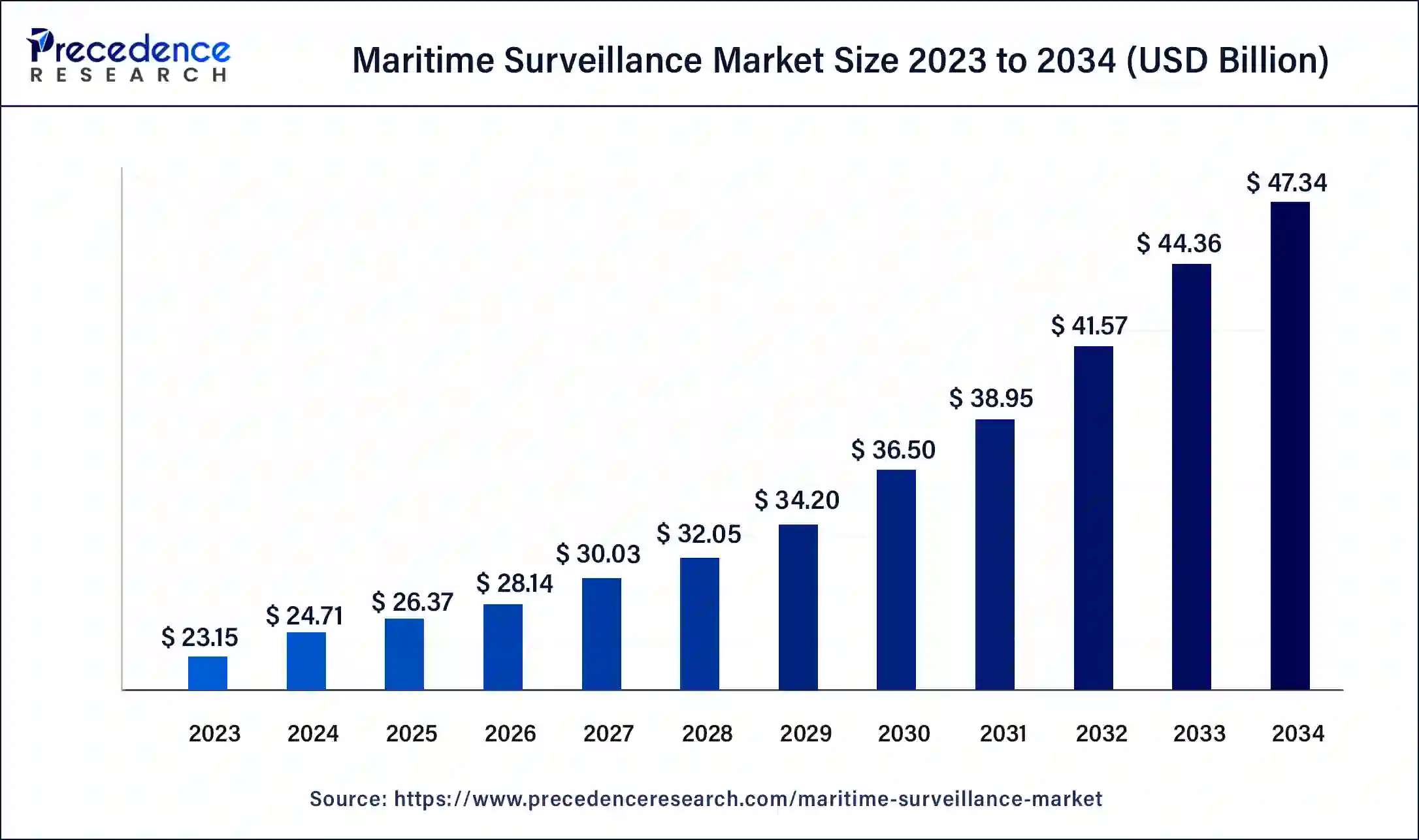
The global maritime surveillance market size was calculated at USD 26.37 billion in 2025 and is predicted to increase from USD 28.36 billion in 2026 to approximately USD 50.93 billion by 2035, expanding at a CAGR of 6.72% from 2026 to 2035. The North America maritime surveillance market size reached USD 9.32 billion in 2025. The increasing need for national security is the key factor driving the maritime surveillance market growth.
Maritime Surveillance Market Key Takeaways
- North America dominated the maritime surveillance market with the largest market share of 35.34% in 2025.
- By component, the hardware segment contributed more than 62.45% of market share in 2025.
- By component, the software segment is expanding at the fastest CAGR between 2026 and 2035.
- By platform, the vessel-based segment contributed to the highest market share in 2025.
- By platform, the subsurface segment is growing at a strong CAGR between 2026 and 2035.
- By application, the security & surveillance segment held a major market share in 2025.
- By application, the environmental & resource monitoring segment is expected to expand at the fastest CAGR from 2026 to 2035.
- By end user, the defense & naval forces segment generated the biggest market share of 56.60% in 2025.
- By end user, the port & infrastructure authorities segment is expanding at the fastest CAGR between 2026 and 2035
Market Overview
Maritime surveillance includes monitoring and observing maritime activities to ensure the security, effective management, and safety of seas and oceans. The maritime surveillance market encompasses a wide range of products, services, and solutions created for different stakeholders, including maritime authorities and governments. The process mainly includes tracking and detecting vessels, monitoring unethical activities such as piracy and smuggling, safeguarding navigation, and managing resources like fisheries.
Top 10 countries with the highest military expenditures in 2024
| Rank | Country | Spending (USD Billion) |
| 1. | United States | 905.5 |
| 2. | China | 407.9 |
| 3. | Russia | 294.6 |
| 4. | India | 73.6 |
| 5. | United Kingdom | 73.5 |
| 6.. | Saudi Arabia | 69.1 |
| 7. | Germany | 63.7 |
| 8. | France | 60.0 |
| 9. | Japan | 49.0 |
| 10. | South Korea | 43.8 |
Role of Artificial Intelligence in the Maritime Surveillance Market
In the maritime surveillance market, artificial intelligence (AI) plays an important role in improving naval forces' capabilities and defending maritime borders. Hence, AI-powered security systems are creating lucrative opportunities in the industry. Furthermore, AI transformed and bolstered the ability to perform surveillance and intelligence gathering. It enables AI to track, identify, and execute actions, which can further enhance maritime capabilities.
- In September 2024, Seadronix, a leading developer of AI and autonomous ship navigation solutions, announces the launch of its latest innovation, the NAVISS 2.0 True-AI Ship Navigation and Monitoring System, at the 2024 Maritime Fair. This enhanced version represents a significant leap forward in maritime situational awareness and safety.
Maritime Surveillance Market Growth Factors
- Increasing piracy and illegal activities are expected to propel market growth shortly.
- An increase in geopolitical tensions and territorial disputes.
- Innovations in technologies such as radar, sonar, and satellite imagery will likely help in the market expansion soon.
- The growing adoption of unmanned aerial vehicles (UAVs).
- Growing government investment in advanced surveillance systems to monitor and secure their coastlines can fuel the maritime surveillance market growth further.
Market Scope
| Report Coverage | Details |
| Market Size by 2035 | USD 50.93 Billion |
| Market Size in 2026 | USD 28.36 Billion |
| Market Size in 2025 | USD 26.37 Billion |
| Market Growth Rate from 2026 to 2035 | CAGR of 6.72% |
| Largest Market | North America |
| Base Year | 2025 |
| Forecast Period | 2026 to 2035 |
| Segments Covered | Component, Platform, Application, End user, and Regions |
| Regions Covered | North America, Europe, Asia-Pacific, Latin America and Middle East & Africa |
Market Dynamics
Driver
Expansion of maritime infrastructure
The ongoing modernization and expansion of maritime infrastructure globally is a crucial factor driving the growth of the maritime surveillance market. Additionally, there is an increasing need to protect this critical infrastructure against emerging threats. Investments in new terminals and economic zones that include advanced security technologies can help in the market expansion further along with the implementation of next-generation security solutions.
- In May 2024, NATO officially launched a new Maritime Centre for Security of Critical Undersea Infrastructure. The NATO Maritime Centre for Security of Critical Undersea Infrastructure (CUI) is a networking and knowledge center concentrating on CUI, which assists Commander MARCOM in making decisions, deploying forces, and coordinating action.
Restraint
Regulatory and compliance issues
The maritime surveillance market faces constraints regarding standardization of security protocols and regulatory compliance. Moreover, the regulatory environment generates a complex landscape for market players to navigate, which can potentially hamper the rapid deployment of innovative technologies and operational practices.
Opportunity
Clean energy and decarbonization
Rising shifts towards low-carbon fuels and technologies in the maritime surveillance market have introduced advanced security dynamics around the use of technology and fuel supply chains. Furthermore, the growing incorporation and utilization of 5G technology is anticipated to enhance communication capabilities in maritime operations for real-time data exchange and better coordination among operators.
- In July 2024, Latvian mobile communications and technology company LMT, in cooperation with the capital company of the Freeport of Riga Authority, provider of the port technical services SIA ‘LVR Flote,' conducted a maritime 5G demonstration in the port of Riga, providing a 5G connectivity solution after numerous tests and measurements.
Segment Insights
Component Insights
The hardware segment dominated the market in 2025 due to the extensive use of surveillance tools on maritime platforms, including radar systems, sonar cameras, and communication devices. The coastal and offshore areas these components make real-time monitoring, threat detection, and data collection possible. The government's increased spending on naval modernization initiatives and maritime security infrastructure contributed to the hardware segment's dominance.
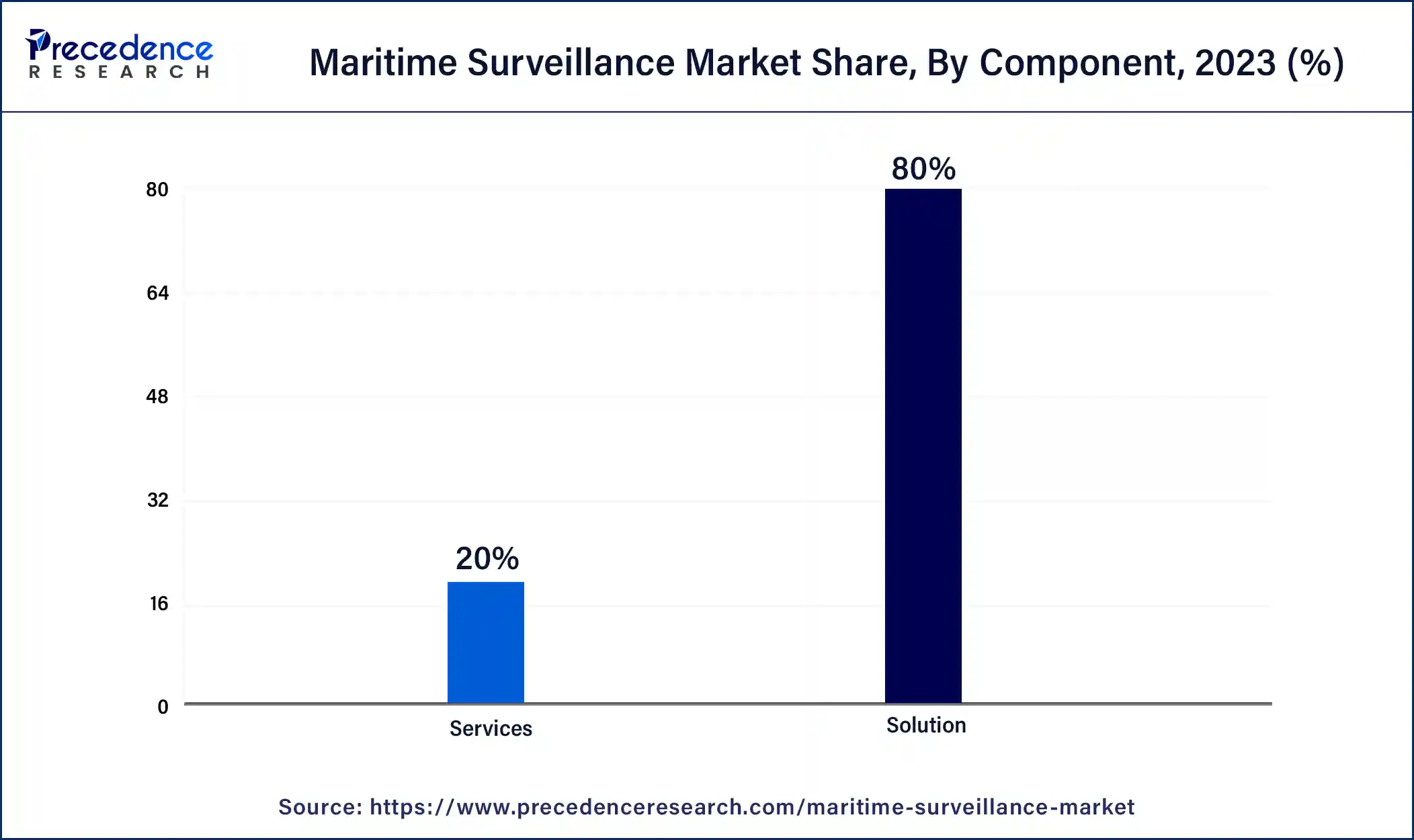
The software segment is expected to grow at the fastest CAGR in the coming years because real-time monitoring systems, data integration platforms, and AI-driven analytics are becoming more widely used. Large amounts of data gathered from sensors and surveillance devices are processed by sophisticated software, which enhances decision-making and operational effectiveness. The segment's growth is being accelerated by the increasing use of intelligent surveillance platforms and cloud-based monitoring.
Maritime Surveillance Market By Component, 2023-2025 (USD Million)
| By Component | 2023 | 2024 | 2025 |
| Hardware | 14,862.53 | 15,584.58 | 16,468.04 |
| Software | 4,463.98 | 4,855.77 | 5,320.15 |
| Services | 3,915.17 | 4,220.43 | 4,581.94 |
Platform Insights
Vessel-based segments dominated the market in 2025 since coast guard boats, patrol boats, and naval ships are essential for border security and maritime surveillance. These ships have sophisticated communication systems, radar, and cameras that allow for efficient monitoring throughout territorial waters. This segment's dominance was facilitated by growing naval fleet expansion and maritime security operations.
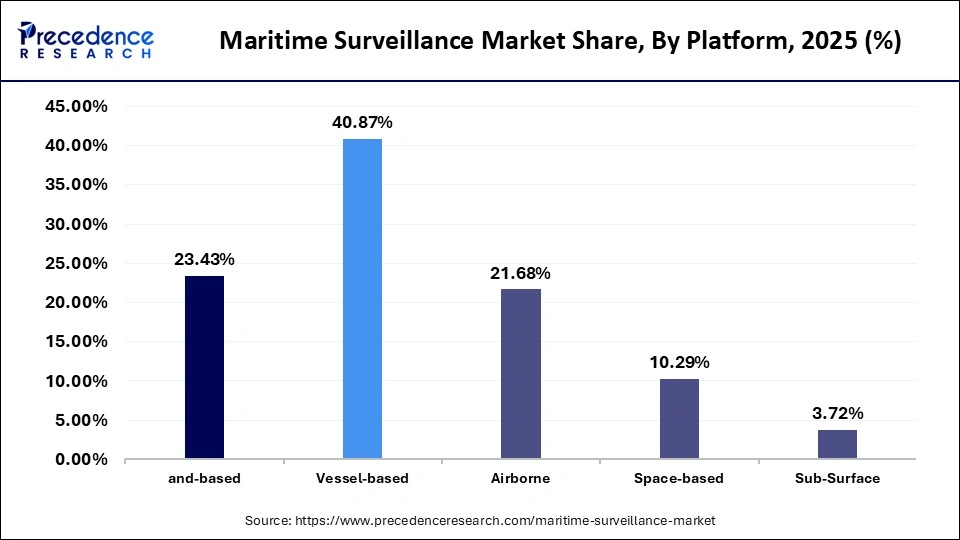
The subsurface segment is expected to grow at the fastest CAGR in the coming years because sonar sensors, autonomous underwater vehicles (AUVs), and underwater monitoring networks are among the underwater surveillance systems that are being used more frequently. These technologies aid in the detection of illicit maritime activity, underwater threats, and submarines. Growing investments in ocean monitoring and underwater defense are fueling this market's expansion.
Maritime Surveillance Market By Platform, 2023-2025 (USD Million)
| By Platform | 2023 | 2024 | 2025 |
| Land-based | 5,539.19 | 5,827.43 | 6,177.47 |
| Vessel-based | 9,769.15 | 10,221.21 | 10,778.58 |
| Airborne | 4,890.67 | 5,269.34 | 5,717.54 |
| Space-based | 2,234.30 | 2,454.57 | 2,714.30 |
| Sub-Surface | 808.37 | 888.23 | 982.25 |
Application Insights
The security & surveillance segment dominated the market in 2025 because of growing worries about piracy, illegal fishing, smuggling, and maritime border security. To keep an eye on maritime activity and maintain national security, governments and defense organizations are increasingly utilizing cutting-edge surveillance technologies. The need for maritime surveillance systems has increased due to rising geopolitical tensions and the need to protect the coast.
The environmental & resource monitoring segment is expected to grow at the fastest CAGR in the coming years due to increasing efforts to monitor marine ecosystems, detect pollution, and manage ocean resources. Maritime surveillance technologies are widely used to track oil spills, monitor climate change impacts, and support sustainable fisheries management. Rising environmental regulations and ocean conservation initiatives are supporting the growth of this segment.
Maritime Surveillance Market By Application, 2023-2025 (USD Million)
| By Application | 2023 | 2024 | 2025 |
| Security & Surveillance | 15,248.34 | 16,078.99 | 17,085.29 |
| Safety & Navigation | 5,222.32 | 5,557.22 | 5,960.64 |
| Environmental & Resource Monitoring | 2,771.02 | 3,024.56 | 3,324.19 |
End User Insights
The defense & naval forces segment dominated the market in 2025 since the main users of maritime surveillance systems are military and naval organizations. These organizations use cutting-edge monitoring technologies to safeguard maritime borders, identify threats, and guarantee safe navigation. The dominance of this segment has been bolstered by rising defense budgets and the modernization of naval surveillance infrastructure.
The port & infrastructure authorities segment is expected to grow at the fastest CAGR in the coming years because surveillance systems for infrastructure protection, vessel traffic monitoring, and port security are becoming more widely used. Ports are incorporating cutting-edge monitoring systems to enhance security and oversee the expansion of maritime commerce. Growing investments in digital port management systems and smart ports are propelling this market's expansion.
Maritime Surveillance Market By End User, 2023-2025 (USD Million)
| By End-User | 2023 | 2024 | 2025 |
| Defense & Naval Forces | 13,381.71 | 14,076.43 | 14,924.43 |
| Coast Guard & Border Security | 5,313.71 | 5,664.47 | 6,084.64 |
| Port & Infrastructure Authorities | 2,891.49 | 3,133.41 | 3,419.22 |
| Commercial & Maritime Industry | 1,654.78 | 1,786.47 | 1,941.83 |
Regional Insights
What is the U.S. Maritime Surveillance Market Size?
The U.S. maritime surveillance market size was exhibited at USD 7.55 billion in 2025 and is projected to be worth around USD 12.48 billion by 2035, poised to grow at a CAGR of 5.05% from 2026 to 2035.
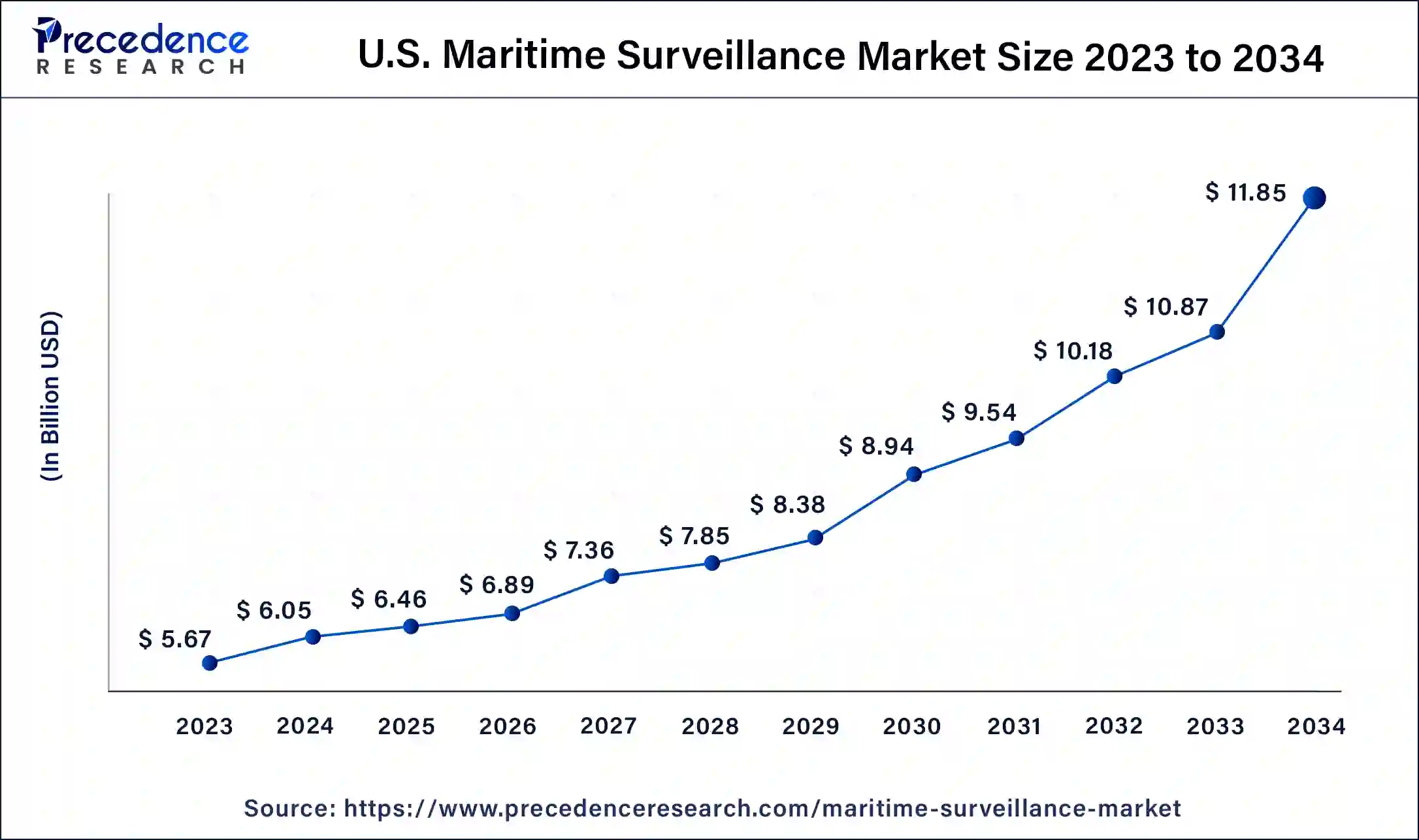
North America dominated the maritime surveillance market in 2025. The dominance of the region can be linked to the increasing integration of surveillance systems with homeland security systems. In North America, the U.S. holds a major market share due to intuitive marine technology and the increasing demand for maritime security. Furthermore, the U.S. Coast Guard and Navy update their surveillance capabilities regularly.
- In February 2024, French maritime surveillance provider Unseenlabs planned to launch its 12th and 13th nanosatellite no earlier than March, passing the halfway mark for a constellation slated to begin tracking vessels in near real-time in 2025. its radio-frequency geolocation network of 11 satellites can currently monitor and track signals from ships across the world's oceans every four to six hours.
U.S. Market Trends
The U.S. is continuously investing in advanced surveillance systems, such as drones and autonomous vehicles, for the monitoring of its maritime territories and shipping routes. Cybersecurity plays a vital role in the protection of maritime navigation and logistic systems, while AI-powered satellite imagery is being employed for the continuous monitoring and reporting of real-time events.
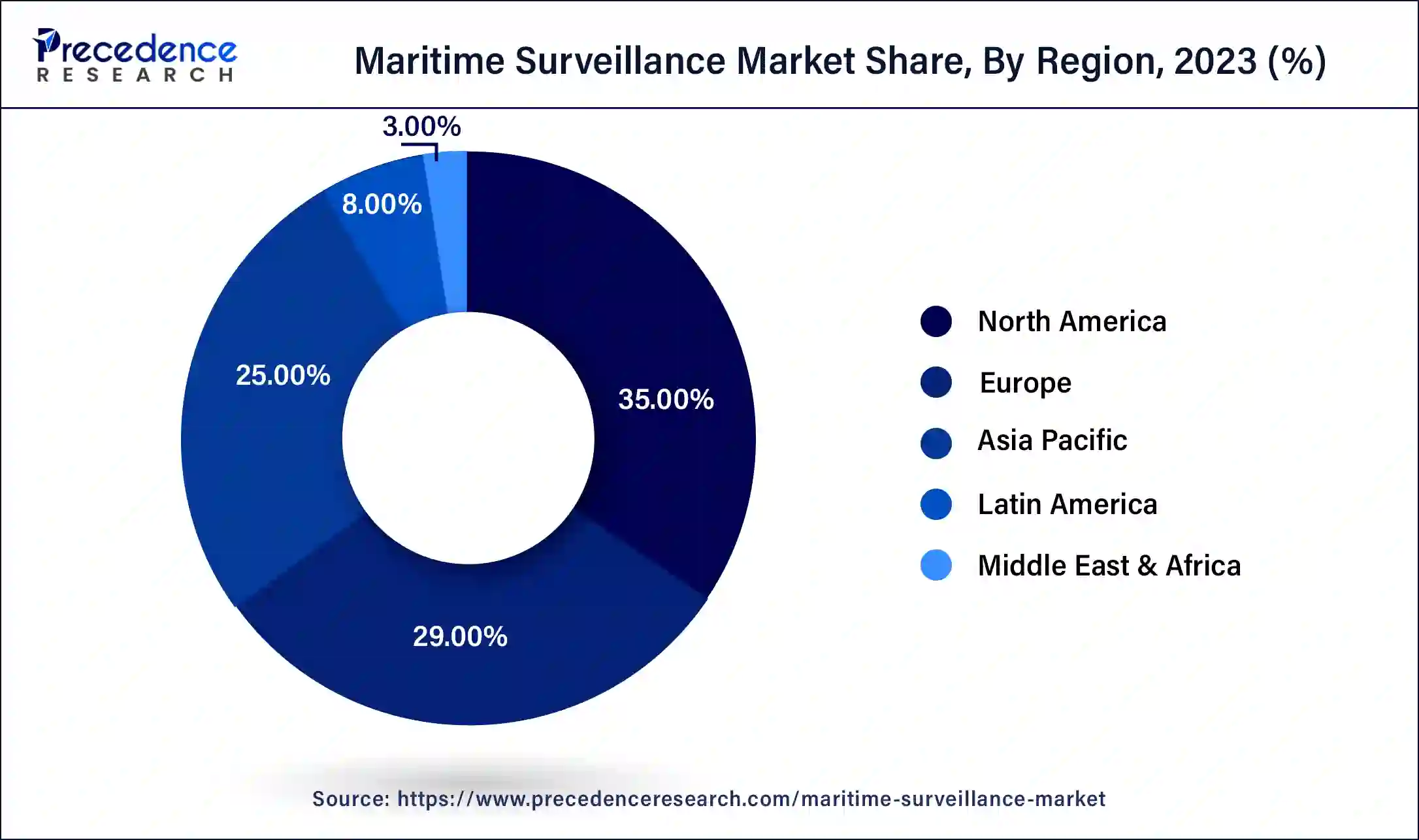
Asia Pacific will witness the fastest growth in the maritime surveillance market over the forecast period, driven by the region's extensive maritime boundaries and strategic importance coupled with the growing maritime trade activities. Moreover, Countries such as China, Japan, and India are investing largely in innovative surveillance technologies to protect their waters.
Singapore Market Trends
Singapore is upgrading its digital systems for effective maritime surveillance and for its shipping ports by employing IoT devices and AI to improve traffic control and security systems. Authorities are working on detecting suspicious vessels in their waters by using new inspection and reporting methods. Smart maritime infrastructure has also been a key focus in this area, aiming to achieve higher efficiency, security, and rapid response capabilities in one of the world's busiest maritime hubs.
What Are the Driving Factors of the Maritime Surveillance Market in Europe?
Europe is expected to grow at a significant CAGR during the forecast period. The aim in Europe is to establish an integrated maritime surveillance network across countries for managing national borders and illegal activities. Investments are concentrated on monitoring major sea routes.
France Market Trends
France is enhancing maritime enforcement activities by maintaining stringent control and surveillance over illegal activities that may occur in its maritime territory, with a particular focus on the protection of underwater communication cables. France is continually improving its reaction time and capabilities for dealing with any emerging maritime security threats.
What Are the Driving Factors of the Maritime Surveillance Market in Latin America?
Latin America is expected to grow at a notable CAGR during the forecast period. Latin America is enhancing its maritime surveillance to fight drug trafficking, illegal fishing, and environmental threats. The trend is towards increasing regional cooperation and adoption of maritime traffic management systems; thus, protecting maritime resources and awareness.
Brazil Market Trends
Brazil is currently investing heavily in maritime surveillance, with a focus on protecting its maritime oil and gas assets from illegal threats. Remote ocean areas are also being closely monitored using various advanced technological methods to stop illegal fishing. Port surveillance systems are being upgraded using various advanced radar and detection tools by integrating information collected from all available sources in order to protect both maritime trade and its marine resources more effectively.
Maritime Surveillance Market Companies
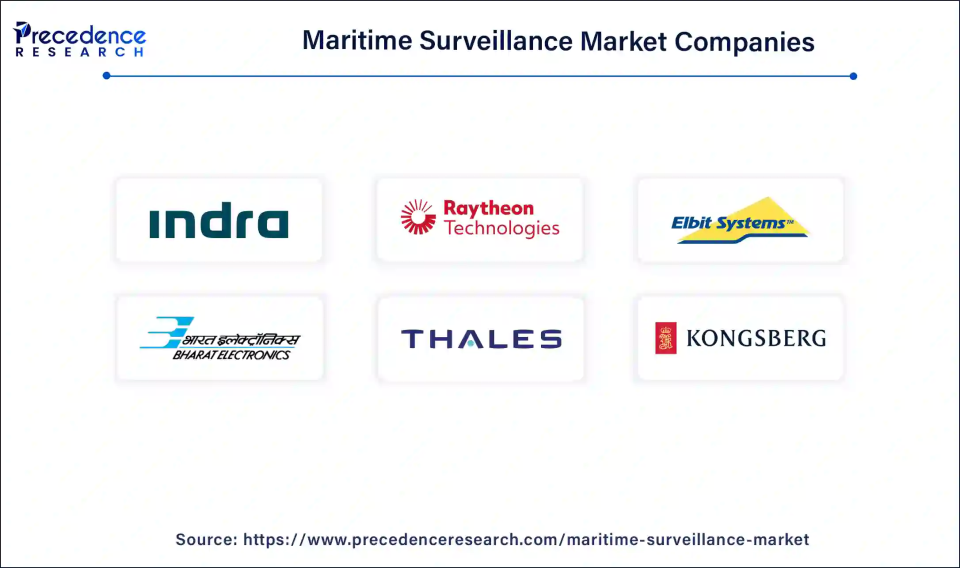
- Indra Sistemas, SA
- Raytheon Technologies Corporation
- Saab AB; Elbit Systems Ltd.
- Bharat Electronics Limited
- Thales Group; Dassault Aviation SA
- Kongsberg Gruppen ASA
- Furuno Electric Co., Ltd.
- SRT Marine Systems plc.
Recent Developments
- In April 2026, UK Prime Minister Keir Starmer and French President Emmanuel Macron launched a new international initiative to secure the Strait of Hormuz, a vital shipping route. Attended by around 40 countries, including India, it aims to ensure safe navigation and protect commercial shipping amid ongoing instability in the Middle East.
(Source: https://currentaffairs.adda247.com ) - In March 2026, the Indian Navy unveiled TRIDENT-SAMUDRA, an advanced AI system to boost maritime security and domain awareness in the Indian Ocean, at the AI Impact Summit 2026. (Source: https://shop.ssbcrack.com )
Segments Covered in the Reports
By Component
- Hardware
- Radar Systems
- Electro-Optical/Infrared [EO/IR] Sensors
- AIS Receivers
- Sonar & Underwater Sensors
- Communication Systems
- Software
- Surveillance Analytics
- AIS Management Software
- Command & Control Platforms
- Services
- Integration & Installation
- Maintenance & Support
- Training & Consulting
By Platform
- Land-based
- Vessel-based
- Airborne
- Space-based
- Sub-Surface
By Application
- Security & Surveillance
- Border Control
- Anti-Piracy
- Illegal Activity Detection
- Safety & Navigation
- Search & Rescue [SAR]
- Vessel Traffic Management
- Environmental & Resource Monitoring
- IUU Fishing Prevention
- Oil Spill Tracking
By End-User
- Defense & Naval Forces
- Coast Guard & Border Security
- Port & Infrastructure Authorities
- Commercial & Maritime Industry
By Region
- North America
- Asia Pacific
- Europe
- South America
- Middle East & Africa
For inquiries regarding discounts, bulk purchases, or customization requests, please contact us at sales@precedenceresearch.com
Frequently Asked Questions





Ask For Sample
No cookie-cutter, only authentic analysis – take the 1st step to become a Precedence Research client
 Get a Sample




 sales@precedenceresearch.com
 Schedule a Meeting
