



Denmark Opens EUs First Full-Scale CO2 Storage Site
Published: 22 Sep 2026
Author: Vidyesh Swar



In September 2026, Denmark officially opened the Greensand carbon storage project, marking the start of commercial operations at what project developer INEOS describes as the European Union’s first full-scale facility for permanent carbon dioxide (COâ‚‚) storage. King Frederik X of Denmark inaugurated the facility at the Port of Esbjerg on September 18. INEOS Energy leads the Greensand project in partnership with Harbour Energy and Denmark’s state-owned North Sea Fund (Nordsøfonden). The project initially has the capacity to store up to 400,000 tons of COâ‚‚ annually. However, the partners plan to expand this capacity to between 4 million and 8 million tons per year as demand for permanent carbon storage increases.
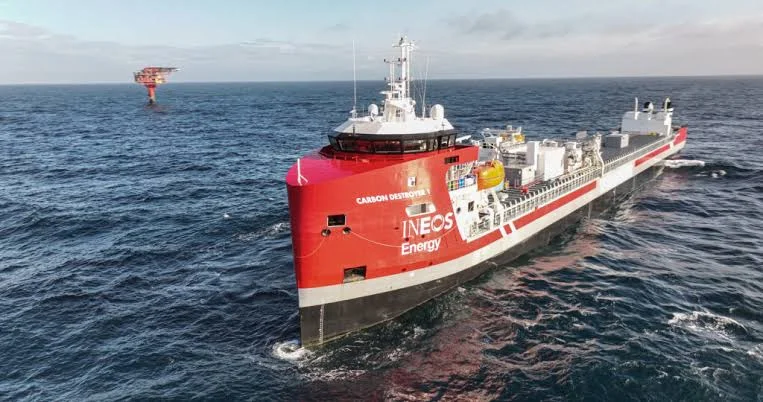
During the first phase, much of the captured COâ‚‚ will come from Danish biomethane plants. After capture, the COâ‚‚ will be liquefied and transported by truck to a dedicated terminal at Esbjerg. From there, the Carbon Destroyer 1, a purpose-built COâ‚‚ carrier, will transport the liquefied carbon dioxide offshore. The project will then inject the COâ‚‚ into the depleted Nini West oil reservoir, located approximately 250 kilometers off Denmark’s coast and around 1,800 meters underneath the seabed.
The start of commercial operations also highlights a significant step for Europe’s broader carbon capture and storage (CCS) plans. The European Union aims to establish annual COâ‚‚ injection capacity of at least 50 million tons by 2030. By 2040, the target could rise to approximately 250 to 280 million tons annually. While Greensand’s planned expansion would represent only part of this requirement, the project establishes operating infrastructure that industrial emitters could potentially use as carbon capture capacity expands across Europe.
Impact on the Chemical Market
Carbon capture and storage is increasingly being considered for industries where process emissions remain difficult to eliminate through electrification or renewable energy alone. Sectors such as cement, steel and chemicals could use CCS to address emissions that are challenging to remove through conventional decarbonization measures. Denmark and other North Sea countries are increasingly exploring the use of depleted offshore oil and gas reservoirs in order to establish a regional market for permanent COâ‚‚ storage.
With commercial operations now underway, the Greensand project also provides Denmark with infrastructure for permanent COâ‚‚ storage and adds to the growing carbon capture and storage network developing across the North Sea.
Impact on the Post Combustion Carbon Capture and Storage Market
The global post-combustion carbon capture and storage market size accounted for USD 8 billion in 2026 and is expected to exceed USD 37.63 billion by 2035, growing at a CAGR of 18.82% from 2026 to 2035.
According to Precedence Research, the market is driven by several factors contributing to its growth and impact on substantial decarbonization. These technologies can capture and store carbon dioxide emissions, decreasing greenhouse gas emissions and modifying climate change impacts. Also, the use of sustainable technologies in industries such as manufacturing and chemicals drives the demand for carbon capture and storage solutions. These industries recognize the need to control CO2 emissions and meet emission reduction targets. Through carbon capture and storage technologies, they can effectively capture and store CO2 emissions, allowing them to meet regulatory requirements and increase their environmental performance.
Rising carbon emissions across the world and a growing concern about the impact of carbon on the environment have favored the adoption of carbon capture and storage across the globe, thus boosting the post-combustion carbon capture and storage market. Governments worldwide are working on promoting this technology through pilot projects in different industries. The technology is accepted for its potential as a large-scale solution to achieve ambitious CO2 emission reduction targets and address climate control objectives.