



Dexcom Further Advances Vision of Glucose Biosensing for All
Published: 17 Jul 2026
Author: Towards Healthcare



DexCom, Inc., the worldwide leader in glucose biosensing, today announced at Aspen Ideas: Health a series of milestones that advance its dream of creating glucose biosensing more acceptable. Particularly, the organization announced pediatric clearance for the Stelo Glucose Biosensor and the launch of its entirely reimagined Stelo app experience in July for Apple iPhone and Android users in the United States.
“Glucose matters for everyone, and better understanding it can help prevent serious health complications,” said Jake Leach, president and CEO of Dexcom. “That’s why we’re working to expand access to glucose biosensing to make preventive, personalized care a reality and make our Stelo app experience more approachable with real-time insights that help people act earlier, before disease takes hold."
The significance of glucose awareness and increasing access to biosensing techniques the focus of a discussion at Aspen Ideas: Health, where Leach will join biochemist and New York Times bestselling author Jessie Inchauspé and moderator Ami B. Bhatt, MD, FACC, and chief novelty officer of the American College of Cardiology. Together, they explore the role of glucose in overall health, the promise of targeted preventive care, and the continued systemic transformation needed to ensure innovative biosensing technologies are available to more people.
Stelo Receives Clearance for Expanded Indication for Pediatric Use.
Earlier this month, Stelo received FDA clearance, increasing its indication for applications from adults ages 18 and older not using insulin to recently include children ages 2 years and older not using insulin. This milestone increases access to glucose in the millions of families at a time when youth-onset Type 2 diabetes is expected to rise, and metabolic syndrome has become progressively prevalent among 4.5% of youth younger than 18 years old in the United States. According to the Centers for Disease Control and Prevention (CDC), the increasing prevalence of Type 2 diabetes in children has increased significantly over the last 20 years, and projections suggest cases could continue to rise by 700%.2
By carrying the accessibility and convenience of a glucose biosensor without a prescription to children and adolescents not using insulin, Stelo has the strength to empower pediatric consumers, along with their caregivers, with valued glucose data that support healthier lifestyle choices and foster increasing awareness of metabolic health earlier in life.
Dexcom Begins the Rollout Of Its Reimagined Stelo App Experience Starting In July, with Future Plans For Global Expansion
As medical care begins to shift toward prevention and personalization, Dexcom believes glucose biosensing plays a significant role in supporting people to better understand how everyday choices affect their health. The reimagined Stelo experience is intended to make glucose insights simple to understand and act on, supporting consumers in building awareness of how food, activity, sleep, and stress affect their overall health.
Dexcom reiterated its plans to increase the availability of Stelo worldwide, with launches anticipated in the United Kingdom, Australia, New Zealand, and South Korea beginning later this year and continuing into 2027, growing access to glucose biosensing and metabolic health insights to many people worldwide.
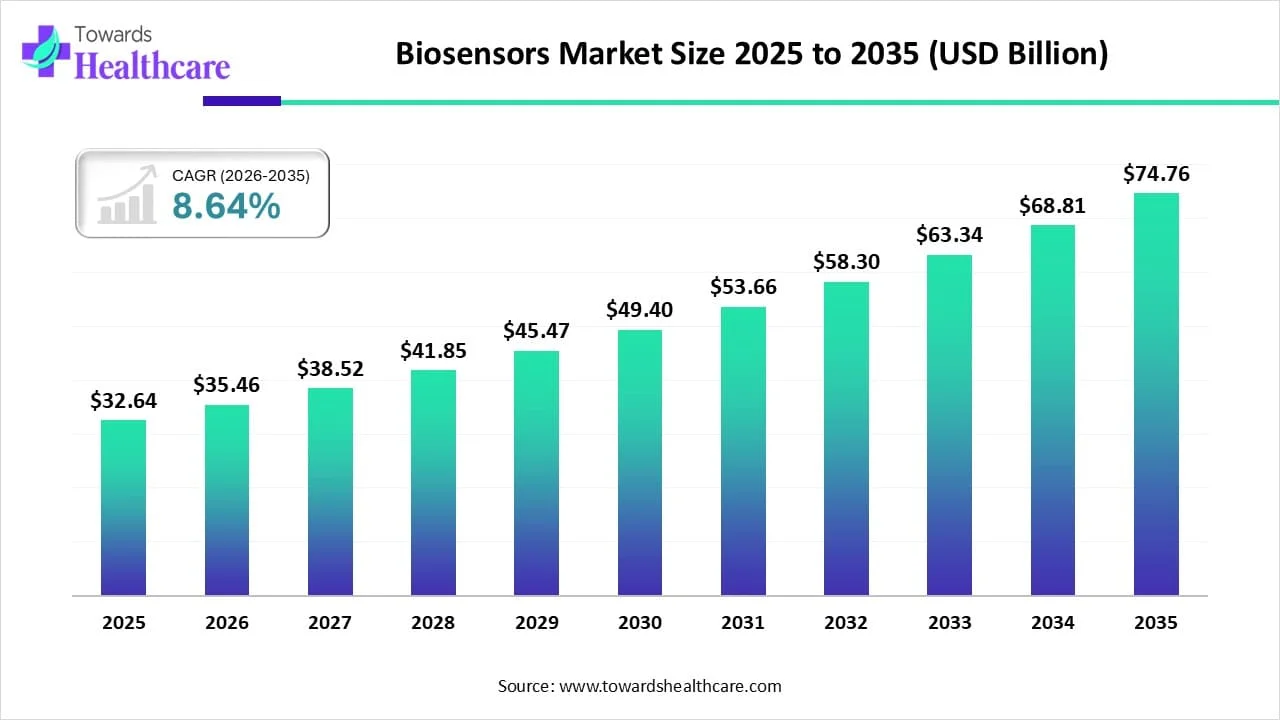
According to Towards Healthcare, the biosensors market is projected to experience significant growth, with estimates suggesting the market size will increase from USD 35.46 billion in 2026 to approximately USD 74.76 billion by 2035, representing a compound annual growth rate (CAGR) of 8.64% from 2026 to 2035, driven by recent advancements in biosensors that identify residual amounts of healthcare in the wastewater of municipal management plants. This is of specific importance to prevent excessive release of polluted water in the environment and exposure of organisms in water to drugs. The applications of biosensors are different and diverse. The advancement and application of biosensing technologies have allowed significant advancements in sectors such as disease identification, food safety, and environmental monitoring. The versatility of such biosensors enables them to address a broad range of analytical complexities across these and other sectors.
About Dexcom
Dexcom authorizes people to take control of their health via innovative biosensing technology. Founded in 1999, Dexcom has pioneered and set the standard in glucose biosensing for more than 25 years. Its technology has transformed how people manage diabetes and track their glucose, helping them feel more in control and live more confidently.
A recent report by Towards Healthcare highlights that the Biosensors Market is witnessing growth because biosensor platforms offer the versatility needed for incorporating environmental, metrological, and operational parameters at the design phase. Biosensor devices that integrate biological and electronic components play a significant role in detecting and computing biological substances. Whether they’re applied for diagnosing diseases, monitoring environmental conditions, or safeguarding food safety, biosensors offer valuable insights rapidly and precisely. These tools rely on biorecognition elements and transducers to turn biological connections into quantifiable signals.