



FDA Broadens Access to Over-the-Counter Naloxone Nasal Spray for Opioid Overdose
Published: 17 Jul 2026
Author: Towards Healthcare



The U.S. Food and Drug Administration (FDA) approved another over-the-counter (OTC) intranasal naloxone product, Rextovy, a 4 milligram (mg) naloxone hydrochloride nasal spray for the evolving management of opioid overdose. Consumers directly purchase this product without a prescription in places like convenience stores, pharmacies, and online. This action aligns with President Trump’s Great American Recovery Initiative, a federal effort to address the U.S.’ addiction and substance abuse disorder crisis and coordinate the government's strategies for prevention, management, and chronic recovery.
“Reducing opioid overdose deaths is a top priority for the FDA,” said Mike Davis, M.D., Ph.D., Acting Director of the Center for Drug Evaluation and Research (CDER). “Today’s approval of an additional over-the-counter naloxone nasal spray supports wider access and provides an additional choice for consumers. Empowering persons without healthcare training to take immediate action with these products has been proven to save lives.”
Naloxone is a medicine that rapidly reverses the effects of opioid overdose and is the standard management for opioid overdose. Rextovy is a supplementary life-saving therapeutic approved by the FDA to reverse an opioid overdose and is sold directly to consumers and contains the same active component as other naloxone nasal sprays. The obtainability of multiple approved formulations increasing access and market accessibility, encourages competition that lessens expenses, and provides substitute sourcing options.
The number of overdose deaths has dramatically lessened since the first FDA approval of an OTC naloxone nasal spray in 2023. Drug overdose persists as a significant public health challenge in the U.S., mainly driven by synthetic opioids such as illicit fentanyl. In the 12 months ending in August 2023, 111,451 overdose deaths were reported; in the 12 months ending in December 2025, 68,632 overdose deaths were reported.
“Immediate access to naloxone nasal sprays is essential when a person is experiencing an overdose, and the FDA remains committed to ensuring nonprescription options are widely available,” said Karen Murray, M.D., Director of the Office of Nonprescription Drug Products in CDER. “We are proud of the dedicated work our review divisions put into making this approval possible, and we encourage any manufacturer seeking to market a nonprescription naloxone product to contact the agency to initiate a conversation.”
When using Rextovy, certain people experience symptoms when they regain consciousness, resulting in overdose reversal, like shaking, sweating, feeling angry, or nausea. The product is safe for application even when it is uncertain whether opioids are present in the person’s system. The product’s packaging involves pictorial directions with five clear steps, involving calling 911 after giving the first dose.
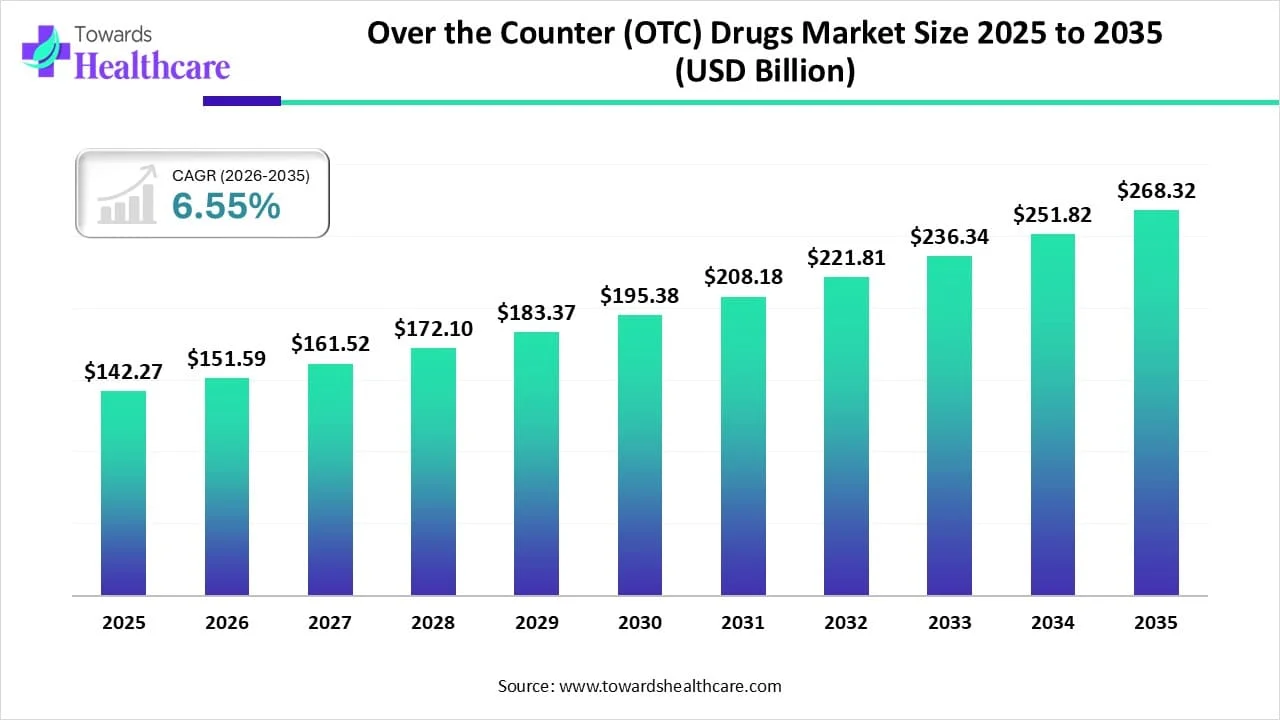
According to Towards Healthcare, the over the counter (OTC) drugs market is projected to experience significant growth, with estimates suggesting the market size will increase from USD 151.59 billion in 2026 to approximately USD 268.32 billion by 2035, representing a compound annual growth rate (CAGR) of 6.55% from 2026 to 2035, driven by over-the-counter (OTC) therapeutics are those that sold directly to patient without a prescription. Over-the-counter (OTC) therapeutics, also reffer as non-prescription therapeutics, are broadly used for treating a variety of minor and self-limiting conditions without a physician’s prescription. OTC medications improve medical care accessibility, lower expenses, and increase patient self-care. Deprived of a formal prescription, many patients utilize over-the-counter (OTC) therapeutics as their first line of therapy since they are inexpensive and available from small pharmacies, street sellers, and friends and family. OTC medicines relieve aches, pains, and itches. It also prevents or cures diseases, such as tooth decay and athlete's foot.
About Trak Ground Wear
The FDA, an agency in the U.S. Department of Health and Human Services, protects the public's medical care by assuring the effectiveness, safety, and security of human and veterinary drugs, vaccines, and other biological products for human use, and medical tools. The agency is accountable for the safety and security of nation’s food supply, dietary supplements, cosmetics, radiation-emitting electronic products, and modifiable tobacco products.
A recent report by Towards Healthcare highlights that the over-the-counter (OTC) drugs market is witnessing growth because the use of OTC drugs is related to significant benefits, such as reducing doctor visits and lower expenses as compared with prescription drugs. Over-the-counter (OTC), or nonprescription, therapeutics are products that consumers purchase in pharmacies, supermarkets, and other retail stores, as well as online without a prescription. These medicines are deemed safe and efficient treatments by the U.S. Food and Drug Administration and various health authorities around the world. These medicines manage common, self-treatable health conditions and symptoms like the common cold, minor pain, allergies, and various conditions that impact large sections of the population