



Cedars-Sinai Study Identifies Biomarkers That May Predict PRP Success in Knee Osteoarthritis
Published: 09 Jul 2026
Author: Towards Healthcare



Researchers Explore Why PRP Works for Some Patients
Researchers from Cedars-Sinai Health Sciences University have identified biological markers that may help predict which patients with knee osteoarthritis are most likely to benefit from platelet-rich plasma (PRP) therapy. Published in the Orthopaedic Journal of Sports Medicine, the study marks an important step toward personalizing regenerative medicine and improving treatment outcomes for individuals suffering from chronic joint pain and mobility limitations.
PRP Composition May Influence Treatment Response
Platelet-rich plasma therapy involves collecting a patient's blood, processing it to concentrate platelets and plasma, and injecting the preparation into the affected knee to encourage tissue repair. Investigators found that approximately 60% of study participants experienced meaningful improvements in pain and knee function. Patients who responded well generally had lower concentrations of specific cellular and protein biomarkers within their PRP samples.
Biomarkers Could Guide Personalized Therapies
According to the corresponding author, Dr. Dmitriy Sheyn, patients with higher concentrations of certain biomarkers showed weaker responses to treatment, suggesting that the biological composition of PRP differs significantly between individuals. These findings indicate that analyzing PRP before treatment could help physicians identify suitable candidates, optimize therapeutic decisions, and better understand the mechanisms responsible for successful regenerative outcomes in osteoarthritis.
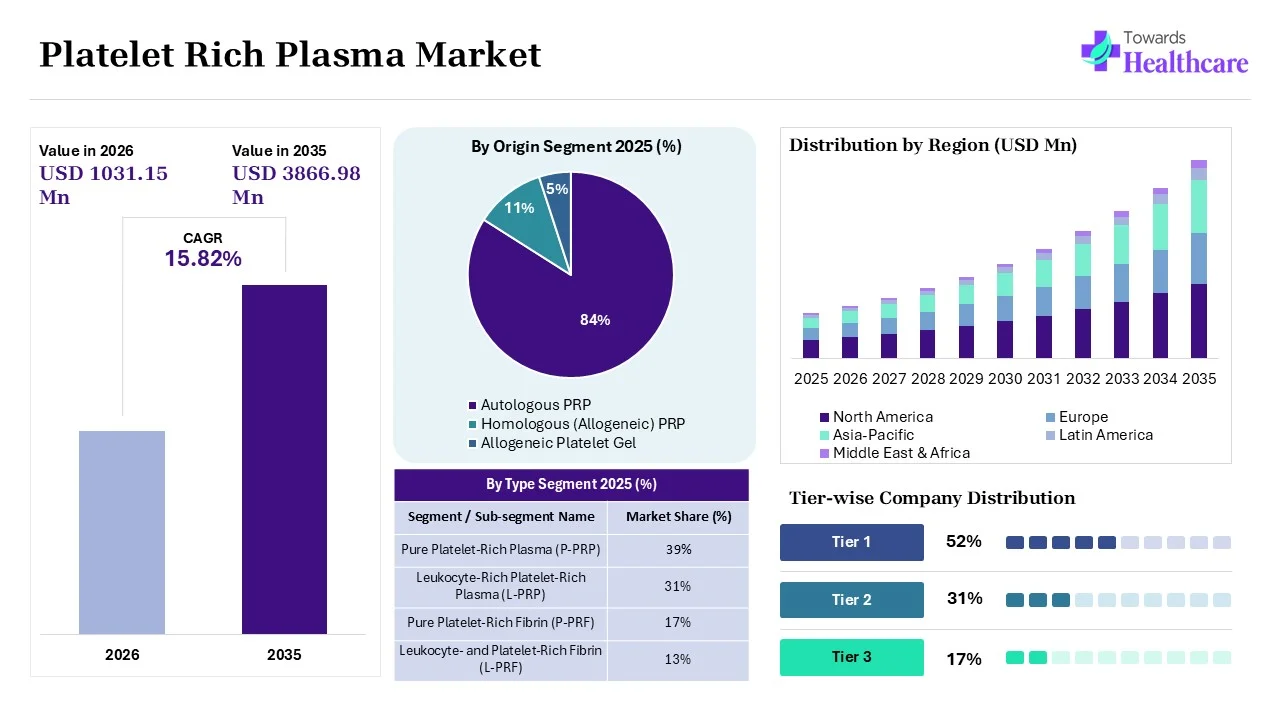
According to Towards Healthcare, the platelet rich plasma market is projected to experience significant growth, with estimates suggesting the market size will increase from USD 1031.15 million in 2026 to approximately USD 3866.98 million by 2035, representing a compound annual growth rate (CAGR) of 15.82% from 2026 to 2035, driven by increasing demand for regenerative therapies, rising sports injuries, expanding orthopedic applications, growing aesthetic procedures, technological advancements in PRP preparation systems, favorable clinical outcomes, increasing healthcare investments, and broader adoption across medical specialties.
Findings Support Future PRP Innovation
Senior author Dr. Bert Mandelbaum described the research as an important first step toward identifying the active components responsible for PRP's therapeutic effects. Although the study was relatively small and lacked a placebo comparison group, the results provide valuable insights for developing more targeted arthritis therapies. The research team plans to continue investigating PRP biology, aiming to enhance treatment effectiveness and advance next-generation regenerative medicine solutions for musculoskeletal disorders.
A recent report by Towards Healthcare highlights that the platelet-rich plasma market is witnessing growth due to increasing prevalence of musculoskeletal disorders, rising preference for minimally invasive treatments, expanding clinical research, growing awareness of regenerative medicine, supportive physician adoption, improved treatment efficacy, and increasing applications in wound healing and aesthetics.