



Global Biotech Summit Set to Strengthen UAE’s Biotechnology and Protein Chip Ecosystem
Published: 26 Aug 2026
Author: Towards Healthcare



Abu Dhabi to Host Global Biotechnology Leaders
The Global Biotech Summit is set to take place in Abu Dhabi on November 11–12, 2026, bringing together regional stakeholders from biotechnology, pharmaceuticals, advanced therapies, and life sciences. The event is positioned as a platform for innovation, investment, collaboration, and knowledge exchange across the biotechnology sector. According to the organizers, the summit will connect scientists, policymakers, investors, companies, and innovators, creating opportunities to discuss emerging technologies and partnerships.
The summit’s focus on biotechnology and healthcare innovation is relevant to the UAE’s interest in advanced research technologies. Its exhibition and conference format is expected to provide a setting where companies can present technologies, discuss research priorities, and build relationships with potential partners and investors.
Innovation, Investment and Collaboration Take Center Stage
The event is designed to bring together stakeholders from different parts of the biotechnology value chain. Its program includes an innovation floor, expert discussions, keynote sessions, workshops, networking opportunities, and meetings aimed at developing partnerships. The event also highlights startups, strategic collaborations, and investment opportunities.
These activities can help create greater visibility for emerging biotechnology platforms and encourage discussions between technology providers, research organizations, pharmaceutical companies, healthcare institutions, and investors. For the UAE, such interactions can support the development of a stronger local biotechnology ecosystem by connecting domestic organizations with international expertise and technology providers.
Protein Chip Technologies Could Gain Greater Attention
The summit could also support the development of the UAE protein chip market by increasing awareness of protein analysis technologies and their applications in biomedical research. Protein chips, including protein microarrays, can support biomarker discovery, protein profiling, drug research, clinical diagnostics, and precision medicine.
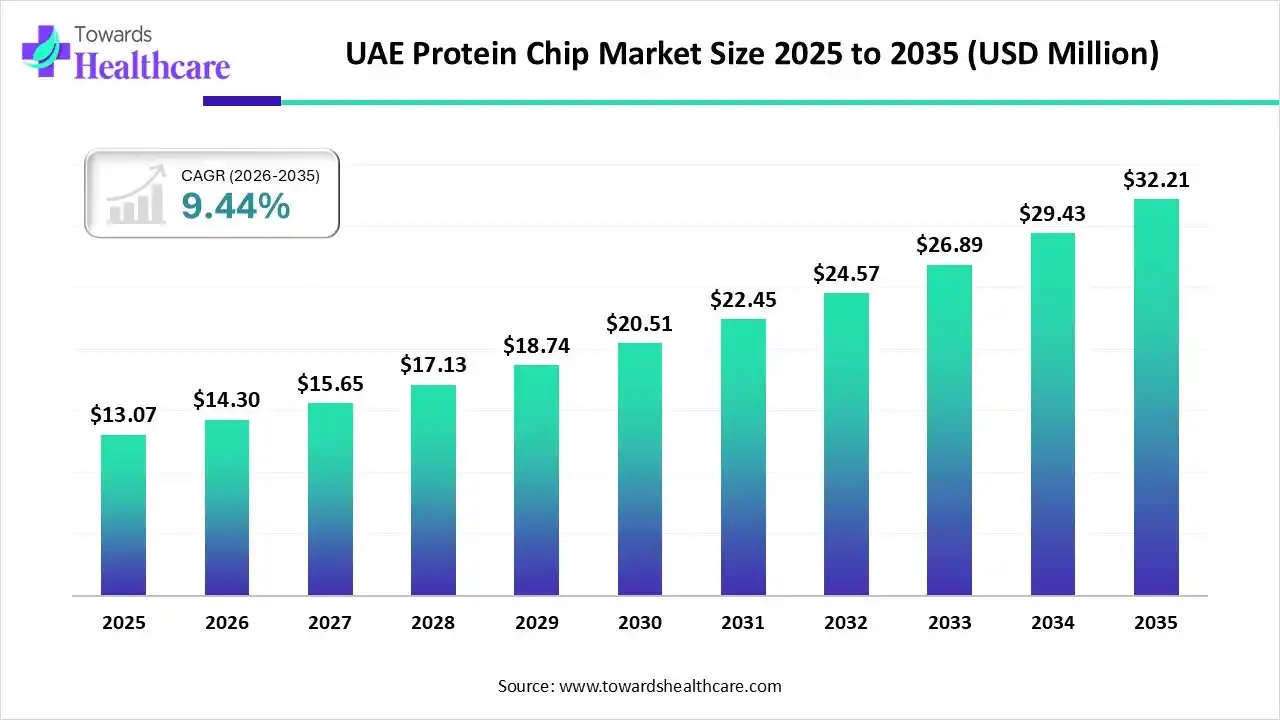
The UAE protein chip market is being supported by increasing investment in biotechnology, precision medicine, advanced healthcare infrastructure, and biomedical research. Market research indicates that the UAE protein chip market is expected to increase from approximately US$14.30 million in 2026 to US$32.21 million by 2035.
A biotechnology event that brings together researchers, healthcare organizations, technology companies, and investors can create opportunities for discussions around these applications. Greater interaction may also encourage partnerships focused on research, diagnostics, biomarker identification, and advanced proteomics.
A Platform for UAE Protein Chip Market Growth
According to Towards Healthcare, the UAE protein chip market is anticipated to grow from USD 13.07 million in 2025 to USD 32.21 million by 2035, with a compound annual growth rate (CAGR) of 9.44% during the forecast period from 2025 to 2035. Driven by surging investments in proteomics research and biomarker discovery for chronic illnesses, the UAE market is expanding rapidly. Key drivers include a strong national shift toward personalized medicine and high-throughput screening technologies. Additionally, integrating artificial intelligence with microarray platforms simplifies data analysis. This digital evolution streamlines clinical workflows, making advanced protein testing a staple in modern UAE diagnostic centers and academic research labs.
The Global Biotech Summit can contribute to the UAE protein chip market by creating a platform for technology discovery, networking, and potential commercial partnerships. Protein chip companies can use such industry gatherings to introduce their platforms, connect with research institutions, and explore opportunities with pharmaceutical and healthcare organizations.
The event may also help researchers and decision-makers understand newer approaches to high-throughput protein analysis, multiplex testing, and precision healthcare. As the UAE continues developing its biotechnology and life sciences capabilities, greater exposure to advanced proteomics technologies could support wider adoption of protein-based research and diagnostic tools.
Collaboration is another potential benefit. Partnerships between biotechnology companies, universities, hospitals, laboratories, and investors can help move protein chip technologies from research applications toward broader commercial and clinical use. Such collaboration may support biomarker discovery, drug development, and personalized healthcare initiatives.
Summit Supports UAE’s Broader Biotech Ambitions
The Global Biotech Summit arrives as the UAE continues to strengthen its biotechnology and life sciences ecosystem. By bringing global and regional participants together in Abu Dhabi, the event can provide a setting for scientific exchange, business development, and investment discussions.
For the protein chip market, the value of the summit lies less in one specific product launch and more in the connections and opportunities it can create. Increased engagement among technology developers, researchers, healthcare providers, and investors could support awareness and adoption of protein chip technologies in the UAE.
Overall, the summit represents an important industry platform for biotechnology innovation. Its emphasis on collaboration, investment, and emerging technologies can help strengthen the environment needed for advanced proteomics and protein chip applications to develop further in the UAE.
A recent report by Towards Healthcare highlights that the UAE protein chip market is witnessing growth due to emerging clinical opportunities. Massive potential lies in expanding localized drug discovery partnerships and expanding biotechnology infrastructure across the region. Developing affordable, point-of-care diagnostic chips will unlock untapped rural markets. Furthermore, collaborative ventures between government health sectors and global tech firms will likely pioneer next-generation disease surveillance tools.