



VA Launches Psilocybin Trial for Veterans with Treatment-Resistant Depression
Published: 10 Aug 2026
Author: Towards Healthcare



Clinical trial will evaluate effectiveness and safety of psilocybin to treat major depression in veterans, including those with concurrent post-traumatic stress disorder.
The U.S. Department of Veterans Affairs announced the launch of a novel clinical trial to assess the efficiency and safety of psilocybin to manage major depression in veterans, including those with concurrent post-traumatic stress disorder.
The novel trial comes after President Trump’s recent executive order on “Accelerating Medical Treatments for Serious Mental Illness,” which goal to highly clinical trial participation and speed up innovative research models and drug approvals for psychedelic medication.
VA’s trial is titled “Psilocybin Intervention for Veterans Overcoming Treatment-Resistant Depression,” or PIVOT, and seeks to pursue innovative solutions for veterans who have not responded to existing treatments.
“Far too many veterans are living with mental health conditions that don’t respond to available treatments,” said VA Secretary Doug Collins. “VA is pursuing all avenues to evaluate new treatments and offer meaningful relief for those who have worn the uniform. This clinical trial reflects another step toward this goal.”
The randomized, controlled trial enroll veterans identified with management-resistant major depressive disorder, with or deprived of concurrent PTSD, and comparation results between two psilocybin dosage levels. The research will also assess participants’ levels of depression before and after management, tolerability of adverse effects, and overall patient-stated depression.
The trial conducted in five locations: Birmingham VA Health Care System and Tuscaloosa VA Medical Center in Alabama, VA Portland Health Care System in Oregon, Corporal Michael J. Crescenz VA Medical Center in Philadelphia and VA Puget Sound Health Care System in Seattle.
The trial conducted in a safe, controlled, healthcare setting using biopharmaceutical-grade therapeutics under careful quality controls, stringent safety protocols that were developed with FDA, and in a setting that involves psychological support.
Furthermore, to this trial, VA is involved in 20 active clinical trials focused on psychedelic treatments for mental medical conditions. All VA research involving research into psychedelics is conducted under strict safety protocols and in full compliance with government guidelines.
The U.S. Food and Drug Administration has granted breakthrough therapy designation to major companies developing psychedelic substances, involving MDMA, psilocybin and LSD, enabling for accelerated review of these drugs. Clinical applications of these therapies outside of research only be measured by VA once FDA approval is granted.
VA strongly discourages self-medicating or attempting to substitute other mental health treatment choice with psychedelics or any other unprescribed substances. Proven, evidence-driven management, are presently available at VA facilities to managing veterans with mental health conditions. Veterans always consult their medical care providers before creating any management decisions.
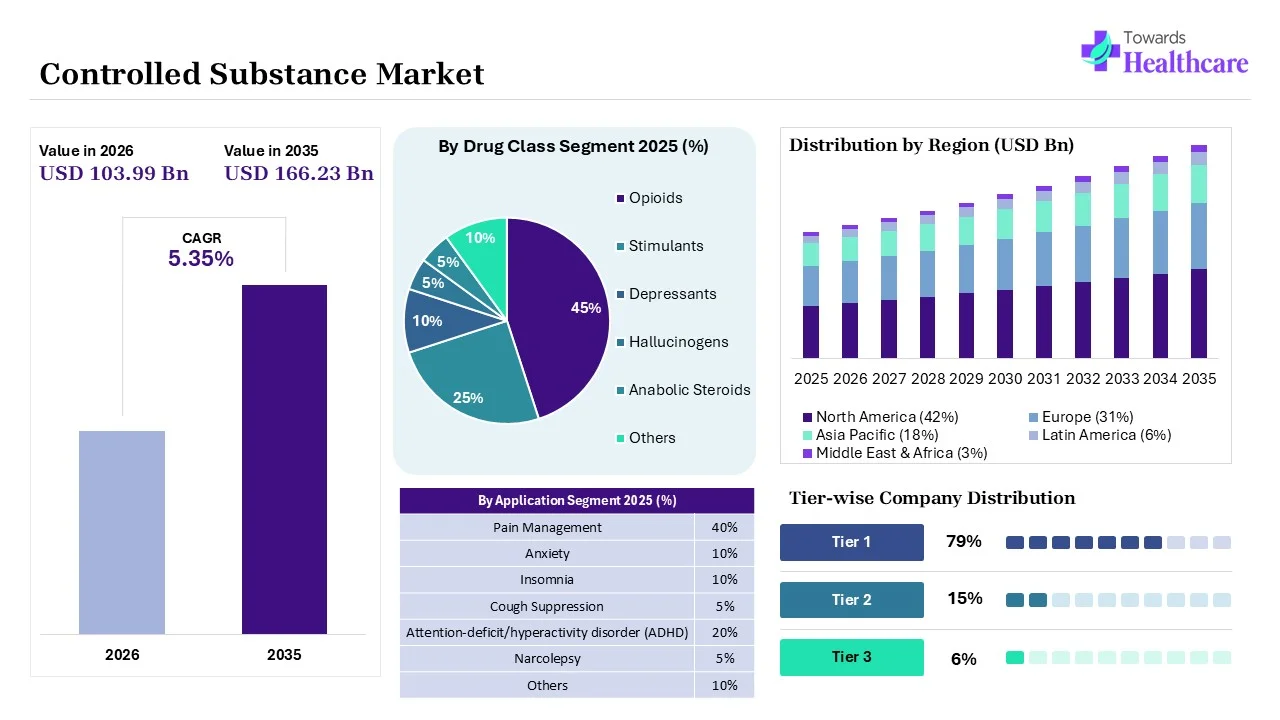
According to Towards Healthcare, the controlled substance market is projected to experience significant growth, with estimates suggesting the market size will increase from USD 103.99 billion in 2026 to approximately USD 166.23 billion by 2035.Expected to maintain a CAGR of 5.35% from 2026 to 2035.Controlled announcement medications have transformed the sectors of pharmacotherapy, offering patients with more suitable and efficient treatment choices for different healthcare conditions. As pharmaceutical technology endures to advance, the development of sophisticated delivery technology likely led to further an advancement in controlled release medications, improving patient care and quality of life. Developing controlled release medications presents some complexities. Formulation challenges is a designing-controlled release systems needs a thorough understanding of drug characteristics and suitable carriers, creating the formulation process more complex. The extensive application of controlled drug delivery technology continues to grow as investigators explore novel technologies and formulations to enhance drug targeting, improve bioavailability, and optimize therapeutic results in the different healthcare fields.
About DNA Script
The VA is positioned to offers support, as suitable, with transportation; caregiver support; homelessness; pharmaceutical advantages; clothing allowances; counseling in readjustment centers; and a full range of physical, psychological, dental, and social solutions. VHA employs more than 14,000 physicians and nearly 300,000 other health care specialists. VHA mainly exists to offers healthcare to military veterans. Runs the largest integrated health care technology in U.S, managing hundreds of hospitals, hospitals, and chronic care centers.
A recent report by Towards Healthcare highlights that the controlled substance market is growing as controlled substances are chemicals whose production, possession or use is regulated by a government. Illicitly applied therapeutics or prescription medications are chosen as controlled drugs. Controlled substances have a high challenge of resulting in an addiction and substance use disorder. As the schedules decrease, I-V, the drugs listed in every category have a reduced strength to cause a substance use or addiction disorder. Medicines containing controlled substances remain unreachable to the large majority of patients around the world. The majority of substances controlled under the international drug control treaties, significantly narcotic drugs and psychotropic substances, have a diversity of healthcare uses. Controlled drug delivery systems are usually used to manage chronic conditions like diabetes, hypertension, and asthma. These technology release medicines in a controlled manner over a lengthy period, confirming consistent drug levels and lowering the frequency of dosing.