



PAHO Calls for Stronger Voluntary Blood Donation Across Latin America and the Caribbean
Published: 29 Jun 2026
Author: Towards Healthcare



World Blood Donor Day Highlights the Importance of Giving Blood
On June 12, 2026, ahead of World Blood Donor Day on June 14, the Pan American Health Organization (PAHO) renewed its call for more voluntary, regular, and unpaid blood donors across the Americas. This year’s campaign theme, “One Drop of Humanity. Give Blood. Save Lives,” emphasizes how a single blood donation can help save lives and support stronger healthcare systems. PAHO stated that voluntary blood donation remains the most reliable way to ensure safe and timely access to blood for patients who need it.
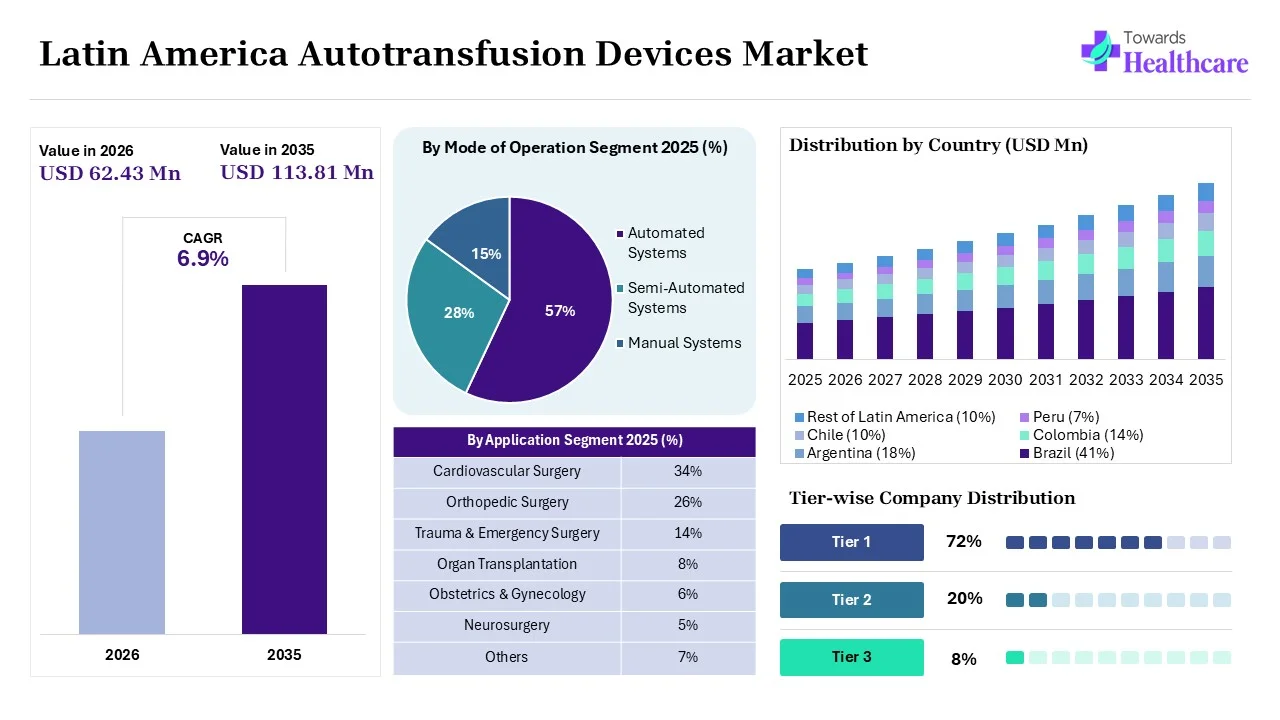
According to Towards Healthcare, the Latin America autotransfusion devices market is projected to experience significant growth, with estimates suggesting the market size will increase from USD 62.43 million in 2026 to approximately USD 113.81 million by 2035, representing a compound annual growth rate (CAGR) of 6.9% from 2026 to 2035. The growth is expected to be supported by rising surgical volumes, increasing awareness of patient blood management, growing demand for blood conservation technologies, and continuous improvements in healthcare infrastructure across countries in the region.
Voluntary Donors Remain Below Desired Levels
According to PAHO, only about 51.5% of blood donations in the region come from voluntary unpaid donors. The remaining donations mainly come from family or replacement donors, which can make blood supplies less stable and harder to predict. Although several countries have improved their blood donation programs in recent years, important gaps still exist. The region currently records an average of 15 blood donations per 1,000 people, a level that remains below what many countries need to maintain self-sufficient blood supplies.
Stable Blood Supplies Are Essential for Healthcare
Blood transfusions are critical for emergency treatment, surgeries, complicated childbirth, and the management of chronic diseases. PAHO noted that relying heavily on family donors may help address immediate needs but does not guarantee a continuous supply of blood. Countries that encourage regular voluntary donations are better able to maintain stable blood inventories, reduce transfusion-related risks, and strengthen the overall resilience of their healthcare systems.
PAHO Urges Continued Action
PAHO Director Dr. Jarbas Barbosa stressed that health systems must ensure access to safe blood during routine care, emergencies, and disasters. He thanked regular donors for their contributions and encouraged more people to donate. PAHO also called on governments to strengthen national blood programs and promote voluntary unpaid donation to ensure equitable access to safe blood for all citizens.
According to Towards Healthcare, the Latin America autotransfusion devices market is witnessing increasing adoption due to the growing need for safe and efficient blood management solutions during surgical procedures. The market is further benefiting from advancements in autotransfusion technologies, expanding access to specialized healthcare services, and increasing efforts by healthcare providers to reduce dependence on donor blood supplies.