



Pruritus Therapeutics Market Size, Key Companies, Company Market Share, Patient Volume, Treatment Adoption Rates, Pricing Analysis, Regulatory Landscape, Competitive Positioning, and Demand Forecast
Deepa Pandey, a Healthcare Industry Expert, highlights that the pruritus therapeutics market has reached USD 12.26 billion in 2026 and is on track to reach USD 17.96 billion by 2035, advancing at a CAGR of 4.34%. Key pruritus therapeutics market companies shaping the market include Bristol-Myers Squibb, Novartis AGÂ , Pfizer Inc. Teva Pharmaceuticals, while major growth segments By span Disease Type, By Product, By Distribution Channel, and By Regions.
Source: https://www.precedenceresearch.com/pruritus-therapeutics-market
 Get a Sample
 Table Of Content


What is the Pruritus Therapeutics Market Size?
The global pruritus therapeutics market size accounted for USD 11.74 billion in 2025, grew to USD 12.26 billion in 2026 and is projected to surpass around USD 17.96 billion by 2035, expanding CAGR of 4.34% between 2026 to 2035. The growth of various types of skin diseases, chronic diseases, and the rising demand for improved anti-itch treatment are boosting the pruritus therapeutics market.
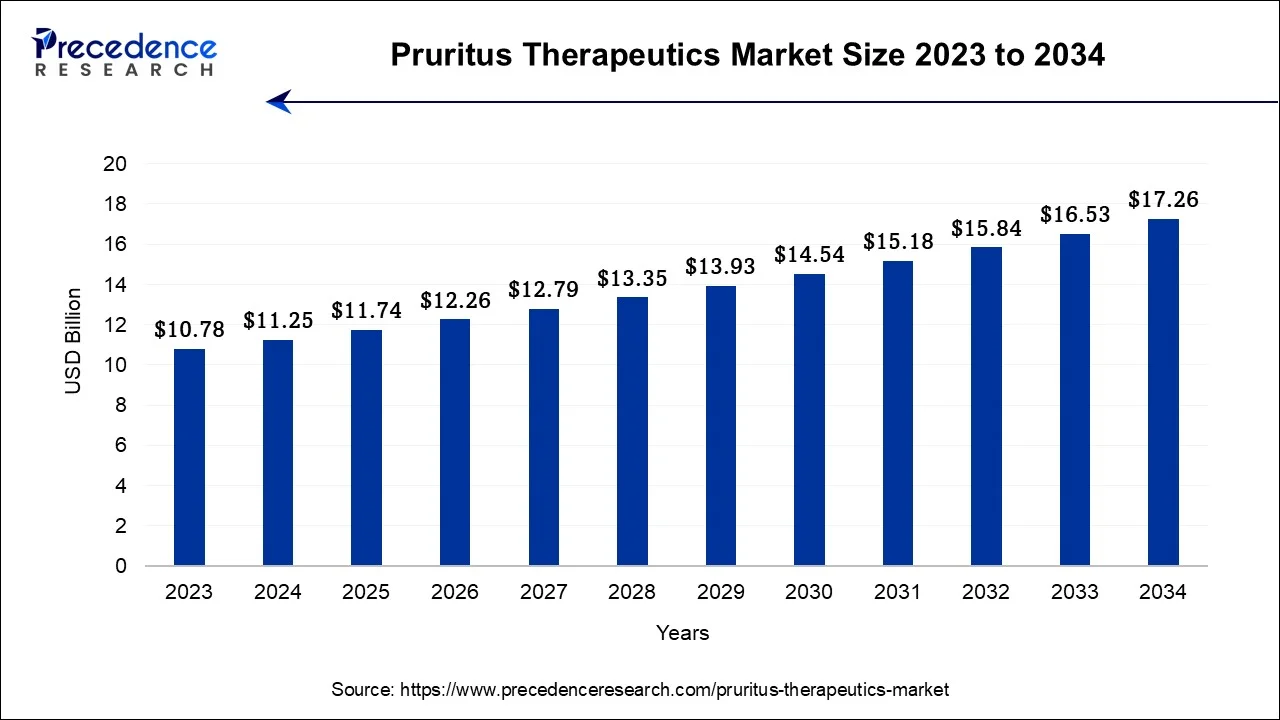
Pruritus Therapeutics Market Key Takeaways
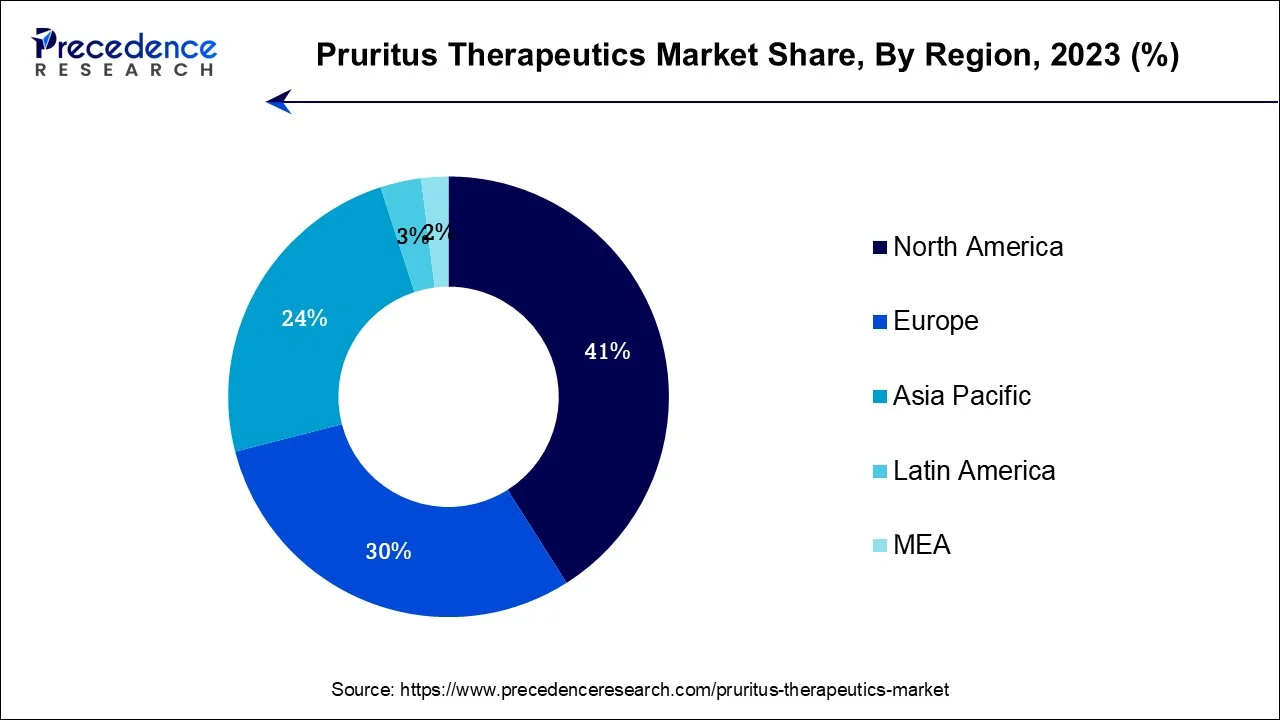
- North America contributed more than 41% of revenue share in 2025.
- By Disease Type, the atopic dermatitis segment held the largest market share in 2025.
- By Product, the corticosteroids segment is expected to capture the highest revenue share over the forecast period.
- By Distribution Channel, the hospital pharmacies segment is expected to dominate the market during the forecast period.
Market Overview
Pruritus therapeutics refers to the various medical treatments, interventions, and therapies employed to alleviate pruritus, commonly known as itching. Pruritus therapeutics are designed to provide relief from itching, reduce inflammation, and address the root causes of pruritus when possible. These therapeutics encompass a wide range of treatment modalities, including topical medications, oral drugs, biological therapies, phototherapy, and lifestyle modifications. The global pruritus therapeutics market revolves around the research, development, innovation and distribution of sedative and non-sedative medicines, drugs or other therapeutics for relief of pruritus.
Pruritus Therapeutics Market Growth Factors
The choice of treatment depends on the underlying cause of pruritus, its severity, and the patient's overall health. The pruritus market growth is driven by various factors including the growing prevalence of pruritus disease and the growing aging population across the globe.
Moreover, the global pruritus therapeutics market is observed to be accelerated by the increased awareness about skin diseases, innovation in the dermatology sector, presence of rapid diagnosis services in urban areas, advancements in research, growing regulatory approvals and development of innovative therapies.
Strategic Growth Opportunities
- High Growth Commercial Opportunities: With an expanding demand for specific biologics and JAK inhibitors to treat dermatoses associated with sclero-pruritus, as well as non-steroidal therapeutic products at the commercial level. Market opportunity is expected to grow on additional, unmet patient need such as cholestatic pruritus, neuropathic and chronic pruritus of unknown etiology.
- Geographic Expansion Opportunities: There is potential for expansion in Asia-Pacific due to the higher penetration of healthcare, a higher prevalence of diagnosed disease, and the higher uptake of advanced therapies. Global pharmaceutical companies can potentially expand in emerging markets such as China and India by entering the market through partnerships, regulatory clearance, and distribution networks.
Market Scope
| Report Coverage | Details |
| Market Size by 2035 | USD 17.96 Billion |
| Market Size in 2025 | USD 11.74 Billion |
| Market Size in 2026 | USD 12.26 Billion |
| Growth Rate from 2026 to 2035 | CAGR of 4.34% |
| Largest Market | North America |
| Base Year | 2025 |
| Forecast Period | 2026 to 2035 |
| Segments Covered | Disease Type, Product, Distribution Channel, and Regions |
| Regions Covered | North America, Europe, Asia-Pacific, Latin America, and Middle East & Africa |
Market Dynamics
Driver
Growing prevalence of pruritus disease
Pruritus is a common symptom associated with various medical conditions, including dermatological disorders (eczema and psoriasis), systemic diseases (liver and kidney diseases), and autoimmune conditions (lupus). As the incidence of these conditions increases, so does the prevalence of pruritus, driving the demand for therapeutic solutions. For instance, according to the Lupus Foundation of America, a particular form of lupus affects at least five million people worldwide. Whereas around 1.5 million Americans are affected by the same. Lupus was also one of the top 20 fatalities of women between the ages of 5 and 64. Thus, the aforementioned stats drive the market growth over the projection period.
Restraint:
Complex and diverse causes
Pruritus can have numerous underlying causes, ranging from dermatological conditions to systematic diseases. The complexity and diversity of these causes make it challenging to develop a one-size-fits-all treatment approach. Tailoring treatments to the specific cause of pruritus can be difficult. Thus, this is acting as a major restraining factor to the market growth during the projected period.
Opportunity
Increasing discoveries and product innovations
Global private players have increased their investment in research and development of novel medications and therapies as a result of the rising demand for pruritus medicines. Given the rising prevalence of skin disorders and conditions globally, the potential for profiting from the expanding pruritus industry has prompted major market participants to create promising and efficient medications. Similar to this, the regulatory authorities were convinced to speed up approvals to protect the interests of consumers by the discovery and rising prevalence of novel skin diseases. The market for pruritus therapies will expand due to the standardization and simplification of regulatory approvals and licensing. Additionally, several collaborations, mergers and acquisitions to develop therapies will stimulate market growth.
Segment Insights
Disease Type Insights
Tthe global pruritus therapeutics market is segmented into atopic dermatitis, urticarial, allergic contact dermatitis and others. The atopic dermatitis segment held the largest market share in 2025 and is expected to continue the same pattern during the forecast period. Atopic dermatitis (AD), also known as eczema, is a common skin condition characterized by red, itchy rashes that often appear on the face, hands, elbows, and knees.
It is a significant contributor to the pruritus therapeutics market due to its high prevalence and the severe itching associated with the condition. According to the National Eczema Association, eczema is present in 31.6 million Americans (10.1%), and it is most common in young children. Eczema is thought to affect 1 in 10 people at some point in their lives, with early infancy being the most common time for occurrence. A conclusive diagnosis for atopic dermatitis (AD) was made in 60% of cases within a year of the onset of symptoms. For adult-onset AD, the delay in diagnosis was more severe, with over 20% of adults stating that it took longer than two years, compared to less than 10% of children under the age of 18.
The urticaria segment is expected to grow at the fastest rate over the forecast period. Urticaria, commonly known as hives, is a skin condition characterized by the sudden appearance of red and itchy wheals on the skin. These welts can vary in size and shape and may come and go over hours to days. Urticaria is a significant contributor to the pruritus therapeutics market due to the intense itching and discomfort it causes. This is a common skin condition that affects people of all ages. Acute urticaria can occur in response to various triggers, while chronic urticaria can persist for six weeks or longer. The itching associated with urticaria is a primary driver for seeking pruritus therapeutics. Thereby, driving the segment's growth.
Product Insights
The global pruritus therapeutics market is segmented into calcineurin inhibitors, corticosteroids, local anesthetics, counterirritants, antihistamines, immunosuppressant and others. The corticosteroids segment is expected to capture the highest revenue share over the forecast period. Corticosteroids are a class of medications that play a significant role in the Pruritus Therapeutics market, particularly for various skin conditions associated with itching (pruritus). These medications are commonly used to alleviate itching, inflammation, and other symptoms in a range of dermatological conditions.
Corticosteroids are one of the most versatile and widely prescribed treatments for dermatological conditions that involve itching. They are effective in reducing inflammation, itching, and redness associated with skin disorders like eczema, psoriasis, contact dermatitis, and allergic reactions. Moreover, these medicines are available in different formulations, including creams, ointments, gels, sprays, and foams. This variety of options ensures that patients can find a suitable product for their specific needs and preferences. Thus, this is expected to drive the segment growth.
Distribution Channel Insights
Based on the distribution channel, the global pruritus therapeutics market is segmented into hospital pharmacies, drug stores & retail pharmacies and online providers. The hospital pharmacies segment is expected to dominate the market during the forecast period. Hospital pharmacies dispense prescription pruritus therapeutics, including topical creams, oral medications, and other treatments, to inpatients and outpatients under the care of hospital staff or specialists.
Moreover, in a hospital setting, patients often require immediate relief from pruritus due to various underlying medical conditions or treatments. Hospital pharmacies ensure that essential pruritus medications are readily available to provide quick relief. Furthermore, in certain cases, patients with severe or complex pruritus may require customized formulations of medications. Hospital pharmacies can compound and tailor pruritus therapeutics to meet individual patient needs. Thus, these benefits of hospital pharmacies drive market growth.
Regional Insights
North America is expected to dominate the market during the forecast period. The growth of the market in the region is attributed to the high prevalence of skin disorders including atopic dermatitis, psoriasis, contact dermatitis, and chronic urticaria. According to the National Psoriasis Foundation/USA, more than 8 million Americans have psoriasis. Psoriasis prevalence in African Americans is 1.5 percent compared to 3.6 percent of Caucasians. In addition, as per the American Academy of Dermatology Association, around 7.5 million people in the United States have psoriasis. Psoriasis occurs in all age groups but is primarily seen in adults, with the highest proportion between ages 45 and 64.
Moreover, the region has a rapidly ageing population, with a significant number of elderly individuals who are more prone to skin conditions like xerosis (dry skin) and pruritus. This demographic trend contributes to the demand for pruritus management. For instance, according to secondary sources, over the next 40 years, the number of Americans, especially the geriatric population (65 and older) will more than quadruple, reaching 80 million in 2040. Thus, this is expected to drive the market growth in the region.
What is the U.S. Pruritus Therapeutics Market Size?
U.S. market is anticipated to grow significantly, owing to the high incidence of chronic skin diseases and systemic conditions associated with itching. As atopic dermatitis, psoriasis, chronic kidney disease, and liver disorders grow in incidence, there are new chances for service coverage opportunities for treating them. Sophisticated diagnosis, with increased awareness, has resulted in earlier diagnosis, and patients with chronic pruritus are now seeking treatment.
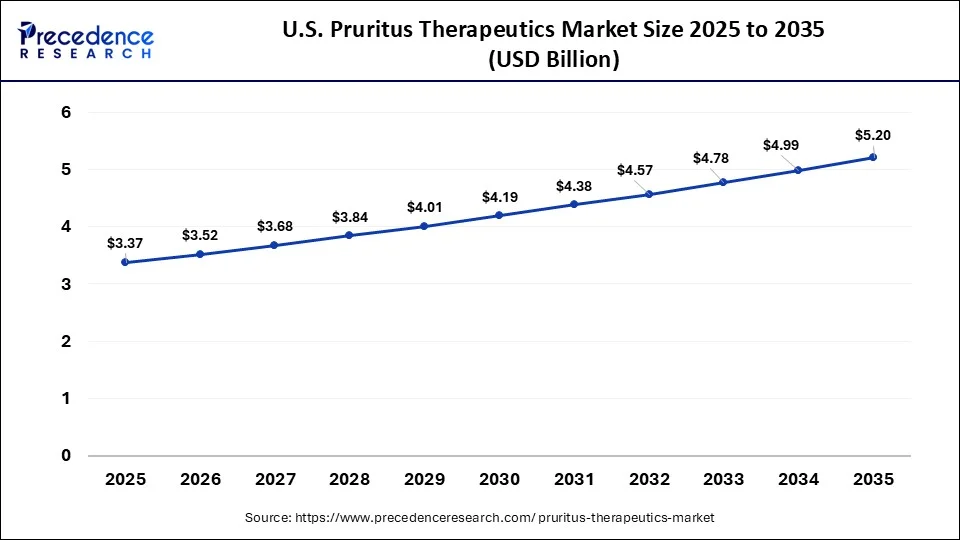
The U.S. pruritus therapeutics market size was exhibited at USD 3.37 billion in 2025 and is projected to be worth around USD 5.20 billion by 2035, poised to grow at a CAGR of 4.43% from 2026 to 2035.
Asia Pacific is expected to grow at the highest CAGR over the forecast period. The market growth in the region is owing to the fast and rapidly growing and improving healthcare infrastructure. Several countries in Asia Pacific are investing in expanding and improving their healthcare infrastructure with substantial support from respective governments, this element brings a potential for the pruritus market to expand in the region for the upcoming period. This includes the development of specialized dermatology clinics and centers, which play a pivotal role in pruritus diagnosis and treatment. Moreover, pharmaceutical companies and research institutions in Asia Pacific are increasingly engaged in research and development efforts to create innovative pruritus therapeutics tailored to the specific needs of the local population. Therefore, this is expected to propel the pruritus therapeutics market growth in the Asia Pacific region.
China Market Trends
China's pruritus therapeutics market is anticipated to grow significantly, with the rise of dermatological and chronic diseases. Improving access to specialized dermatology services along with increasing healthcare expenditure are helping drive adoption of treatment. There is greater recognition of patients with skin disorders, resulting in earlier diagnosis and treatment of chronic itchy skin. Innovative and targeted therapies are becoming more available to offer new treatment options.
Advancements in Anti-Itch Treatment Solutions in Europe
Europe shows a significant growth during the forecast period. They are moving away from traditional antihistamines toward targeted, mechanism-based therapies that tackle the underlying neuroimmune causes of chronic itch. Medications aiming on nervous system mechanisms, such as gabapentin and pregabalin, are increasingly utilized for chronic, non-inflammatory itching. Conventional antihistamines are usually ineffective for chronic itching, leading to the demand for therapies that address inflammatory and neuropathic mechanisms.
Germany Market Trends
Germany market is anticipated to grow significantly, due to an increasing incidence of both dermatological and systemic chronic diseases. Chronic kidney disease and other diseases associated with itching are increasing in prevalence because of an increasing elderly population. The pharmaceutical and biotechnology sector is another strength for Germany, where it contributes to research and fosters therapeutic innovation through clinical research.
Latin America's Pruritus Therapeutics Industry Evolution
Latin America shows a notable growth during the forecast period. There is an increasing incidence of chronic pruritus linked with dermatological conditions like atopic dermatitis, psoriasis, and eczema. This is usually driven by urbanization, changing lifestyles, and even environmental factors, leading to skin barrier dysfunction. Increased educational initiatives, along with the establishment of dedicated dermatology-rheumatology clinics, are assisting in earlier recognition of pruritic conditions.
Brazil Market Trends
Brazil's pruritus therapeutics market is anticipated to grow significantly, driven by the growing prevalence of different dermatological diseases and chronic illnesses. Patients know about a new ubiquitous symptom: the skin itching that always persists, and of which they seek treatment. Improved access to and expansion of dermatology services helps with diagnosis and treatment uptake.
MEA Pruritus Therapeutics Industry Trends
MEA shows a rapid growth during the forecast period. It is driven by increasing disease prevalence, modernization of healthcare infrastructure, and rising awareness of specialized dermatology care. Moreover, atopic dermatitis is the largest segment driving pruritus therapeutics in the region, mainly in the UAE. Tele-dermatology and online pharmacies are increasing, offering easier access to OTC antipruritic medications along with consultations in areas where specialized, in-person care is scarce.
Saudi Arabia Market Trends
Saudi Arabia market is anticipated to grow significantly, due to the growing prevalence of chronic diseases and dermatological conditions. Rising prevalence of chronic conditions such as diabetes mellitus, chronic kidney disease, and other systemic pathologies is contributing to the need to treat pruritus. Specialized health systems to support dermatology and chronic-care services are available due to the government's investment in health system infrastructure.
Supply Chain Analysis-Pruritus Therapeutics Market
- R&D: Pharma companies come up with incredible nuances of antipruritic mechanisms, targets, biologics, and small-molecule drug development; and are focusing on efficacy, safety, patient tolerability, and patient outcomes over longer periods.
- Key Players: Sanofi, Regeneron Pharmaceuticals, Galderma
- Clinical Trials and Regulatory Approvals: Post-clinical testing, basically preclinical testing, and later clinical testing in a progressive sequence of potential new treatments should be conducted to test the safety and efficacy of these drugs and, after they are submitted for approval to the regulatory authorities and approved for clinical use, access them in the market.
- Key Players: AbbVie, Bristol Myers Squibb, Chugai Pharmaceutical, Maruho
- Hospitals and Pharmacies Distribution: Manufacturers use wholesalers, specialty distributors, hospital, pharmacy channels, and online distribution channels to ensure that they have adequate inventory, storage facilities, and are available when patients need them, while ensuring appropriate practices are followed to maintain their product quality.
- Key Players: GSK, Pfizer, Novartis, Teva Pharmaceutical Industries
- Patient Support and Services: Patient-support programmes provide various services, such as information and education, services and monitoring for adherence to the treatment, access services and financial support for progressing in therapy and overall treatment outcomes.
Competitive Landscape
The key players in the pruritus therapeutics market are pharmaceutical companies and dermatological specialists working in the traditional, biologic, and targeted development of products for skin diseases. The current players in the therapeutics space that are witnessing increased competition are Bristol-Myers Squibb, Actavis Plc, Novartis AG, Mylan NV, Pfizer Inc., and Sanofi, among others, which are pursuing novel mechanisms, clinical differentiation, and efficacy of their therapeutic products.
The companies are investing in their dermatology/immunology business with clinical development, product approval, product access, and strategic partnership developments. Continued efforts by Sanofi and Regeneron to develop dupilumab to add additional indications for pruritus and other products that would be more competitive in the overall market.
Pruritus Therapeutics Market Companies
- Amgen, Inc.: Amgen, Inc. is a significant player in the pruritus therapeutics market, mainly through its development of targeted biologic therapies targeted at inflammatory skin conditions, which cause chronic itching. Its efforts aim to provide deeper, thus, more sustained relief for moderate-to-severe disease states.
- Cara Therapeutics: Cara Therapeutics is a commercial-stage biopharmaceutical company that provides a novel, targeted approach to treating chronic pruritus (itching) by targeting kappa opioid receptors (KORs).
- AbbVie, Inc.: AbbVie, Inc. is a leading competitor in the pruritus therapeutics market, mainly offering targeted immunology treatments programmed to alleviate itching linked with chronic, immune-mediated dermatological diseases.
- Astellas Pharma: Astellas Pharma is a major player in the pruritus therapeutics market, primarily providing targeted topical treatments for chronic itching conditions, mainly atopic dermatitis.
Company Profiles - Pruritus Therapeutics Market
Bristol-Myers Squibb
Headquarters: Princeton, New Jersey, USA
Founded: 1881
Bristol-Myers Squibb is a worldwide biopharmaceutical company with a history of developing innovative medicines in therapeutic areas: Immunology, Oncology, and Cardiovascular disease. The excellent research prowess and immunology expertise render opportunities to tackle inflammatory conditions linked with long-standing pruritus in the context of their treatment.
- Key Vulnerabilities: Unfavorable clinical catch-up pace, difficulties surrounding late-stage product pipeline, reliance on clinical trials, lead optimization projects, and lack of experience in the use of direct-to-consumer marketing tactics.
Novartis AG
Headquarters: Basel, Switzerland
Founded: 1996
Novartis, a global pharmaceutical company, focuses on discovering and developing innovative medicines in four therapeutic areas, namely cardiovascular, other therapeutic areas, dermatology, and immunology. Well-established capabilities in the area of specialty medicine and potential for research to participate in various inflammatory skin disorders associated with itching.
Key Strengths: Global commercial reach, key strength in r&d, immunology & dermatology experience, innovative platforms for drug development, specialty-medicine portfolio.
Key Vulnerabilities: Their drug development costs are high, they have limited shelf-life, there are regulatory pressures, and biologics and targeted therapies are competing with these drugs.
Pfizer Inc.
Headquarters: New York City, New York, USA
Founded: 1849
Pfizer is a global biopharmaceutical business with products and expertise in areas of immune and inflammatory diseases, oncology, and other therapeutic areas. There are opportunities in pruritus-related inflammatory dermatological diseases with innovative targeted products and novel skills in research and development.
Key Strengths are a diverse portfolio of R&D experience, a global commercialisation network, strong manufacturing capabilities, and extensive therapeutic experience as well as clinical-development experience.
- Key Vulnerabilities: Patent protection, competition, expensive research and development, and regulatory uncertainties could affect future growth.
Sanofi
Headquarters: Paris, France
Founded: 1973
Sanofi is a global leader in the health care sector and has a proven history in the fields of immunology, specialty medicines, vaccines, and chronic diseases. It has been collaborating with Regeneron as well and has had success with Dupixent, giving it more of a boost in inflammatory dermatology and itchy diseases.
Key Vulnerabilities: Regulatory risks and reliance on key products, high research and development costs, and new biologics and targeted therapies.
Teva Pharmaceuticals
Headquarters: Tel Aviv, Israel
Founded: 1901
Teva Pharmaceuticals is one of the world's leading pharmaceutical companies with a proven track record in the development, commercialisation and distribution of both speciality and generic drugs. Its extensive range of products, wide manufacturing network and worldwide distribution enable it to offer highly competitive treatment solutions in various therapeutic areas, such as dermatology.
- Key strength: Generics advantages are high quality, wide manufacturing network, geographical dispersion, cost-effective manufacturing and distribution.
- Key Vulnerabilities: Profitability may be affected by high generic competition, and new molecular entities within the biologic and targeted therapy classes can create competition for the higher value, higher-end portion of the treatment market.
Collaboration Landscape
- In April 2026, Sanofi and Regeneron announced positive findings from Phase III trials for Dupixent's use in the treatment of chronic spontaneous urticaria (CSU) that demonstrated its ability to significantly decrease itch severity and urticaria activity. The results are further indications of cooperation and the addition of other indications relating to itch. (Source: https://www.sanofi.com)
- In November 2025, Sanofi and Regeneron's global development efforts for Dupixent were marked by an impressive effectiveness on urticaria itch and urticaria hives parameters for the treatment of chronic spontaneous urticaria. The move combines Sanofi's capacities in commercialization and Regeneron's expertise in antibody development. (Source: https://www.sanofi.com)
- In June 2025, Galderma started two clinical trials for nemolizumab and chronic pruritus of unknown origin, systemic sclerosis. As a result of this project, chronic itching therapeutic solutions were improved through its collaboration with clinical research centres. (Source: https://www.galderma.com)
Recent Development
- In June 2026, AbbVie announced it would make a definitive acquisition of Apogee for an estimated total price tag of USD 10.9 billion, to add to its immunology and dermatology pipelines. The acquisition expands AbbVie's advanced therapies expertise and capabilities in treating pruritus-driven inflammatory skin diseases. (Source: https://news.abbvie.com)
- In April 2025, Tvardi Therapeutics joined with Cara, creating a company focused on therapeutics targeting the STAT3 pathway. The deal allowed Cara to focus its resources elsewhere besides its pruritus-based development and changed the dynamics of competition between smaller innovators.
- In June 2023, Ipsen stated that Bylvay has received approval from the United States Food and Drug Administration (FDA) for the treatment of cholestatic pruritus in patients with Alagille syndrome starting at the age of 12 months. Bylvay is an ileal bile acid transport inhibitor (IBATi) that operates locally in the small intestine and has very little systemic exposure. In the United States and for the treatment of progressive familial intrahepatic cholestasis (PFIC) in Europe, Bylvay was authorized as the first medication therapy option in 2021 for individuals suffering from cholestatic pruritus caused by PFIC. For qualified ALGS patients, Bylvay is instantly available by prescription.
- In August 2023, VeopozTM, also known as CD55-deficient protein-losing enteropathy, was authorized by the U.S. Food and Drug Administration (FDA) for the treatment of adult and pediatric patients 1 year of age and older with CHAPLE disease, according to Regeneron Pharmaceuticals, Inc. The first and only remedy suggested especially for CHAPLE is Veopoz. The pre-approval inspection concerns about the aflibercept 8 mg BLA have been resolved with the consent of Veopoz. In the next weeks, FDA action on the aflibercept 8 mg BLA is anticipated.
Segments Covered in the Report
By Disease Type
- Atopic Dermatitis
- Allergic Contact Dermatitis
- Urticaria
- Others
By Product
- Corticosteroids
- Antihistamines
- Local Anesthetics
- Counterirritants
- Immunosuppressant
- Calcineurin Inhibitors
- Others
By Distribution Channel
- Hospital Pharmacies
- Drug Stores & Retail Pharmacies
- Online Providers
By Geography
- North America
- Europe
- Asia-Pacific
- Latin America
- Middle East and Africa
For inquiries regarding discounts, bulk purchases, or customization requests, please contact us at sales@precedenceresearch.com
Frequently Asked Questions





Ask For Sample
No cookie-cutter, only authentic analysis – take the 1st step to become a Precedence Research client
 Get a Sample
.webp)



 sales@precedenceresearch.com
 Schedule a Meeting
